
REVIEW · CYCLING TOURS
Full Day Biking Tour Exploring the Best of Kyoto
Kyoto reveals itself best at street level, and this small-group bike tour gets you far beyond the usual temple-to-temple shuffle. In seven to eight hours, you pedal through quiet lanes, major sights, old neighborhoods, and the city’s famous geisha district, with a guide explaining what you are seeing along the way.
I like the wide range of sights and the way the route links places that are too spread out for a comfortable walking day. I also like the local feel: lunch is included, and the ride uses smaller streets where you see traditional homes, riverside paths, and ordinary Kyoto life between the headline attractions.
The trade-off is simple: this is a serious full day out. Expect roughly 18 to 20 miles of cycling, plenty of walking at the sites, and possible fatigue by late afternoon. The route is generally flat and considered manageable, but you should be comfortable riding a bike and ready to keep moving.
In This Review
- Key points to know before booking
- Why a bicycle works so well in Kyoto
- Starting at Cycle Kyoto near Kyoto Station
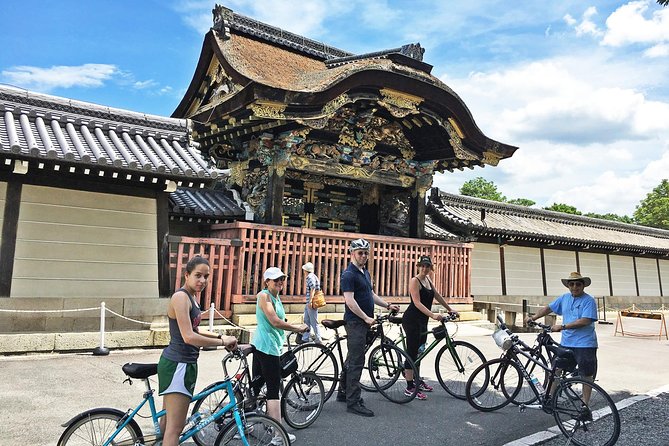
- Nishi Honganji and Kyoto’s wooden scale
- Kitano Tenmangu and a local shrine atmosphere
- Kinkaku-ji, Kyoto’s Golden Pavilion
- The Imperial Palace grounds and Kyoto’s former center
- Gion by bicycle, with the right expectations
- Tofuku-ji’s Zen setting
- Fushimi Inari and the torii gates
- Lunch, bikes, and the real cost of the tour
- How hard is the ride?
- The guide can shape the whole day
- Who should book this Kyoto bike tour?
- Should you book it?
- FAQ
- How long does the Kyoto bike tour last?
- Where does the tour start and finish?
- What is included in the tour price?
- How many people can join the group?
- What age must riders be?
- How much cycling should I expect?
- What happens if the weather is poor?
Key points to know before booking
- See Kyoto’s major sights in one day: The route includes Kinkaku-ji, Fushimi Inari, Gion, the Imperial Palace grounds, Nishi Honganji, Kitano Tenmangu, and Tofuku-ji.
- Ride with a small group: The maximum is eight travelers, allowing guides such as Karl, Jay, Juan, Paul, and Indra to offer personal help and adjust their explanations.
- Plan for a long active day: The cycling distance can reach about 18 to 20 miles, with around 14,000 steps possible once temple walks and shrine visits are added.
- Lunch and water are included: The meal is served during the day, and dietary needs should be shared ahead of time.
- Use quality equipment: A Cannondale bicycle and helmet are provided. An electric bicycle upgrade may be available, but it is not listed as part of the standard package.
- Start and finish near Kyoto Station: The shop is at 7 Higashikujō Nishisannōchō, about one block south of Kyoto Station, and the ride returns there.
Why a bicycle works so well in Kyoto
Kyoto is not a compact old town where every famous sight sits around one central square. The temples and shrines are spread across a broad city, and moving between them by bus can mean waiting, crowding, and repeated transfers.
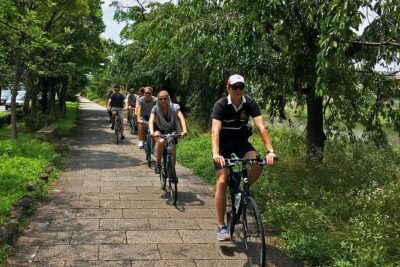
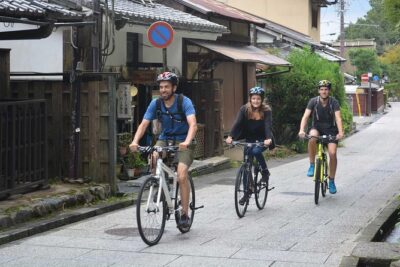
A bicycle gives you a useful middle ground. You cover much more ground than on foot, but you still travel slowly enough to notice narrow lanes, wooden houses, small gardens, and neighborhood streets. The guides use quieter roads where possible, which makes the city feel less intimidating than it can from the window of a bus or taxi.
The route is generally flat, though the day is not effortless. You will ride on city streets and stop often to walk around sacred sites. This makes the tour a good fit for an active adult, a family with confident teenagers, or anyone who wants an overview before choosing places to revisit later.
The group size matters. With no more than eight riders, it is easier to hear the guide, ask questions, and keep the group together at intersections. Guides named Karl, Jay, Juan, Paul, Indra, Jamie, and Quinn have led different departures, so the tone can vary. The strongest guiding style combines clear history with humor and practical cultural details.
More bike days around Kyoto:
- Hidden Kyoto E-Biking tour
★ 5.0 · 1,843 reviews - Bike Tour Exploring North Kyoto plus Lunch
★ 5.0 · 1,087 reviews - Arashiyama Bamboo Forest & Hidden Gems Bike Tour (Early Bird)
★ 5.0 · 613 reviews
Starting at Cycle Kyoto near Kyoto Station
The day begins at Cycle Kyoto, at 7 Higashikujō Nishisannōchō in Minami Ward. The shop is close to Kyoto Station, which makes the starting point convenient if you are staying near the station or arriving by train.
Allow about 15 minutes for introductions, bike fitting, and a helmet check. You receive a high-quality Cannondale bike, though the supplied information does not specify the exact model or frame style. If you carry a phone and wallet, the bike has a small front pouch. A larger backpack must be carried throughout the day, so pack lightly.
This is the time to tell the operator about dietary requirements. Lunch is included, but the meal cannot be tailored at the last minute if the guide has not been told what you need.
Nishi Honganji and Kyoto’s wooden scale
The first sightseeing stop is Nishi Honganji, one of Kyoto’s major Buddhist temples and one of the city’s less visited religious sites. The main wooden buildings are enormous, giving you an early sense of the scale and craftsmanship found in Kyoto’s temple architecture.
The stop lasts about 15 minutes, so do not expect a long, unhurried temple visit. Its value is the contrast with later, more famous attractions. You begin the day in a serious religious setting without the same level of attention drawn by Kinkaku-ji or Fushimi Inari.
A good guide can make this short stop meaningful by explaining how the temple fits into Kyoto’s Buddhist traditions. This is one of the places where the quality of the commentary matters more than the amount of time spent on site.
Kitano Tenmangu and a local shrine atmosphere
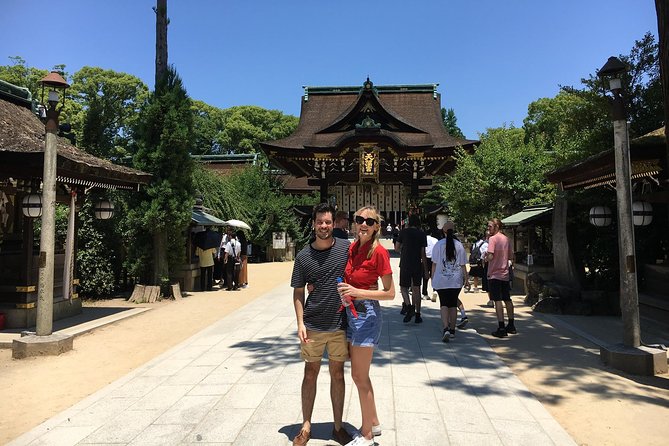
At Kitano Tenmangu, you spend about 20 minutes among local shrine visitors and learn about the shrine’s past. The mood is quieter and more open than at some of Kyoto’s headline sights, giving you room to notice the approach, shrine buildings, and rituals taking place around you.
This stop also shows why a bike tour can be more than a checklist of famous places. You are not simply being taken from one postcard view to another. You get a glimpse of a working religious site, one used by people in Kyoto as well as by those visiting the city.
The short visit means you will receive an introduction rather than a full study of the shrine. If you prefer spending an hour at each temple, the pace may feel quick. If your goal is to understand the city’s broad character in one day, the timing makes sense.
A few more Kyoto experiences worth comparing
- 5 Top Highlights of Kyoto Full Day Bike Tour (E-bike option)
★ 5.0 · 511 reviews - Kyoto Private Car Tour – Full Day with Local Guide & Nara Option
★ 5.0 · 169 reviews - Full Day Tour of Kyoto with Private Transportation
★ 5.0 · 130 reviews - Full Day Hiroshima and Miyajima Tour by Bullet Train from Kyoto
★ 4.5 · 120 reviews
Kinkaku-ji, Kyoto’s Golden Pavilion
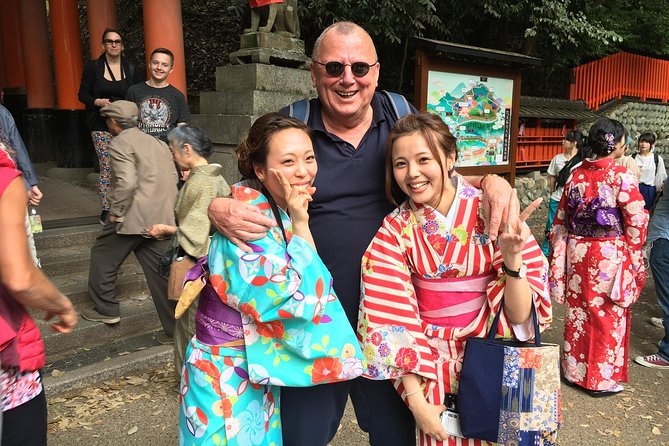
Kinkaku-ji is the visual star of the morning. The Golden Pavilion sits beside a pond and is one of Japan’s most visited attractions. The building’s bright exterior is striking, but the setting around it is just as important, with carefully arranged gardens and viewing areas.
You spend about 30 minutes here, including guide commentary and time to look around. There is also a chance to stop for an ice cream, a welcome pause after the first stretch of riding.
Expect crowds. Kinkaku-ji is not an offbeat stop, and the short visit will not allow a leisurely exploration of every garden path. Still, arriving by bicycle gives the experience a better rhythm than spending the whole day on crowded public transport. You see the pavilion, hear the story behind it, and then continue before the day loses momentum.
The Imperial Palace grounds and Kyoto’s former center
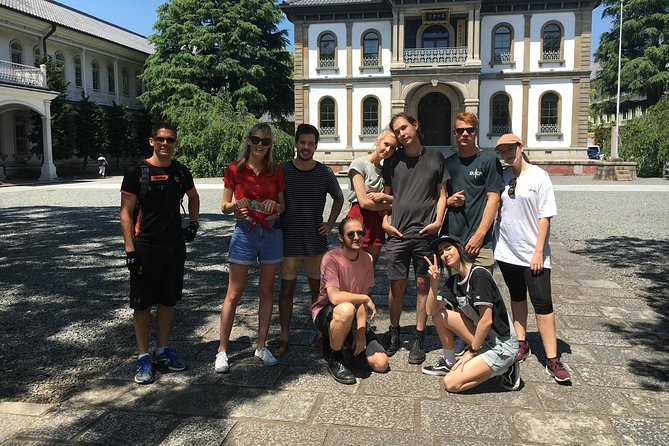
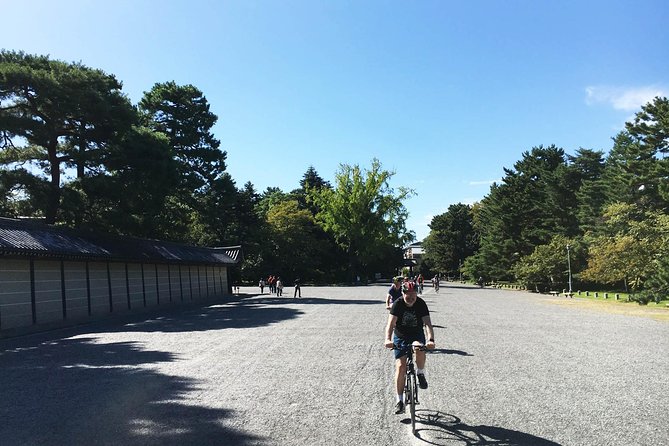
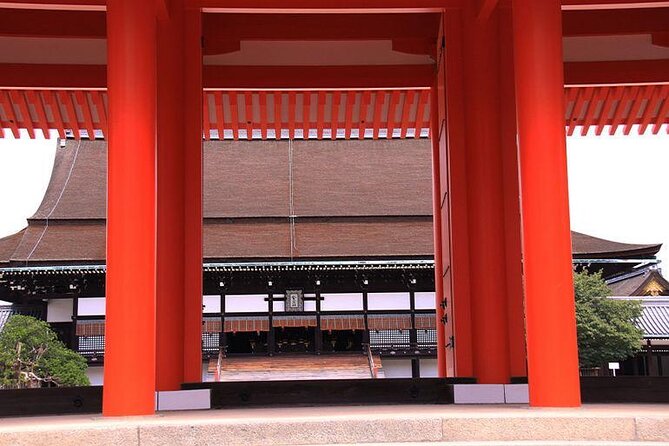
The route continues through the grounds of Kyoto’s Imperial Palace, the former seat of Japan’s imperial family. The stop adds political and royal context to a day otherwise focused heavily on temples and shrines.
The supplied schedule does not give this stop a separate time estimate, so the length may depend on the day’s pace and traffic. You should think of it as a guided ride and sightseeing passage rather than a full palace tour.
This section is especially useful if you want to understand Kyoto as more than a collection of religious buildings. The city served as Japan’s imperial capital for centuries, and the palace grounds help connect the quiet streets you are riding through with the country’s larger story.
Gion by bicycle, with the right expectations
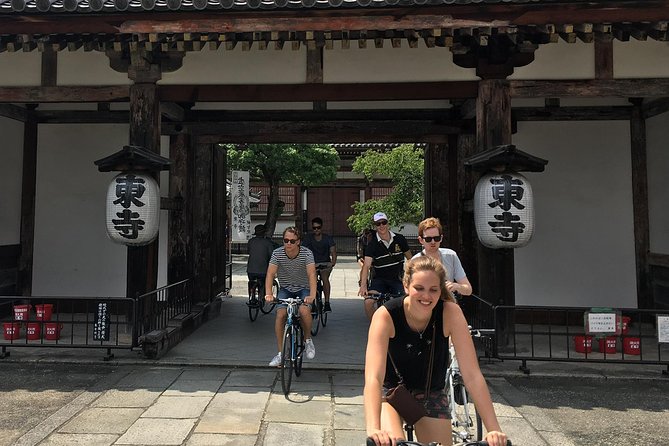
Gion is Kyoto’s best-known geisha district, and the tour pauses here for about 15 minutes. Your guide explains the district’s role and the traditions connected with geisha and maiko, who are professional entertainers trained in arts such as music, dance, and conversation.
Keep expectations sensible. A possible glimpse of a geisha or maiko is just that, a possibility, not a promise. The district is a real neighborhood, not a stage set, so respectful behavior matters. Listen to the guide, avoid blocking lanes, and do not treat people going about their work as photo props.
Gion works well as part of a larger tour because you see it in context. The ride through other neighborhoods makes the polished historic streets feel less isolated from everyday Kyoto. You also avoid spending the entire day in one crowded district.
Tofuku-ji’s Zen setting
Tofuku-ji receives a short five-minute stop, mainly for its bridge views and broad temple grounds. It is one of Kyoto’s oldest and largest Zen temples, and even a brief look gives you a taste of its spacious design.
The time is enough for a quick orientation and photographs, not a full visit. If you return later, you may want to allow much longer, particularly during the autumn foliage season, though no seasonal schedule is promised by the tour.
As a cycling stop, Tofuku-ji provides a useful change of pace. After the urban streets and busy attractions, the temple’s open setting gives you a moment to slow down before the final major site.
Fushimi Inari and the torii gates
The final major stop is Fushimi Inari-taisha, famous for its long corridors of vermilion torii gates. It is among Kyoto’s most visited attractions, and the lower shrine area can be crowded.
The guide’s role is valuable here. Fushimi Inari can feel confusing, especially when you have limited time, and the route is not simply a matter of walking to one single viewpoint. The guide helps you choose a practical path through the complex and explains the meaning and funding behind the torii gates.
Do not expect to walk the entire mountain trail during this tour. The stop is listed at about 20 minutes, so the emphasis is on seeing the main atmosphere and understanding the shrine rather than completing every path.
By this point, your legs may be telling you the day has been ambitious. That is part of the bargain. You have crossed much of Kyoto by bike, and Fushimi Inari gives the day a memorable final image before you ride back to the starting point.
Lunch, bikes, and the real cost of the tour
At $119.38 per person, this is not Kyoto’s cheapest sightseeing option. The price includes the bicycle, helmet, bottled water, lunch, and a full day of guiding. It also buys a route that connects distant parts of the city without requiring you to work out every bus or train transfer.
Lunch is more than a basic convenience. A good midday meal breaks up the riding, and the tour uses a Japanese restaurant rather than leaving you to find food on your own. The exact menu is not specified, so share dietary requirements in advance.
The standard bike should suit riders who are comfortable with a full day of steady cycling. One rider noted that an electric bike upgrade may help, but also pointed out that any bicycle seat can become uncomfortable after many hours. You should not book this expecting a casual two-hour spin.
The financial value is strongest if you want transport, guiding, cultural explanation, and a meal bundled together. It is weaker if you already know Kyoto well, prefer slow temple visits, or would rather use trains and spend more time at fewer places.
How hard is the ride?
The route is described as generally flat, safe, and easy to follow, with much of the cycling on smaller roads and local streets. That does not make it a light activity. About 18 miles is a substantial ride, and some full days have reached roughly 20 miles plus extensive walking.
Weather will change the experience. Warm or humid conditions can make the ride sweaty, while rain may cause the outing to be canceled. Wear comfortable clothes, bring sun protection, and use shoes that work for both pedaling and temple grounds.
You must be at least 13 years old and comfortable riding a bike. A moderate level of physical fitness is required. Teens who enjoy being active may have a great time, but a child who tires quickly or dislikes long rides is not a good match.
The guide can shape the whole day
The most important variable is the guide. Names associated with different departures include Karl, Jay, Juan, Paul, Indra, Jamie, and Quinn. Their strengths described in the supplied material include history, humor, cultural explanation, route planning, photography help, and practical recommendations.
A strong guide does more than announce temple names. You may learn about Buddhist and Shinto traditions, the role of the imperial family, geisha culture, the purpose of the torii gates, and small Japanese phrases or counting. Several guides are also described as using humor, which helps keep a long day lively.
There is one useful caution: one rider had a less satisfying experience because the explanations felt unclear and the guide’s style did not suit the group. That is a reminder that no tour can guarantee the same personality every day. The company’s very high 4.9 rating from 498 ratings and 99 percent recommendation rate point to consistently strong results, but your enjoyment will still depend partly on the individual guide and group dynamic.
Who should book this Kyoto bike tour?
I would choose this tour if you have one full day for Kyoto and want a broad first look at the city. It is especially good for active couples, solo riders who like meeting a small group, and families with confident teenagers.
It also suits repeat visitors who want to reach quieter streets and less familiar temples without planning a route themselves. The local-road sections are a real strength, since they show the city between its famous sights.
I would skip it if you want a slow, contemplative temple day, dislike cycling in city traffic, or have physical limits that make a long ride and extensive walking uncomfortable. In that case, a shorter walking tour or private vehicle tour would give you more rest and more time at each site.
Free cancellation is available up to 24 hours before the start time. Changes or cancellations inside that window are not accepted for a refund. Poor weather or failure to meet the minimum group size can lead to a new date, another experience, or a full refund.
Should you book it?
Book it if you want maximum coverage with real exercise and a local guide. The route is ambitious but smart: major temples, Fushimi Inari, Gion, the palace grounds, lunch, and backstreet riding all fit into one day.
The best reason to go is not simply that you can check off Kyoto’s famous sights. It is that the bicycle links them into a lived-in city experience. You see where the temples sit in relation to homes, shops, rivers, and ordinary streets.
Just arrive ready for a long day. If 18 to 20 miles sounds enjoyable rather than alarming, this is one of the most efficient and memorable ways to get your bearings in Kyoto.
FAQ
How long does the Kyoto bike tour last?
The tour lasts approximately seven to eight hours. Some departures may run longer depending on the pace of the group and the day’s route.
Where does the tour start and finish?
The tour starts and ends at Cycle Kyoto, located at 7 Higashikujō Nishisannōchō, Minami Ward, Kyoto. The shop is near public transportation and about one block south of Kyoto Station.
What is included in the tour price?
The price includes use of a Cannondale bicycle, a helmet, bottled water, lunch, and guiding throughout the tour.
How many people can join the group?
The activity has a maximum of eight travelers, creating a small-group experience.
What age must riders be?
Riders must be at least 13 years old and comfortable riding a bicycle.
How much cycling should I expect?
The ride may cover roughly 18 to 20 miles. You will also walk at the temples and shrines, so a moderate level of physical fitness is needed.
What happens if the weather is poor?
The experience requires good weather. If the operator cancels because of poor conditions, you will be offered a different date or a full refund.
Recently added around Kyoto
- Higashiyama | Kyoto: Sakura Season Private Rickshaw Tour★ 5.0 · 3 reviews
- Kyoto Kimono Rental CHAMATSU|Kimono/Yukata Rental FamilyPlan★ 5.0 · 3 reviews
- Kyoto: Half-Day Private Guided Tour to the Old Town of Gion★ 4.4 · 3 reviews
- Nara Private Customizable Half Day Tour★ 5.0 · 3 reviews
- Kansai Region Hiking Adventure in Nara Kobe Kyoto and More★ 5.0 · 3 reviews
- Full Day Nara Deer, Temple, Shrine, Activities & Tea Ceremony★ 5.0 · 3 reviews
- Nara: Essential Private Tour with Deer Park and Temples★ 5.0 · 3 reviews
- Hiking Tour for Sacred Sites in Kyoto with a Guide★ 5.0 · 3 reviews
Cycling Tours, compared.
Arashiyama Bamboo Forest & Hidden Gems Bike Tour (Early Bird)
Read our review →
5 Top Highlights of Kyoto Full Day Bike Tour (E-bike option)
Read our review →
Afternoon Kyoto Bike Tour: Bamboo Forest, Monkeys & Hidden Spots
Read our review →
South Kyoto in a Nutshell: Gentle Backstreet Bike Tour!
Read our review →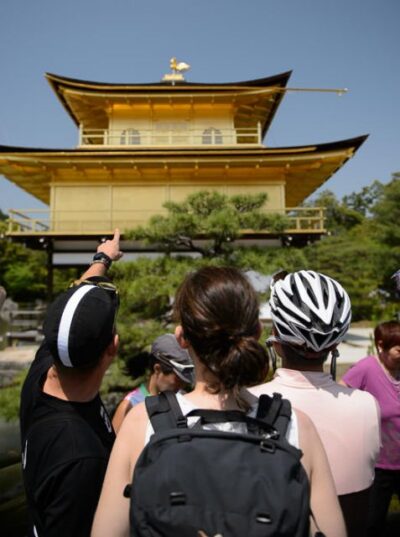
Browse the lists this tour appears in