
REVIEW · CYCLING TOURS
South Kyoto in a Nutshell: Gentle Backstreet Bike Tour!
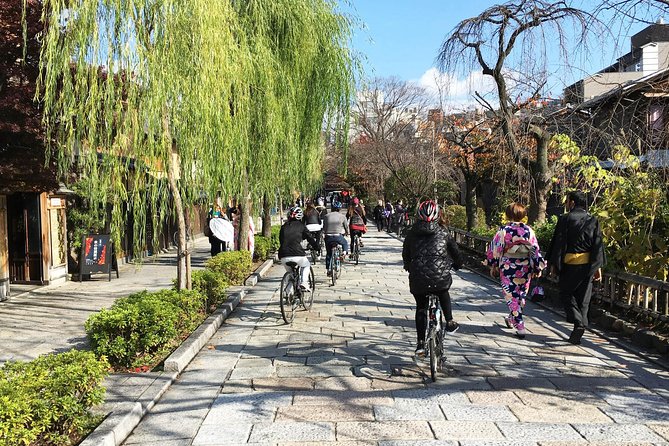
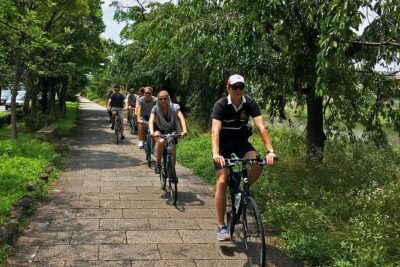
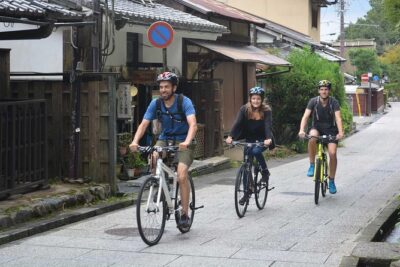
Kyoto is easier to understand from a bicycle seat. This small-group ride links Fushimi Inari, Gion, Tofukuji, and Nishi Honganji while slipping through narrow lanes that buses cannot reach. You cover more ground than on foot, yet the pace remains gentle enough to notice canals, old streets, and everyday Kyoto life.
I like the maximum group size of eight, which keeps the ride manageable in traffic and lets you hear the guide. I also like the strong mix of major sights and quieter routes, plus the simple setup: a Cannondale bike, helmet, and bottled water are provided.
The main caution is time. Three to four hours is enough for a useful introduction, not a long visit at every stop. Tofukuji receives only about five minutes, and one rider felt Gion was rushed for photographs. You need to be comfortable on a bike, and Kyoto heat can make even an easy ride tiring.
In This Review
- Key points to know before you book
- Why cycling works so well in southern Kyoto
- Nishi Honganji gives the morning some scale
- The Takase Canal brings a quieter rhythm
- Gion needs patience, not just a camera
- Tofukuji is brief but visually rewarding
- Fushimi Inari is the morning’s big finish
- The guides are a major part of the experience
- Bikes, pace, and safety on Kyoto’s streets
- Is $79.59 a fair price?
- Who should book this ride?
- Should you book South Kyoto in a Nutshell?
- FAQ
- Where does the bike tour start?
- What time does the tour begin?
- Where does the tour finish?
- How long does the tour last?
- What equipment is included?
- What sights does the tour visit?
- Are children allowed to join?
- What happens if the weather is poor?
Key points to know before you book
- A compact route with big Kyoto sights: Visit Nishi Honganji, Gion, Tofukuji, Takase Canal, and Fushimi Inari in one morning.
- Quiet lanes are the real attraction: The route gets you away from bus traffic and into smaller streets that are awkward to cover by public transport.
- Small groups make city riding easier: The tour accepts no more than eight people, with a guide leading the way.
- A practical first-day introduction: You see several important areas without spending hours planning connections between them.
- Guides add personality: Guides named Jay, Indra, Juan, Sam, Kevin, Jaime, and others have been praised for history, cultural context, safety advice, and local recommendations.
- You need basic cycling confidence: Riders must be at least 13 and comfortable riding a bicycle.
Why cycling works so well in southern Kyoto
Kyoto’s famous temples and shrines are spread across a wide city. Walking between them can eat up much of your morning, while buses often leave you on crowded main roads. A bicycle gives you a middle path: you travel efficiently but still move slowly enough to see the details.
The useful part is not simply the distance covered. Your guide handles the route, chooses backstreets, and adjusts the ride around crowds. You can focus on the city instead of staring at a map or trying to work out which bus comes next.
This is not a racing tour. The route is described as gentle, and the terrain is mostly manageable, with much of the riding on side streets. Still, you should know your own limits. A rider reported cycling in 36°C heat, while another enjoyed the ride in chilly rain with extra gloves and a hat provided by the guide. Weather can change the feel of the morning considerably.
The group meets at Cycle Kyoto at 9:00 am, near public transportation, at 7 Higashikujō Nishisannōchō in Minami Ward. After a short introduction, you get fitted to your bike and meet the guide and the rest of the group. The activity ends back at the same shop, which makes the start and finish easy to plan around.
More bike days around Kyoto:
- Hidden Kyoto E-Biking tour
★ 5.0 · 1,843 reviews - Bike Tour Exploring North Kyoto plus Lunch
★ 5.0 · 1,087 reviews - Arashiyama Bamboo Forest & Hidden Gems Bike Tour (Early Bird)
★ 5.0 · 613 reviews
Nishi Honganji gives the morning some scale
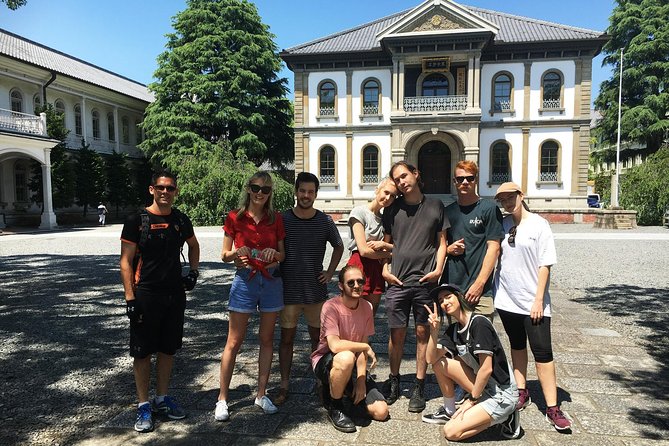
Nishi Honganji is an excellent early stop because it shows a quieter side of Kyoto’s religious life. The temple is one of the city’s less visited major religious sites and includes one of the world’s largest wooden buildings.
You have about 15 minutes here. That is enough to step inside, take in the wooden structure, and hear why the site matters, but not enough for a slow architectural study. I would treat this as a strong introduction rather than a complete temple visit.
The short stop also helps the tour avoid becoming a string of long lectures. You get a sense of the place, then return to the bicycle and continue through the city. If Nishi Honganji is high on your personal list, plan a separate visit after the tour rather than expecting the morning ride to cover every detail.
The Takase Canal brings a quieter rhythm
The route follows the serene Takase Canal on two wheels. This stretch offers a welcome change after the scale of Nishi Honganji, with water, narrow routes, and good places for photographs.
Your guide explains the canal’s place in Kyoto’s past while you ride. The value here is the connection between scenery and city history. You are not just stopping at isolated monuments. You are seeing how different parts of Kyoto fit together.
The canal section also captures the main appeal of the tour: the ride itself becomes part of the sightseeing. You may find that these short stretches between formal attractions are among the morning’s most pleasant moments. They give you a local-looking view of the city without requiring a long walk.
Gion needs patience, not just a camera
Gion is Kyoto’s best-known geisha district, with traditional streets and a carefully protected atmosphere. The guide explains the district’s customs and the world of geisha and maiko, while reminding you how to behave around residents and performers.
This is one place where the group schedule matters. The official stop lasts about 15 minutes, and one rider felt that was too short for photographs and quiet observation. If you like to linger over street details, architecture, and changing light, you may wish the tour gave you more time.
On the other hand, a short guided stop has a practical advantage. Gion can become crowded, and a guide helps you move through it respectfully rather than wandering into private spaces or blocking narrow lanes. One rider happened to see a maiko, but that is a fortunate possibility, not something the tour can promise.
Pay attention to the cultural explanation here. Several guides have been praised for connecting Kyoto’s past with life in Japan today. Jay, in particular, has been singled out for his account of Gion and local culture, while another guide, Sam, was praised for making the background easy to follow.
A completely different side of Kyoto:
- PERFECT KYOTO 1-Day Bus Tour
★ 5.0 · 13,518 reviews - Kyoto: Fushimi Inari, Kinkakuji, Bamboo Grove 1 Day Bus Tour
★ 4.8 · 4,316 reviews - Kyoto: Tea Ceremony in a Traditional Tea House in Kiyomizu
★ 4.9 · 3,519 reviews - Kyoto Geisha Walking Tour: Gion District & Hidden Gems
★ 4.7 · 3,273 reviews
Tofukuji is brief but visually rewarding
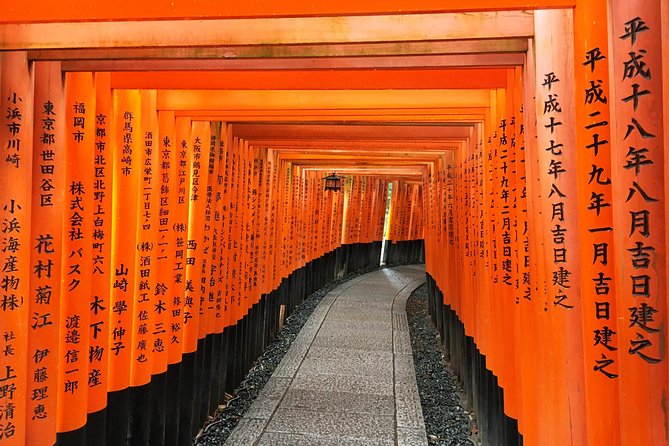
Tofukuji is one of Japan’s oldest and largest Zen temples. The tour swings by for about five minutes, with a view from the bridge and time to appreciate the spacious grounds.
Five minutes is plainly brief. You will not have time to explore the temple complex in a serious way, and admission to paid attractions is not listed as part of the tour. The stop works best as a scenic look and a chance to learn why Tofukuji matters.
That limited time may frustrate photographers or temple enthusiasts. For a first pass through southern Kyoto, though, it gives you another important landmark without sacrificing the route’s wider variety. You can mark Tofukuji for a longer return visit if its architecture or grounds catch your interest.
Fushimi Inari is the morning’s big finish
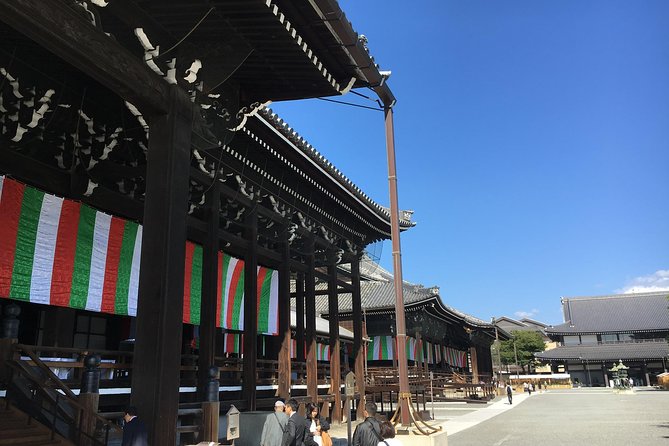
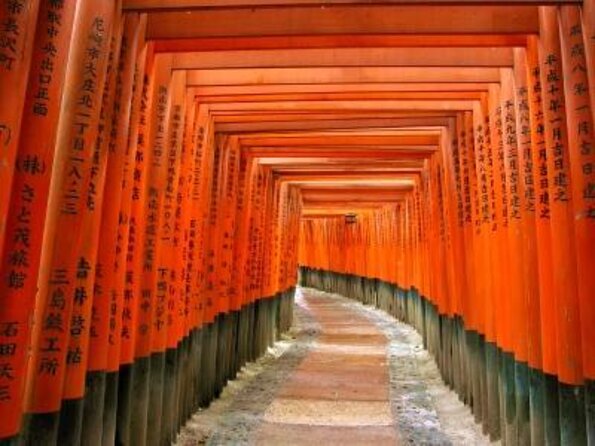
Fushimi Inari Taisha is the tour’s most famous stop and usually the place you will recognize instantly from photographs. Its rows of orange torii gates have made it one of Kyoto’s most visited sights, but the popularity creates a problem: the entrance area can be crowded and confusing.
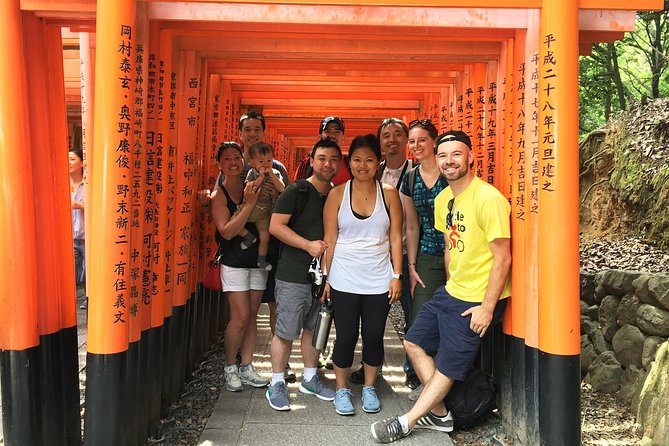
The guide helps you choose a practical path through the crowds. You have about 25 minutes, enough to see the key approach, take photographs, and hear the basic meaning behind the shrine. It is not enough to hike far up the mountain trails, so set your expectations accordingly.
This stop shows why a guide can be worth paying for. You do not have to work out where to go while avoiding people, bicycles, and foot traffic. A guide who knows the area can keep the group moving and still give you a focused look at the shrine.
Fushimi Inari is also a useful place to end the sightseeing portion of the ride. After several smaller streets and quieter stops, you finish at Kyoto’s most recognizable southern landmark. You return to the shop afterward, rather than ending at the shrine, so allow time for the ride back.
The guides are a major part of the experience
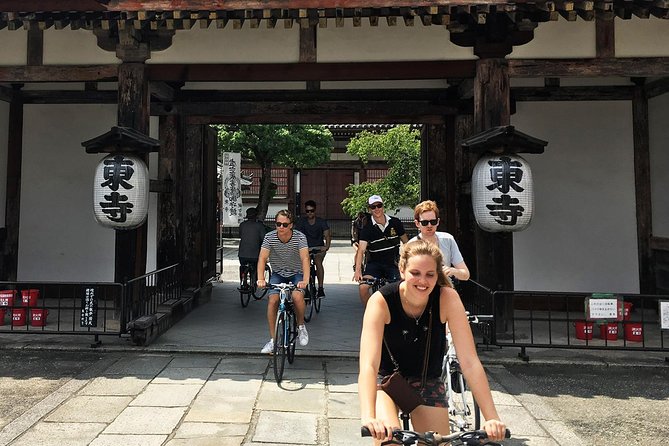
The route is set, but the personality of the morning depends heavily on the guide. Names connected with this tour include Jay, Indra, Juan, Sam, Kevin, Jaime, Julian, Shaun, Carl, Paul, Quin, and Thierry.
The strongest guide qualities are clear instructions, good pacing, and the ability to explain culture without turning every stop into a lecture. Jay has been praised for humor and insight, while Indra has been noted for safety and storytelling. Juan has even made an extra stop at the original Nintendo card company after learning that a young rider liked Nintendo.
That kind of flexibility is valuable, though it cannot be guaranteed on every departure. One guide helped with a restaurant reservation, another offered lunch suggestions, and a guide who was an ordained Shinto priest gave especially personal insight into religion and local customs. These touches can turn a standard sightseeing route into a more memorable morning.
There is a small tradeoff. A friendly guide may spend time chatting or answering questions, and one participant felt that this reduced the number of places visited. The company acknowledged that tangential questions can affect the schedule. If you want a tightly timed checklist, say so politely at the start and keep an eye on the clock.
Bikes, pace, and safety on Kyoto’s streets
The tour provides a high-quality Cannondale bike, helmet, bottled water, and bicycle use. You do not need to arrange a rental shop or carry a helmet across Kyoto, which removes a fair amount of morning fuss.
You must be at least 13 and comfortable riding a bike. The tour is not designed for someone learning to cycle in city conditions. Guides give instructions about traffic and how to interact with pedestrians, an important point in a city with narrow lanes and mixed road use.
The ride has been described as relaxed and manageable, with enough exercise to feel active but not like a hard workout. An e-bike upgrade was used by at least one rider and made the route easier, but the supplied information does not establish that an upgrade is always available or included. Ask Cycle Kyoto directly if you need that option.
Dress for the forecast. Kyoto can be hot, rainy, or chilly, and the guide’s response to weather may vary depending on conditions. The activity requires good weather, so a cancellation caused by poor weather brings an alternative date or a full refund.
Is $79.59 a fair price?
At $79.59 per person, this is not the cheapest way to see Kyoto. You are paying for more than a bicycle rental, though. The price includes the bike, helmet, water, route planning, a guide, and a small group capped at eight people.
The value is strongest if you are new to Kyoto and want a useful orientation early in your stay. In one morning, you connect several districts and landmarks that would take more planning by bus and more energy on foot. The guide’s local explanations and backstreet route are the parts you cannot easily reproduce with a rental bike and a phone map.
The value is weaker if you already know southern Kyoto, prefer long temple visits, or want complete control over your photography stops. The scheduled time at Tofukuji is very short, and Gion may feel quick for anyone who likes to linger.
I would compare the price with the cost of renting a bike, helmet, and water separately, then add the time you would spend planning a safe route. For a first visit, that calculation makes the tour reasonable. For experienced cyclists who enjoy independent exploring, the guided element may be less necessary.
Who should book this ride?
I would recommend it to first-time Kyoto visitors, active couples, families with older children, and anyone who wants a broad introduction without spending the day on foot. It also suits people who enjoy history and cultural explanation but prefer conversation and movement to a formal indoor tour.
Families should note the minimum age of 13. Everyone should be comfortable riding, following directions, and sharing roads and lanes with pedestrians. The small group makes the experience more approachable for families, but the tour is still a bicycle outing, not a passive sightseeing bus.
I would be more cautious about recommending it to serious photographers, visitors with limited cycling confidence, or anyone who wants extended time inside each temple and shrine. You will see many places, but you will sample them rather than explore them fully.
Free cancellation is available up to 24 hours before the 9:00 am start for a full refund. Changes or cancellations inside that window are not accepted for a refund. If the minimum number of participants is not reached, the provider offers another date or experience, or a full refund.
Should you book South Kyoto in a Nutshell?
Book this tour if you want to get your bearings in Kyoto quickly, enjoy riding, and value a guide who can connect major sights with quieter streets. The mix of Fushimi Inari, Gion, Tofukuji, the canal, and Nishi Honganji gives you a useful cross-section of southern Kyoto in half a day.
Skip it if your priority is slow temple visits or independent wandering. The schedule keeps moving, and Gion and Tofukuji deserve more time than the tour can provide. For most visitors who want an active, friendly introduction, though, the $79.59 price buys a well-organized morning and a view of Kyoto that buses and maps often miss.
FAQ
Where does the bike tour start?
It starts at Cycle Kyoto, 7 Higashikujō Nishisannōchō, Minami Ward, Kyoto, 601-8003, Japan.
What time does the tour begin?
The start time is 9:00 am.
Where does the tour finish?
The activity ends back at the Cycle Kyoto meeting point.
How long does the tour last?
The ride lasts approximately three to four hours.
What equipment is included?
A Cannondale bicycle, helmet, bottled water, and use of the bicycle are included.
What sights does the tour visit?
The route includes Nishi Honganji, Takase Canal, Gion, Tofukuji Temple, and Fushimi Inari Taisha Shrine, along with backstreets and additional scenic stops.
Are children allowed to join?
Riders must be at least 13 years old and comfortable riding a bicycle.
What happens if the weather is poor?
The experience requires good weather. If Cycle Kyoto cancels because of poor weather, you can choose another date or receive a full refund.
Recently added around Kyoto
- Kyoto Kimono Rental CHAMATSU|Kimono/Yukata Rental FamilyPlan★ 5.0 · 3 reviews
- Higashiyama | Kyoto: Sakura Season Private Rickshaw Tour★ 5.0 · 3 reviews
- Kyoto: Half-Day Private Guided Tour to the Old Town of Gion★ 4.4 · 3 reviews
- Nara Private Customizable Half Day Tour★ 5.0 · 3 reviews
- Kansai Region Hiking Adventure in Nara Kobe Kyoto and More★ 5.0 · 3 reviews
- Full Day Nara Deer, Temple, Shrine, Activities & Tea Ceremony★ 5.0 · 3 reviews
- Nara: Essential Private Tour with Deer Park and Temples★ 5.0 · 3 reviews
- Hiking Tour for Sacred Sites in Kyoto with a Guide★ 5.0 · 3 reviews
Cycling Tours, compared.
Arashiyama Bamboo Forest & Hidden Gems Bike Tour (Early Bird)
Read our review →
5 Top Highlights of Kyoto Full Day Bike Tour (E-bike option)
Read our review →
Full Day Biking Tour Exploring the Best of Kyoto
Read our review →
Afternoon Kyoto Bike Tour: Bamboo Forest, Monkeys & Hidden Spots
Read our review →
Browse the lists this tour appears in