
REVIEW · WALKING TOURS
Kyoto Run & Walk Tour with Locals
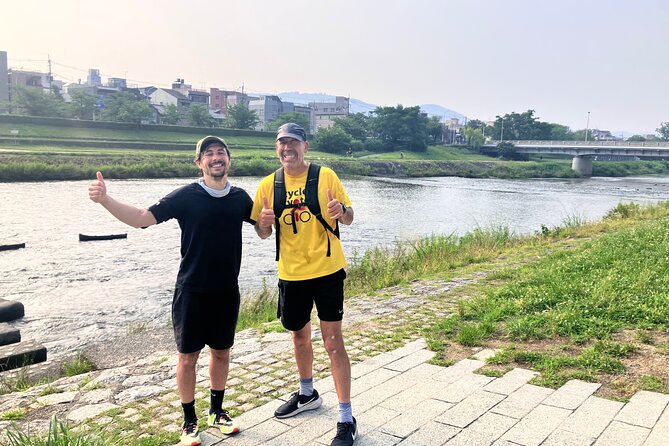
Kyoto is at its best before the tour buses arrive, and this early-morning run and walk makes good use of those quiet hours. You move at a gentle pace through temples, riverside paths, shrines, and ordinary streets, with Soyo, a local who has lived in Kyoto for more than 30 years, explaining what you see.
I like the small maximum of four people, which should make it easier to ask questions and adjust the pace. I also like the mix of exercise and sightseeing: you get a workout, fresh air, and a look at parts of Kyoto that are easy to miss from a taxi or crowded tour route.
The main consideration is fitness and timing. You need a moderate level of fitness, and the start is early. The listed duration is described as both two hours and two and a half hours, so confirm the exact timing when you book. In light rain, the run becomes a walking tour.
In This Review
- Key points to know before booking
- Why an early Kyoto run works so well
- Setting out from Kyoto Tower
- Higashi Hongan-ji: a strong first landmark
- Takasegawa and the quieter side of the city
- Kamogawa River: open air and room to move
- Heian Shrine and the scale of Kyoto’s sacred sites
- Yasaka Shrine and Hanamikoji Street
- A pace made for beginners, not racers
- Rain plans and seasonal timing
- Is $19.51 a good value?
- Who should book this Kyoto tour?
- Should you book it?
- FAQ
- Where does the Kyoto run and walk tour start?
- Where does the tour finish?
- How fast does the group run?
- Is the tour suitable for first-time runners?
- What happens if it rains?
- What is included in the price?
Key points to know before booking
- A quiet start in Kyoto: Begin near Kyoto Tower before the city gets busy.
- A relaxed running pace: The pace is listed around 7 to 9 minutes per kilometer, with walking and sightseeing breaks.
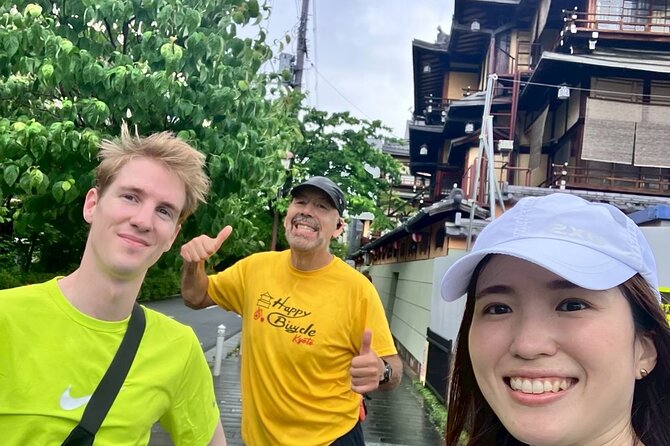
- Soyo leads the way: Your English-speaking guide has lived in Kyoto for more than 30 years.
- Six varied stops: Visit Higashi Hongan-ji, Takasegawa, the Kamogawa River, Heian Shrine, Yasaka Shrine, and Hanamikoji Street.
- A very small group: The tour accepts no more than four people.
- Low cost, useful format: At $19.51 per person, the tour offers exercise and local orientation for less than many standard sightseeing activities.
Why an early Kyoto run works so well
Kyoto can feel crowded by midmorning. Famous temples fill with tour groups, narrow lanes become harder to cross, and even a peaceful riverside walk can lose its calm. Starting early gives you a different city, one with cooler air, quieter streets, and more room to notice daily life.
You are not simply running past landmarks. The route pauses at several places for explanations, so the workout has a sightseeing rhythm. You run or walk, stop to listen, then continue. That suits people who want movement but do not want a strict athletic session.
I especially like the way the route connects major sights with less showy places. Higashi Hongan-ji and Heian Shrine are important stops, but Takasegawa, the Kamogawa River, and local streets add a more ordinary side of Kyoto. The result should feel less like checking off monuments and more like getting your bearings on foot.
The tour is guided in English by Soyo, whose more than three decades in Kyoto are useful here. That length of local experience matters most between the headline sights, where a guide can give the route a sense of place instead of offering only a list of names.
More walking tours in Kyoto:
- Kyoto Geisha Walking Tour: Gion District & Hidden Gems
★ 4.7 · 3,273 reviews - Kyoto: Gion Magical Night Walking Tour with Geisha Trivia
★ 4.9 · 2,393 reviews - Kyoto: Gion Geisha District Walking Tour – Stories of Geisha
★ 4.7 · 2,187 reviews
Setting out from Kyoto Tower
The meeting point is Starbucks Coffee at Kyoto Tower Sando, inside Kyoto Tower near Kyoto Station. This is a practical starting place because Kyoto Station is served by public transportation and is easy to find on a first morning in the city.
You return to the same meeting point at the end. That makes the tour simple to fit into a Kyoto itinerary, especially if you plan to spend the rest of the day near the station, ride to another part of the city, or return to your hotel for breakfast.
The early start is both the tour’s strength and its main demand. You will need to organize your clothes, shoes, and water the night before. Bottled water is included, but running wear, running shoes, and locker use are not. Do not treat this as a sightseeing walk where casual footwear will always be enough. The route involves running, even at a slow pace.
The pace is described in two slightly different ways: around 7 to 8 minutes per kilometer in one description and 8 to 9 minutes per kilometer in another. Either way, this is intended to be gentle rather than fast. The guide also welcomes first-time runners and includes walking, stops, and explanations.
Higashi Hongan-ji: a strong first landmark
Higashi Hongan-ji Temple is the first listed stop. It gives the morning a clear cultural beginning, and its location near the station makes it a sensible place to start exploring Kyoto.
You can expect a pause here rather than a quick pass-by. The format allows Soyo to explain the site before the group moves on. That break is helpful if you are still warming up or are not used to running while sightseeing.
A temple visit at the start also sets the tone for the whole route. This is not a race with a few photo stops added on. The historical places are part of the purpose. You should be ready to slow down, listen, and take in the setting before moving again.
Takasegawa and the quieter side of the city
From the temple area, the route includes Takasegawa. This canal is one of the more appealing parts of the experience because it shifts the focus from grand religious sites to Kyoto’s waterways and local streets.
A canal-side section is also a natural fit for a relaxed run. You get a change from busy roads and a chance to move at an easy rhythm. The exact surface and running conditions are not specified, so you should not assume the entire route is a dedicated jogging path. Stay ready to walk when the guide asks you to.
Takasegawa helps show why this tour is different from a standard temple circuit. Kyoto’s character is not found only inside major gates. It also appears in the small water routes, quiet corners, and neighborhoods that connect the better-known sights.
A completely different side of Kyoto:
- PERFECT KYOTO 1-Day Bus Tour
★ 5.0 · 13,518 reviews - Kyoto: Fushimi Inari, Kinkakuji, Bamboo Grove 1 Day Bus Tour
★ 4.8 · 4,316 reviews - Kyoto: Tea Ceremony in a Traditional Tea House in Kiyomizu
★ 4.9 · 3,519 reviews - Kyoto: Tea Ceremony Ju-An at Jotokuji Temple
★ 4.9 · 3,207 reviews
Kamogawa River: open air and room to move
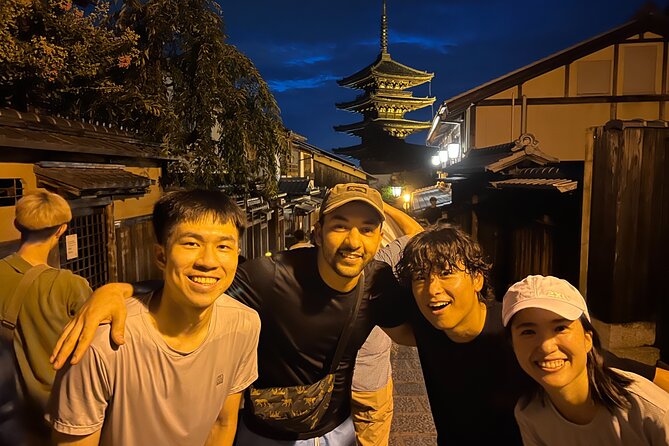
The Kamogawa River brings a wider, more open section to the route. After temple grounds and narrow city streets, the river gives you space and a change of view.
This is likely one of the most comfortable portions for a beginner runner. The tour’s slow pace makes more sense beside the river, where you can settle into movement without feeling pushed. It is also a good place for a walking break and a short explanation from Soyo.
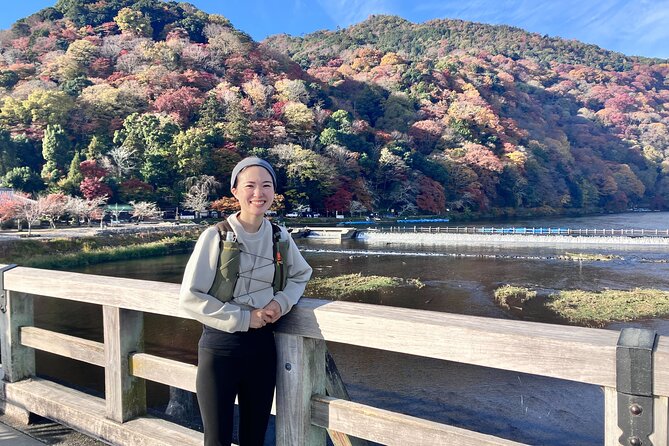
Seasonal changes are part of the appeal. Depending on the time of year, you might see cherry blossoms or autumn foliage. Those details are not guaranteed, but they add a strong reason to consider the tour during spring or fall.
Keep your expectations practical. This is not advertised as a dedicated nature outing, and the route also includes urban sights. The river section is valuable because it adds air, space, and a local daily-life setting to a route otherwise centered on temples and shrines.
Heian Shrine and the scale of Kyoto’s sacred sites
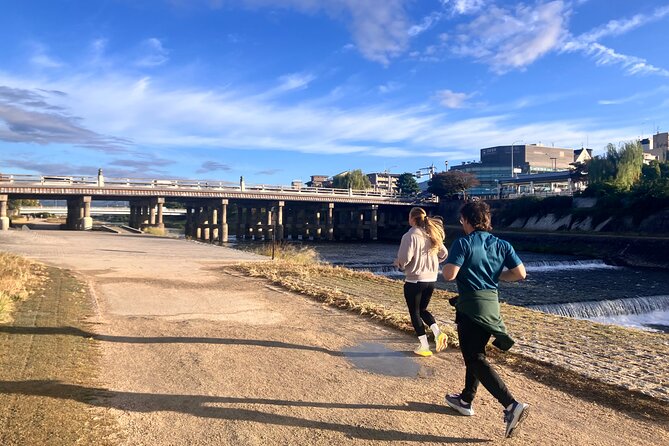
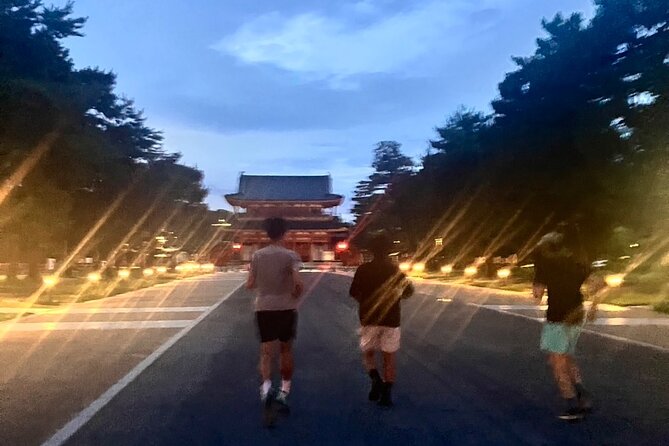
Heian Shrine is another major stop. Its inclusion gives you one of Kyoto’s most recognizable religious landmarks after the quieter canal and river sections.
The contrast matters. At Takasegawa and the Kamogawa River, the focus is on movement and the city’s everyday rhythm. At Heian Shrine, the scale and formal design create a more ceremonial pause. Soyo can help connect the place to Kyoto’s wider story, though the exact amount of explanation will depend on the group and morning schedule.
For runners, this is also a reminder that the tour is not built around uninterrupted mileage. You will stop at sights, hear explanations, and take breaks. If you want a continuous training run, this is the wrong format. If you want a gentle workout with cultural stops, the interruptions are part of the value.
Yasaka Shrine and Hanamikoji Street
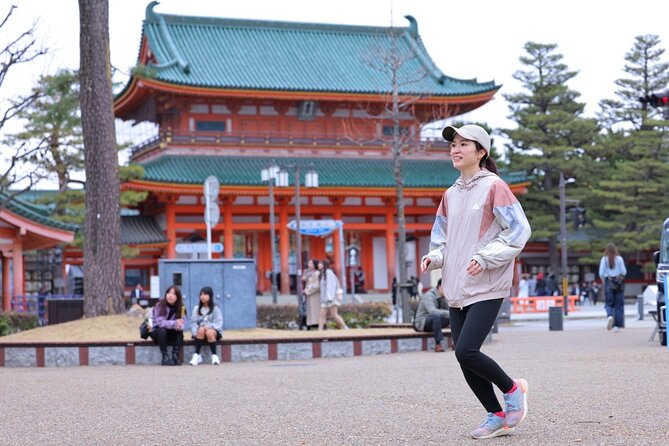
The route continues to Yasaka Shrine and Hanamikoji Street, placing two well-known Gion-area sights near the end of the morning.
Yasaka Shrine adds another important religious site, while Hanamikoji Street gives you a look at one of Kyoto’s most recognizable traditional streetscapes. The pairing works well because it combines a shrine visit with an urban walking section.
This part of the route may feel more sightseeing-focused than running-focused. That is not a flaw, but you should understand the balance before booking. The experience is best described as a run and walk tour, not a two-hour jog.
Hanamikoji Street can also be a useful orientation point for later exploration. You may want to return to this area on your own, but this early visit gives you a first look before the day becomes busier. The tour ends back at Kyoto Tower, so the final route is not a one-way drop-off in Gion.
A pace made for beginners, not racers
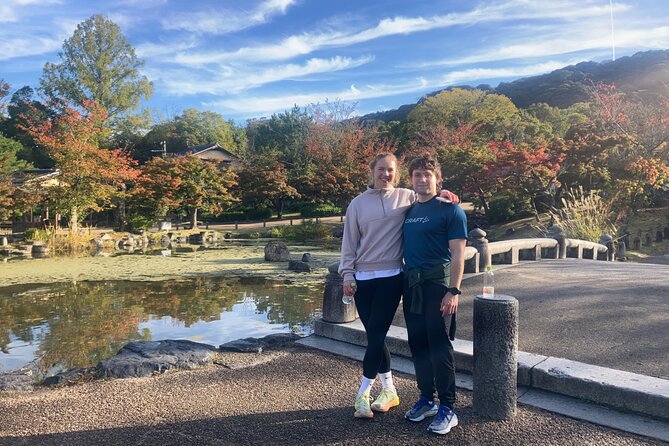
The stated running speed ranges from 7 to 9 minutes per kilometer. That is deliberately easy, and the tour welcomes all running levels, including people running for the first time.
Soyo’s format includes stops at the sights, so you should not measure the experience by total distance alone. The two-hour or two-and-a-half-hour schedule includes running, walking, explanations, and pauses. The listing uses both duration figures, so ask for the precise expected length before the morning begins.
The tour still requires moderate physical fitness. Beginners are welcome, but that does not mean the outing is effortless. You should be comfortable being on your feet for the full session and able to jog at the stated pace.
I would recommend thinking of it as active sightseeing. You get exercise, but you also need to be willing to pause often. That makes the tour a good choice after a long flight or before a full day of sightseeing, provided you can handle the early start.
Rain plans and seasonal timing
The tour operates in light rain, but it becomes a walking tour in those conditions. Bring your own rain gear. Bottled water is supplied, but rain protection is not.
Heavy rain, strong wind, snow, heat waves, typhoons, and similar conditions can cause cancellation. A decision is made by noon the day before in those cases, and you will be notified if the activity is called off. If bad weather cancels the outing, you can receive a different date or a full refund.
Spring and autumn may offer cherry blossoms or fall foliage, but the tour does not promise a particular seasonal display. Summer heat may be a concern because the outing is outdoors and begins with physical activity. The early timing helps, but you should still consider your own comfort.
Is $19.51 a good value?
At $19.51 per person, this is inexpensive for a small-group guided experience in Kyoto. The price includes bottled water and a local English-speaking guide, with a maximum of four people.
The real value is not the number of sights alone. It comes from combining local orientation, light exercise, and a quiet start to the day. A standard walking tour may cover more historical detail, while a running tour gives you a different way to move through the city and can help you understand distances between areas.
The price does not include shoes, running clothes, or a locker. Those costs may matter if you are packing light or need somewhere to store a bag. The tour starts and ends at the same place, which may reduce the need for extra transport after the activity.
With only a handful of bookings possible, the price is particularly fair for solo visitors or couples who want a more personal outing. The tradeoff is that confirmation is subject to availability and may arrive within 48 hours of booking, so do not leave it until the last minute if your Kyoto schedule is tight.
Who should book this Kyoto tour?
I would choose this tour if you want to see Kyoto before the crowds, enjoy a gentle run, and hear local context along the way. It suits first-time runners, active sightseers, and people who prefer a small group to a large guided walk.
It also works well for someone who has already seen Kyoto’s main sights and wants a different morning routine. The route includes famous places, but the canal, river, and neighborhood sections keep it from being only a greatest-hits tour.
I would skip it if you want a fast training run, a long temple visit, or a completely flexible start time. You should also think twice if you dislike running in city settings or do not have moderate physical fitness.
The two-hour and two-and-a-half-hour descriptions should be clarified before you commit. That small inconsistency is not a major problem, but exact timing matters when you have a train reservation, breakfast booking, or another early activity.
Should you book it?
Book the Kyoto Run & Walk Tour with Locals if you want a low-cost, active introduction to Kyoto and like the idea of seeing the city before it fills up. Soyo’s long connection to the city, the very small group, and the mix of major sights with quieter places make this more useful than a simple morning jog.
Skip it if your priority is speed, uninterrupted running, or a late start. For everyone else, bring proper shoes, prepare for a gentle but real workout, and confirm the exact duration when booking.
FAQ
Where does the Kyoto run and walk tour start?
It starts at Starbucks Coffee at Kyoto Tower Sando, inside Kyoto Tower near Kyoto Station, at 7211 Higashishiokoji-cho, Shimogyo Ward, Kyoto 600-8216.
Where does the tour finish?
The activity ends back at the meeting point near Kyoto Tower.
How fast does the group run?
The running pace is described as approximately 7 to 9 minutes per kilometer. The group also walks and stops at sights for explanations.
Is the tour suitable for first-time runners?
Yes. All running levels are welcome, including first-time runners, although participants should have a moderate level of physical fitness.
What happens if it rains?
The tour runs in light rain as a walking tour. You need to bring your own rain gear. In severe weather or certain social conditions, the tour may be canceled, with notice provided when possible.
What is included in the price?
Bottled water is included. Running clothes, running shoes, and locker use are not included.
Recently added around Kyoto
- Higashiyama | Kyoto: Sakura Season Private Rickshaw Tour★ 5.0 · 3 reviews
- Kyoto Kimono Rental CHAMATSU|Kimono/Yukata Rental FamilyPlan★ 5.0 · 3 reviews
- Kyoto: Half-Day Private Guided Tour to the Old Town of Gion★ 4.4 · 3 reviews
- Nara Private Customizable Half Day Tour★ 5.0 · 3 reviews
- Kansai Region Hiking Adventure in Nara Kobe Kyoto and More★ 5.0 · 3 reviews
- Full Day Nara Deer, Temple, Shrine, Activities & Tea Ceremony★ 5.0 · 3 reviews
- Nara: Essential Private Tour with Deer Park and Temples★ 5.0 · 3 reviews
- Hiking Tour for Sacred Sites in Kyoto with a Guide★ 5.0 · 3 reviews
Walking Tours, compared.
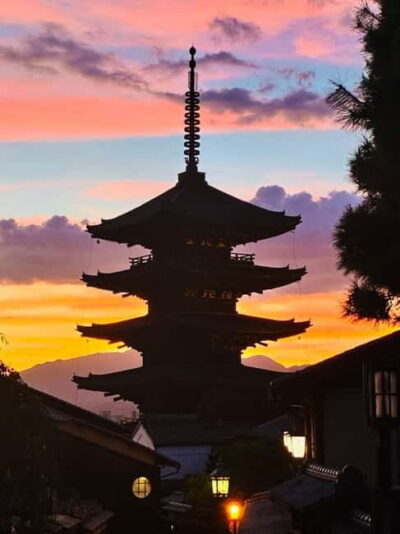
Kyoto Geisha Walking Tour: Gion District & Hidden Gems
Read our review →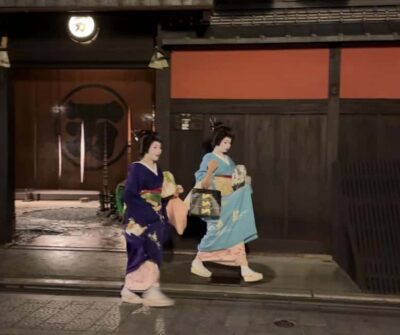
Gion Magical Night Walking Tour with Geisha Trivia
Read our review →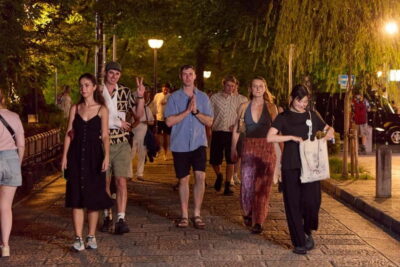
Gion Geisha District Walking Tour – Stories of Geisha
Read our review →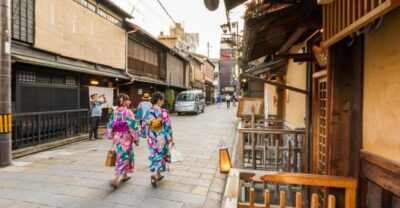
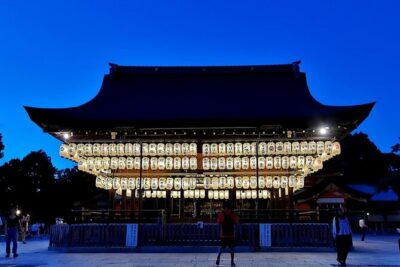
Kyoto Gion Geisha District Walking Tour – The Stories of Geisha
Read our review →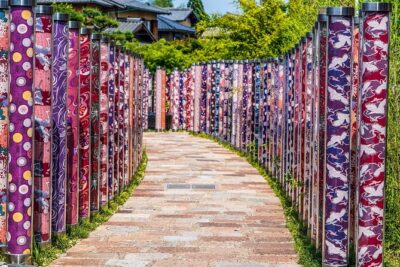
Kyoto Arashiyama Walking Tour: Bamboo, Monkeys, Gardens & Secrets
Read our review →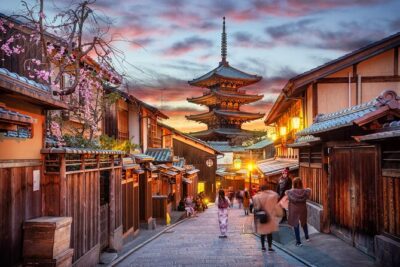
Kyoto Gion: 2-Hour Geisha Culture & History Walking Tour
Read our review →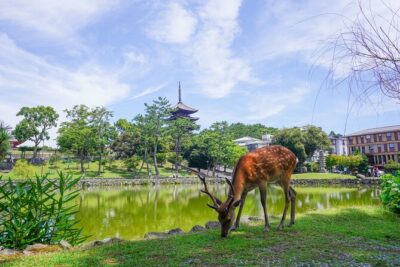
Nara Half Day Trip Walking Tour (Private Option Available)
Read our review →Browse the lists this tour appears in