
REVIEW · GION GEISHA DISTRICT TOURS
Kyoto: Maiko Happy Hour at a Historic Machiya
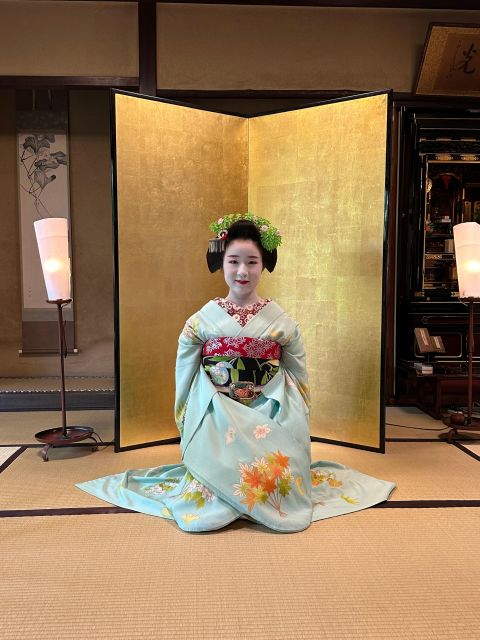
Kyoto’s Tondaya machiya gives this experience a memorable setting: you spend time inside a 140-year-old wooden townhouse filled with traditional objects and stories. I especially like the close look at a maiko’s tea ceremony and the chance to see refined buyō dance in the sort of room where Kyoto’s old entertainment culture still feels at home.
I also like the friendly part of the visit, when you learn simple party games and can ask questions before taking photos with the maiko. The main caution is value: at $709 per person, this is a costly two-hour experience, and language support may not always be smooth.
In This Review
- Key points to know before booking
- Entering Tondaya, a 140-year-old Kyoto townhouse
- The tea ceremony with Uji matcha
- Buyō dance in an old Kyoto setting
- Party games and a chance to ask questions
- Commemorative photos with the maiko
- What the $709 price really buys you
- How long the visit feels
- Who will enjoy this most
- Practical details that can make or break the visit
- Should you book the Maiko Happy Hour?
- FAQ
- How long does the Maiko Happy Hour last?
- Where does the experience meet?
- What is included in the price?
- Are alcoholic drinks included?
- What languages are available?
- Do I need to bring anything?
- Can I choose a maiko instead of a geiko?
- Is the activity refundable?
Key points to know before booking
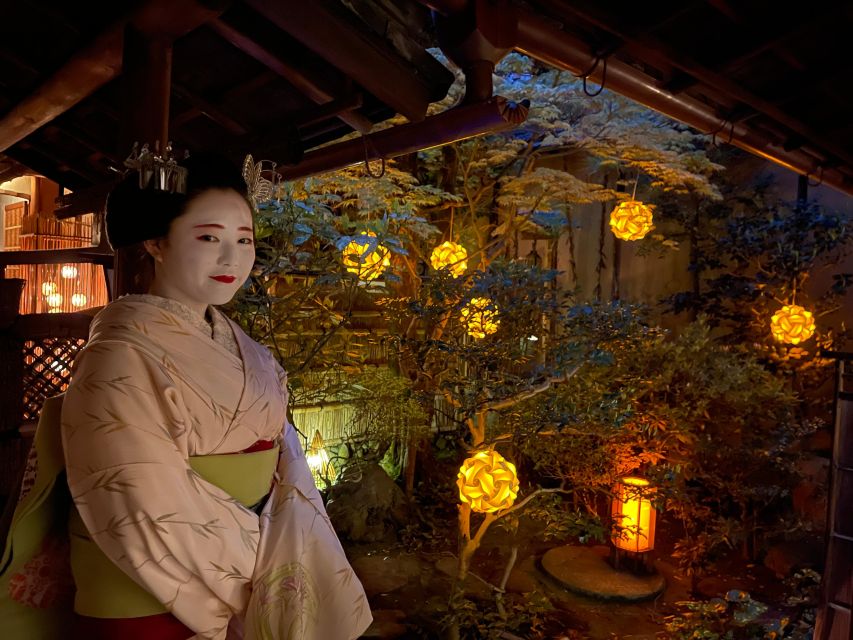
- A 140-year-old machiya: Tour Tondaya, a culturally significant Kyoto townhouse in the Nishijin area.
- Tea and sweets: A maiko is scheduled to serve Uji matcha with Japanese sweets during a traditional tea ceremony.
- Classical dance: Watch a buyō performance accompanied by traditional Japanese music.
- A rare personal meeting: Ask questions, play maiko party games, and take commemorative photos.
- Language support varies: Japanese, English, and Chinese assistance is available, but a translation device or interpreter may be needed.
- A high price and firm cancellation rule: The listed cost is $709 per person, with reservations required for at least two people.
Entering Tondaya, a 140-year-old Kyoto townhouse
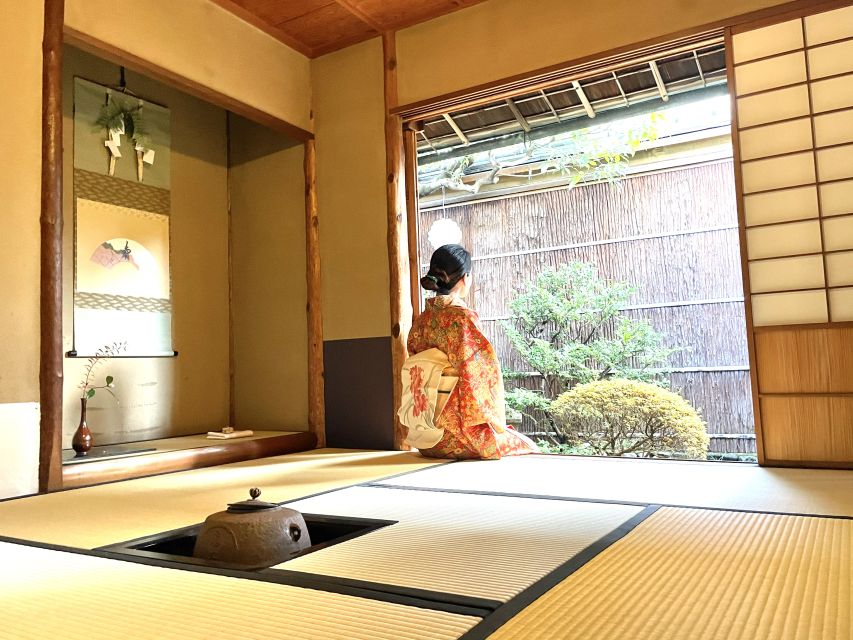
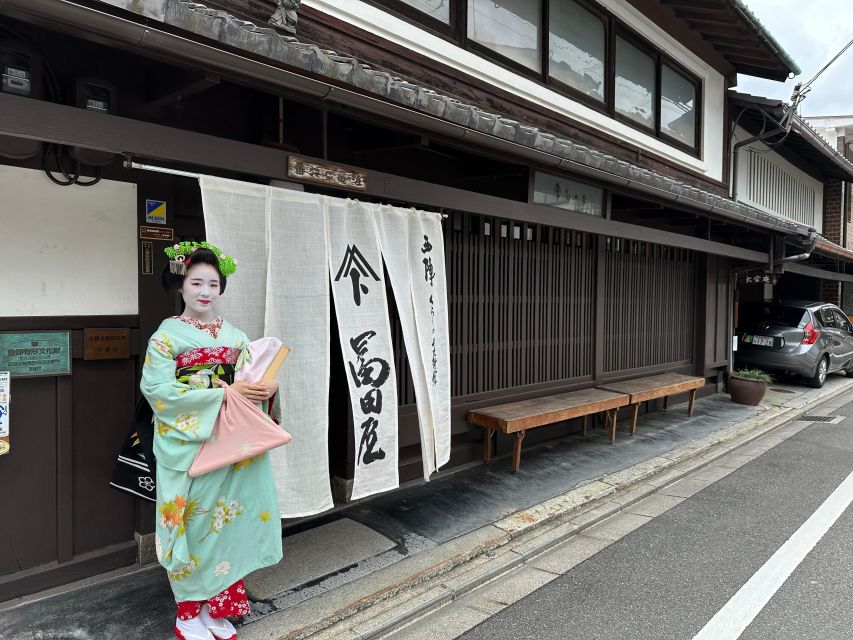
The experience begins at Tondaya-Nishijin Japanese Cultural Experience Museum. This is not a modern theater dressed up to look old. Tondaya is a traditional machiya, a narrow wooden Kyoto townhouse that has been preserved as a culturally significant landmark by the Kyoto City Government.
Your first portion is a guided walk through the house. Staff introduce the building, its rooms, objects, and connection to Kyoto’s traditional arts. You might find this part especially rewarding if you enjoy architecture, craft, and the small details of old homes: wooden surfaces, carefully arranged interiors, and the way rooms were designed for both daily life and formal occasions.
The house gives the maiko program a better sense of place. Instead of watching a stage performance in a large hall, you sit in a historic setting linked to the kind of refined entertainment associated with Kyoto’s late Edo period. That setting is a major part of what you are paying for.
Still, keep your expectations in check. The supplied information does not specify the exact rooms visited, the size of the group, or how long the house tour lasts. If your main interest is architecture, you may wish there were more time devoted to Tondaya itself. The full activity lasts two hours, and the maiko program takes up much of that window.
More evenings in Gion:
- Kyoto Geisha Walking Tour: Gion District & Hidden Gems
★ 4.7 · 3,273 reviews - Kyoto: Gion Magical Night Walking Tour with Geisha Trivia
★ 4.9 · 2,393 reviews - Kyoto: Gion Geisha District Walking Tour – Stories of Geisha
★ 4.7 · 2,187 reviews
The tea ceremony with Uji matcha
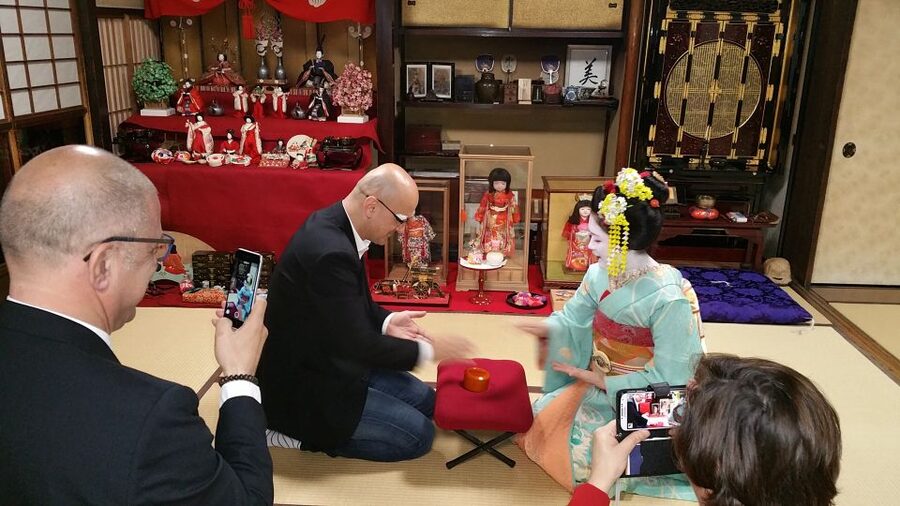
After the house tour, you meet the maiko and watch a traditional tea ceremony. She serves Uji matcha and Japanese sweets, giving you a chance to see the calm, precise movements that make Japanese tea preparation more than simply making a drink.
This is a useful cultural introduction because tea ceremony is built around manners, timing, objects, and attention to the guest. You are not just handed a cup of tea. You get a short look at a formal art that places importance on the host’s movements and the setting around you.
The experience includes tea ceremony, matcha, and sweets in its description, but one booking account reported receiving no tea or food and spending barely an hour at the event. I would treat this as an important practical warning. The advertised program includes the ceremony, yet delivery may vary, so confirm the day’s schedule with Tondaya if the tea service is central to your decision.
You should also bring socks. Tondaya specifically asks visitors to wear socks rather than stockings, a small rule that matters in a traditional Japanese house where you may remove your shoes. Comfortable clothing is sensible, but no special dress code is listed.
Buyō dance in an old Kyoto setting
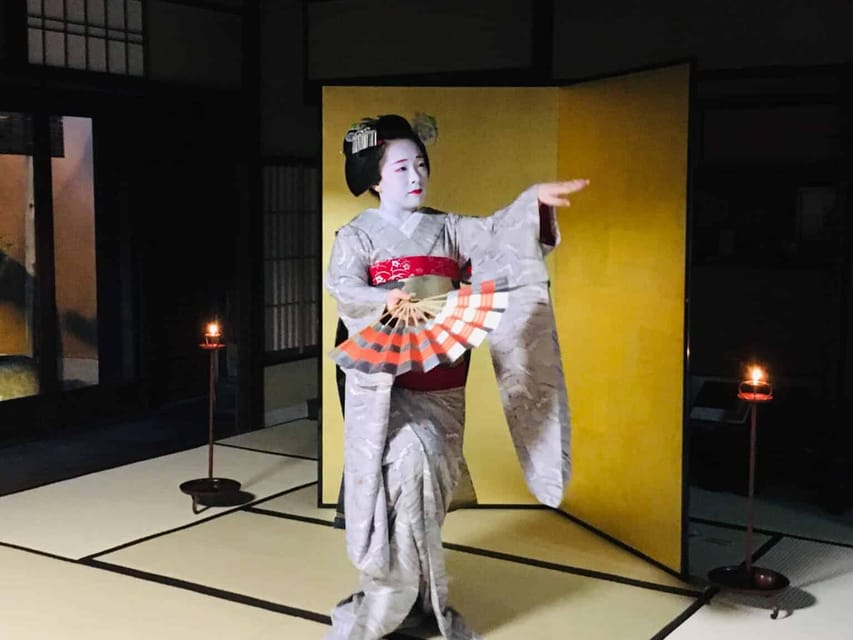
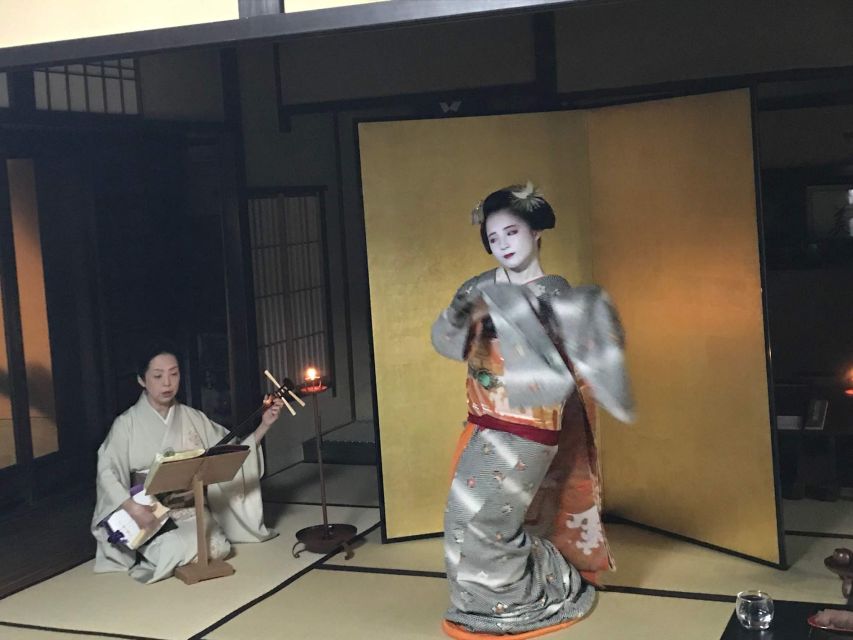
The maiko then performs buyō, a formal style of Japanese dance accompanied by classical music. This is a quiet, controlled art rather than a fast entertainment show. Hand gestures, posture, fan work, and small movements carry much of the meaning.
I like that the performance is presented as part of a cultural encounter, not as a stand-alone dance number. You first see the townhouse, then the tea ceremony, then the dance. Each part helps explain the setting and the role of traditional arts in Kyoto.
You should not expect a long stage production. The total appointment is only two hours, and that time is shared among the building tour, tea, dance, games, questions, and photos. The value comes from the range of activities and the access to the performer, not from a lengthy concert.
The program may feature a geiko instead of a maiko if scheduling requires it. You cannot choose between the two. Both are trained performers within Kyoto’s traditional entertainment culture, but if meeting a maiko specifically is essential to you, understand that the substitution is possible.
Party games and a chance to ask questions
After the dance, the mood becomes more relaxed. The maiko explains traditional party games and plays them with you. This is likely the most social portion of the visit, and it offers a break from simply sitting and watching.
The games also give you a practical way to ask about maiko life and customs. You can ask questions during this part, although the quality of the exchange depends on the interpreter or translation system arranged for your appointment.
Language support is offered in Japanese, English, and Chinese. Some staff members do not speak English, and Tondaya may arrange an interpreter or use a translation device. That is worth taking seriously. One booking account described the maiko as enchanting but found the English translation too weak to follow what she was saying. Another specifically praised the geiko and English translator.
In other words, this experience can be excellent when communication works well, but language support is not guaranteed to feel equally polished every day. If you want detailed explanations about dance, tea, or maiko customs, ask in advance how English support will be handled.
More history walks in Kyoto:
- World Heritage Kyoto & Nara Uji Authentic Matcha Experience
★ 5.0 · 1,573 reviews - Kyoto Gion: 2-Hour Geisha Culture & History Walking Tour
★ 5.0 · 1,186 reviews - Kyoto Gion Historical Walking Tour
★ 5.0 · 188 reviews - Historical Kyoto E-Bike Tour
★ 5.0 · 181 reviews
Commemorative photos with the maiko
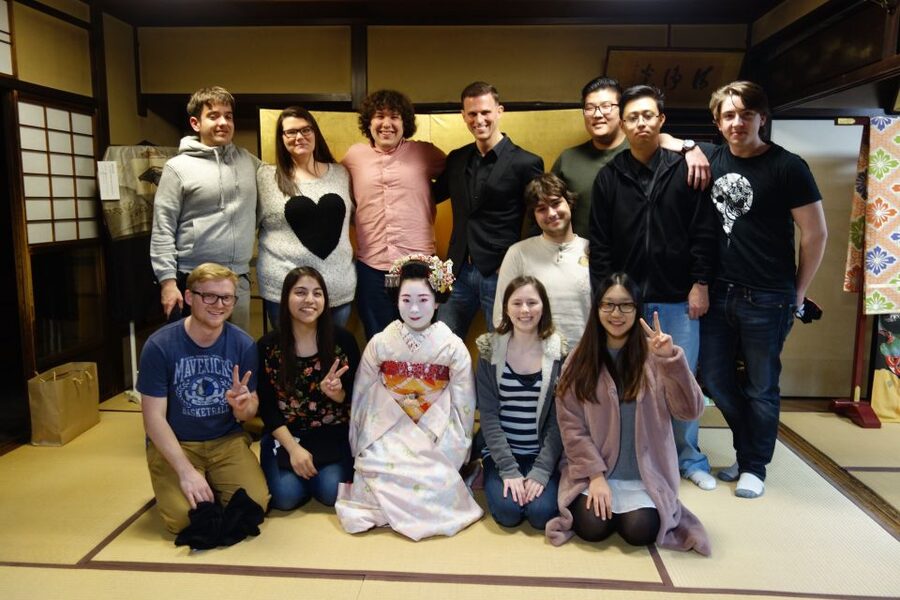
The appointment ends with time for photographs with the maiko. This is one of the rarest parts of the program. Maiko do not normally take casual photographs with the public, so a planned cultural setting like this gives you access that you would not usually have during a Kyoto visit.
You can take as many photos as the schedule allows, according to the supplied information. Bring a phone or camera with enough battery and storage. The information does not promise professional photography, a private photographer, or printed images, so plan to take your own pictures.
Photography also changes the tone of the experience. The earlier dance and tea ceremony are formal and observant. The final photos let you meet the performer more directly and preserve the memory of the townhouse, costume, and occasion.
Please remember that the maiko is a working artist, not a character provided for unrestricted personal access. Follow the staff’s instructions, handle the moment respectfully, and keep the focus on the cultural exchange.
What the $709 price really buys you
The listed price is $709 per person, making this one of Kyoto’s most expensive short cultural activities. Reservations must be made for at least two participants, so the minimum listed cost is $1,418 before any extra spending.
That price is difficult to justify if you measure value by time alone. Two hours is brief, and one booking account described the actual program as lasting barely an hour. Alcoholic drinks are not included, either, despite the happy hour name.
The price makes more sense if you place high value on three things:
- Access to a preserved, culturally significant machiya
- A scheduled meeting with a maiko or possibly a geiko
- A small-scale encounter that combines tea, dance, games, questions, and photos
You are paying for rarity and setting as much as for the individual activities. A regular dance performance may cost less. A tea ceremony without a maiko will usually cost less. A house tour will usually cost less. This program joins all three elements in one appointment.
Even so, I would not book it casually. The price is far above what many visitors expect for a two-hour activity, and the mixed accounts about timing, tea service, and translation make it important to know exactly what you want. If the photo opportunity and personal access are your top priorities, the cost may feel worthwhile. If you mainly want tea or dance, cheaper options may serve you better.
How long the visit feels
On paper, the appointment lasts two hours. That sounds generous for a compact cultural program, but the time is divided among several parts:
- Guided tour of Tondaya
- Tea ceremony with matcha and sweets
- Maiko dance performance
- Traditional party games
- Questions about maiko culture
- Commemorative photographs
The schedule may feel full rather than slow. You will not have an entire afternoon to study the building or speak at length with the performer.
Arrive on time. A late arrival could affect a tightly arranged program, especially because the maiko must be reserved ahead of time. Tondaya requires at least ten days to arrange a maiko, which explains the strict cancellation policy. The activity is non-refundable unless cancellation is made at least ten days before the scheduled appointment.
The house is closed from December 31 through January 1. Maiko appointments are not available from December 29 through January 10. These dates matter if you are planning a New Year visit to Kyoto.
Who will enjoy this most
I would recommend this for someone who wants a rare, structured introduction to Kyoto’s traditional arts and is comfortable paying a premium for access. It suits couples, small groups, and visitors who care more about personal contact and cultural context than about covering many sights in one day.
It is also a good fit for photographers and anyone who has wanted a respectful photo with a maiko but knows that ordinary street encounters do not offer that opportunity. The historic townhouse adds atmosphere that a hotel meeting room could not provide.
You may want to skip it if your budget is tight, if you dislike formal performances, or if you need fully reliable English interpretation. The experience is not suitable for wheelchair users, and no accessibility details beyond that are provided.
Families should consider the quiet, formal nature of the tea and dance portions. The party games may be more engaging for some children, but the program is built around traditional arts rather than a general sightseeing show.
Practical details that can make or break the visit
Wear socks, not stockings. This is the clearest clothing instruction and is easy to overlook.
The meeting point is Tondaya-Nishijin Japanese Cultural Experience Museum. Starting times vary, so check availability when booking. Transportation instructions beyond the meeting point are not supplied, so allow enough time to reach the address without rushing.
English, Japanese, and Chinese support is offered, but staff language ability can vary. If you have detailed questions, write down the most important ones before arriving. A translation device may be used, and an interpreter may be arranged.
The provider is Tondaya, Co., Ltd. A specific guide or interpreter name is not supplied, and you cannot request a particular maiko or guarantee that a maiko rather than a geiko will appear.
Should you book the Maiko Happy Hour?
Book it if meeting a maiko in a historic machiya feels like a special reason to visit Kyoto, and if you are willing to pay for a rare, carefully arranged encounter. The tea ceremony, classical dance, games, questions, and photographs create a fuller experience than a short performance alone.
Skip it if you are judging value by minutes, food, or drink. The $709 price is steep, alcohol is extra, and the language and timing concerns mean the program may not feel equally satisfying for every booking.
Before committing, confirm the expected tea service, interpreter arrangements, exact start time, and whether the appointment will feature a maiko or geiko. If those details suit you, Tondaya offers a memorable window into Kyoto’s traditional entertainment culture, with the added pleasure of spending time in a genuine old townhouse rather than simply watching from a distance.
FAQ
How long does the Maiko Happy Hour last?
The scheduled duration is two hours. The activity includes the machiya tour, tea ceremony, dance, party games, questions, and photographs.
Where does the experience meet?
You meet at Tondaya-Nishijin Japanese Cultural Experience Museum.
What is included in the price?
The experience includes a guided machiya tour, a maiko dance performance, traditional party games, a tea ceremony, photography opportunities, and a lesson about Kyoto and maiko culture.
Are alcoholic drinks included?
No. Alcoholic drinks are not included.
What languages are available?
The listed languages are Japanese, English, and Chinese. An interpreter may be arranged, and a translation device may be used when needed.
Do I need to bring anything?
Bring socks. Tondaya asks you to wear socks and refrain from wearing stockings.
Can I choose a maiko instead of a geiko?
No. Depending on availability, a geiko may be arranged instead of a maiko, and preferences cannot be accepted.
Is the activity refundable?
The activity has a strict non-refundable policy unless cancellation is made at least ten days before the scheduled appointment. Reservations require a maiko to be arranged at least ten days ahead.
Recently added around Kyoto
- Higashiyama | Kyoto: Sakura Season Private Rickshaw Tour★ 5.0 · 3 reviews
- Kyoto Kimono Rental CHAMATSU|Kimono/Yukata Rental FamilyPlan★ 5.0 · 3 reviews
- Kyoto: Half-Day Private Guided Tour to the Old Town of Gion★ 4.4 · 3 reviews
- Nara Private Customizable Half Day Tour★ 5.0 · 3 reviews
- Full Day Nara Deer, Temple, Shrine, Activities & Tea Ceremony★ 5.0 · 3 reviews
- Nara: Essential Private Tour with Deer Park and Temples★ 5.0 · 3 reviews
- Kansai Region Hiking Adventure in Nara Kobe Kyoto and More★ 5.0 · 3 reviews
- Hiking Tour for Sacred Sites in Kyoto with a Guide★ 5.0 · 3 reviews
Gion Geisha District Tours, compared.

Kyoto Geisha Walking Tour: Gion District & Hidden Gems
Read our review →
Gion Magical Night Walking Tour with Geisha Trivia
Read our review →
Gion Geisha District Walking Tour – Stories of Geisha
Read our review →
Best of Kyoto: Gion, Geisha, Pagodas & Cobblestones
Read our review →

Kyoto Night Foodie Tour in Gion (9+ dishes + 6 Sake tastings)
Read our review →
Kyoto Gion Geisha District Walking Tour – The Stories of Geisha
Read our review →
Kyoto Gion: 2-Hour Geisha Culture & History Walking Tour
Read our review →Browse the lists this tour appears in