
REVIEW · WALKING TOURS
Kyoto Lazy Bird Walking Tour
Kyoto’s top three sights are spread across the city, but this private afternoon tour links them in one long outing. You visit Arashiyama Bamboo Grove, the Golden Pavilion at Kinkaku-ji, and the torii gates of Fushimi Inari, with a guide handling the route.
I like the 12:45 pm start, especially if jet lag or a packed morning makes an early tour unappealing. I also like the one-group format, since guides such as Mitsue, Noriko, Keiko, and Satoshi can adjust explanations, photo stops, and the pace to suit you.
The tradeoff is simple: this is a fast overview, not a slow, meditative look at Kyoto. You also pay ¥1,220 for public transportation and ¥500 to enter Kinkaku-ji, on top of the $111.05 tour price.
In This Review
- Key points to know before booking
- Why this afternoon route works in Kyoto
- Arashiyama Bamboo Grove: beautiful, brief, and popular
- Kinkaku-ji: Kyoto’s golden postcard
- Fushimi Inari: the strongest final impression
- What the private guide adds
- Timing, transport, and the real cost
- Walking demands and accessibility
- Weather, season, and the late start
- Who will get the most from this tour?
- My take after weighing the strengths and limits
- Should you book the Kyoto Lazy Bird Walking Tour?
- FAQ
- Where does the Kyoto Lazy Bird Walking Tour start?
- Where does the tour end?
- How long does the tour last?
- Which sights are included?
- Are transportation and entrance fees included?
- Can I cancel for a full refund?
Key points to know before booking
- Three major sights in one afternoon: Arashiyama, Kinkaku-ji, and Fushimi Inari cover three very different sides of Kyoto.
- A useful late start: Meet at Kyoto Station at 12:45 pm, a good fit for jet-lagged arrivals and slow mornings.
- Private group format: Only your party takes part, so the guide can respond to your interests and needs.
- Expect plenty of walking: Comfortable shoes and clothes matter, even though each listed stop is planned for about an hour.
- Transportation costs extra: Budget ¥1,220 per person for public transit, plus ¥500 per person for Kinkaku-ji.
- Strong guide feedback: Mitsue, Noriko, Keiko, Satoshi, Saori, Michiko, and Cheia are praised for warmth, planning, local insight, and flexibility.
Why this afternoon route works in Kyoto
Kyoto is easy to underestimate. On a map, Arashiyama, Kinkaku-ji, and Fushimi Inari may look like a neat triangle. In practice, they sit in different parts of the city, and a first-time visitor can lose time figuring out trains, station exits, and the best order.
This tour takes that planning job off your hands. You meet your guide at Kyoto Station, then move through three major sights during a roughly 5-hour-45-minute outing. The guide fare is included, while public transportation and the Kinkaku-ji entrance are separate.
I see the tour’s main value in the route rather than in admission savings. You are paying for a private guide, navigation, timing, and cultural explanation. If you already know Kyoto’s trains and have plenty of time, you can visit these places for less on your own. If you have one free afternoon and want the city’s biggest visual hits without a research project, the cost becomes easier to justify.
The late start is the unusual feature. Many Kyoto sightseeing days begin early, often before the city feels fully awake. Here, you can have a relaxed morning and still begin your main sightseeing at 12:45 pm. That timing also suits anyone adjusting to Japan time.
More walking tours in Kyoto:
- Kyoto Geisha Walking Tour: Gion District & Hidden Gems
★ 4.7 · 3,273 reviews - Kyoto: Gion Magical Night Walking Tour with Geisha Trivia
★ 4.9 · 2,393 reviews - Kyoto: Gion Geisha District Walking Tour – Stories of Geisha
★ 4.7 · 2,187 reviews
Arashiyama Bamboo Grove: beautiful, brief, and popular
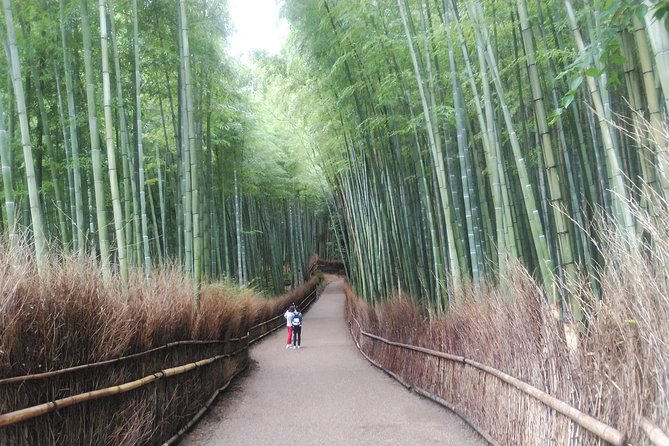
The first stop is Arashiyama, with about an hour set aside for the famous bamboo forest. The tall stalks create a narrow corridor of green, with filtered light and the soft movement of leaves in the breeze. It is one of Kyoto’s most recognizable scenes, and you will understand why the moment you enter the grove.
The appeal is visual and sensory. The bamboo rises high above you, and the muted colors feel different from the bright vermilion gates and gold architecture later in the day. Your guide can add context about the area and help you find worthwhile photo positions, an especially useful service when your time is limited.
The limitation is the short visit. Arashiyama is more than one path through bamboo, but this tour gives the grove about an hour before moving on. You should treat the stop as a focused introduction rather than a full exploration of the district.
That time limit is not necessarily a flaw. The tour is designed to connect three far-flung sights, and lingering in Arashiyama would reduce time elsewhere. Still, if the bamboo forest is your main reason for visiting Kyoto, you may want a separate visit with more time.
One guide, Saori, was specifically praised for helping with attractive photo spots. That detail matters here. The grove is a place where a few steps in the right direction can make your pictures much better, and a local guide can keep you from spending the whole hour trying to work out where to stand.
Kinkaku-ji: Kyoto’s golden postcard
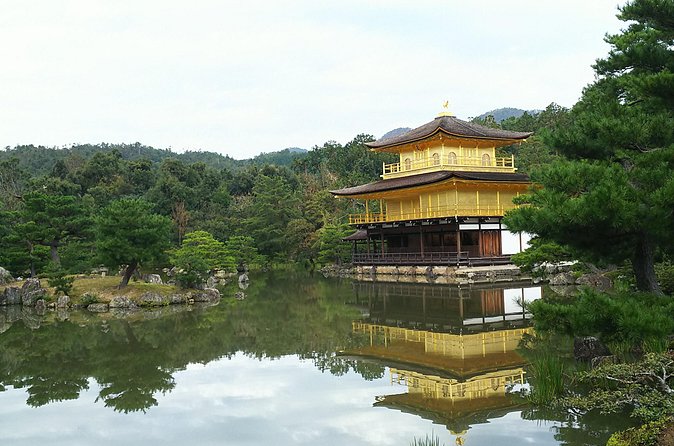
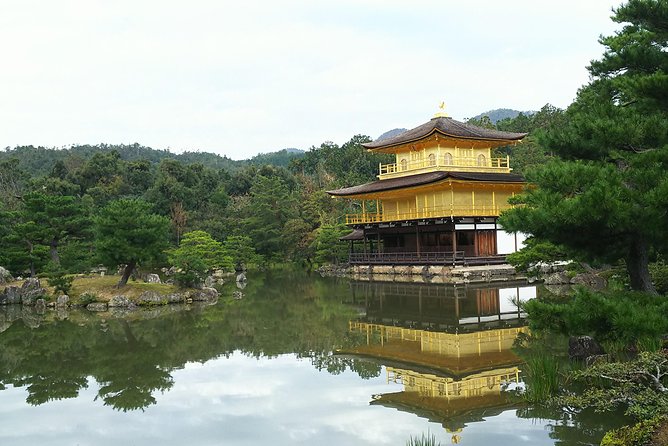
Next comes Kinkaku-ji, the Golden Pavilion and a UNESCO World Heritage Site. The gilded building sits beside a pond, creating the classic Kyoto image you have likely seen before. The temple is tied to Zen tradition and Samurai culture, but the first impression is visual: gold against the surrounding setting, reflected in the water when conditions cooperate.
Admission is not included. Set aside ¥500 per person for the temple, and remember that this is the only one of the three listed stops with a separate entry fee. The guide fare covers the person leading your visit, not every cost along the route.
The planned visit is about an hour. That should give you time to view the pavilion, take photographs, and hear the main cultural points without turning the stop into a long temple circuit. Kinkaku-ji is very popular, so you should expect the experience to feel more scheduled and public than a quiet neighborhood temple visit.
That popularity is both the strength and weakness of the stop. The Golden Pavilion is an icon for a reason, and skipping it on a first Kyoto visit can feel like leaving out one of the city’s defining sights. At the same time, the crowds and fixed route can make the visit feel less personal than the private guide arrangement suggests.
A guide adds value here by explaining what you are looking at instead of leaving you with a quick photograph and little context. Mitsue, for example, was praised for sharing information about Kyoto’s history, food, transportation, and local details. That kind of broader explanation can turn a famous building into part of a larger picture.
Fushimi Inari: the strongest final impression
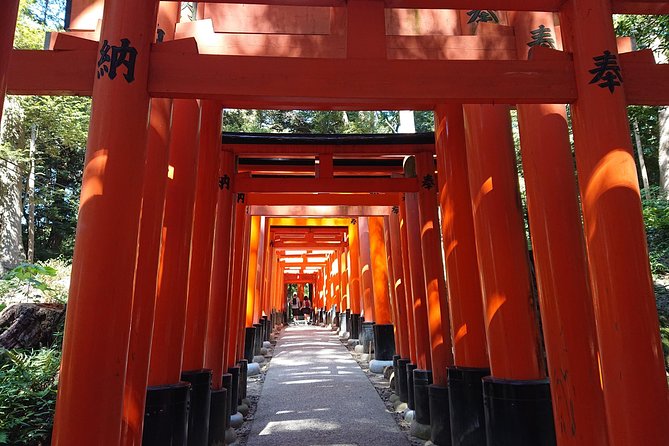
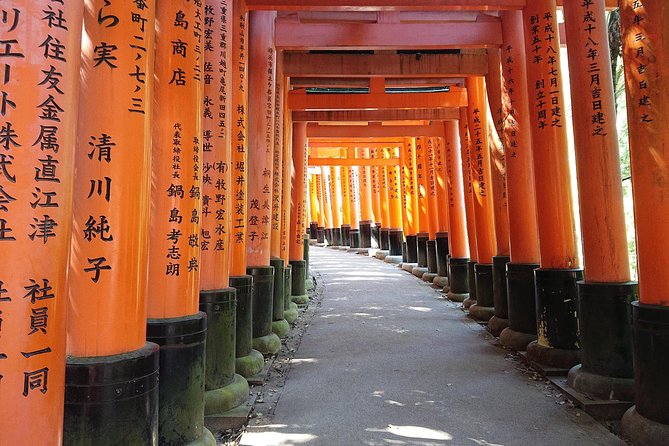
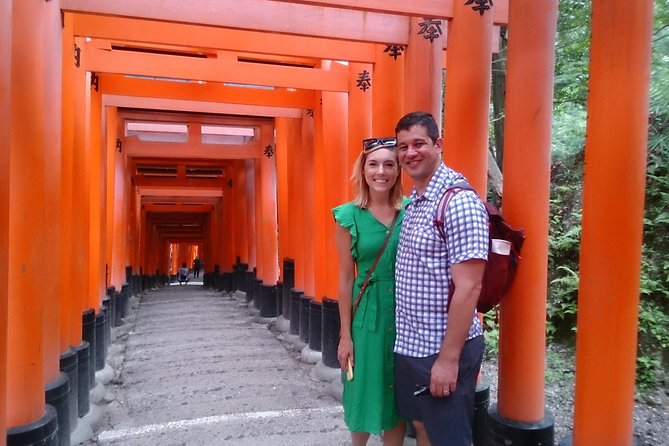
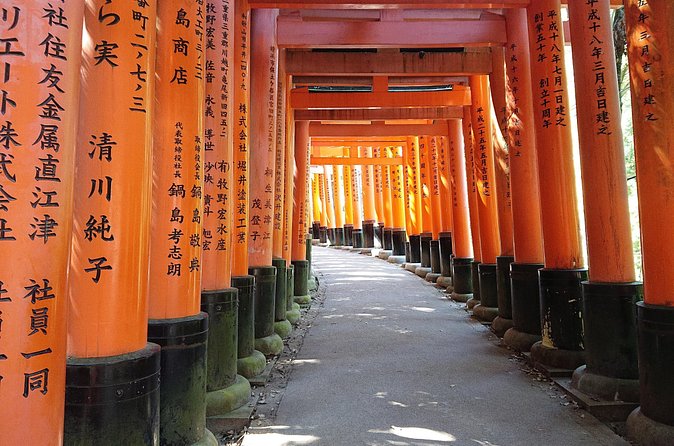
The last listed stop is Fushimi Inari-taisha, known for its long tunnels of vermilion torii gates. Worshippers donated the gates in appreciation for good fortune received from the shrine’s deity, and the repeated symbols create one of Kyoto’s most striking walks.
This stop has a different mood from Kinkaku-ji. The Golden Pavilion is a single, carefully framed structure. Fushimi Inari is about movement through a sequence of gates, with the path drawing you forward. Even with only an hour, you get a strong sense of why the shrine is one of Kyoto’s essential sights.
An hour is enough for an introduction, but not for a full climb through the shrine’s mountain paths. Keep your expectations realistic. You will see the famous torii-lined sections, but the tour does not promise a complete hike to every upper shrine.
The guide is useful here for more than directions. Shrine customs and religious symbols can be easy to miss when you are rushing for photographs. A well-prepared guide can explain the meaning of the gates and help you approach the site with more understanding.
Ending at Fushimi Inari also gives the route a strong visual finish. After the soft bamboo of Arashiyama and the polished gold of Kinkaku-ji, the red-orange gates create a sharp change in color and atmosphere. It is a smart trio of sights because each one offers something distinct.
A completely different side of Kyoto:
- PERFECT KYOTO 1-Day Bus Tour
★ 5.0 · 13,518 reviews - Kyoto: Fushimi Inari, Kinkakuji, Bamboo Grove 1 Day Bus Tour
★ 4.8 · 4,316 reviews - Kyoto: Tea Ceremony in a Traditional Tea House in Kiyomizu
★ 4.9 · 3,519 reviews - Kyoto: Tea Ceremony Ju-An at Jotokuji Temple
★ 4.9 · 3,207 reviews
What the private guide adds
This is not a large coach outing. Only your group participates, which changes the feel of the day. You can ask questions without addressing a crowd, and the guide can respond to your pace, interests, and practical needs.
The guide team has received especially strong praise for friendliness and care. Mitsue is described as warm and calm, Noriko as sweet and well informed, and Cheia as friendly and enjoyable company. Keiko made the tour personal and helped visitors get more from each landmark than they might alone.
Satoshi, also called Nick, kept in touch through WhatsApp before the tour and organized the train connections and timetable. That is a valuable detail for this particular route. The transportation is not a minor part of the outing, since the sights are separated across Kyoto and the tour depends on moving efficiently between them.
Michiko was able to adjust to the challenges of traveling with a young child. That suggests the private setup can help families in ways a fixed group tour cannot. Saori was praised for being responsible and for finding good photo locations.
You should not assume you will receive a particular guide when booking. The names above show the range of guides used by KAMNAVI Tours, not a guaranteed assignment. What you can reasonably expect is a guide-led, private format with room for questions and some flexibility.
Timing, transport, and the real cost
The advertised price is $111.05 per person. That covers the guide fare, but not food and drinks, public transportation, or Kinkaku-ji admission. Public transportation is listed at ¥1,220 per person, and the temple costs ¥500 per person.
That makes the total outlay higher than the headline price. Exchange rates will change the dollar equivalent, so I would think of the price in two parts: the fixed tour cost and the local expenses paid during the outing.
The value depends on how you travel. For a solo visitor, the per-person price is less attractive than it is for a couple or family sharing a private guide. Group discounts are available, which may improve the arithmetic for a larger party.
You are also buying time. Planning this route yourself means researching the order of stops, working out public transit, watching the clock, and deciding how long you can afford at each site. If those tasks sound manageable, self-guiding will cost less. If you would rather spend your afternoon looking at Kyoto than studying transit maps, the guide fee pays for convenience.
The meeting point is Kyoto Station, and the tour returns to that meeting point. That gives you a clear start and finish, though you should allow enough time to locate your guide and confirm the meeting details. One past outing began with confusion at the train station before the group connected with the guide, so careful attention to the meeting instructions is sensible.
Walking demands and accessibility
The tour information recommends comfortable clothes and shoes, and I would take that seriously. You walk through a bamboo grove, temple grounds, and a shrine with torii-lined paths, while also moving between public transport stops.
Most people can participate, and the experience is described as accessible for people with limited eyesight and limited mobility. Animals and pets are also allowed. Still, accessibility on paper does not remove the practical demands of a multi-stop walking route, so you should discuss specific mobility needs with the provider before booking.
The private format helps. A guide can give more direct assistance and adjust the rhythm better than a large group leader can. The schedule remains fairly full, however, so this is not the right choice if you want a slow day with long rests.
Weather, season, and the late start
The experience requires good weather. If poor weather forces cancellation, you are offered another date or a full refund. You can cancel for a full refund up to 24 hours before the 12:45 pm start, but cancellations or changes inside that window are not refunded or accepted.
The afternoon start can work well on a cold or wet day because you avoid the earliest hours, but weather still matters. One outing took place in cold weather with intermittent rain, and the guide helped keep the day enjoyable. That is encouraging, but you should still bring suitable clothing and shoes rather than counting on ideal conditions.
The schedule also changes with daylight and crowd levels, though no exact seasonal timing is provided. You should book with the understanding that the tour’s purpose is efficient coverage, not perfect solitude at each site.
Who will get the most from this tour?
I would recommend it most strongly to first-time Kyoto visitors with one open afternoon. You see three major sights, receive cultural background, and avoid handling the route alone.
It also fits:
- Couples who want a private outing rather than a large group tour
- Families who need a guide willing to adjust the pace
- Visitors dealing with jet lag who do not want an early start
- People who enjoy taking photographs and want help finding good viewpoints
- Anyone uncertain about Kyoto’s train connections and station changes
I would be more cautious if you have several days in Kyoto and prefer to spend half a day at one district. Arashiyama, Kinkaku-ji, and Fushimi Inari each reward more time than this itinerary provides. You may prefer to visit them separately, especially if you want to walk farther at Fushimi Inari or explore more of Arashiyama.
The same applies if you are highly budget-conscious. The $111.05 price, transit fare, and temple admission add up. The tour earns its value through private guiding and saved planning time, not through low-cost admission.
My take after weighing the strengths and limits
The strongest part of this experience is its focus. You do not spend the afternoon debating what to see next. You get bamboo, gold, and torii gates, three of Kyoto’s most recognizable sights, in a single guided route.
The afternoon timing is a real advantage. You can have a quiet morning, recover from a long journey, or visit something close to your hotel before meeting at Kyoto Station. The private format is another clear plus, especially when guides such as Satoshi help with train timing and Michiko adjusts to a child’s needs.
The main weakness is the pace. One hour per sight gives you a useful first look, but it does not let you know any of these areas in depth. Kinkaku-ji can feel crowded, and Fushimi Inari’s full path extends well beyond what this schedule allows.
The available rating is 4.9 from 14 reviews, with 100 percent recommending it. That is a small sample, but the repeated praise points to the same strengths: warm guides, clear explanations, good organization, local tips, and personal attention. One four-star assessment called it a good quick overview, which is probably the fairest description of the format.
Should you book the Kyoto Lazy Bird Walking Tour?
Book it if you want a private, well-organized introduction to Kyoto’s headline sights and you value an afternoon start more than a low price. It is especially useful for a first visit, a short stay, or a day when you want someone else to manage the trains and sequence.
Skip it if you want long walks, quiet temple time, or a cheap do-it-yourself outing. The tour gives you breadth rather than depth. For many visitors, that is exactly the point: by the end of one afternoon, you have seen three very different faces of Kyoto and gained a clearer idea of where you might want to return.
FAQ
Where does the Kyoto Lazy Bird Walking Tour start?
The tour starts at Kyoto Station in Kyoto, Japan, at 12:45 pm.
Where does the tour end?
The activity ends back at the meeting point, Kyoto Station.
How long does the tour last?
The approximate duration is 5 hours and 45 minutes.
Which sights are included?
The route includes Arashiyama Bamboo Grove, Kinkaku-ji Temple, and Fushimi Inari-taisha Shrine.
Are transportation and entrance fees included?
No. Public transportation costs ¥1,220 per person, and admission to Kinkaku-ji costs ¥500 per person. Food and drinks are also not included.
Can I cancel for a full refund?
Yes. You can cancel at least 24 hours before the start time for a full refund. Cancellations or changes made less than 24 hours before the tour are not refunded or accepted. If poor weather causes the experience to be canceled, you can choose another date or receive a full refund.
Recently added around Kyoto
- Higashiyama | Kyoto: Sakura Season Private Rickshaw Tour★ 5.0 · 3 reviews
- Kyoto Kimono Rental CHAMATSU|Kimono/Yukata Rental FamilyPlan★ 5.0 · 3 reviews
- Kyoto: Half-Day Private Guided Tour to the Old Town of Gion★ 4.4 · 3 reviews
- Nara Private Customizable Half Day Tour★ 5.0 · 3 reviews
- Kansai Region Hiking Adventure in Nara Kobe Kyoto and More★ 5.0 · 3 reviews
- Full Day Nara Deer, Temple, Shrine, Activities & Tea Ceremony★ 5.0 · 3 reviews
- Nara: Essential Private Tour with Deer Park and Temples★ 5.0 · 3 reviews
- Hiking Tour for Sacred Sites in Kyoto with a Guide★ 5.0 · 3 reviews
Walking Tours, compared.

Kyoto Geisha Walking Tour: Gion District & Hidden Gems
Read our review →
Gion Magical Night Walking Tour with Geisha Trivia
Read our review →
Gion Geisha District Walking Tour – Stories of Geisha
Read our review →

Kyoto Gion Geisha District Walking Tour – The Stories of Geisha
Read our review →
Kyoto Arashiyama Walking Tour: Bamboo, Monkeys, Gardens & Secrets
Read our review →
Kyoto Gion: 2-Hour Geisha Culture & History Walking Tour
Read our review →
Nara Half Day Trip Walking Tour (Private Option Available)
Read our review →Browse the lists this tour appears in