
REVIEW · HIGASHIYAMA DISTRICT TOURS
Kyoto: Higashiyama Slow Cycling Tour along the quiet waterfront
Kyoto’s best cycling often happens away from the famous lanes. This four-hour ride follows the Kamo River and Lake Biwa Canal, linking shady shrine grounds, temple gardens, old waterworks, and quiet streets that are easy to miss on foot. The route covers about 12 kilometers at an unhurried pace.
I like the small group size, limited to six people, and the use of folding Brompton bicycles. I also like that the navigator can adjust the course to your wishes and suggest a specialty restaurant for lunch. The main thing to consider is that this is still a four-hour ride, and the tour asks for a moderate level of fitness. The 500-yen insurance fee and temple admission are extra.
In This Review
- Key points at a glance
- Why Slow Cycling Works So Well in Kyoto
- Meeting at Demachiyanagi Station
- The Kamo River Shows Kyoto’s Natural Side
- Shimogamo Shrine and the Shade of Tadasunomori
- The Philosopher’s Walk Follows the Lake Biwa Canal
- Nanzen-ji Brings Temple Grandeur
- Nanzenji Suirokaku Explains Modern Kyoto
- Keage Incline Preserves a Canal Railway
- Kyoto Gyoen Gives You Room to Breathe
- What the Brompton Bicycle Adds
- Food Stops Can Shape the Day
- Price, Group Size, and Overall Value
- Who Should Book This Four-Hour Ride?
- Should You Book the Higashiyama Slow Cycling Tour?
- FAQ
- Where does the Kyoto cycling tour start?
- Where does the tour end?
- How far do you ride?
- What equipment is included?
- Is temple admission included?
- Can the tour be canceled if the weather is poor?
Key points at a glance
- Brompton bicycles make the 12-kilometer route manageable: You ride a compact, stylish folding bike with the needed equipment supplied.
- The quiet waterfront route shows another Kyoto: Riverbanks, canals, and smaller streets replace much of the city traffic.
- Seven carefully chosen stops create a strong cultural mix: You see Shimogamo Shrine, Nanzen-ji, the Philosopher’s Walk, and Kyoto Gyoen.
- A group of six keeps the ride personal: The navigator can respond to your interests and adjust the course.
- The pace suits casual cyclists better than speed seekers: This is a sightseeing ride, not a workout or citywide bicycle race.
- Food can be part of the plan: The navigator can suggest a local lunch or specialty shop according to your wishes.
Why Slow Cycling Works So Well in Kyoto
Kyoto is not a city you need to conquer in a hurry. Its pleasures are scattered among rivers, gardens, temple grounds, narrow streets, and small waterways. A bicycle lets you connect these places without spending the day waiting for buses or walking long stretches between sights.
This tour takes that idea seriously. The pace is slow, and the route is built around the quieter waterside parts of the Higashiyama area and nearby northern Kyoto. You get time to look around, stop for photographs, and hear how Kyoto grew around its rivers and canals.
The ride is about 12 kilometers over roughly four hours. That works out to a sightseeing pace rather than a demanding cycling schedule. You should still be comfortable riding for several hours, but you do not need to be a keen cyclist. The description calls for moderate physical fitness, which is a fair guide.
I especially like the way the water links the day together. The Kamo River gives you Kyoto’s natural center, the Lake Biwa Canal explains an important part of the city’s modern development, and the canal-side Philosopher’s Walk adds a quieter, more reflective stretch.
More walks through Higashiyama:
- Kyoto: Private Rickshaw Tour of Gion and Higashiyama Area
★ 5.0 · 144 reviews - Kyoto: Historic Higashiyama Walking Tour
★ 5.0 · 31 reviews - Kyoto: Kiyomizudera, Higashiyama and Yasaka Discovery Tour
★ 4.8 · 17 reviews
Meeting at Demachiyanagi Station
The tour begins at 10:00 a.m. near Demachiyanagi Station, at 32-1 Tanaka Kamiyanagicho in Sakyo Ward. The location is close to public transportation, so you can reach the start without arranging a private transfer.
Your navigator provides the Brompton bicycle, helmet, and riding equipment, including bags for wheeled transport. That makes the morning simpler. You do not need to arrange a rental bike or bring special cycling gear.
The group can include no more than six people. That matters in Kyoto, where narrow lanes and shared paths reward a compact group. It also gives you a better chance to ask questions or request a change in emphasis. You might want more temple time, more waterside riding, or a food stop, and the route can be arranged around your wishes.
Confirmation is sent within 48 hours of booking, subject to availability. The experience ends back at the meeting point, so plan your day with that return in mind.
The Kamo River Shows Kyoto’s Natural Side
The first stop is the Kamo River, which runs through central Kyoto. You have about 15 minutes here, enough to take in the broad river setting and understand why this waterway remains such a popular part of city life.
This is a useful opening stop because it gives the tour a clear theme. Kyoto may be famous for temples, but water has always shaped how the city looks and functions. The river also offers a pleasant contrast to the dense streets and formal buildings closer to the center.
Do not expect a long riverside walk or an extended nature outing. The stop is brief. Its value is in setting the tone for the rest of the ride and showing you how close Kyoto’s open spaces are to its urban core.
Shimogamo Shrine and the Shade of Tadasunomori
The ride continues to Shimogamo Shrine, north of the Kamo River delta. You have 45 minutes here, making it one of the more substantial stops.
Shimogamo is a UNESCO World Heritage Site, but the forest of Tadasunomori gives the visit its special mood. Sunlight filters through the trees, and the woodland creates a calm buffer between the shrine and the surrounding city.
I like this stop for anyone who wants a quieter shrine experience. The setting encourages you to slow down, look closely, and listen to the guide’s explanation of Kyoto’s religious and cultural traditions.
The 45-minute visit is long enough to feel worthwhile without taking over the day. You should remember that shrine and temple grounds can involve walking after you leave the bicycle, so comfortable shoes still matter even though the tour is built around cycling.
More bike days around Kyoto:
- Hidden Kyoto E-Biking tour
★ 5.0 · 1,843 reviews - Bike Tour Exploring North Kyoto plus Lunch
★ 5.0 · 1,087 reviews - Arashiyama Bamboo Forest & Hidden Gems Bike Tour (Early Bird)
★ 5.0 · 613 reviews - 5 Top Highlights of Kyoto Full Day Bike Tour (E-bike option)
★ 5.0 · 511 reviews
The Philosopher’s Walk Follows the Lake Biwa Canal
The Philosopher’s Walk is a footpath beside the Lake Biwa Canal at the foot of the Higashiyama area. The name comes from philosophers who walked here while thinking, and the path has become one of Kyoto’s better-known quiet routes.
The tour allows about 30 minutes at this stop. The canal gives you another view of Kyoto’s relationship with water, this time in a more intimate setting than the open Kamo River.
This part of the route may be especially appealing if you want a break from major sightseeing streets. The area is known for its calm, tree-lined feel, though you should take care around pedestrians because the path is described as a footpath rather than a dedicated cycle track.
That is an important practical point. The tour is called slow cycling for a reason. You are not racing along every section of the route. You may need to ride carefully, dismount, or share space with people on foot.
Nanzen-ji Brings Temple Grandeur
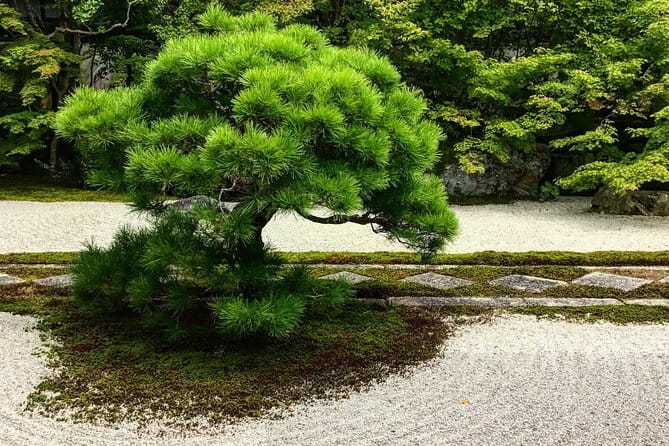
Nanzen-ji is one of Japan’s most prestigious Rinzai temples. The stop lasts about 30 minutes and includes time to appreciate the famous Sanmon Gate and the temple’s beautiful garden.
The Sanmon Gate is particularly notable for its connection to Kabuki plays. Even if you do not know the theatrical reference, the gate gives the visit a strong visual focus and helps explain why Nanzen-ji has such an important place in Japanese Buddhist culture.
Temple admission is not included in the tour price. That cost is easy to overlook, so keep a little extra cash available. The supplied information does not state the current admission amount, and it can vary by area or seasonal display.
Thirty minutes is a sensible amount of time for a stop within a broader cycling day. You get an introduction rather than an exhaustive temple visit. If Nanzen-ji is one of your top Kyoto priorities, you may want to return later for a longer, independent visit.
Nanzenji Suirokaku Explains Modern Kyoto
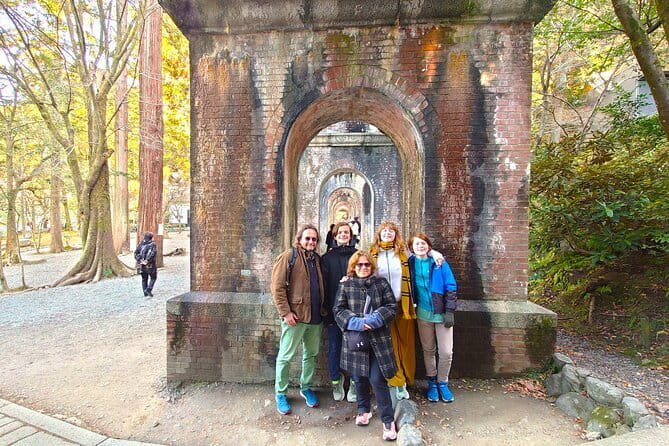
Within the Nanzen-ji grounds, Nanzenji Suirokaku is a striking brick aqueduct built as part of the Lake Biwa Canal system. The structure still carries water and played an important role in Kyoto’s modernization during the Meiji era.
You have another 30 minutes here. This stop is valuable because it shifts the story from ancient religious sites to engineering and city development. Kyoto is often presented only through old temples and traditional streets, but the canal system shows how the city adapted to a changing Japan.
The aqueduct also makes a good photograph, especially for anyone who enjoys industrial architecture. The brick arches contrast with the surrounding temple grounds, giving you a memorable change of scene without leaving the Nanzen-ji area.
Since the aqueduct is in the temple precincts, the stop works efficiently within the route. You see two different sides of Kyoto in one place: religious heritage and modern infrastructure.
Keage Incline Preserves a Canal Railway
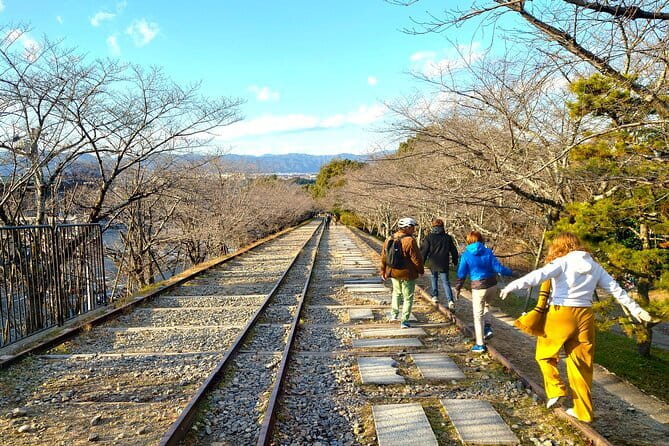
The Keage Incline is another part of the Lake Biwa Canal system. This former incline railway helped move boats along a change in elevation and has been preserved as an industrial heritage site.
The stop lasts about 30 minutes. Cherry trees line the route, making it particularly attractive during blossom season, although no season is guaranteed to provide flowers. The site also gives you a sense of the practical work once required to move goods and boats through Kyoto’s canal network.
I like the progression from the aqueduct to the incline. Instead of treating the canal as scenery, the tour uses it to explain how water supported transportation and urban growth.
Like several parts of the day, the Keage Incline is best appreciated at a relaxed pace. You have enough time to look, photograph, and listen, but not enough for a long historical study. The navigator’s role is important here because the value comes from understanding what you are seeing, not just passing a brick structure on a bicycle.
Kyoto Gyoen Gives You Room to Breathe
The final listed stop is Kyoto Gyoen National Garden, with about one hour allocated. The garden surrounds the Kyoto Imperial Palace, once the residence of Japan’s emperor until the middle of the 19th century.
After the river paths, wooded shrine, temples, and canal works, Kyoto Gyoen provides a broad and open finish. The extra time here allows you to move beyond a quick photograph and enjoy the scale of the grounds.
The Imperial Palace itself is the key historical reference, but the tour’s information does not promise a separate palace admission or an interior visit. Think of this stop as an introduction to the former imperial area and its surrounding garden rather than a full palace tour.
An hour is generous compared with the shorter stops. You can use it to walk, take photographs, or ask the navigator about Kyoto’s imperial past. Because the activity returns to Demachiyanagi Station, this final stop also helps bring the route back toward the city’s northern side.
What the Brompton Bicycle Adds
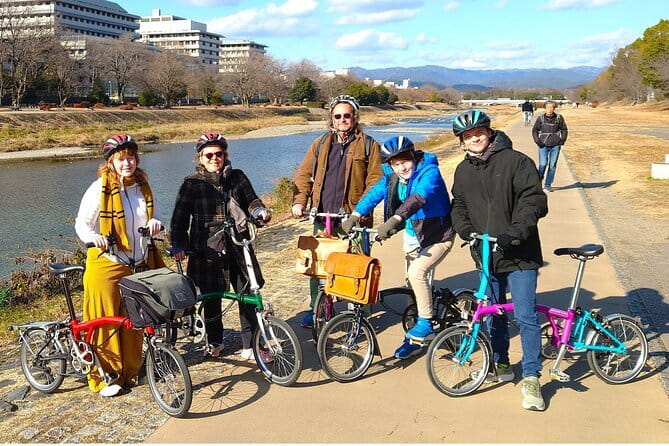
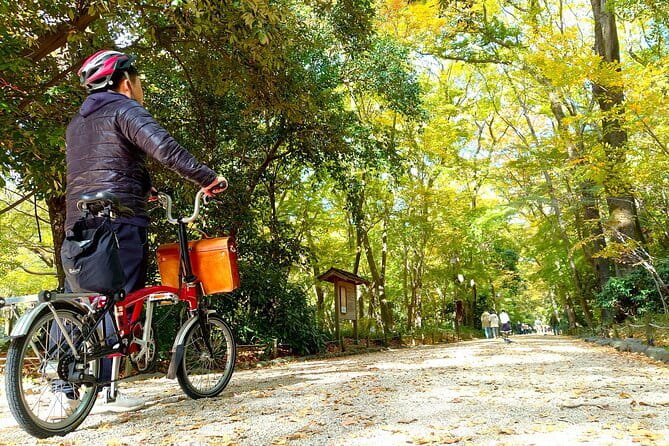
Brompton bicycles are compact folding bikes known for their small wheels and practical design. Here, the point is not to show off cycling technique. The bike supports a sightseeing style that is light, flexible, and easy to manage in a small group.
All riding equipment is supplied. That includes a helmet and bags for wheeled transport, so you can arrive without packing a bicycle kit. The tour also highlights the bicycle’s appearance, and you can take photographs with the stylish Brompton.
The bikes may appeal to you if you are not confident about your fitness. The ride is described as slow, and the course is intended for people who want to explore without pushing hard. Still, slow does not mean effortless. Four hours on a bicycle requires basic comfort in the saddle and enough energy for repeated stops and starts.
If you rarely cycle, tell the navigator at the start. The route can be arranged according to your wishes, and the small group makes that conversation practical.
Food Stops Can Shape the Day
Snacks are not included, but the navigator can suggest restaurants for lunch based on what you want. The tour also points you toward specialty shops, adding a food option to the cultural and historical stops.
This flexibility is useful because Kyoto has no shortage of places to eat, but choosing one during a moving tour can be awkward. You can ask for a lunch suggestion that fits your preferences rather than trying to plan every bite in advance.
The exact restaurant and timing are not fixed. If food is a major reason for booking, discuss your wishes with the navigator early. If you would rather keep riding and eat afterward, you can do that too.
Price, Group Size, and Overall Value
The price is $129 per person. That is not the cheapest way to see Kyoto, especially because insurance costs an additional 500 yen and Nanzen-ji admission is not included.
The value comes from what the price bundles together: a Brompton bicycle, riding equipment, a dedicated navigator, a four-hour route, and a maximum group size of six. You are paying for access to a planned ride through several parts of Kyoto, plus local route judgment and the ability to adjust the course.
For a large group, the small-group format may be worth the cost. Group discounts are available, so check the final price if you are booking with several people.
I would compare this tour with the cost of renting a bicycle and planning the same route alone. A self-guided ride may cost less, but you would need to choose the roads, connect the sights, manage the bike, and decide where to stop. This tour makes more sense if you value local navigation and want to spend your time looking around rather than checking directions.
The strongest appeal is the quiet alternative to Kyoto’s crowded sightseeing circuit. The ride connects famous places with smaller waterways and streets, giving you a more varied picture of the city.
Who Should Book This Four-Hour Ride?
I would recommend this experience to you if you:
- Want to see Kyoto by bicycle without committing to a fast or strenuous ride
- Enjoy rivers, canals, temples, shrines, and historic infrastructure in one outing
- Prefer a group of six or fewer
- Like having a route that can respond to your interests
- Want a navigator who can suggest a local lunch stop
- Are comfortable with moderate physical activity
It is less suitable if you want a long visit inside every temple, a powerful athletic ride, or a completely fixed sightseeing schedule. The listed stops are numerous, so each one receives an introduction rather than a full guided tour.
The tour also depends on good weather. If poor weather cancels the experience, you are offered another date or a full refund. A minimum number of participants is required as well, with the same choice of another date, another experience, or a full refund if the tour cannot operate.
Free cancellation is available up to 24 hours before the start time. Changes or cancellations inside that window are not accepted for a refund.
Should You Book the Higashiyama Slow Cycling Tour?
Book it if you want quiet Kyoto, a manageable bicycle route, and a small-group guide who can connect the city’s rivers, temples, canals, and imperial grounds.
The $129 price is fair for a four-hour private-style group experience with a Brompton bicycle and equipment, though you should add the insurance fee, temple admission, and any food costs. The route is not designed for deep study at each site, but it gives you a well-shaped introduction to several important corners of Kyoto.
I would choose this tour early in a Kyoto visit, especially if you want to get your bearings without spending the day on crowded streets. It is also a good choice for returning visitors who have already seen the headline temples and want a quieter way to understand how Kyoto lives with water.
FAQ
Where does the Kyoto cycling tour start?
The tour starts at 10:00 a.m. near Demachiyanagi Station, at 32-1 Tanaka Kamiyanagicho, Sakyo Ward, Kyoto, 606-8205, Japan.
Where does the tour end?
The activity ends back at the meeting point near Demachiyanagi Station.
How far do you ride?
The route is approximately 12 kilometers and takes about four hours, including sightseeing stops.
What equipment is included?
The bicycle rental, navigator, helmet, and bicycle equipment such as bags for wheeled transport are included.
Is temple admission included?
Nanzen-ji admission is not included. The other listed stops have no admission ticket charge shown in the tour details.
Can the tour be canceled if the weather is poor?
Yes. The experience requires good weather. If it is canceled because of poor weather, you can choose another date or receive a full refund.
Recently added around Kyoto
- Higashiyama | Kyoto: Sakura Season Private Rickshaw Tour★ 5.0 · 3 reviews
- Kyoto Kimono Rental CHAMATSU|Kimono/Yukata Rental FamilyPlan★ 5.0 · 3 reviews
- Nara Private Customizable Half Day Tour★ 5.0 · 3 reviews
- Kyoto: Half-Day Private Guided Tour to the Old Town of Gion★ 4.4 · 3 reviews
- Kansai Region Hiking Adventure in Nara Kobe Kyoto and More★ 5.0 · 3 reviews
- Full Day Nara Deer, Temple, Shrine, Activities & Tea Ceremony★ 5.0 · 3 reviews
- Nara: Essential Private Tour with Deer Park and Temples★ 5.0 · 3 reviews
- Hiking Tour for Sacred Sites in Kyoto with a Guide★ 5.0 · 3 reviews
Higashiyama District Tours, compared.
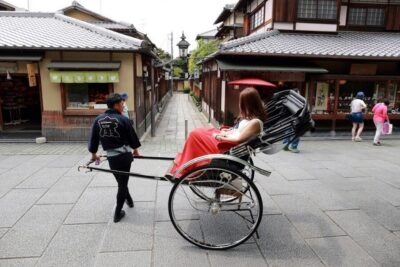
Private Rickshaw Tour of Gion and Higashiyama Area
Read our review →
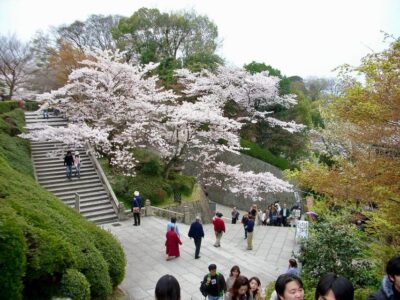
Kiyomizudera, Higashiyama and Yasaka Discovery Tour
Read our review →
Kyoto Early Bird English Tour: Gion & Higashiyama(Private opt)
Read our review →
Browse the lists this tour appears in