REVIEW · TOURS
Kyoto Full Course Tour: Explore 10 Must-See Sights & Hidden Gems
Kyoto’s greatest challenge is not finding beautiful places. It is fitting them together. This 9.5-hour small-group tour links Arashiyama, Kinkakuji, Ryoanji, Fushimi Inari, Kiyomizudera, Yasaka Pagoda, and Gion in one demanding day, with local buses and trains doing much of the connecting.
I like two things right away: you learn how to move around Kyoto instead of simply riding in a tour bus, and guides such as Megumi, Masako, and Masa bring local knowledge and plenty of personal care to a packed schedule. The trade-off is serious: expect more than 20,000 steps, short visits, extra entrance fees, and little time to linger.
In This Review
- Key points to know before booking
- A Kyoto sampler built for speed
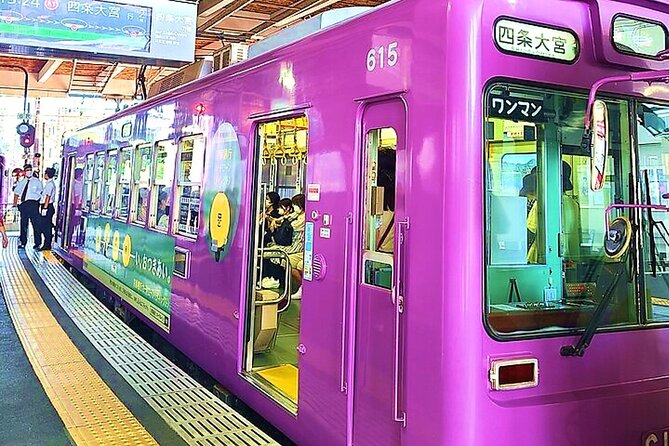
- Starting in Arashiyama with bamboo and tram travel
- Ryoanji and Kinkakuji: two very different temples
- Lunch at a conveyor-belt sushi restaurant
- Fushimi Inari and its endless red gates
- Kiyomizuzaka and Sanneizaka, Kyoto on foot
- Kiyomizudera and the view from its wooden stage
- Yasaka Pagoda and the final walk through Gion
- The guides make the difference
- Who should book this Kyoto day tour?
- Should you book it?
- FAQ
- What time does the tour start?
- Where is the meeting point?
- Where does the tour end?
- How long does the tour last?
- What costs are included?
- How much extra money should I bring?
- How much walking is involved?
- How many people can join the tour?
Key points to know before booking
- Nine major stops in one day: You visit Kyoto’s best-known temples, shrines, old streets, and the Arashiyama bamboo forest.
- Public transport is part of the lesson: Local buses, trains, and the Randen tram help you understand a city that can be confusing on your own.
- A small group keeps the pace manageable: The maximum is 10 people, with a guide leading the entire route.
- Plan for a workout: The itinerary includes steep and crowded pedestrian streets, temple grounds, and more than 20,000 steps.
- The advertised price is not the final cost: Add roughly $10 for transport, $6.80 to $14 for lunch, and $11 for admission fees.
- The tour is best for a first Kyoto day: It gives you a broad orientation, but it is not designed for slow temple visits or detailed exploration.
A Kyoto sampler built for speed
At about $98.83 per person, this tour is not cheap compared with a simple walking tour. But you are paying for route planning, a local escort, and the ability to connect far-flung parts of Kyoto in a single day.
The real value appears when you look at the map. Arashiyama is in western Kyoto. Fushimi Inari is in the south. Kinkakuji and Ryoanji sit in the northwest, while Kiyomizudera and Gion are in the eastern hills. Putting all of these places together requires careful timing and several changes in transport.
You should budget about $10 for transportation, $6.80 to $14 for lunch, and around $11 for temple admission. That brings the practical total to roughly $126.63 to $133.83 per person. Bring cash, and have a transportation IC card such as Suica or PASMO ready if possible.
This is a sightseeing sprint, not a relaxed cultural walk. Most listed stops receive about 30 minutes. That is enough for photographs, a quick look around, and an explanation from your guide. It is not enough for a full visit to every temple or for climbing far up the Fushimi Inari trail.
Other Kyoto mornings people book alongside this one:
- PERFECT KYOTO 1-Day Bus Tour
★ 5.0 · 13,518 reviews - Kyoto: Fushimi Inari, Kinkakuji, Bamboo Grove 1 Day Bus Tour
★ 4.8 · 4,316 reviews - Kyoto: Tea Ceremony in a Traditional Tea House in Kiyomizu
★ 4.9 · 3,519 reviews
Starting in Arashiyama with bamboo and tram travel
The day begins near JR Saga-Arashiyama Station. The stated meeting time is 8:50 am, and the instructions are firm about punctuality. Arrive early, since late arrivals are not admitted and there is no refund.
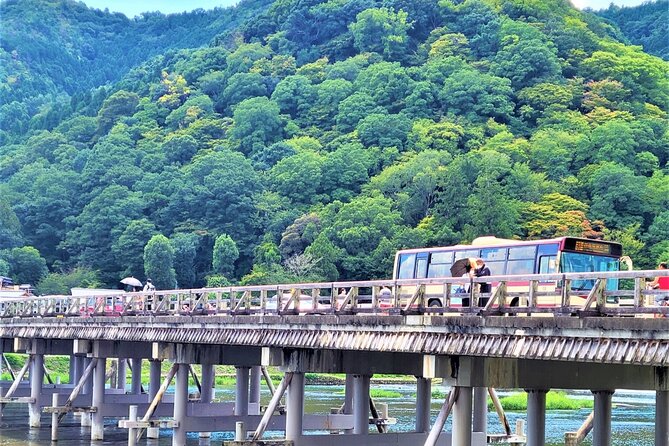
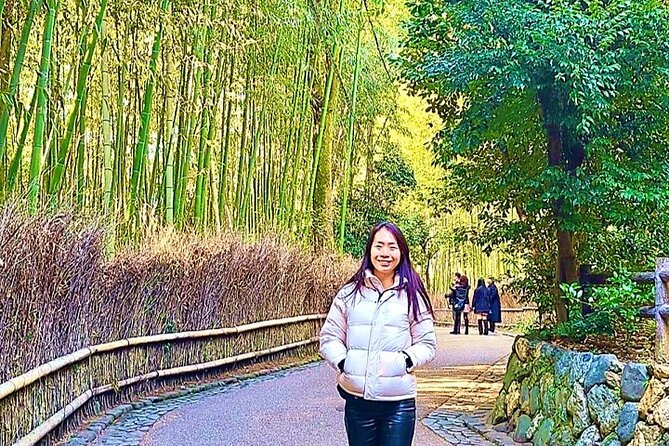
Arashiyama opens the day with one of Kyoto’s most familiar scenes: the tall bamboo grove backed by wooded hills. You get about 30 minutes here, which works well for a first look and photographs. The short visit also tells you what kind of day lies ahead. You will see many places, but you will keep moving.
The Randen tram line is another appealing part of this section. It gives you a taste of Kyoto’s everyday transport and adds variety to the route. One useful feature of the tour is that your guide does not just point out the next stop. You also learn how to use local transport, follow Japanese etiquette, and read the rhythm of daily life in the city.
That practical help matters. Kyoto’s transport system can feel awkward when you are trying to connect distant temples under time pressure. The guide handles the route while you watch how the system works.
Ryoanji and Kinkakuji: two very different temples
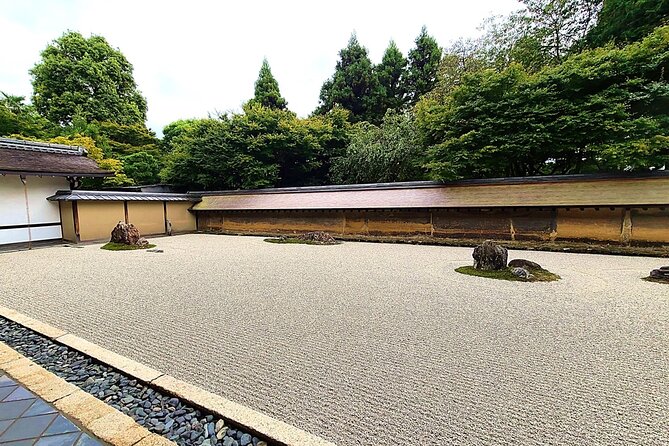
Ryoanji comes next, with its famous dry stone garden. The visit is brief, so you should think of it as a focused introduction rather than a long period of quiet reflection.
The garden is known for its simple arrangement of stones and gravel. Its appeal is not a long list of decorative details. It is the spare design and the open space for your own interpretation. Your guide can provide background, but you should also allow yourself a moment to look without trying to photograph everything.
Kinkakuji, the Golden Pavilion, offers the day’s sharpest visual contrast. Its bright gold exterior reflected beside the pond is instantly recognizable, and this is one place where even a short stop gives you a strong sense of Kyoto’s postcard image.
Admission to both temples is extra. The schedule allots around 30 minutes at each, so you will follow a set path rather than wander every corner. That makes the visit efficient, but if Ryoanji or Kinkakuji is a personal priority, plan to return independently on another day.
Lunch at a conveyor-belt sushi restaurant
Lunch is at a conveyor-belt sushi restaurant, where you order according to what you want and pay for your own food and drinks. The available choices include sushi, vegetable sushi, ramen, kara-age, beer, and mochi.
This format suits a tight schedule because it offers several kinds of food and does not require a long formal meal. It also lets you control the cost. A reasonable allowance is $6.80 to $14, depending on your order.
Vegetarian diners should pay attention here. The meal is not presented as a dedicated vegetarian menu, and only some items may work for you. If you need strict vegetarian food, this is a point to clarify before booking rather than assume the restaurant will provide a full range of suitable dishes.
The lunch break is also your best chance to rest your feet. Use it. The afternoon includes more walking through temple approaches, slopes, and shopping streets.
A completely different side of Kyoto:
- Kyoto Geisha Walking Tour: Gion District & Hidden Gems
★ 4.7 · 3,273 reviews - Kyoto: Tea Ceremony Ju-An at Jotokuji Temple
★ 4.9 · 3,207 reviews - Kyoto: Gion Magical Night Walking Tour with Geisha Trivia
★ 4.9 · 2,393 reviews - Kyoto: 45-Minute Tea Ceremony Lesson Experience
★ 4.3 · 2,378 reviews
Fushimi Inari and its endless red gates
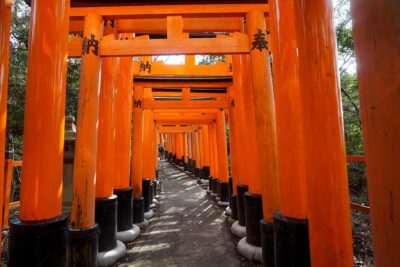
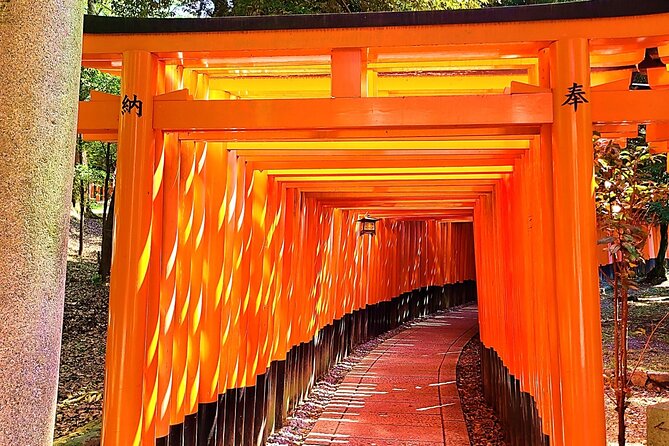
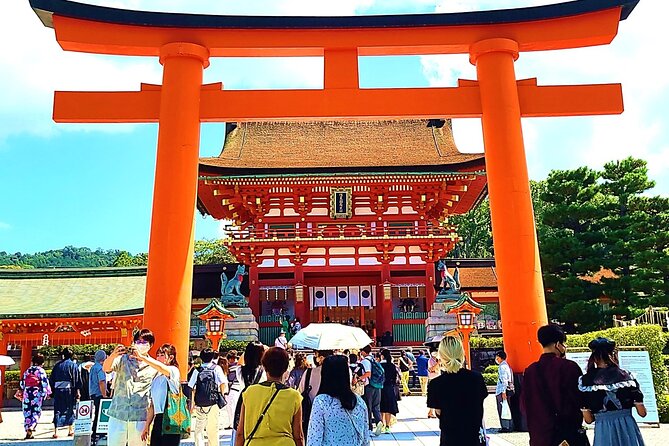
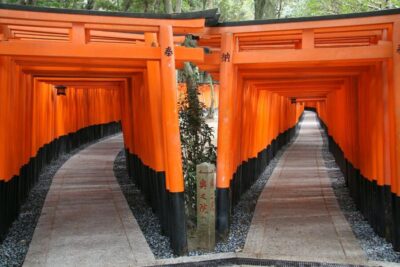
Fushimi Inari Taisha is one of Kyoto’s most memorable sights. Its path runs beneath thousands of red torii gates, donated over many years by individuals and businesses.
The tour allows about 30 minutes. That gives you enough time to enter the gate-lined path and understand the scale of the shrine, but not enough to walk the entire mountain route. The torii become less crowded as you climb, yet this itinerary is designed for a short visit, not a full hike.
Fushimi Inari is also a useful lesson in shrine etiquette. You can ask your guide how to behave at the entrance, where to bow, and how shrines differ from Buddhist temples. Those small explanations help turn a quick photograph stop into a more meaningful visit.
The ground can be uneven, and the walking does not stop when you leave. If you are managing a wheelchair, limited mobility, or a slow pace, contact the operator before booking. Several major sights on this route are difficult to access fully, and the schedule leaves little room for delays.
Kiyomizuzaka and Sanneizaka, Kyoto on foot
The eastern Kyoto section is less about one monument and more about the approach. Kiyomizuzaka and Sanneizaka are sloping pedestrian streets lined with souvenir shops, sweets, crafts, and local food.
These streets are a pleasant change after the large temple grounds. You get a feel for how Kyoto presents its old quarters to both residents and shoppers. You can browse, but 30 minutes passes quickly, especially when the lanes are crowded.
The slopes are the practical concern. Comfortable shoes are essential, and you should not treat this as a gentle stroll. The combination of inclines, stairs, standing, and public transport is why the tour is rated for people with moderate physical fitness.
A wheelchair user may find some parts of the route difficult or impossible to enjoy fully. One purpose of the tour is to help you see a lot even when planning is hard, but it cannot remove Kyoto’s old stone slopes or crowded approaches.
Kiyomizudera and the view from its wooden stage
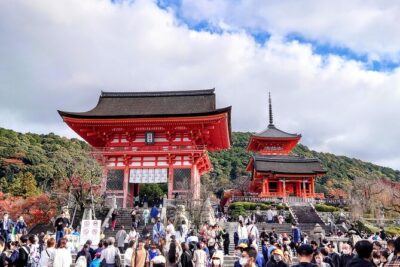
Kiyomizudera is one of Kyoto’s major temple sights, known for its large wooden stage built without the use of a single nail. The structure projects from the hillside and gives you a broad view across the city.
The temple visit lasts about 30 minutes, with admission extra. That is enough to see the main stage and take in the setting, though not enough for every sub-temple, path, or seasonal corner of the grounds.
You should also expect crowds around the approach and the main viewing points. The guide helps you stay on schedule and explains what you are seeing, but you will need to keep close to the group. The rules specifically require you to follow the host. If you separate from the group, the host cannot search for you.
This is one of the tour’s strongest stops for first-time visitors because it combines architecture, religion, hillside scenery, and old Kyoto streets in one compact area.
Yasaka Pagoda and the final walk through Gion
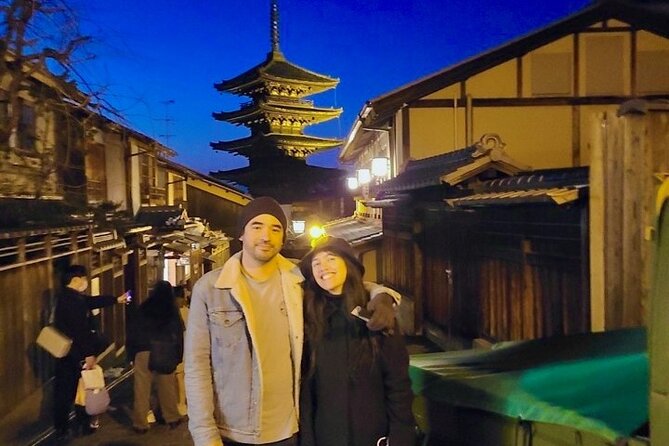
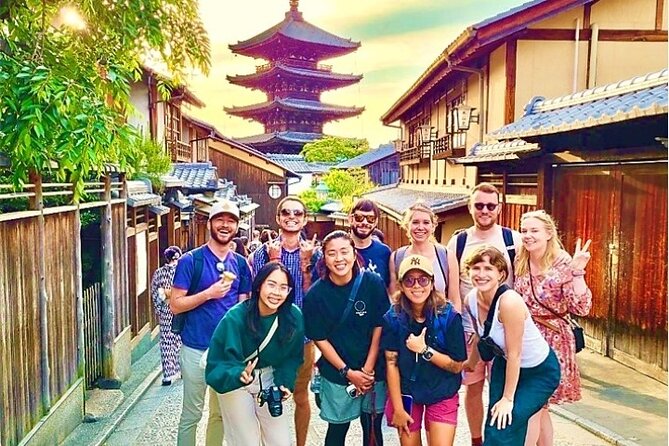
Hokanji Temple, better known for its Yasaka Pagoda, gives you one of the most recognizable views in the Higashiyama district. The pagoda rises above the traditional streets and is especially attractive from the surrounding lanes.
The stop itself is short, with no admission fee listed. You should think of it as a photo and orientation point rather than a full temple visit.
The day ends in Gion, near Gion Shopping Street. This is Kyoto’s historic entertainment district, with traditional buildings, narrow lanes, restaurants, and a strong sense of the old city. You might even catch sight of a geisha, though that should never be treated as guaranteed.
Ending here is useful. You are left in a central sightseeing area with shops and places to eat, rather than returned to the morning meeting point. The listed end point is at Gion Shopping Street Promotion Associates, 567-6 Gionmachi Minamigawa.
The guides make the difference
A route this fast can easily become a blur of gates, roofs, and photographs. The guide is what gives the day shape.
Megumi is described as thoughtful, polite, and good at explaining Kyoto while also helping families navigate the city. Masako is repeatedly praised for her humor, preparation, historical explanations, and attention to the group. Masa is also noted for helping people find their way and offering suggestions for the following day.
The strongest part of the guiding style is practical. You learn how to use public transport, how to move between districts, and which areas deserve more time later. One guide may speak with an accent that takes some getting used to, so if precise verbal explanations are especially important to you, keep that in mind.
The group maximum of 10 is a good fit for this route. A larger group would make station transfers and crowded temple approaches harder. Still, the tour requires you to stay alert and keep pace with the guide.
Who should book this Kyoto day tour?
I would choose this experience if you have only one full day in Kyoto, are visiting for the first time, or feel uneasy planning several train and bus connections. It is also a strong first-day orientation if you want to return later to the places that caught your attention.
You should be comfortable walking more than 20,000 steps. Wear supportive shoes, carry water, and keep some cash handy for fares, food, and admissions. Bring a charged phone because the ticket is mobile, and prepare your IC transport card in advance.
I would not choose this tour if you want long periods of quiet at each temple, dislike fixed schedules, have serious mobility limits, or need a guaranteed vegetarian lunch. The pace is intense, and the short stops favor coverage over depth.
The experience is non-refundable and cannot be changed after booking, so check the start time, meeting point, fitness demands, and food arrangements before committing.
Should you book it?
Book this tour if your priority is seeing Kyoto’s major sights in one day with a local guide handling the route. For about $127 to $134 after normal extras, you get a broad introduction to the city and a useful lesson in public transport.
Skip it if you have three or more days and prefer to visit two or three areas slowly. Kyoto rewards patience, but this tour serves a different purpose: it helps you get your bearings fast, then shows you where to spend more time later.
FAQ
What time does the tour start?
The tour starts at 8:50 am at JR Saga-Arashiyama Station. The instructions stress that the group leaves on time, so arrive early.
Where is the meeting point?
Meet at Saga-Arashiyama Station, 11-1 Sagatenryuji Kurumamichicho, Ukyo Ward, Kyoto, 616-8373, Japan.
Where does the tour end?
The tour ends at Gion Shopping Street Promotion Associates, 567-6 Gionmachi Minamigawa, Higashiyama Ward, Kyoto, 605-0074, Japan.
How long does the tour last?
The experience lasts approximately 9 hours and 30 minutes.
What costs are included?
The tour fee and consumption tax are included. Transportation, food and drinks, and temple entrance fees are not included.
How much extra money should I bring?
Transportation costs about $10 per person, food and drinks usually cost $6.80 to $14, and entrance fees total about $11 per person.
How much walking is involved?
You should expect more than 20,000 steps, along with walking on slopes and through temple areas. A moderate level of physical fitness is required.
How many people can join the tour?
The maximum group size is 10 people. Anyone under 18 must be accompanied by a guardian, and children under 13 require a private-tour request.
Recently added around Kyoto
- Higashiyama | Kyoto: Sakura Season Private Rickshaw Tour★ 5.0 · 3 reviews
- Kyoto Kimono Rental CHAMATSU|Kimono/Yukata Rental FamilyPlan★ 5.0 · 3 reviews
- Kyoto: Half-Day Private Guided Tour to the Old Town of Gion★ 4.4 · 3 reviews
- Nara Private Customizable Half Day Tour★ 5.0 · 3 reviews
- Kansai Region Hiking Adventure in Nara Kobe Kyoto and More★ 5.0 · 3 reviews
- Full Day Nara Deer, Temple, Shrine, Activities & Tea Ceremony★ 5.0 · 3 reviews
- Nara: Essential Private Tour with Deer Park and Temples★ 5.0 · 3 reviews
- Hiking Tour for Sacred Sites in Kyoto with a Guide★ 5.0 · 3 reviews
Tours, compared.
Fushimi Inari, Kinkakuji, Bamboo Grove 1 Day Bus Tour
Read our review →
Kyoto Geisha Walking Tour: Gion District & Hidden Gems
Read our review →
Gion Magical Night Walking Tour with Geisha Trivia
Read our review →
Gion Geisha District Walking Tour – Stories of Geisha
Read our review →

Kyoto Night Foodie Tour in Gion (9+ dishes + 6 Sake tastings)
Read our review →