REVIEW · PRIVATE
KIYOTO’s Kyoto Private Tour: Highlights & Hidden Gems
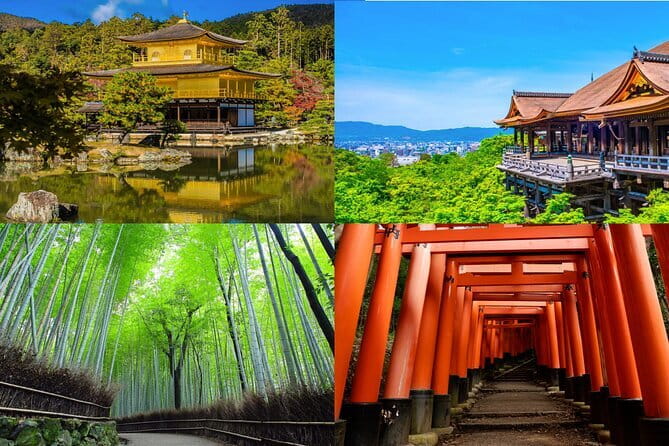
Kyoto’s biggest challenge is not finding things to see. It is fitting them together without losing half a day to wrong turns and transport changes. This private tour tackles that problem with a guide and an ambitious route that can include Fushimi Inari, Kiyomizu-dera, Gion, Nishiki Market, Kinkaku-ji, and Arashiyama.
I like the one-to-one attention, which lets you ask questions and adjust the pace. I also like the mix of famous sights and small atmospheric stops, especially Pontocho, Tatsumi Bridge, and the old lanes near Yasaka Pagoda. The main caution is simple: fourteen stops in four to eight hours is a lot, so you should agree on priorities before setting out.
In This Review
- Key points to know before booking
- What this private Kyoto tour is really trying to do
- Pontocho and the first taste of old Kyoto
- Fushimi Inari’s orange tunnel
- Kiyomizu-dera and the slopes of Higashiyama
- A machiya Starbucks, Yasaka Pagoda, and Gion
- Tatsumi Bridge and the quieter side of Gion
- Nishiki Market, Kyoto’s food corridor
- Kinkaku-ji, the Golden Pavilion
- Tenryu-ji and the Arashiyama Bamboo Forest
- Kimono Forest and Togetsukyo Bridge
- Guide style, photography, and flexibility
- Price, timing, and what you actually pay
- Who will get the most from this Kyoto day
- Should you book KIYOTO’s private Kyoto tour?
- FAQ
- How long does the private Kyoto tour last?
- Where does the tour start and end?
- Is this a private tour?
- Are admission tickets included?
- Is transportation included?
- What places can the tour visit?
- Can most people participate?
- What is the cancellation policy?
Key points to know before booking
- A private guide keeps the day flexible: You can ask questions, change the pace, and focus on the sights that matter most to your group.
- The route covers a remarkable spread of Kyoto: It links southern Higashiyama, central Kyoto, northern Kyoto, and Arashiyama.
- The famous sights come with extra costs: Entrance tickets, food, drinks, transport, and the guide’s related expenses are not included.
- Photography is part of the service: Guides are described as happy to take photos, and Kiyoto-san has also made short videos for some groups.
- Guide quality may vary by person: Akiyo, Yuhey, Paren, and Kiyoto-san are all named in the available feedback, but your assigned guide is not guaranteed.
- The day is mainly on foot: Comfortable shoes matter, and public transport may be used at an additional cost.
What this private Kyoto tour is really trying to do
This is best understood as a flexible Kyoto orientation rather than a slow, specialist tour of one district. The advertised route gathers a long list of major sights, then adds short stops where the city’s older character is easier to feel.
That approach has real value on a first visit. Kyoto spreads out, and its sights do not sit in one compact historic center. Fushimi Inari is in the south, Kiyomizu-dera is in Higashiyama, Kinkaku-ji is in the northwest, and Arashiyama is farther west. A private guide can help you understand how these pieces fit together.
The route is also adjustable. A four-hour version cannot reasonably give every stop equal time, while an eight-hour day can cover more ground but may feel full. Tell the guide what matters most: temples, food, old streets, photography, gardens, or a broad first look at Kyoto.
The meeting point is the Kyoto Tourist Information Center, Kyo-Navi, on the second floor of Kyoto Station Building. The tour ends back there. That is practical if you are arriving by train or want a clear central starting point, though a return to Kyoto Station may add travel time at the end of a long day.
A few more Kyoto experiences worth comparing
- Fushimi Inari Hidden Hiking Tour (Private Option Available)
★ 5.0 · 1,750 reviews - Private Kyoto Tour with a Local, Highlights & Hidden Gems, Personalised
★ 5.0 · 1,543 reviews - Kyoto 6hr Private Tour with Government-Licensed Guide
★ 5.0 · 1,369 reviews
Pontocho and the first taste of old Kyoto
The opening stop is Pontocho, a narrow lane running beside the Kamo River between Sanjo and Shijo streets. It is one of Kyoto’s five geisha districts, with traditional buildings, restaurants, and tea houses packed into a remarkably tight space.
The scheduled visit is only about ten minutes, so think of it as a quick orientation and photo stop, not a full meal or evening outing. Pontocho is especially useful early in the day because it gives you a quick sense of Kyoto’s older dining quarters before the tour moves to the larger sights.
Your guide can also help explain the difference between a historic entertainment district and an ordinary restaurant street. That context is one reason a private guide can be more useful than simply walking through with a map.
Fushimi Inari’s orange tunnel
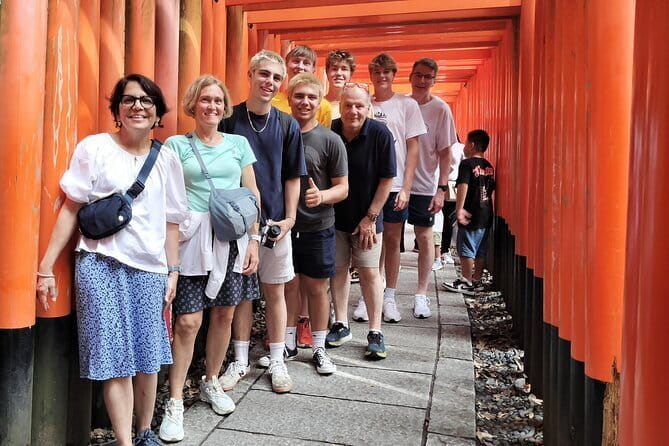
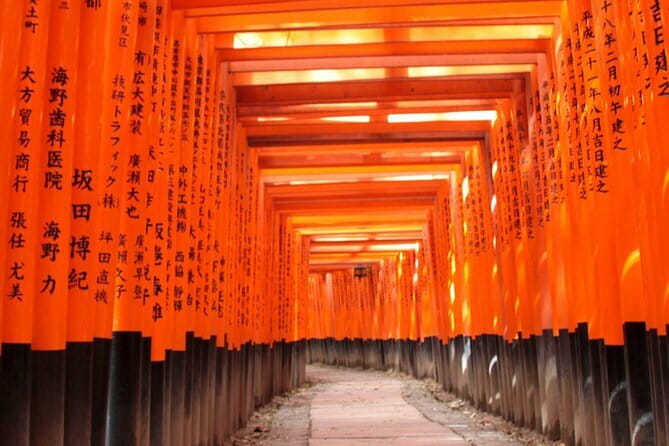
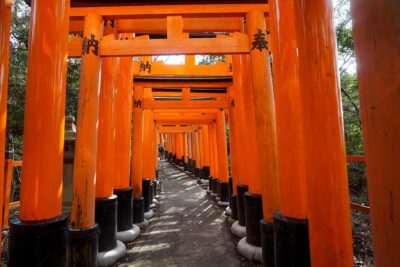
Fushimi Inari-taisha is the first major stop, with about an hour set aside. Its famous Senbon Torii consists of thousands of vermilion gates that climb through the wooded grounds of Mount Inari.
The gates were donated by individuals and businesses, a detail that helps explain why the path feels almost endless. You walk beneath repeated rows of orange-red structures, with smaller shrines and stone fox figures appearing along the way.
An hour gives you enough time to experience the lower section and take photographs, but not to complete the full mountain route. That is not a weakness. The entire climb takes much longer, and many people will prefer to save energy for the rest of this packed day.
The shrine has no admission charge. It is also one of Kyoto’s most popular sights, so a private guide can help you move with purpose instead of wandering around the entrance area. Ask for a realistic time plan if Fushimi Inari is one of your top priorities.
Kiyomizu-dera and the slopes of Higashiyama
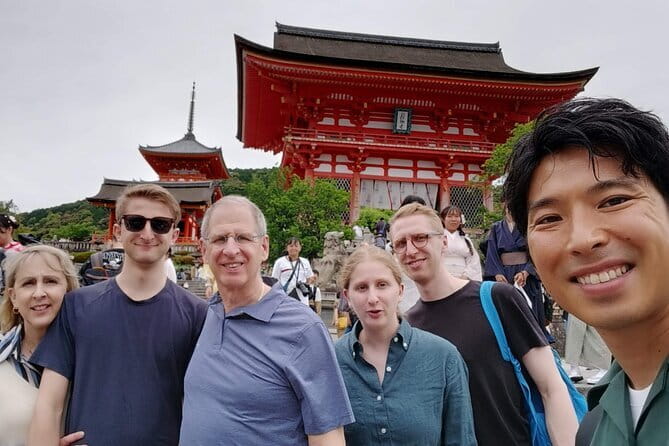
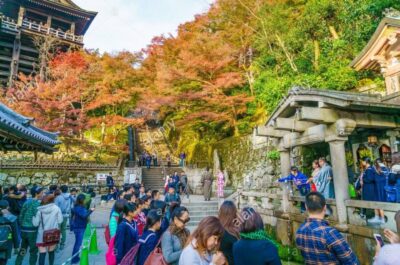
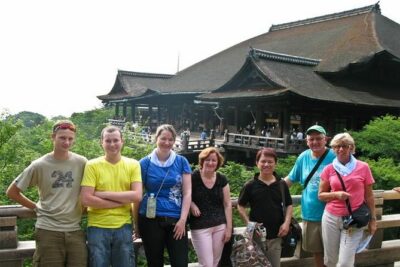
Kiyomizu-dera receives about an hour, with admission charged separately. The temple sits on the wooded slopes of Mount Otowa and is known for its large wooden stage, broad city views, and long connection to Kyoto’s religious life.
This is one place where a guide adds useful structure. The grounds include several buildings, gates, and religious features, and it is easy to see the stage without understanding how the temple complex fits together. You can ask about customs, architecture, and the role of the temple in Kyoto.
The nearby slopes of Sannenzaka and Ninenzaka receive another hour. These stone-paved lanes lead toward Kiyomizu-dera and are lined with traditional-style buildings, shops, cafés, and small food sellers.
The area is photogenic but rarely quiet. The lanes are also sloped and can be tiring, especially after Fushimi Inari. Wear shoes with a firm sole, and remember that this part of Kyoto is as much about strolling and browsing as it is about sightseeing.
A completely different side of Kyoto:
- PERFECT KYOTO 1-Day Bus Tour
★ 5.0 · 13,518 reviews - Kyoto: Fushimi Inari, Kinkakuji, Bamboo Grove 1 Day Bus Tour
★ 4.8 · 4,316 reviews - Kyoto: Tea Ceremony in a Traditional Tea House in Kiyomizu
★ 4.9 · 3,519 reviews - Kyoto Geisha Walking Tour: Gion District & Hidden Gems
★ 4.7 · 3,273 reviews
A machiya Starbucks, Yasaka Pagoda, and Gion
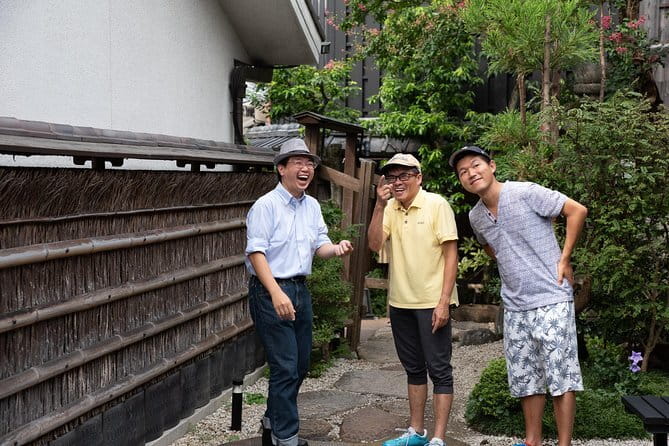
The five-minute visit to Starbucks Coffee Kyoto Nineizaka Yasaka Chaya is an unusual stop. It occupies a traditional machiya-style building, so the interest is in the setting rather than the coffee brand.
You only explore inside briefly, and you may leave the tour if you want to stay longer. That makes this a harmless add-on for people curious about the building, but it is not essential if you are trying to spend every minute at temples and historic streets.
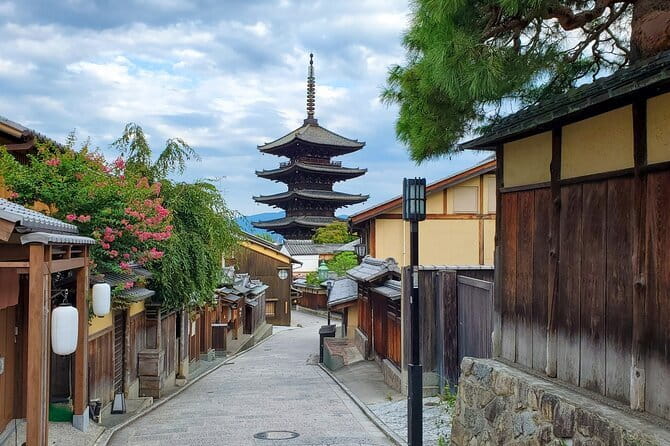
The nearby Yasaka Pagoda, also called Gojunoto, gets another five-minute photo stop. Its elegant profile is one of the most recognizable views in the Higashiyama district. The short visit is enough for a look and a picture, though not for a detailed temple visit.
Hanamikoji Street in Gion is also scheduled for about five minutes. This narrow stone-paved street runs through Kyoto’s best-known geisha district. The quick stop lets you see the traditional facades and understand the area’s layout, but it should not be confused with a full exploration of Gion.
Please keep your behavior respectful here. The district is a living neighborhood and workplace, not a stage set. A guide can help you understand what you are seeing without turning the area into a hunt for photographs of people.
Tatsumi Bridge and the quieter side of Gion
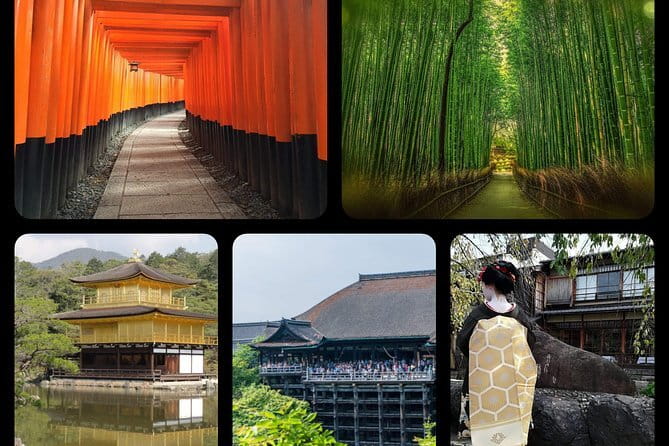
Tatsumi Bridge is given about ten minutes. This small wooden bridge crosses the Shirakawa River and offers a calmer contrast to the crowded Higashiyama slopes.
I especially like this stop because it shows a more delicate side of Kyoto. The river, bridge, and traditional buildings create the kind of scene many people hope to find but might miss if they follow only the main attractions.
Ten minutes is enough for photographs and a short explanation. If your group values atmosphere more than ticking off every major temple, ask whether this area can receive extra time. A private tour makes that kind of trade possible.
Nishiki Market, Kyoto’s food corridor
Nishiki Market gets about an hour and is the tour’s main food-focused stop. Known as Kyoto’s Kitchen, it runs through a narrow covered market filled with food shops and small stalls.
You can expect a wide range of Japanese ingredients and prepared foods, but the experience is not included in the tour price. You pay for anything you eat or drink, and you should keep in mind that some sellers may have their own rules about where food can be consumed.
A guide is useful here because the market can seem like a row of unfamiliar samples. Ask what is local to Kyoto, what is seasonal, and which foods are worth trying if you have limited time. If your group has allergies or strong dislikes, explain that before entering.
The market is also a good place to adjust the day. You might use the hour for lunch, a small snack, or simply a walk through the stalls. The route is already long, so do not feel obliged to sample everything.
Kinkaku-ji, the Golden Pavilion
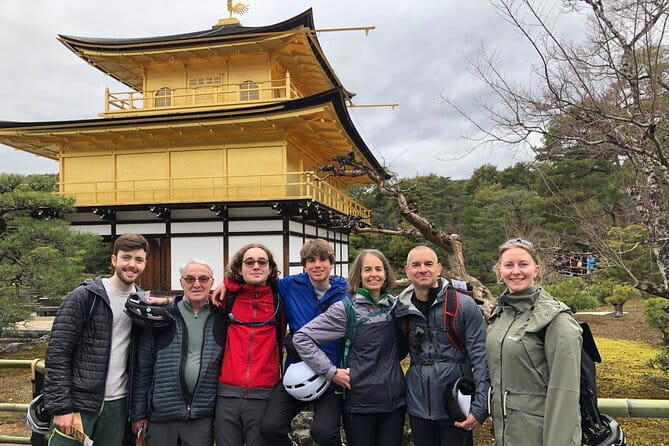
Kinkaku-ji receives about an hour, with an admission fee not included. The three-story Golden Pavilion is covered in gold leaf and sits beside a pond in temple grounds designed for viewing the building from several angles.
This is one of Kyoto’s signature sights, and it earns its place on a first-visit route. The pavilion is striking even if you have seen photographs, but the visit is more about viewing and taking pictures than entering the building. The grounds provide the setting, while the pavilion does the visual work.
Crowds can make the main viewing area feel brisk and crowded. A private guide cannot remove the crowds, but can help you understand the route and give the stop some context rather than leaving you to make a quick loop and move on.
Because Kinkaku-ji is across the city from Fushimi Inari and Higashiyama, transport planning matters. The experience does not include transportation, and public transport may be used at an additional cost. Confirm how the group plans to move between districts before you begin.
Tenryu-ji and the Arashiyama Bamboo Forest
Tenryu-ji is a major Zen temple in Arashiyama, founded in 1339 by Ashikaga Takauji on the site of a former imperial villa. The visit lasts about thirty minutes, and admission is extra.
That half hour gives you a useful introduction to the temple, but it is not enough for a slow study of every building and garden. If Zen architecture or garden design is central to your interests, you may want to ask for more time here and shorten another stop.
The Arashiyama Bamboo Forest follows, with about thirty minutes. The principal path runs for roughly 400 meters through tall bamboo. It is a memorable walk, though the famous lane can be crowded and the visit is fairly short.
The value of seeing the bamboo forest with a guide is mainly practical. You can get to the known path, hear how it relates to Arashiyama, and avoid spending extra time searching for the entrance. Do not expect a solitary woodland walk at a popular time of day.
Kimono Forest and Togetsukyo Bridge
The Arashiyama Kimono Forest is a ten-minute stop near Randen Arashiyama Station. About 600 cylindrical pillars, each roughly two meters tall, display kimono fabric patterns as a public art installation.
This is a modern counterpoint to the temples and bamboo. The pillars are easy to photograph, and the stop gives the route a change of pace. Ten minutes is enough to walk through and take pictures.
Togetsukyo Bridge receives another ten minutes. The historic bridge crosses the Oi River for 155 meters and provides views toward the surrounding hills and water.
Again, the timing is brief. You get a picture and a first impression, not a long river walk or a full afternoon in Arashiyama. If scenery is your main interest, tell the guide. You may prefer to trade one of the shorter central stops for more time by the bridge or bamboo grove.
Guide style, photography, and flexibility
The provider describes the guides as warm, fun, and attentive, with a strong spirit of omotenashi, or Japanese hospitality. The most praised qualities in the available feedback are friendliness, flexibility, careful planning, and taking good photographs.
Several guides are named in the feedback. Yuhey is described as easygoing and willing to adapt the day to a group’s interests. Akiyo is praised for balancing major sights with quieter places and even arranging an introduction to a grandmaster pottery maker. Paren handled a rainy afternoon with a family and kept the day casual and adaptable. Kiyoto-san is noted for careful planning, useful suggestions, strong Kyoto knowledge, and making photos and a short video.
Those details point to the best reason to book privately: the guide can respond to your group instead of delivering one fixed speech. You can ask for more food, more temples, fewer shops, or a slower pace.
Still, guide experience may differ. One piece of feedback describes a friendly guide who took excellent pictures but was new to Japan, did not speak Japanese, and knew little about Japanese culture and history. The provider acknowledged that limitation. When booking, it is sensible to state that historical explanation is important to you and ask about the guide assigned to your group.
Price, timing, and what you actually pay
The listed price is $177.90 per person. That is a serious cost for a walking tour, but private guiding can offer good value if you are sharing it with family or friends and want a custom day rather than a fixed group schedule.
The price does not cover food, drinks, attraction tickets, or transportation. You are also asked to cover those costs for the guide as well as for yourself. Kiyomizu-dera, Kinkaku-ji, and Tenryu-ji specifically charge admission, so budget for those separately.
The four to eight hour range matters. At four hours, this is a highlights sampler. At eight hours, you can see more districts but may spend much of the day walking or moving between them. The route’s fourteen listed stops are not all full visits, and several receive only five or ten minutes.
I would not book this expecting a slow, reflective temple day. I would book it to get your bearings fast, see many well-known places, and use the guide’s local help to decide what deserves a second visit later.
The tour is primarily on foot. It is near public transport, and service animals are allowed. Most people can participate, but the hills and stone streets around Fushimi Inari, Kiyomizu-dera, and Higashiyama make sensible footwear important. Free cancellation is available up to 24 hours before the start time. Cancellations or changes inside that window are not accepted for a refund.
Who will get the most from this Kyoto day
This tour suits a first visit, especially if you have limited time and want a broad look at Kyoto. It also suits families and couples who prefer to move at their own speed and ask questions without a large group listening.
It is a good fit for photographers because the route includes repeated opportunities for portraits and scenic shots, and the guides are expected to help with photos. It also works for mixed-interest groups: one person can focus on temples, another on food, and another on old streets.
You may want something else if you prefer one subject in depth. A specialist temple tour, food tour, or Arashiyama-focused outing would give you more time in one area. This route favors range over depth.
Should you book KIYOTO’s private Kyoto tour?
Book it if you want a personal guide, a broad first look at Kyoto, and the freedom to adjust the day. The strongest features are the private format, photo help, and blend of major sights with places such as Pontocho and Tatsumi Bridge.
Before paying, confirm your priorities, the expected duration, how transport will work, and which admissions you will cover. If your guide is Yuhey, Akiyo, Paren, or Kiyoto-san, the available feedback points to especially strong personal attention, but guide assignments can vary.
For a group willing to pay for convenience and flexibility, this is a useful Kyoto introduction. For a traveler seeking quiet temples and long visits at each site, the packed route may feel rushed.
FAQ
How long does the private Kyoto tour last?
The tour lasts approximately four to eight hours. The exact length affects how many stops you can visit and how much time you can spend at each one.
Where does the tour start and end?
It starts at the Kyoto Tourist Information Center Kyo-Navi, on the second floor of Kyoto Station Building. The activity ends back at the meeting point.
Is this a private tour?
Yes. Only your group participates, so you receive the guide’s attention without joining a larger tour group.
Are admission tickets included?
No. Food, drinks, attraction tickets, and transportation are not included. Admission is specifically listed as extra for Kiyomizu-dera, Kinkaku-ji, and Tenryu-ji.
Is transportation included?
No. The experience is primarily a walking tour. Public transport may be used at an additional cost, and you are asked to cover related costs for the guide as well as yourself.
What places can the tour visit?
The route can include Pontocho, Fushimi Inari-taisha Shrine, Kiyomizu-dera, Sannenzaka and Ninenzaka, the machiya Starbucks, Yasaka Pagoda, Hanamikoji Street, Tatsumi Bridge, Nishiki Market, Kinkaku-ji, Tenryu-ji, the Arashiyama Bamboo Forest, the Kimono Forest, and Togetsukyo Bridge.
Can most people participate?
Most people can participate, and service animals are allowed. The tour is mainly on foot, with slopes and stone-paved streets at several major areas.
What is the cancellation policy?
You can cancel up to 24 hours before the experience start time for a full refund. Cancellations or changes made less than 24 hours before the start time are not accepted and will not be refunded.
Recently added around Kyoto
- Higashiyama | Kyoto: Sakura Season Private Rickshaw Tour★ 5.0 · 3 reviews
- Kyoto Kimono Rental CHAMATSU|Kimono/Yukata Rental FamilyPlan★ 5.0 · 3 reviews
- Kyoto: Half-Day Private Guided Tour to the Old Town of Gion★ 4.4 · 3 reviews
- Nara Private Customizable Half Day Tour★ 5.0 · 3 reviews
- Kansai Region Hiking Adventure in Nara Kobe Kyoto and More★ 5.0 · 3 reviews
- Full Day Nara Deer, Temple, Shrine, Activities & Tea Ceremony★ 5.0 · 3 reviews
- Nara: Essential Private Tour with Deer Park and Temples★ 5.0 · 3 reviews
- Hiking Tour for Sacred Sites in Kyoto with a Guide★ 5.0 · 3 reviews
Private, compared.
Fushimi Inari Hidden Hiking Tour (Private Option Available)
Read our review →
Private Kyoto Tour with a Local, Highlights & Hidden Gems, Personalised
Read our review →
Kyoto 6hr Private Tour with Government-Licensed Guide
Read our review →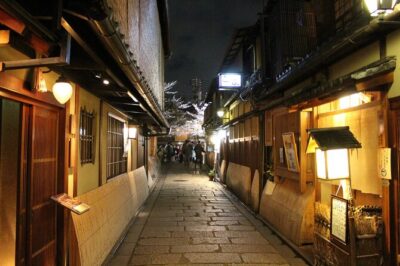
10 Must-see Spots in Kyoto One Day Private Tour (up to 7 people)
Read our review →
Nara Half Day Trip Walking Tour (Private Option Available)
Read our review →
Kyoto 4hr Private Tour with Government-Licensed Guide
Read our review →