REVIEW · PRIVATE
KIYOTO’s Kyoto Private Tour: Highlights & Hidden Gems
Kyoto’s biggest sights rarely fit neatly into one day, but this private tour makes a serious attempt. You move from the red gates of Fushimi Inari to Kiyomizu-dera, Gion, Nishiki Market, Kinkaku-ji, and Arashiyama, with a guide to explain what you are seeing rather than simply point at it.
I like the personal feel, especially the chance to adjust the pace and ask questions as you go. I also like the mix of famous temples, traditional lanes, local snacks, and ordinary Kyoto streets. The tradeoff is a long day with several transfers, and the advertised price does not include admissions, food, or standard transportation costs.
In This Review
- Key points at a glance
- A big Kyoto day, built around walking
- Fushimi Inari: red gates and an early start
- Kiyomizu-dera and Kyoto from the wooden stage
- Sannenzaka, Ninenzaka, and a very Kyoto coffee stop
- Yasaka Shrine, Hanamikoji-dori, and Gion
- Nishiki Market: Kyoto’s edible center
- Kinkaku-ji, Kyoto’s golden temple
- Arashiyama Bamboo Forest at day’s end
- What the $116 price really covers
- Practical details before you book
- Who will get the most from this tour
- Should you book this Kyoto tour?
- FAQ
- How long does the private Kyoto tour last?
- Which languages are available?
- Is hotel pickup included?
- Are admission fees and meals included?
- What should I bring?
- Can wheelchair users take this tour?
Key points at a glance
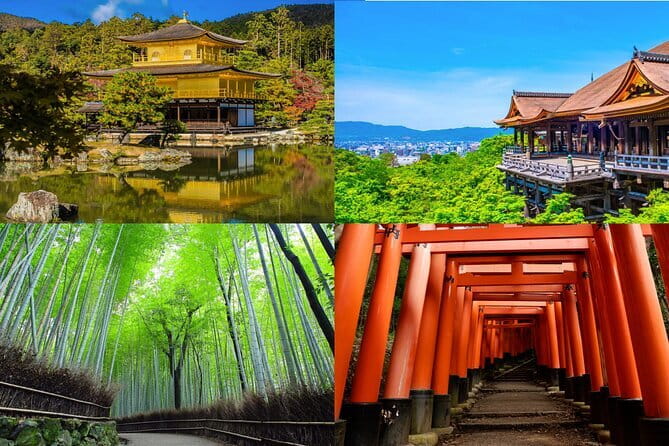
- A private Kyoto overview in 6 to 8 hours: You can cover far more than you normally would on foot alone.
- Famous sights plus everyday Kyoto: The route links major temples with Sannenzaka, Ninenzaka, Gion, and Nishiki Market.
- A guide-led walking experience: Kiyoto’s small team aims for conversation, local context, and flexible pacing.
- Food is part of the day: Nishiki Market includes time for snacks, tastings, shopping, and lunch.
- Expect extra costs: Admission fees, meals, drinks, and transportation are not generally included.
- Check mobility details carefully: The tour is described as wheelchair accessible in one section but also not suitable for wheelchair users or people with mobility impairments.
A big Kyoto day, built around walking
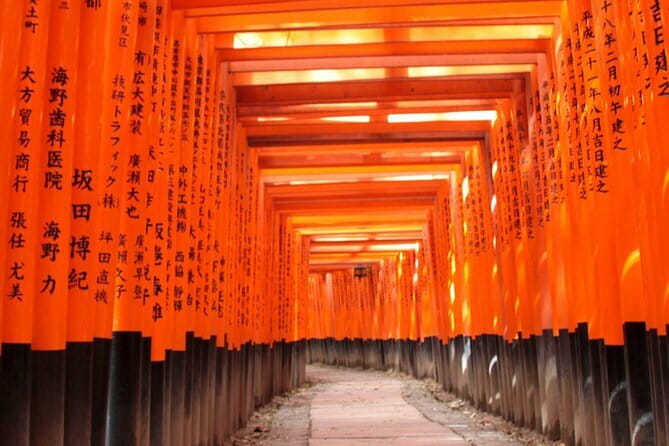
This is not a quiet single-neighborhood stroll. It is a broad survey of Kyoto, with a route that crosses the city and links several of its most recognizable sights.
You begin in Kyoto and use a short train ride to reach Fushimi Inari Taisha. From there, the day shifts to eastern Kyoto, then downtown, northwestern Kyoto, and finally Arashiyama. That range is the main appeal. If this is your first visit and you want to see the city’s major pieces in one day, the route gives you a useful first look.
The pace is designed to be gentle, with breaks in cafés, tea houses, and local eateries. Still, you should be comfortable walking for much of the day. The itinerary includes temple grounds, sloping streets, market lanes, bamboo paths, and station transfers.
Because the group is private, you have more room to ask for explanations or adjust the rhythm than you would on a large bus tour. Kiyoto works with a small team of guides he has trained, and guides named Mariko, Mana, and Noda have led past departures. The experience can therefore feel personal, but your exact guide depends on availability.
A few more Kyoto experiences worth comparing
- Fushimi Inari Hidden Hiking Tour (Private Option Available)
★ 5.0 · 1,750 reviews - Private Kyoto Tour with a Local, Highlights & Hidden Gems, Personalised
★ 5.0 · 1,543 reviews - Kyoto 6hr Private Tour with Government-Licensed Guide
★ 5.0 · 1,369 reviews
Fushimi Inari: red gates and an early start
Your first major stop is Fushimi Inari Taisha, reached by a train ride of about ten minutes from Kyoto.
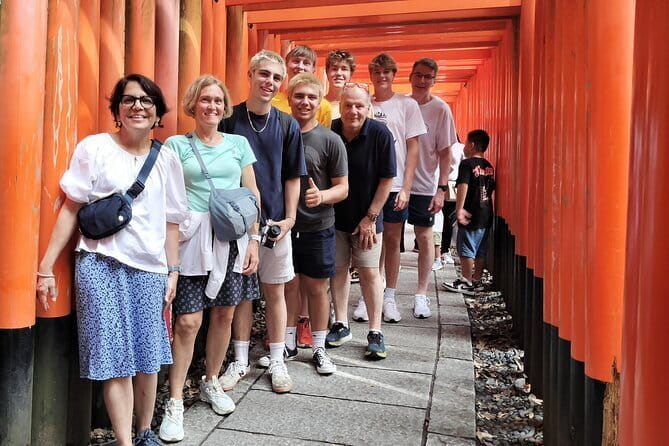
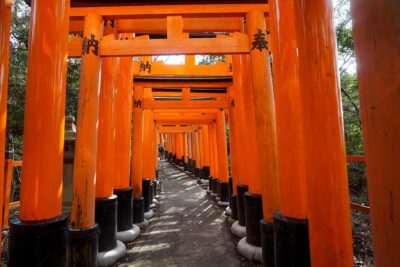
Fushimi Inari is famous for its long corridors of vermilion torii gates. The shrine is dedicated to Inari, a Shinto deity associated with rice, business, and prosperity. Fox statues appear around the grounds because foxes are regarded as Inari’s messengers.
The scheduled visit lasts about 40 minutes. That gives you enough time to enter the shrine grounds, walk beneath a section of the gates, and hear the basic religious and historical context. It is not enough for a full climb to the mountain summit, so set your expectations accordingly.
This is one of the busiest places in Kyoto. Starting here is sensible because the first stop comes before the day has fully gathered speed, but Fushimi Inari can still be crowded. Your guide may help you find quieter stretches and explain the shrine’s symbols, yet no private tour can remove the crowds from one of Japan’s most popular sights.
Wear shoes with a good grip. The route can include steps and uneven surfaces, even if your guide keeps the walk moderate.
Kiyomizu-dera and Kyoto from the wooden stage
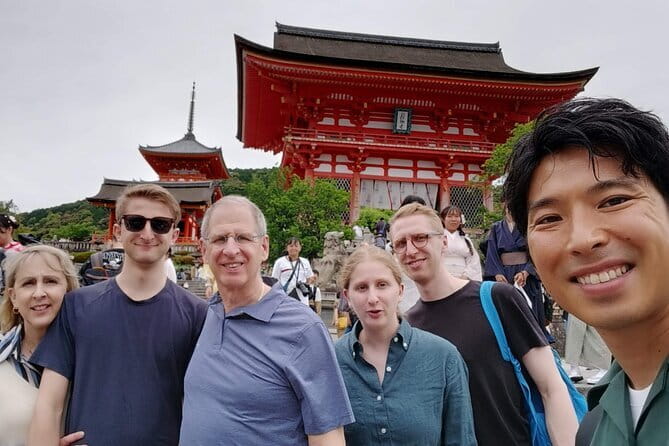
After Fushimi Inari, a black cab transfer of about 20 minutes takes you to Kiyomizu-dera.
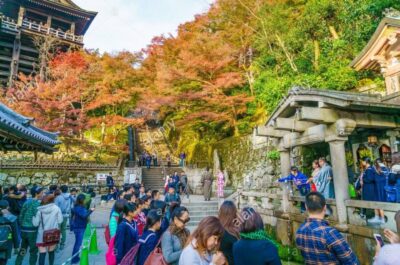
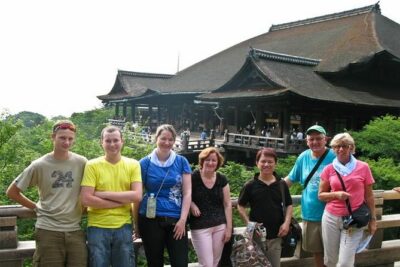
Kiyomizu-dera is one of Kyoto’s essential stops. Its large wooden stage projects from the hillside and gives you wide views over the city. The temple’s name means Pure Water Temple, linked to the Otowa Waterfall below the main hall.
You have about an hour for a guided visit. That is a useful amount of time for the main hall, the stage, the surrounding paths, and the view. Your guide can also explain how the temple fits into Kyoto’s Buddhist traditions instead of leaving you to decode the complex on your own.
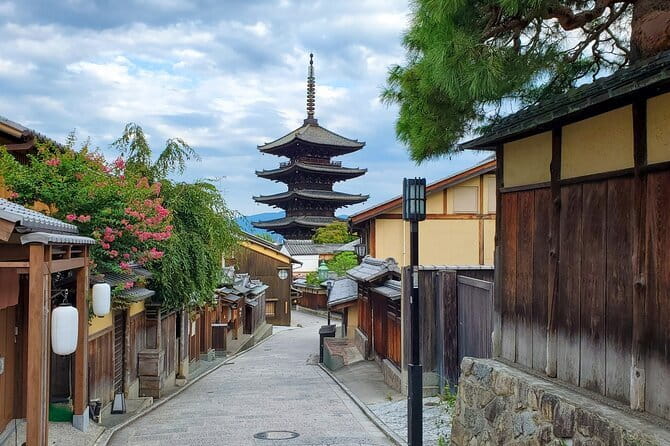
The approach to Kiyomizu-dera is part of the experience. You walk through Sannenzaka and Ninenzaka, two old lanes lined with wooden buildings, cafés, souvenir shops, and food stalls. They are attractive but heavily visited, so think of them as historic shopping streets rather than untouched old Kyoto.
The itinerary allows about 15 minutes in each lane. That is enough for a short walk and perhaps a snack, but not enough for serious shopping. If you spot something you want to buy, tell your guide early. A private tour gives you some flexibility, although the full route already contains many stops.
Sannenzaka, Ninenzaka, and a very Kyoto coffee stop
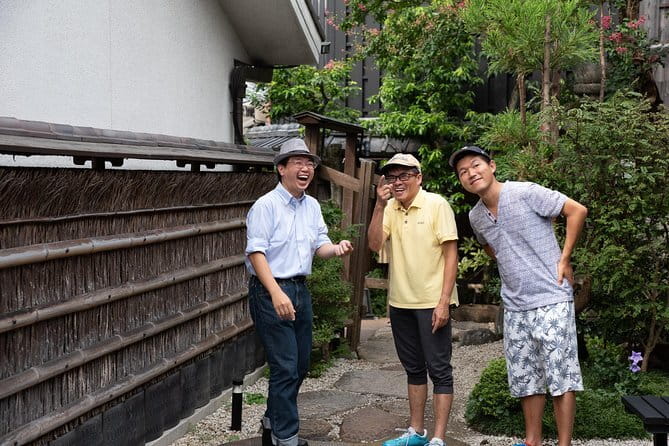
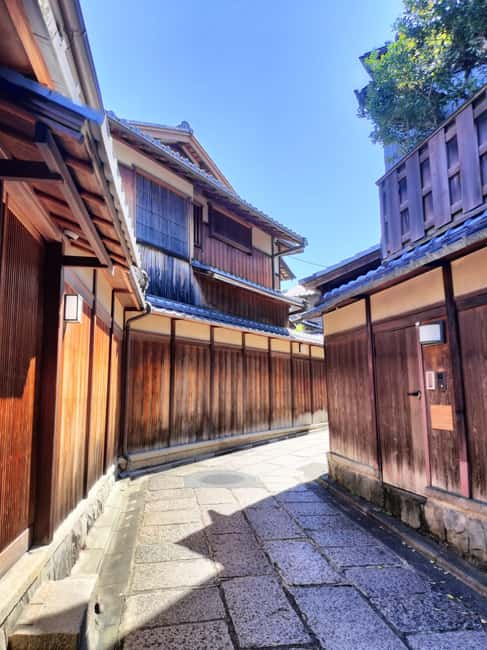
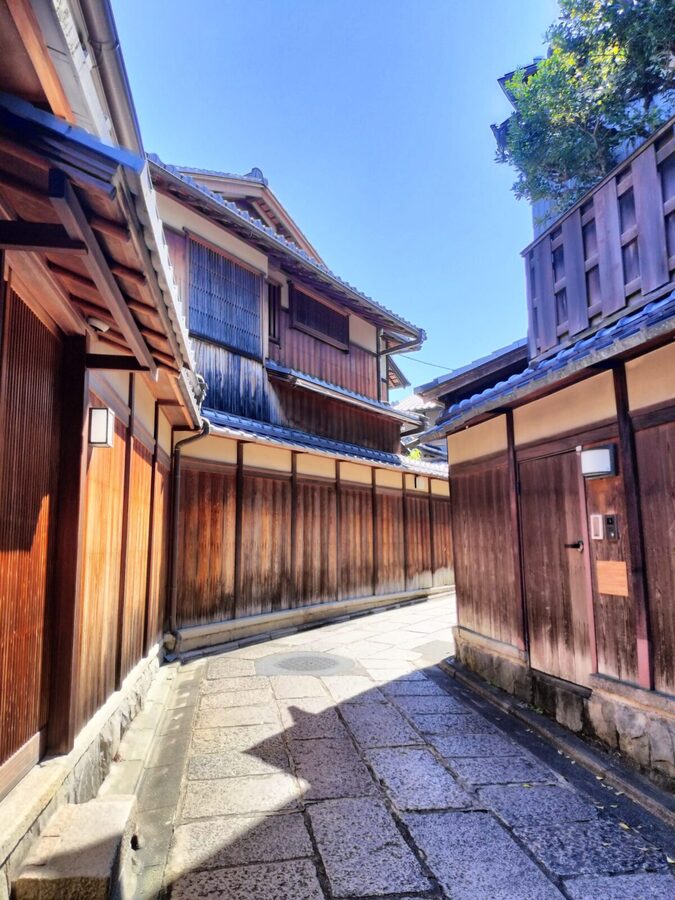
Sannenzaka and Ninenzaka offer some of the best visual continuity in the eastern temple district. Sloping lanes, dark timber façades, tiled roofs, and small food shops create the classic Kyoto scene.
You can pause for coffee, dessert, street food, or a local snack. Food is not included, so carry some yen. The tour information suggests bringing about ¥1,000 per person for a half-day and ¥1,000 to ¥1,500 for a full-day to cover admissions, but food and drinks may require more.
One stop is the Starbucks Coffee at Kyoto Nineizaka Yasaka Chaya. The attraction is the setting inside a traditional-style townhouse, not the coffee itself. It is a quick photo stop, lasting about five minutes. I would treat it as a novelty rather than a cultural highlight.
The short timing here keeps the day moving. It also means you should not expect a slow café break at every stop. If you want time for tea, sweets, or shopping, ask your guide how to fit it in.
A completely different side of Kyoto:
- PERFECT KYOTO 1-Day Bus Tour
★ 5.0 · 13,518 reviews - Kyoto: Fushimi Inari, Kinkakuji, Bamboo Grove 1 Day Bus Tour
★ 4.8 · 4,316 reviews - Kyoto: Tea Ceremony in a Traditional Tea House in Kiyomizu
★ 4.9 · 3,519 reviews - Kyoto Geisha Walking Tour: Gion District & Hidden Gems
★ 4.7 · 3,273 reviews
Yasaka Shrine, Hanamikoji-dori, and Gion
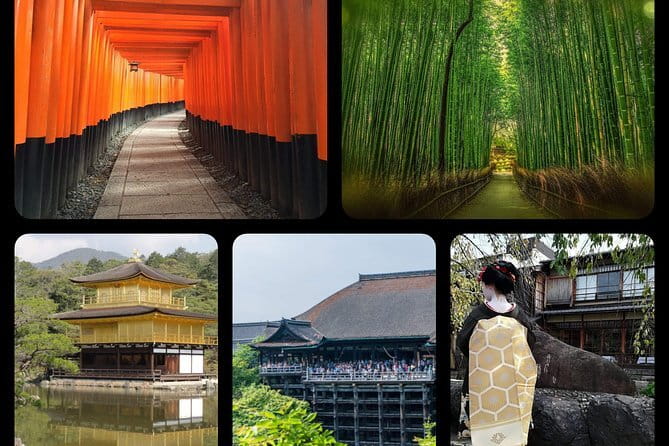
The route continues toward Yasaka Shrine, with a short walk and photo stop of about ten minutes.
Yasaka Shrine is one of Kyoto’s best-known Shinto shrines and an important landmark at the eastern edge of Gion. The bright vermilion gates and open grounds offer a change from the enclosed temple spaces earlier in the day.
From there, you walk along Hanamikoji-dori and through Gion. Hanamikoji is known for its traditional wooden architecture and refined restaurant fronts. Gion is Kyoto’s historic geisha district, though you should not expect guaranteed sightings of geiko or maiko. The value here is the street setting, the explanation of local customs, and the chance to understand how the district functions beyond the postcard view.
The schedule gives about ten minutes on Hanamikoji-dori and 20 minutes in Gion. That is enough for orientation and photos. It is not a full neighborhood exploration.
This is also a place where good behavior matters. Keep your distance from people, do not block narrow lanes, and follow any posted photography rules. A local guide can help you read the mood of the area.
Nishiki Market: Kyoto’s edible center
Nishiki Market provides the longest stop in the middle of the day, about one hour.
The covered market is packed with food stalls, small shops, kitchen goods, pickles, sweets, seafood, and seasonal specialties. It is an ideal place to sample several small items instead of committing to one large meal.
Lunch and food tastings are listed as part of the stop, but the cost is yours. You may also need to cover the guide’s meal if you ask the guide to join you for lunch. Clarify this before ordering.
I like this part of the tour because it adds taste and texture to a day otherwise centered on temples and shrines. Kyoto is not only architecture and ceremony. A market walk lets you see what people buy, eat, and take home.
One hour goes quickly. If you want a sit-down lunch, the time may feel tight. If your priority is sampling local snacks, it works better. Tell your guide what matters most so the stop matches your appetite and budget.
Kinkaku-ji, Kyoto’s golden temple
After Nishiki Market, a bus or coach transfer of about 40 minutes takes you toward Kinkaku-ji. This is one of the longer road sections, and traffic can affect the timing.
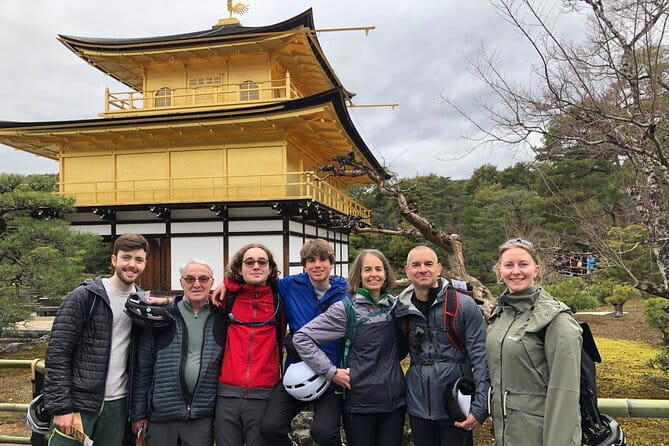
Kinkaku-ji, formally known as Rokuon-ji, is the Golden Pavilion associated with Zen Buddhism. The pavilion’s gold-covered upper stories reflect in the pond, creating one of Kyoto’s most familiar views.
Your guided visit lasts around 50 minutes. You follow the designated route around the grounds and stop at the main viewing areas. The pavilion itself is the visual centerpiece, but the surrounding garden and pond help explain why the site has remained so important.
Do not expect to enter the pavilion. The appeal is the exterior view and the setting. Crowds can gather at the main photo point, especially during busy seasons, so your guide’s historical explanation may be most useful while you move through the grounds.
The transfer time is worth considering. Kinkaku-ji sits away from the earlier eastern districts, and reaching it by public transport can take effort. Including it in a private route saves you from planning the connections yourself, but it also adds to the day’s transit time.
Arashiyama Bamboo Forest at day’s end
A black cab ride of about 25 minutes takes you from Kinkaku-ji to Arashiyama.
The bamboo forest is a short walking visit of about 30 minutes. Tall bamboo stalks create a narrow green corridor, and the sound of the wind moving through the leaves is often more memorable than the photographs.
This stop is beautiful but compact. The main paths are popular, and the famous section can feel crowded. Your guide may point out quieter sections or explain the wider Arashiyama area, but the scheduled time is not enough for a full visit to every temple, garden, or riverside path.
Arashiyama is also a good place to think about the balance of this tour. You see many famous places, but each receives a limited amount of time. If you would rather spend half a day slowly exploring Arashiyama, this itinerary will feel too fast. If you want a first orientation to Kyoto’s major sights, the variety is a strength.
The return train takes about 25 minutes, bringing you back to Kyoto. After Fushimi Inari, several temple visits, market food, and multiple transfers, you will likely be ready for a quiet evening.
What the $116 price really covers
At $116 per person, the tour can offer solid value for a private day if you are traveling with family or a small group and want a guide’s help connecting distant sights.
The value comes from the route planning, pickup, private attention, and the ability to ask questions throughout the day. You also avoid spending your limited vacation time figuring out how to link Fushimi Inari, Kiyomizu-dera, Gion, Nishiki Market, Kinkaku-ji, and Arashiyama.
The price needs careful reading. Admission fees are extra, generally about ¥300 to ¥800 per paid facility. Food, drinks, personal expenses, and transportation costs are also listed as not included.
There is a separate van option that includes the vehicle, driver, gas, parking, and one bottle of water per guest. Confirm exactly which transport arrangement applies to your booking. The scheduled route includes trains, a bus or coach, and black cabs, so the transport cost can affect the final total.
For a solo visitor, $116 plus extras may feel expensive. For a private group splitting the guide cost, it can make more sense. You are paying for time saved and local assistance, not admission tickets or meals.
Practical details before you book
Comfortable shoes are essential. This is a walking tour with temple grounds, sloped lanes, market streets, and station connections.
Dress for the weather. Kyoto can feel especially hot and humid in warmer months, while winter mornings may be cold. Bring cash for admissions and small food purchases because many places accept cash only.
Pickup is included, but you need to email your preferred location after booking. That can be your hotel, a station, or a landmark. Be specific, especially if you are meeting near a large station.
Communication takes place through WhatsApp when possible. Install it before the tour, or provide a direct email address. Send your reservation date and time, the group representative’s full name, phone number, and email address so the guide can confirm the details.
The tour is offered in English or Japanese and is for a private group. Cancellation is free up to 24 hours ahead, and you can reserve now and pay later.
There is conflicting information about accessibility. One section says the tour is wheelchair accessible, while another says it is not suitable for wheelchair users or people with mobility impairments. Contact the provider before booking if this affects you. The route’s walking, slopes, steps, and transfers may be difficult even when a vehicle option is available.
Who will get the most from this tour
I would recommend it to a first-time Kyoto visitor who wants a broad introduction and does not want to handle a complicated day of connections.
It also suits families and couples who value a private guide, especially if you want help choosing snacks, understanding customs, or changing the pace. Past guide feedback highlights friendly service, local knowledge, help avoiding the thickest crowds, and thoughtful food stops. Kiyoto has also taken a group to a conveyor-belt sushi restaurant, showing that meals can sometimes be shaped around your interests.
The tour is less suited to you if you prefer slow temple visits, long shopping breaks, or a single neighborhood explored in detail. It is also a poor fit if long walks, steps, or frequent transfers are a concern.
Should you book this Kyoto tour?
Book it if your priority is seeing the major sights in one private day, with a human guide to connect the history, food, and neighborhoods.
Before paying, confirm three things: your pickup point, the transport arrangement and added cost, and the accessibility of the exact route. Also decide if you want a full lunch or quick market snacks.
The tour’s strongest feature is its personal, flexible approach. The main weakness is the ambitious schedule. If you accept a fast-moving day and budget for extras, it can be a practical way to get your first feel for Kyoto before returning to the places that deserve more time.
FAQ
How long does the private Kyoto tour last?
The tour lasts between 6 and 8 hours. Starting times depend on availability.
Which languages are available?
Live guiding is available in English and Japanese.
Is hotel pickup included?
Pickup in Kyoto is included, but you need to email the provider after booking with your preferred pickup location, such as a hotel, station, or landmark.
Are admission fees and meals included?
No. Admission fees, food, drinks, personal expenses, and transportation costs are generally not included. Paid facilities usually charge about ¥300 to ¥800.
What should I bring?
Bring comfortable shoes and clothing suited to the weather. Carry cash because many places accept cash only.
Can wheelchair users take this tour?
The information is inconsistent. One section describes the activity as wheelchair accessible, while another says it is not suitable for wheelchair users or people with mobility impairments. Contact the provider before booking to confirm the route and transport arrangements.
Recently added around Kyoto
- Higashiyama | Kyoto: Sakura Season Private Rickshaw Tour★ 5.0 · 3 reviews
- Kyoto Kimono Rental CHAMATSU|Kimono/Yukata Rental FamilyPlan★ 5.0 · 3 reviews
- Kyoto: Half-Day Private Guided Tour to the Old Town of Gion★ 4.4 · 3 reviews
- Nara Private Customizable Half Day Tour★ 5.0 · 3 reviews
- Kansai Region Hiking Adventure in Nara Kobe Kyoto and More★ 5.0 · 3 reviews
- Full Day Nara Deer, Temple, Shrine, Activities & Tea Ceremony★ 5.0 · 3 reviews
- Nara: Essential Private Tour with Deer Park and Temples★ 5.0 · 3 reviews
- Hiking Tour for Sacred Sites in Kyoto with a Guide★ 5.0 · 3 reviews
Private, compared.
Fushimi Inari Hidden Hiking Tour (Private Option Available)
Read our review →
Private Kyoto Tour with a Local, Highlights & Hidden Gems, Personalised
Read our review →
Kyoto 6hr Private Tour with Government-Licensed Guide
Read our review →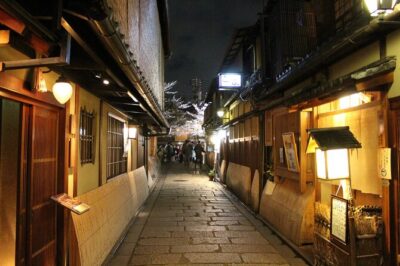
10 Must-see Spots in Kyoto One Day Private Tour (up to 7 people)
Read our review →
Nara Half Day Trip Walking Tour (Private Option Available)
Read our review →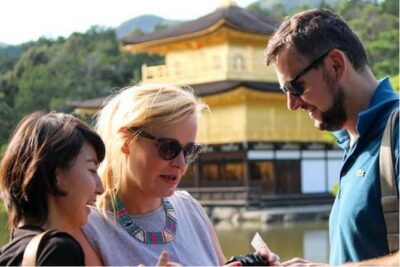
Kyoto 4hr Private Tour with Government-Licensed Guide
Read our review →