
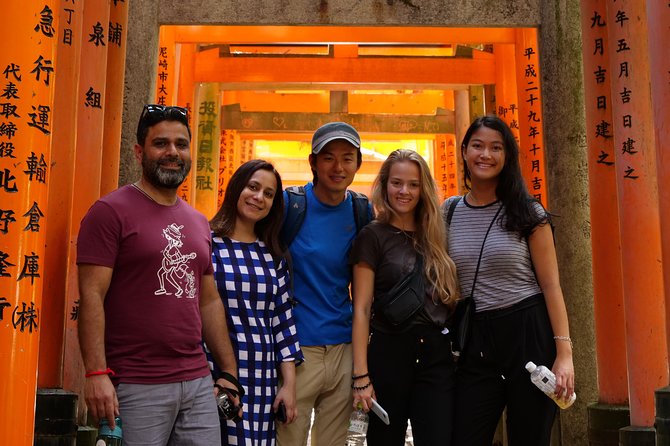
REVIEW · FUSHIMI INARI SHRINE TOURS
Inside of Fushimi Inari – exploring and lunch with locals
The best part of this Kyoto tour is that it takes you beyond the famous first stretch of red torii gates. I like the quiet bamboo and cedar paths, and I like that the route adds small sacred sites, a waterfall, and a gate factory to the usual shrine visit. The included soba lunch and tea break also make the four-hour outing feel like more than a photo stop.
The main caution is physical: the summit sits at 233 meters, and the final climb includes steep stairs. Guides such as Go, Satsuki, and Ko have adjusted their pace for groups, but this is still a hike, not a flat sightseeing walk. Meeting-point communication also matters, since one booking ended badly when the guide and guest failed to find each other.
In This Review
- Key points
- Why this Fushimi Inari hike feels different
- Starting at the Great Torii
- The main shrine and thousands of red gates
- Bamboo, cedar, and smaller sacred sites
- The gate factory, a useful local detail
- Climbing to the 233-meter summit
- Soba lunch and the Japanese tea break
- What the $72.26 price buys you
- Which guide style may suit you
- Weather, fitness, and practical preparation
- Should you book this Fushimi Inari tour?
- FAQ
- How long does the Fushimi Inari tour last?
- Where does the tour meet?
- Where does the tour end?
- What does the tour include for lunch?
- Are dietary options available?
- How difficult is the hike?
- Does the tour reach the summit?
- How large is the group?
- Can I cancel for a full refund?
Key points
- A quieter route through Fushimi Inari: Leave the busiest torii-gate path for bamboo, cedar forest, worship stones, and a waterfall.
- A four-hour shrine hike: The route includes the main shrine, the torii gates, a summit climb, and lunch.
- Soba, tea, and a boiled egg: Food is part of the tour, with vegetarian, halal-friendly, and gluten-free options available.
- A small-group format: The tour is described as limited to 12 people, while the additional details list a maximum of 6.
- Steep stairs to the summit: You need moderate physical fitness and comfortable walking ability.
- Free cancellation up to 24 hours ahead: Poor weather may lead to a new date or a full refund.
Why this Fushimi Inari hike feels different
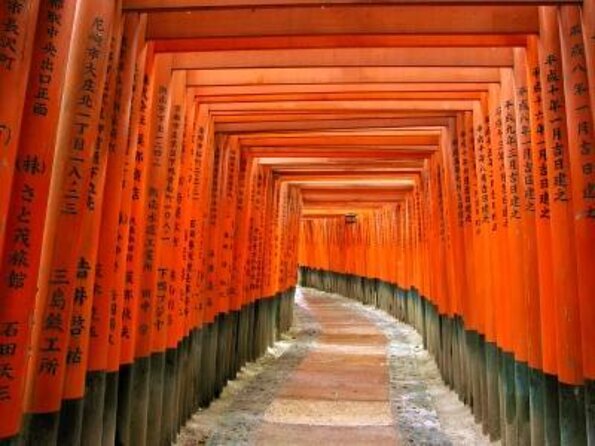
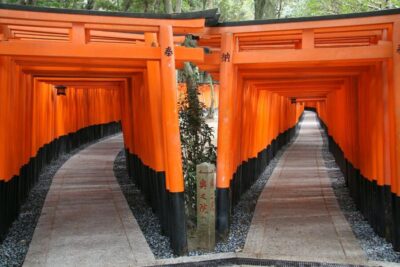
Fushimi Inari-taisha is one of Kyoto’s most recognizable sights. Its hillside trail is lined with thousands of vermilion torii gates, each donated in connection with worship and business success. The first section is easy to reach and often crowded, especially around the main shrine and the most photographed gates.
This tour changes the pace and angle. You begin with the important sights, but then follow a less familiar route through the sacred mountain. That gives you a better sense of Fushimi Inari as a working religious site, not simply a bright tunnel built for photographs.
I like this approach because the shrine’s meaning becomes clearer when you see its smaller worship places, stone markers, forest paths, and waterfall. You still get the iconic torii gates, but you also see the quieter side of the mountain.
The tour lasts about four hours, with roughly three and a half hours listed for the guided visit, hiking, and soba lunch. That is enough time to reach the summit shrine without racing, though the amount of time spent at each stop can vary with the group’s walking pace.
More ways to walk Fushimi Inari:
- Kyoto: Fushimi Inari, Kinkakuji, Bamboo Grove 1 Day Bus Tour
★ 4.8 · 4,316 reviews - Fushimi Inari Hidden Hiking Tour (Private Option Available)
★ 5.0 · 1,750 reviews - Kyoto/Osaka: Nara, Fushimi Inari Taisha, Arashiyama Bus Tour
★ 4.7 · 1,275 reviews
Starting at the Great Torii
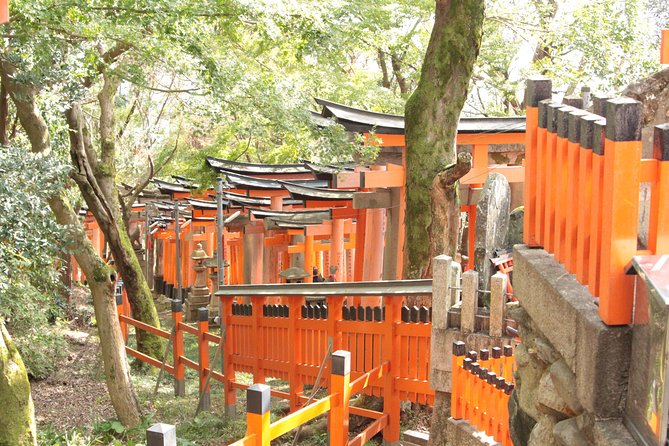
The meeting point is the Great Torii at 68 Fukakusa Yabunouchicho in Fushimi Ward, Kyoto. It is near public transportation, but you should still allow time to identify the correct gate and guide before the start.
This is one place where you should pay attention to the meeting instructions. A red cap was used as a guide identifier, and one missed tour resulted from the guide and guest not finding each other. The guide reported waiting before the start time and searching for about 30 minutes, while the guest understood the meeting differently. The practical lesson is simple: arrive early, read the meeting directions carefully, and look for the stated identifier.
The activity ends back at the meeting point. That makes the outing easier to fit into a Kyoto day, since you do not need to arrange a separate return transfer from the mountain.
The main shrine and thousands of red gates
The first part introduces Fushimi Inari-taisha and its cultural background. You will see the main shrine area before heading along the torii-lined route.
The gates are not just decoration. They mark a connection between donors and Inari, the Shinto deity associated with rice, agriculture, and commercial success. Companies and individuals have donated torii over the years, creating the long red corridors that make Fushimi Inari so distinctive.
A guide adds value here because it is easy to walk through the gates without understanding what you are seeing. The explanation helps connect the bright vermilion color, the fox imagery linked with Inari, and the custom of donation to the shrine’s wider religious role.
This section is also the most familiar and likely to feel busiest. If you want quiet photographs, this is not always the best place to linger. The benefit of this tour is that you do not have to choose between the famous gates and a calmer walk. You get both.
Bamboo, cedar, and smaller sacred sites
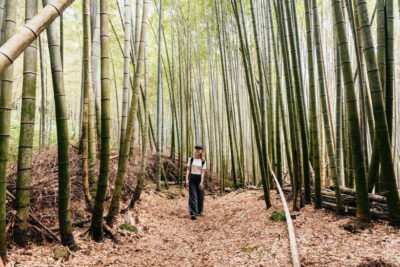
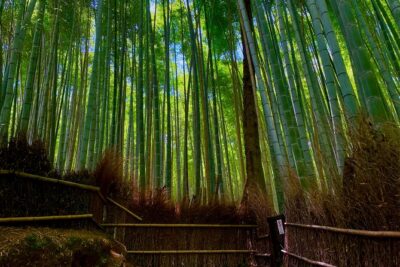
After the main shrine area, the route turns toward forest paths. Bamboo and cedar replace much of the open shrine approach, and the tone becomes quieter.
The forest route is one of the strongest reasons to book this outing. You are still on Fushimi Inari’s sacred mountain, but the setting feels less like a major city attraction. The trees soften the noise, and the walking becomes more about the mountain itself.
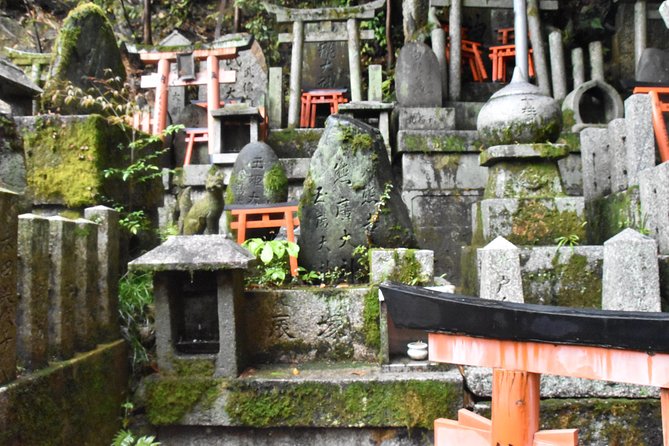
The tour visits authentic holy spots, including worship stones and a waterfall. These places help show that Fushimi Inari is not only a line of gates leading to a summit. The mountain contains many smaller sites where people pray, leave offerings, and maintain local religious customs.
You might find the quieter path more memorable than the headline sight. The torii gates are striking, but the smaller worship areas give the visit texture and a stronger sense of place.
The route is described as easy walking in this section, but easy does not mean completely effortless. You will be walking on a forest route for an extended period, and conditions can vary with weather. Good shoes are sensible, especially since the tour requires moderate physical fitness.
More Kyoto tours that include lunch:
- Bike Tour Exploring North Kyoto plus Lunch
★ 5.0 · 1,087 reviews - Kyoto Zen Meditation & Garden Tour at a Zen Temple with Lunch
★ 5.0 · 441 reviews - 4.5-Hour Kyoto Bike Tour with Lunch and UNESCO Zen Temples
★ 5.0 · 122 reviews - From Kyoto: Nara History Guided Half Day Bus Tour with Lunch
★ 4.8 · 114 reviews
The gate factory, a useful local detail
A gate factory is included along the route. This is an unusual stop because it connects the famous shrine view with the practical work behind it.
Thousands of torii gates line the mountain, and seeing a place connected with their production gives you a more grounded understanding of the shrine. Instead of treating the gates as a single scenic object, you begin to see them as maintained, replaced, and connected with individual donors.
The stop also adds a local-industry detail that you would probably miss on a standard visit. It is the kind of small inclusion that makes a guided route worthwhile. You are not simply being taken to the most photographed point. You are being shown parts of Fushimi that explain how the place functions.
The available information does not promise a detailed factory demonstration or a specific length of time there, so keep expectations practical. Think of it as an interesting stop on a larger route rather than a full workshop visit.
Climbing to the 233-meter summit
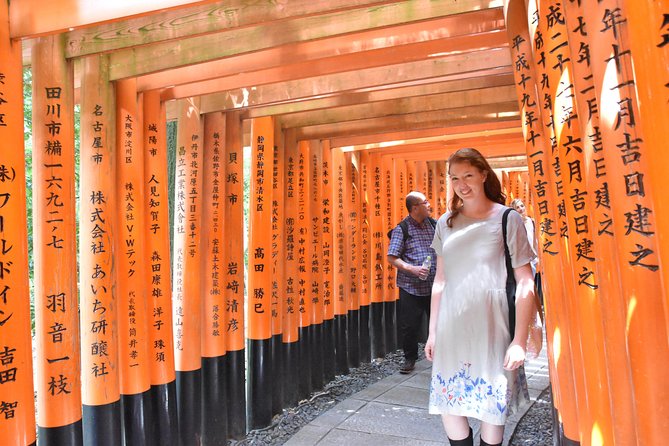
The summit section includes a forest climb of about 20 minutes. The summit shrine sits at 233 meters, and the guide shows you around once you arrive.
The word climb matters. The route includes many stairs, some of them steep. One successful guest described the hike as more challenging than expected, while another specifically warned that people who struggle physically may not enjoy it.
You should be comfortable with sustained walking and stairs before booking. The tour is not presented as an athletic challenge, but neither is it suitable for someone looking for a gentle, level route. A moderate fitness level is required.
The reward is a more complete visit to the mountain. Many people stop well before the summit, so reaching the upper shrine gives you a sense of having seen the full Fushimi Inari route. If you want to pray at the summit shrine, the guide can show you how to do so.
Guides Go, Satsuki, and Ko have each received strong praise for being friendly, informative, and attentive to pace. That matters on a hilly route. A good guide can make the climb feel manageable by setting a steady rhythm and explaining the stops along the way. Still, no guide can remove the stairs, so judge your ability honestly.
Soba lunch and the Japanese tea break
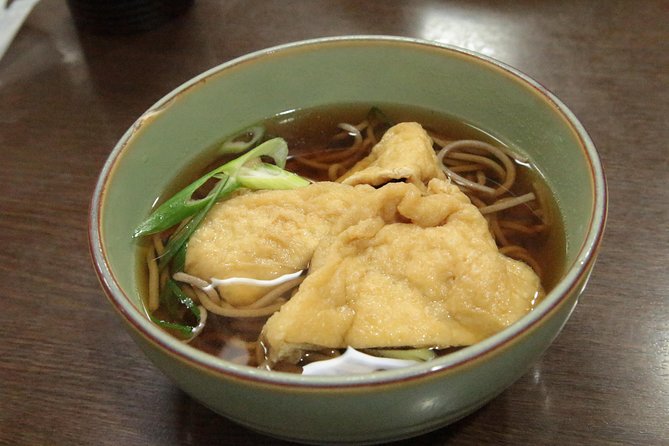
Food is included, which is useful during a half-day hike. The tour provides a soba noodle lunch, followed by a Japanese tea and boiled egg break.
Soba is a fitting meal for this setting. It is simple, familiar to many visitors, and not overly heavy before the remaining walking. The meal also gives the tour a local food element instead of treating lunch as an afterthought.
Dietary needs can be accommodated, with vegetarian, halal-friendly, and gluten-free food available. You should provide that information when booking so the operator can prepare properly. The supplied details do not specify the exact restaurant, soba variety, or menu for each dietary option, so ask ahead if you have a serious allergy or strict requirement.
The tea and boiled egg stop adds a small pause to the day. That break is especially helpful after the climb or before the final portion of the route. You are not expected to organize food on your own, which improves the value of the tour for visitors who want a guided morning or afternoon without extra planning.
What the $72.26 price buys you
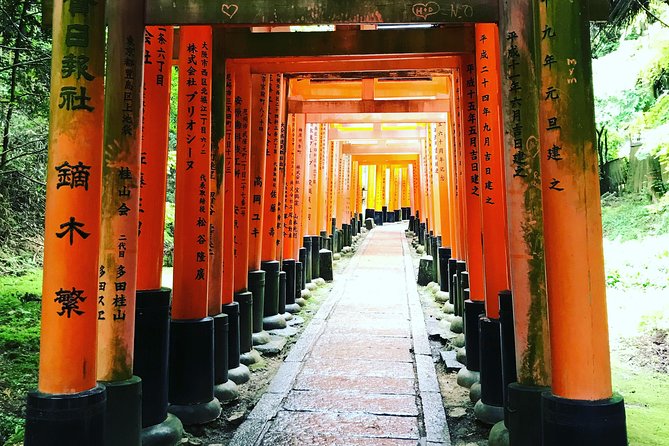
At $72.26 per person, this is more expensive than visiting Fushimi Inari independently. Entry to the shrine itself is included, and the grounds are generally accessible without paying for a standard admission ticket.
The price makes sense mainly for the route and the guide. You are paying to find quieter paths, understand the shrine’s customs, reach the summit with direction, and have lunch and refreshments arranged. If you would happily walk the mountain alone and skip the meal, the tour may not be the best value.
For a first visit to Kyoto, I see stronger value here than in a basic orientation walk. Fushimi Inari is easy to reach, but its scale can be confusing, and the busiest section does not show the whole site. The guide helps you spend four hours with a clear purpose.
The group size needs a little clarification. The overview says the group is limited to 12 participants, while the additional information gives a maximum of 6. Either way, this is intended to be a small-group activity. A smaller group usually makes it easier to ask questions and keep a shared pace, but you should confirm the expected group size at booking if that detail affects your decision.
The tour is often booked around 80 days in advance. That suggests you should not leave it until the last moment during a busy Kyoto trip, especially if you need a particular date or dietary arrangement.
Which guide style may suit you
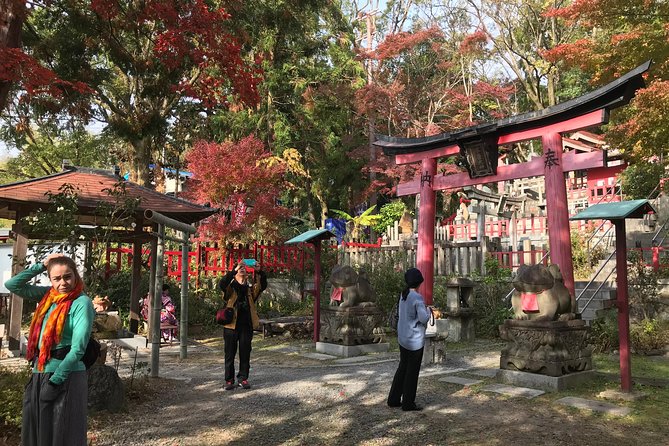
The guide names associated with this activity include Go, Satsuki, and Ko. Go is noted for adjusting the pace to the group, which is useful on a route with a steep finish. Satsuki is associated with taking the group away from the crowds and through smaller shrines and trees. Ko is praised for explaining both the mountain and its history while leading the quieter route.
You are not guaranteed a particular guide, so book for the route and format rather than a specific personality. The strongest pattern is clear: the guide is central to the experience. You will get more from the tour if you ask questions about the shrine, the gates, worship customs, and the places you pass.
The activity is best for people who enjoy learning while walking. If you want a fast photo visit, the four-hour format may feel long. If you like local context and less obvious corners, the extra time is the point.
Weather, fitness, and practical preparation
The activity requires good weather. If poor weather causes cancellation, you are offered another date or a full refund. Free cancellation is available up to 24 hours before the start time, while changes or cancellations within 24 hours are not accepted for a refund.
Wear shoes suitable for stairs and forest paths. The tour description does not list special equipment, but the steep steps make basic walking comfort important. You should also be prepared for a sustained outing rather than a short stop at the lower shrine.
Bring enough attention for the meeting point. The tour begins and ends at the Great Torii, and the missed-meeting incident shows why you should arrive early and use the guide’s identifying details.
Food options include vegetarian, halal-friendly, and gluten-free choices, but you should communicate your needs before the tour. The availability of an option does not mean every dish suits every allergy, so ask specific questions if necessary.
Should you book this Fushimi Inari tour?
Book it if you want more than the standard torii-gate photograph. The combination of the main shrine, quieter forest route, worship stones, waterfall, gate factory, summit shrine, soba, tea, and a boiled egg gives you a fuller visit than a short independent walk.
I would especially recommend it for first-time Kyoto visitors who want cultural explanation and do not want to plan the route themselves. It also suits anyone who has already seen the lower gates and wants a calmer, more local-feeling way to approach the mountain.
Skip it if steep stairs are a serious concern, if you prefer to explore at your own speed, or if the included lunch does not appeal to you. The tour costs more than a self-guided visit, but the guide, route, food, and summit walk provide a reasonable return for the price.
FAQ
How long does the Fushimi Inari tour last?
The experience lasts approximately four hours. The listed shrine visit, hiking, and lunch portion takes about three and a half hours.
Where does the tour meet?
The meeting point is the Great Torii at 68 Fukakusa Yabunouchicho, Fushimi Ward, Kyoto, postal code 612-0881.
Where does the tour end?
The activity ends back at the meeting point at the Great Torii.
What does the tour include for lunch?
A soba noodle lunch is included. The tour also includes a Japanese tea and boiled egg break.
Are dietary options available?
Vegetarian, halal-friendly, and gluten-free food options are available. You should provide your dietary needs when booking.
How difficult is the hike?
You need moderate physical fitness. The route includes many stairs, some steep, and a climb to the summit shrine at 233 meters.
Does the tour reach the summit?
Yes. The route includes a forest climb of about 20 minutes to the summit shrine, where the guide shows you around.
How large is the group?
The tour description says the group is limited to 12 participants, while the additional details state a maximum of 6. Confirm the expected group size when booking if this is important to you.
Can I cancel for a full refund?
Yes, if you cancel at least 24 hours before the experience start time. If poor weather causes the tour to be canceled, you are offered a different date or a full refund.
Recently added around Kyoto
- Higashiyama | Kyoto: Sakura Season Private Rickshaw Tour★ 5.0 · 3 reviews
- Kyoto Kimono Rental CHAMATSU|Kimono/Yukata Rental FamilyPlan★ 5.0 · 3 reviews
- Kyoto: Half-Day Private Guided Tour to the Old Town of Gion★ 4.4 · 3 reviews
- Nara Private Customizable Half Day Tour★ 5.0 · 3 reviews
- Kansai Region Hiking Adventure in Nara Kobe Kyoto and More★ 5.0 · 3 reviews
- Full Day Nara Deer, Temple, Shrine, Activities & Tea Ceremony★ 5.0 · 3 reviews
- Nara: Essential Private Tour with Deer Park and Temples★ 5.0 · 3 reviews
- Hiking Tour for Sacred Sites in Kyoto with a Guide★ 5.0 · 3 reviews
Fushimi Inari Shrine Tours, compared.
Fushimi Inari, Kinkakuji, Bamboo Grove 1 Day Bus Tour
Read our review →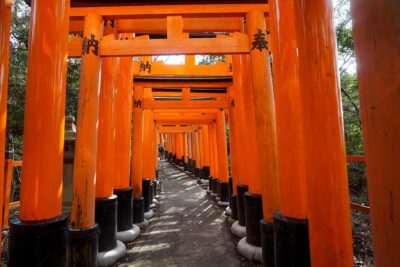
Fushimi Inari Hidden Hiking Tour (Private Option Available)
Read our review →
Kyoto/Osaka: Nara, Fushimi Inari Taisha, Arashiyama Bus Tour
Read our review →
Nijo, Kinkaku-ji, Arashiyama, Kiyomizu & Fushimi Inari
Read our review →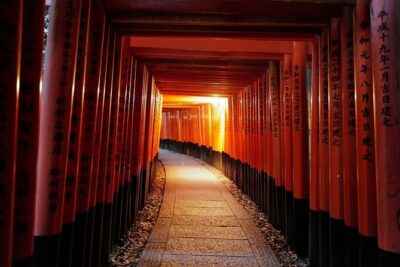
Kyoto Early Bird English Tour: Fushimi-Inari and Arashiyama
Read our review →
Fushimi, Arashiyama – Bamboo, Monkey, Torii & Secrets
Read our review →Browse the lists this tour appears in