
REVIEW · HIKING & TREKKING
Hike and explore the Kurama and Kibune ancient Paths
Kurama and Kibune offer a side of Kyoto that feels far removed from city streets. This five-and-a-half-hour mountain walk links a historic temple, forest shrines, stone stairways, and the red lanterns of Kifune Shrine, with the Eizan Railway ride adding a pleasant rural prelude.
I like the balance of nature and culture, and I like that the small group, capped at 12 people, lets the guide set a steady pace. Guide Justin is especially good at explaining the route’s legends and pointing out less obvious places. The main catch is the trail itself: steep, uneven sections can be awkward in rain, heat, or for anyone unused to mountain walking.
In This Review
- Key points to know before booking
- Why the Kurama to Kibune route feels different from Kyoto
- Meeting near Kyoto Tower at 9:30 a.m.
- Kurama-dera: a temple on Mount Kurama
- The forest path between Kurama and Kibune
- Arriving in Kibune and Kifune Shrine
- How much walking should you expect?
- What the $165.18 price includes
- Who will enjoy this experience most?
- Practical details that affect your day
- Should you book the Kurama and Kibune hike?
- FAQ
- Where does the tour start?
- What time does the tour begin?
- How long does the experience last?
- What transportation is used?
- Which major sights are visited?
- Is lunch included?
- How difficult is the hike?
- Is the tour guided in English?
- What is the cancellation policy?
Key points to know before booking
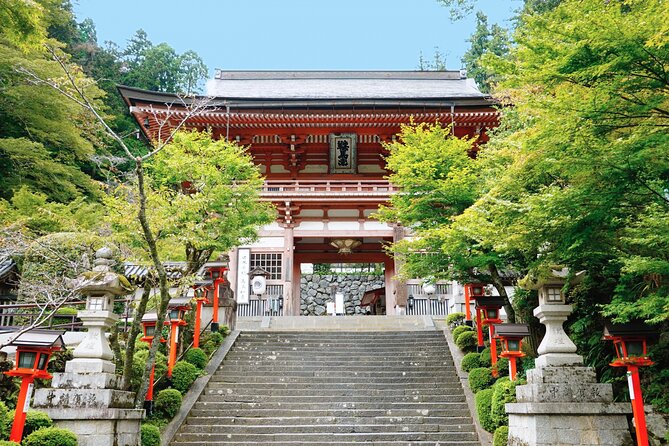
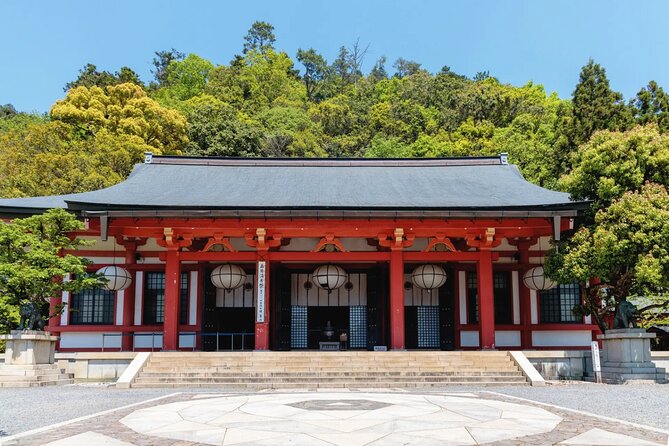
- Kurama-dera begins the cultural side of the walk, with a mountain temple, guardian statues, and broad views from its main hall.
- The Eizan Railway ride is part of the pleasure, carrying you from urban Kyoto into the quieter northern countryside.
- The trail is rugged in places, with steep stairs and uneven ground rather than a flat woodland stroll.
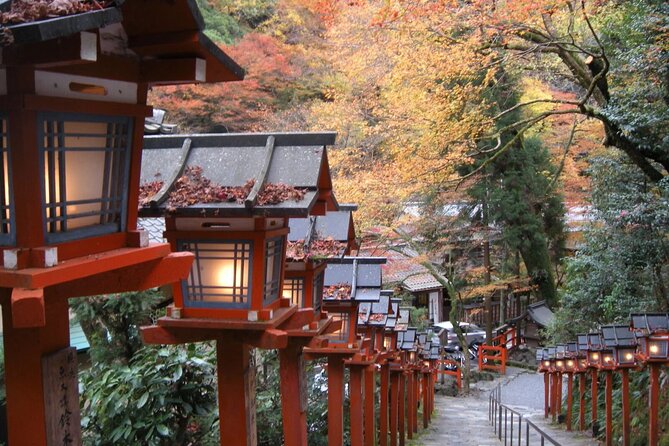
- Kifune Shrine’s red lantern staircase is the visual finale, and the shrine’s water-linked fortune slips add a memorable local custom.
- Transportation and entrance fees are included, but lunch is not.
- The group maximum is 12 people, and the tour returns to its original meeting point near Kyoto Tower.
Why the Kurama to Kibune route feels different from Kyoto
Kyoto is famous for temples reached by buses, trains, and busy shopping streets. This route asks you to work a little harder for its rewards. You walk through the wooded slopes north of the city, following an old mountain path associated with monks, warriors, and spiritual seekers.
That effort changes the mood. The forest becomes the main setting, while the temples and shrines appear as part of the mountain rather than as isolated sights. You hear the guide’s stories, climb at a manageable pace, and get a clearer sense of why these two villages have long been linked.
The route is not a wilderness expedition. It is a guided cultural hike, with marked destinations and public transport at both ends. Still, you should expect real stairs, uneven surfaces, and a moderate level of exertion. Comfortable walking shoes matter more here than polished sightseeing clothes.
A few more Kyoto experiences worth comparing
- Fushimi Inari Hidden Hiking Tour (Private Option Available)
★ 5.0 · 1,750 reviews - Kyoto: 3-Hour Fushimi Inari Shrine Hidden Hiking Tour
★ 4.9 · 270 reviews - Kyoto Hiking Tour: The Nature and Legends of Kurama and Kibune
★ 5.0 · 75 reviews
Meeting near Kyoto Tower at 9:30 a.m.
The day starts at Starbucks Coffee in Kyoto Tower Sando, beside Kyoto Station, at 9:30 a.m. This is a useful meeting place for anyone staying near the station, though you should allow time to locate the café inside the Kyoto Tower complex.
From there, the group takes the Karasuma Subway Line to Kokusaikaikan Station. The journey continues with a 15 to 20 minute walk through a quiet residential area to Iwakura Station, where you board the Eizan Railway.
This transfer takes some time, but it is not dead time. The Eizan train carries you away from central Kyoto and into the northern countryside. By the time you reach Kurama Station after roughly 30 minutes, the setting has changed from city blocks to wooded mountain country.
Transportation during the tour is included, so you do not have to work out the fare or route changes yourself. That is valuable in Kyoto, where a short trip can involve several operators and different ticket systems. The return is also handled as part of the experience, with the activity ending back at the original meeting point.
Kurama-dera: a temple on Mount Kurama
Kurama-dera sits on the slopes of Mount Kurama, and reaching it sets the tone for the rest of the day. This is not simply a temple stop followed by a separate hike. The mountain, the buildings, and the religious stories all belong together.
The temple’s main hall gives you panoramic views over the surrounding area. It is a fine place to pause, catch your breath, and take in the scale of the forested hills. The setting feels quiet and elevated without requiring a long journey from Kyoto.
You will also encounter guardian statues and other details that make the temple more than a quick photo stop. Your guide explains the meaning behind the site and the stories connected with the mountain. That context helps you notice details that are easy to pass when visiting independently.
The visit to Kurama-dera lasts about two hours, including the approach and time spent around the temple grounds. The entrance fee is included. That removes one small task from the morning and makes it easier to focus on the surroundings.
I would not treat this stop as a standard temple circuit. The appeal is the way the buildings sit among the trees and slopes. If you want a long list of rooms, gardens, and art objects, this may feel less immediately rewarding. If you like sacred places with a strong natural setting, Kurama-dera gives you a memorable start.
The forest path between Kurama and Kibune
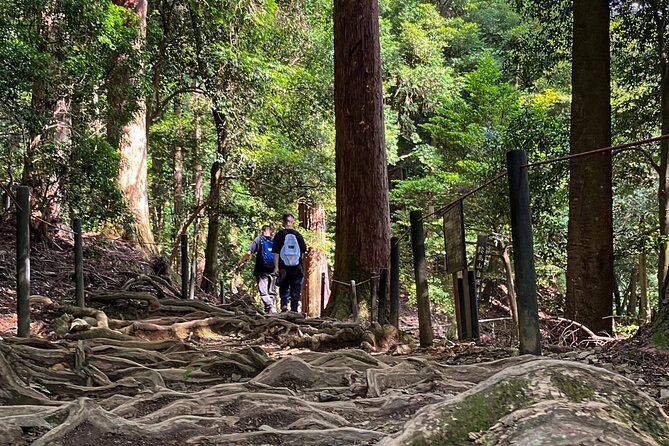
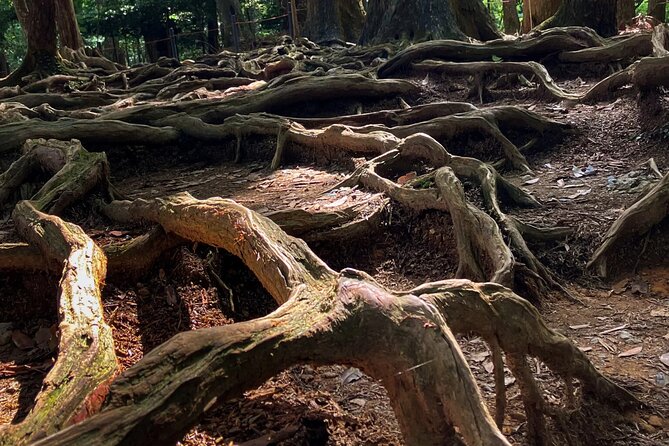
After Kurama-dera, the day shifts from temple visit to mountain walk. The trail passes through dense cedar forest, hidden shrines, and steep stairways before descending toward Kibune.
The word hike is important here. This is not a smooth park path. Some sections are steep and uneven, and wet or hot weather can make the footing more difficult. The guide keeps the group together and sets a steady pace, which is especially useful when the trail rises or the steps become irregular.
You should expect to use your legs for much of the middle section. A moderate fitness level is required, but the experience is not presented as a strenuous athletic challenge. One guide-led account describes it as manageable for most people, which matches the tour’s focus on a controlled pace rather than speed.
Still, do not book this as a gentle stroll if you dislike stairs. The route’s appeal comes partly from its rougher character. You get forest silence, mountain air, and a sense of following an old route rather than moving between attractions by vehicle.
The guide’s role is particularly useful in this section. Justin explains the legends tied to the path and identifies spiritual sites that might otherwise look like ordinary corners of the woods. The result is a walk with a story running through it, not just a sequence of climbs and descents.
Plan your clothing with the trail in mind. Wear shoes with a firm sole, and choose clothes that allow comfortable movement. Bring water, since lunch is not included and the tour spends several hours away from the center of Kyoto. On a hot day, the combination of stairs and forest humidity may feel stronger than the distance suggests.
A completely different side of Kyoto:
- PERFECT KYOTO 1-Day Bus Tour
★ 5.0 · 13,518 reviews - Kyoto: Fushimi Inari, Kinkakuji, Bamboo Grove 1 Day Bus Tour
★ 4.8 · 4,316 reviews - Kyoto: Tea Ceremony in a Traditional Tea House in Kiyomizu
★ 4.9 · 3,519 reviews - Kyoto Geisha Walking Tour: Gion District & Hidden Gems
★ 4.7 · 3,273 reviews
Arriving in Kibune and Kifune Shrine
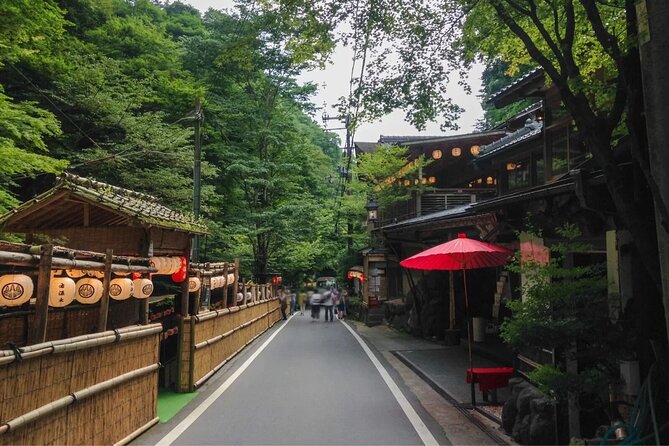
The route descends into Kibune, a peaceful mountain village associated with water and rain. Here you visit Kifune Shrine, dedicated to the goddess of water and rain.
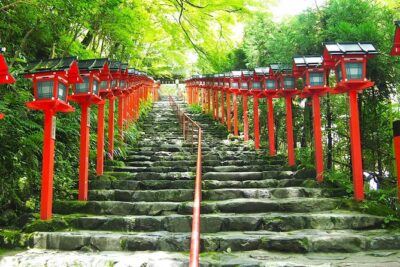
The shrine’s most recognizable feature is its staircase lined with red lanterns. It is the kind of view that changes with the season and weather, but the basic appeal remains clear: stone steps, lanterns, trees, and a sacred setting gathered into one compact scene.
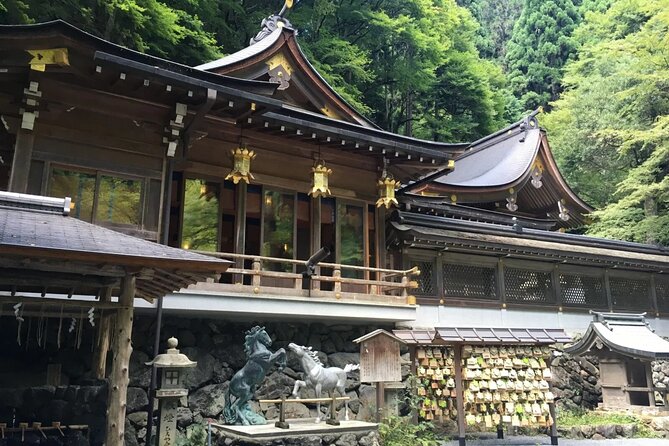
Kifune Shrine also offers water-activated omikuji. You place the special fortune slip on water to reveal the message, turning a familiar Japanese shrine custom into a small hands-on moment. You can also write wishes at the shrine, giving the stop a personal element beyond taking photographs.
The visit follows a demanding section of trail, so the shrine provides a satisfying arrival point. You have moved from the high slopes around Kurama down into a village setting, but the religious character of the day continues. The two sites feel related without feeling identical.
The Kibune stop lasts about three hours, including the descent and time at the shrine. Admission is free. Since lunch is not included, this is the point in the day when you may want to have your own snack or meal plan ready, though no specific lunch arrangement is supplied with the tour.
How much walking should you expect?
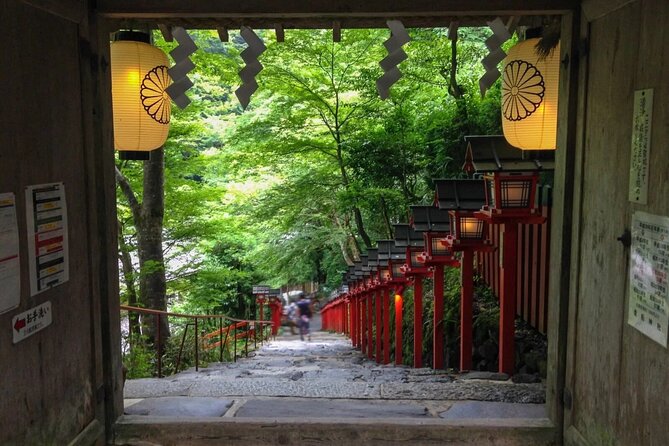
The tour requires moderate physical fitness. The information provided does not give a total distance or exact elevation gain, so I would judge it by terrain rather than numbers. You will walk through mountain forest, climb steep stairways, and manage uneven sections before descending into Kibune.
That makes the experience a good fit for people who are comfortable walking for several hours and handling natural trail surfaces. It is less suitable if you need level, paved access throughout or if stairs cause difficulty.
Weather can affect the day. Wet conditions may make the trail slippery, while hot weather can make the climbs feel harder. A guide helps with route-finding and pace, but no guide can remove the physical demands of the mountain. Check your own comfort honestly before booking.
The small group limit helps here. With no more than 12 people, the guide can keep the pace orderly and offer practical help along the way. A large group would make the narrow or uneven parts less pleasant and could make the experience feel more like a procession.
What the $165.18 price includes
At $165.18 per person, this is not a bargain-priced walk. The value comes from combining several pieces that would otherwise require planning: the subway connection, the walk to Iwakura Station, the Eizan Railway ride, the route between Kurama and Kibune, the English-speaking guide, and the entry fees.
You are paying for structure as much as transport. An independent visit is possible, but you would need to coordinate the route, understand the transfers, choose the correct trail, and supply your own historical and spiritual context. This tour handles those moving parts in one half-day outing.
The price makes the most sense if you want guidance rather than simply reaching the two religious sites. Justin’s explanations about legends and lesser-seen spots add value during the forest section, where a solo walker might otherwise notice only trees and stairs.
Lunch is not included, so budget separately for food. The tour also takes roughly 5 hours and 30 minutes, which gives you much of the day back for other Kyoto plans. That is useful if you want a mountain escape without giving up an entire day.
The tour is commonly booked about 43 days ahead. That does not guarantee that every date will sell out, but it suggests that you should reserve early if your Kyoto schedule is fixed, especially if you want a small-group departure.
Who will enjoy this experience most?
I would choose this tour if you want to pair Kyoto’s religious heritage with time outdoors. It suits people who prefer a slower, more physical day to a chain of indoor sights and who enjoy hearing the stories behind a place as they walk through it.
It is also a good choice for first-time visitors who do not want to decode northern Kyoto’s transport connections alone. The route involves several changes before the trail even begins. Having a guide meet you at Kyoto Station reduces that mental load.
The experience may suit families with older children who can manage a moderate hike, though the supplied information does not specify a minimum age. It also works well for solo visitors who want company on a mountain path without joining a huge group.
I would think twice if your priority is comfort, convenience, or a flat walking route. The trail is uneven, lunch is on your own, and the weather can change how demanding the climb feels. This is a cultural hike, not a relaxed sightseeing bus trip.
Practical details that affect your day
The experience uses a mobile ticket, and confirmation is received at booking. It operates near public transportation, but the organized transport is a key part of the schedule rather than an optional extra.
The meeting point is Starbucks Coffee at Kyoto Tower Sando, Kyoto Tower Building, in the Shimogyo Ward area. The start time is 9:30 a.m., and the tour ends back at that meeting point.
Free cancellation is available if you cancel at least 24 hours before the local start time. A cancellation within 24 hours is not refunded, and changes inside that same window are not accepted. Keep that deadline in mind when arranging your Kyoto days.
The provider is Snow Monkey Resorts Tours, operated by Machinovate Japan Ltd. English guidance is included, and the group size is limited to 12 people.
Should you book the Kurama and Kibune hike?
Book it if you want a half-day that feels distinctly different from central Kyoto. The strongest parts are the forest route, the connection between temple and mountain, the Eizan Railway ride, and the arrival at Kifune Shrine’s lantern-lined steps.
The price is fair for a guided outing that includes transport and entrance fees, though it is more expensive than making the trip independently. You are paying for a smoother route, steady pacing, and the stories that give meaning to the sites.
Skip it if steep steps and uneven ground would take away your enjoyment. For everyone else, this is one of the better ways to see northern Kyoto without turning the day into a complicated transport exercise. Bring good shoes, water, and enough energy for the climb, then let the forest do much of the talking.
FAQ
Where does the tour start?
It starts at Starbucks Coffee in Kyoto Tower Sando, inside the Kyoto Tower Building near Kyoto Station.
What time does the tour begin?
The start time is 9:30 a.m.
How long does the experience last?
The tour lasts approximately 5 hours and 30 minutes.
What transportation is used?
The group takes the Karasuma Subway Line to Kokusaikaikan Station, walks to Iwakura Station, and then rides the Eizan Railway to Kurama Station. Transportation during the tour is included.
Which major sights are visited?
The tour visits Kurama-dera Temple and Kifune Shrine in Kibune, with a mountain trail connecting the two areas.
Is lunch included?
No. Lunch is not included in the tour price.
How difficult is the hike?
A moderate level of physical fitness is recommended. The trail includes steep stairways and uneven sections, and wet or hot weather may make it more difficult.
Is the tour guided in English?
Yes. An English-speaking guide leads the experience.
What is the cancellation policy?
You can cancel for a full refund up to 24 hours before the start time. Cancellations and changes made within 24 hours are not accepted, and the amount paid is not refunded.
Recently added around Kyoto
- Higashiyama | Kyoto: Sakura Season Private Rickshaw Tour★ 5.0 · 3 reviews
- Kyoto Kimono Rental CHAMATSU|Kimono/Yukata Rental FamilyPlan★ 5.0 · 3 reviews
- Kyoto: Half-Day Private Guided Tour to the Old Town of Gion★ 4.4 · 3 reviews
- Nara Private Customizable Half Day Tour★ 5.0 · 3 reviews
- Kansai Region Hiking Adventure in Nara Kobe Kyoto and More★ 5.0 · 3 reviews
- Full Day Nara Deer, Temple, Shrine, Activities & Tea Ceremony★ 5.0 · 3 reviews
- Nara: Essential Private Tour with Deer Park and Temples★ 5.0 · 3 reviews
- Hiking Tour for Sacred Sites in Kyoto with a Guide★ 5.0 · 3 reviews
Hiking & Trekking, compared.
Fushimi Inari Hidden Hiking Tour (Private Option Available)
Read our review →
Kyoto Hiking Tour: The Nature and Legends of Kurama and Kibune
Read our review →
Kyoto Arashiyama Bamboo Forest Hiking Tour(Hidden Temples)
Read our review →
Browse the lists this tour appears in