REVIEW · TOURS
Dark Kyoto Tour
Kyoto’s temples and lantern-lit lanes look peaceful, but this city has plenty of unsettling stories beneath the surface. The Dark Kyoto Tour takes you from Yasaka Shrine and Gion to cemeteries, old religious sites, and a haunted candy store, showing you a side of Kyoto that standard sightseeing often skips.
I like the tour’s mix of famous sights and lesser-known places. I also like that guide Atticus Sims ties ghost stories to Japanese religion, local customs, and real events rather than treating every stop as a cheap scare. The main thing to consider is tone: if you dislike supernatural tales, grim history, or creepy stories after sunset, this may not be your best four hours in Kyoto.
In This Review
- Key points to know before booking
- Why Kyoto’s dark side makes a good tour theme
- Yasaka Shrine and Kyoto’s fight against plague
- Gion’s back streets and haunting tales
- Kennin-ji, Zen practice, and a more serious mood
- Kiyomizu-dera with its darker history
- Toyokuni Shrine and the memory of Hideyoshi
- The unusual stops between the major sights
- How Atticus Sims shapes the experience
- Is $175 a fair price?
- Group size, timing, and practical planning
- Who will enjoy the Dark Kyoto Tour?
- Should you book this Kyoto ghost tour?
- FAQ
- How long is the Dark Kyoto Tour?
- Where does the tour begin?
- Who leads the tour?
- Which Kyoto locations are included?
- Is admission included?
- How many people can join the tour?
- Is the tour suitable for everyone?
- What happens if the weather is poor?
- Can I cancel for a refund?
Key points to know before booking
- Four hours of dark Kyoto stories: The route connects major sights with ghostly, haunted, and supernatural tales.
- Atticus Sims leads the experience: His storytelling and cultural context are central to the tour.
- Famous sites gain a different mood: Yasaka Shrine, Gion, Kennin-ji, Kiyomizu-dera, and Toyokuni Shrine all take on a darker character.
- Small group size: The tour is limited to 10 people, which should make it easier to hear and ask questions.
- Good for repeat visitors: You can see familiar Kyoto landmarks in a new way, while first-time visitors get unusual historical context.
- Plan for weather: The tour requires good weather, and cancellations for poor conditions may lead to a new date or a full refund.
Why Kyoto’s dark side makes a good tour theme
Kyoto has more than 1,200 years of political, religious, and cultural history. That gives a guide plenty to work with, from plague fears and temple power struggles to tales of restless spirits and haunted streets.
The appeal here is not simply walking around in the dark and waiting for a fright. The tour uses supernatural stories as a way into Japanese ideas about death, worship, pollution, protection, and the boundary between the living and the dead. You get entertainment, but you also get a better sense of why shrines, temples, graves, and protective rituals matter.
I find this approach more useful than a standard ghost walk that treats every old building as haunted. Kyoto’s darker stories are tied to the city itself. The result should feel closer to local folklore and historical storytelling than to a staged horror show.
The tour works for first-time visitors because it includes major places you may already want to see. It also works for repeat visitors because Gion and Kiyomizu-dera can feel very different when you hear their less comfortable stories.
Other Kyoto mornings people book alongside this one:
- PERFECT KYOTO 1-Day Bus Tour
★ 5.0 · 13,518 reviews - Kyoto: Fushimi Inari, Kinkakuji, Bamboo Grove 1 Day Bus Tour
★ 4.8 · 4,316 reviews - Kyoto: Tea Ceremony in a Traditional Tea House in Kiyomizu
★ 4.9 · 3,519 reviews
Yasaka Shrine and Kyoto’s fight against plague
The tour begins at Yasaka Shrine in Gion, at 625 Gionmachi Kitagawa. This is a practical meeting point in one of Kyoto’s best-known sightseeing areas, and the shrine gives the tour an immediate link between religion and fear.
Yasaka Shrine played an important role in efforts to ward off a plague that struck Kyoto in the ninth century. That detail gives the opening stop real weight. Before modern medicine, disease could seem supernatural, sudden, and impossible to control. Religious ceremony became one of the ways people tried to protect the city.
You should expect about 15 minutes here, with no admission charge. The stop is short, but it sets up the main idea of the evening: places that look beautiful today often served serious protective purposes in the past.
I like starting at a shrine rather than jumping straight into ghost stories. It places the supernatural material within Japanese religious practice. You are not just hearing that a site is spooky. You are learning why people came here when they were frightened and what they hoped the gods might do.
Gion’s back streets and haunting tales
From Yasaka Shrine, the tour moves into Gion. The district is famous for traditional architecture and geisha culture, but its back streets also carry many haunting tales.
The planned stop lasts about 30 minutes and has no admission fee. Since Gion is a public district, the value here comes from the guide’s interpretation and the specific places he points out. You are not paying to enter an attraction. You are paying for a walking route and a set of stories that would be difficult to assemble on your own.
Gion is also a place where you should be considerate. Keep your voice down, stay with the group, and remember that this is a living neighborhood, not a theme park. The tour’s darker subject matter should not become an excuse for intrusive behavior or dramatic posing in quiet lanes.
For me, this is likely one of the stronger parts of the experience. The contrast between Gion’s refined image and its grim folklore gives the district more depth. You may look at familiar streets differently once you know which corners are connected to old fears and local legends.
Kennin-ji, Zen practice, and a more serious mood
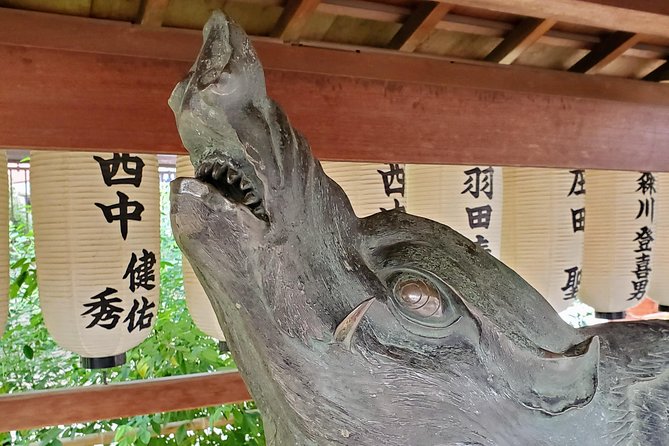
Kennin-ji Temple is the oldest Zen temple in Japan, and the tour allows about 15 minutes here. Admission is listed as free for this stop.
This part of the route shifts the focus from neighborhood folklore to Buddhist history and religious practice. A Zen temple may not sound like an obvious stop on a ghost tour, but that is exactly why it works. Kyoto’s dark stories are not limited to abandoned buildings or spooky alleys. They also connect to the ways people have thought about mortality, discipline, suffering, and the afterlife.
The short visit means you should not expect a full temple tour or extended time to study the architecture. Instead, Kennin-ji functions as a compact setting for the guide’s explanation. Atticus Sims is described as bringing strong historical and cultural context to the sites, and this is the sort of stop where that background matters most.
If you want a detailed art-history visit, you may find 15 minutes brief. If you want a focused story that links Zen, death, and Kyoto’s religious world, the timing makes sense.
A completely different side of Kyoto:
- Kyoto Geisha Walking Tour: Gion District & Hidden Gems
★ 4.7 · 3,273 reviews - Kyoto: Tea Ceremony Ju-An at Jotokuji Temple
★ 4.9 · 3,207 reviews - Kyoto: Gion Magical Night Walking Tour with Geisha Trivia
★ 4.9 · 2,393 reviews - Kyoto: 45-Minute Tea Ceremony Lesson Experience
★ 4.3 · 2,378 reviews
Kiyomizu-dera with its darker history
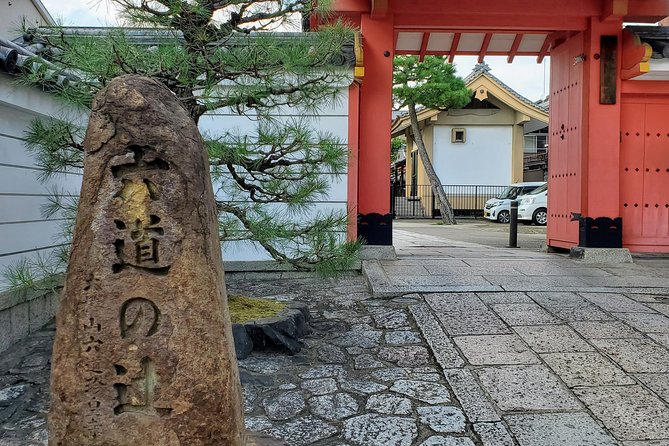
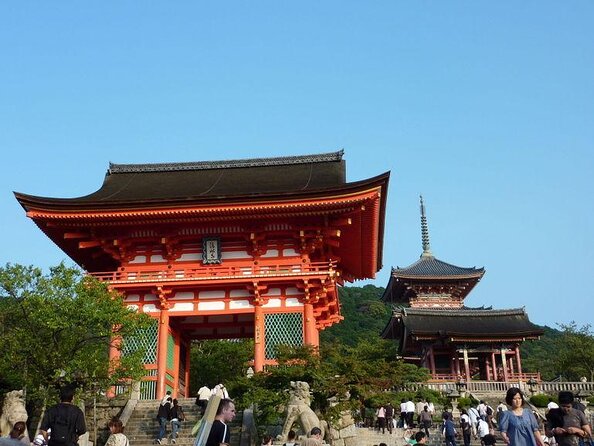
Kiyomizu-dera is the best-known major temple on the route. It is a UNESCO World Heritage Site, and the tour spends about 30 minutes here. Admission is included.
Many visitors see Kiyomizu-dera for its famous wooden stage and hillside setting. This tour asks you to consider the temple through its darker local history instead. That change in emphasis is useful because you can visit a celebrated site without repeating the usual postcard description.
The included admission adds some value to the $175 price, although one temple ticket alone does not justify the cost. The real reason to book is the guided interpretation, the small group, and the unusual theme. If you already plan to visit Kiyomizu-dera independently, you should ask yourself how much you would pay to hear its supernatural and grim stories in a focused setting.
Thirty minutes is enough for a meaningful stop, but it is not enough for a leisurely exploration of the entire temple complex. Keep your expectations clear. This is a story-led visit, not a complete Kiyomizu-dera sightseeing session.
I especially like the way this stop broadens the idea of a haunted Kyoto. A famous religious landmark can hold layers of fear, devotion, legend, and political memory at the same time. You do not need to avoid the popular sights to find the city’s darker character.
Toyokuni Shrine and the memory of Hideyoshi
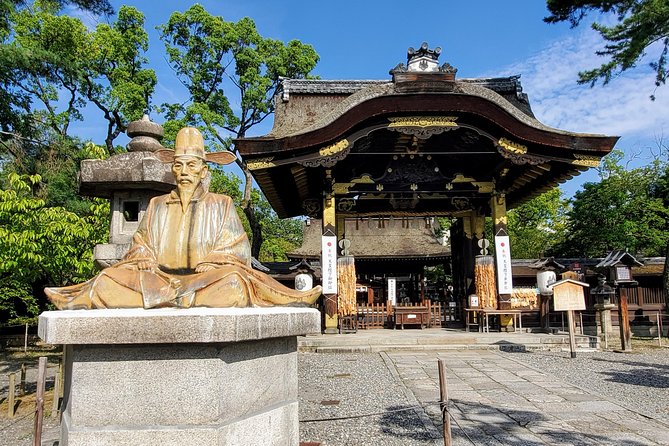
Toyokuni Shrine is the final listed stop, with about 10 minutes devoted to it. The shrine is where the shogun Hideyoshi is enshrined, and admission is free.
This is a brief visit, but the subject is important. Hideyoshi was one of Japan’s most powerful historical figures, and his memory is tied to the political and religious changes of his era. A shrine connected to a major ruler offers another way to think about Kyoto’s past: not only through spirits and legends, but through power, death, worship, and the choices made after a ruler’s death.
Ten minutes will not provide a full lesson on Hideyoshi or the shrine’s architecture. The stop works better as a final piece in the larger story. After hearing about plague, haunted streets, Zen, and temple folklore, you finish at a site linked to national history and memorial practice.
The unusual stops between the major sights
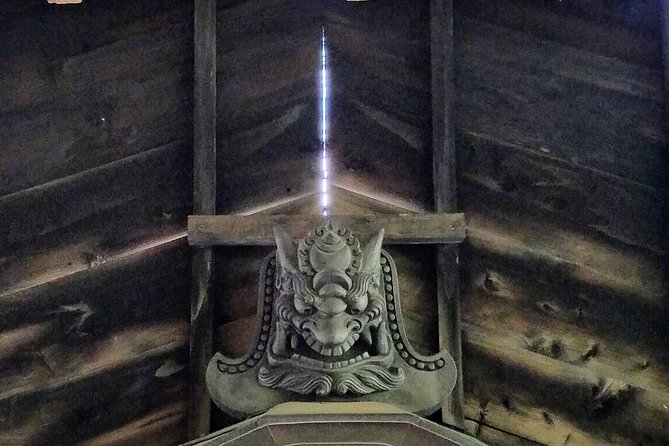
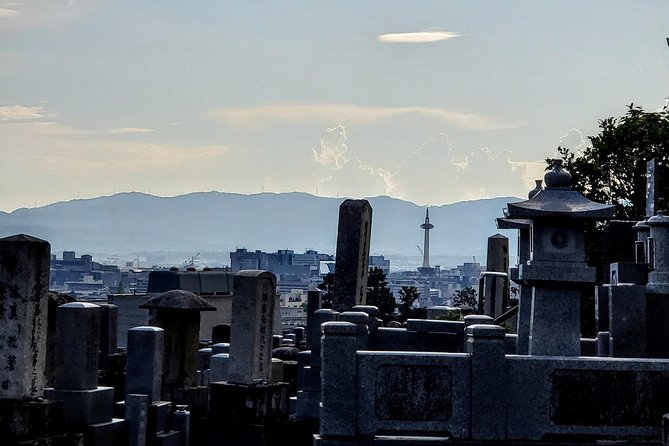
The formal itinerary names five principal locations, but the experience also includes lesser-known places such as cemeteries and a haunted candy store. These smaller stops may be the most distinctive part of the route.
You can see a famous temple without a guide. You can also walk through Gion on your own. What you are less likely to do is locate the odd, unsettling places that do not appear on a first-time Kyoto checklist, then understand why a particular site has a frightening reputation.
That is where a small-group walking tour earns its fee. You are not simply being taken from one major attraction to the next. You are getting a themed route that links the city’s public monuments with its stranger corners.
The haunted candy store sounds like the sort of detail that will appeal to families with older children and teenagers, though the tone may still be too unsettling for young children. The tour is best for people who enjoy folklore and can handle scary stories without expecting a full horror production.
How Atticus Sims shapes the experience
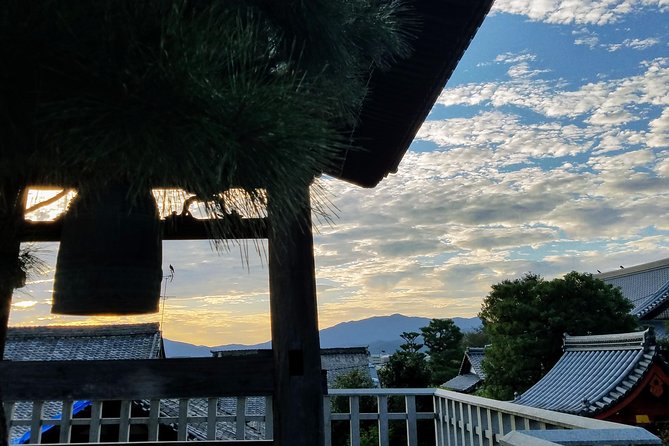
Atticus Sims is the named guide, and the descriptions of his approach point to storytelling as the heart of the tour. He brings information about shrines, temples, local customs, and Kyoto’s past into an engaging evening walk.
That matters because the route itself is not difficult to understand. Yasaka Shrine, Gion, Kennin-ji, Kiyomizu-dera, and Toyokuni Shrine are all established Kyoto sights. The guide is what turns them into one connected experience.
The strongest praise centers on Atticus being fun to talk with and able to give context for the meanings and history of each place. The tour has also worked well for a family group that included two discerning teenagers, which suggests the stories are not aimed only at serious folklore fans.
I would book this for someone who wants a guide with personality. If you prefer to move silently through temples, take photographs, and read signs at your own pace, a self-guided evening may suit you better. If you enjoy asking questions and hearing the story behind a place, Atticus’s role becomes much more important.
Is $175 a fair price?
At $175 per person, this is not a budget walking tour. The experience lasts about four hours, includes a Kiyomizu-dera admission ticket, and limits the group to a maximum of 10 people.
The price is easiest to justify if you value three things: a specialized subject, a small group, and access to stories and stops you would probably miss alone. You are also getting a route that combines free public sites with one included admission, rather than paying for a long list of entrance tickets.
Still, you should not book it simply because Kyoto has famous temples. Most of the main locations can be visited independently, and several listed stops have no admission fee. The value depends on how much you want the guide’s storytelling and cultural explanation.
For a first-time visitor with only one evening in Kyoto, the tour gives you a strong sense of the city’s religious and historic center. For a repeat visitor, the unusual theme may make the higher price easier to accept. I would be more hesitant if you are mainly seeking a conventional temple tour or a fast route through top attractions.
Group size, timing, and practical planning
The maximum group size is 10 people. That is small enough to make a walking discussion more manageable than a large coach-style outing. It should also make it easier to hear stories in busy areas and ask Atticus questions along the way.
The meeting point is Yasaka Shrine. The tour is near public transportation, which helps when you are arranging your evening around other Kyoto plans. A mobile ticket is provided, so you do not need to manage a printed voucher.
Confirmation is sent within 48 hours of booking, subject to availability. Most people can participate, and service animals are allowed. The supplied information does not give a detailed accessibility assessment, so anyone with specific mobility needs should confirm the walking conditions before booking.
The experience requires good weather. Kyoto’s outdoor lanes, shrine grounds, and temple approaches are central to the route, so poor conditions can affect the outing. If the operator cancels because of weather or because the minimum number of participants is not met, you can choose a different date or experience, or receive a full refund.
You can cancel for a full refund up to 24 hours before the start time. Cancellations or changes made less than 24 hours ahead are not accepted for a refund.
Who will enjoy the Dark Kyoto Tour?
I would recommend it to first-time visitors who want more than the standard temple checklist. The tour covers famous places, but the stories give those places a new purpose and mood.
It is also a good fit for repeat visitors who have already seen Kiyomizu-dera and Gion in daylight. You get a reason to return to familiar areas without repeating a basic sightseeing route.
Families with older children or teenagers may enjoy the mix of mystery, history, and unusual stops. The experience is not described as a children’s ghost show, so parents should use their judgment if anyone in the group is sensitive to frightening stories.
Couples and friends who like folklore should find the theme easy to enjoy. People who dislike tales about ghosts, cemeteries, or grim events should skip it. The tour promises a different side of Kyoto, and that side is meant to be unsettling.
Should you book this Kyoto ghost tour?
Book the Dark Kyoto Tour if you want a small-group evening walk led by Atticus Sims, with stories that connect Kyoto’s shrines, temples, rulers, disease fears, and supernatural traditions. Its best feature is not a single attraction. It is the way familiar places such as Gion and Kiyomizu-dera are given a darker, more thoughtful setting.
Skip it if you want a quiet temple visit, a complete architectural tour, or the lowest possible price. At $175, you are paying mainly for the guide’s interpretation and the unusual route. For the right audience, that makes this a memorable way to see Kyoto after the standard sightseeing list is finished.
FAQ
How long is the Dark Kyoto Tour?
The tour lasts approximately four hours.
Where does the tour begin?
The meeting point is Yasaka Shrine, located at 625 Gionmachi Kitagawa in Kyoto’s Higashiyama Ward.
Who leads the tour?
The experience provider and named guide is Atticus Sims.
Which Kyoto locations are included?
The route includes Yasaka Shrine, Gion, Kennin-ji Temple, Kiyomizu-dera Temple, and Toyokuni Shrine. It also includes lesser-known places such as cemeteries and a haunted candy store.
Is admission included?
Admission to Kiyomizu-dera is included. The listed stops at Yasaka Shrine, Gion, Kennin-ji Temple, and Toyokuni Shrine have no admission charge.
How many people can join the tour?
The tour has a maximum of 10 participants.
Is the tour suitable for everyone?
Most people can participate, and service animals are allowed. The experience is aimed at people who are comfortable with scary ghost stories and supernatural subjects.
What happens if the weather is poor?
The tour requires good weather. If it is canceled because of poor conditions, you will be offered another date or a full refund.
Can I cancel for a refund?
Yes. You can cancel at least 24 hours before the start time for a full refund. Cancellations or changes made less than 24 hours before the experience are not accepted for a refund.
Recently added around Kyoto
- Higashiyama | Kyoto: Sakura Season Private Rickshaw Tour★ 5.0 · 3 reviews
- Kyoto Kimono Rental CHAMATSU|Kimono/Yukata Rental FamilyPlan★ 5.0 · 3 reviews
- Kyoto: Half-Day Private Guided Tour to the Old Town of Gion★ 4.4 · 3 reviews
- Nara Private Customizable Half Day Tour★ 5.0 · 3 reviews
- Kansai Region Hiking Adventure in Nara Kobe Kyoto and More★ 5.0 · 3 reviews
- Full Day Nara Deer, Temple, Shrine, Activities & Tea Ceremony★ 5.0 · 3 reviews
- Nara: Essential Private Tour with Deer Park and Temples★ 5.0 · 3 reviews
- Hiking Tour for Sacred Sites in Kyoto with a Guide★ 5.0 · 3 reviews
Tours, compared.
Fushimi Inari, Kinkakuji, Bamboo Grove 1 Day Bus Tour
Read our review →
Kyoto Geisha Walking Tour: Gion District & Hidden Gems
Read our review →
Gion Magical Night Walking Tour with Geisha Trivia
Read our review →
Gion Geisha District Walking Tour – Stories of Geisha
Read our review →

Kyoto Night Foodie Tour in Gion (9+ dishes + 6 Sake tastings)
Read our review →