
REVIEW · WALKING TOURS
Kyoto Philosophy Walk with Philosopher (Private/6.5 hour)
Kyoto’s temples make more sense when you stop treating them as photo backdrops and start asking what they mean. This private walk with Hiroki, a nationally licensed guide and philosophy researcher, links Buddhist, Shinto, Zen, and modern Japanese thought to the places where those ideas took shape.
I like the small private format, which lets you ask direct questions and spend more time on ideas that catch your interest. I also like the mix of major sights and quieter corners, including Konchi-in and the backstreets around the Philosopher’s Path.
The main drawback is the pace. Six and a half hours includes walking, stairs, public transport, lunch, and seven stops, so this is not a gentle sightseeing stroll. Temple entry, food, and transport cost extra, too.
In This Review
- Key points at a glance
- Kyoto through questions, not just sights
- Higashi Hongan-ji and the idea of the Pure Land
- Yoshida Shrine and Shinto belief
- Ginkaku-ji and the beauty of simplicity
- The Philosopher’s Walk and modern Japanese thought
- Nanzen-ji Suirokaku and the problem of protecting a view
- Sanmon Gate and three steps toward liberation
- Konchi-in and the Zen garden question
- What the six and a half hours really includes
- The value of a private philosophy tour
- Who should book this Kyoto experience
- Should you book the Kyoto Philosophy Walk?
- FAQ
- How long does the Kyoto Philosophy Walk last?
- Where does the tour start and finish?
- What is included in the price?
- How much extra cash should I prepare?
- Is this a private tour?
- Is the walk physically demanding?
Key points at a glance
- A philosophy researcher leads the conversation: Hiroki brings academic training to Zen Buddhism, Shinto, Pure Land thought, and modern Japanese philosophy.
- Seven carefully linked stops: The route moves from Higashi Hongan-ji in central Kyoto to Yoshida Shrine, Ginkaku-ji, the Philosopher’s Walk, and Nanzen-ji.
- Private means flexible: Only your group takes part, so you can ask questions and adjust the discussion to your interests.
- A full day on foot: Plan for about one mile of walking, stairs in a two-story building, and time on public transportation.
- The price covers the guide only: Bring cash for roughly ¥1,600 in temple fees, ¥750 for transport, and your lunch.
- Best for curious, active minds: This suits you if you want cultural context and conversation, not just a checklist of famous buildings.
Kyoto through questions, not just sights
Most Kyoto sightseeing asks you to look. This experience asks you to think. At each stop, Hiroki frames the place around a question, then gives you room to discuss it rather than simply reciting dates and architectural details.
The questions are broad but grounded in the setting. At Higashi Hongan-ji, you consider the Pure Land, one of the central ideas in Japanese Buddhist tradition. At Yoshida Shrine, the focus shifts to Shinto and its view of the sacred world. At Ginkaku-ji, the subject is the appeal of simplicity.
That approach changes the rhythm of a temple visit. You still see the buildings, gardens, gates, and paths, but you also have a way to connect them. If you enjoy history, religion, ethics, or cultural comparison, the conversation can give the day more staying power.
Hiroki is also presented as a guide who can discuss the meeting between Japanese and Western philosophy. That makes the Philosopher’s Walk more than a pleasant canal-side path. It becomes the setting for a discussion about how Japanese thinkers responded to Western traditions.
More walking tours in Kyoto:
- Kyoto Geisha Walking Tour: Gion District & Hidden Gems
★ 4.7 · 3,273 reviews - Kyoto: Gion Magical Night Walking Tour with Geisha Trivia
★ 4.9 · 2,393 reviews - Kyoto: Gion Geisha District Walking Tour – Stories of Geisha
★ 4.7 · 2,187 reviews
Higashi Hongan-ji and the idea of the Pure Land
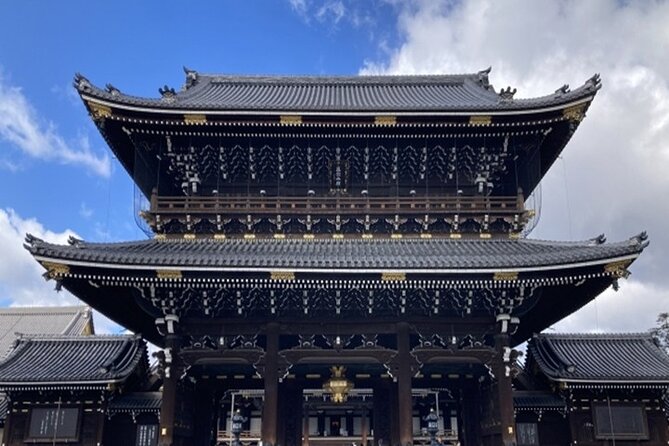
The morning begins at Kyoto’s Bus Ticket Centre and Information Centre, near Kyoto Station, at 9:00 a.m. From there, you walk about 10 minutes to Higashi Hongan-ji Temple.
The stop lasts around 30 minutes, and there is no admission charge. The subject is Pure Land Buddhism, a major strand of Japanese Buddhist thought. Rather than treating the temple as an isolated monument, Hiroki uses it to introduce one of the key religious ideas in Japan.
This is a useful first stop because it establishes the tone. You are not being rushed from one famous object to another. You are given a central question and a place connected to it.
You should expect some walking right away, so comfortable shoes matter. The route later includes a longer path and public transportation, making sturdy footwear one of the simplest ways to improve your day.
Yoshida Shrine and Shinto belief
The next major stop is Yoshida Shrine, one of Kyoto’s oldest shrines. The visit lasts about 30 minutes and costs nothing to enter.
Here, the question is simply: what is Shinto? The experience uses Yoshida Shrine as a place to consider Japanese Shinto thought and its pantheistic character. You can ask Hiroki to explain how Shinto differs from Buddhist traditions, and how the two have existed alongside each other in Japan.
This stop should appeal to anyone who finds Kyoto’s religious mix confusing. A Buddhist temple and a Shinto shrine are not interchangeable, even when both are part of a typical Kyoto sightseeing day. A guide who can place each site within a wider intellectual tradition is especially useful here.
The strength of this part is the chance to ask basic questions without feeling rushed. The limitation is that 30 minutes is still a short introduction. If Shinto is your main interest, you may want to use the private format to request more time on that topic.
Ginkaku-ji and the beauty of simplicity
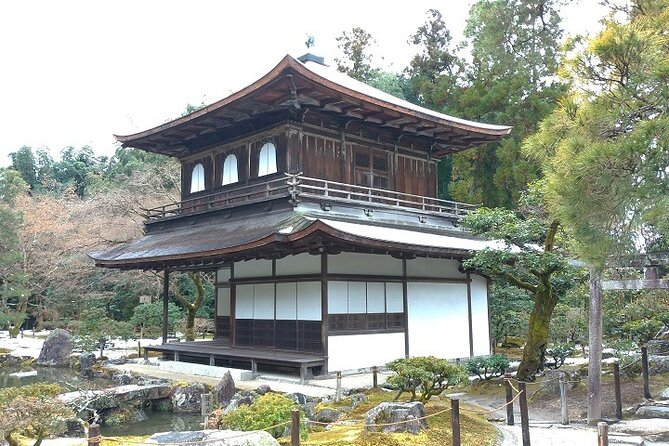
Ginkaku-ji, also known as the Silver Pavilion, receives about 45 minutes. It is a Zen temple and a UNESCO World Heritage site, but the subject here is not simply its fame or appearance. The discussion centers on the Japanese idea that simplicity can be beautiful and complete.
Admission is not included. The supplied cost estimate for all temple entries is about ¥1,600 per person, paid in cash, so you should have yen ready before the day begins.
Ginkaku-ji is a strong match for this kind of tour because its appeal is not based only on a grand exterior. The site is valued for its restrained design and Zen associations. Hiroki can help you think about why a quiet, spare setting may carry as much force as a highly decorated one.
I would give this stop your full attention. It is easy to photograph a temple garden and move on. The better use of the time is to ask how the site expresses the idea being discussed, and how much of that meaning comes from the buildings, the garden, or your own expectations.
A few more Kyoto experiences worth comparing
- Fushimi Inari Hidden Hiking Tour (Private Option Available)
★ 5.0 · 1,750 reviews - Private Kyoto Tour with a Local, Highlights & Hidden Gems, Personalised
★ 5.0 · 1,543 reviews - Kyoto 6hr Private Tour with Government-Licensed Guide
★ 5.0 · 1,369 reviews - 10 Must-see Spots in Kyoto One Day Private Tour (up to 7 people)
★ 5.0 · 1,108 reviews
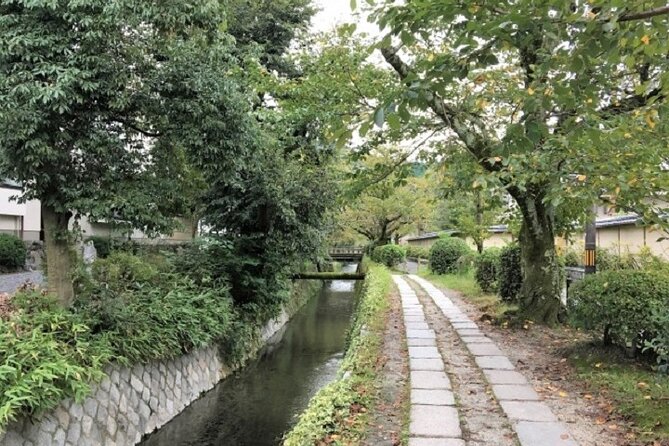
The Philosopher’s Walk and modern Japanese thought
The Philosopher’s Walk is the central stretch of the experience and lasts about one hour. The path is famous, but the discussion gives it a less predictable purpose.
The main question concerns the way Japanese philosophers dealt with Western philosophy. That topic adds a modern layer to a route most people associate with temples, spring blossoms, and quiet walking.
You will walk for about one mile during the day, including this section. The path itself is free, but the time and energy required are real. This is not a tour where you step off a bus, take a picture, and climb back aboard.
The private setting is especially valuable here. Philosophy works better as a conversation than as a speech. Hiroki can explain the subject, but you can also test ideas, compare Japanese and Western approaches, and ask for clarification when a concept feels abstract.
The experience’s strongest praise centers on Hiroki’s ability to combine broad cultural knowledge with personal discussion. One account describes the day as a journey with a friend, while another highlights his ability to show important places along the path as well as less obvious corners that a first-time visitor might miss.
That does not mean every moment will feel light or easy. The subject matter can be demanding, and the walk may be tiring after a morning of temples. If you want a quiet scenic walk with little conversation, this may feel too talkative. If you want to understand why Kyoto has inspired intellectual life as well as religious practice, it is likely the most rewarding section.
Nanzen-ji Suirokaku and the problem of protecting a view
The route continues to Nanzen-ji Suirokaku, where you spend about 15 minutes. The Suirokaku Aqueduct is a Western-style brick structure located within the setting of a traditional Buddhist temple.
The question here is about ideal landscape protection. That pairing is useful because it brings an old debate into view: how should a city protect its established character while accommodating new technology, new buildings, and modern needs?
The aqueduct is not treated as a random architectural oddity. Its presence gives Hiroki a concrete example for discussing philosophical thinking about preservation and change.
This short stop may appeal to you if you enjoy architecture and urban questions. It is less satisfying if you prefer long visits at each temple, since 15 minutes allows only a compact discussion and a quick look.
Sanmon Gate and three steps toward liberation
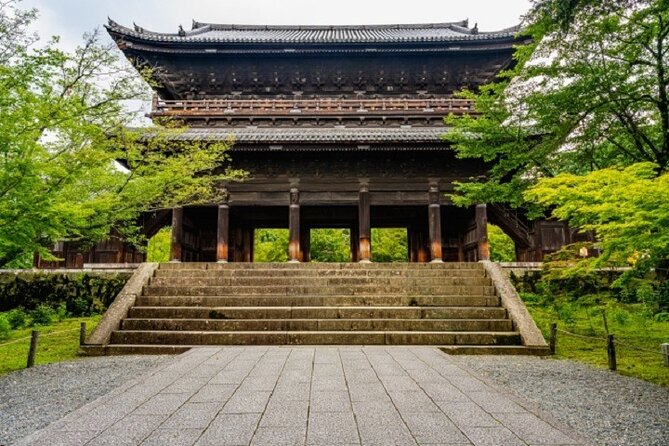
At Nanzen-ji, the Sanmon Gate receives another 15-minute visit. Admission is not included.
The name Sanmon refers to a gate representing three steps toward liberation. The discussion turns to Buddhist ideas about enlightenment and awakening.
The gate is two stories high and includes stairs, an important practical point. The tour description specifically notes a two-story building with stairs, so you should be comfortable with that part of the route before booking.
This is a good example of how the experience connects physical movement with an idea. You do not simply hear about a Buddhist concept in a classroom. You encounter a structure whose name and design provide the starting point for the discussion.
Still, the stop is brief. You will not get a long, unhurried visit here. The value comes from the question Hiroki brings to the site, not from an extended architectural tour.
Konchi-in and the Zen garden question
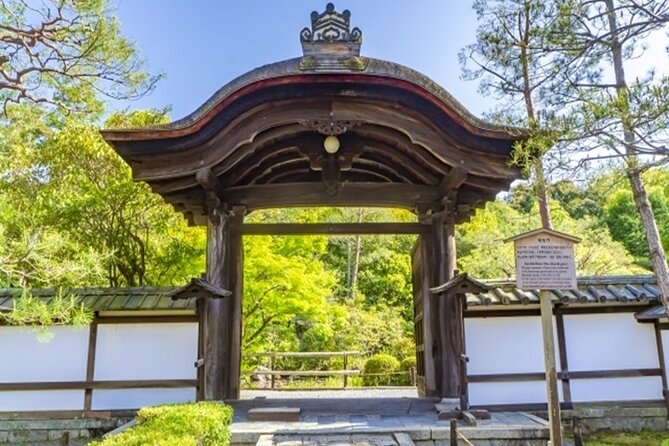
The final listed stop is Konchi-in, visited for about 30 minutes. It is described as a Zen temple known particularly among Japanese people with an interest in history. Its Zen garden is the focus.
The question is what an authentic Zen garden looks like, and what such a garden says about Japanese religious ideas. This is a fitting ending because it returns to a smaller, quieter site after the more famous Ginkaku-ji and Nanzen-ji.
You may find Konchi-in more satisfying than a major landmark if you prefer places where the discussion can take center stage. The stop is not presented as a quick photo opportunity. It is a chance to examine how a garden creates meaning through restraint, arrangement, and absence.
Admission costs extra, as it does at Ginkaku-ji and the Sanmon Gate. Bring cash for the estimated ¥1,600 total in temple fees. The exact amount you pay should be confirmed when booking or with the guide, but the supplied guidance is clear: prepare cash.
What the six and a half hours really includes
The named stops total about three hours and 45 minutes. The remaining two hours and 45 minutes are divided into a one-hour lunch break and about one hour and 45 minutes for backstreet walking and public transportation.
That breakdown matters. You are not spending six and a half straight hours listening to explanations inside temples. You get pauses, transfers, meals, and time to walk between places. The extra movement also helps the day feel like an exploration of Kyoto rather than a string of isolated appointments.
Lunch is at your own expense, and food and drinks are not included. The information does not specify a restaurant or fixed meal, so you should plan for that cost separately and ask Hiroki about the lunch arrangement if you have dietary needs or a strong preference.
Public transportation costs about ¥750 per person and is also extra. The start and finish are at the Bus Ticket Centre and Information Centre at 902 Higashishiokōjichō, Shimogyo Ward, close to Kyoto Station. The activity ends back at the meeting point.
The route involves walking on a path for roughly one mile, plus walking between sites and transport stops. Most people can take part, but the stairs and full-day length make comfortable shoes and reasonable stamina important.
The value of a private philosophy tour
The listed price is $230 per person. That amount covers the guide fee, not temple admissions, lunch, or public transportation. In practical terms, you should budget the tour price plus about ¥1,600 for temple fees, ¥750 for transit, and whatever you spend on lunch.
That is a meaningful price for a single day in Kyoto. The value depends on what you want from a guide. If you only need directions and a list of dates, a standard group tour may cost less and serve you well.
I see the value in the private format and the guide’s unusual training. You are paying for a conversation shaped around your group, not just transport between sights. Hiroki has also been praised for flexible planning, strong time management, and adapting to what people want to see.
The tour is especially useful early in a Kyoto visit if you want a framework for understanding later temple visits. It can also work near the end of a trip, when you have already seen enough sites to recognize the questions being raised.
There are only four published ratings, all at the top level, so I would treat the strong response as encouraging rather than as proof that the format suits everyone. The praise consistently centers on Hiroki, his cultural and religious understanding, his flexibility, and the pleasure of discussing philosophy with him. Those are the qualities to weigh most heavily when deciding.
Who should book this Kyoto experience
I would choose this for you if you:
- Enjoy asking why a place matters, not just when it was built.
- Have an interest in Zen Buddhism, Shinto, Pure Land Buddhism, or modern philosophy.
- Prefer a private guide who can adjust the discussion to your questions.
- Want both major Kyoto sights and less obvious corners near the Philosopher’s Walk.
- Can manage a full six-and-a-half-hour day with walking, transit, and stairs.
I would hesitate if you want a slow luxury outing, a purely visual temple tour, or a fixed meal and transport package. The day has several short stops, and its success depends on your willingness to take part in conversation.
Wear comfortable shoes, carry cash, and leave room in your attention for ideas as well as photographs. The tour is not simply a route through eastern Kyoto. It is a guided attempt to connect what you see with how people have thought about faith, simplicity, modernity, and awakening.
Should you book the Kyoto Philosophy Walk?
Book it if you want Kyoto to become more than a collection of beautiful places. Hiroki’s combination of licensed guiding and philosophy research gives the day a clear identity, and the private format lets you shape the discussion as you go.
Skip it if you prefer a faster checklist of sights or do not want to pay extra for admissions, lunch, and transit. For the right person, the best souvenir here may not be a photograph. It may be a question you continue asking after you leave Kyoto.
FAQ
How long does the Kyoto Philosophy Walk last?
The experience lasts approximately 6 hours and 30 minutes. This includes seven sightseeing stops, a one-hour lunch break, backstreet walking, and public transportation.
Where does the tour start and finish?
It starts at 9:00 a.m. at the Bus Ticket Centre and Information Centre, 902 Higashishiokōjichō, Shimogyo Ward, Kyoto, 600-8216, Japan. It ends back at the same meeting point.
What is included in the price?
The guide fee is included. Temple entrance fees, lunch, drinks, and public transportation are not included.
How much extra cash should I prepare?
The provided estimate is ¥1,600 per person for temple entrance fees and ¥750 per person for public transportation. You also need money for lunch and other food or drinks.
Is this a private tour?
Yes. Only your group participates in the activity, and group discounts are available.
Is the walk physically demanding?
The experience includes about one mile of walking, public transportation, and stairs in a two-story building. Most people can participate, but comfortable shoes and the ability to manage stairs are important.
Recently added around Kyoto
- Higashiyama | Kyoto: Sakura Season Private Rickshaw Tour★ 5.0 · 3 reviews
- Kyoto Kimono Rental CHAMATSU|Kimono/Yukata Rental FamilyPlan★ 5.0 · 3 reviews
- Kyoto: Half-Day Private Guided Tour to the Old Town of Gion★ 4.4 · 3 reviews
- Nara Private Customizable Half Day Tour★ 5.0 · 3 reviews
- Kansai Region Hiking Adventure in Nara Kobe Kyoto and More★ 5.0 · 3 reviews
- Full Day Nara Deer, Temple, Shrine, Activities & Tea Ceremony★ 5.0 · 3 reviews
- Nara: Essential Private Tour with Deer Park and Temples★ 5.0 · 3 reviews
- Hiking Tour for Sacred Sites in Kyoto with a Guide★ 5.0 · 3 reviews
Walking Tours, compared.
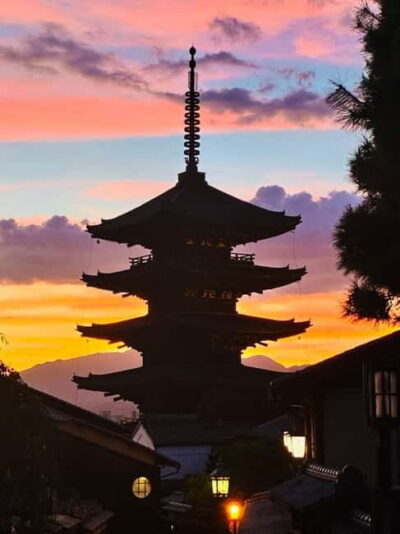
Kyoto Geisha Walking Tour: Gion District & Hidden Gems
Read our review →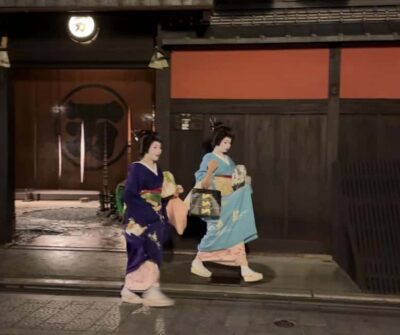
Gion Magical Night Walking Tour with Geisha Trivia
Read our review →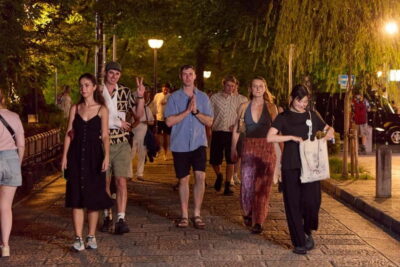
Gion Geisha District Walking Tour – Stories of Geisha
Read our review →
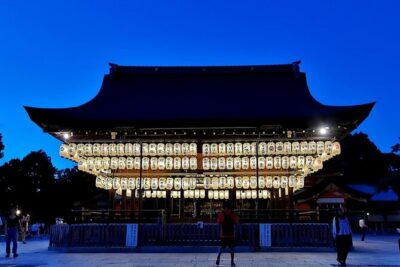
Kyoto Gion Geisha District Walking Tour – The Stories of Geisha
Read our review →
Kyoto Arashiyama Walking Tour: Bamboo, Monkeys, Gardens & Secrets
Read our review →
Kyoto Gion: 2-Hour Geisha Culture & History Walking Tour
Read our review →
Nara Half Day Trip Walking Tour (Private Option Available)
Read our review →Browse the lists this tour appears in