
REVIEW · CYCLING TOURS
Kyoto: Night E-Bike Tour Hidden Gems & Backstreets
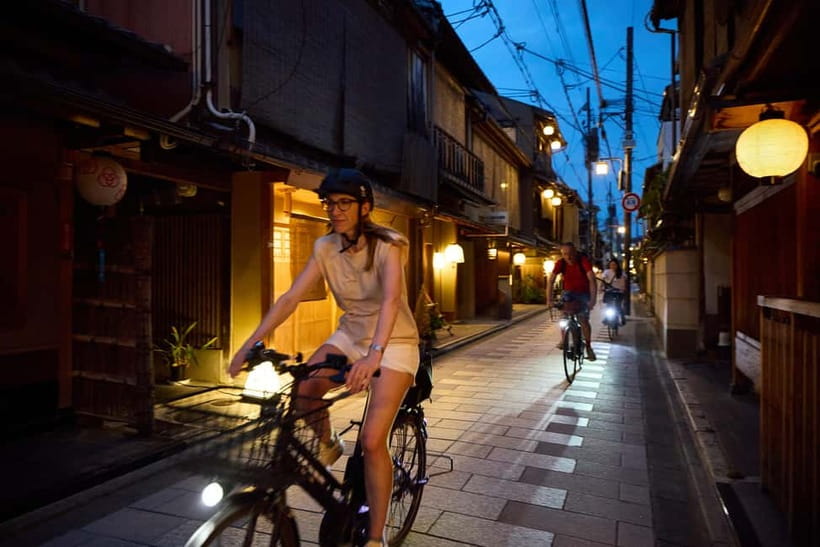
Kyoto changes after sunset. The tour slips through quiet lanes and illuminated temple districts, linking Gion, Kiyomizuzaka, Ninenzaka, and Maruyama Park without asking you to make sense of the city map on your own. The electric bike keeps the ride manageable, though you still pedal.
I like the small six-person limit, which lets guides such as Ben and Jay offer history and keep an eye on the group. I also like the timing: cooler air, softer light, and far fewer people at places that can feel packed by day. The main consideration is simple: you must already be comfortable on a bicycle, and the route is not suitable for children under 12 or riders shorter than 145 centimeters.
In This Review
- Key points at a glance
- Why Kyoto is especially good after dark
- Starting in Gion with a small group
- Miyagawacho and the first quiet streets
- Toyokuni Shrine and the National Museum area
- Kiyomizuzaka and the Kiyomizu-dera area
- Yasaka Pagoda and Ninenzaka after sunset
- A break at Maruyama Park
- Furukawacho and the ride back to Gion
- What $64 gets you
- Riding conditions and who should book
- Is the evening e-bike ride worth booking?
- FAQ
- Where does the Kyoto night e-bike tour start?
- How long does the tour last?
- What is included in the price?
- How many people are in the group?
- Is the tour conducted in English?
- What age must participants be?
- Is there a height requirement?
- Do I need to know how to ride a bicycle?
- Does the tour run in the rain?
- What should I bring?
Key points at a glance
- Nighttime access to Kyoto’s old quarters: See Gion, Miyagawacho, Kiyomizuzaka, and Ninenzaka when the streets are calmer.
- Electric assistance, not a motorized sightseeing ride: You still pedal, but the e-bike helps with the effort.
- Small group of up to six: The format is more personal than a large coach or walking group.
- A strong guide can make the ride: Ben and Jay are named as guides, with particular praise for clear facts and attentive group handling.
- Two hours for $64: The price is reasonable if you value transport between several sights, bike rental, and live guiding.
- Basic riding requirements matter: Bring comfortable shoes, arrive 10 minutes early, and be ready to ride in light rain if needed.
Why Kyoto is especially good after dark
Daytime Kyoto can feel like a series of queues, photo stops, and crowded lanes. At night, the same wooden streets and temple approaches take on a quieter mood. You see fewer people, hear more of the city, and spend less time edging around tour groups.
That does not mean every stop is open or fully lit all night. This is primarily an exterior sightseeing ride, with visits and photo stops rather than extended temple interiors. Still, the evening setting is the point. You are seeing the streets, gates, pagodas, and old neighborhoods as part of a real city, not only as daytime sights on a checklist.
The route also gives you a useful sense of Kyoto’s layout. Gion, the Kiyomizu area, Toyokuni Shrine, the National Museum, Maruyama Park, and the eastern temple streets are close enough to connect by bike, but spread out enough that walking between all of them takes time. The e-bike turns that distance into part of the experience.
More bike days around Kyoto:
- Hidden Kyoto E-Biking tour
★ 5.0 · 1,843 reviews - Bike Tour Exploring North Kyoto plus Lunch
★ 5.0 · 1,087 reviews - Arashiyama Bamboo Forest & Hidden Gems Bike Tour (Early Bird)
★ 5.0 · 613 reviews
Starting in Gion with a small group
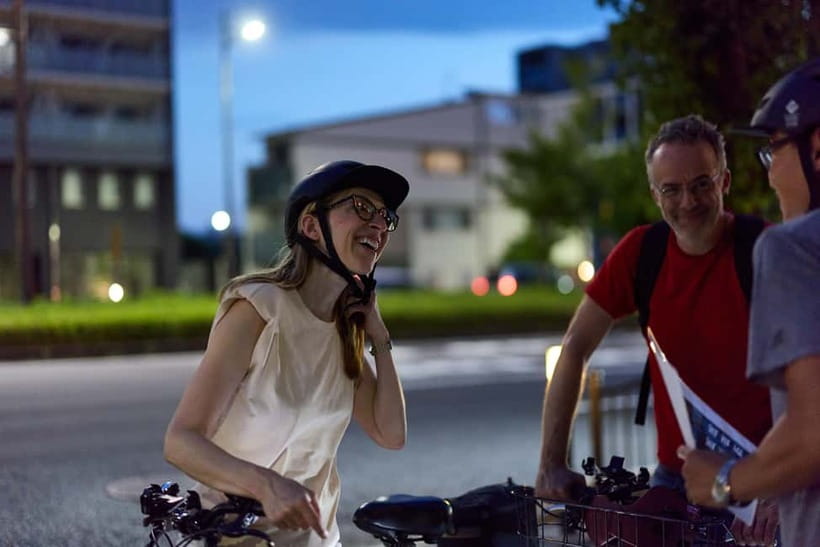
You meet in front of Kyoto Tourist Lounge Gion. Arrive 10 minutes before departure so there is time to get organized and ready to ride. The tour includes the e-bike and helmet, with an English-speaking live guide leading the way.
The group is limited to six participants. That number matters on Kyoto’s narrower streets. A small line of bikes is easier to manage than a large pack, and your guide can give instructions without shouting across a crowd. It also gives you a better chance to ask about a building, neighborhood, or custom as you go.
The ride is designed for people who can already ride a bike comfortably. The electric assistance helps with effort, but it does not remove the need to steer, brake, balance, and pedal. Wear comfortable shoes and clothing that lets you move. One rider noted that there was still some pedaling, so do not treat this as a completely passive sightseeing trip.
Miyagawacho and the first quiet streets
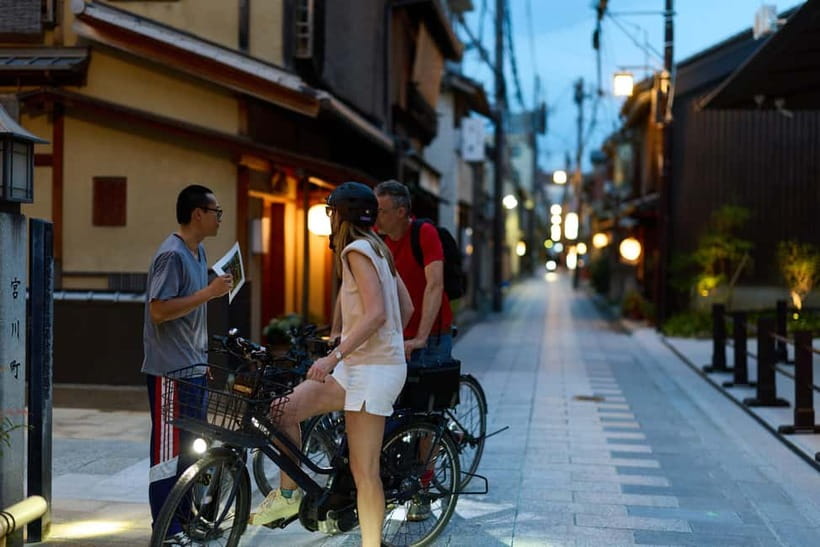
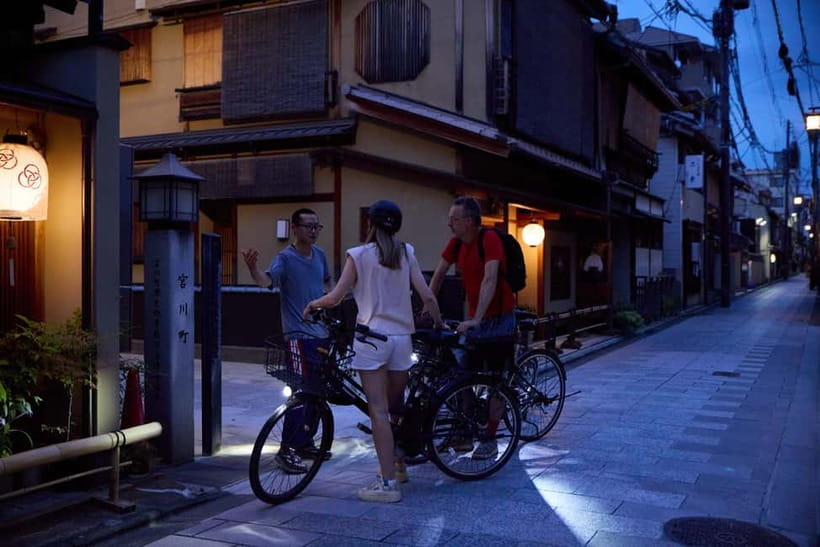
The first guided section takes you through Miyagawacho, one of Kyoto’s traditional entertainment districts. Its narrow streets and old-style buildings provide a gentler opening than a major road or busy shopping area.
At night, the district is best appreciated from the saddle. You can take in the architecture and atmosphere without stopping at every doorway. Your guide provides context, helping you understand what you are seeing rather than leaving you to guess from the street.
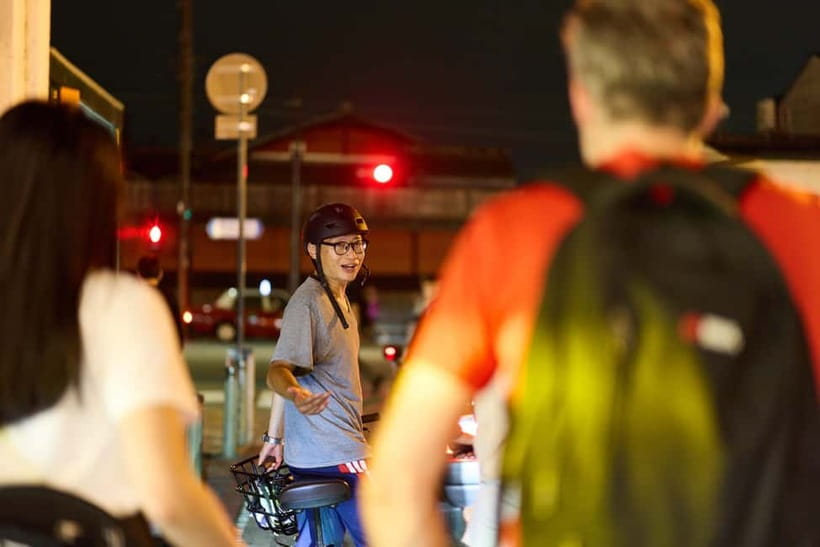
This is also where the small group format starts to pay off. Kyoto’s lanes can be tight, and you need to stay aware of pedestrians and other bikes. Keep your pace steady, follow the guide’s signals, and resist the urge to stop suddenly for every attractive view.
Toyokuni Shrine and the National Museum area
The route continues toward Toyokuni Shrine and the Kyoto National Museum area. The museum is seen from the exterior, so this is not a museum visit with indoor exhibits. Instead, the stop helps connect Kyoto’s cultural institutions with the older religious sites around them.
Toyokuni Shrine offers a change of mood from the narrow entertainment streets. The visit is short, but a guide can point out details that are easy to miss in the dark, including the character of the grounds and the setting of the shrine within the wider neighborhood.
The National Museum stop lasts only a few minutes. Think of it as a brief orientation and viewing point rather than a major attraction by itself. That brevity is useful on a two-hour tour, since the evening is built around movement and a string of exterior sights.
More e-bike rides around Kyoto:
- 5 Top Highlights of Kyoto Full Day Bike Tour (E-bike option)
★ 5.0 · 511 reviews - E-Bike Tours of the highlights of Kyoto!!!
★ 5.0 · 291 reviews - Kyoto: City Secrets eBike Tour
★ 4.9 · 196 reviews - Pedal Adventure Kyoto’s iconic landmarks on an e-bike tour
★ 5.0 · 189 reviews
Kiyomizuzaka and the Kiyomizu-dera area
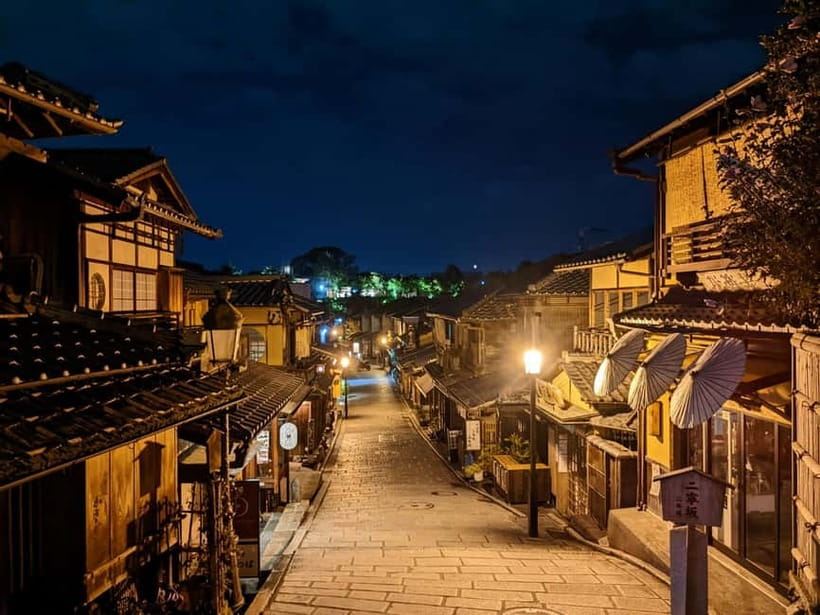
The Kiyomizu area is one of the tour’s main draws. Kiyomizuzaka leads toward Kiyomizu-dera, and the slope is lined with traditional-looking buildings and shops. By night, the approach feels different from its daytime version, with less visual noise and a calmer pace.
You get a photo stop and a guided visit lasting about 10 minutes. That is enough for a look and a few pictures, but not enough for a full exploration of Kiyomizu-dera. If entering the temple grounds or seeing interior details is your priority, you should plan a separate daytime visit.
The slope also deserves practical attention. It can be uneven or crowded in places, even during the evening, and you are moving between riding and walking. Keep your shoes comfortable and follow instructions about where to leave or handle the bike.
The electric bike helps most when the route rises. It does not turn the slope into a flat road, but it reduces the strain compared with an ordinary bicycle. This is one reason the tour suits visitors who want active sightseeing without committing to a long, hard ride.
Yasaka Pagoda and Ninenzaka after sunset
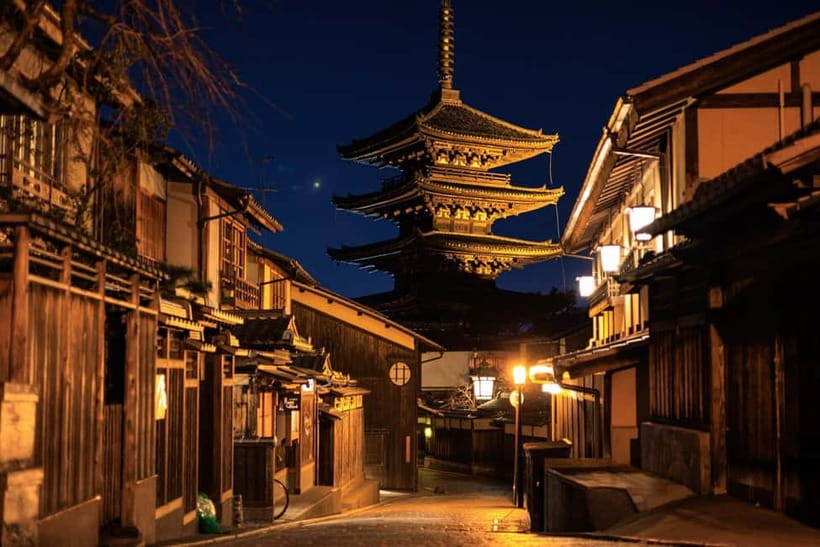
The Yasaka Pagoda photo spot is one of the route’s most recognizable views. The pagoda gives you a strong visual marker of Kyoto’s old eastern districts, and the surrounding streets are particularly appealing when lit at night.
The stop is short, around 10 minutes, so you will want to have your camera ready. Your guide can help you understand how the pagoda fits into the area rather than treating it as only a backdrop for a picture.
Next comes Ninenzaka, another old slope with wooden buildings and a traditional streetscape. This is one of the sections where the ride feels less like standard sightseeing and more like moving through Kyoto’s historic neighborhoods. You pass through rather than spending the evening shopping, so the experience favors atmosphere and context over detailed browsing.
Ninenzaka can be busy and narrow. Stay alert, slow down near pedestrians, and do not expect the freedom of an empty cycle path. The reward is seeing a famous area at a more peaceful hour, while still having a guide manage the route.
A break at Maruyama Park
Maruyama Park provides the tour’s main pause. You have about 10 minutes for a break, photos, and a guided look around.
The park gives your legs a short rest after the slopes and old streets. It also changes the rhythm of the evening. Instead of moving from one built-up district to the next, you get a little open space and a chance to absorb what you have seen.
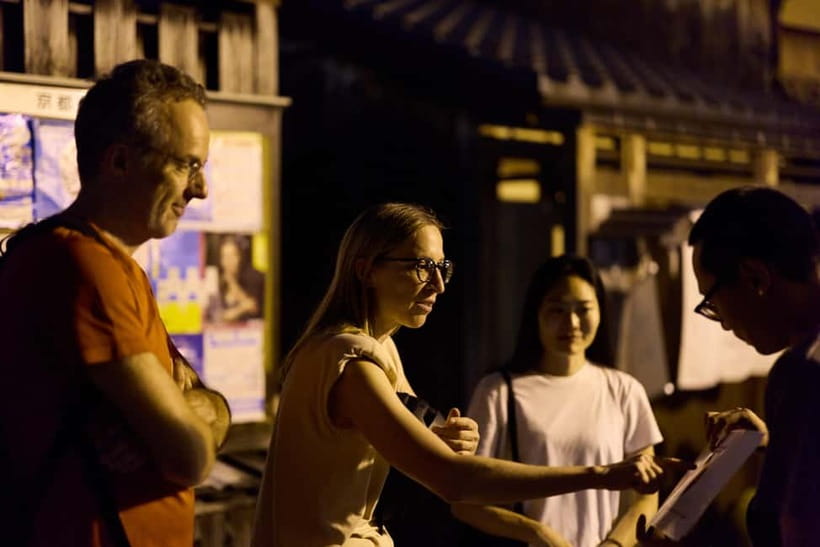
This is a good moment to ask questions. The guides named in the feedback, Ben and Jay, were singled out for useful information, historical explanation, and careful attention to the group. One account also mentioned seeing geisha during the ride, though that is not something you should count on. If you do see people working in the entertainment districts, keep a respectful distance and do not treat anyone as a photo prop.
Furukawacho and the ride back to Gion
The later part of the route includes Furukawacho Shopping Street and more guided riding before returning to Kyoto Tourist Lounge Gion. Furukawacho adds a local street feel to an evening otherwise focused on major cultural sights.
A shopping street at night is not necessarily a shopping excursion. Shops may be closed, and the point is the street itself, its scale, and its place in daily Kyoto. This is one of the tour’s useful contrasts: famous temple approaches are balanced by ordinary lanes and neighborhood streets.
The return ride gives you another look at Kyoto from the bike rather than from a fixed viewpoint. You may find that this movement is as memorable as the formal stops. The city connects more clearly when you travel between its landmarks under your own power.
What $64 gets you
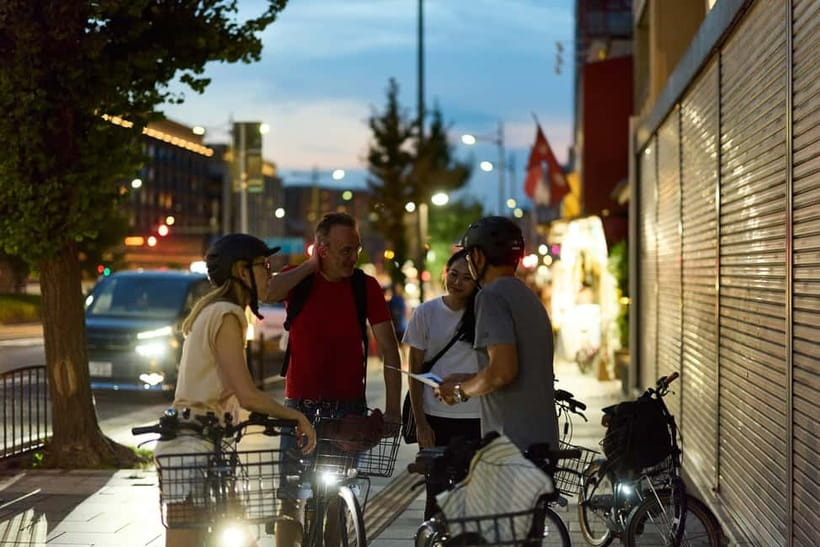
At $64 per person, the price is fair for a two-hour guided outing that includes an e-bike, helmet, and live English-speaking guide. You are paying not only for the bicycle, but also for the route planning and the ability to cover several districts without arranging transport between each one.
The value is strongest if you want an introduction to eastern Kyoto at night. In two hours, you visit or view Gion, Miyagawacho, Toyokuni Shrine, the National Museum exterior, Kiyomizuzaka, Kiyomizu-dera, Yasaka Pagoda, Ninenzaka, Maruyama Park, and Furukawacho.
The value is weaker if you want long visits inside temples, museum admission, food, or a slow photography session. None of those are included. Food and drinks are extra, hotel pickup and drop-off are not provided, and insurance is not included.
For a first evening in Kyoto, I see the cost as a useful trade. You get orientation, evening atmosphere, and light exercise in one booking. You also avoid spending your first night working out which lanes and sights can sensibly be linked on foot.
Riding conditions and who should book
This tour suits adults and older children who are confident on a bicycle and meet the minimum age of 12 and height requirement of more than 145 centimeters. It is not suitable for people who cannot ride a bike or who have back problems.
You should also be ready for ordinary city riding. The supplied information does not promise a car-free route, so you need to pay attention to the guide, other riders, pedestrians, and changing street conditions. The group size helps, but it does not remove the need for care.
The tour runs in light rain, and ponchos are available if needed. That makes the booking a little less fragile in Kyoto’s changeable weather, but comfortable shoes still matter. If rain is forecast, protect anything you carry and expect the streets to feel slick.
The English language format is useful for visitors who want live explanation rather than a recorded audio guide. The strongest comments about the experience focus on clear information, attentive guiding, and the pleasant ease of the e-bikes. That combination is more important here than a packed list of attractions.
Is the evening e-bike ride worth booking?
I would book this tour if you want a compact first look at Kyoto after dark, especially if you enjoy moving through a city instead of only walking from one major sight to the next. The route combines famous eastern Kyoto views with smaller streets, and the electric assistance makes the distance less demanding.
I would skip it if you dislike cycling, need step-free sightseeing, want extensive temple interiors, or prefer to explore at your own pace. You should also avoid booking it simply because you expect a completely effortless ride. There is still pedaling, and Kyoto’s narrow streets require attention.
For most suitable riders, the strongest reasons to go are the six-person group, the cooler evening timing, and the chance to see busy daytime sights in a calmer setting. Guides such as Ben and Jay add the historical explanation that turns a pleasant bike ride into a useful introduction to Kyoto.
FAQ
Where does the Kyoto night e-bike tour start?
The meeting point is in front of Kyoto Tourist Lounge Gion.
How long does the tour last?
The tour lasts two hours, including the guided stops and the ride back to Kyoto Tourist Lounge Gion.
What is included in the price?
The price includes an e-bike rental, a helmet, and a live English-speaking guide.
How many people are in the group?
The group is limited to six participants.
Is the tour conducted in English?
Yes. The live tour guide language is English.
What age must participants be?
Participants must be at least 12 years old.
Is there a height requirement?
Yes. Participants must be taller than 145 centimeters.
Do I need to know how to ride a bicycle?
Yes. You must be comfortable riding an e-bike. The tour is not suitable for people who cannot ride a bike.
Does the tour run in the rain?
The tour proceeds in light rain, and ponchos are available if needed.
What should I bring?
Bring comfortable shoes. You should also arrive at the meeting point 10 minutes before the tour begins.
More Kyoto Evenings
- Kyoto: Gion Magical Night Walking Tour with Geisha Trivia
★ 4.9 · 2,393 reviews - Night Walk in Gion: Kyoto’s Geisha District
★ 4.5 · 2,003 reviews - Kyoto Night Foodie Tour in Gion (9+ dishes + 6 Sake tastings)
★ 5.0 · 1,762 reviews - Kyoto Gion Night Walk & Geisha District Guided Tour
★ 5.0 · 786 reviews
Recently added around Kyoto
- Higashiyama | Kyoto: Sakura Season Private Rickshaw Tour★ 5.0 · 3 reviews
- Kyoto Kimono Rental CHAMATSU|Kimono/Yukata Rental FamilyPlan★ 5.0 · 3 reviews
- Kyoto: Half-Day Private Guided Tour to the Old Town of Gion★ 4.4 · 3 reviews
- Nara Private Customizable Half Day Tour★ 5.0 · 3 reviews
- Kansai Region Hiking Adventure in Nara Kobe Kyoto and More★ 5.0 · 3 reviews
- Full Day Nara Deer, Temple, Shrine, Activities & Tea Ceremony★ 5.0 · 3 reviews
- Nara: Essential Private Tour with Deer Park and Temples★ 5.0 · 3 reviews
- Hiking Tour for Sacred Sites in Kyoto with a Guide★ 5.0 · 3 reviews
Cycling Tours, compared.
Arashiyama Bamboo Forest & Hidden Gems Bike Tour (Early Bird)
Read our review →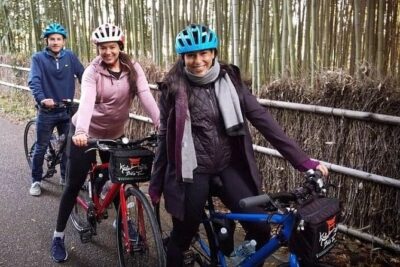
5 Top Highlights of Kyoto Full Day Bike Tour (E-bike option)
Read our review →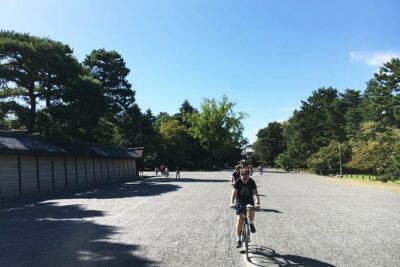
Full Day Biking Tour Exploring the Best of Kyoto
Read our review →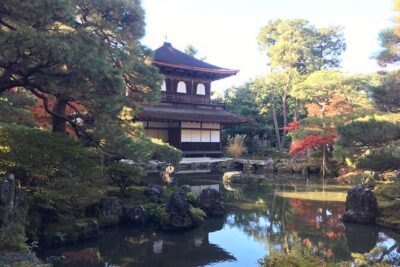
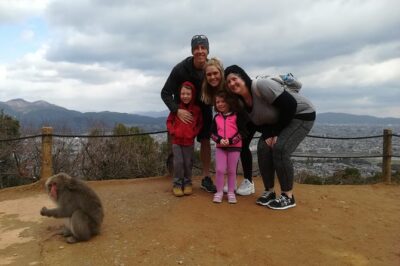
Afternoon Kyoto Bike Tour: Bamboo Forest, Monkeys & Hidden Spots
Read our review →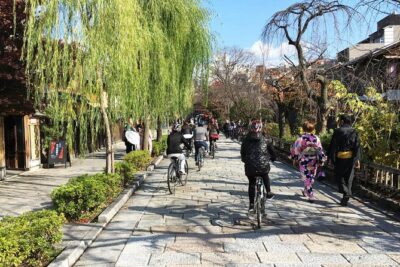
South Kyoto in a Nutshell: Gentle Backstreet Bike Tour!
Read our review →Browse the lists this tour appears in