
REVIEW · GION GEISHA DISTRICT TOURS
Kyoto: Meet the Geisha Maiko with Gion Walking Tour
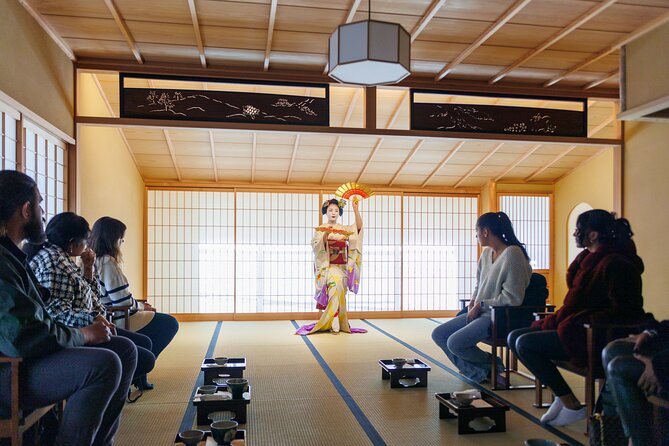
Meeting a maiko and retired geiko inside a private ochaya is the heart of this Kyoto experience. You are not asked to spot geiko from a distance on Gion’s streets. Instead, you get a guided introduction, a traditional dance, translated questions, and a close look at a private entertainment house.
I like the clear cultural context provided during the walk, and I like the chance to speak directly with the performers. Guides including Haruki, Takuma, Miko, Ayako, Naomi, and Chiko have been praised for friendly, useful explanations. The main caution is value: at $109.43, the walking portion may feel long if you mainly want the performance.
In This Review
- Key points to know before booking
- Why the private ochaya visit matters
- The Gion walk starts with atmosphere, not monuments
- Gion Shirakawa and Tatsumi Bridge
- Hanamikoji Street and the geiko districts
- The performance in Miyagawasuji
- How good is the guiding?
- Is $109.43 a fair price?
- Timing, clothing, and comfort
- Who will enjoy this most?
- Should you book the Gion maiko tour?
- FAQ
- How long does the Kyoto maiko and geiko tour last?
- What is included in the tour?
- Does the tour include a meal or drinks?
- Is hotel pickup provided?
- Where does the tour start and end?
- Can children join the tour?
- Do I need to wear special clothing?
- Is photography allowed?
- Is the tour held in bad weather?
- Is the performance venue accessible without stairs?
Key points to know before booking
- Private ochaya visit: Enter a traditional entertainment house that is normally closed to casual visitors.
- Two generations of performers: Meet a working maiko and a retired geiko, then hear about their lives and training.
- Live traditional arts: Watch a maiko dance, with music and other elements of the performance presented in the tea house setting.
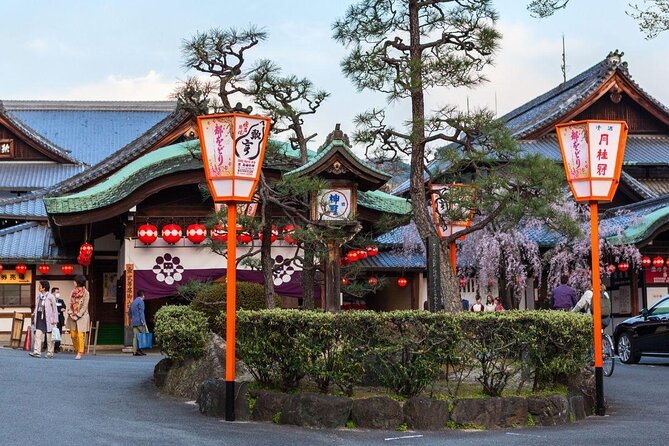
- Gion on foot: Visit Gion Shirakawa, Tatsumi Daimyojin Shrine, Tatsumi Bridge, Hanamikoji Street, Gion Corner, and the grounds of a Zen temple.
- Guide as translator: Your guide explains the conversation in English and helps you ask questions.
- Important practical details: Wear socks, bring comfortable shoes, and be ready for stairs to the second floor.
Why the private ochaya visit matters
Kyoto’s geiko and maiko are often treated as a street spectacle. That approach misses the point, and it can be intrusive. This tour offers a better way to learn: you meet performers in a setting designed for conversation and traditional entertainment.
An ochaya is not a café or a standard tea ceremony venue. It is a private establishment where geiko and maiko entertain guests through dance, music, conversation, and formal hospitality. Access is tightly controlled, so stepping inside is a significant part of what you are paying for.
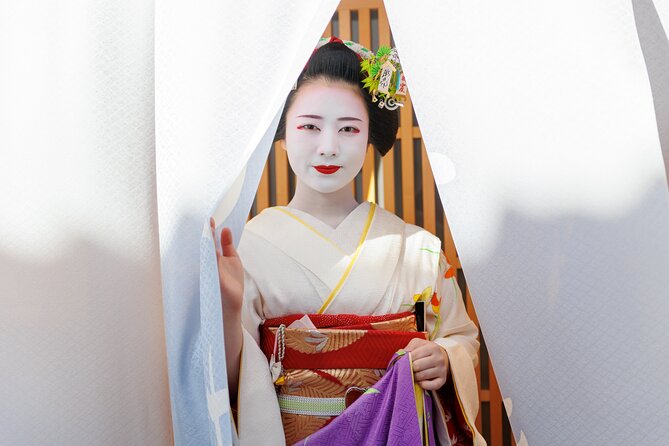
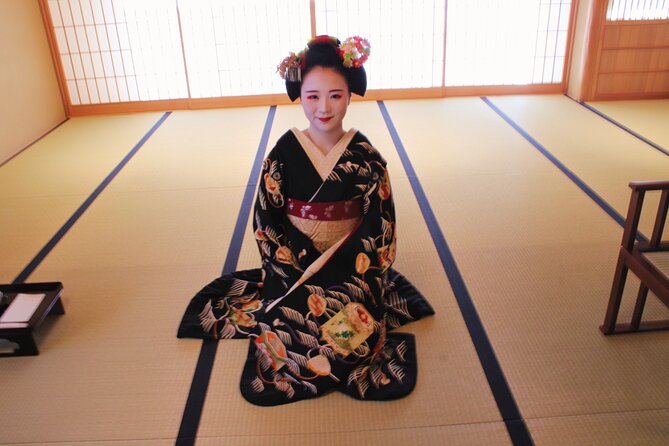
At the house in Miyagawasuji, you meet a maiko who is still in training and a retired geiko. The distinction matters. A maiko is an apprentice, still learning the arts, manners, music, and service expected in the profession. A geiko has completed that training. Hearing from both gives you two views of the tradition, one from the active training period and one from life after performing.
The performance is followed by conversation and questions. Your guide translates, making this more than a silent show. You can ask about training, daily life, customs, and the meaning of what you have seen, though the quality of that exchange depends partly on the guide’s English and voice projection.
More evenings in Gion:
- Kyoto Geisha Walking Tour: Gion District & Hidden Gems
★ 4.7 · 3,273 reviews - Kyoto: Gion Magical Night Walking Tour with Geisha Trivia
★ 4.9 · 2,393 reviews - Kyoto: Gion Geisha District Walking Tour – Stories of Geisha
★ 4.7 · 2,187 reviews
The Gion walk starts with atmosphere, not monuments
The walking portion begins in or near Miyagawasuji and moves through Gion. This is not a tour built around entering major attractions. Instead, the guide points out streets, buildings, shrines, and districts while explaining how geiko and maiko live and work.
That approach suits you if you want context. Gion can look like a collection of handsome wooden façades unless someone explains what happens behind them. The guide discusses the lifestyle, customs, training, and changing role of geiko and maiko in Kyoto.
The walk lasts around an hour and a half before the private house portion, depending on the group and the day. Some of the route covers nearby streets more than once or follows a loose loop. If you enjoy local detail, this gives you time to ask questions and notice small features. If you prefer a tight schedule, the walking section may feel repetitive.
The group can include up to 30 people. That is a fairly large maximum for a conversation-based cultural experience. Smaller departures may feel more personal, but you should not book expecting a private tour.
Gion Shirakawa and Tatsumi Bridge
Gion Shirakawa is one of the prettiest parts of the route. Traditional wooden buildings line the waterway, and the narrow streets offer a more restrained view of Kyoto than the broad shopping roads nearby.
The guide uses this area to explain the place of geiko and maiko in Kyoto society. You learn why the district has its particular customs and why respectful behavior matters. This is a good moment to put the street scenes into context before seeing a performance.
Tatsumi Daimyojin Shrine is a very short stop, listed at about five minutes. The shrine dates to the Heian period and is associated with protection, safety, good fortune, travelers, and warriors. Do not expect a long shrine visit or a major sightseeing detour. Its value here is as a small cultural marker along the Gion route.
Nearby Tatsumi Bridge has the look many people associate with old Kyoto: a small traditional crossing, wooden machiya houses, and a quiet corner that feels far removed from modern city streets. It is a photo-friendly place, but remember that Gion is a working neighborhood. Look, listen, and avoid blocking doorways or photographing people without permission.
Hanamikoji Street and the geiko districts
Hanamikoji Street is one of Gion’s main roads, lined with machiya, restaurants, shops, and tea houses. The architecture is attractive, but the guide’s explanation is what turns a pleasant walk into a useful one.
You hear about the difference between public streets and private establishments. You also get a clearer idea of why chasing maiko for photographs is poor etiquette. Seeing someone pass by in costume does not give you permission to follow, crowd, or photograph her.
The tour may also pass Gion Corner, a venue associated with short presentations of traditional Kyoto arts. Based on the supplied schedule, you view the area rather than attend a separate Gion Corner performance. That distinction is worth noting if you are expecting a second show.
The route includes the precinct of one of Kyoto’s oldest Zen Buddhist temples. You do not enter the temple buildings, but you walk through the grounds like a local visitor and get a quiet change of pace from the geiko district. This is a brief atmospheric stop, not a substitute for a full temple visit.
More walking tours in Kyoto:
- Night Walk in Gion: Kyoto’s Geisha District
★ 4.5 · 2,003 reviews - Kyoto Gion Geisha District Walking Tour – The Stories of Geisha
★ 5.0 · 1,441 reviews - Nishiki Market Brunch Walking Tour (7 Tastings + Brunch)
★ 5.0 · 1,355 reviews - Kyoto Arashiyama Walking Tour: Bamboo, Monkeys, Gardens & Secrets
★ 5.0 · 1,216 reviews
The performance in Miyagawasuji
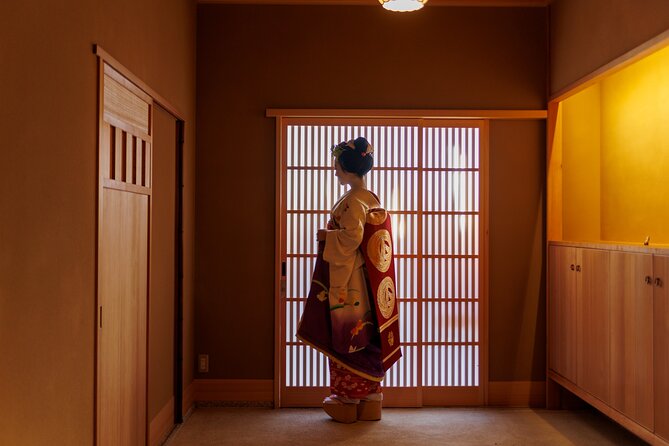
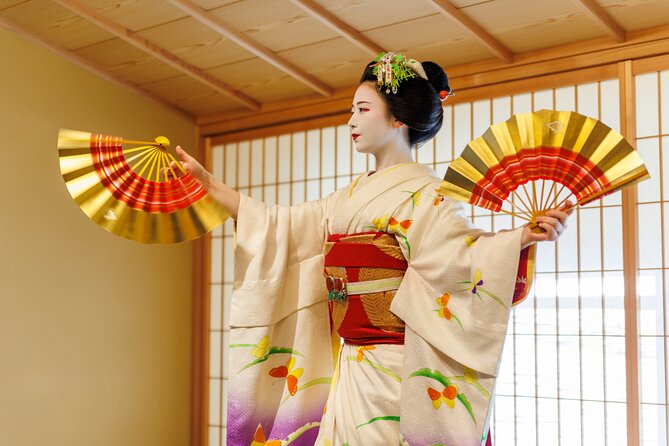
The final portion takes place at the private house in Miyagawasuji and lasts about 90 minutes. The maiko performs a traditional dance, and the session may include music from the house mother, or Okaasan, on shamisen. The performance is formal, graceful, and short enough to hold your attention without becoming a full evening entertainment program.
The setting does much of the work. You are seated inside a traditional house, rather than watching from a public stage. The second floor is reached by stairs, so this is not suitable for anyone who cannot manage them.
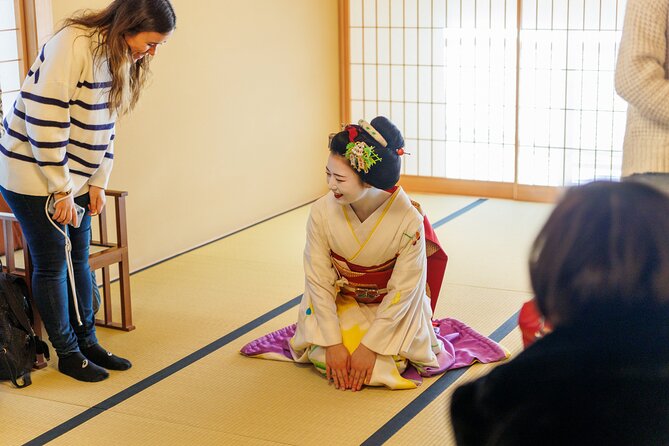
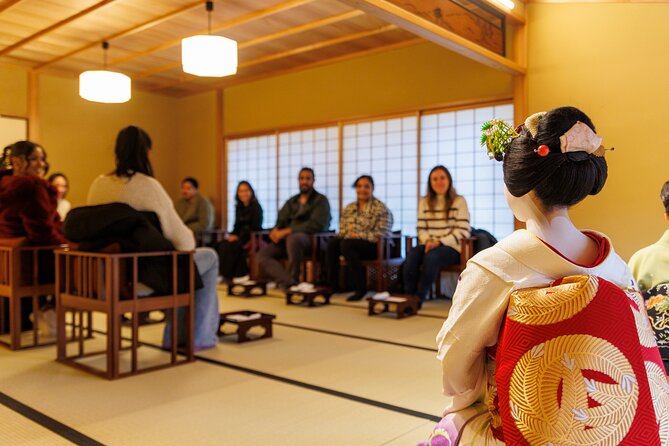
After the dance, you have a chance to ask questions. Your guide translates between the group and the maiko or retired geiko. This is one of the strongest reasons to choose this tour over a basic cultural show. You see the art, then hear personal explanations about the people who practice it.
The experience can include a photo session. Photography and video are allowed only during the performance and designated photo session. If you want to post an image on social media, ask the maiko directly for permission first. Do not assume that a group photo automatically grants permission to publish it.
How good is the guiding?
The guide is central to the experience. The walk covers familiar sights, but the explanations make sense of them. Guides named Haruki, Takuma, Miko, Ayako, Naomi, Chiko, Yoko, Machiko, and Ellie, also called Eriko, have received strong praise for warmth, English, and cultural explanations.
Miko was specifically appreciated for translating the conversation with the performers. Ayako was praised for clear English and for helping with a restaurant recommendation after the tour. Naomi and Chiko were noted for making the history and customs easy to follow, while Ellie was praised for friendly, useful commentary.
These individual reports also point to the main weakness. One experience had trouble with soft voices and translation, making parts of the conversation hard to hear. That matters in a traditional house, where microphones may not be used and the discussion is the main benefit after the dance.
If you have trouble hearing, sit near the guide or performers when possible. Ask politely for a repeat if you miss an explanation. The tour operator has acknowledged that audibility and guide training can be improved, so the exact quality may vary by departure.
Is $109.43 a fair price?
At $109.43 per person, this is not a cheap Gion stroll. You are paying for the access and arrangement, not simply for three hours of walking.
The price makes more sense if you value the private ochaya setting, live performance, translated discussion, and chance to meet both a maiko and retired geiko. Arranging this access independently would be difficult. The tour also gives you a respectful alternative to trying to encounter performers on the street.
The price feels less convincing if you mainly want a dance lasting a few minutes. The walking tour takes a substantial part of the experience, and some of the stops are brief or viewed from outside. You do not receive hotel transfers, transportation to the meeting point, food, or extra drinks.
I would compare this with the cost of a standard cultural performance, but do not treat the two as identical. A theater show may offer more stage time and food or drink for less money. This tour offers context, a private setting, and conversation. Choose based on which part matters more to you.
Timing, clothing, and comfort
The tour lasts about three hours, though it can run longer depending on the day. Plan no tight connection immediately afterward, especially if you have a restaurant reservation or train to catch.
Wear comfortable walking shoes. The route includes several Gion streets and temple grounds, and the walking portion takes time. Rain does not automatically cancel the tour, so bring an umbrella in wet weather.
You must wear socks inside the performance venue. On rainy days, do not enter with wet socks or wet clothing. Use an umbrella during the walk and arrive dry. This is both practical and part of the etiquette of entering a traditional house.
The performance is upstairs, reached only by stairs. Children under 10 are not permitted. The activity requires moderate physical fitness, not strenuous hiking, but you should be comfortable walking and climbing stairs.
The meeting and ending point is in Miyagawasuji, Higashiyama Ward, Kyoto. It is near public transportation, but hotel pickup and drop-off are not included. Check the exact location carefully before setting out, since a small neighborhood meeting point may not be as easy to spot as a major station or landmark.
Who will enjoy this most?
I recommend this for a first-time Kyoto visitor who wants an introduction to geiko and maiko culture without treating the performers as photo props. It also suits anyone who enjoys asking questions and prefers a small cultural encounter to a large stage show.
You will get the most from it if you are curious about training, etiquette, music, dance, and the difference between a maiko and a geiko. The tour is also useful after visiting Higashiyama, since the route fits naturally with a day spent around eastern Kyoto.
It may not suit you if you dislike guided walks, have limited mobility, cannot manage stairs, or want a meal included. It is also a poor choice if your main goal is fast sightseeing. The tour takes its time, and the walk may feel like too much setup for the performance.
Families should note the minimum age of 10. Older children who can sit quietly during a traditional performance may find the meeting memorable, but the etiquette and translation require patience.
Should you book the Gion maiko tour?
Book it if entering a private ochaya and speaking with a maiko are worth more to you than getting the lowest possible price. The performance, translated Q&A, and chance to meet a retired geiko give the tour substance that a street walk alone cannot provide.
Skip it if $109.43 feels high for a three-hour activity with no food or transportation. In that case, look for a shorter Gion walk or a public traditional arts performance.
My practical advice is to book this for the cultural access, not for the sightseeing stops. The walk helps you understand the district, but the private house is the reason to go. Wear socks, keep your schedule loose, and treat the performers with the same care you would show any working artist.
FAQ
How long does the Kyoto maiko and geiko tour last?
The experience lasts about three hours, though it may run longer depending on the day.
What is included in the tour?
It includes a guided Gion walk, a visit to a private ochaya, a maiko performance, a meeting with a retired geiko, translated conversation, questions, and a photo session under the stated rules.
Does the tour include a meal or drinks?
No. Extra food and drinks are not included.
Is hotel pickup provided?
No. Hotel pickup and drop-off are not included, and you must make your own way to Miyagawasuji.
Where does the tour start and end?
The listed start and end location is Miyagawasuji in Kyoto’s Higashiyama Ward. The experience ends at the private house venue.
Can children join the tour?
Children under 10 years old are not permitted.
Do I need to wear special clothing?
No special outfit is specified, but you must wear socks at the performance venue. Comfortable walking shoes are recommended.
Is photography allowed?
Photography and video are allowed only during the performance and photo session. Ask the maiko directly before posting any images on social media.
Is the tour held in bad weather?
Yes. The tour operates rain or shine. Bring an umbrella and do not arrive at the venue with wet clothing or wet socks.
Is the performance venue accessible without stairs?
No. The maiko performance takes place on the second floor of a private house, and access is by stairs only.
Recently added around Kyoto
- Higashiyama | Kyoto: Sakura Season Private Rickshaw Tour★ 5.0 · 3 reviews
- Kyoto Kimono Rental CHAMATSU|Kimono/Yukata Rental FamilyPlan★ 5.0 · 3 reviews
- Kyoto: Half-Day Private Guided Tour to the Old Town of Gion★ 4.4 · 3 reviews
- Nara Private Customizable Half Day Tour★ 5.0 · 3 reviews
- Kansai Region Hiking Adventure in Nara Kobe Kyoto and More★ 5.0 · 3 reviews
- Full Day Nara Deer, Temple, Shrine, Activities & Tea Ceremony★ 5.0 · 3 reviews
- Nara: Essential Private Tour with Deer Park and Temples★ 5.0 · 3 reviews
- Hiking Tour for Sacred Sites in Kyoto with a Guide★ 5.0 · 3 reviews
Gion Geisha District Tours, compared.
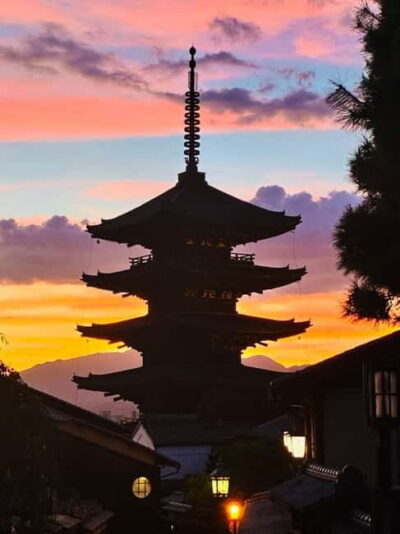
Kyoto Geisha Walking Tour: Gion District & Hidden Gems
Read our review →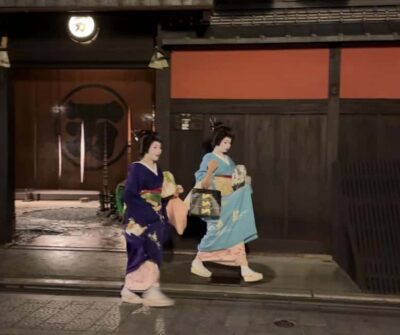
Gion Magical Night Walking Tour with Geisha Trivia
Read our review →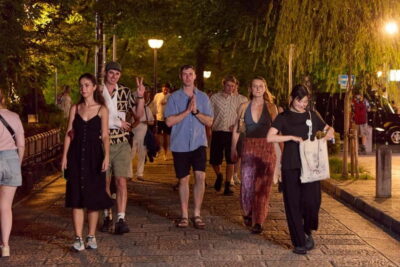
Gion Geisha District Walking Tour – Stories of Geisha
Read our review →
Best of Kyoto: Gion, Geisha, Pagodas & Cobblestones
Read our review →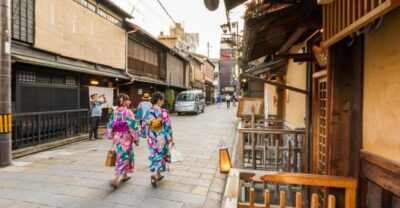
Kyoto Night Foodie Tour in Gion (9+ dishes + 6 Sake tastings)
Read our review →
Kyoto Gion Geisha District Walking Tour – The Stories of Geisha
Read our review →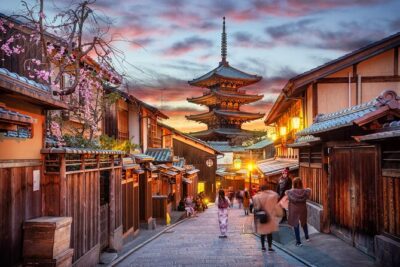
Kyoto Gion: 2-Hour Geisha Culture & History Walking Tour
Read our review →Browse the lists this tour appears in