
REVIEW · CYCLING TOURS
Kyoto in a Day by eBike: The Best Bits Tour (East Course)
Kyoto’s grand temples make more sense when you reach them by bicycle, not just by taxi or tour bus. This private eBike ride links major sights with quieter streets, the Kamo River area, and the Philosopher’s Path, giving you a useful view of how Kyoto’s old quarters fit together.
I like the small group size, capped at six people per guide, and the fact that lunch and listed admission fees are included. The English-speaking guides can also adjust the ride, as Makoto did for one family by adding a beautiful Kamo River detour. The main caution is the pace: eight hours on a bicycle is a full day, and the published duration does not match some accounts describing three-hour rides, so confirm the exact plan before booking.
In This Review
- Key points to know before you book
- Why an eBike is a smart way to see Kyoto
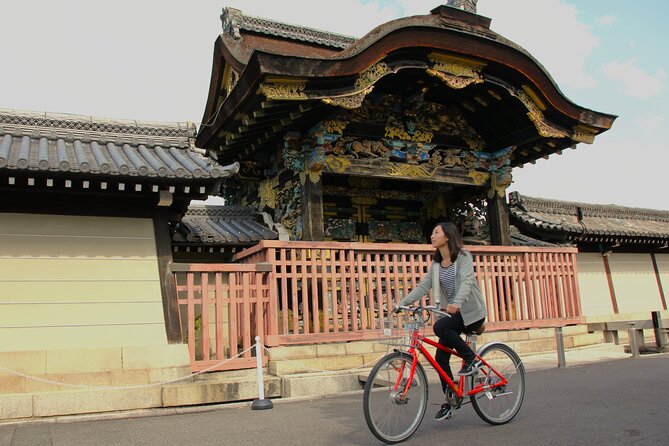
- Starting at Kyoto Station and Nishi Honganji
- Nijo Castle and the world of the shoguns
- A quiet loop through Kyoto Gyoen
- Ginkakuji and the art of restraint
- The Philosopher’s Path and a slower stretch of cycling
- Kiyomizu-dera and the eastern hills
- What the guides add to the ride
- Lunch, duration, and the value of $247.12
- Who will enjoy this best
- Weather, cancellation, and practical limits
- Should you book this Kyoto eBike tour?
- FAQ
- Where does the Kyoto eBike tour begin?
- What time does the tour start?
- Where does the tour finish?
- How long is the tour?
- What is included in the tour price?
- How many people can join each guide?
- Can the tour operate in rainy weather?
- Can children join the tour?
Key points to know before you book
- Ride from Kyoto Station to the eastern hills: The route connects Nishi Honganji, Nijo Castle, Kyoto Gyoen, Ginkakuji, the Philosopher’s Path, and Kiyomizu-dera.
- Small private groups: Two to six people are accepted per guide, with an extra guide available for groups of seven to twelve.
- Lunch and entry fees are included: You pay one tour price rather than handling admission at each major temple and castle.
- Guides can shape the ride: Makoto, Kay, Tad, and Tomoko are named guides associated with warm, helpful service and useful history.
- Rain does not automatically cancel the outing: You can ride with a free poncho or switch to walking and public transportation.
- Cycling rules matter: Children must be at least 10 years old, at least 145 centimeters tall, and able to ride safely on the road without help.
Why an eBike is a smart way to see Kyoto
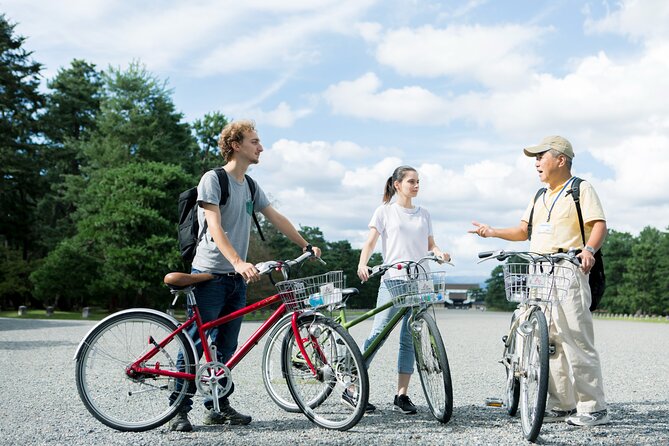
Kyoto is large enough that walking between its best sights can eat up much of your day. Buses and taxis help, but they do not give you the same sense of movement through the city. On an eBike, you can cover more ground while still seeing the smaller streets between the headline attractions.
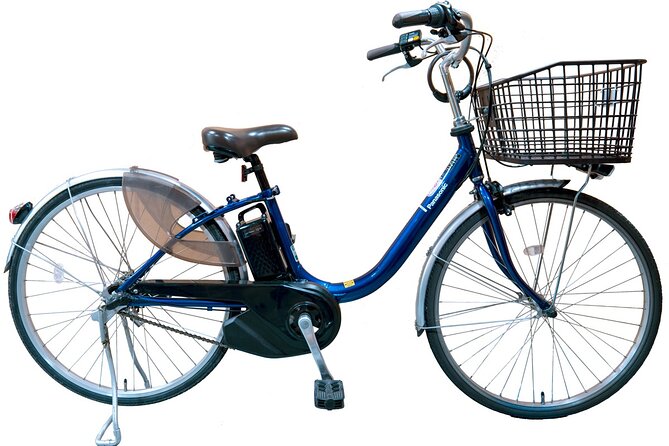
The electric assist matters most when the route reaches eastern Kyoto and the hills around Kiyomizu-dera. You still pedal, but the motor makes the day more manageable than a standard bicycle. That said, this is not a passive sightseeing ride. You need to stay alert on city roads, follow your guide, and be comfortable cycling for several hours.
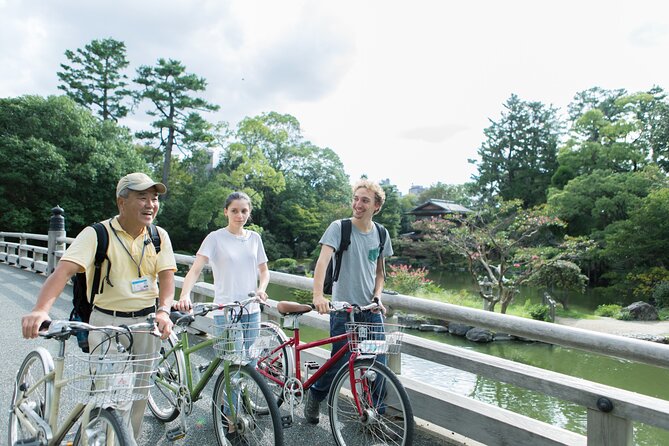
The small group format is a real advantage. With two to six people per guide, it is easier to ask questions, stop for photos, and keep the group together. A guide can also adapt the route more easily than a large coach tour. Makoto, for example, added a Kamo River detour for one family, turning a fixed sightseeing plan into a more personal ride.
You should also expect history throughout the day. The focus is on Kyoto’s connection with the shoguns and the political and religious forces that shaped the city. The guide does more than point at buildings. You get context for why these places were built, how they relate to one another, and what to notice in their design.
More bike days around Kyoto:
- Hidden Kyoto E-Biking tour
★ 5.0 · 1,843 reviews - Bike Tour Exploring North Kyoto plus Lunch
★ 5.0 · 1,087 reviews - Arashiyama Bamboo Forest & Hidden Gems Bike Tour (Early Bird)
★ 5.0 · 613 reviews
Starting at Kyoto Station and Nishi Honganji
The meeting point is the Kyoto Cycling Tour Project terminal near Kyoto Station at 552-13 Higashiaburanokōjichō. The listed start time is 9:00 a.m., and the tour returns to this same point at the end of the day.
Beginning at Kyoto Station is practical if you are staying near the station or arriving by train. Give yourself enough time to find the cycle terminal and complete the start-up process before the 9:00 departure. The activity uses a mobile ticket, so keep your booking available on your phone.
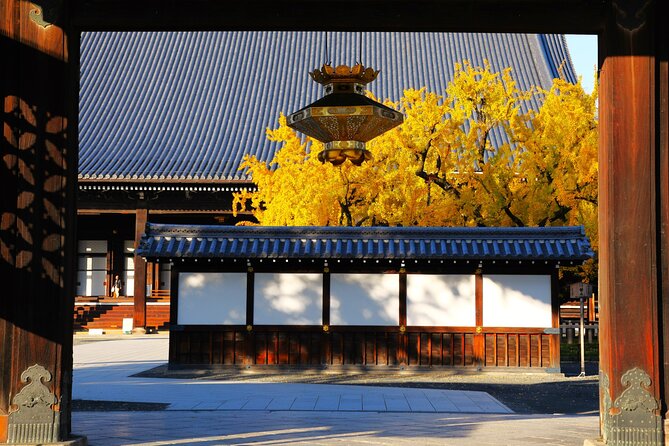
The first stop is Nishi Honganji, one of Kyoto’s major Buddhist temples. You have about 15 minutes here, which makes this more of an introduction than a full temple visit. That short stop can work well at the start of a long day because it gives you an early taste of Kyoto’s religious architecture without using up your energy.
Nishi Honganji is also a good counterpoint to the more famous stops later. You may find it quieter than the headline temples, allowing you to look around without immediately feeling swept into a crowd. Your guide can explain the temple’s place in Kyoto before you move on by bicycle.
Nijo Castle and the world of the shoguns
Nijo Castle receives the longest stop early in the route, about one hour. This is one of the day’s strongest historical visits because the setting connects directly with Japan’s military rulers and the political power they held in Kyoto.
Inside, you can expect to see striking architecture and artworks. The castle is not simply an attractive compound to cycle past. It gives the guide a chance to explain how power was displayed through rooms, decoration, gates, and carefully controlled movement.
The one-hour visit is useful, but it is still a timed group stop. If you like to study every painting or linger in each garden, you may want more time. The benefit is that you see Nijo Castle without having to arrange separate admission or work out local transportation.
Because the day includes several major sights, pay attention to how the guide links them. Nijo Castle represents political authority, while the temples later in the route show different sides of Kyoto’s religious and artistic life. That contrast gives the whole ride more shape than a simple checklist of attractions.
A quiet loop through Kyoto Gyoen
Next comes Kyoto Gyoen National Garden, the broad green area where the Imperial Palace is located. The planned stop is only about 15 minutes, so you should think of this as a short ride through an important part of central Kyoto rather than a full Imperial Palace visit.
This pause changes the rhythm of the morning. After the formal rooms and artwork of Nijo Castle, Kyoto Gyoen gives you open space and a calmer place to cycle. It is also a reminder that Kyoto is not only a collection of temples packed into narrow lanes. The city has large, quiet areas where you can slow down.
The short timing is the main limitation. If the Imperial Palace is high on your personal list, this tour does not appear to provide a dedicated palace visit. You cycle around the garden area instead. That is still useful for orientation, but it is different from an extended palace tour.
More e-bike rides around Kyoto:
- 5 Top Highlights of Kyoto Full Day Bike Tour (E-bike option)
★ 5.0 · 511 reviews - E-Bike Tours of the highlights of Kyoto!!!
★ 5.0 · 291 reviews - Kyoto: City Secrets eBike Tour
★ 4.9 · 196 reviews - Pedal Adventure Kyoto’s iconic landmarks on an e-bike tour
★ 5.0 · 189 reviews
Ginkakuji and the art of restraint
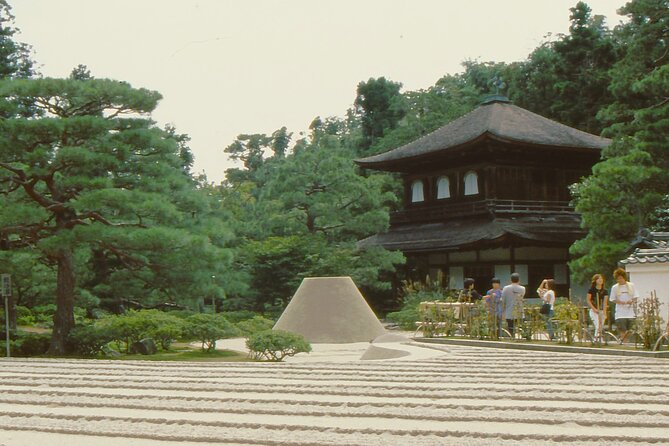
Ginkakuji, commonly called the Silver Pavilion, receives about 45 minutes. The pavilion was built by a shogun, and the carefully designed grounds are a key part of why this stop earns more time than Nishi Honganji or Kyoto Gyoen.
Do not expect a glittering silver building. The name is more interesting than the literal appearance. The appeal lies in the balance between the pavilion, the garden, and the surrounding setting. Your guide can help you notice details that are easy to miss if you simply walk in, take a photo, and leave.
Ginkakuji is a good place to appreciate Kyoto’s preference for controlled beauty. The visit is not about size or spectacle. It is about proportion, materials, garden design, and the way a building sits within its grounds.
Forty-five minutes gives you enough time for a meaningful visit, though the stop may feel brief if you want to explore every corner. Wear comfortable shoes for the temple grounds, even though the main transportation for the day is by bike.
The Philosopher’s Path and a slower stretch of cycling
The Philosopher’s Path is one of the most appealing parts of this route. This quaint street runs through northeastern Kyoto and is particularly striking during the autumn maple season. It is well suited to a bicycle because the ride feels more relaxed than moving through central city traffic.
This is where the tour’s design makes the most sense. Instead of simply transferring between famous sites, you get a connecting stretch that shows Kyoto at a gentler speed. You can take in the path, pause for photos, and listen as your guide explains the area.
The supplied timing does not give a fixed number of minutes for the Philosopher’s Path, so the exact stop may depend on the day’s pace. That flexibility can be helpful, but it also means you should not assume you will have a long, independent stroll here.
Season matters. Autumn maple color can make this section especially memorable, but the tour operates year-round. In rain, you can continue by bike with a free poncho or switch to a walking tour using buses or the metro, with that public transportation included in the tour fee.
Kiyomizu-dera and the eastern hills
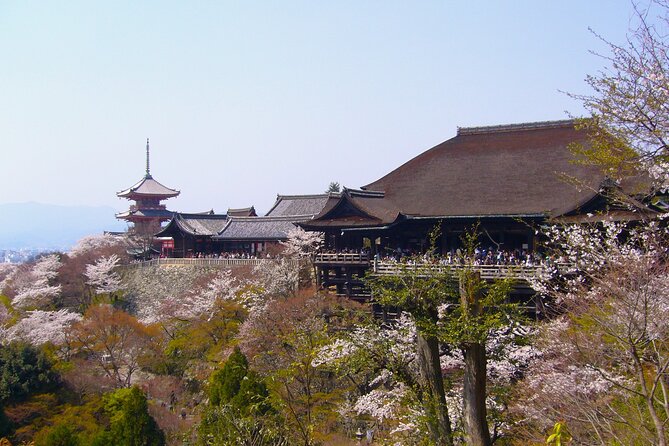
Kiyomizu-dera is the final listed temple stop and one of Kyoto’s great viewpoints. Built by one of the early shoguns, the temple sits in the eastern mountains and looks out across the city.
The scheduled visit is about 30 minutes. That is enough for a guided introduction and a look at the main setting, but it is not a leisurely exploration of every part of the temple grounds. If Kiyomizu-dera is the main reason you came to Kyoto, you may prefer to return on another visit with more time.
The eastern location also explains why the eBike helps. The day has already included several stops, and the approach to Kiyomizu-dera can be demanding on a regular bicycle. Electric assistance reduces the strain, but you should still be prepared for a physically active finish.
This is a strong closing sight because it pulls the city into view. After spending the day among temples, gardens, streets, and historic compounds, you can look back across Kyoto and see the scale of the place you have been crossing.
What the guides add to the ride
A good guide is especially important on a cycling tour. You are not only following roads. You are making decisions about safety, timing, traffic, and where to stop. The named guides connected with this experience include Makoto Yanai, Kay, Tad, and Tomoko.
Makoto is described as kind, entertaining, and willing to adapt the route. A Kamo River detour was added for one family, and that detail is worth noting if you like a tour that can respond to your interests. Kay and Tad are associated with careful cycling guidance and clear explanations of Kyoto’s past. Tomoko is described as friendly, informative, and attentive to photo and refreshment breaks.
You should not assume you will receive a specific guide unless the operator confirms it. Still, the small group structure gives the guide room to speak with you directly. That is often more useful than a large group where every stop becomes a race to hear the explanation.
Lunch, duration, and the value of $247.12
At $247.12 per person, this is not a budget way to see Kyoto. The price makes more sense when you count what is bundled: an eBike, an English-speaking guide, lunch, listed entry fees, and a private group capped at six people per guide.
You are also paying for route planning. Kyoto’s major sights are spread across the city, and arranging this combination independently would take time. A guide handles the sequence, navigation, admissions, and the practical side of cycling between stops.
The value depends on how much you want from a single day. If you have only a short stay in Kyoto and want a broad first look, the tour covers a lot. If you prefer slow temple visits, long meals, or hours at one garden, the packed schedule may feel costly.
There is one important point to clarify before paying. The tour is advertised as approximately eight hours, from a 9:00 a.m. start, but some accounts describe outings of about three hours. That may reflect a different version of the ride, a shortened route, or an older schedule. Ask KCTP to confirm the current duration, lunch arrangement, and exact stops for your date.
Who will enjoy this best
I would recommend this ride to couples, families with older children, and small private groups that want both major sights and the spaces between them. It suits you especially well if you enjoy history but do not want to spend the whole day inside museums or temples.
You should be comfortable on a bicycle and able to ride safely on city roads without assistance. Children must be at least 10 years old and at least 145 centimeters tall. The tour is not designed for a young child who needs a trailer, tandem, or adult help.
This is also a good choice if you want a guide who can answer questions as you go. The private format makes it easier to ask about Kyoto’s shoguns, temple customs, architecture, or the best places to pause for photographs.
You may want a different plan if you dislike cycling in urban areas, tire easily, or want an unhurried visit to Kiyomizu-dera and Ginkakuji. A full day on an eBike still takes stamina, even with electric assistance.
Weather, cancellation, and practical limits
The tour operates in rain. You can continue by bicycle with a free rain poncho, or choose a walking version using public buses or the metro. That choice is a useful safeguard in Kyoto’s changeable weather, though a rainy day will still affect the feel of the route and the views.
The minimum group size is two people per guide. One-person bookings are not accepted. Groups of seven to twelve can be accommodated if an extra guide is arranged.
Cancellation information needs careful attention. One set of terms says you can request a refund by 6:00 p.m. Japan time at least three days before the tour, while the stated cancellation policy says the experience is non-refundable and cannot be changed. Because those terms conflict, confirm the applicable rule with KCTP before booking rather than relying on a refund.
Confirmation is sent within 48 hours, subject to availability. The meeting point is near public transportation, and the activity ends back at the Kyoto Station cycling terminal.
Should you book this Kyoto eBike tour?
Book it if you want a high-energy introduction to Kyoto, value a private guide, and like the idea of linking Nijo Castle, Ginkakuji, the Philosopher’s Path, and Kiyomizu-dera in one day. The small group, included admissions, lunch, and rain alternatives help justify the price.
Think twice if you want long, quiet visits at each temple or are uncertain about cycling for most of a day. Before committing, confirm the eight-hour schedule because the published duration and shorter accounts do not line up. If that detail is clear and you are happy with an active day, this is a practical way to see both Kyoto’s famous sights and its quieter connecting streets.
FAQ
Where does the Kyoto eBike tour begin?
It begins at the Kyoto Cycling Tour Project Kyoto Station Cycle Terminal, at 552-13 Higashiaburanokōjichō, Shimogyo Ward, Kyoto, 600-8235, Japan.
What time does the tour start?
The listed start time is 9:00 a.m.
Where does the tour finish?
The activity ends back at the meeting point near Kyoto Station.
How long is the tour?
The advertised duration is approximately eight hours. Some accounts describe three-hour outings, so confirm the current schedule and route with KCTP before booking.
What is included in the tour price?
Lunch, the eBike experience, the English-speaking guide, and all listed entry fees are included.
How many people can join each guide?
A guide can accept a minimum of two and a maximum of six people. Groups of seven to twelve can be arranged with an additional guide.
Can the tour operate in rainy weather?
Yes. You can continue by bicycle with a free rain poncho or switch to a walking tour using public transportation, including buses or the metro.
Can children join the tour?
Children must be at least 10 years old, at least 145 centimeters tall, and able to ride a bicycle safely on the road without assistance.
Recently added around Kyoto
- Higashiyama | Kyoto: Sakura Season Private Rickshaw Tour★ 5.0 · 3 reviews
- Kyoto Kimono Rental CHAMATSU|Kimono/Yukata Rental FamilyPlan★ 5.0 · 3 reviews
- Nara Private Customizable Half Day Tour★ 5.0 · 3 reviews
- Kyoto: Half-Day Private Guided Tour to the Old Town of Gion★ 4.4 · 3 reviews
- Kansai Region Hiking Adventure in Nara Kobe Kyoto and More★ 5.0 · 3 reviews
- Full Day Nara Deer, Temple, Shrine, Activities & Tea Ceremony★ 5.0 · 3 reviews
- Nara: Essential Private Tour with Deer Park and Temples★ 5.0 · 3 reviews
- Hiking Tour for Sacred Sites in Kyoto with a Guide★ 5.0 · 3 reviews
Cycling Tours, compared.
Arashiyama Bamboo Forest & Hidden Gems Bike Tour (Early Bird)
Read our review →
5 Top Highlights of Kyoto Full Day Bike Tour (E-bike option)
Read our review →
Full Day Biking Tour Exploring the Best of Kyoto
Read our review →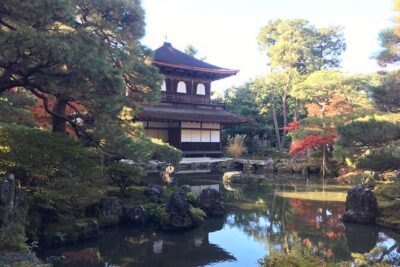
Afternoon Kyoto Bike Tour: Bamboo Forest, Monkeys & Hidden Spots
Read our review →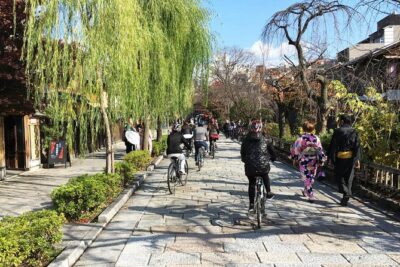
South Kyoto in a Nutshell: Gentle Backstreet Bike Tour!
Read our review →Browse the lists this tour appears in