
REVIEW · GION GEISHA DISTRICT TOURS
Kyoto: Gion Walking Tour
Kyoto’s Gion district is far more than a pretty street lined with wooden houses and the occasional glimpse of a Maiko. This walk connects three hanamachi, or traditional Geiko districts, with bridges, shrines, theater spaces, statues, and small details that are easy to miss when you wander alone. I like the route’s wider view of Kyoto, and I like that guides such as Jose and Saskia invite questions about everything from Japanese customs to daily life in Japan. The main consideration is simple: a Maiko or Geiko sighting is never guaranteed, and the famous Hanamikoji-dori is not part of the route.
In This Review
- Key points to know before you book
- Why this Gion walk is different from a photo stop
- Starting at the Disney Store in central Kyoto
- Pontocho Alley and the Kaburenjo theater
- The Kamo River, statues, and Sanjo Ohashi
- Gion Kobu and the preserved Shirakawa streets
- Gion Higashi and the quieter side of the route
- Yasaka Shrine and the origin of Gion
- What you will learn about Maiko and Geiko
- How the price compares with the experience
- Which departure and season make sense
- Who will get the most from this tour
- Should you book the Gion Walking Tour?
- FAQ
- How long is the Kyoto Gion Walking Tour?
- What areas are included in the route?
- Is Hanamikoji-dori included?
- Will I definitely see a Maiko or Geiko?
- How many people are in the group?
- Which languages are available?
- Where does the tour meet?
- What should I bring?
- Can I cancel the booking?
Key points to know before you book
- Three traditional districts in two hours: Visit Pontocho, Gion Kobu, and Gion Higashi rather than seeing only one famous lane.
- A maximum of six people: The small group makes it easier to hear the guide and ask personal questions.
- A history-focused walk: Learn how Kyoto, Gion, Yasaka Shrine, and the Gion Festival connect across more than 1,100 years.
- Jose and Saskia bring personal context: Their explanations include life in Japan, not just dates and buildings.
- A manageable 3.3-kilometer route: Expect steady walking with frequent stops for stories, photos, maps, and details.
- No guaranteed Geiko sighting: Treat Maiko and Geiko as a possible bonus, not the purpose of the tour.
Why this Gion walk is different from a photo stop
Many people arrive in Gion expecting one famous street to explain the whole district. It cannot. Gion is a working neighborhood, a collection of entertainment quarters, preserved streets, shrines, bridges, theaters, and private establishments. Without context, you may photograph a wooden facade and walk on without knowing why it matters.
This tour gives you that context in a compact two-hour route. You move through Pontocho, Gion Kobu, and Gion Higashi, three of Kyoto’s five hanamachi. The guide explains the role of the districts, the lives of Maiko and Geiko, and the design of the traditional Machiya houses.
I especially like the small-group format. With no more than six participants, the guide can stop often without creating a traffic jam of people. You can ask why a building is designed a certain way, how to recognize the difference between a Maiko and a Geiko, or what daily life in Japan is really like. The guides use an iPad for maps, older photographs, and visual material, which helps turn an abstract history lesson into something you can see.
The experience is offered in English, Spanish, Dutch, and French. Saskia is a native Dutch speaker, while Jose is praised for clear English and Spanish. Guide assignments can vary, but the consistent strength is the conversational approach. You are not simply following a flag through the streets. You are encouraged to shape the discussion around your interests.
More evenings in Gion:
- Kyoto Geisha Walking Tour: Gion District & Hidden Gems
★ 4.7 · 3,273 reviews - Kyoto: Gion Magical Night Walking Tour with Geisha Trivia
★ 4.9 · 2,393 reviews - Kyoto: Gion Geisha District Walking Tour – Stories of Geisha
★ 4.7 · 2,187 reviews
Starting at the Disney Store in central Kyoto
The meeting point is directly in front of the Disney Store at Kyoto Shijo-Kawaramachi. Look for the guide seated and holding an iPad showing the Get Your Guide image and the tour title. Kyoto has only one Disney Store, which makes the location fairly easy to identify, though the busy shopping area can still feel crowded at meeting time.
Arrive ready to walk. No transport is included, and no food, drinks, or other amenities are provided. Comfortable shoes matter more than a stylish outfit here. Bring water, sunscreen, a hat, and an umbrella, especially during Kyoto’s hot or rainy months.
The route covers about 3.3 kilometers, or roughly two miles, with repeated stops. It is not a fast march, but it is still a walking tour on city streets and bridges. I would avoid scheduling an important train departure immediately afterward. The tour lasts two hours, and the pace may adjust slightly around crowds, questions, or seasonal changes.
Pontocho Alley and the Kaburenjo theater
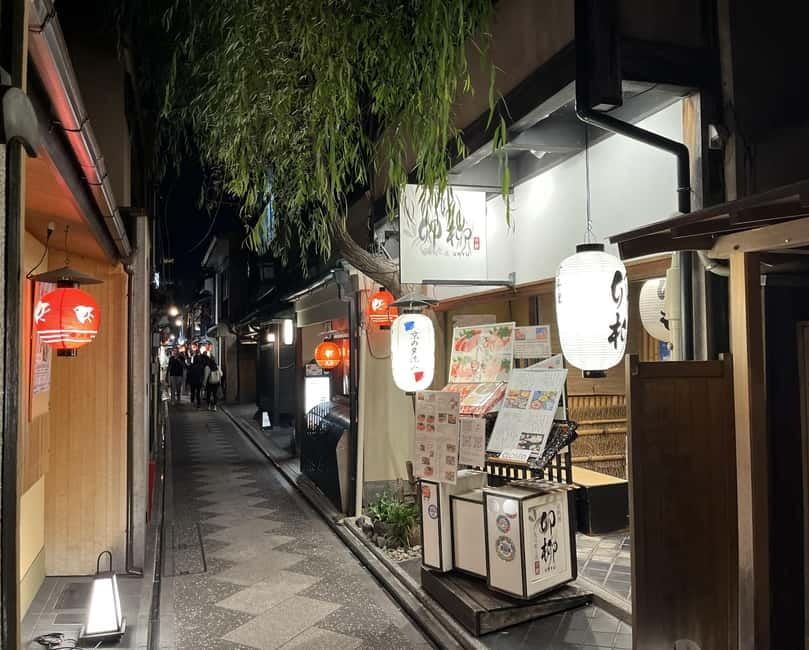
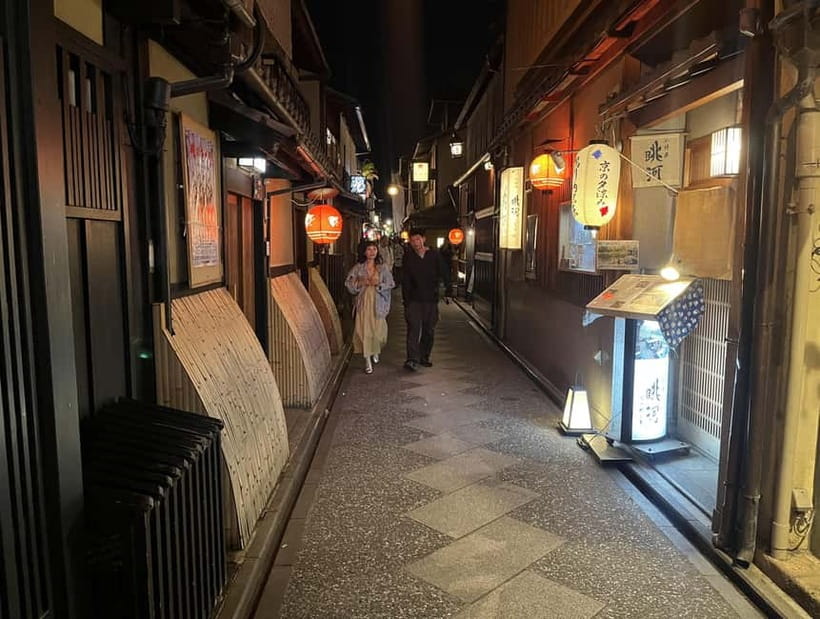
The first section takes you into Pontocho Alley, one of Kyoto’s best-known traditional entertainment areas. The narrow passage is famous for its wooden facades and dining establishments, but the point of the stop is not simply to admire the scenery. Your guide explains how Pontocho functions as one of the city’s hanamachi and how performance, dining, and traditional arts fit together.
Pontocho Kaburenjo is an important stop because it gives physical form to the cultural role of the district. A Kaburenjo is associated with performances by Maiko and Geiko, and the guide uses the setting to explain the difference between the performers, their training, and their professional lives.
This is one of the tour’s strongest features: it places the Geiko world within Kyoto’s broader social structure. You learn about routines and practices without treating the women as costume displays. That distinction matters in Gion, where careless photography and blocking doorways can cause real problems for residents and workers.
The alley itself may be crowded, particularly at popular times. A small group helps here because you can stay close to the guide and hear the explanation. Still, do not expect a quiet private lane for the entire stop.
The Kamo River, statues, and Sanjo Ohashi
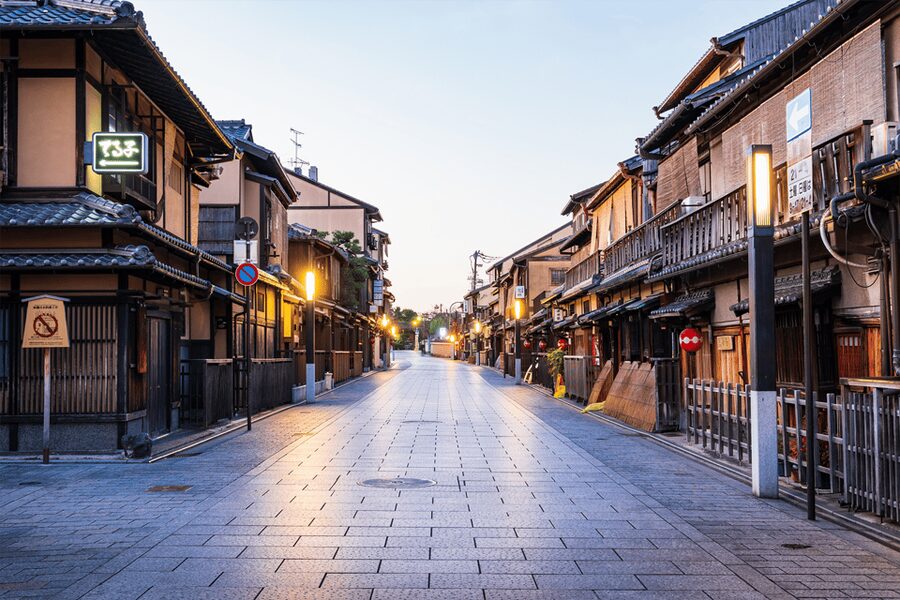
From Pontocho, the walk reaches the Kamo River and the Yagi-san and Kita-san statues. These details may seem minor at first, which is exactly why a guide adds value. A good walking tour teaches you to notice what you would otherwise pass without a second thought.
The river also provides a useful geographic frame. Kyoto’s districts make more sense when you understand how the waterway, bridges, and central streets connect them. At Sanjo Ohashi, your guide explains the importance of the bridge and its place in Kyoto’s urban story.
I like this section because it gives your feet a break from narrow lanes and your eyes a wider view. You also get a clearer sense of downtown Kyoto as a living city, rather than a museum quarter separated from ordinary Japanese life.
The walk continues along Yamato-dori toward Gion. The route is not built around long talks at one monument. Instead, guides tend to stop frequently for short explanations, using photographs and maps when useful. That rhythm works well for people who prefer a conversation to a formal lecture.
More walking tours in Kyoto:
- Night Walk in Gion: Kyoto’s Geisha District
★ 4.5 · 2,003 reviews - Kyoto Gion Geisha District Walking Tour – The Stories of Geisha
★ 5.0 · 1,441 reviews - Nishiki Market Brunch Walking Tour (7 Tastings + Brunch)
★ 5.0 · 1,355 reviews - Kyoto Arashiyama Walking Tour: Bamboo, Monkeys, Gardens & Secrets
★ 5.0 · 1,216 reviews
Gion Kobu and the preserved Shirakawa streets
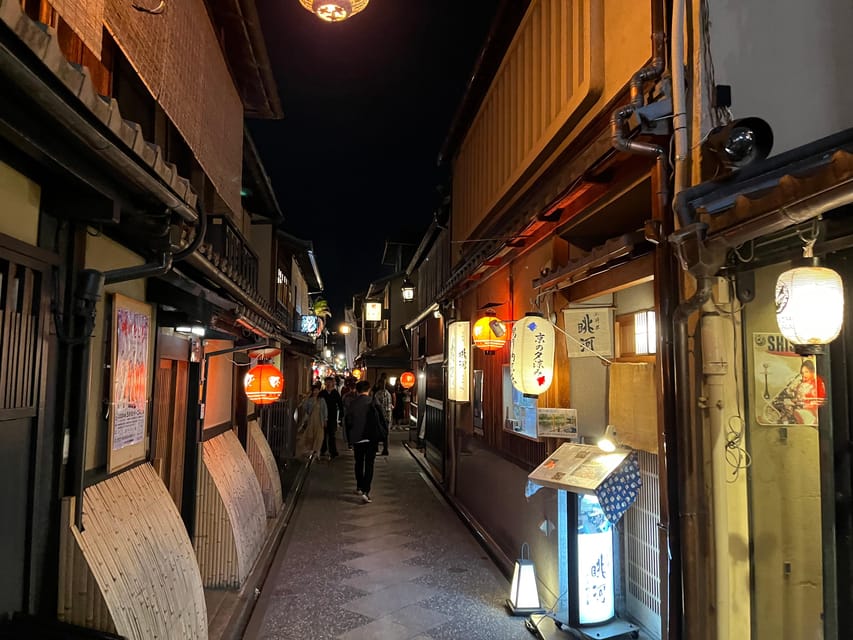
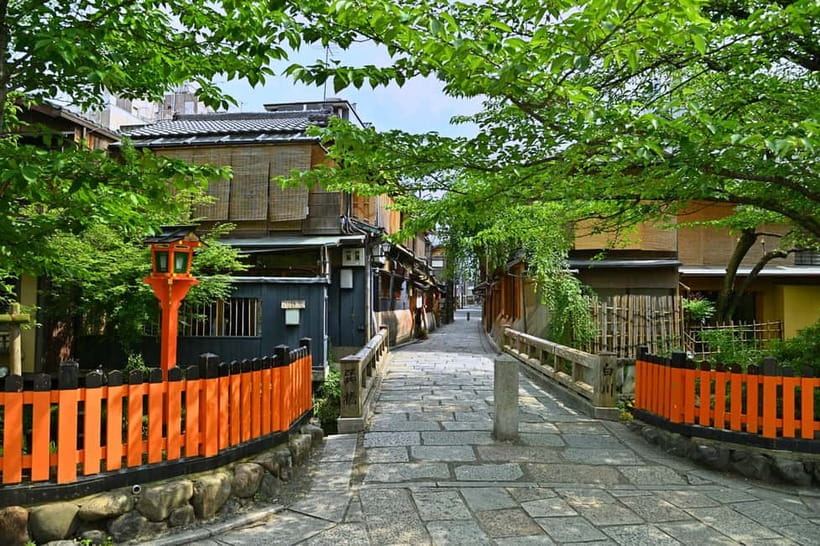
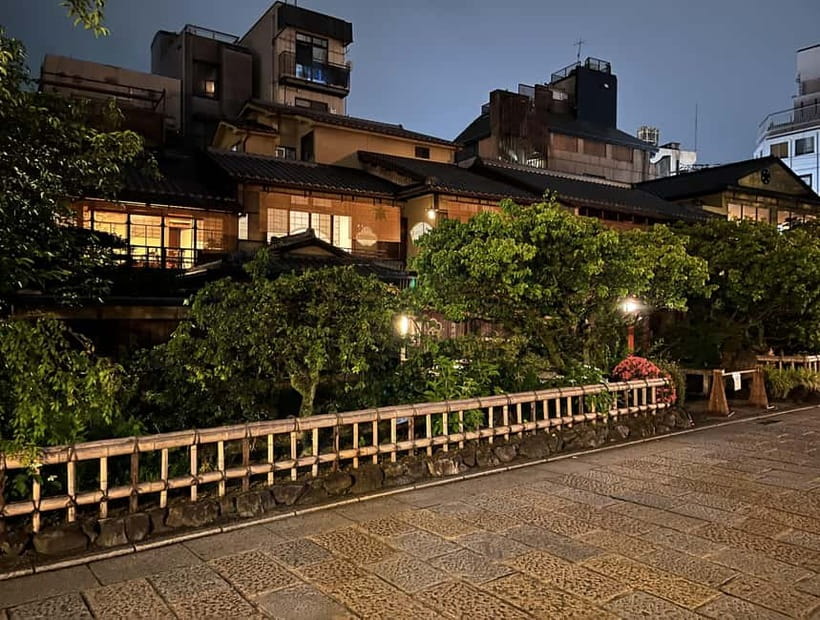
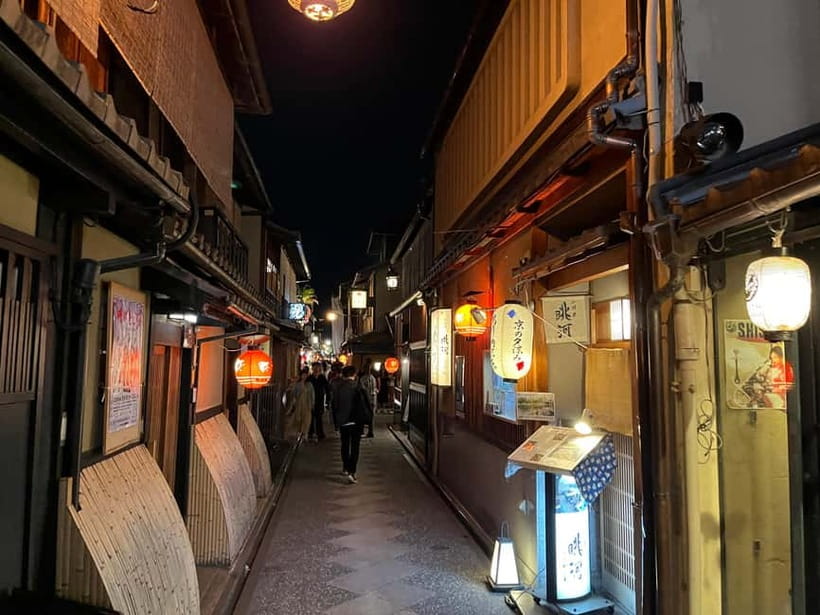
Gion Kobu, particularly the Gion Shinbashi and Gion Shirakawa areas, is the visual heart of the walk. Here you see preserved wooden Machiya houses, carefully maintained lanes, and the kind of architecture most people associate with old Kyoto.
The important point is not just that the buildings look beautiful. Your guide explains how the district developed and how the streets relate to the hanamachi system. You also learn to read small architectural details and understand why the neighborhood is protected as a national historical area.
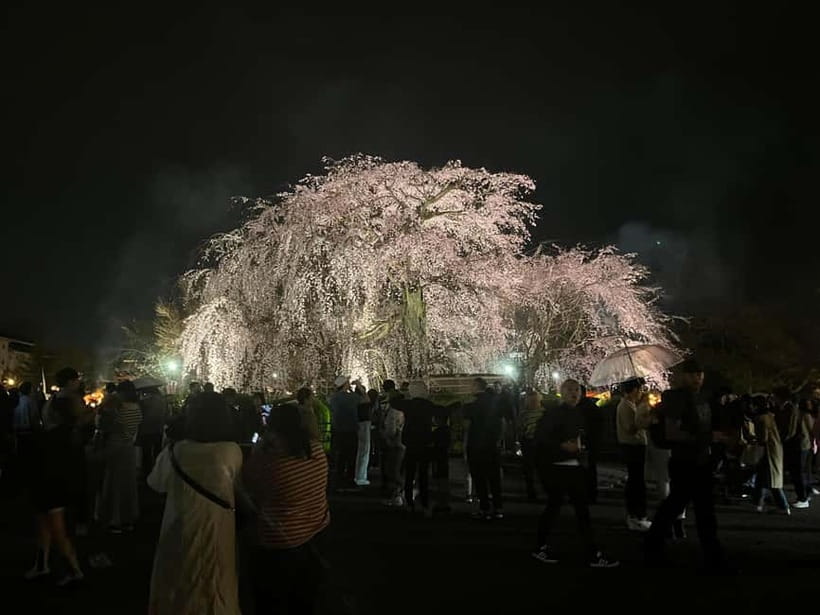
Gion Shirakawa is especially attractive during cherry blossom season, usually from late March into early April. At that time, the route may change slightly to show flowering trees around Gion. Seasonal beauty is a bonus, but it also brings heavier crowds, so do not expect an empty postcard scene.
Tatsumi Jinja and Tatsumi Bridge add another layer to this section. The shrine and bridge are photogenic, but the guide gives them meaning beyond their appearance. You may hear stories about local customs, the neighborhood, and the way Kyoto’s past still shapes daily routines.
This is also the part of the tour where you need to behave thoughtfully. Many buildings are private businesses or homes, not public attractions. Keep your voice down, avoid blocking narrow lanes, and follow the guide’s advice about photographs.
Gion Higashi and the quieter side of the route
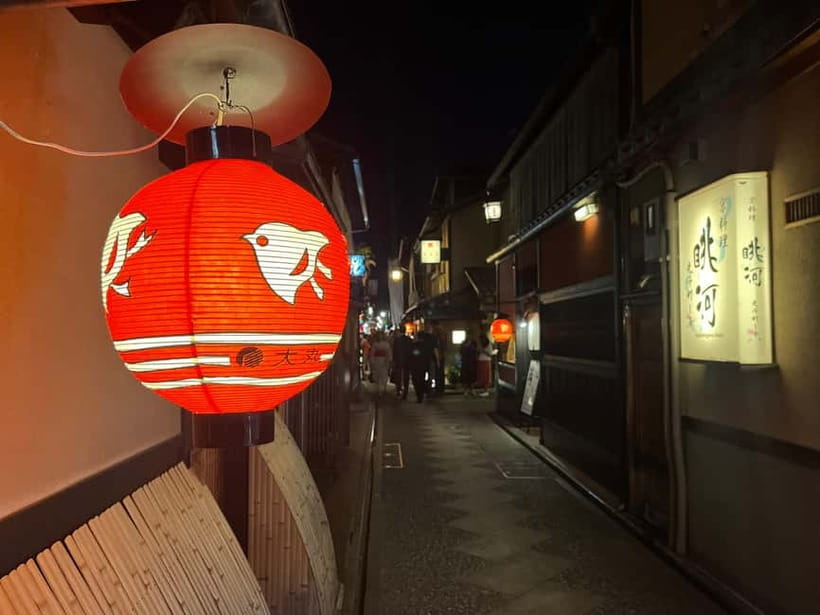
The route continues into Gion Higashi, another of Kyoto’s five hanamachi. This section is useful because it broadens your understanding of Gion. The district is not one uniform block. Each hanamachi has its own identity, streets, performance traditions, and connections to the surrounding neighborhood.
Gion Higashi may feel less immediately familiar than the most photographed parts of Gion. That is part of its value. You are encouraged to look beyond the obvious sights and see how different quarters fit together.
The guide also explains Maiko and Geiko life here. You learn about training, work, appearance, and the routines that support traditional performance. The subject can easily become superficial, reduced to hairstyles and kimono. This tour aims for a fuller explanation, including the professional and cultural side of the tradition.
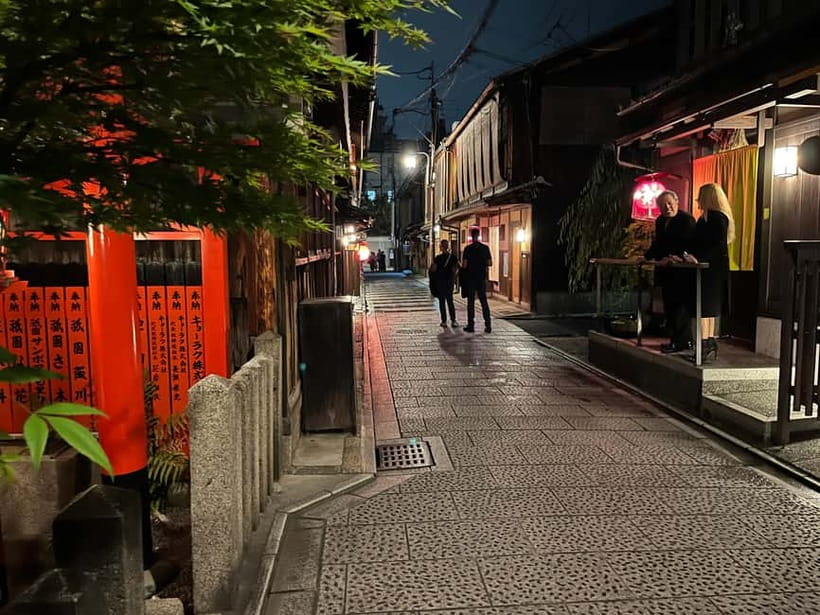
You might see a Maiko or Geiko during the walk, but there is no promise of it. That is worth stressing before you book. The best reason to take the tour is to understand the district. A sighting, if it happens, should be treated as luck, and you should never chase, touch, photograph aggressively, or obstruct someone on the way to work.
Yasaka Shrine and the origin of Gion
Yasaka Shrine, formerly called Gion Shrine, is included if time allows. Its connection to the district name gives the tour a strong historical thread. The shrine and Gion have origins reaching back more than 1,100 years, and the guide explains how religious tradition helped shape the area.
The shrine also links directly to the Gion Festival, one of Japan’s three major and most important festivals. Even if your visit does not coincide with the festival, learning about its origins helps you see the district as more than an entertainment quarter.
The visit may take place in daylight or after dark, depending on the departure time. One evening walk included a look at Yasaka Shrine and visits to the shrine of beauty and the shrine of love. Those smaller stops can make the final section feel personal, especially if you enjoy learning how local religious customs connect with modern hopes and habits.
Because the shrine is included only if time permits, do not regard it as an absolute feature of every departure. The exact balance between questions, walking pace, seasonal conditions, and the group’s interests can affect the ending.
What you will learn about Maiko and Geiko
The tour handles a subject that is often misunderstood outside Japan. You learn the distinction between Maiko, who are in training, and Geiko, the Kyoto term commonly associated with Geisha. The guide discusses their lifestyles, activities, practices, and routines within the setting of the hanamachi.
The personal style of Jose and Saskia is a real advantage here. They are foreign residents of Japan rather than native-born Kyoto guides, according to the information provided, and they draw on years of living in the country. That perspective can make it easier for an international visitor to ask basic questions without feeling awkward.
At the same time, I would not treat a foreign guide as automatically better than a Japanese guide. The value here comes from the guides’ preparation, enthusiasm, language skills, and ability to connect historic facts with modern life. Several tours have been led by Jose and Saskia together, while other departures have featured one guide. The experience may vary slightly by guide, but the format is designed to stay personal.
The open question period is one of the tour’s best uses. You can ask about something you noticed on the street, a custom you have encountered elsewhere in Japan, or a point you want clarified. The guide may also offer suggestions for meals or other places to visit after the walk, though those recommendations are not a formal included feature.
How the price compares with the experience
At $35 per person, this is a reasonable price for a two-hour walk led by a live guide, especially with a group capped at six. You are paying for interpretation, not admission tickets, transportation, food, or a performance. The cost makes sense if you want to understand what you are seeing rather than simply collect photographs.
The value improves for first-time visitors to Kyoto. A short orientation can change how you see the rest of your stay. You may return to Gion later and notice a Machiya detail, a shrine connection, or the layout of a hanamachi that would have meant little before the tour.
The price is less compelling if you only want guaranteed access to a Geiko performance or a visit inside traditional establishments. This is a street-level walking experience, not a dinner, show, or meet-and-greet. It also does not include Hanamikoji-dori, the famous street many people expect to see.
Free cancellation up to 24 hours before the start time and the option to reserve now and pay later make planning easier. Check available start times before booking, since the tour lasts two hours and departure options can vary.
Which departure and season make sense
The walk is offered at different starting times, including morning and afternoon departures. The 9:45 and 12:30 tours can include a free visit to the Gion Gallery if you want to extend the experience. The gallery visit is optional, so confirm the timing and your interest with the guide.
Morning can be a good choice if you want to use the rest of the day for temples or shopping. Afternoon may suit you if you prefer to spend the earlier hours elsewhere and see Gion as the day changes. An evening departure can give Yasaka Shrine a different mood, but the available route and shrine timing depend on the schedule.
Spring brings cherry blossoms, generally from late March into early April, and the route may be adjusted to show the best blooms around Gion. Summer calls for water, sun protection, and an umbrella. The supplied advice is practical: wear comfortable shoes, bring a sun hat, umbrella, sunscreen, and water.
Who will get the most from this tour
I would choose this for a first visit to Kyoto, especially if you have only a few hours to understand the center of the city. It suits curious people who like history, architecture, customs, and stories more than a rapid checklist of photo stops.
Families can benefit from the flexible question format. A two-hour route is long enough to teach children something real without taking up an entire day, though younger children need to manage the walking distance. The small group also makes it easier for family members to hear and stay involved.
It works well for repeat visitors, too. If you have already walked through Gion, a guide can show you why familiar streets matter. The tour is particularly useful for visitors who want to ask detailed questions about Japanese life and do not want a large group presentation.
You may want to skip it if your priority is a guaranteed Maiko sighting, a formal Geiko performance, or the specific Hanamikoji-dori street. You may also prefer a longer temple tour if your main interest is religious architecture rather than Gion’s neighborhoods and performing arts culture.
Should you book the Gion Walking Tour?
Book it if you want a friendly, question-led introduction to Gion that reaches beyond the most famous lane. The strongest reasons are the six-person maximum, the three-hanamachi route, and guides such as Jose and Saskia who bring both preparation and personal experience of life in Japan.
Do not book it expecting a staged encounter with a Maiko or Geiko. Come for the streets, stories, architecture, shrines, and the chance to understand why Gion works the way it does. At $35, it is a good-value orientation for a curious first-time visitor, and a worthwhile refresher if you have already seen the district but know you missed its smaller details.
FAQ
How long is the Kyoto Gion Walking Tour?
The tour lasts two hours and covers approximately 3.3 kilometers, or about two miles.
What areas are included in the route?
The route visits Pontocho, Gion Kobu, and Gion Higashi. It also includes locations such as Pontocho Alley, Pontocho Kaburenjo, the Kamo River, Sanjo Ohashi, Yamato-dori, Gion Shinbashi, Gion Shirakawa, Tatsumi Jinja, Tatsumi Bridge, and Yasaka Shrine if time allows.
Is Hanamikoji-dori included?
No. Hanamikoji-dori is not included in the itinerary.
Will I definitely see a Maiko or Geiko?
No. A Maiko or Geiko sighting cannot be guaranteed.
How many people are in the group?
The group is limited to six participants. Depending on bookings, it may feel close to a private tour.
Which languages are available?
The tour is offered in English, Spanish, Dutch, and French.
Where does the tour meet?
Meet in front of the Disney Store at Kyoto Shijo-Kawaramachi. The guide will be seated and holding an iPad showing the Get Your Guide image and the tour title.
What should I bring?
Bring comfortable shoes, a sun hat, an umbrella, sunscreen, and water.
Can I cancel the booking?
You can cancel up to 24 hours in advance for a full refund. You can also reserve now and pay later.
Recently added around Kyoto
- Higashiyama | Kyoto: Sakura Season Private Rickshaw Tour★ 5.0 · 3 reviews
- Kyoto Kimono Rental CHAMATSU|Kimono/Yukata Rental FamilyPlan★ 5.0 · 3 reviews
- Kyoto: Half-Day Private Guided Tour to the Old Town of Gion★ 4.4 · 3 reviews
- Nara Private Customizable Half Day Tour★ 5.0 · 3 reviews
- Kansai Region Hiking Adventure in Nara Kobe Kyoto and More★ 5.0 · 3 reviews
- Full Day Nara Deer, Temple, Shrine, Activities & Tea Ceremony★ 5.0 · 3 reviews
- Nara: Essential Private Tour with Deer Park and Temples★ 5.0 · 3 reviews
- Hiking Tour for Sacred Sites in Kyoto with a Guide★ 5.0 · 3 reviews
Gion Geisha District Tours, compared.

Kyoto Geisha Walking Tour: Gion District & Hidden Gems
Read our review →
Gion Magical Night Walking Tour with Geisha Trivia
Read our review →
Gion Geisha District Walking Tour – Stories of Geisha
Read our review →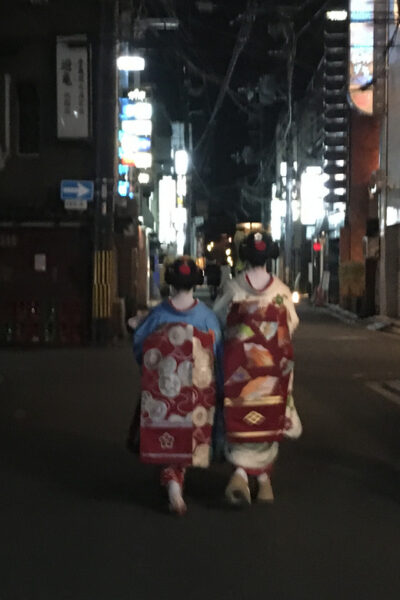
Best of Kyoto: Gion, Geisha, Pagodas & Cobblestones
Read our review →

Kyoto Night Foodie Tour in Gion (9+ dishes + 6 Sake tastings)
Read our review →
Kyoto Gion Geisha District Walking Tour – The Stories of Geisha
Read our review →
Kyoto Gion: 2-Hour Geisha Culture & History Walking Tour
Read our review →Browse the lists this tour appears in