
REVIEW · GION GEISHA DISTRICT TOURS
Kyoto: Gion Geisha District Walking Tour and Hidden Gems
Gion’s greatest reward is not a quick glimpse of a kimono-clad maiko. It is the chance to understand the streets behind the image: the wooden townhouses, lantern-lit lanes, teahouses, shrines, and customs that still shape Kyoto’s cultural center. This three-hour walk connects Gion with northern Higashiyama, ending at Kiyomizu-dera after a steady run of famous and quieter sights.
I like the way the tour links geisha culture with ordinary Kyoto life, rather than treating it as a costume show. I also like the strong historical thread, especially with guides such as Ben and J, who explain samurai, religious traditions, the Shinkansen, and even tanuki in a way that works for adults and children.
The catch is the physical effort. You cover a lot of ground and face many steps, particularly toward the temple district. At $25, the value is excellent, but you should arrive with water and enough fitness for three hours on foot.
In This Review
- Key points at a glance
- Why this Gion walk feels different
- Meeting at Ben’s Cookies Kyoto Shijo
- Gion Tatsumi Bridge and the meaning of the district
- Chion-in, where Kyoto gets serious
- Maruyama Park and a breather among the temples
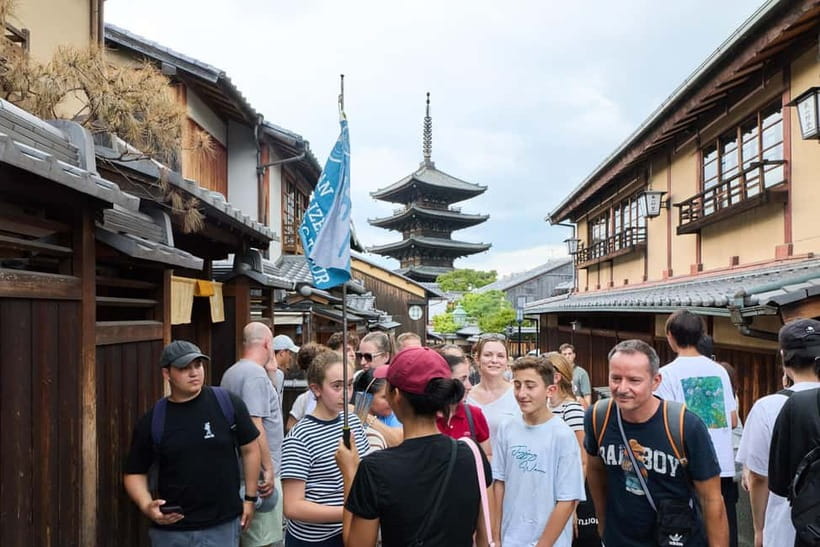
- Hōkan-ji and the famous five-story pagoda
- Ninenzaka and Sannenzaka, Kyoto’s sloping lanes
- Finishing at Kiyomizu-dera’s Niomon Gate
- What $25 gets you
- Who should book this experience
- Small details that make the walk easier
- Should you book the Gion walking tour?
- FAQ
- How long does the Kyoto Gion walking tour last?
- What language is the tour offered in?
- Where does the tour meet?
- Where does the tour finish?
- What sights are included?
- Does the tour include a guide?
- How much does the tour cost?
- Are there many steps?
- What should I bring?
- Can I cancel for a refund?
Key points at a glance
- Gion Tatsumi Bridge: Begin with one of Kyoto’s most atmospheric waterways and learn how Gion’s traditional entertainment district developed.
- A history-led walk: Guides including Ben and J bring university-level historical interest and plenty of anecdotes to the streets.
- Northern Higashiyama in one sweep: Chion-in, Maruyama Park, Hōkan-ji, Ninenzaka, and Sannenzaka create a full cultural route.
- Quiet corners between major sights: The walk includes small shrines and backstreets that are easy to miss when you follow only the main sightseeing roads.
- A useful family option: The route worked for a group ranging from age 11 to 79, though the steps still deserve serious consideration.
- A different start and finish: You meet near Kyoto Shijo and end at Kiyomizu-dera’s Niomon Gate, so you see far more than one neighborhood.
Why this Gion walk feels different
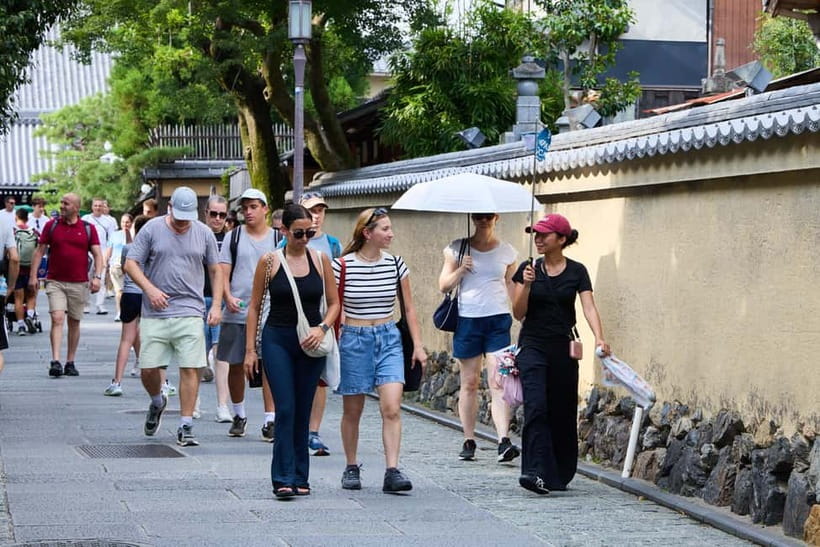
Many Kyoto outings reduce Gion to a photo stop. This one gives you time to ask how the district works. Your guide explains the training and working lives of maiko and geisha, the role of traditional teahouses, and the way old wooden buildings fit into a modern city.
That context matters. Without it, a narrow lane can look pretty but anonymous. With an explanation of who used it, why the buildings look as they do, and how Kyoto’s customs changed over time, the same lane becomes part of a living story.
The guides named most often are Ben and J, also called Jay in one account. Ben is described as especially good at connecting Kyoto’s past to wider subjects such as samurai, the Shinkansen, and tanuki folklore. J has a history degree and is praised for handling questions with depth while keeping the pace friendly and patient.
The tour’s high rating, 4.9 from 14 reviews, reflects this strength. The praise centers less on a single monument and more on the guides’ ability to explain a complicated city in clear terms. That is the main reason to choose this walk over simply following a map.
More evenings in Gion:
- Kyoto Geisha Walking Tour: Gion District & Hidden Gems
★ 4.7 · 3,273 reviews - Kyoto: Gion Magical Night Walking Tour with Geisha Trivia
★ 4.9 · 2,393 reviews - Kyoto: Gion Geisha District Walking Tour – Stories of Geisha
★ 4.7 · 2,187 reviews
Meeting at Ben’s Cookies Kyoto Shijo
The meeting point is in front of Ben’s Cookies Kyoto Shijo. Your guide will hold a sign, which should make the group easy to spot, but give yourself enough time to locate the shop and gather before the walk begins.
The first ten minutes are guided time around the starting area. This is a useful opening because you can get oriented before entering the older quarters. It also gives you a chance to ask your guide about the route, the pace, or the best way to manage the steps ahead.
The tour is offered in English with a live guide. Group size can vary. One group had only two people and received almost one-to-one attention, while the route is also designed to work with larger groups. A small group will naturally make questions easier, but the guide’s role remains the heart of the experience.
Gion Tatsumi Bridge and the meaning of the district

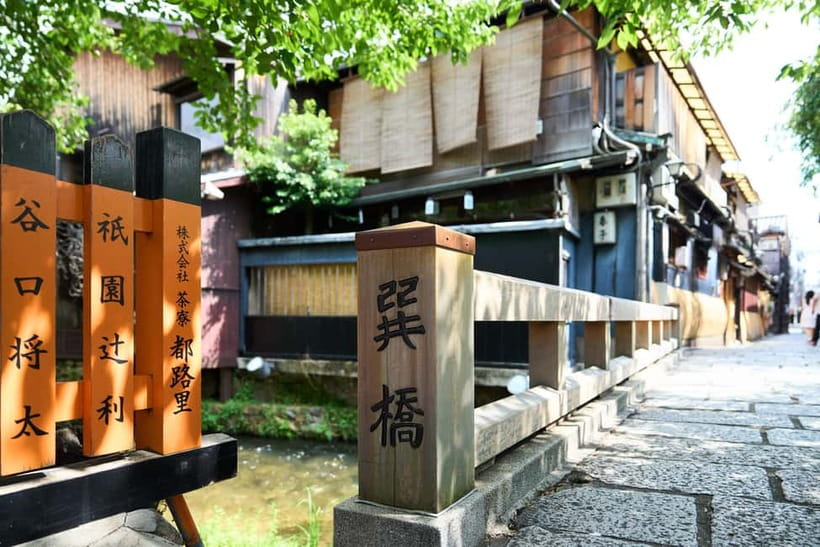
The first major stop is Gion Tatsumi Bridge, reached in about 20 minutes of guided sightseeing. This is the point where the tour’s themes come together: water, traditional buildings, entertainment culture, and Kyoto’s polished public image.
Your guide uses the bridge and surrounding streets to explain Gion’s connection to geisha culture. You learn about maiko and geisha training, their daily work, and the traditions that support the district. The subject is handled as a social and historical tradition, not simply as a chance to spot someone in elaborate dress.
The area can be busy, especially around attractive photo spots. Your guide helps you read the setting rather than just pause for a picture. I would keep your camera ready, but give priority to listening, since the most useful details concern the people and customs behind the scenery.
Chion-in, where Kyoto gets serious
The walk continues to Chion-in, with around 30 minutes for a guided visit. This is one of the longer stops and one of the best places to understand Kyoto’s Buddhist traditions.
Expect a substantial temple setting and plenty of steps. The route’s warning about stairs is not a formality here. You need to be comfortable walking uphill and moving through a large religious site without rushing.
Chion-in also helps shift the tour from the popular image of Gion to the wider religious life of Kyoto. Your guide explains how faith, power, architecture, and the city’s imperial past fit together. This is where a history-focused guide can add real value, since the site may otherwise seem like another impressive temple courtyard.
The 30-minute visit is long enough for explanation without turning the tour into a full temple study. You will not have unlimited time to explore every corner, so consider returning on your own if Chion-in becomes a personal favorite.
More walking tours in Kyoto:
- Night Walk in Gion: Kyoto’s Geisha District
★ 4.5 · 2,003 reviews - Kyoto Gion Geisha District Walking Tour – The Stories of Geisha
★ 5.0 · 1,441 reviews - Nishiki Market Brunch Walking Tour (7 Tastings + Brunch)
★ 5.0 · 1,355 reviews - Kyoto Arashiyama Walking Tour: Bamboo, Monkeys, Gardens & Secrets
★ 5.0 · 1,216 reviews
Maruyama Park and a breather among the temples
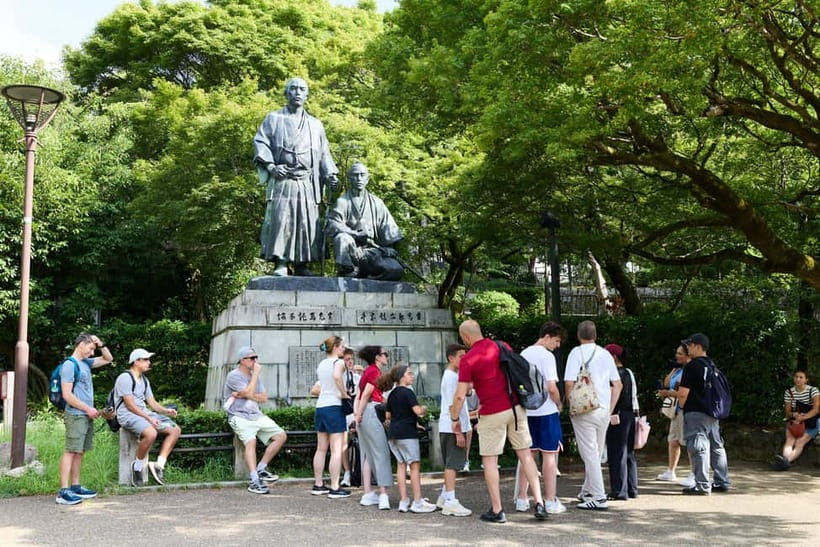
Maruyama Park receives about 20 minutes. It gives the route a change of pace after Chion-in’s stairs and formal grounds.
The park is also a useful setting for talking about Kyoto as a city where public space, seasonal customs, religion, and tourism overlap. Your guide can connect what you have seen in Gion with the larger Higashiyama area.
Do not treat this as a long rest stop. The tour keeps moving, and three hours passes quickly. Still, the park offers a natural point to drink water and catch your breath. Since water is the only item specifically recommended, bring a bottle from the start rather than counting on a convenient refill.
Hōkan-ji and the famous five-story pagoda
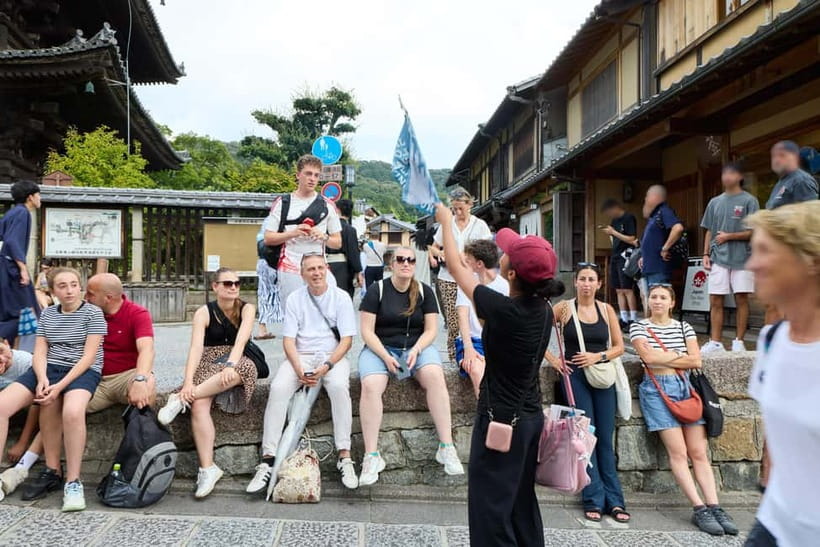
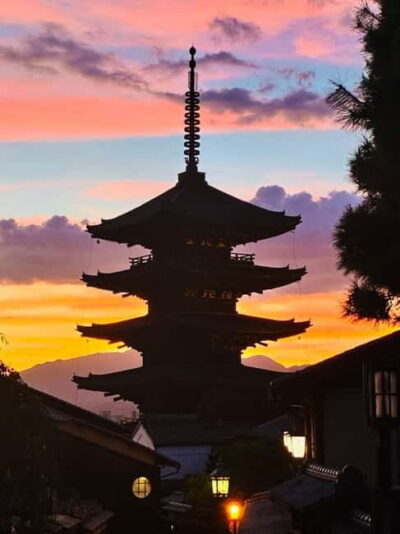
The next stop is Hōkan-ji, visited for about ten minutes. Its pagoda is one of the most recognizable sights in the eastern Kyoto streetscape, and the surrounding approach is especially appealing for photographs.
Ten minutes is enough for an explanation and a look at the setting, but not enough for a lengthy temple visit. That is an important distinction. This tour is a broad walking circuit, not a series of long interior visits.
You will be moving through an area where narrow streets and old wooden facades attract many people. Listen for the guide’s comments about how these preserved buildings relate to Kyoto’s past and present. The visual appeal is obvious, but the explanation helps you understand why the streets have remained so closely associated with old Kyoto.
Ninenzaka and Sannenzaka, Kyoto’s sloping lanes
Ninen Zaka Path receives about five minutes, followed by another five minutes at Sannenzaka. These short stops may look brief on paper, but the paths themselves are part of the experience.
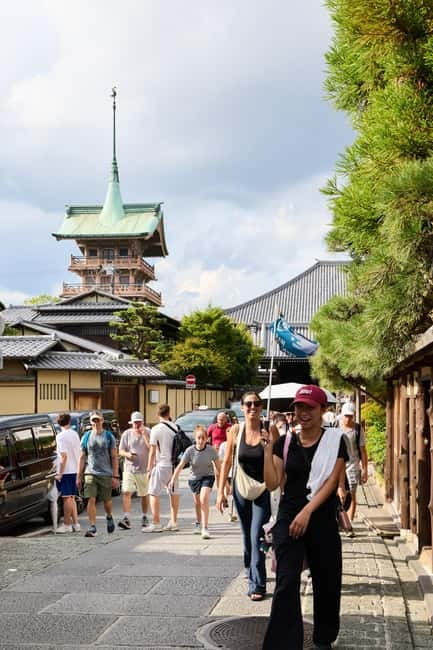
The lanes rise and fall through a traditional streetscape of wooden buildings, shops, and strong sightlines toward the temple district. They are among Kyoto’s most photographed areas, so you should expect a more popular atmosphere than in the side streets earlier in the walk.
The short guided timing keeps the tour from getting stuck in shopping traffic. You get the historical explanation, see the main views, and continue toward the final gate. If you want time to browse shops or return for photographs, plan to do that after the tour.
The steps and slopes become more important here. Wear sensible shoes and avoid bringing anything awkward to carry. The experience is suitable for a broad age range, but it is not designed for someone with a low level of fitness.
Finishing at Kiyomizu-dera’s Niomon Gate
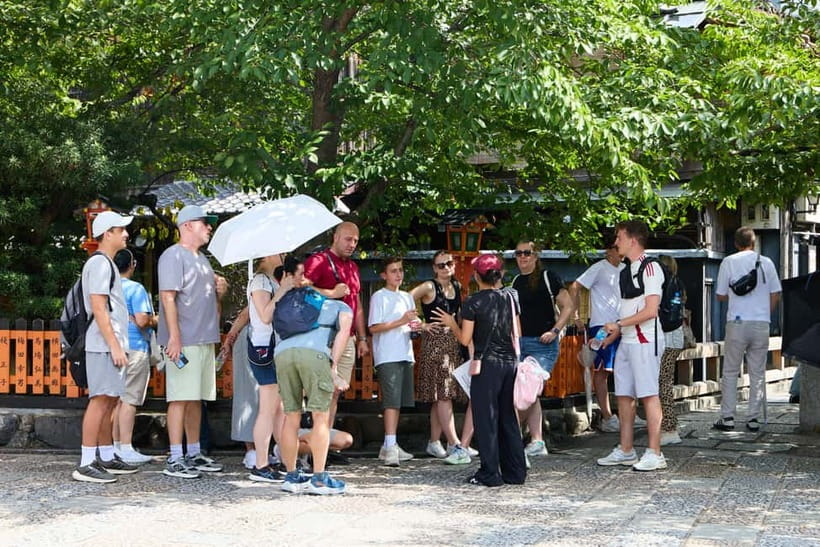
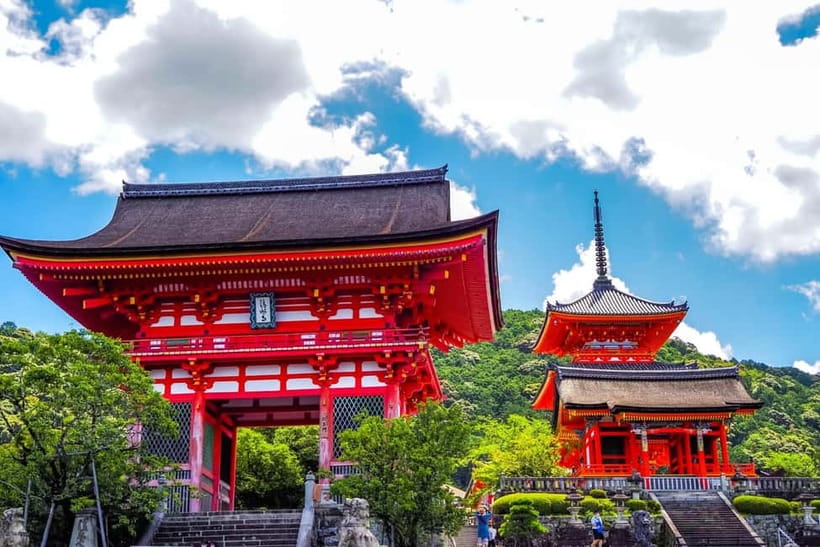
The walk ends at Kiyomizu-dera Niomon Gate rather than returning to the starting point. This is one of the tour’s best practical features. You finish near one of Kyoto’s major attractions after crossing a large part of Gion and northern Higashiyama.
The final location also gives the route a satisfying shape. You begin near Kyoto Shijo, move through Gion, pass religious and public spaces, and finish at the entrance to a major temple complex. One guide described the ending as particularly special, and I can see why: you reach Kiyomizu-dera with a clear sense of how the surrounding streets connect.
The tour does not include a separate Kiyomizu-dera visit beyond the Niomon Gate finish. If you want to enter and explore the temple, check your plans and allow extra time afterward.
What $25 gets you
At $25 per person, this is a strong-value tour if you want interpretation rather than transport or admission extras. The fee covers the guided walk, and the route includes several of Kyoto’s most important cultural areas in three hours.
You are paying for the guide’s ability to explain what you see. That matters in Gion, where the streets can be attractive but hard to interpret on your own. It matters even more at Chion-in and the smaller shrines, where a few clear stories can turn an ordinary stop into a memorable one.
The price is especially fair for a first day in Kyoto. You cover enough ground to understand the city’s eastern core, then you can decide which areas deserve a longer return visit. The tradeoff is pace. You will not linger at every temple, shop, or photo point.
A 4.9 rating from 14 reviews suggests a very strong overall experience, but the sample is not large. I would focus on the repeated practical strengths: clear historical explanations, friendly guides, patient answers, and the amount of territory covered in three hours.
Who should book this experience
I would recommend it to first-time Kyoto visitors who want a clear introduction before exploring independently. It is also a good choice if you have limited time and want to connect Gion with northern Higashiyama in one outing.
Families can do well here. A group with children aged 11 and 15, a 47-year-old parent, and a 79-year-old grandparent all enjoyed the walk, and the guide kept the material understandable for the children. That does not remove the physical challenge, so family groups should judge the oldest or least mobile person’s comfort carefully.
History fans will get the most from Ben or J’s broad explanations. You can ask about daily life in Japan as well as Kyoto’s long past, and the guides are comfortable connecting local sights to wider Japanese subjects.
I would not choose this tour if you need a flat route, dislike walking for several hours, or want long visits inside each temple. It is also not the right format for anyone hoping to rely on a vehicle between sights. The experience is a walking circuit, with stairs and slopes built into the day.
Small details that make the walk easier
Bring water, as requested, and wear shoes suited to steps and uneven city streets. You should also avoid alcohol and drugs during the activity.
Keep your schedule flexible after the finish. Since the route ends at Kiyomizu-dera Niomon Gate, you can continue sightseeing from there rather than backtracking to Kyoto Shijo.
The activity allows cancellation up to 24 hours before the start for a full refund, and you can reserve now while paying later. Those terms are useful if your Kyoto plans are still shifting.
Starting times depend on availability, so check the time when booking. The walk lasts three hours, and you should treat that as active sightseeing rather than a relaxed stroll with long café stops.
Should you book the Gion walking tour?
Book it if you want Kyoto explained by a warm, history-minded guide and you like covering ground on foot. The combination of Gion stories, geisha culture, Chion-in, Maruyama Park, Hōkan-ji, Ninenzaka, Sannenzaka, and a Kiyomizu-dera finish gives you a lot for $25.
Skip it if stairs are a serious problem or if you prefer to spend an hour at each temple. For everyone else, this is a practical first look at Kyoto’s cultural heart, especially when you want more than attractive streets and quick photographs.
FAQ
How long does the Kyoto Gion walking tour last?
The tour lasts three hours.
What language is the tour offered in?
The live tour guide speaks English.
Where does the tour meet?
You meet in front of Ben’s Cookies Kyoto Shijo. The guide will be holding a sign.
Where does the tour finish?
The walk finishes at Kiyomizu-dera Niomon Gate.
What sights are included?
The route includes Gion Tatsumi Bridge, Chion-in, Maruyama Park, Hōkan-ji Temple, Ninen Zaka Path, and Sannenzaka.
Does the tour include a guide?
Yes. A guided tour with a live English-speaking guide is included.
How much does the tour cost?
The listed price is $25 per person.
Are there many steps?
Yes. The tour includes many steps, and it is not suitable for people with a low level of fitness.
What should I bring?
Bring water for the three-hour walk.
Can I cancel for a refund?
Yes. You can cancel up to 24 hours in advance for a full refund.
Recently added around Kyoto
- Higashiyama | Kyoto: Sakura Season Private Rickshaw Tour★ 5.0 · 3 reviews
- Kyoto Kimono Rental CHAMATSU|Kimono/Yukata Rental FamilyPlan★ 5.0 · 3 reviews
- Kyoto: Half-Day Private Guided Tour to the Old Town of Gion★ 4.4 · 3 reviews
- Nara Private Customizable Half Day Tour★ 5.0 · 3 reviews
- Kansai Region Hiking Adventure in Nara Kobe Kyoto and More★ 5.0 · 3 reviews
- Full Day Nara Deer, Temple, Shrine, Activities & Tea Ceremony★ 5.0 · 3 reviews
- Nara: Essential Private Tour with Deer Park and Temples★ 5.0 · 3 reviews
- Hiking Tour for Sacred Sites in Kyoto with a Guide★ 5.0 · 3 reviews
Gion Geisha District Tours, compared.
Kyoto Geisha Walking Tour: Gion District & Hidden Gems
Read our review →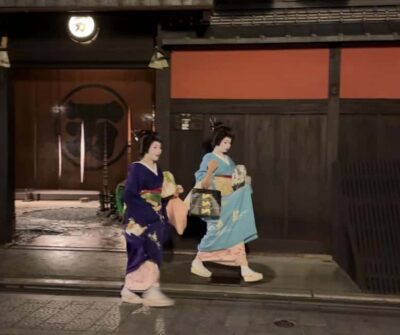
Gion Magical Night Walking Tour with Geisha Trivia
Read our review →
Gion Geisha District Walking Tour – Stories of Geisha
Read our review →
Best of Kyoto: Gion, Geisha, Pagodas & Cobblestones
Read our review →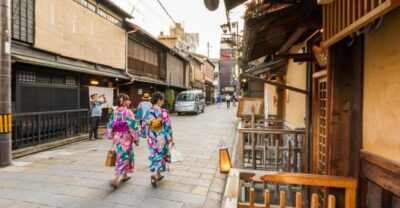

Kyoto Night Foodie Tour in Gion (9+ dishes + 6 Sake tastings)
Read our review →
Kyoto Gion Geisha District Walking Tour – The Stories of Geisha
Read our review →
Kyoto Gion: 2-Hour Geisha Culture & History Walking Tour
Read our review →Browse the lists this tour appears in