
REVIEW · GION GEISHA DISTRICT TOURS
Kyoto: Gion & Geisha District Night Time Walking Tour
Kyoto’s Gion is most atmospheric after dark, when lanterns glow along old lanes and the crowds thin. This two-hour walk links Yasaka Shrine, Nene no Michi, Ninenzaka, and Hanamikoji Street, giving you both famous sights and quieter corners that are easy to miss alone.
I like the route’s mix of sacred places and old entertainment streets. I also like the practical touch of guide-provided photos, especially if you are traveling solo. Guides including Majo, Pedro, Yuvia, Wilber, and Bell have been praised for clear explanations and friendly help.
The main consideration is the walking surface and pace. This tour is not suitable for wheelchair users, and stone lanes, sloped streets, and evening cold can make good shoes and warm clothing important.
In This Review
- Key points to know before you book
- Starting beside Yasaka Shrine
- Yasaka Shrine and Kyoto’s festival life
- A quiet pause in Maruyama Park
- Nene no Michi and old Higashiyama
- Ninenzaka, with slopes and wooden facades
- Yasui-Konpiragu and the Power Stone
- Hanamikoji Street and the world of geiko
- Why the guides make a difference
- The $20 price and what you receive
- Who should take this evening walk
- Should you book the Gion night tour?
- FAQ
- How long does the Kyoto Gion night walking tour last?
- Where does the tour begin?
- Where does the tour end?
- What language is the tour offered in?
- Which places does the route visit?
- Will I definitely see a geisha or maiko?
- Is the tour suitable for wheelchair users?
- What is included in the price?
Key points to know before you book
- Nighttime Gion feels calmer: Evening light and fewer people make the old lanes easier to appreciate than during the busiest daytime hours.
- The route covers major sights: You visit Yasaka Shrine, Maruyama Park, Nene no Michi, Ninenzaka, Yasui-Konpiragu Shrine, and Hanamikoji Street.
- Geisha culture is explained, not staged: Your guide discusses geiko and maiko, their training, work, and artistic traditions.
- The Power Stone ritual is unusual: At Yasui-Konpiragu Shrine, you can learn about the custom of crawling through the symbolic stone arch.
- Guide quality is a major strength: Majo, Pedro, Nay, Yuvia, Wilber, Bell, and others have been praised for friendly, clear, personal tours.
- It costs $20 per person: For two hours of guiding, local context, and photos, this is a low-cost way to get oriented in Gion.
Starting beside Yasaka Shrine
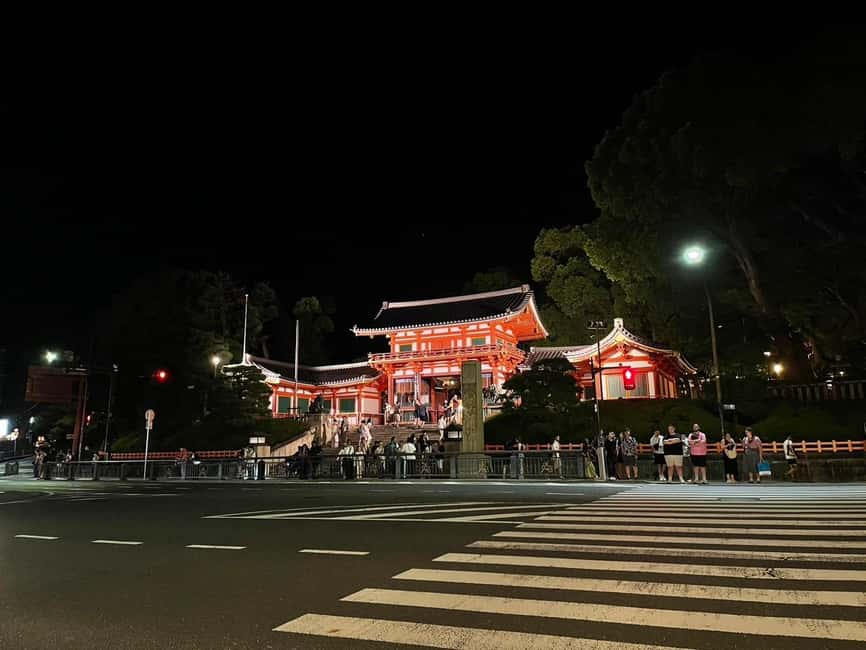
The meeting point is in front of the Starbucks next to Kyoto Gion Hotel, at 35.0036732, 135.7760837. It is within walking distance of Yasaka Shrine’s Western Tower Gate entrance, so you begin in a useful part of eastern Kyoto rather than spending the first part of the tour on transport.
That matters because Gion is easy to visit badly. You can walk through it, take photographs, and still miss what the buildings mean or why some streets matter. An English-speaking guide gives the neighborhood a clear shape from the start.
The tour lasts two hours and returns to the same Starbucks meeting point. Starting times vary, so you need to check availability when booking. The route is on foot, with no transport included, and the evening setting means you should dress for the season. December participants found it cold, even while enjoying the quieter streets.
More evenings in Gion:
- Kyoto Geisha Walking Tour: Gion District & Hidden Gems
★ 4.7 · 3,273 reviews - Kyoto: Gion Magical Night Walking Tour with Geisha Trivia
★ 4.9 · 2,393 reviews - Kyoto: Gion Geisha District Walking Tour – Stories of Geisha
★ 4.7 · 2,187 reviews
Yasaka Shrine and Kyoto’s festival life
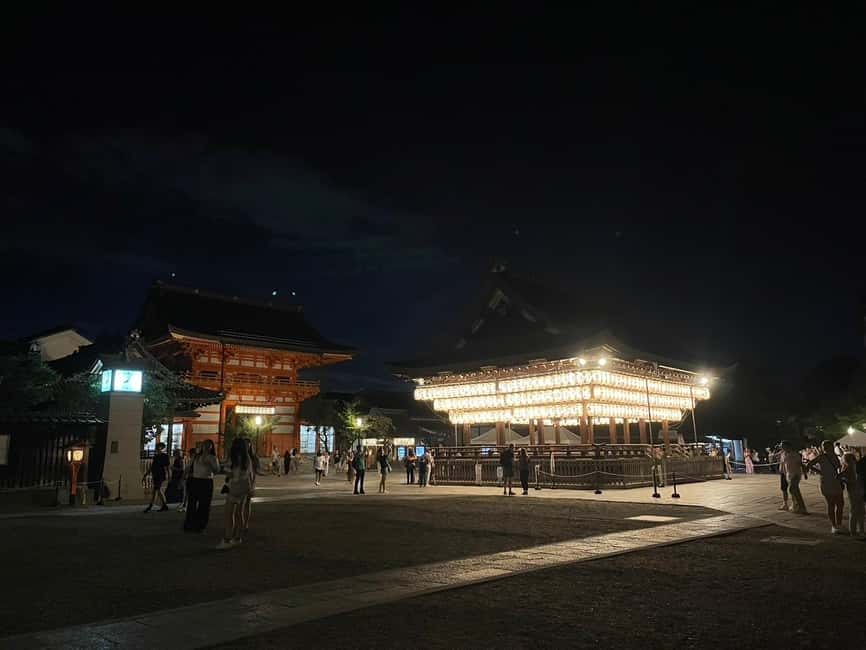
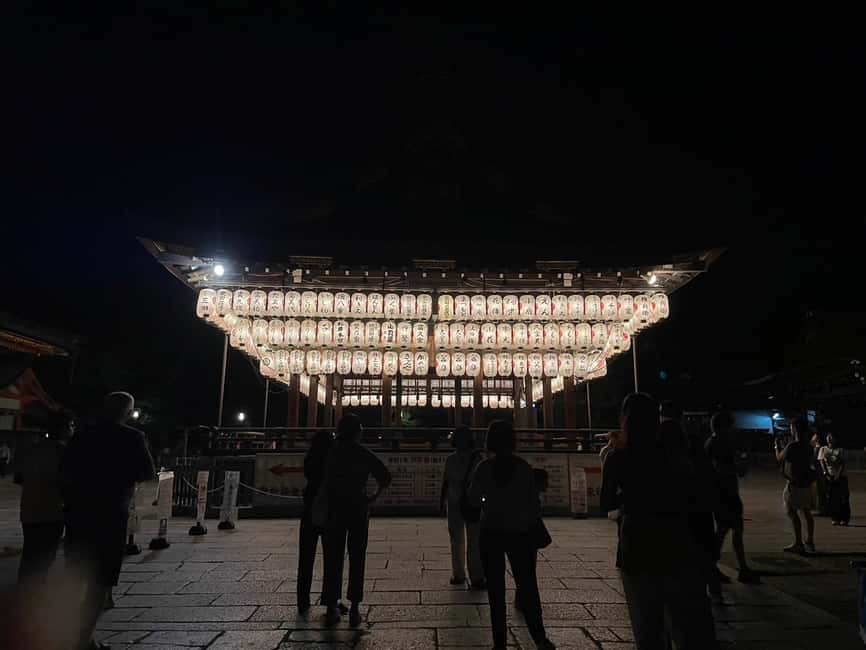
Yasaka Shrine is a fitting first stop. It is one of Kyoto’s best-known religious sites and has strong ties to the Gion Matsuri, one of Japan’s major festivals. Here, the guide explains the shrine’s place in Kyoto life and its connection to the district’s long relationship with performance, ceremony, and geisha traditions.
The shrine also helps you understand the name Gion. This is not simply a district of pretty wooden facades. Its identity grew around religious activity, pilgrimage, entertainment, and refined hospitality. The tour’s discussion of the shrine gives you a useful foundation before the route turns into the narrow streets of Higashiyama.
Expect roughly 20 minutes here. That is enough for an introduction and questions, but not a full religious-site visit. If you want extended time for prayer, detailed architectural study, or photographs, you may want to return on your own.
A quiet pause in Maruyama Park
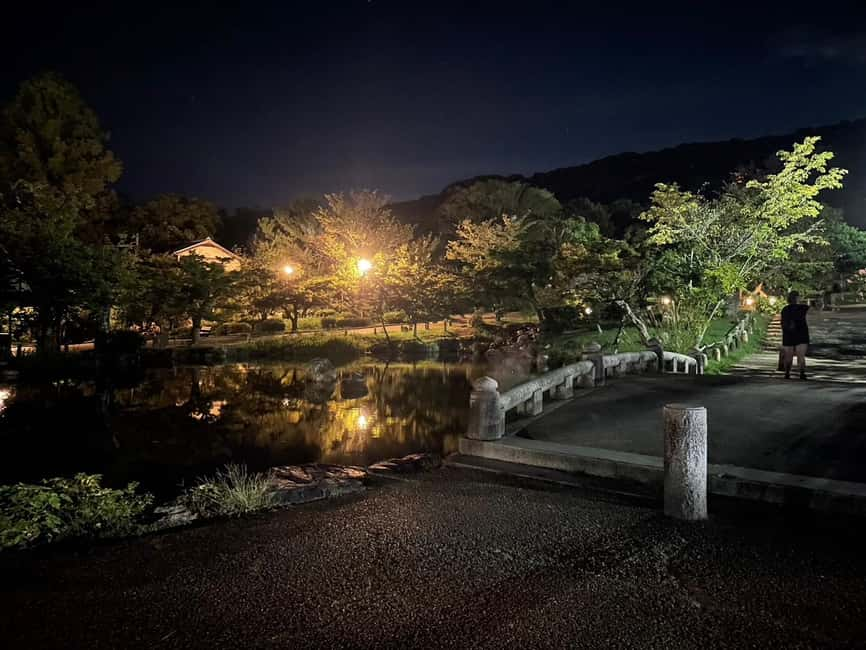
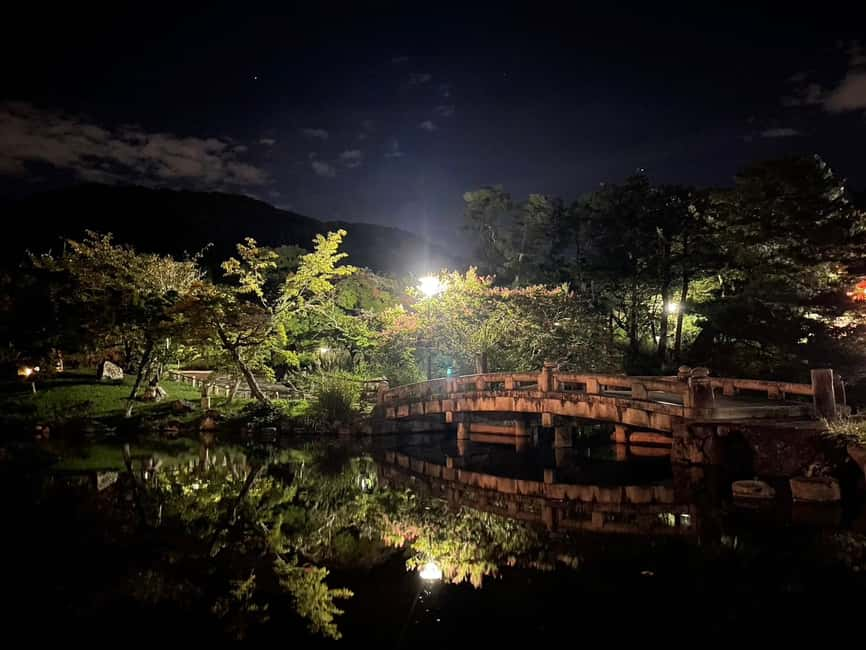
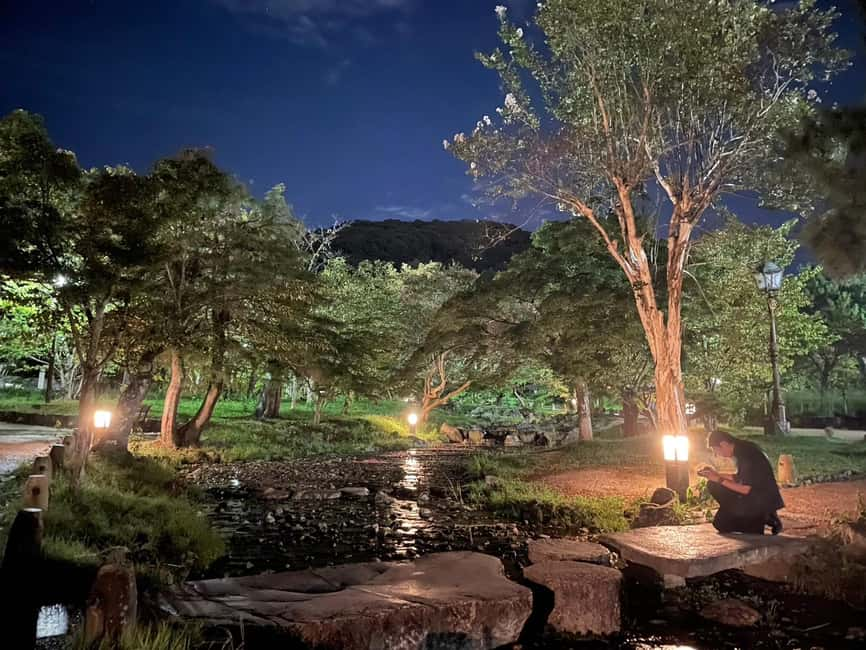
The route continues through Maruyama Park, described as Kyoto’s oldest public garden. It provides a welcome change from the hard stone and close-packed buildings of Gion. You get a short stretch of open space and greenery before returning to the historic lanes.
The park is especially useful at night because it slows the pace. This is not a tour that simply rushes from one photo stop to the next. Your guide can explain how the park fits into the area and point out the connection between Kyoto’s seasonal beauty and its religious and cultural life.
The exact amount of time at the park can vary within the two-hour route. The listed itinerary gives the main stops approximate blocks of 20 to 30 minutes, so you should think of this as a guided neighborhood walk rather than a series of formal admissions.
Nene no Michi and old Higashiyama
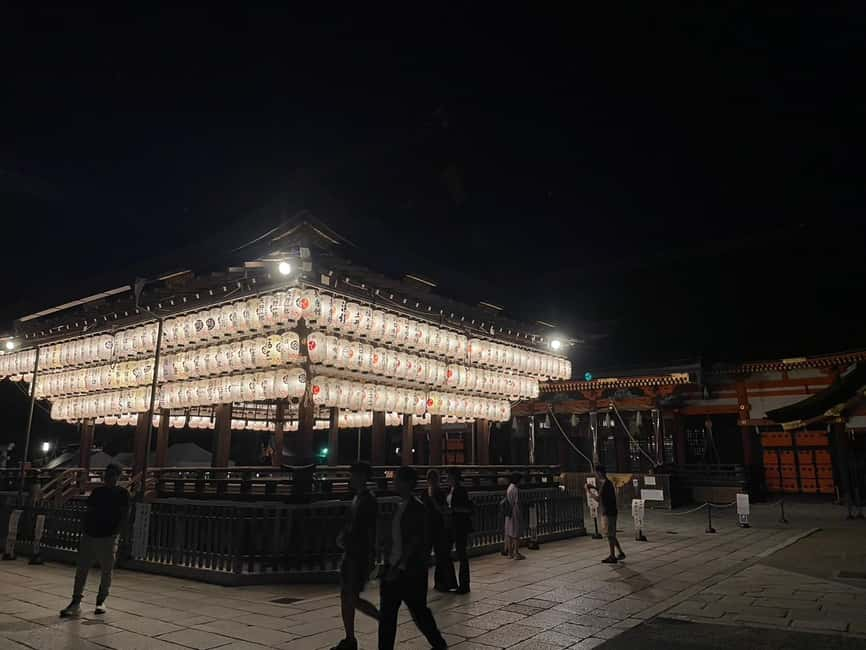
Nene no Michi is one of the prettiest parts of the walk. This stone-paved lane is named for Nene, the wife of samurai leader Toyotomi Hideyoshi. Traditional townhouses, teahouses, and small shops line the route, giving you a strong sense of old Kyoto architecture.
The guide’s value is clear here. Many buildings do not have signs explaining their history, and the lane can look like a simple scenic street if you do not know what you are seeing. You learn why the area has retained its traditional appearance and how it connects to the culture of Higashiyama.
This is also one of the better sections for photographs. Evening light can give the paving stones and wooden facades a softer mood than harsh midday sun. Still, remember that low light can make photographs harder, and you should stay aware of other pedestrians and residents.
More walking tours in Kyoto:
- Night Walk in Gion: Kyoto’s Geisha District
★ 4.5 · 2,003 reviews - Kyoto Gion Geisha District Walking Tour – The Stories of Geisha
★ 5.0 · 1,441 reviews - Nishiki Market Brunch Walking Tour (7 Tastings + Brunch)
★ 5.0 · 1,355 reviews - Kyoto Arashiyama Walking Tour: Bamboo, Monkeys, Gardens & Secrets
★ 5.0 · 1,216 reviews
Ninenzaka, with slopes and wooden facades
Ninenzaka is a historic slope lined with wooden buildings and small storefronts. It is one of Kyoto’s most recognizable streets, and it can be crowded during the day. At night, the atmosphere is often more manageable, which is one of the strongest reasons to choose this experience instead of visiting only in daylight.
The lane is photogenic, but it is not flat or modern. The stone surface and incline require steady walking, particularly in poor weather. This is the part of the route where the wheelchair restriction matters most. You should also avoid treating the street as a film set. It remains a working neighborhood, and the old buildings are part of everyday Kyoto.
A guide can help you look beyond the postcard view. You hear about the district’s architecture, the role of its shops, and the way traditional streets have become part of modern Kyoto sightseeing. The tour does not promise extended shopping time, so return later if you want to browse storefronts at leisure.
Yasui-Konpiragu and the Power Stone
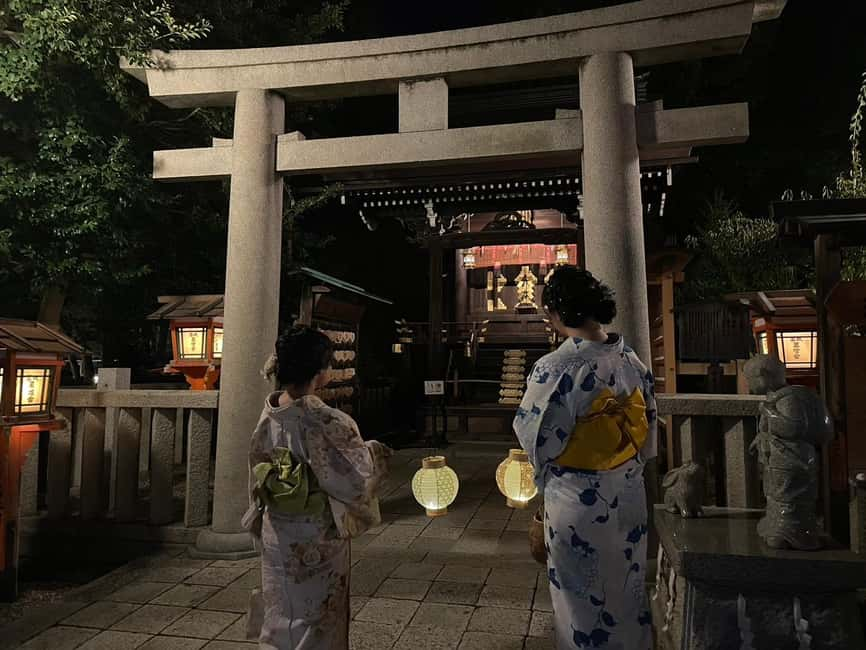
One of the more unusual stops is Yasui-Konpiragu Shrine. Its symbolic Power Stone archway is linked to wishes for relationships and separation from unwanted ties. People crawl through the opening as part of the ritual, first in one direction and then the other, according to the custom explained at the shrine.
This stop adds something different to the route. Yasaka Shrine gives you a major religious landmark, while Yasui-Konpiragu shows a more specific and hands-on form of popular belief. It is memorable because the tradition is physical and easy to understand, even if you know little about Japanese shrine customs.
The space is not presented as a performance for the group. Your guide explains the meaning, and you can decide how much you want to take part. The itinerary allows around 30 minutes for one section of the later walk, so the timing may include this shrine and the final Gion streets.
Hanamikoji Street and the world of geiko
Hanamikoji Street is the heart of the Gion portion of the walk. Its preserved wooden teahouses are associated with Kyoto’s geiko and maiko. In Kyoto, geiko is the local term for a professional entertainer often called geisha elsewhere, while maiko are apprentices in training.
Your guide explains their work, training, clothing, performance skills, and place within Kyoto’s traditional entertainment culture. This is important because the district is often reduced to a hunt for a quick photograph. A good explanation shifts your attention from appearance to the years of practice behind music, dance, conversation, and ceremony.
You might see a geiko or maiko moving through the area, but you should not book this tour expecting a sighting. One participant happened to see several, while another described seeing one briefly. That is unusual rather than guaranteed. The real value is learning how the district works and how to behave respectfully around people who live and work there.
The route offers a glimpse into a private world, not entry into a teahouse or a geisha performance. That distinction matters. You are walking public streets and receiving cultural context, which makes this a good introduction but not a substitute for a formal evening performance.
Why the guides make a difference
The strongest part of this experience is the human element. Majo is repeatedly praised for her cheerful manner, clear explanations, and ability to bring the lanes to life. Pedro and Nay have been singled out for detailed, thoughtful guiding, while Wilber has been appreciated for fluent English and strong explanations of Japanese history and the area.
Other named guides include Yuvia, Bell, Amy, Jason, and Sam. The exact guide depends on the date, but the pattern is consistent: you can expect an English-speaking guide who encourages questions and explains details that are not obvious from the street.
A few guides also helped with photographs. That is a small feature, but it matters if you are alone or want something better than a string of selfies. One guide also helped point out good places to eat after the walk, though restaurant advice should be treated as a helpful extra rather than a promised part of the tour.
Group size can vary. Some bookings have turned into very small walks, even a private-feeling outing for two people, while the available information does not guarantee a particular group size. A small group gives you more room for questions and photographs, but you should not book on the assumption that every departure will be private.
The $20 price and what you receive
At $20 per person, this is inexpensive for a two-hour guided walk in one of Kyoto’s most sought-after districts. You receive an English-speaking guide, historical explanations at Yasaka Shrine and along the route, cultural background on geiko and maiko, and photos during the tour.
The value comes from orientation. You could walk these streets for free, but you would likely spend much of your time taking photographs without knowing the significance of the shrine, the lanes, the Power Stone, or the teahouses. For a first evening in Kyoto, that context can make the following days more rewarding.
The price does not include food, entrance tickets, or transportation. The walk focuses on public streets, shrines, gardens, and outside views, so there is no promise of an indoor geisha show or private teahouse visit. If you want a meal or performance, plan that separately.
The flexible booking terms are useful for a Kyoto itinerary that may change. You can cancel up to 24 hours in advance for a full refund, and you can reserve now and pay later. Check the current departure time before booking, since the activity runs for two hours but does not list one fixed start time.
Who should take this evening walk
I would choose this tour if you are visiting Kyoto for the first time and want a clear introduction to Gion without spending a large sum. It works particularly well for people who enjoy history, architecture, religious customs, and stories about how a neighborhood functions.
It also suits solo visitors. The route is social without requiring a meal or a long evening commitment, and the photo help can be useful. Couples and small groups may appreciate the relaxed pace and the chance to ask about restaurants or other Kyoto sights.
You should think twice if you want a long photography session at each stop. Two hours covers a lot of ground, and the guide needs to keep the group moving. It is also not suitable for wheelchair users, and anyone uncomfortable with slopes or uneven stone paths should consider another way to see Gion.
For the best experience, wear warm layers in cooler months and shoes suited to stone streets. Keep your camera ready, but use it with care around working teahouses and local residents. The point is to understand Gion, not to turn it into a stage.
Should you book the Gion night tour?
Book it if you want good cultural orientation at a modest price, especially on your first night in Kyoto. The route covers the district’s essential sights, but its real strength is the explanation connecting shrines, old lanes, architecture, and geiko culture.
Do not book it solely to see a geisha. Sightings can happen, but they are not promised. Book it for the streets, the stories, the Power Stone ritual, the nighttime mood, and the chance to ask a local guide what you are looking at.
For $20, this is an easy recommendation for walkers who can manage slopes and stone paving. It gives you a thoughtful introduction to Gion, then leaves you near the same central meeting point with the rest of your evening free.
FAQ
How long does the Kyoto Gion night walking tour last?
The tour lasts two hours.
Where does the tour begin?
It begins in front of the Starbucks next to Kyoto Gion Hotel. The coordinates are 35.0036732, 135.7760837.
Where does the tour end?
The walk returns to the Starbucks next to Kyoto Gion Hotel.
What language is the tour offered in?
The tour is conducted in English with a live English-speaking guide.
Which places does the route visit?
The route includes Gion, Yasaka Shrine, Maruyama Park, Nene no Michi, Ninenzaka, Yasui-Konpiragu Shrine, and Hanamikoji Street.
Will I definitely see a geisha or maiko?
No. You might see geiko or maiko during the walk, but sightings are not guaranteed.
Is the tour suitable for wheelchair users?
No. The activity is not suitable for wheelchair users.
What is included in the price?
The $20 price includes the English-speaking guide, historical insights into Yasaka Shrine, and photos during the tour.
More Kyoto Evenings
- Kyoto Night Foodie Tour in Gion (9+ dishes + 6 Sake tastings)
★ 5.0 · 1,762 reviews - Kyoto Gion Night Walk & Geisha District Guided Tour
★ 5.0 · 786 reviews - Kyoto Ghost Tour: Dark Tales, Urban Legends, Bamboo Forest Night
★ 5.0 · 625 reviews - Kyoto Bar Hopping Night Tour
★ 5.0 · 613 reviews
Recently added around Kyoto
- Higashiyama | Kyoto: Sakura Season Private Rickshaw Tour★ 5.0 · 3 reviews
- Kyoto Kimono Rental CHAMATSU|Kimono/Yukata Rental FamilyPlan★ 5.0 · 3 reviews
- Kyoto: Half-Day Private Guided Tour to the Old Town of Gion★ 4.4 · 3 reviews
- Nara Private Customizable Half Day Tour★ 5.0 · 3 reviews
- Kansai Region Hiking Adventure in Nara Kobe Kyoto and More★ 5.0 · 3 reviews
- Full Day Nara Deer, Temple, Shrine, Activities & Tea Ceremony★ 5.0 · 3 reviews
- Nara: Essential Private Tour with Deer Park and Temples★ 5.0 · 3 reviews
- Hiking Tour for Sacred Sites in Kyoto with a Guide★ 5.0 · 3 reviews
Gion Geisha District Tours, compared.
Kyoto Geisha Walking Tour: Gion District & Hidden Gems
Read our review →
Gion Magical Night Walking Tour with Geisha Trivia
Read our review →
Gion Geisha District Walking Tour – Stories of Geisha
Read our review →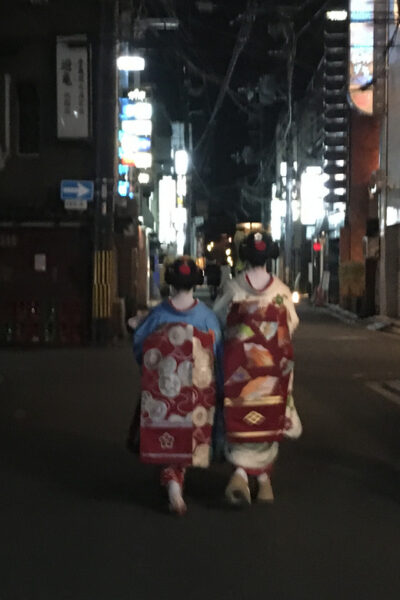
Best of Kyoto: Gion, Geisha, Pagodas & Cobblestones
Read our review →

Kyoto Night Foodie Tour in Gion (9+ dishes + 6 Sake tastings)
Read our review →
Kyoto Gion Geisha District Walking Tour – The Stories of Geisha
Read our review →
Kyoto Gion: 2-Hour Geisha Culture & History Walking Tour
Read our review →Browse the lists this tour appears in