
REVIEW · GION GEISHA DISTRICT TOURS
Kyoto: Gion and Geisha District Walking Tour
Gion is best understood on foot, and this two-hour walk gives you the stories that old wooden streets cannot explain on their own. You’ll move from Yasaka Shrine and Maruyama Park into the lanes of Higashiyama, then finish among the teahouses and machiya of Hanamikoji Street. The focus is geisha culture, but the tour also covers shrine customs, samurai history, architecture, and local legends.
I like the small group, capped at 10 people, because it should be easier to hear your guide and ask questions. I also like the route’s variety: lantern-lit shrine paths, quiet lanes, old wooden homes, and the playful Power Stone ritual at Yasui-Konpiragu. The main drawback is that two hours goes quickly, and several stops involve slopes, stone paving, and walking through popular historic streets.
In This Review
- Key points to know before you book
- Why this Gion walk works so well
- Starting at Yasaka Shrine
- Maruyama Park and seasonal Kyoto
- Nene-no-Michi and old Kyoto lanes
- Ninenzaka and the feel of old Higashiyama
- The Power Stone at Yasui-Konpiragu
- Hanamikoji Street and the geisha district
- What the guides add to the walk
- Timing, group size, and practical comfort
- Who should book this Gion tour?
- Is $22.55 good value?
- Should you book it?
- FAQ
- How long does the Gion walking tour last?
- What is the tour price?
- How large is the tour group?
- Is the tour conducted in English?
- Where does the tour start?
- Where does the tour finish?
- Which places are included in the route?
- Are admission fees included?
- Is a mobile ticket available?
- Can I cancel for a full refund?
Key points to know before you book
- A compact route through Gion and Higashiyama: Six stops bring together shrines, parks, preserved lanes, and the heart of the geisha district.
- Geisha culture without a staged show: You learn about teahouses, maiko training, traditional entertainment, and places where you might spot geisha, but no geisha performance is included.
- A maximum of 10 people: This is a more personal format than a large city walk, with a better chance to ask your own questions.
- A guide-led introduction to Kyoto: Guides such as Sam, Shin, Amy, Tim, Maria, and Naoya have been praised for clear English, friendly help, and strong storytelling.
- Good value at $22.55: The tour includes an English-speaking guide and access to Gion and Hanamikoji Street, with no separate admission charges listed.
- A walking tour with some uneven ground: Comfortable shoes matter, especially on stone-paved Ninenzaka, Nene-no-Michi, and the narrow lanes of Gion.
Why this Gion walk works so well
Gion can look simple at first: old wooden buildings, paper lanterns, narrow streets, and many people holding cameras. The details are easy to miss. A guide can point out the difference between a traditional machiya townhouse and a teahouse, explain why certain lanes matter, and put the district’s geiko and maiko traditions into context.
That added explanation is the real reason to book this tour. You are not just passing through a scenic part of Kyoto. You are learning how the area connects religion, seasonal celebrations, samurai stories, tea culture, and traditional entertainment.
The price is also sensible. At $22.55 per person, you are paying mainly for the guide’s time and local explanation rather than for an expensive attraction ticket. Since the route uses public streets, shrines, and parks, there are no major entrance fees to inflate the cost. If this is your first visit to Kyoto, the tour can help you decide which parts of Gion and Higashiyama deserve a slower return visit.
The small-group cap matters. With no more than 10 people, the guide can usually keep the pace together and respond to questions. It is still a group walk, so you should not expect a private tour, but the format feels much more manageable than a large crowd following a flag.
More evenings in Gion:
- Kyoto Geisha Walking Tour: Gion District & Hidden Gems
★ 4.7 · 3,273 reviews - Kyoto: Gion Magical Night Walking Tour with Geisha Trivia
★ 4.9 · 2,393 reviews - Kyoto: Gion Geisha District Walking Tour – Stories of Geisha
★ 4.7 · 2,187 reviews
Starting at Yasaka Shrine
The walk begins at Starbucks Coffee in the Kyoto Gion Hotel, at 555 Gionmachi Minamigawa. This is a useful meeting point because it sits near Yasaka Shrine and is close to public transportation.
Yasaka Shrine is an effective opening stop. It introduces you to the religious side of the district before the route turns toward teahouses and entertainment streets. The shrine is known for its vermilion gate, lantern-lit paths, and long connection with Kyoto’s local traditions.
You have about 20 minutes here. That is enough time for your guide to explain the setting and point out features you might otherwise walk past. It is also a good place to ask basic questions about Shinto customs before the tour moves on.
The shrine is free to enter, and there is no separate admission charge for this part of the walk. As with all busy religious sites, keep your behavior respectful. This is an active place of worship, not simply a photo stop.
Maruyama Park and seasonal Kyoto
From Yasaka Shrine, the route continues to Maruyama Park for roughly 10 minutes. Kyoto’s oldest public park is known for seasonal beauty and its weeping cherry trees.
This short stop adds breathing room to the tour. After the shrine’s gates and lanterns, the park gives you a greener, more open setting. The guide can connect the park to seasonal celebrations and explain why certain times of year change the mood of Kyoto.
Do not expect a long park visit. Ten minutes is enough for an introduction and a few photographs, but not for a full stroll through the grounds. If cherry blossoms are a priority, you may want to return later and spend more time here on your own.
Nene-no-Michi and old Kyoto lanes
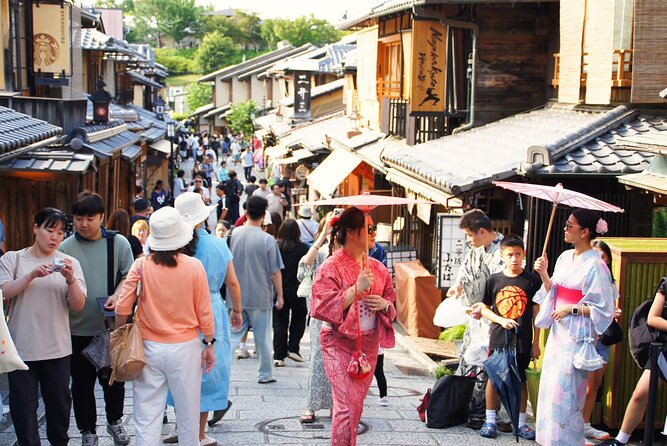
Nene-no-Michi is a picturesque lane named for Nene, the wife of samurai warlord Toyotomi Hideyoshi. The route spends about 10 minutes here, among traditional buildings, small shops, and teahouses.
This is the sort of street where a guide adds real value. The preserved architecture can be attractive without context, but the story behind the name and the lane’s connection to Kyoto’s past gives the setting more meaning. You will also get a better sense of how old neighborhoods were shaped around narrow roads and wooden buildings.
Photography is tempting, but remember that this is still a functioning neighborhood and cultural district. A guide can help you look carefully without turning every doorway into a camera target. The calm atmosphere may also vary depending on the time of day.
More walking tours in Kyoto:
- Night Walk in Gion: Kyoto’s Geisha District
★ 4.5 · 2,003 reviews - Kyoto Gion Geisha District Walking Tour – The Stories of Geisha
★ 5.0 · 1,441 reviews - Nishiki Market Brunch Walking Tour (7 Tastings + Brunch)
★ 5.0 · 1,355 reviews - Kyoto Arashiyama Walking Tour: Bamboo, Monkeys, Gardens & Secrets
★ 5.0 · 1,216 reviews
Ninenzaka and the feel of old Higashiyama
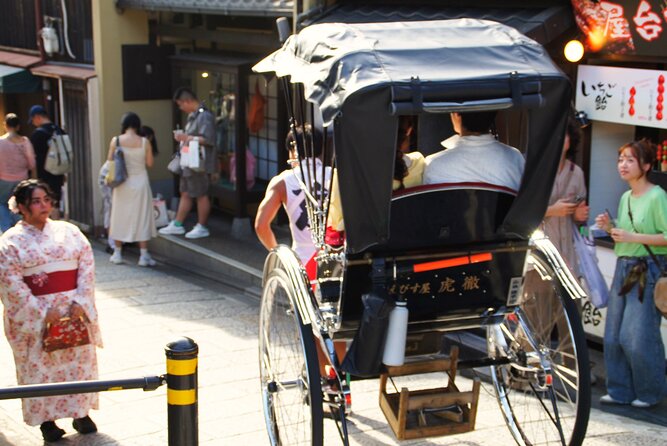
The walk then reaches the Ninenzaka and Sannenzaka area for about 15 minutes. The route describes the experience as a descent down Ninenzaka, with stone paving, historic wooden buildings, artisan shops, and a strong old-Kyoto feel.
This is one of the most photogenic sections of the outing. You will see the kind of streetscape many people picture when they imagine traditional Kyoto. The trade-off is that scenic streets attract plenty of people, and the stone slope can be awkward in poor footwear.
Wear shoes with a firm sole. The route is only about two hours, but you are walking between six stops rather than standing in one district. If you have trouble with slopes or uneven paving, take this into account before booking. The tour information says most people can participate, but it does not promise a step-free route.
The guide’s historical stories are especially useful here. A walk down Ninenzaka can otherwise become a sequence of shopfronts and photographs. With an explanation of how the streets looked and functioned in earlier periods, the area feels less like a backdrop and more like a living part of Kyoto.
The Power Stone at Yasui-Konpiragu
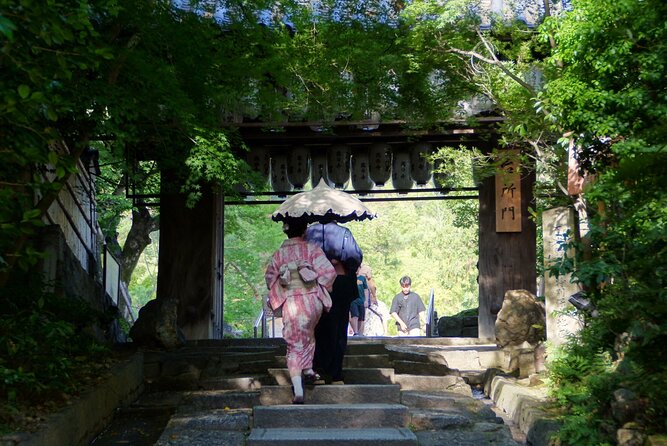
Yasui-Konpiragu is a smaller shrine in the Higashiyama district, and the tour allows about 10 minutes here. Its best-known feature is the Power Stone archway.
The custom is direct and memorable. People crawl through the stone to pray for strong relationships or to break ties with the past. It is an unusual ritual, and it gives the tour a lighter, more human moment after the formal shrine and historical material.
This stop also shows why a local guide can improve a short walking route. Without an explanation, the stone arch may look like an odd structure in a shrine courtyard. With the story behind it, you understand why people approach it with such purpose.
You may not have much time to take part in the ritual yourself, since the stop lasts around 10 minutes. Still, the guide can explain the practice and place it within the broader mix of customs found in Kyoto.
Hanamikoji Street and the geisha district
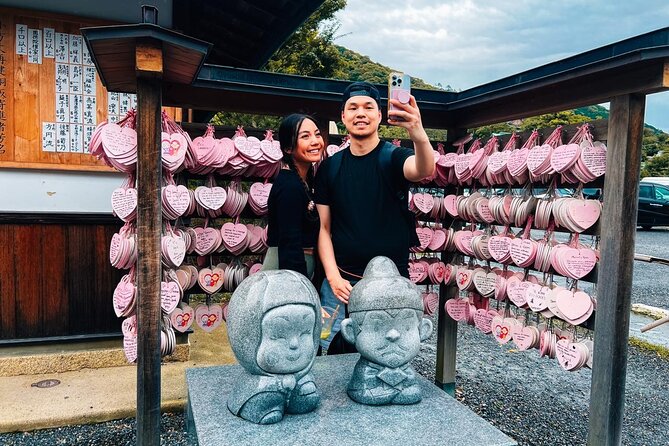
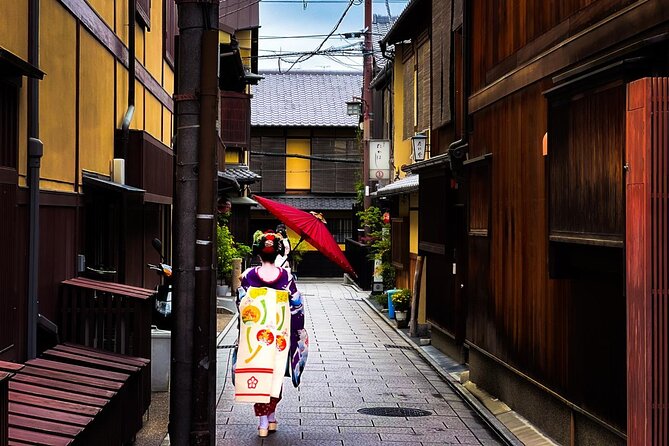
The final major stop is Hanamikoji Street, the center of Gion, with about 15 minutes set aside for the visit. This is where the tour’s geisha theme comes into clearest focus.
Hanamikoji is lined with preserved wooden machiya, exclusive teahouses, and lanterns. The setting is elegant, but the important point is that Gion is not a theme park. Teahouses may be private, and geiko and maiko are working professionals. The tour can explain the traditions of the district and offer tips on places where you might spot them, but it does not guarantee a sighting.
That distinction matters. You should approach Gion with patience and respect, not as a hunt for photographs. Learning about maiko training, tea ceremonies, and traditional entertainment customs gives you a better way to read the district without treating local people as scenery.
The route ends back at the original meeting point. That makes the tour easy to combine with the rest of a Kyoto day, especially if you want to continue exploring Gion or return to a nearby station afterward.
What the guides add to the walk
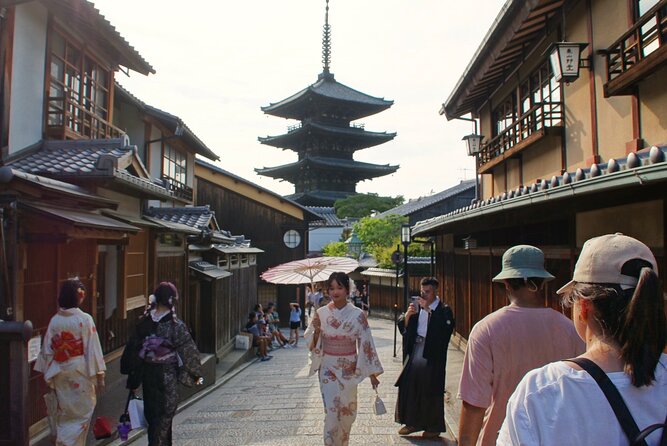
The guides are the strongest part of this experience. Different sessions may feature different people, but names associated with the tour include Sam, Shin, Amy, Tim, Maria, and Naoya.
Sam has been praised for clear English and a flexible approach. Shin is noted for giving a strong introduction to Gion. Amy receives especially warm comments for making history and culture interesting throughout the walk. Tim is described as friendly and well informed, while Maria helped with organization before the tour and adjusted the pace and shade during a very hot outing. Naoya is associated with atmospheric storytelling about geisha traditions and lantern-lit lanes.
Those details suggest a useful range in guiding style. You may get a guide who focuses on architecture, one who emphasizes traditional arts, or one who is especially good at local legends and practical advice. The exact guide cannot be selected from the information provided, so book for the route and format rather than for one guaranteed individual.
The best guiding moments seem to come when a simple object gets a story: a shrine gate, a townhouse facade, a stone arch, or a teahouse entrance. That is the difference between a pleasant walk and a useful introduction to Kyoto.
Timing, group size, and practical comfort
The advertised duration is approximately two hours. That is long enough to cover the six main stops without taking over your day. It is short enough to fit before dinner, another sightseeing plan, or an evening in Gion.
The tour is offered with a mobile ticket, and confirmation is received at booking. You meet at the Starbucks in the Kyoto Gion Hotel and return there at the end. The location is near public transportation, which helps if you are fitting the walk into a wider Kyoto schedule.
Bring water, especially in warm weather. One guide was specifically praised for keeping the group in the shade during a hot day, but shade will depend on the route, weather, and timing. Comfortable walking shoes are more important than formal clothing.
Tips are optional and not included. There are no listed entrance fees for the six stops, and the tour includes an English-speaking guide plus entry or access to Gion and Hanamikoji Street.
Free cancellation is available if you cancel at least 24 hours before the start time. Cancellations inside that window are not refunded, and changes are not accepted within 24 hours. The cut-off uses local Kyoto time.
Who should book this Gion tour?
I would choose this walk if you are visiting Kyoto for the first time and want a clear introduction to Gion without committing to a long half-day excursion. It is also a good fit if you care about traditional arts, shrine customs, old architecture, or the social world behind the geisha district.
You will get the most from it if you enjoy listening while walking. The route includes several short stops rather than long visits inside major attractions. It is about context, stories, and seeing familiar streets with sharper eyes.
Families and small groups may appreciate the limited size, though the stone lanes and slopes still require sensible footwear. Photography fans should also like it, but you need to balance pictures with respect for private teahouses and working streets.
I would be less enthusiastic if you want a formal geisha performance, extended shrine visits, or a tour with guaranteed geisha sightings. None of those is promised. This is a guided neighborhood walk, not a ticketed cultural show.
Is $22.55 good value?
Yes, for the right purpose. The price is low for a two-hour English-language walk with a maximum of 10 people, especially since the guide covers several connected areas rather than only one street.
The value comes from interpretation, not admission tickets. You could walk past Yasaka Shrine, Ninenzaka, and Hanamikoji Street for free, but you would miss much of the explanation about maiko training, tea culture, samurai connections, shrine rituals, and local architecture.
If you already know Gion well, the tour may feel too introductory. For most first-time visitors, though, $22.55 is a reasonable way to get your bearings and collect useful ideas for exploring the district again on your own.
Should you book it?
Book this tour if you want Gion explained in plain English, prefer a small group, and like a mix of scenery and cultural detail. The strongest reasons are the six-stop route, the personal group size, and the guides’ repeated success with storytelling and practical help.
Skip it if you are looking for a performance, guaranteed geisha encounters, or a relaxed ride with little walking. For everyone else, this is a fairly priced first look at Kyoto’s most famous traditional district, with enough history and local detail to make the old streets feel more than merely beautiful.
FAQ
How long does the Gion walking tour last?
The tour lasts approximately two hours.
What is the tour price?
The listed price is $22.55 per person.
How large is the tour group?
The activity accepts a maximum of 10 travelers.
Is the tour conducted in English?
Yes. An English-speaking guide is included.
Where does the tour start?
The meeting point is Starbucks Coffee at the Kyoto Gion Hotel, 555 Gionmachi Minamigawa, Higashiyama Ward, Kyoto 605-0074.
Where does the tour finish?
The activity ends back at the original meeting point.
Which places are included in the route?
The route includes Yasaka Shrine, Maruyama Park, Nene-no-Michi, Ninenzaka and Sannenzaka, Yasui-Konpiragu, and Hanamikoji Street.
Are admission fees included?
The listed stops have free admission, and entry or access to Gion and Hanamikoji Street is included.
Is a mobile ticket available?
Yes. The tour provides a mobile ticket, and confirmation is received when you book.
Can I cancel for a full refund?
Yes, if you cancel at least 24 hours before the experience start time. Cancellations made less than 24 hours in advance are not refunded, and changes inside that period are not accepted.
Recently added around Kyoto
- Higashiyama | Kyoto: Sakura Season Private Rickshaw Tour★ 5.0 · 3 reviews
- Kyoto Kimono Rental CHAMATSU|Kimono/Yukata Rental FamilyPlan★ 5.0 · 3 reviews
- Kyoto: Half-Day Private Guided Tour to the Old Town of Gion★ 4.4 · 3 reviews
- Nara Private Customizable Half Day Tour★ 5.0 · 3 reviews
- Kansai Region Hiking Adventure in Nara Kobe Kyoto and More★ 5.0 · 3 reviews
- Full Day Nara Deer, Temple, Shrine, Activities & Tea Ceremony★ 5.0 · 3 reviews
- Nara: Essential Private Tour with Deer Park and Temples★ 5.0 · 3 reviews
- Hiking Tour for Sacred Sites in Kyoto with a Guide★ 5.0 · 3 reviews
Gion Geisha District Tours, compared.

Kyoto Geisha Walking Tour: Gion District & Hidden Gems
Read our review →
Gion Magical Night Walking Tour with Geisha Trivia
Read our review →
Gion Geisha District Walking Tour – Stories of Geisha
Read our review →
Best of Kyoto: Gion, Geisha, Pagodas & Cobblestones
Read our review →

Kyoto Night Foodie Tour in Gion (9+ dishes + 6 Sake tastings)
Read our review →
Kyoto Gion Geisha District Walking Tour – The Stories of Geisha
Read our review →
Kyoto Gion: 2-Hour Geisha Culture & History Walking Tour
Read our review →Browse the lists this tour appears in