
REVIEW · KYOTO KIMONO RENTALS
Kyoto 6hr Private Guided Tour & Kimono Experience
Kyoto’s famous red torii gates are only the beginning here. The tour pairs a standard kimono fitting with a guided visit to two or three Kyoto sights, giving you cultural context instead of a quick photo stop. I like the chance to choose your stops with the guide, and I like that guide Yasuko has been praised for helping visitors move through Fushimi Inari’s crowds with ease.
The main thing to watch is the wording around the itinerary. The tour is advertised as six hours, but you do not visit every temple listed. You choose two or three sites, transportation and entry fees cost extra, and the kimono plan is the basic standard version.
In This Review
- Key points at a glance
- What this Kyoto tour actually includes
- Choosing the right two or three sights
- Fushimi Inari beyond the red gates
- The kimono fitting in Gion
- Northern Kyoto: gold, rocks, and quiet gardens
- Eastern Kyoto: silver, moss, and major temple grounds
- Markets, palaces, and city streets
- Arashiyama, Uji, and the distance problem
- Group size, guide service, and practical value
- Should you book this Kyoto experience?
- FAQ
- How long does the tour last?
- How many sights will I visit?
- Is the kimono rental included?
- Are kimono sizes limited?
- Is transportation included?
- Are admission fees included?
- Can I cancel for a full refund?
Key points at a glance
- One-hour kimono start: Dress at Kyoto Kimono Rental wargo’s Gion store before sightseeing.
- Choose two or three sights: The long stop list is a menu, not a promise to see every place.
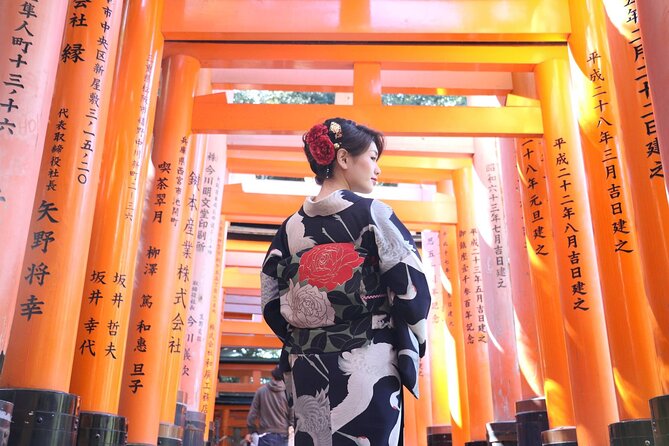
- Fushimi Inari with context: Your guide explains symbols, local culture, and the shrine’s connection to politics.
- Licensed English-speaking guide: The experience is built around walking and interpretation, not a private vehicle.
- Private activity: Only your own group participates, although another part of the description mentions a small-group limit of 15, so confirm the final setup.
- Good booking flexibility: Cancellation is free up to 24 hours before the start time.
What this Kyoto tour actually includes
This is best understood as a flexible walking tour with a costume experience attached, not as a grand bus tour of every major temple in Kyoto. The supplied sightseeing list is enormous, covering famous temples, gardens, shrines, markets, castle grounds, imperial sites, and western Kyoto attractions.
In practice, you select two or three places with your guide. That matters. Kinkaku-ji, Fushimi Inari, Gion, and Arashiyama are not close neighbors, so trying to combine too many distant areas would leave you watching the clock. A sensible plan groups nearby sights together.
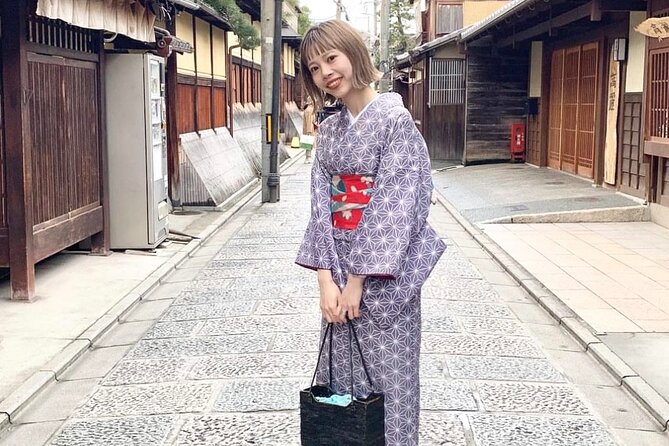
The experience begins with about an hour at the Wargo Kyoto Gion store. The standard kimono plan is designed as a budget introduction, with simple designs that mix cute and elegant touches. Staff dress you as well as they can if the fit is not exact.
Women’s sizes are listed for heights of 150 to 170 centimeters, and men’s sizes for 165 to 200 centimeters. If you fall outside those ranges, or want a highly specific style, keep your expectations modest. This is a standard rental plan, not a formal custom dressing session.
After the fitting, you meet your licensed local English-speaking guide in Kyoto and continue on foot. There is no private vehicle included. You pay for trains, buses, taxis, admission, lunch, and personal purchases yourself.
The price is $162.52 per person. That can be fair for a private six-hour outing with a kimono session and a guide, especially if you are sharing the cost with family or friends. It is less attractive if you expected entrance tickets, transport, or an all-day driver to be covered. I would compare the total cost, not just the headline price.
More kimono and yukata rentals:
- Kimono Tea Ceremony at Kyoto Maikoya, NISHIKI
★ 5.0 · 911 reviews - Kyoto: Kimono Rental with Hairstyling and Accessories
★ 4.8 · 653 reviews - Kyoto: Kimono Tea Ceremony at Orizuruya Gion
★ 4.9 · 618 reviews
Choosing the right two or three sights
The tour works best when you decide what kind of Kyoto day you want. The list allows for several different styles.
For classic Kyoto, choose Kinkaku-ji, Ryoan-ji, and perhaps Nijo Castle. For eastern Kyoto, combine Ginkaku-ji, Honen-in, Nanzen-ji, Kiyomizu-dera, or Kennin-ji. For a shrine-focused morning, make Fushimi Inari one of your main stops and add nearby Tofuku-ji.
Do not assume the 15-minute entries in the sightseeing list are fixed visits. They are planning references, and several are too short for a meaningful visit. Fifteen minutes at a temple may cover the approach and a quick look, but not the full grounds, gardens, or indoor areas.
Some places also require more planning than others. Shugakuin Imperial Villa is managed by the Imperial Household Agency, while Kokedera, also called Saiho-ji, has controlled access. The information provided does not say that reservations or admission arrangements are handled for you, so ask before putting either on your list.
Byodoin is in Uji, outside central Kyoto, and the tour warns that extra travel time is expected. It may be worthwhile for its Phoenix Hall, a Japanese National Treasure and UNESCO World Heritage site, but it is a poor match for a day already packed with northern or eastern Kyoto.
Fushimi Inari beyond the red gates
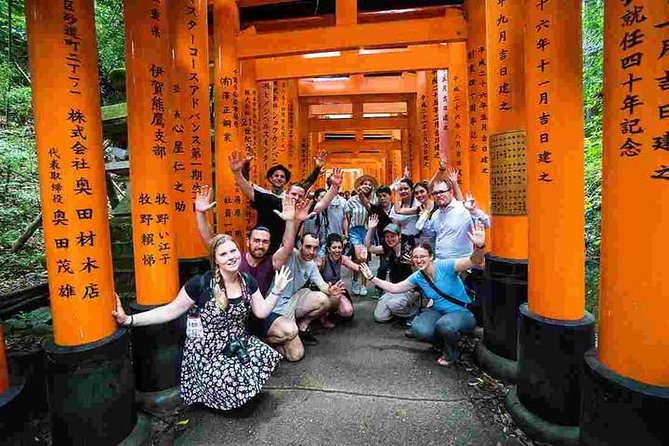
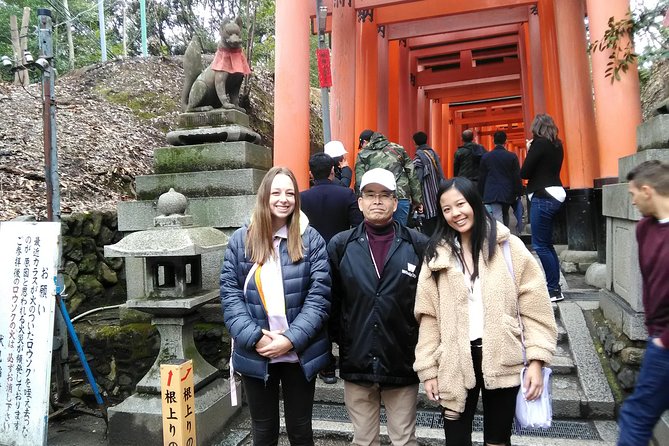
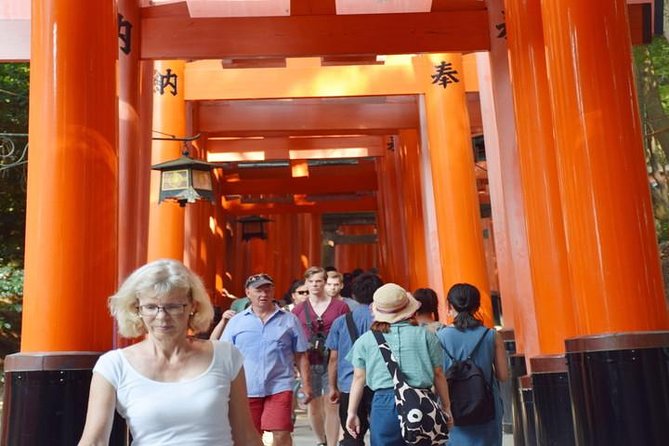
Fushimi Inari-taisha is the clearest reason to book this with a guide. On your own, it is easy to walk through a short section of vermilion torii, take a photograph, and leave without understanding what you are seeing.
The guide’s role is to explain the shrine’s origins, local culture, and the symbols that many people pass without noticing. The tour description also points to the way politics changed the shrine over time. That kind of explanation turns a dramatic corridor into a place with layers of meaning.
The detailed praise for guide Yasuko is useful here. She was specifically appreciated for making a short visit feel unhurried, explaining things carefully, and helping the group pass through the waves of people. That is practical help, not just storytelling. Fushimi Inari can become difficult for a first-time visitor when the paths fill up.
Go early if photographs matter to you. One review gives the same advice, noting that the shrine becomes crowded around midday and that taking pictures gets harder. The tour does not promise an empty path, but a guide can help you use your time better.
The shrine is also a good place to consider the kimono choice. A kimono makes memorable photographs, but walking in traditional clothing for long periods may be less comfortable than ordinary clothes. Ask your guide to keep the route realistic for your group.
The kimono fitting in Gion
The kimono session is a pleasant way to begin, but it is important to see it for what it is. The Standard Kimono Plan offers an easy introduction to wearing kimono, with a selection of simple designs. It is not described as a private photo shoot, a tea ceremony, or a formal cultural lesson.
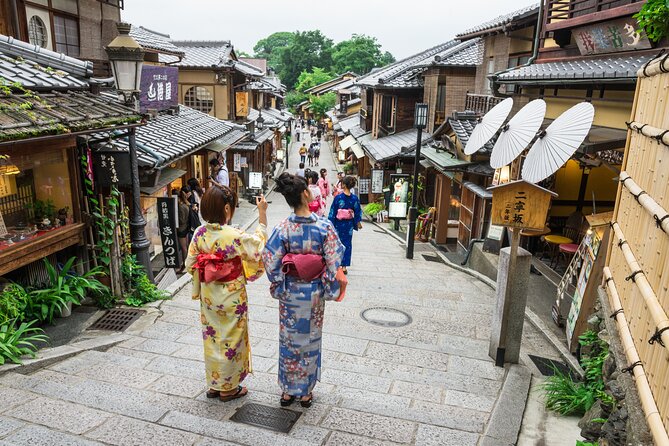
The location in Gion gives the day a strong Kyoto setting. After dressing, you may be able to see historic streets and traditional districts depending on the route you choose, but the included sightseeing portion remains limited to two or three selected places.
Sizing is the practical concern. Women should note the listed range of 150 to 170 centimeters, and men should note 165 to 200 centimeters. Staff will make the best fit possible when a perfect size is not available, but you should not book this expecting a made-to-measure result.
The tour information says the start time may vary, and that the kimono portion is estimated at about one hour from the tour start. Confirm the meeting time and the order of the day before you set up other plans.
A few more Kyoto experiences worth comparing
- Fushimi Inari Hidden Hiking Tour (Private Option Available)
★ 5.0 · 1,750 reviews - Private Kyoto Tour with a Local, Highlights & Hidden Gems, Personalised
★ 5.0 · 1,543 reviews - Kyoto 6hr Private Tour with Government-Licensed Guide
★ 5.0 · 1,369 reviews - 10 Must-see Spots in Kyoto One Day Private Tour (up to 7 people)
★ 5.0 · 1,108 reviews
Northern Kyoto: gold, rocks, and quiet gardens
Kinkaku-ji, the Golden Pavilion, is a Zen temple whose top two floors are covered in gold leaf. It was originally the retirement villa of shogun Ashikaga Yoshimitsu and later became a temple. The pavilion is the visual prize, but the grounds and pond setting help explain why the site remains so popular.
The drawback is simple: a short stop may feel rushed, and the temple is often busy. Admission is not included. If Kinkaku-ji is your priority, make it one of your two or three choices rather than squeezing it between distant sites.
Ryoan-ji offers a different sort of visit. Its famous rock garden asks you to slow down and look closely. The site began as an aristocratic villa during the Heian period before becoming a Zen temple. A guide can help you understand the setting, but no explanation can replace sitting quietly for a few minutes.
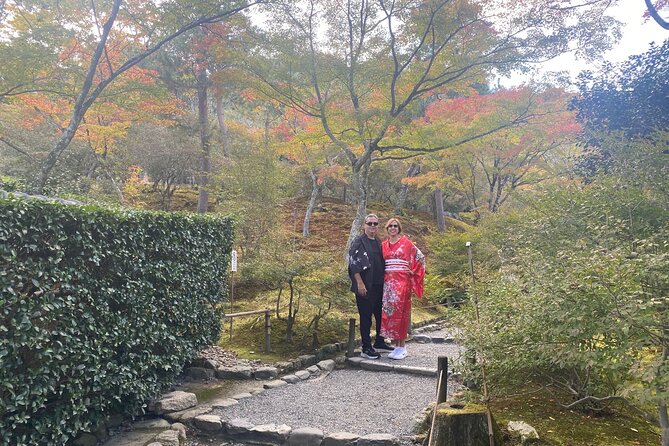
Taizo-in, a subtemple of Myoshin-ji, is known for its garden and is recommended in every season. It is a better choice for you if gardens matter more than headline sights. Daitoku-ji offers another garden-centered option, with temples within the larger temple complex and several places tied to Zen practice.
Eastern Kyoto: silver, moss, and major temple grounds
Ginkaku-ji, the Silver Pavilion, was built in 1482 as shogun Ashikaga Yoshimasa’s retirement villa. Despite its name, it is not covered in silver. Its appeal comes from the restrained design, garden paths, and setting along Kyoto’s eastern mountains.
Nearby Honen-in is more atmospheric. The approach leads to a moss-covered gate, followed by sand mounds and a quiet temple setting. The stop is brief in the listed schedule, so you will get the most from it if you value mood and scenery rather than a long historical visit.
Nanzen-ji has spacious grounds at the foot of the Higashiyama mountains and is one of Japan’s major Zen temples. It gives you room to walk and a sense of scale that smaller temple stops lack. Tofuku-ji, in southeastern Kyoto, is especially known for autumn color, though its large grounds can reward a visit at other times too.
Kiyomizu-dera is one of Kyoto’s best-known temples and receives a one-hour guided treatment in the description, though the stop time elsewhere is listed as only 10 minutes. That contradiction should be clarified before booking. If you want a proper visit, tell the guide that Kiyomizu-dera is a priority and do not plan too many additional sites.
Kennin-ji is close to Hanamikoji and Shijo streets. Its spacious grounds and dry gardens make it a useful Gion-area choice, especially if you want to stay near the kimono rental location. The listed stop is only one minute, which is clearly not enough for a normal temple visit, so treat that timing as unreliable.
Markets, palaces, and city streets
Nishiki Market is Kyoto’s Kitchen, a narrow five-block shopping street lined with more than 100 shops and restaurants. It is a good choice when you want food and everyday city life mixed with temple visits. The listed 10-minute stop is enough for a quick look, not a relaxed food wander.
The Kyoto Imperial Palace occupies spacious grounds and served as the Imperial Family’s residence until 1868, when the capital moved to Tokyo. It offers a different side of Kyoto from the temple circuit, with imperial history and broad open spaces.
Nijo Castle was built in 1603 as Tokugawa Ieyasu’s Kyoto residence. It is a UNESCO World Heritage site and a strong pick if you want political and military history rather than another Zen garden.
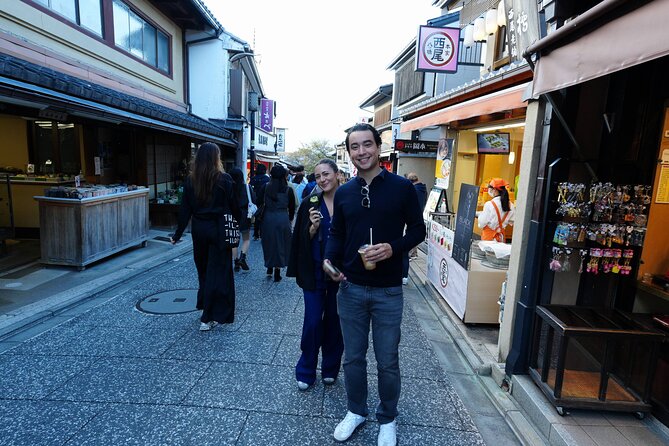
Pontocho and Gion are atmospheric districts of narrow streets and traditional dining. A guide can make these areas less confusing for a first visit, but the information provided does not promise a geisha encounter or a meal. Treat them as walking areas, not guaranteed performances.
Arashiyama, Uji, and the distance problem
Arashiyama’s Togetsukyo Bridge and bamboo groves are among Kyoto’s best-known sights. The bridge dates to the Heian period in origin and was most recently rebuilt in the 1930s. The bamboo paths offer a pleasant walk, though combining Arashiyama with Fushimi Inari or northern Kyoto in six hours could leave very little time at each place.
Byodoin Temple in Uji is another outlier. Its Phoenix Hall is the reason to go, but extra travel time is expected because it lies outside central Kyoto. Choose it only if the temple is more important to you than seeing several central Kyoto sights.
The tour’s flexibility is useful, but geography still wins. Ask your guide to build a route with short transfers. A day spent crossing Kyoto can be less satisfying than two well-chosen temples in one area.
Group size, guide service, and practical value
The experience is described as private, with only your group participating. Elsewhere, it mentions a maximum small-group size of 15 and group discounts. Those details do not fully match, so confirm whether your booking is strictly private and whether the group-size limit applies to your specific departure.
The included service is a licensed local English-speaking guide, a meeting on foot in Kyoto, and the standard kimono experience. That gives you interpretation and planning help, but not a car, driver, lunch, transport, or general admission.
At $162.52 per person, value depends on how much guidance you want. I see good value for first-time visitors who want cultural explanations, help at a crowded shrine, and a flexible route. The price is harder to justify for confident independent visitors who only want kimono rental and photographs.
Most people can participate, the tour is near public transportation, and service animals are allowed. Confirmation arrives within 48 hours, subject to availability. Free cancellation applies if you cancel at least 24 hours before the local start time. Late cancellations and late changes are not accepted.
Should you book this Kyoto experience?
Book it if you want a guided introduction to Kyoto rather than a checklist of temples. It suits first-time visitors, families, and anyone who values having a local guide explain symbols and history while keeping the day moving. Fushimi Inari is the strongest match, especially if you want help with crowds and a more meaningful visit.
Choose carefully if your priority is a full kimono photography package, a private car, or visiting many distant sights in one day. Ask about the conflicting timing for Kiyomizu-dera, confirm the private group arrangement, and agree on two or three geographically sensible sites before you start.
My pick would be the kimono fitting, Fushimi Inari, and one nearby temple such as Tofuku-ji or Kiyomizu-dera, depending on the route. That gives you a memorable cultural start, a shrine visit with real explanation, and enough breathing room to enjoy Kyoto rather than race through it.
FAQ
How long does the tour last?
The tour duration is approximately six hours, including the kimono experience and visits to two or three selected Kyoto sights.
How many sights will I visit?
You will choose two or three sights with your guide from the provided list. You will not visit every location shown in the sightseeing options.
Is the kimono rental included?
Yes. The standard kimono experience is included, with dressing at Kyoto Kimono Rental wargo’s Kyoto Gion store.
Are kimono sizes limited?
Yes. The listed range is 150 to 170 centimeters for women and 165 to 200 centimeters for men. Staff will dress you as well as possible if an exact fit is unavailable.
Is transportation included?
No. Transportation fees are not included, and the tour does not provide a private vehicle. You meet the guide in Kyoto and travel on foot, using public transportation or other options at your own expense.
Are admission fees included?
Admission fees are generally not included. Guide entry fees are covered only for sights specifically listed under the tour’s expectations.
Can I cancel for a full refund?
Yes, if you cancel at least 24 hours before the experience start time. Cancellations or changes made less than 24 hours before the start are not accepted for a refund.
Recently added around Kyoto
- Kyoto Kimono Rental CHAMATSU|Kimono/Yukata Rental FamilyPlan★ 5.0 · 3 reviews
- Higashiyama | Kyoto: Sakura Season Private Rickshaw Tour★ 5.0 · 3 reviews
- Kyoto: Half-Day Private Guided Tour to the Old Town of Gion★ 4.4 · 3 reviews
- Nara Private Customizable Half Day Tour★ 5.0 · 3 reviews
- Kansai Region Hiking Adventure in Nara Kobe Kyoto and More★ 5.0 · 3 reviews
- Full Day Nara Deer, Temple, Shrine, Activities & Tea Ceremony★ 5.0 · 3 reviews
- Nara: Essential Private Tour with Deer Park and Temples★ 5.0 · 3 reviews
- Hiking Tour for Sacred Sites in Kyoto with a Guide★ 5.0 · 3 reviews
Kyoto Kimono Rentals, compared.
KYOTO Tea Ceremony with kimono near by Imamiya Jinjya Shrine
Read our review →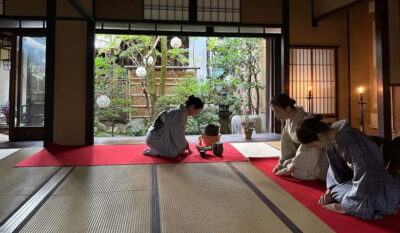
Kimono and Tea Ceremony Experience at Cultural Asset
Read our review →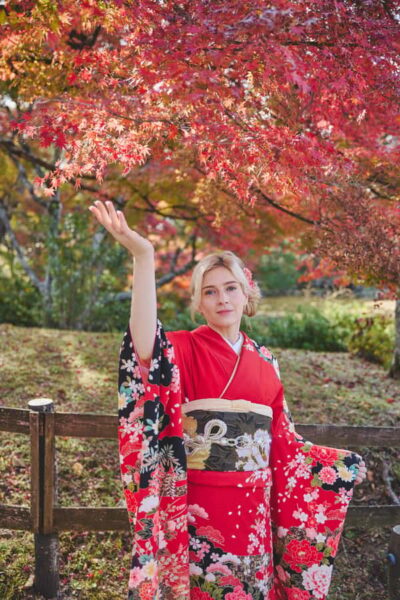
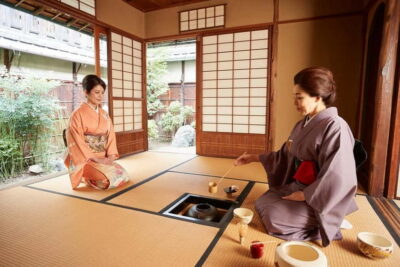
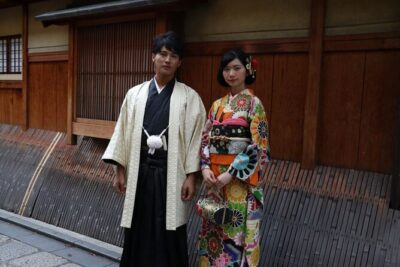
Family-Friendly Kimono & Yukata Experience at WARGO
Read our review →Browse the lists this tour appears in