
REVIEW · CYCLING TOURS
KIYOTO’s Kyoto Private E-Cycling Tour: Highlights & Hidden Gems
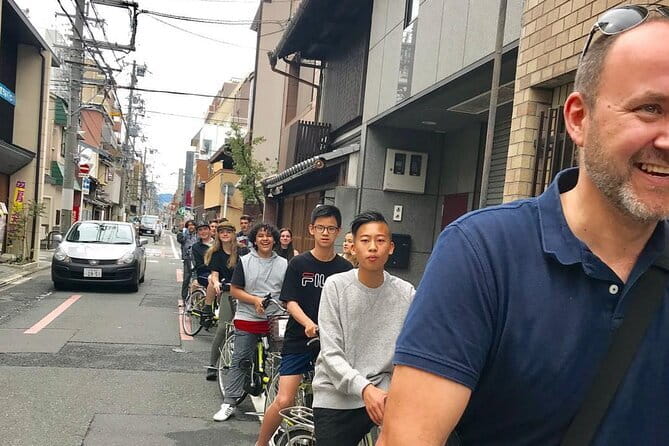
Kyoto’s best feature is its mix of grand temples, quiet lanes, riverside paths, and ordinary neighborhoods. This private e-bike tour lets you connect those pieces in one long ride, from the vermilion gates of Fushimi Inari to Gion’s wooden streets and the Kamogawa Delta.
I like two things right away: the e-bike saves time and energy, and the private format lets your guide adjust the route. Guides such as Yonnie, Yuhei, Mana, Yuichi, Kento, Takuma, and Polina have been praised for friendly conversation, local stories, family skills, and safe riding through busy streets.
The main consideration is stamina. You must already know how to ride a bicycle, and four to eight hours in Kyoto traffic is a serious outing. Paid temple admission, food, and drinks cost extra, and some stops are brief photo visits rather than full temple tours.
In This Review
- Key points to know before you book
- Why an e-bike works so well in Kyoto
- Starting at Higashi Hongan-ji and riding south
- Fushimi Inari and the Tofuku-ji area
- Yasaka Pagoda, Yasui-Konpiragu, and Gion
- Heian Jingu, Nanzen-ji, and the old aqueduct
- Philosopher’s Walk and Honen-in
- Shimogamo, the Kamogawa Delta, and Kyoto’s everyday side
- Kyoto Gyoen, central streets, and the final ride
- What $198.15 buys you
- Guides, pace, and the feel of the day
- Practical details and possible drawbacks
- Should you book this Kyoto e-bike tour?
- FAQ
- How long does the Kyoto private e-cycling tour last?
- Is the electric bike included?
- Can children join the tour?
- Is this a private tour?
- Are temple and shrine entrance fees included?
- Where does the tour start and finish?
- What happens if I need to cancel?
Key points to know before you book
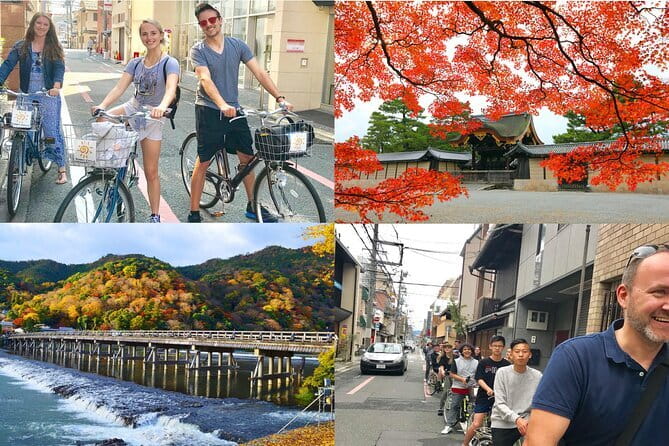
- Cover much of Kyoto in one ride: The route can link southern Kyoto, Higashiyama, northern shrines, the Imperial Palace area, and central shopping streets.
- A private guide shapes the day: You can focus on places you have not yet seen or ask for a slower, more local ride.
- E-bikes are included: A normal bicycle is also available, while children’s bikes and child seats must be requested in advance.
- The strongest praise goes to the guides: Yonnie, Yuhei, Mana, Yuichi, Kento, Takuma, and Polina are noted for humor, cultural explanation, patience, and family-friendly pacing.
- The route favors variety over long visits: You may see 20 or more places, but several stops last only 10 to 15 minutes.
- The price buys time and flexibility: At $198.15 per person, the value improves for people who want a private day and would otherwise spend hours arranging transport.
Why an e-bike works so well in Kyoto
Kyoto’s central sights are spread farther apart than a map may suggest. Fushimi Inari is in the south, Gion lies east of the center, Nanzen-ji and Philosopher’s Walk sit farther north, and Shimogamo is beyond that. Walking between all of them would take much of your day.
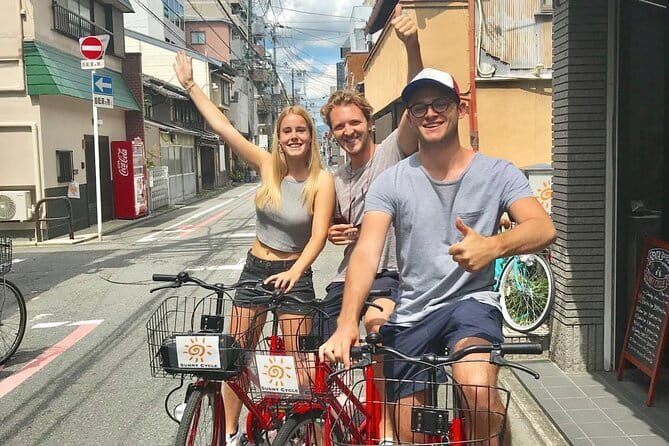
An e-bike gives you a practical middle ground. You are outdoors and close to the city, but you do not spend the entire day on foot. The supplied bikes are described as comfortable and well maintained, and the electric assistance helps make a long route more manageable.
The private setup matters just as much. If you have already seen Fushimi Inari, your guide can spend more time in Gion or northern Kyoto. If children are along, the ride can be adjusted to suit them. The experience is not a fixed coach excursion with a large crowd waiting for you.
Still, Kyoto streets can be busy, and you need reasonable fitness. The guide handles navigation, but you remain responsible for riding safely and following the group. Ask for a children’s bike or child seat when booking, since supplies are limited.
More bike days around Kyoto:
- Hidden Kyoto E-Biking tour
★ 5.0 · 1,843 reviews - Bike Tour Exploring North Kyoto plus Lunch
★ 5.0 · 1,087 reviews - Arashiyama Bamboo Forest & Hidden Gems Bike Tour (Early Bird)
★ 5.0 · 613 reviews
Starting at Higashi Hongan-ji and riding south
The meeting point is Sunny CycleJapan at 477 Ōhorichō in Kyoto’s Shimogyo Ward, near public transportation. The tour may begin around Higashi Hongan-ji, a major Jodo Shinshu temple founded in 1602.
Higashi Hongan-ji gives you an early look at Kyoto’s scale. Its Goeido, or Founder’s Hall, is an imposing wooden building, and the open temple grounds offer a calm start before the ride moves into busier streets. This is a useful first stop if you want religious context before seeing the more famous sites.
The schedule gives the temple less detail than the named stops, so do not assume you will have a long interior visit. The real purpose is to begin connecting Kyoto’s Buddhist traditions with the city you see from the bicycle.
Fushimi Inari and the Tofuku-ji area
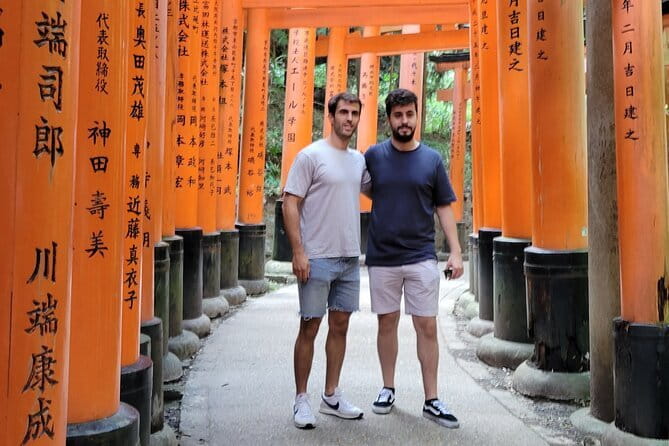
Fushimi Inari-taisha is one of Kyoto’s essential stops. It is the head shrine of more than 30,000 Inari shrines in Japan, and its trails are known for thousands of bright red torii gates climbing into the wooded hills.
The planned visit is about 40 minutes, with no admission fee. That is enough to see the famous lower gate passages and feel the scale of the shrine, though not enough for a full climb through every torii. If you want the mountain trail experience, ask your guide how much time can be given to it.
The ride then reaches Komyo-in, a sub-temple of Tofuku-ji. Its quiet garden is especially appealing in autumn, when maple leaves contrast with moss-covered ground. The stop lasts about 20 minutes, and admission is not included, so confirm the current fee with your guide.
Tofuku-ji itself receives about 10 minutes. The temple is famous for the Tsutenkyo Bridge and its views over maple trees, especially in fall. Ten minutes is a quick look, not a full exploration of the temple grounds, but the short stop keeps the larger route moving.
This southern section is a good example of the tour’s approach: you see major names, then add a smaller, calmer place nearby. The tradeoff is that the route favors breadth rather than long temple visits.
Yasaka Pagoda, Yasui-Konpiragu, and Gion
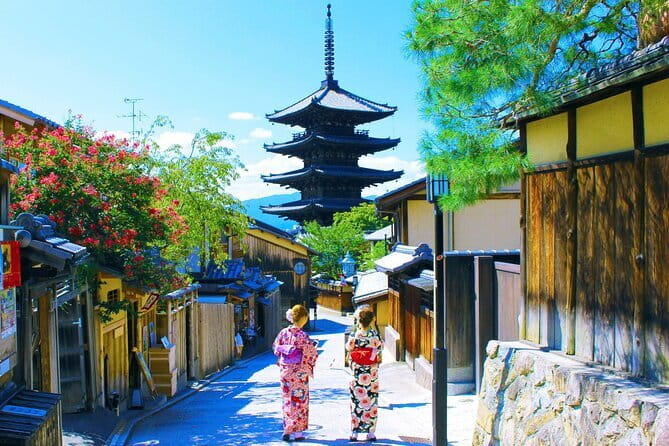
Hōkan-ji Temple, better known for Yasaka Pagoda, gives you one of Kyoto’s most recognizable street scenes. The pagoda rises above the historic Higashiyama district, where narrow streets and traditional buildings create some of the city’s most photographed views.
The stop is about 20 minutes and admission is listed as free. This is mainly an exterior and neighborhood visit, so it works well for photographs and orientation. The surrounding streets can be crowded, and bicycles may not be practical on every narrow stretch.
Yasui-Konpiragu takes about 10 minutes. The shrine is associated with breaking unwanted relationships and forming better ones. Its stone monument has a hole through which worshippers pass as part of a prayer ritual. Your guide can explain the custom and the shrine’s place in everyday Japanese religious practice.
The tour then moves along Hanamikoji Street, a traditional lane in Gion lined with tea houses and restaurants. At roughly 10 minutes, you will get a quick sense of the district rather than a full evening in its dining quarter. Treat the area respectfully, especially around private buildings and people working in the neighborhood.
Tatsumi Bridge and the Shirakawa Canal offer a gentler side of Gion. The small bridge crosses the Shirakawa River, while willow-lined canals and machiya houses create a quieter view than the main shopping lanes. A 10-minute bridge stop and a 15-minute canal visit are short, but they let you see why this part of Gion is so popular.
The River Terrace adds another 15 minutes beside the Shirakawa. Stone paths, benches, and flowing water give you a natural pause in the middle of the urban route. I would value this part most in a private tour, since you can ask to linger if the pace allows.
A few more Kyoto experiences worth comparing
- Fushimi Inari Hidden Hiking Tour (Private Option Available)
★ 5.0 · 1,750 reviews - Private Kyoto Tour with a Local, Highlights & Hidden Gems, Personalised
★ 5.0 · 1,543 reviews - Kyoto 6hr Private Tour with Government-Licensed Guide
★ 5.0 · 1,369 reviews - 10 Must-see Spots in Kyoto One Day Private Tour (up to 7 people)
★ 5.0 · 1,108 reviews
Heian Jingu, Nanzen-ji, and the old aqueduct
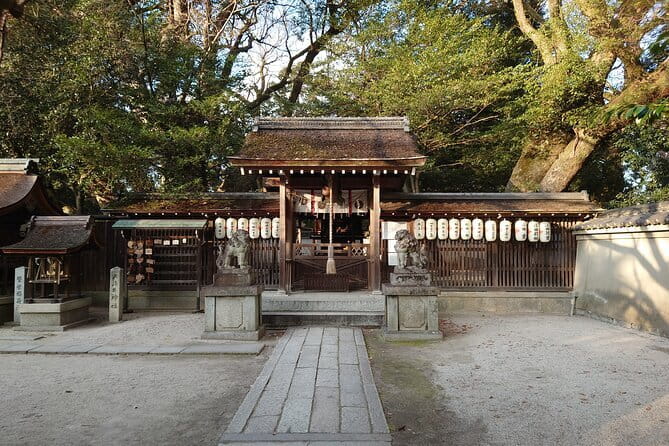
The huge vermilion torii of Heian Jingu is a roadside landmark in its own right. At 24.2 meters high, it was built in 1929 to mark the enthronement of Emperor Showa. The brief 15-minute stop is mainly for viewing and photographs.
Nanzen-ji follows with another 15-minute visit. Founded in 1291 by Emperor Kameyama, it is an important Rinzai Zen temple with spacious grounds and gardens. The itinerary does not promise a paid interior tour, so think of this as a first look at the temple complex.
Nearby, Nanzenji Suirokaku is a brick aqueduct completed in 1888. It carried water from Lake Biwa and has an unusual European-inspired appearance within the temple grounds. The 10-minute stop is worthwhile because it shows a different chapter of Kyoto’s past, one tied to modern infrastructure rather than only temples and shrines.
This cluster works well by bicycle. The three sights sit close enough to connect without wasting time on transfers, yet each offers a different visual experience: a giant gate, a Zen temple, and an industrial-era brick structure.
Philosopher’s Walk and Honen-in
Philosopher’s Walk follows the Biwa Canal for about two kilometers between the Wakakusa area and the northern Higashiyama temple district. The tour allows around 30 minutes, so you will see a section rather than walk the entire path at an unhurried pace.
This is one place where the bicycle may not always be the main attraction. The path is a scenic pedestrian route, and your guide may have you walk portions of it or use nearby streets. In spring, the canal corridor is associated with cherry blossoms; in autumn, the trees around nearby temples can be striking.
Honen-in receives about 15 minutes. This quiet Zen temple sits among trees and has a calmer mood than the large headline sights. The stop is a good counterpoint to Fushimi Inari and Gion, though the brief timing means you should not expect a long meditation in the grounds.
The value here is not simply another temple checked off a list. You get a sense of how Kyoto’s religious spaces often sit beside canals, wooded slopes, and residential streets.
Shimogamo, the Kamogawa Delta, and Kyoto’s everyday side
Shimogamo Jinja, formally Kamomioya Shrine, is one of Kyoto’s oldest Shinto shrines, with roots reaching back to around 90 BC. The grounds are associated with the Tadasu no Mori woodland, and the 30-minute stop gives you more time than several earlier visits.
This is a strong place to hear about Shinto customs and the long relationship between shrine, forest, and city. Admission is free, making it an easy addition to the day.
The Kamogawa Delta is where the Kamo and Takano Rivers meet. Its stepping stones are shaped like turtles and birds, and the area is popular for sitting, crossing the water, and watching local life. The tour allows about 15 minutes, enough for photographs and a short break.
The river section helps keep the experience from becoming a parade of monuments. You see where people spend time outdoors, not just the places built for sightseeing. If your group wants a slower rhythm, this is a sensible spot to request a little extra time.
Kyoto Gyoen, central streets, and the final ride
The route may continue through Kyoto Gyoen, the large park around the former Imperial Palace. It combines open green space with historic buildings and is used by locals for relaxation throughout the year. The supplied itinerary does not assign a numbered stop here, so the exact time may depend on your chosen route.
Ebisugawa Tobiishi, or the stepping stones at Kojin, crosses the Ebisugawa, a tributary of the Kamo River. It is a small, playful stop where you can hop across stones and see the water at close range. The visit takes about 10 minutes.
Teramachi-dori offers a change of pace. This north-south shopping street has traditional goods, cafes, clothing shops, and everyday Kyoto commerce. Ten minutes is enough for a quick look, but you may want to return later if shopping is a priority.
Sanjo Street is another central corridor, with restaurants, cafes, historic buildings, and easy access to the Kawaramachi and Kamo River areas. Like Kyoto Gyoen, it appears as part of the route without a numbered time slot, so your guide can use it as a connection or add it according to your interests.
The activity ends back at the meeting point. That makes the start and finish simple, though you should allow enough time to return the bikes and continue to your next plan.
What $198.15 buys you
At $198.15 per person, this is not a budget bicycle rental. You are paying for the bike, a private guide, route planning, local explanation, and the ability to cover a large part of Kyoto in one outing.
The price makes the most sense if you have only a short stay, want to see both southern and northern Kyoto, or prefer not to work out several train, bus, and walking connections. It also has extra value for families and small groups because the guide can adjust the pace and choose places that suit everyone.
The cost is harder to justify if you want slow temple visits, a full meal stop, or extensive shopping. Food and drinks are not included, and paid entrances are extra. Group discounts are available, so check how the total changes for your party.
The duration is listed as approximately four to eight hours. That wide range is important. A four-hour ride will need a tighter route, while an eight-hour day can include more of the northern sights and longer pauses.
Guides, pace, and the feel of the day
The strongest part of this experience is the human side. Yonnie is praised for history, culture, and safe navigation through crowded streets. Yuhei has experience keeping children engaged and adjusting the schedule for families. Mana is described as helpful before the ride as well as during it, while Yuichi is known for an entertaining style.
Kento, Takuma, and Polina also appear as guides who bring humor, local anecdotes, and a relaxed manner. You cannot choose a particular guide unless the company confirms it, but the range of names gives you a useful sense of the team’s style.
The private format also lets you ask for locations you have not yet seen. That matters in Kyoto, where a standard route can repeat sights you visited yesterday. Tell the guide your priorities at the start: temples, street life, photography, gardens, family pacing, or simply fewer crowds.
Practical details and possible drawbacks
You receive an electric bike, though a standard bicycle can be provided. Participants must be able to ride, and a moderate level of fitness is expected. Children’s non-electric bikes and child seats are limited, so request them when booking.
Temple and shrine entry fees are not included. Most listed stops show free admission, but Komyo-in specifically notes that its admission is extra. Food and drinks are also your responsibility, so plan for a break during a longer ride.
The activity is private, and confirmation arrives at booking. It is near public transportation, but the meeting point is in Shimogyo Ward, so check your route before the start time.
Free cancellation is available up to 24 hours before the local start time. Changes or cancellations inside that window are not refunded.
Should you book this Kyoto e-bike tour?
Book it if you want to see a broad slice of Kyoto in one day, value personal pacing, and are comfortable riding in city traffic. It is particularly well suited to first-time visitors, families with cycling ability, and anyone who finds Kyoto’s scattered sights tiring to connect on foot.
Choose something slower if your main goal is long temple visits, extended garden time, or a carefully paced food experience. This tour gives you many impressions rather than one deep stay at each site.
For most active visitors, the private e-bike format is the key advantage. You get Fushimi Inari, Gion, Nanzen-ji, Philosopher’s Walk, Shimogamo, river paths, and ordinary central streets in one coherent day, with a guide who can help the route feel personal instead of mechanical.
FAQ
How long does the Kyoto private e-cycling tour last?
The experience lasts approximately four to eight hours. The exact length and route can be adjusted for your private group.
Is the electric bike included?
Yes. An electric bike is included, and a normal cycle is also available.
Can children join the tour?
Yes, children can join if they can ride a bicycle. Children’s non-electric bikes and child seats are available in limited quantities and must be requested when booking.
Is this a private tour?
Yes. Only your group participates, allowing the guide to adjust the pace and route to your needs.
Are temple and shrine entrance fees included?
No. Paid entrance fees are not included. Most listed stops have no admission charge, while Komyo-in notes that admission is extra.
Where does the tour start and finish?
The tour starts and ends at Sunny CycleJapan, 477 Ōhorichō, Shimogyo Ward, Kyoto, postal code 600-8419.
What happens if I need to cancel?
You can receive a full refund if you cancel at least 24 hours before the local start time. Cancellations or changes made less than 24 hours beforehand are not refunded.
Recently added around Kyoto
- Higashiyama | Kyoto: Sakura Season Private Rickshaw Tour★ 5.0 · 3 reviews
- Kyoto Kimono Rental CHAMATSU|Kimono/Yukata Rental FamilyPlan★ 5.0 · 3 reviews
- Kyoto: Half-Day Private Guided Tour to the Old Town of Gion★ 4.4 · 3 reviews
- Nara Private Customizable Half Day Tour★ 5.0 · 3 reviews
- Full Day Nara Deer, Temple, Shrine, Activities & Tea Ceremony★ 5.0 · 3 reviews
- Nara: Essential Private Tour with Deer Park and Temples★ 5.0 · 3 reviews
- Kansai Region Hiking Adventure in Nara Kobe Kyoto and More★ 5.0 · 3 reviews
- Hiking Tour for Sacred Sites in Kyoto with a Guide★ 5.0 · 3 reviews
Cycling Tours, compared.
Arashiyama Bamboo Forest & Hidden Gems Bike Tour (Early Bird)
Read our review →
5 Top Highlights of Kyoto Full Day Bike Tour (E-bike option)
Read our review →
Full Day Biking Tour Exploring the Best of Kyoto
Read our review →
Afternoon Kyoto Bike Tour: Bamboo Forest, Monkeys & Hidden Spots
Read our review →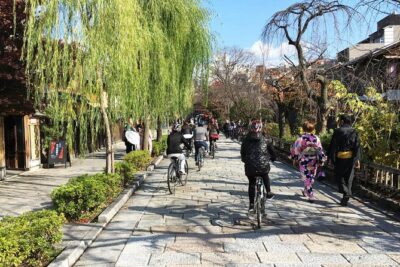
South Kyoto in a Nutshell: Gentle Backstreet Bike Tour!
Read our review →Browse the lists this tour appears in