
REVIEW · CYCLING TOURS
Japan’s Rural Life & Nature: Private Half Day Cycling Near Kyoto
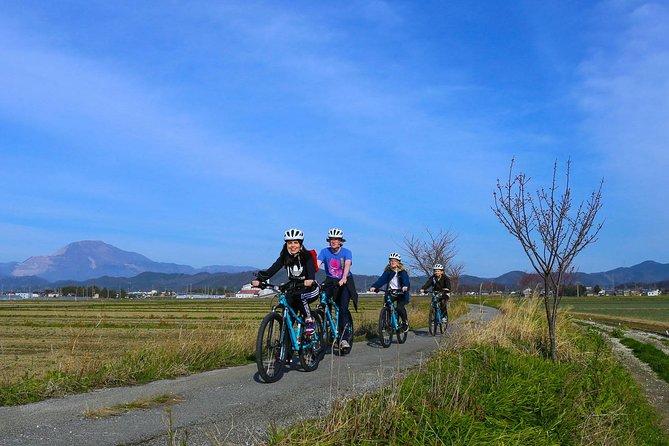
A short bullet-train ride from Kyoto carries you to Maibara, where the city quickly gives way to rice paddies, village lanes, temples, and mountain views. This private 13-kilometer ride offers a close look at ordinary rural Japan, not another circuit of famous Kyoto sights. Guide Tako is fluent in English and brings strong knowledge of local history and culture.
I like the easy pace and the chance to stop at places such as Iwaya Zenkodo Temple, a small mountain shrine with a cave and Inari shrine. I also like the personal format: your own group rides together, and the guide can explain why the farms, villages, and waterways matter.
The main drawback is the price, $255, which is a serious outlay for a 3-to-4-hour activity. The ride is beginner-friendly, but you still need moderate fitness, and the experience depends on good weather.
In This Review
- Key points at a glance
- Why Maibara makes a smart escape from Kyoto
- The 13km ride: easy pace, real countryside
- Saienji and the shape of an old village
- Iwaya Zenkodo Temple, a mountain stop with a cave
- A local spring and the hidden work of water
- Rice fields built from a former lake
- Lake Biwa, Hikone Castle, and building out the day
- What the $255 price really buys
- The guide and the personal touch
- Who should book this ride?
- Practical details before you reserve
- Should you book Japan’s Rural Life and Nature ride?
- FAQ
- Where does the cycling tour start and finish?
- How far do you cycle?
- How long does the experience last?
- Is the ride suitable for beginners?
- Is this a private tour?
- Is an English-speaking guide included?
- Are bicycles and refreshments included?
- Can I visit Lake Biwa or Hikone Castle afterward?
- What happens if the weather is poor?
Key points at a glance
- A 20-minute bullet-train link from Kyoto: Reach Maibara quickly, then trade city streets for quiet farm roads.
- A private 13km route: Your group rides alone with an English-speaking guide, rather than joining a large cycling party.
- Rural history in plain sight: See villages, rice fields, a former inland lake basin, and an old community water source.
- Three distinct cultural stops: Visit Saienji, Iwaya Zenkodo Temple, and a small Inari shrine with a manmade cave.
- Small comforts included: Bicycle use, coffee or tea, water, and snacks are provided.
- An easy add-on day: You can spend extra time at Lake Biwa or Hikone Castle after the ride.
Why Maibara makes a smart escape from Kyoto
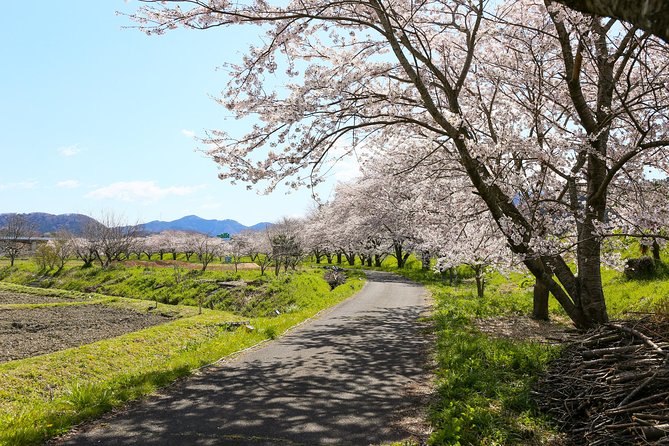
Kyoto gives you temples by the dozen, but it can be hard to see how much of Japan still runs on farms, village ties, and local water. This ride shifts the focus. You begin and end at Maibara Station, in Shiga Prefecture, and spend the middle of the day on back roads around the farming communities that now fall under Maibara’s administration.
The train connection is part of the appeal. From Kyoto, a bullet train ride of about 20 minutes gets you to the start, so you do not need to spend half a day reaching the countryside. The trip feels like a small change of scene rather than a major expedition.
Once you leave the station, the route follows agricultural areas and villages. The point is not speed or athletic achievement. You are there to notice the layout of the fields, the older settlements, and the way local life fits around Lake Biwa and the mountains.
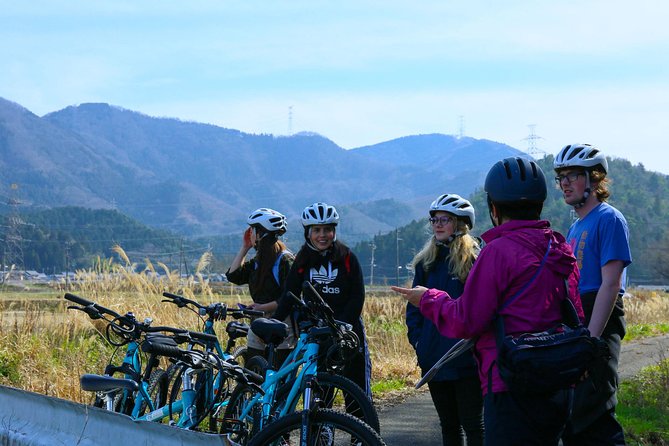
Tako’s role matters here. The ride is much more useful with someone who can explain what you are seeing. Her English is fully fluent, and she uses a binder to support the historical and cultural stories. That helps turn a pleasant bike ride into a readable lesson in the area.
More bike days around Kyoto:
- Hidden Kyoto E-Biking tour
★ 5.0 · 1,843 reviews - Bike Tour Exploring North Kyoto plus Lunch
★ 5.0 · 1,087 reviews - Arashiyama Bamboo Forest & Hidden Gems Bike Tour (Early Bird)
★ 5.0 · 613 reviews
The 13km ride: easy pace, real countryside
The route covers about 13 kilometers, or roughly 9 miles, over three to four hours. That timing includes the stops, short walks, refreshments, and conversation, so you are not pedaling continuously.
The ride is described as beginner-friendly, and the available information places the route on rural back roads. A past ride continued despite rain and was still considered enjoyable, but you should not treat that as a guarantee of comfortable conditions. This experience requires good weather and is canceled if conditions are poor.
Moderate fitness is the sensible standard. You should be comfortable sitting on a bicycle for several hours and handling a 13-kilometer route. The short hike at Iwaya Zenkodo Temple adds a little effort beyond cycling.
The private setup is a useful advantage. You can ask questions without waiting for a large group, and the guide can pause for photographs or adjust the rhythm to your party. One family found the ride manageable for an 11-year-old, but the supplied details do not specify a minimum age or child-bike arrangements, so ask before booking if you are bringing young children.
Saienji and the shape of an old village
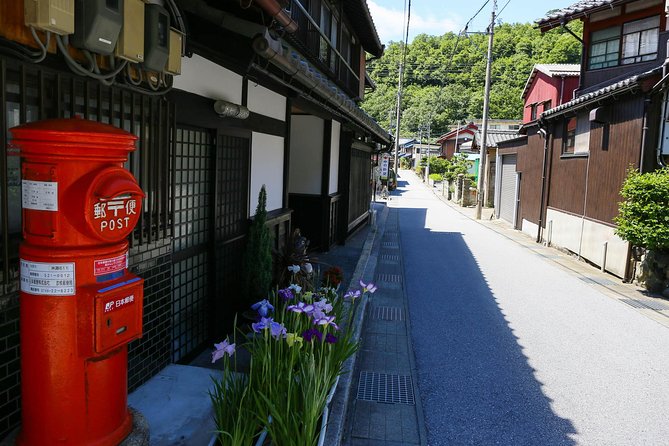
The first cultural stop is Saienji, a Chinese-influenced Zen temple that also gives its name to the surrounding village community. You spend about 15 minutes here, enough to look at the temple and the settlement around it.
This is a modest stop, not a grand temple visit. That is exactly why it works. You get a quick look at a traditional rural village rather than another major monument packed with sightseeing groups. The guide can help you read the connection between the religious site and the small community beside it.
If you want a long temple visit, Saienji may feel brief. Treat it as a window into village life and a pause in the ride, not as the main attraction of the day.
Iwaya Zenkodo Temple, a mountain stop with a cave
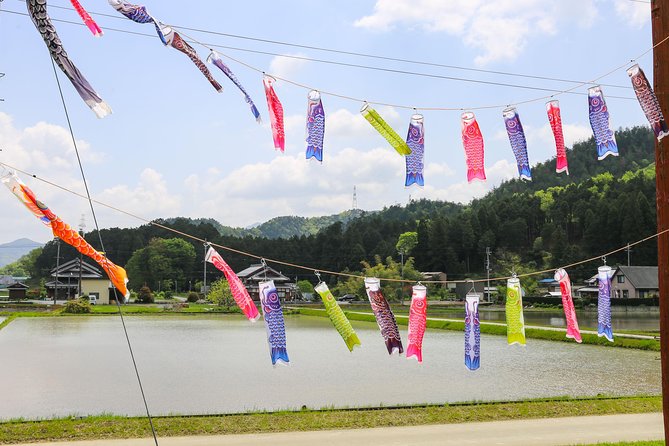
Iwaya Zenkodo Temple brings more variety to the route. The site sits on a small mountain about 120 meters high, and the temple is built into the side of the mountain. You stop for around 30 minutes, including a short hike and refreshments.
There is also an Inari shrine and an old manmade cave with its own unusual past. The combination gives you several things to look at in a compact area: a religious site, a small climb, a shrine associated with Inari worship, and evidence of people shaping the mountain for practical or religious reasons.
This is likely the most physically demanding part of the ride, though the climb is described as short. Wear shoes suitable for walking, not just cycling. The information does not provide trail conditions, so you should expect a simple outdoor stop rather than a fully developed visitor facility.
Coffee, tea, water, and snacks are included, and the temple stop is a natural point for them. Lunch is not included, so do not expect a meal during the half-day outing.
A few more Kyoto experiences worth comparing
- Fushimi Inari Hidden Hiking Tour (Private Option Available)
★ 5.0 · 1,750 reviews - Private Kyoto Tour with a Local, Highlights & Hidden Gems, Personalised
★ 5.0 · 1,543 reviews - Kyoto 6hr Private Tour with Government-Licensed Guide
★ 5.0 · 1,369 reviews - 10 Must-see Spots in Kyoto One Day Private Tour (up to 7 people)
★ 5.0 · 1,108 reviews
A local spring and the hidden work of water
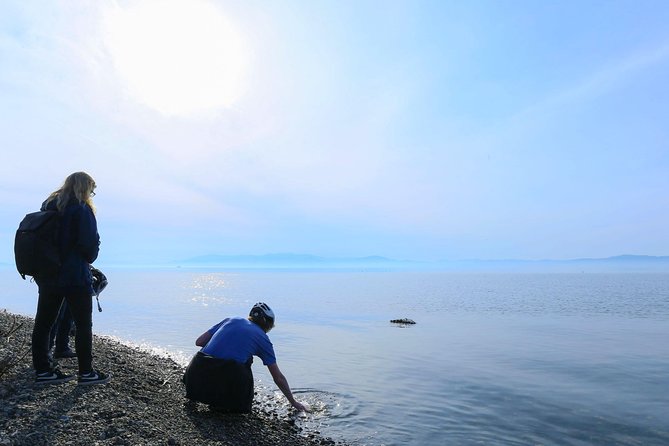
The stop identified as 南世継外れ温泉 is a natural spring shared by the local community for a long time. It forms part of the underground water route between Mount Ibuki and Lake Biwa.
The spring is not treated and is not for drinking. Locals use the water for washing vegetables and other household tasks, making it a practical part of community life rather than a sightseeing fountain. That distinction is worth noting. You are looking at a living local resource, not sampling a regional beverage.
You spend about 10 minutes here. It is a short stop, but it adds an important piece of context. Rural Japan is not only temples and pretty fields. Water, farming, and shared facilities shape daily routines, and this spring makes that visible.
Rice fields built from a former lake
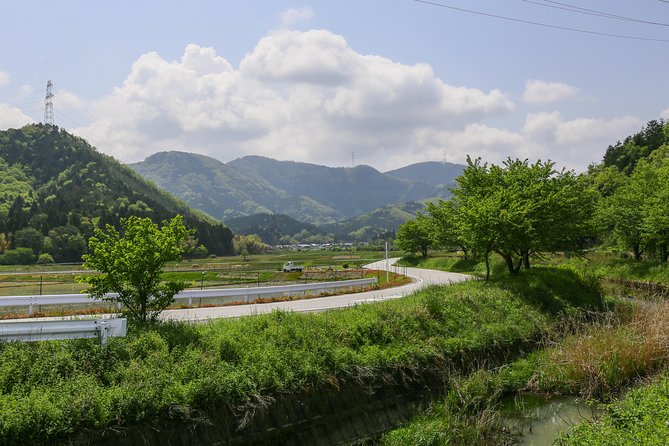
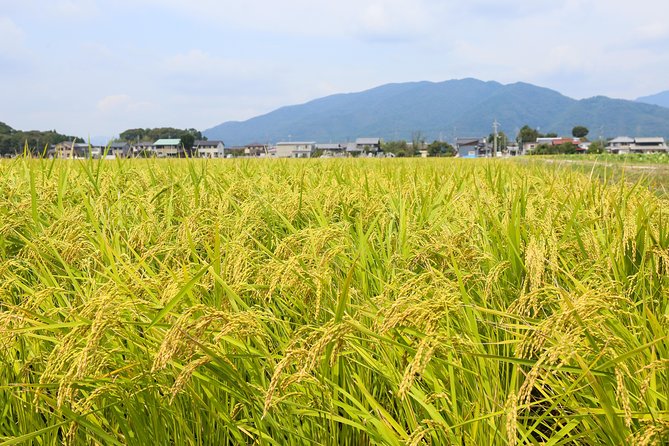
The agricultural section gives the ride one of its best historical details. Before the war, this farm area was a smaller inland lake connected with the broader Lake Biwa region. It was drained and changed into farmland to produce more rice during Japan’s postwar recovery.
As you cycle through the fields, you are seeing more than open countryside. You are passing through an area altered to meet a national need. The paddies carry a story about food, reconstruction, and the physical reshaping of local land.
This part will appeal to you if you like understanding why a place looks the way it does. It is less suited to anyone seeking constant attractions or dramatic scenery. The pleasure comes from the quiet roads, the agricultural views, and the guide’s explanation.
Lake Biwa, Hikone Castle, and building out the day
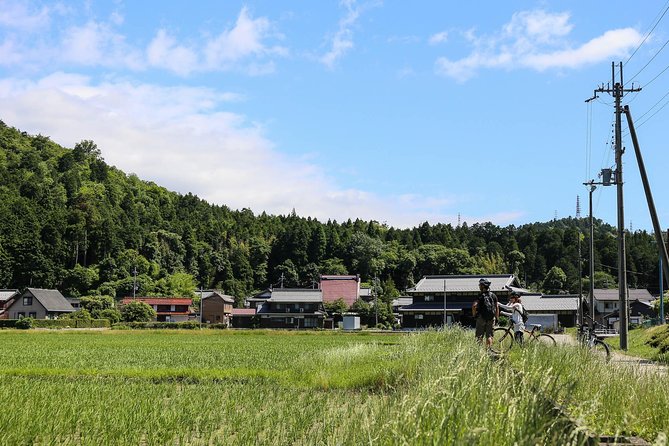
The cycling activity ends back at Maibara Station, but the location gives you options. You can spend more time at Lake Biwa or continue to Hikone Castle if your schedule allows.
The tour itself is not a full Lake Biwa sightseeing day, so check your timing before adding another major stop. Still, the option is useful. You can keep the ride as a focused half-day escape, then decide whether you want more history at Hikone Castle or more time beside the lake.
One guide went beyond the basic route and gave a family a ride to Hikone Castle afterward. That was an extra gesture, not something you should count on as part of the standard package. Plan your own onward transport unless the operator confirms otherwise.
What the $255 price really buys
At $255, this is not a bargain bicycle rental. You are paying for a private experience, an English-speaking guide, bicycle use, refreshments, and the convenience of a quick train connection from Kyoto.
The value depends heavily on your group size. For one person or a couple, the cost is high for a half day. For a small private group, the per-person price becomes easier to justify, especially if you place a high value on direct conversation and a flexible pace. Group discounts are available, though the exact savings are not provided.
You are also paying for access to interpretation. Renting a bicycle and following rural roads on your own would cost less, but you might pass the former lake basin, the community spring, or the village history without understanding what they mean. The guide supplies that missing layer.
I would book this for a special day outside Kyoto, not as a cheap way to get exercise. If your budget is tight, compare the cost with a self-guided train and bicycle outing. If you want local explanation, a private group, and simple logistics, the higher price has a clearer purpose.
The guide and the personal touch
Tako receives especially strong praise for her English, preparation, and grasp of Japanese and local history. She spent time living in the United States, which helps explain why communication is easy for English-speaking visitors.
Her binder is a practical detail. It suggests that the stories are not limited to a few casual facts delivered while riding. You can ask about the villages, the temples, farming, and the area around Maibara, then follow the explanation with something you can see in front of you.
The private format also lets you request photo pauses or a quick look at a shop, as long as the timing works. Do not expect the itinerary to become entirely custom, but the format offers more room for conversation than a large group tour.
Who should book this ride?
This is a good choice for you if:
- You want a break from Kyoto’s crowded temple districts.
- You enjoy gentle cycling more than intense athletic riding.
- You like local history tied to ordinary places.
- You want a private activity with an English-speaking guide.
- You are interested in rice farming, village life, temples, and Lake Biwa.
- You have a half day available and can reach Maibara by train.
It may not suit you if you want a long, demanding cycling route, a full meal, or a packed list of major attractions. The ride is built around small stops and quiet observation. Rain and poor weather can also affect the plan.
Bring clothing suitable for cycling and walking, and allow room in your schedule for the station meeting and return. Since lunch is not supplied, eat before the ride or plan food afterward.
Practical details before you reserve
The activity lasts about three to four hours and starts and ends at Maibara Station in Shiga. The meeting point is near public transportation, and the quick bullet-train connection makes it practical from Kyoto.
Confirmation arrives within 48 hours of booking, subject to availability. This is a private activity, so only your group takes part. Group discounts may make the price more reasonable for families or friends booking together.
You can cancel for a full refund up to 24 hours before the local start time. Changes or cancellations made inside that window are not accepted for a refund. If poor weather forces cancellation, you are offered another date or a full refund.
Should you book Japan’s Rural Life and Nature ride?
Book it if you want to see how rural Japan works, not just how it photographs. The best parts are the quiet farming roads, the former lake turned rice land, the community spring, and Tako’s explanations. These details give the day a clear sense of place.
The $255 cost is the key decision. It makes the most sense for a private group that values an English-speaking guide and an easy escape from Kyoto. If you only want to pedal through fields, a cheaper self-guided option may do. If you want the countryside to make sense as you ride through it, this is a thoughtful and unusually personal half-day choice.
FAQ
Where does the cycling tour start and finish?
The tour starts and ends at Maibara Station in Shiga Prefecture.
How far do you cycle?
The route covers about 13 kilometers, or approximately 9 miles.
How long does the experience last?
The cycling experience lasts approximately three to four hours, including stops.
Is the ride suitable for beginners?
The route is described as beginner-friendly, but you should have moderate physical fitness. A short hike is included at Iwaya Zenkodo Temple.
Is this a private tour?
Yes. Only your group participates in the activity.
Is an English-speaking guide included?
Yes. A professional guide is included, and guide Tako is described as fluent in English.
Are bicycles and refreshments included?
Bicycle use, coffee or tea, water, and snacks are included. Lunch is not included.
Can I visit Lake Biwa or Hikone Castle afterward?
You can stop and spend more time at Lake Biwa or Hikone Castle if you like. The tour itself ends back at Maibara Station.
What happens if the weather is poor?
The experience requires good weather. If it is canceled because of poor weather, you are offered a different date or a full refund. You can cancel for a full refund up to 24 hours before the start time.
Recently added around Kyoto
- Higashiyama | Kyoto: Sakura Season Private Rickshaw Tour★ 5.0 · 3 reviews
- Kyoto Kimono Rental CHAMATSU|Kimono/Yukata Rental FamilyPlan★ 5.0 · 3 reviews
- Kyoto: Half-Day Private Guided Tour to the Old Town of Gion★ 4.4 · 3 reviews
- Nara Private Customizable Half Day Tour★ 5.0 · 3 reviews
- Nara: Essential Private Tour with Deer Park and Temples★ 5.0 · 3 reviews
- Kansai Region Hiking Adventure in Nara Kobe Kyoto and More★ 5.0 · 3 reviews
- Full Day Nara Deer, Temple, Shrine, Activities & Tea Ceremony★ 5.0 · 3 reviews
- Hiking Tour for Sacred Sites in Kyoto with a Guide★ 5.0 · 3 reviews
Cycling Tours, compared.
Arashiyama Bamboo Forest & Hidden Gems Bike Tour (Early Bird)
Read our review →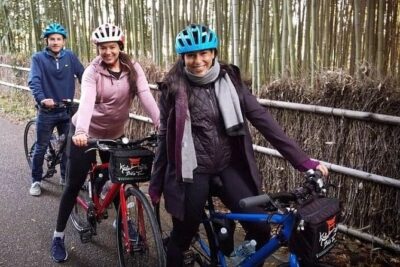
5 Top Highlights of Kyoto Full Day Bike Tour (E-bike option)
Read our review →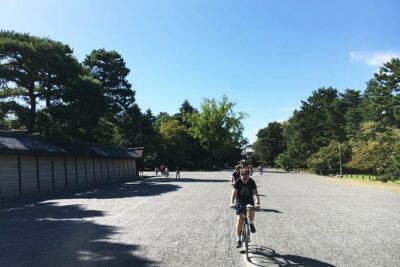
Full Day Biking Tour Exploring the Best of Kyoto
Read our review →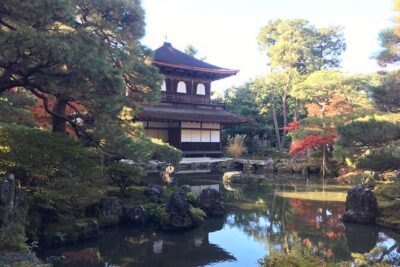
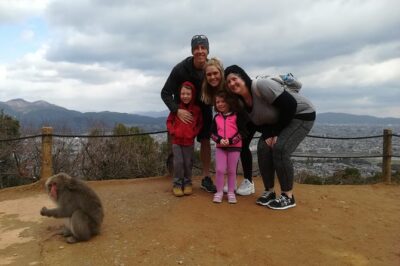
Afternoon Kyoto Bike Tour: Bamboo Forest, Monkeys & Hidden Spots
Read our review →
South Kyoto in a Nutshell: Gentle Backstreet Bike Tour!
Read our review →Browse the lists this tour appears in