
REVIEW · GION GEISHA DISTRICT TOURS
Gion at Night: Secrets and Legends of the Geishas
Gion after dark is less about checking off sights and more about noticing how Kyoto’s old entertainment district changes under lantern light. This 150-minute walk links Minamiza Theater, Tatsumi Bridge, Hanamikoji Street, Gion Corner, and Yasaka Shrine while your Spanish-speaking guide explains geisha customs, local legends, and the rules of this private world.
I like the small-group limit of 15 people, which should make it easier to hear the guide in narrow lanes. I also like the focus on real neighborhood stories rather than a show or meal package. The main caution is value and group control: one booking complaint described a much larger-than-expected group and confusion over an advance charge and gratuity, so check the final price and payment terms carefully before booking.
In This Review
- Key points to know before walking Gion
- Why Gion works best after sunset
- Meeting at Minamiza Theater
- Tatsumi Bridge and the classic Gion view
- Hanamikoji Street and the etiquette of geisha districts
- Gion lanes, legends, and local stories
- Gion Corner as the evening finish
- Yasaka Shrine under evening lights
- Is 150 minutes enough for Gion?
- What the $21 price gives you
- Who should book this evening walk?
- FAQ
- Where does the Gion night tour meet?
- How long does the tour last?
- What language is the tour conducted in?
- What places does the tour visit?
- Is Yasaka Shrine definitely the final stop?
- Are show tickets included?
- Is food or drink included?
- Is transportation included?
- Is the tour wheelchair accessible?
- How large can the group be?
- Can I cancel for a refund?
- Should you book Gion at Night?
Key points to know before walking Gion
- Minamiza begins the story: The tour starts at Kyoto’s famous kabuki theater, a useful introduction to Gion’s long link with traditional performance.
- Tatsumi Bridge is a short but photogenic stop: You get one of the district’s classic views, though it can feel crowded at popular times.
- Hanamikoji is the cultural center: Your guide explains the tea-house streets, geisha customs, and why respectful behavior matters.
- Sime has earned strong praise: One Spanish-speaking guide named Sime was described as clear, informative, and excellent at managing the group.
- The tour ends near Gion Corner: This is a convenient finish for anyone interested in traditional arts, though show tickets are not included.
- The price needs a careful check: The listed cost is $21 per person with taxes and handling fees included, but a complaint reported a much higher advance charge and unexpected gratuity expectations.
Why Gion works best after sunset
Gion is one of Kyoto’s most recognizable districts, but it is easy to see only its polished surface. In daylight, Hanamikoji Street can feel like a photo stop. At night, the lit signs, wooden facades, and quiet side lanes give the neighborhood a stronger sense of place.
This tour is built around that evening mood. You walk rather than ride, and the route is short enough to keep the attention on the streets and stories. The guide fills in the background that you cannot get from a quick photograph: how entertainment districts worked, what geisha actually do, and how customs still shape daily life around the tea houses.
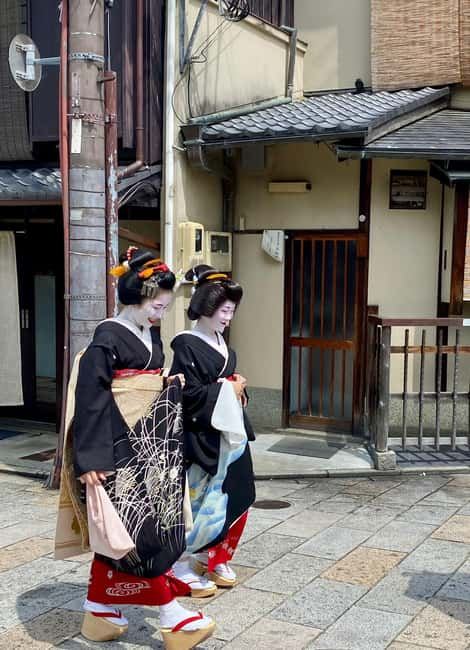
The experience is not a private geisha encounter. You are not promised a meeting, performance, meal, or access to a tea house. You might see a geiko or maiko moving through the district, but that is chance, not a tour feature. One booking specifically noted seeing geikos in a taxi, which is a reminder that sightings can be brief and unpredictable.
The advertised price is $21 per person, and local taxes and handling fees are included. At that rate, the walk can be good value if you want context and a Spanish-language guide. Still, the reported payment problem deserves attention. One complaint described a group paying more than 160 euros in advance while the guide later explained a tip-based arrangement to the wider group. That account conflicts with the stated price and included-fee policy.
I would confirm the total charged at checkout and ask how gratuity works before setting off. A tip should be clear and optional, not a surprise at the end.
More evenings in Gion:
- Kyoto Geisha Walking Tour: Gion District & Hidden Gems
★ 4.7 · 3,273 reviews - Kyoto: Gion Magical Night Walking Tour with Geisha Trivia
★ 4.9 · 2,393 reviews - Kyoto: Gion Geisha District Walking Tour – Stories of Geisha
★ 4.7 · 2,187 reviews
Meeting at Minamiza Theater
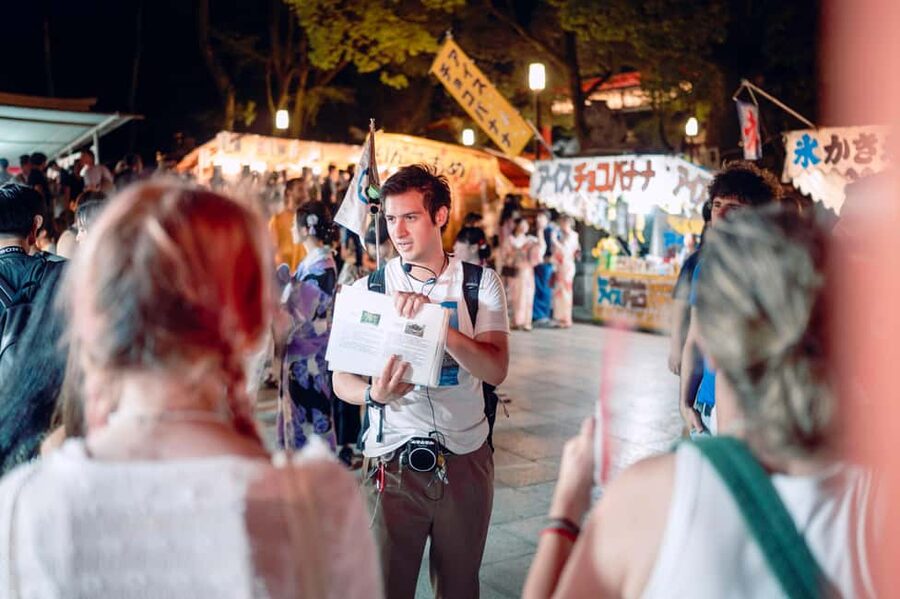
The guide waits by Minamiza Theater with a blue flag marked by a panda logo. The meeting point is at approximately 35.0034444, 135.7724632, and it is close to public transport.
Minamiza is a fitting place to start. It is not just a convenient landmark. The theater represents Kyoto’s traditional stage culture and connects directly to the world of dance, music, costume, and performance that shaped Gion.
You receive about 10 minutes of guided explanation here. That is enough to set the theme without using up the whole evening before the walk begins. If you arrive early, use the theater as your visual anchor and look for the blue panda flag rather than trying to identify a guide in the surrounding streets.
The location is public and easy to recognize, but Gion’s evening streets can be busy. Give yourself time to reach the meeting point, especially if you are coming from another part of Kyoto. Transportation to and from the start is not included.
Tatsumi Bridge and the classic Gion view
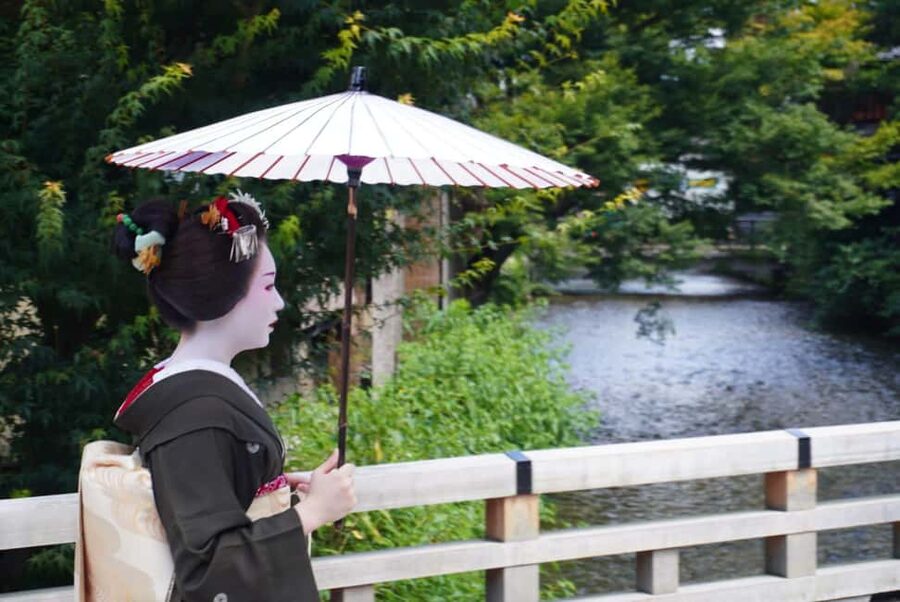
The walk continues to Tatsumi Bridge, with around 10 minutes of explanation. This is one of Gion’s most photographed spots, and it offers the kind of compact Kyoto scene many people picture before arriving: a narrow waterway, traditional buildings, and soft evening light.
The appeal is visual, but the guide’s role matters here. Without context, the bridge can be a quick photograph and little more. With an explanation of the district and its customs, it becomes part of a larger story about how people moved between theaters, tea houses, shrines, and the lanes of Gion.
Do not expect a long pause or a private photo session. The stop is brief, and a maximum group size of 15 still means you may need to share the best viewpoints. A small group should help, but the area can be crowded. One rating specifically described the tour as more crowded than expected, so the advertised limit does not always mean a quiet, secluded walk.
Bring comfortable shoes. The route is on foot, and the neighborhood is not wheelchair accessible. It is suitable for baby strollers, but narrow streets and evening foot traffic may still require care.
Hanamikoji Street and the etiquette of geisha districts
Hanamikoji Street is likely the most important stop for understanding what Gion is and what it is not. The street is known for its tea houses and for geisha who still pass through the surrounding alleys.
The guide spends about 10 minutes here, but the subject can easily support much longer. A good explanation should help you separate geiko and maiko from the many myths attached to them. It should also explain why a traditional entertainment district is not an open-air stage for photography.
This is where the tour’s Spanish-language format can be especially useful. Cultural rules are easier to follow when they are explained plainly. You can ask questions about local traditions and customs without relying on a short sign or a translated paragraph.
You should expect to look, listen, and keep a respectful distance. Do not block lanes, follow anyone into a private entrance, or assume that a person in traditional dress is available for photographs. The tour promises stories about the authentic side of Gion, not access to private spaces.
The word intimate appears in the tour description, but keep your expectations measured. Gion is a working district as well as a historic one. The streets may be crowded, and the group may include up to 15 people. The magic comes from the setting and the explanation, not from guaranteed solitude.
More Kyoto evenings:
- Night Walk in Gion: Kyoto’s Geisha District
★ 4.5 · 2,003 reviews - Kyoto Night Foodie Tour in Gion (9+ dishes + 6 Sake tastings)
★ 5.0 · 1,762 reviews - Kyoto Gion Night Walk & Geisha District Guided Tour
★ 5.0 · 786 reviews - Kyoto Ghost Tour: Dark Tales, Urban Legends, Bamboo Forest Night
★ 5.0 · 625 reviews
Gion lanes, legends, and local stories
A separate stop labeled Gion gives the guide room to connect the individual sights. This is the part of the walk where legends, customs, and local history can feel less like isolated facts and more like a picture of the neighborhood.
The tour promises secret spots and stories about the real Gion. Since no specific hidden locations are named, you should not expect access to closed tea houses or restricted alleys. The phrase is best understood as a guided look at less obvious corners and details that are easy to miss when walking alone.
This is also where the guide’s skill has the greatest effect on the experience. One Spanish-language review praised Sime for being clear, informative, and very good at handling the group. That is the strongest positive detail available about the guiding. If Sime leads your walk, you can reasonably hope for a calm presentation with useful explanations, though guide assignment is not guaranteed in the supplied information.
The tour is conducted in Spanish, and some content may be presented in its original language. That makes it a natural fit for Spanish-speaking visitors who want more than a basic list of dates and names. If you are not comfortable following Spanish for two and a half hours, this is probably not the right format.
Gion Corner as the evening finish
The official route ends at Gion Corner, a venue associated with traditional performances. This is a sensible final stop because it brings the themes of theater, dance, music, and geisha culture back together.
The tour does not include a ticket to a show. You can treat the ending as a convenient point for continuing your own evening, but you will need to arrange and pay for any performance separately. The same applies to private tea houses. Nothing in this walk gives you entry to one.
Finishing at Gion Corner also gives you a clear endpoint rather than leaving you in an unnamed side street. You can continue toward Yasaka Shrine, the surrounding Gion lanes, or public transport, depending on your plans. The description also presents Yasaka Shrine as the final atmospheric highlight, while the detailed itinerary lists Gion Corner as the finish. I would treat the shrine as part of the evening route or nearby area, but confirm the exact ending with the guide on the day.
Yasaka Shrine under evening lights
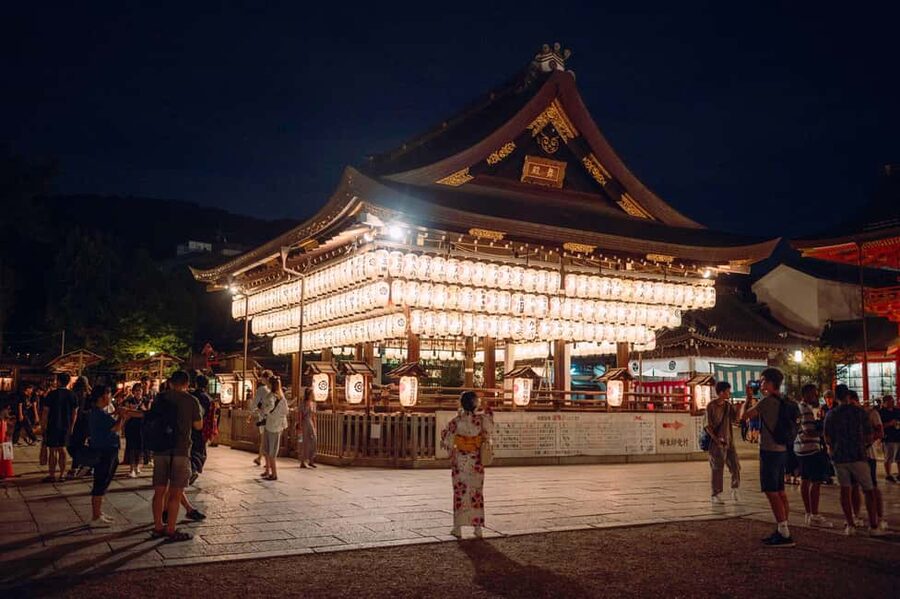
Yasaka Shrine is described as peaceful and atmospheric at night, with its buildings lit against the darker streets. It offers a change of mood after the tea houses and narrow lanes. Gion feels enclosed and private in places, while the shrine opens the experience into a larger religious setting.
The shrine is valuable here because it shows that Gion is not only about geisha culture. Kyoto’s old districts developed around temples, shrines, commerce, theater, and neighborhood life. A short visit helps place the entertainment quarter within the broader city.
The supplied route information contains a small difference: the general description presents Yasaka Shrine as the final stop, while the step-by-step itinerary says the tour finishes at Gion Corner. That is not a major concern, but it matters if you are meeting someone afterward or need to catch transport. Ask the guide where the group will officially separate.
Is 150 minutes enough for Gion?
Two and a half hours is a useful length for this route. You get enough time for several stops and explanations without turning the evening into a tiring historical lecture.
The stop-by-stop outline gives roughly 10 minutes each at Minamiza, Tatsumi Bridge, Hanamikoji Street, and Gion. The remaining time covers walking, questions, the spaces between sights, and the broader discussion around Gion Corner and Yasaka Shrine.
That means the tour is more of an orientation walk than a detailed study of geisha culture. If you want extended time at each site, long photography breaks, or a full evening performance, you will need to add those separately.
A group of up to 15 is small by ordinary city-tour standards. It should allow the guide to answer questions and keep the pace manageable. Still, the report of a crowded experience shows that the atmosphere may vary by date and departure time. Small does not always mean private.
What the $21 price gives you
At the stated $21 price, you are paying mainly for a guided walk in Spanish. The route itself uses public streets and shrines, so the value rests on the quality of the storytelling, the route design, and the guide’s ability to explain customs without reducing them to clichés.
Taxes and handling fees are listed as included, with no extra local charges during the walk. Food, drinks, transportation, show tickets, and private tea-house visits are not included.
I see this as a reasonable price for a focused introduction, especially if you are staying in Kyoto for only a short time or want help getting your bearings in Gion. It is less compelling if you already know the district well or mainly want photographs, since you can walk through many of these streets independently.
The payment complaint is too specific to ignore. Before booking, compare the displayed total with the amount charged, and check whether the reservation is for a paid tour or a gratuity-based walk. The booking terms say you can cancel up to 24 hours in advance for a full refund and reserve now while paying later, which gives you some flexibility, but it does not remove the need to check the price carefully.
Who should book this evening walk?
I would recommend it to Spanish-speaking visitors who want a cultural introduction to Gion without paying for a meal or performance package. It also suits first-time Kyoto visitors who want a clear route through the district and a guide to explain respectful behavior around tea houses and geisha.
It is a good fit for couples, friends, and solo visitors who prefer a small walking group. Most people can join, and baby strollers are allowed, though the lack of wheelchair access is important.
I would be more cautious if your main goal is a quiet, crowd-free experience. Gion is popular, and one rating specifically described the tour as more crowded than expected. I would also skip it if you require wheelchair access or if you want guaranteed geisha contact, a private tea-house visit, or an included show.
FAQ
Where does the Gion night tour meet?
The meeting point is Minamiza Theater. The guide waits with a blue flag featuring a panda logo. The coordinates are 35.0034444, 135.7724632.
How long does the tour last?
The walking tour lasts 150 minutes, or two and a half hours. Starting times depend on availability.
What language is the tour conducted in?
The live tour guide speaks Spanish. Some content may be presented in its original language.
What places does the tour visit?
The route includes Minamiza Theater, Tatsumi Bridge, Hanamikoji Street, Gion, Gion Corner, and the Yasaka area. The detailed route lists Gion Corner as the finish, while the general description presents Yasaka Shrine as the final atmospheric stop.
Is Yasaka Shrine definitely the final stop?
The supplied information gives two descriptions of the ending. The general description ends at Yasaka Shrine, while the detailed itinerary ends at Gion Corner. Confirm the exact final stop with the guide.
Are show tickets included?
No. Tickets to performances at Gion Corner are not included.
Is food or drink included?
No. The tour does not include food or drinks.
Is transportation included?
No. You must arrange and pay for transportation to and from the meeting point yourself.
Is the tour wheelchair accessible?
No. The experience is not wheelchair accessible. Baby strollers are permitted.
How large can the group be?
The maximum group size is 15 people. One rating described the experience as more crowded than expected, so the atmosphere may not always feel private.
Can I cancel for a refund?
You can cancel up to 24 hours in advance for a full refund. The reservation option also allows you to book now and pay later.
Should you book Gion at Night?
Book this walk if you want Spanish-language explanations, a compact evening route, and useful context for Gion’s theaters, tea houses, shrines, and customs. The praise for Sime’s clear guiding suggests that the right guide can make the experience both easy to follow and genuinely interesting.
Before paying, verify the displayed total and ask how gratuity is handled. If those terms match the advertised $21 price, this is a sensible introduction to Gion after dark. If you want a private experience, guaranteed geisha sightings, wheelchair access, or an included performance, choose a different activity.
Recently added around Kyoto
- Higashiyama | Kyoto: Sakura Season Private Rickshaw Tour★ 5.0 · 3 reviews
- Kyoto Kimono Rental CHAMATSU|Kimono/Yukata Rental FamilyPlan★ 5.0 · 3 reviews
- Kyoto: Half-Day Private Guided Tour to the Old Town of Gion★ 4.4 · 3 reviews
- Nara Private Customizable Half Day Tour★ 5.0 · 3 reviews
- Kansai Region Hiking Adventure in Nara Kobe Kyoto and More★ 5.0 · 3 reviews
- Full Day Nara Deer, Temple, Shrine, Activities & Tea Ceremony★ 5.0 · 3 reviews
- Nara: Essential Private Tour with Deer Park and Temples★ 5.0 · 3 reviews
- Hiking Tour for Sacred Sites in Kyoto with a Guide★ 5.0 · 3 reviews
Gion Geisha District Tours, compared.
Kyoto Geisha Walking Tour: Gion District & Hidden Gems
Read our review →
Gion Magical Night Walking Tour with Geisha Trivia
Read our review →
Gion Geisha District Walking Tour – Stories of Geisha
Read our review →
Best of Kyoto: Gion, Geisha, Pagodas & Cobblestones
Read our review →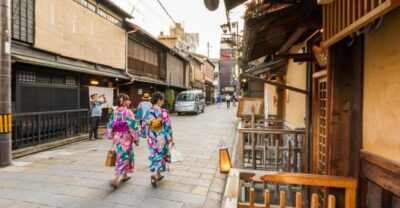
Kyoto Night Foodie Tour in Gion (9+ dishes + 6 Sake tastings)
Read our review →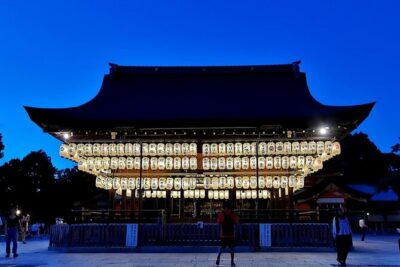
Kyoto Gion Geisha District Walking Tour – The Stories of Geisha
Read our review →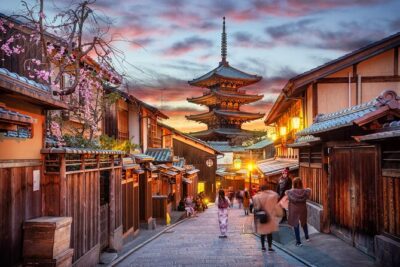
Kyoto Gion: 2-Hour Geisha Culture & History Walking Tour
Read our review →Browse the lists this tour appears in