
REVIEW · CYCLING TOURS
Explore Hidden Kyoto by E-Bike: Private, Scenic & Fun
Kyoto’s best moments are often between the famous sights: a quiet lane, a temple gate without a tour bus beside it, or a riverside stop where locals hop across stepping stones. This private e-bike tour links those small pleasures with major landmarks, giving you a broad look at eastern and northern Kyoto without wearing out your feet.
I like the private format, since your guide can adjust the pace and route to your interests. I also like the e-bike advantage: you cover much more ground than on foot, yet still move slowly enough to notice wooden houses, shrine entrances, and side streets. The main consideration is weather. The ride can stretch beyond five hours on a hot day, and temple admission, food, drinks, and tips cost extra.
In This Review
- Key points to know before booking
- Why an e-bike works so well in Kyoto
- Kiyomizu-dera gives the ride a famous beginning
- Chion-in and Nanzen-ji show Kyoto’s grand temple side
- The Heian Jingu torii makes an easy photo stop
- Hanamikoji Street brings you into old Gion
- Kamogawa River adds breathing room
- Shimogamo Shrine trades crowds for ancient woodland
- Demachi Futaba and Somei Well show everyday Kyoto
- Kyoto Gyoen finishes the ride with open space
- A private guide makes the difference
- What the $123.57 price really covers
- Who should book this Kyoto ride
- My final booking advice
- FAQ
- How long does the Kyoto e-bike tour last?
- Is this a private tour?
- What does the price include?
- Are temple and shrine entrance fees included?
- Is food included?
- Can the route be tailored to my interests?
- What happens if the weather is poor?
- How late can I cancel for a full refund?
Key points to know before booking
- Kiyomizu-dera and nine other Kyoto sights give you a wide-ranging first look at the city.
- Quiet streets and riverside paths help you get away from Kyoto’s most crowded corridors.
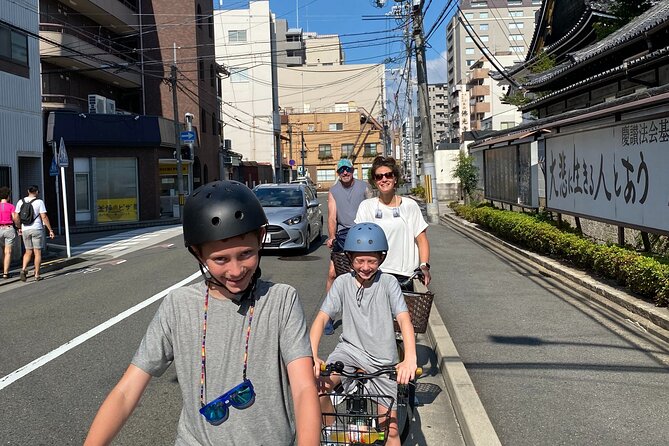
- Guide Yonnie is praised for clear cultural explanations, family-friendly pacing, and a warm manner.
- E-bikes and insurance are included, so you can ride farther with less effort.
- Demachi Futaba mochi and local stops add a taste of everyday Kyoto to the temple visits.
- Private timing matters, especially for families, short stays, and anyone who wants photo breaks.
Why an e-bike works so well in Kyoto
Kyoto is laid out broadly, with major sights separated by rivers, shopping streets, residential lanes, and large temple grounds. Walking between all of these places takes time. Public transport helps, but buses can be slow and crowded, and trains do not reach every worthwhile corner.
An e-bike gives you another option. You can cover the distance between Kiyomizu-dera, Gion, the Kamogawa River, Shimogamo Shrine, and Kyoto Gyoen National Garden while keeping the day active but manageable. You still see the city at street level, rather than passing it through a train window.
I see the biggest value in the private setting. Your guide can slow down for photographs, take breaks in hot weather, and explain a shrine or temple in response to your questions. The pace is not fixed for a large group. That makes the tour a strong choice for families, couples, and people with only two days in Kyoto.
The ride is not a race. The supplied information describes a 3 to 5 hour experience, but one outing lasted a little more than five hours after the guide adjusted the pace and added breaks during hot weather. Plan for flexibility rather than a hard finish time.
More bike days around Kyoto:
- Hidden Kyoto E-Biking tour
★ 5.0 · 1,843 reviews - Bike Tour Exploring North Kyoto plus Lunch
★ 5.0 · 1,087 reviews - Arashiyama Bamboo Forest & Hidden Gems Bike Tour (Early Bird)
★ 5.0 · 613 reviews
Kiyomizu-dera gives the ride a famous beginning
The tour begins near Kiyomizu-dera, one of Kyoto’s most recognizable temples. Your guide stops at a viewpoint and explains the temple’s place in Kyoto, including its celebrated wooden stage and broad views over the city.
The stop is scheduled for about 45 minutes, which gives you time to take photographs and listen without turning the opening of the tour into a rushed glance. The listed price does not include admission, so ask your guide about the exact plan if you want to enter the temple grounds.
Kiyomizu-dera is a sensible starting point because it immediately puts Kyoto’s scale into perspective. From above, you can see why the city is best explored as a mix of hills, rooftops, temple compounds, and open spaces. The drawback is that this is one of Kyoto’s most popular sights, so the opening section may feel less secluded than the later stops.
Still, the e-bike changes the experience. After the temple, you can leave the busiest approach roads behind and reach quieter parts of the city with less effort than you would on foot.
Chion-in and Nanzen-ji show Kyoto’s grand temple side
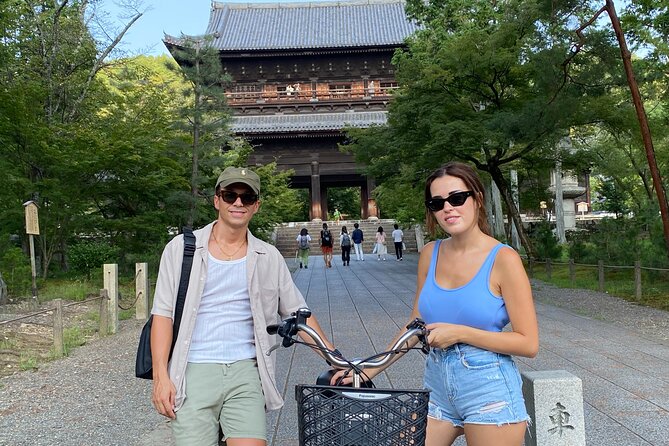
At Chion-in, your guide leads you through the enormous Sanmon Gate, described as the largest wooden gate in Japan. The stop lasts about 15 minutes and admission is free.
This is a short visit, but the gate gives you an immediate sense of scale. Chion-in is the head temple of the Jodo Pure Land Buddhist sect, and your guide can explain the temple’s role and the customs connected with it. Since the stop is brief, think of it as a focused introduction rather than a full visit to every building.
Nanzen-ji receives about 30 minutes. Your guide shows you the outer grounds, including the large Sanmon Gate and the spacious temple area. The gate has an upper level with views across Kyoto, but the tour description focuses on the outer grounds, so admission or extra time may be needed if you want to explore more fully.
I like the contrast between these two temples. Chion-in feels imposing at the entrance, while Nanzen-ji gives you room to appreciate broad courtyards and architectural details. These stops also provide useful Buddhist context before the route shifts toward Shinto shrines, old neighborhoods, and river life.
The Heian Jingu torii makes an easy photo stop
The Grand Torii of Heian Jingu is a quick stop of about 10 minutes. At 24 meters tall, the vermilion gate is hard to miss and marks the approach to a shrine connected with Kyoto’s imperial past.
You do not need a long visit to appreciate this stop. The torii works well as a photograph, a landmark, and a change of pace after the temple grounds. Your guide can explain why torii gates mark the transition into sacred Shinto space.
Because the visit is short, this is best treated as a roadside photo stop rather than a complete Heian Jingu visit. That is useful if you want to keep moving, but less satisfying if you hoped to spend a long time inside the shrine compound.
More e-bike rides around Kyoto:
- 5 Top Highlights of Kyoto Full Day Bike Tour (E-bike option)
★ 5.0 · 511 reviews - E-Bike Tours of the highlights of Kyoto!!!
★ 5.0 · 291 reviews - Kyoto: City Secrets eBike Tour
★ 4.9 · 196 reviews - Pedal Adventure Kyoto’s iconic landmarks on an e-bike tour
★ 5.0 · 189 reviews
Hanamikoji Street brings you into old Gion
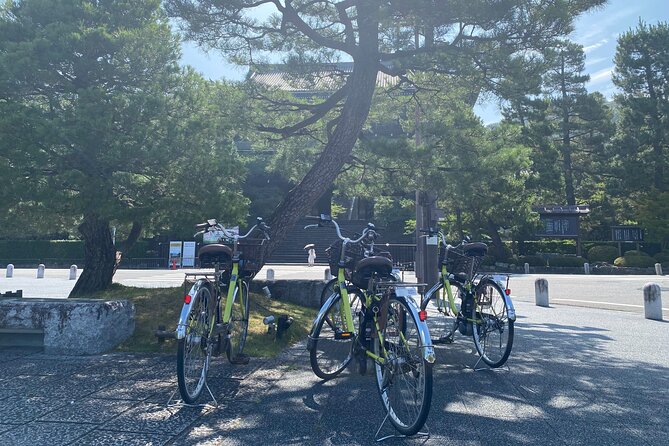
Hanamikoji Street runs through Gion, Kyoto’s best-known traditional entertainment district. Your guide pauses for about 10 minutes to discuss the wooden townhouses and the area’s connection with geisha culture.
The street is attractive, but it is also a place where you should behave carefully. Take photographs from public areas, avoid blocking doorways, and remember that the traditional buildings are part of a living neighborhood, not a stage set.
A guide adds value here because the architecture alone does not explain how the district developed. You can ask about the townhouses, the role of Gion, and the difference between what you see on the street and what takes place inside the private establishments.
The stop is short by design. Hanamikoji is one piece of the ride, not the whole point. You get a taste of Gion before continuing toward the river and the less formal parts of the city.
Kamogawa River adds breathing room
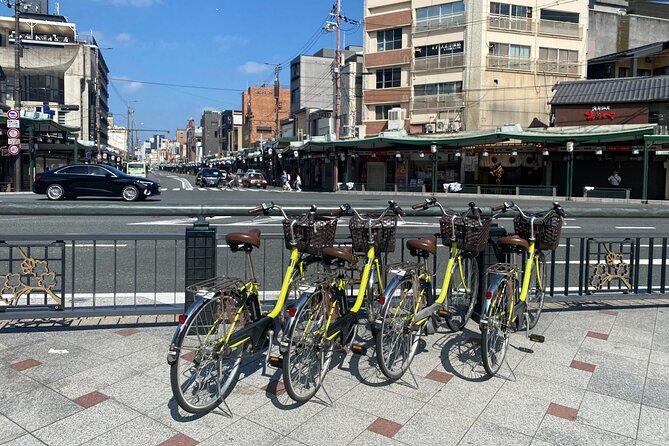
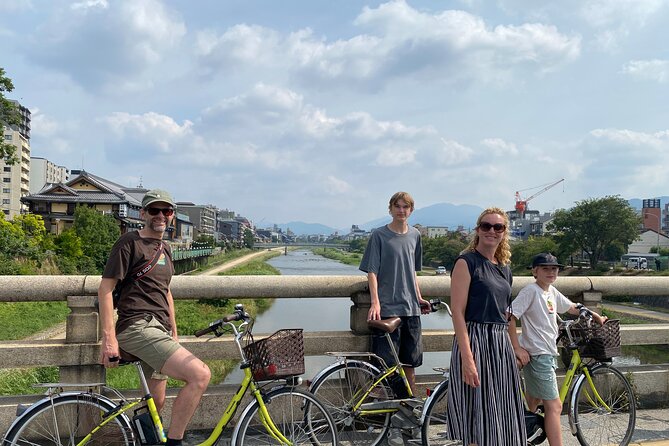
The Kamogawa River is one of the most pleasant sections of the route. Your guide takes you to the famous stepping stones, where people cross the water by hopping from stone to stone.
This stop offers something the temple visits cannot: open space, water, and a view of daily Kyoto. You can pause, take pictures, and watch the river move through the city. The supplied schedule does not give a fixed time for this stop, so the actual pause may depend on your group and the day.
The stepping stones may not suit every rider, so use care and do not feel pressured to cross. You can enjoy the river from the bank just as well. This is also a good point to ask your guide about nearby neighborhoods and local routines.
Shimogamo Shrine trades crowds for ancient woodland
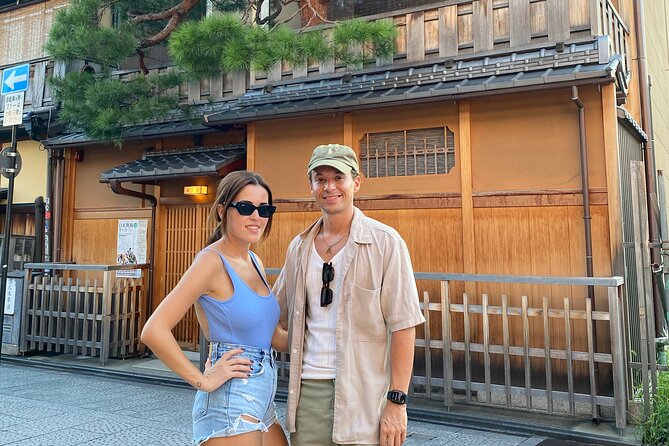
Shimogamo Jinja is one of Kyoto’s oldest and most important Shinto shrines. It sits at the edge of an ancient forest and is recognized as a UNESCO World Heritage site. The planned visit lasts about 45 minutes, making it one of the tour’s more substantial stops.
The setting changes the mood completely. After the bright torii at Heian Jingu and the stone streets of Gion, the forest around Shimogamo offers shade and quiet. Your guide can explain the shrine’s Shinto traditions, sacred spaces, and place in Kyoto’s religious life.
The tour stops at the entrance, so confirm how much of the grounds you will enter and explore. Admission is listed as free, but the route and timing may not allow a full visit to every area.
For families, this can be an especially useful stop. The forest gives children room to look around, and the guide can turn the religious details into a story rather than a lecture. One family described the explanations as clear and engaging, with the guide keeping three children comfortable and interested throughout the ride.
Demachi Futaba and Somei Well show everyday Kyoto
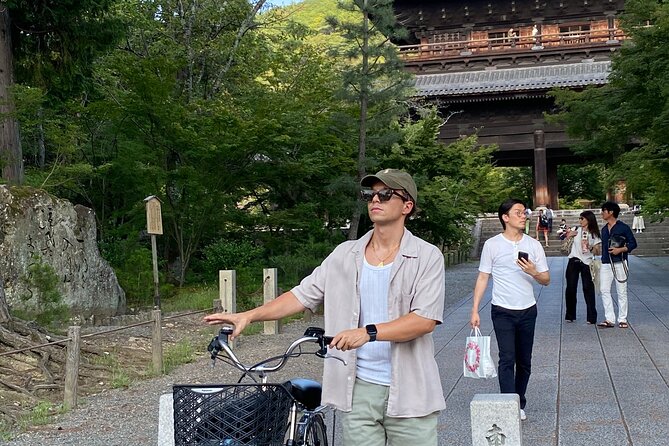
At Demachi Futaba, you visit a historic wagashi shop near the Kamogawa River. The shop is known for traditional Japanese sweets and a history of nearly 200 years. Food is not included, so bring money if you want to try something.
This is one of the tour’s most appealing details. Temple architecture can tell you about Kyoto’s past, but a local sweet gives you a small, direct connection to how people enjoy the city today. A mochi stop was a highlight for one family, and it adds a welcome break between the more formal cultural sites.
The shop may be busy, and your exact choice of sweets depends on what is available. The tour does not promise a meal, so do not treat this as lunch. Think of it as a traditional snack and a chance to ask your guide about wagashi.
Somei Well is a 10-minute stop near Kyoto Gyoen. This historic water source dates to the early Edo period, around the 1600s, and has long been valued for its fresh water.
It is an understated stop, but that is part of its appeal. You get a glimpse of Kyoto’s older water traditions rather than another major monument. If you prefer famous sights only, the well may feel too small. If you like local details, it helps make the tour more personal.
Kyoto Gyoen finishes the ride with open space
The final major stop is Kyoto Gyoen National Garden, the large park surrounding the Kyoto Imperial Palace. Your guide leads you through the garden for about 30 minutes, sharing information as you ride or pause.
After temples, shrine gates, narrow streets, and the river, the garden gives the tour a calm finish. Its broad paths make it a comfortable place to slow down and review what you have seen. The tour does not include admission to the Imperial Palace itself, so do not confuse the garden visit with a palace tour.
Kyoto Gyoen also shows another side of the city. Kyoto is not only old lanes and ornate religious buildings. It has large public spaces where people walk, rest, and move through the center of town. The e-bike is particularly useful here because you can see more of the park without committing to a long walk.
A private guide makes the difference
The strongest part of this experience is not simply the bicycle. It is the guide’s ability to connect the stops.
Yonnie is praised for explaining Buddhist and Shinto traditions in clear language, keeping families engaged, and adjusting the pace when the weather is hot. The guide also received praise for making riders feel safe and relaxed. That matters because a cycling tour can become tiring when the leader sticks to a rigid schedule.
The tour is offered with English, Indonesian, and Malay-speaking guides. It is a private activity, so only your group participates. That gives you room to ask questions and request more time for photographs, although the exact route is shaped by the day’s conditions and your interests.
The route can be adapted toward photography, history, or local culture. You should tell the operator what matters most before setting out. If you want long temple visits, say so. If you prefer quiet streets and short photo stops, say that instead.
What the $123.57 price really covers
At $123.57 per person, this is not the cheapest way to see Kyoto. The value comes from combining a private guide, an e-bike, bicycle insurance, and a route that covers several parts of the city in one outing.
You are also paying for time saved. Reaching Kiyomizu-dera, Gion, the Kamogawa River, Shimogamo Shrine, and Kyoto Gyoen by public transport would mean planning several connections. On foot, it would take much longer. For a first visit or a short two-day stay, that efficiency can justify the cost.
The price does not include temple and shrine admission, meals, snacks, drinks, parking charges when free parking is unavailable, or tips. Kiyomizu-dera is specifically listed without admission included, while Chion-in, Nanzen-ji’s outer grounds, Shimogamo Jinja, and several other stops are listed as free.
The tour is commonly booked about 21 days ahead, so I would not leave it until the last minute if your dates are fixed. Confirmation arrives at booking, and free cancellation is available up to 24 hours before the start time. Poor weather can lead to a new date or a full refund.
Who should book this Kyoto ride
I would recommend it most strongly to:
- Families who want sightseeing without an all-day walk
- Couples who prefer a private pace and plenty of photographs
- First-time visitors who need a clear introduction to Kyoto
- People with only a short stay
- Repeat visitors who want quieter streets and smaller local stops
- Anyone interested in both Buddhist temples and Shinto shrines
You should think twice if you dislike cycling, want long indoor temple visits, or need a fixed three-hour finish. The tour is weather dependent, and the pace may change with heat, breaks, and your group’s energy.
Most people can participate, but the supplied information does not give detailed bicycle requirements or a specific route difficulty. Ask KyotoNusa Tours about rider needs before booking if you have concerns.
My final booking advice
Book this tour if you want Kyoto in broad strokes, but with enough time for small discoveries. You will see famous sites such as Kiyomizu-dera, Chion-in, Nanzen-ji, Heian Jingu, and Shimogamo Jinja, then balance them with Hanamikoji Street, the Kamogawa stepping stones, a traditional wagashi shop, and Somei Well.
The best reason to choose it is the private guide and flexible pace. Yonnie’s ability to keep children engaged, explain religious traditions, and slow down in hot weather fits the tour’s greatest strength: it can respond to you.
I would skip it only if your priority is a detailed visit inside each temple, since several stops are short and entrance fees are not included. For an active, family-friendly introduction to Kyoto that reaches both famous landmarks and quieter corners, the e-bike is a smart use of a half day.
FAQ
How long does the Kyoto e-bike tour last?
The experience lasts approximately 3 to 5 hours. One reported outing took a little over five hours because the guide adjusted the pace and added breaks during hot weather.
Is this a private tour?
Yes. Only your group participates in the activity.
What does the price include?
The price includes an English, Indonesian, or Malay-speaking guide, e-bike rental, and bicycle insurance.
Are temple and shrine entrance fees included?
No. Entrance fees are not included when you choose to enter a temple or shrine. Some stops, including Chion-in and several shrine or garden areas, are listed as free.
Is food included?
No. Meals, snacks, and drinks are not included. Demachi Futaba is a stop where you can purchase traditional Japanese sweets, but the cost is extra.
Can the route be tailored to my interests?
Yes. The guide can shape the route around interests such as photography, history, or local culture.
What happens if the weather is poor?
The experience requires good weather. If it is canceled because of poor conditions, you will be offered another date or a full refund.
How late can I cancel for a full refund?
You can cancel at least 24 hours before the experience start time for a full refund. Cancellations or changes made less than 24 hours before the start time are not accepted for a refund.
Recently added around Kyoto
- Higashiyama | Kyoto: Sakura Season Private Rickshaw Tour★ 5.0 · 3 reviews
- Kyoto Kimono Rental CHAMATSU|Kimono/Yukata Rental FamilyPlan★ 5.0 · 3 reviews
- Kyoto: Half-Day Private Guided Tour to the Old Town of Gion★ 4.4 · 3 reviews
- Nara Private Customizable Half Day Tour★ 5.0 · 3 reviews
- Kansai Region Hiking Adventure in Nara Kobe Kyoto and More★ 5.0 · 3 reviews
- Full Day Nara Deer, Temple, Shrine, Activities & Tea Ceremony★ 5.0 · 3 reviews
- Nara: Essential Private Tour with Deer Park and Temples★ 5.0 · 3 reviews
- Hiking Tour for Sacred Sites in Kyoto with a Guide★ 5.0 · 3 reviews
Cycling Tours, compared.
Arashiyama Bamboo Forest & Hidden Gems Bike Tour (Early Bird)
Read our review →
5 Top Highlights of Kyoto Full Day Bike Tour (E-bike option)
Read our review →
Full Day Biking Tour Exploring the Best of Kyoto
Read our review →
Afternoon Kyoto Bike Tour: Bamboo Forest, Monkeys & Hidden Spots
Read our review →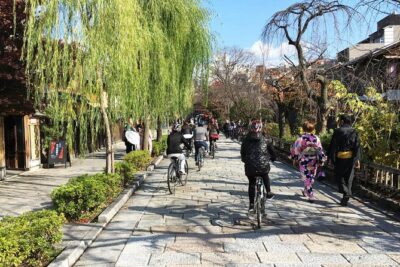
South Kyoto in a Nutshell: Gentle Backstreet Bike Tour!
Read our review →Browse the lists this tour appears in