
REVIEW · CITY TOURS
Discovering Kyoto A Tailored Private Tour of the City’s Treasures
Kyoto is easiest to enjoy when someone helps you connect the quiet details: a shrine tucked beside a restaurant lane, a Kabuki statue by the river, or the ritual at a famous stone monument. This private morning tour lets you shape the route, while still covering major sights such as Gion and Kiyomizu-dera.
I like the one-to-one format, especially if you want to ask questions or adjust the pace. I also like the mix of well-known places and smaller stops, from the Gion Shirakawa canal to Tatsumi Daimyojin Shrine and a traditional yatsuhashi shop. The main consideration is time: three hours is short for Kyoto, and the full list of stops would make for a brisk morning.
In This Review
- Key points at a glance
- A flexible Kyoto morning, not a fixed sightseeing march
- Starting at Kyoto Station
- Gion and the old streets of Shirakawa
- Izutsu Yatsuhashi Honpo and a taste of Kyoto
- Tatsumi Daimyojin Shrine and quiet Shinto details
- Yasui-Konpiragu and the famous stone ritual
- Yasakanoto and the view of a Kyoto pagoda
- Izumo no Okuni and the roots of Kabuki
- Kiyomizu-dera, the morning’s main event
- What the three-hour schedule really means
- Guides, language, and the feel of the experience
- Who should book this Kyoto tour?
- Should you book it?
- FAQ
- How much does the private Kyoto tour cost?
- How long does the experience last?
- Where does the tour start and finish?
- What time is the tour offered?
- Is transportation included?
- Is this a private activity?
- Are food and drinks included?
- Can I cancel for a full refund?
Key points at a glance
- A private route from Kyoto Station: Your group travels together, with pickup offered and the tour returning to the starting point.
- Gion takes center stage: Walk old lanes, Gion Shirakawa, Tatsumi Daimyojin Shrine, and the restaurant streets associated with geisha culture.
- Kiyomizu-dera gets a full hour: The temple’s wooden viewing platform, Koyasu Pagoda, and Otowa Spring receive the most time.
- Local tastes are part of the route: Stop at Izutsu Yatsuhashi Honpo for a traditional Kyoto sweet, with no admission charge.
- Diego has earned praise: He is described as friendly, clear in English, and good at explaining Kyoto customs and temple history.
- The schedule needs sensible choices: With stops ranging from 10 to 20 minutes, ask the guide to set priorities before you begin.
A flexible Kyoto morning, not a fixed sightseeing march
The appeal here is control. You are not joining a large group that must follow a guide’s set speech and pace. You can tell the guide what matters most, then shape the morning around temples, food, old neighborhoods, or cultural details.
That flexibility matters in Kyoto. First-time visitors often want the famous sights, while returning visitors may prefer a slower walk through Gion or a look at local shrines. The tour description includes Fushimi Inari Shrine, Arashiyama Bamboo Grove, local markets, and lesser-known neighborhoods as possible choices, but the scheduled route centers on Gion and Kiyomizu-dera.
At $95 per person, the price is not a bargain for a three-hour outing. It becomes easier to justify for a small private group that wants transport, a personal guide, and a route adjusted to its interests. If you are traveling alone, the cost is harder to defend. If two or more people share the experience and use the guide well, the personal attention can make better sense.
The tour runs in the morning, from 9:00 to 11:30, and pickup is offered. The stated meeting point is Kyoto Station, with the activity ending back there. That makes it useful on a day when you want to begin sightseeing without sorting out every connection yourself.
A few more Kyoto experiences worth comparing
- Fushimi Inari Hidden Hiking Tour (Private Option Available)
★ 5.0 · 1,750 reviews - Private Kyoto Tour with a Local, Highlights & Hidden Gems, Personalised
★ 5.0 · 1,543 reviews - Kyoto 6hr Private Tour with Government-Licensed Guide
★ 5.0 · 1,369 reviews
Starting at Kyoto Station
Kyoto Station is a practical place to begin. It is a major transport hub, and returning there gives you an easy point from which to continue your day. The supplied details describe transport to the attractions as included, though you should confirm exactly how that transport works when booking.
Because the tour lasts about three hours, use the opening minutes well. Tell the guide whether you care most about temple architecture, Shinto customs, food, geisha districts, photography, or general orientation. If you want a specific place such as Fushimi Inari or Arashiyama, say so before the route begins. The more clearly you state your priorities, the more useful the private format becomes.
The activity is limited to your own group. That means you can stop to ask what a shrine object means, request a little more time at a favorite site, or move on when a stop does not hold your interest. A private tour cannot remove Kyoto’s crowds, but it can reduce the feeling of being carried along by someone else’s schedule.
Gion and the old streets of Shirakawa
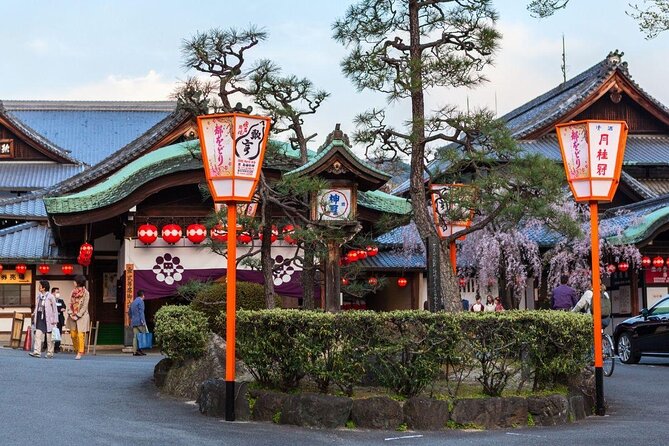
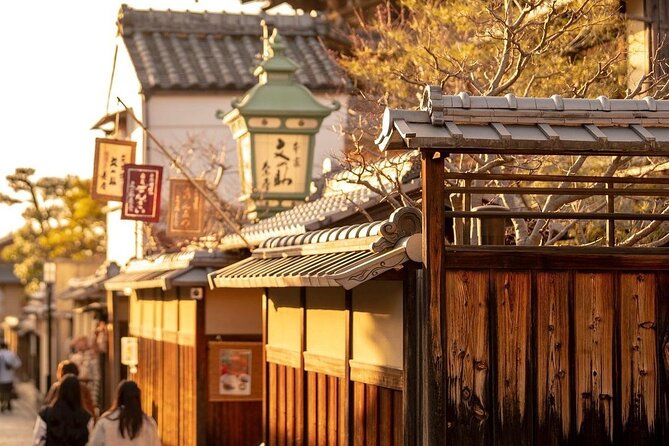
Gion is the strongest part of this outing. The district gives you a look at Kyoto’s traditional side through narrow lanes, old-style buildings, teahouse streets, and quiet water along Gion Shirakawa.
The walk along Gion Shirakawa is brief, listed at about 20 minutes, so do not expect a long neighborhood exploration. Still, a short guided walk can help you notice the character of the area instead of simply passing through it on the way to a temple.
The tour also visits the restaurant streets associated with geisha culture. The useful point here is context. Gion is not a stage set built for sightseeing. It is a working district, and the private format gives your guide a chance to explain how the area functions while reminding you to be discreet.
Photography needs good manners. Stay on public paths, avoid blocking entrances, and do not treat people in traditional dress as public displays. The details supplied for this experience do not promise a geisha encounter, so book it for the neighborhood and its cultural setting, not for a guaranteed sighting.
One guide, Diego, received especially strong praise for explaining Kyoto’s history and customs in clear English. That is important in Gion, where a few well-placed explanations can make an ordinary lane more meaningful. A guide’s value is not just naming buildings. It is helping you understand why the district looks and behaves as it does.
Izutsu Yatsuhashi Honpo and a taste of Kyoto
The stop at Izutsu Yatsuhashi Honpo offers a small but welcome change from shrine and temple viewing. Yatsuhashi is a traditional Kyoto confection, and the shop gives you a chance to connect the city’s food culture with its sightseeing.
The stop lasts about 20 minutes, and admission is free. Brunch and alcoholic drinks are not included, so think of this as a tasting or browsing stop rather than a meal. If you have a sweet tooth, it is a useful pause. If you need a proper breakfast, eat before the tour or plan food afterward.
I like this sort of stop because it keeps the morning from becoming a procession of gates, statues, and temple roofs. Food tells you something about a place in a different way. Ask the guide what makes the sweet traditional, how it is usually served, and which varieties are popular if time allows.
A completely different side of Kyoto:
- PERFECT KYOTO 1-Day Bus Tour
★ 5.0 · 13,518 reviews - Kyoto: Fushimi Inari, Kinkakuji, Bamboo Grove 1 Day Bus Tour
★ 4.8 · 4,316 reviews - Kyoto: Tea Ceremony in a Traditional Tea House in Kiyomizu
★ 4.9 · 3,519 reviews - Kyoto Geisha Walking Tour: Gion District & Hidden Gems
★ 4.7 · 3,273 reviews
Tatsumi Daimyojin Shrine and quiet Shinto details
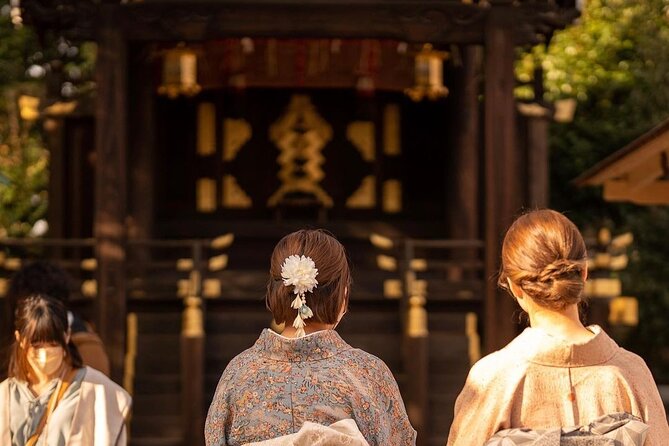
Tatsumi Daimyojin Shrine is a smaller stop, listed at about 20 minutes. Its long history gives the guide room to explain Shinto practice in a setting that should feel more intimate than Kyoto’s major temple grounds.
This is where a private tour can earn its keep. At a large sight, you may remember the view but miss the meaning of the small gestures: how to approach a shrine, what the entrance gate signifies, or why certain objects appear in the grounds. The exact level of explanation depends on your guide, but this is a good place to ask direct questions.
Do not expect the scale of Kiyomizu-dera. The value is contrast. After the lanes of Gion, a compact shrine can slow the morning and give you a clearer sense of everyday religious practice.
Yasui-Konpiragu and the famous stone ritual
Yasui-Konpiragu is another short stop, scheduled for about 10 minutes. It is known for a large stone monument and rituals connected with cutting unwanted ties and forming better ones.
The ritual is visually striking, but ten minutes is not much time. If this custom interests you, tell the guide early and ask for a clear explanation before you arrive. That way you will know what you are seeing instead of simply watching people pass through the stone.
The shrine also makes a useful cultural counterpoint to the grand temples. Kyoto sightseeing is not only about polished buildings and famous views. It includes personal hopes, private rituals, and places where people come to ask for change in their lives.
Yasakanoto and the view of a Kyoto pagoda
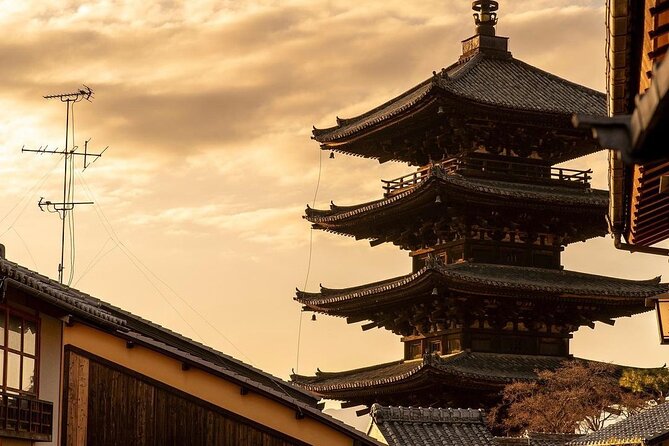
Yasakanoto is a towering pagoda in the Gion area, with roughly 10 minutes allotted. Its height gives the surrounding streets a strong visual marker, and it is one of the places where Kyoto’s old urban texture and religious architecture meet.
The short visit is best treated as a photo and orientation stop. The supplied information does not say that you enter the pagoda, so do not assume an interior visit. The guide can help place it within the neighborhood and point out how it shapes the view along the nearby streets.
Ten minutes may be enough for a look, but not for a slow architectural study. If pagodas are a major interest, ask whether more time can be taken here at the expense of another stop.
Izumo no Okuni and the roots of Kabuki
The statue of Izumo no Okuni provides a different kind of cultural stop. Okuni is linked with the origins of Kabuki theater, and the statue offers a quick way to connect Kyoto with one of Japan’s most important performing arts.
The visit is listed at about 20 minutes. That is generous compared with Yasakanoto, and it gives the guide room to explain who Okuni was and why she matters. This is not a full theater performance, and no performance is included, but the stop adds a human story to a morning otherwise focused on sacred places.
I find this kind of detail useful because it widens your view of Kyoto. The city’s culture is not confined to temples. Theater, food, street life, and religious practice all overlap here.
Kiyomizu-dera, the morning’s main event
Kiyomizu-dera receives about one hour, making it the clear centerpiece of the route. The temple is famous for its broad wooden viewing platform, the three-story Koyasu Pagoda, and the Otowa Spring, whose waters are associated with good fortune and health.
An hour lets you see the main features without turning the visit into a rushed dash. It is still a busy schedule if you want to study the architecture, take photographs, and listen to a full explanation. Wear shoes suited to walking, since the tour includes several temple and neighborhood stops.
The temple’s name refers to the pure water spring. That detail is easy to reduce to a photo opportunity, but a guide can explain how the spring fits into the site’s religious life. Ask about the meaning of the three streams and the customs connected with drinking from them. The provided information confirms the spring as a highlight, but does not specify what is included in the ritual, so let your guide set expectations.
Kiyomizu-dera is also a place where the private format helps with choices. You may care most about the viewing platform, the pagoda, the spring, or the surrounding approach streets. Tell the guide what you want from the hour.
The temple is likely to be the busiest part of the morning. A guide cannot guarantee quiet conditions, especially during popular seasons, but a morning start is sensible. The activity is offered daily in the 9:00 to 11:30 window, which puts the main temple visit early enough to avoid part of the day’s later buildup.
What the three-hour schedule really means
The listed stop times add up to about three hours and ten minutes before allowing for movement. That tells you something important: the route is ambitious. If every listed stop is included, each visit will be tightly timed, and transport between locations will leave little room for lingering.
The description also presents the tour as customizable. In practice, you should treat the stops as a menu of possible interests rather than assume that every sight will receive equal attention. Ask the guide to rank the route around your priorities.
A practical plan might be:
- Choose Gion, Gion Shirakawa, and Kiyomizu-dera for traditional streets and major temple sights.
- Choose the shrines and Yasakanoto if you want a concentrated look at local religious places.
- Keep Izutsu Yatsuhashi Honpo if food culture matters to you.
- Ask about Fushimi Inari or Arashiyama only if you are willing to drop several Gion stops, since the tour is short and the supplied schedule does not confirm those sites as fixed visits.
This is also why a private tour can work better for a first morning in Kyoto than a broad group excursion. You can use it to get your bearings, learn the basic customs, and decide which areas deserve more of your own time later.
Guides, language, and the feel of the experience
The tour includes a local guide, but no individual guide is guaranteed in the supplied details. Diego is specifically praised for good English, a friendly manner, and clear explanations of Kyoto’s history and customs. If you need an English-speaking guide or hope for Diego, confirm that before booking.
The strongest part of the experience is the chance to ask questions. A private guide can explain a shrine ritual in plain language, help you understand Gion’s etiquette, or point out why a particular temple feature matters. That personal exchange is more valuable than simply being escorted from one address to another.
The tone appears casual rather than formal. That suits a three-hour morning, especially if you want a comfortable introduction rather than an academic lecture. Still, the quality of a private tour depends heavily on the guide assigned, so your expectations should focus on the format and route rather than assume one particular person.
Who should book this Kyoto tour?
I would recommend it to a couple, family, or small private group that wants a short introduction to Kyoto without spending the day on a fixed group schedule. It is especially useful if you want Gion and Kiyomizu-dera, but also want someone to explain the small shrines and customs along the way.
It suits first-time visitors who feel unsure about Kyoto’s layout and returning visitors who want a more personal look at Gion. It also works for anyone who values conversation over a long checklist of sights.
I would be cautious if you want Arashiyama, Fushimi Inari, and Kiyomizu-dera in one outing. The tour may be customizable, but three hours cannot give all three major areas proper attention. I would also think twice if you are seeking a low-cost sightseeing option, since $95 per person is a premium for a short experience.
Confirmation arrives when you book. Service animals are allowed, the route is near public transportation, and most people can participate. Free cancellation is available up to 24 hours before the start time. Changes or cancellations inside that window are not refunded, and poor weather or failure to meet the minimum number of participants can lead to a new date or a full refund. One important caution is that a previous booking was canceled the day before because of staffing pressure during a high-demand season, so keep that possibility in mind during peak periods.
Should you book it?
Book this tour if you want personal attention, Gion context, and a focused Kiyomizu-dera visit in one morning. The food stop, quiet shrines, and Kabuki connection give the route more variety than a simple temple transfer.
Skip it if you prefer to explore independently or want several far-flung Kyoto sights in one day. The value rests on the guide and the private format, not on the number of stops. Set your priorities before meeting at Kyoto Station, and this can be a useful, friendly way to begin your time in Kyoto.
FAQ
How much does the private Kyoto tour cost?
The tour costs $95 per person.
How long does the experience last?
The tour lasts approximately three hours.
Where does the tour start and finish?
It starts at Kyoto Station in Kyoto and ends back at the meeting point.
What time is the tour offered?
The stated operating time is Monday through Sunday from 9:00 AM to 11:30 AM.
Is transportation included?
Transportation to the attractions is included, and pickup is offered.
Is this a private activity?
Yes. Only your group participates in the activity.
Are food and drinks included?
Brunch and alcoholic beverages are not included. The stop at Izutsu Yatsuhashi Honpo has no admission charge.
Can I cancel for a full refund?
Yes, if you cancel at least 24 hours before the experience start time. Cancellations or changes made less than 24 hours in advance are not refunded.
Recently added around Kyoto
- Higashiyama | Kyoto: Sakura Season Private Rickshaw Tour★ 5.0 · 3 reviews
- Kyoto Kimono Rental CHAMATSU|Kimono/Yukata Rental FamilyPlan★ 5.0 · 3 reviews
- Kyoto: Half-Day Private Guided Tour to the Old Town of Gion★ 4.4 · 3 reviews
- Nara Private Customizable Half Day Tour★ 5.0 · 3 reviews
- Kansai Region Hiking Adventure in Nara Kobe Kyoto and More★ 5.0 · 3 reviews
- Full Day Nara Deer, Temple, Shrine, Activities & Tea Ceremony★ 5.0 · 3 reviews
- Nara: Essential Private Tour with Deer Park and Temples★ 5.0 · 3 reviews
- Hiking Tour for Sacred Sites in Kyoto with a Guide★ 5.0 · 3 reviews
City Tours, compared.
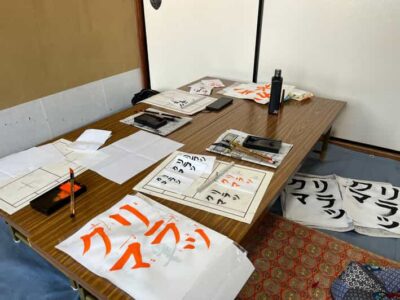
Calligraphy class at Buddhist temple in city center
Read our review →
Private departure transfer from Kyoto city to Kansai International airport
Read our review →
Full-Day City Highlights Bike Tour with Light Lunch
Read our review →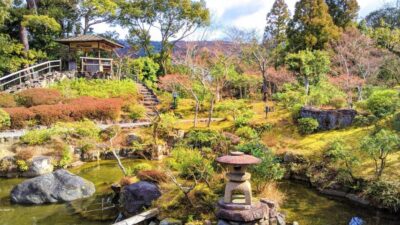
City Highlights Shared Group or Private Bike Tour
Read our review →
Private arrival transfer from Kansai International airport to Kyoto City
Read our review →
Private Transfer by Sedan from Itami Airport ITM to Kyoto City
Read our review →
Guided Kyoto City Cherry Blossom One Day Private Tour
Read our review →Browse the lists this tour appears in