REVIEW · VIP
The Kyoto VIP Experience!
Kyoto’s big sights are spread across the city, and this private, taxi-based tour turns a potentially fussy day into one planned route. You answer a short questionnaire, then your guide shapes the outing around your interests instead of making you follow a fixed group schedule.
I like the freedom to ask for more temples, culture, food, or neighborhood time. I also like the personal guidance from hosts such as Niall, Eric, Milo, and Neil, who have helped guests adjust the day, explain Japanese history, and find useful side streets. The main catch is price: at $492.66 per person, this makes the most sense for a small group that values time and personal attention.
In This Review
- Key points at a glance
- Why a private Kyoto day can make sense
- Starting at Fushimi Inari Taisha
- Walking the Bamboo Forest in Arashiyama
- Finding calm at Tenryu-ji Temple
- Seeing Kinkakuji, Kyoto’s Golden Pavilion
- What the guides add to the day
- Is $492.66 per person good value?
- Walking, weather, and practical limits
- Who should book this Kyoto experience?
- Should you book it?
- FAQ
- How long is the Kyoto VIP Experience?
- Where does the tour begin?
- Where does the tour end?
- Is this a private tour?
- Is transportation included?
- Which sights are included in the planned route?
- Are admission fees included?
- Are extra activities included?
- Can I cancel for a full refund?
Key points at a glance
- Four major Kyoto sights in about six hours: The route can cover Fushimi Inari, the Bamboo Forest, Tenryu-ji, and Kinkakuji.
- Private taxi transportation: You spend less energy figuring out connections between far-flung areas.
- A flexible personal route: Your interests help shape the day, rather than a standard group timetable.
- Guides with different strengths: Niall is praised for humor, local suggestions, and tailoring the day; Eric adds historical pictures and careful planning; Milo brings strong historical explanations.
- Useful food and neighborhood advice: Niall has pointed people toward back-alley entrances and lunch or dinner spots.
- A premium price for convenience: The cost buys privacy, planning, and a guide, not a long list of included extras.
Why a private Kyoto day can make sense
Kyoto rewards planning, but it can punish poor planning. Fushimi Inari is in the southeast, Arashiyama is on the western side, and Kinkakuji is elsewhere again. Add temple opening hours, crowds, walking time, and the challenge of finding the right station or bus, and a short visit can lose much of its useful sightseeing time.
This experience tackles that problem with private transportation and a guide who handles the route. You begin at Nidec Kyoto Tower, near Kyoto Station, and finish back at the same meeting point. That central start is practical, especially if you are using Kyoto as a base for only a few days.
The value is not simply getting from one attraction to another. You are paying for someone to connect the pieces. A good guide can explain why a shrine matters, point out a less obvious approach, adjust the rhythm when you are tired, and suggest where to eat afterward.
The private format also changes the pace. You do not wait for strangers to finish shopping, use the restroom, or take photographs. If your group wants more cultural explanation, you can spend longer talking. If you have already seen several temples, you can ask for a different emphasis.
Still, six hours goes quickly. The four named stops alone account for roughly two hours and 45 minutes of suggested visiting time. The rest is used for taxi rides, transitions, orientation, and any added conversation or stops. You should expect a well-chosen snapshot of Kyoto, not every major sight in the city.
A few more Kyoto experiences worth comparing
- Kyoto: Private Highlights Tour with Guide and Luxury Vehicle
★ 4.6 · 316 reviews - Sushi Making Experience Luxury Course in Nara
★ 5.0 · 36 reviews - Kyoto Day Tour with Certified Tour Guide & Luxury vehicle
★ 4.7 · 24 reviews
Starting at Fushimi Inari Taisha
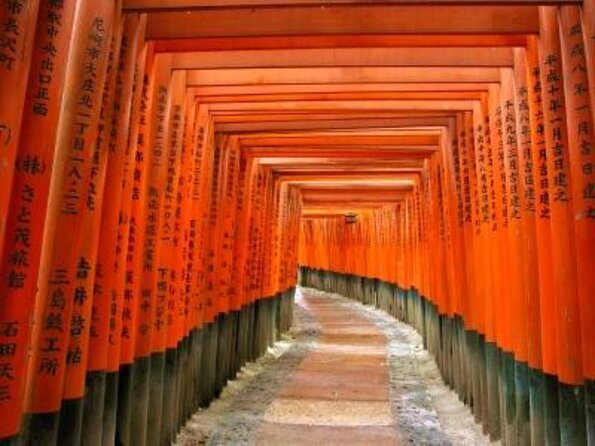
Fushimi Inari Taisha is a strong first stop because it gives you one of Kyoto’s most memorable visual experiences right away. The shrine is famous for its long corridors of orange torii gates, which climb the wooded slopes behind the main shrine area.
The planned visit is about 45 minutes, with no admission charge. That is enough to see the main approach, walk through a section of the gates, and get a feel for the site. It is not enough for a full climb to the upper mountain shrines, so tell your guide if hiking farther matters to you.
This is one place where a guide can help you understand more than the photographs. Fushimi Inari is dedicated to Inari, a deity associated with rice, prosperity, and business. Fox statues appear around the shrine because foxes are regarded as Inari’s messengers. Your guide may also help you read the difference between a grand shrine approach and the quieter paths farther uphill.
The free entry is welcome, but do not mistake free for empty. Fushimi Inari is one of Kyoto’s most popular sights. The private format does not remove the crowds, yet it can help you avoid wasting time at the wrong entrance or wandering without a plan.
Walking the Bamboo Forest in Arashiyama
The Bamboo Forest Street stop lasts about 30 minutes. This is enough for a walk and photographs, though it is a brief visit to a famous area rather than a full tour of Arashiyama.
The bamboo stalks create a cool green corridor that feels very different from Kyoto’s temple grounds. The visual appeal is obvious, but the experience is best when you treat it as one part of Arashiyama, not the whole district. A short stop works well for a first look, especially if your day also includes Tenryu-ji.
You should keep your expectations practical. The bamboo path is popular, and the most photographed sections can feel busy. Your guide may help you approach it efficiently and connect it with nearby sights. The information supplied for this tour does not promise a private section of the grove or a quiet visit, so the main advantage here is time management rather than solitude.
If you enjoy photography, tell your guide before the day begins. That gives the route a better chance of allowing enough time for the pictures you want without squeezing the temple visits too tightly.
Finding calm at Tenryu-ji Temple
Tenryu-ji gives the day a different mood. The temple is especially valued for its Zen garden, where ponds, rocks, trees, and borrowed scenery are arranged with careful restraint.
The visit is planned for about 45 minutes, and admission is included. That makes this stop more than a quick exterior photograph. You can enter the temple grounds, see the garden, and get an introduction to Zen design without paying an extra fee at the site.
I find Tenryu-ji useful in a Kyoto itinerary because it provides context after the dramatic bamboo path. The forest catches your eye; the garden asks you to slow down. A guide can explain how the garden is viewed, what features to notice, and how temple spaces work within Japanese religious life.
The drawback is time. Tenryu-ji has enough to occupy a longer visit, particularly if you want to explore every garden path or combine it with more of Arashiyama. The 45-minute plan favors variety over a leisurely stay. If this is your priority, make that clear in your questionnaire or at the start of the tour.
A completely different side of Kyoto:
- PERFECT KYOTO 1-Day Bus Tour
★ 5.0 · 13,518 reviews - Kyoto: Fushimi Inari, Kinkakuji, Bamboo Grove 1 Day Bus Tour
★ 4.8 · 4,316 reviews - Kyoto: Tea Ceremony in a Traditional Tea House in Kiyomizu
★ 4.9 · 3,519 reviews - Kyoto Geisha Walking Tour: Gion District & Hidden Gems
★ 4.7 · 3,273 reviews
Seeing Kinkakuji, Kyoto’s Golden Pavilion

Kinkakuji, commonly called the Golden Pavilion, is the day’s boldest visual stop. The upper stories are covered in gold leaf and reflect in the pond, creating the image most people associate with this temple.
The planned visit is about 45 minutes, and admission is included. You can view the pavilion from the garden paths and continue through the grounds at a steady pace. The gold is striking, but the setting matters just as much: water, trees, and the pavilion are arranged to make the building appear almost weightless.
A guide adds value by explaining what you are looking at. The present structure is a reconstruction, and the site has served different religious and political roles over time. The supplied information does not specify exactly what each guide covers, but Eric has used historical pictures from textbooks to make explanations more concrete. That kind of visual aid can help if you prefer context over a quick walk-by.
Kinkakuji is also a place where a short visit may be enough for some people. You cannot enter the pavilion itself, and the main view is the central attraction. If you mainly want the classic photograph, 45 minutes is sensible. If you want detailed temple history or a slower garden visit, ask how the time can be adjusted.
What the guides add to the day
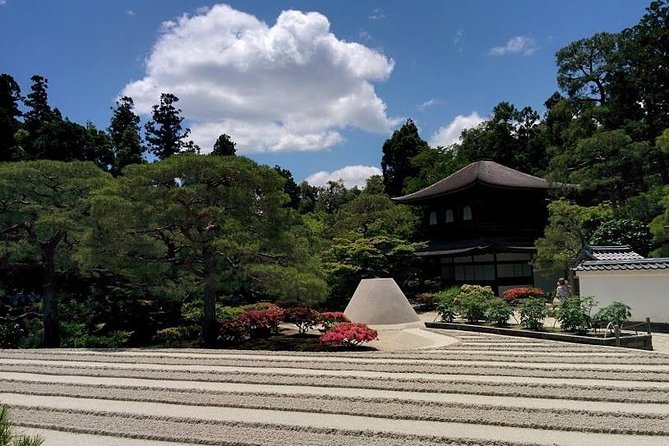
The guide is the heart of this experience. The private taxi is useful, but a driver alone would not explain the gates at Fushimi Inari, the layout of a Zen garden, or the role of Kinkakuji in Kyoto’s story.
Niall has been especially helpful for groups wanting a day shaped around personal interests. He has led people to back-alley entrances and suggested lunch and dinner options, details that can make a short Kyoto visit feel less like a checklist. He has also been praised for humor, friendliness, and teaching a little Japanese along the way.
Eric is a good name to request if available when your main aim is history and careful planning. He has used textbook pictures, added historical explanation, and adjusted the schedule to focus on what the group wanted. Milo has also provided strong historical background and looked after the practical side of the day.
Neil has been noted for patience and attention to individual needs. That may matter if your group includes different ages, different walking speeds, or people who are unsure how much temple time they want.
Guide assignments are not guaranteed, so do not book solely on the hope of getting one particular person. The useful point is that the experience is built around human guidance, not just transportation. State your priorities clearly before the tour: gardens, religion, history, food, photography, shopping, or a lighter walking day.
Is $492.66 per person good value?
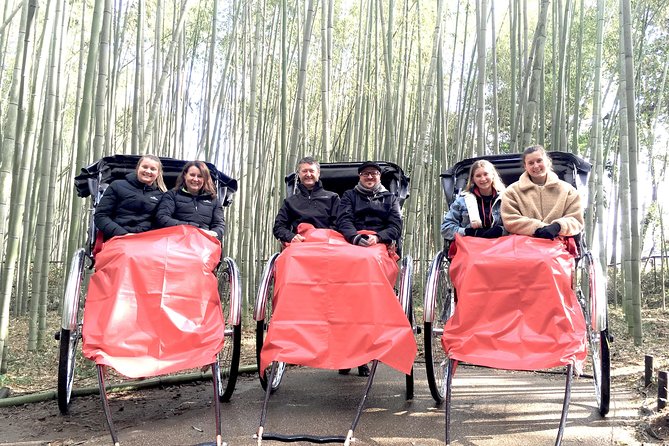
The price is high for a six-hour sightseeing experience. It becomes easier to justify when several people share the planning benefit and private vehicle. A couple pays a substantial premium, while a family or small group may find the cost more reasonable if public transport, taxis, and a private guide would otherwise be arranged separately.
Your fee includes private transportation and all fees and taxes. Admission is included for Tenryu-ji and Kinkakuji, while Fushimi Inari and the Bamboo Forest do not require an admission ticket. Added activities, such as cultural lessons or rickshaw rides, cost extra.
The best value comes from saving time and reducing friction. You are not paying for luxury meals, extensive admissions, or a full-day vehicle. You are paying for a six-hour private route with a person who can help you use that time well.
I would be more cautious if you are comfortable using trains and buses, already know Kyoto, or mainly want to visit one neighborhood slowly. Independent sightseeing will cost less and may give you more control over how long you stay at each site.
For a first visit, a short stay, or a group with mixed interests, the private format has a stronger case. It can also be useful for people who do not want to spend the day changing trains and checking directions.
Walking, weather, and practical limits
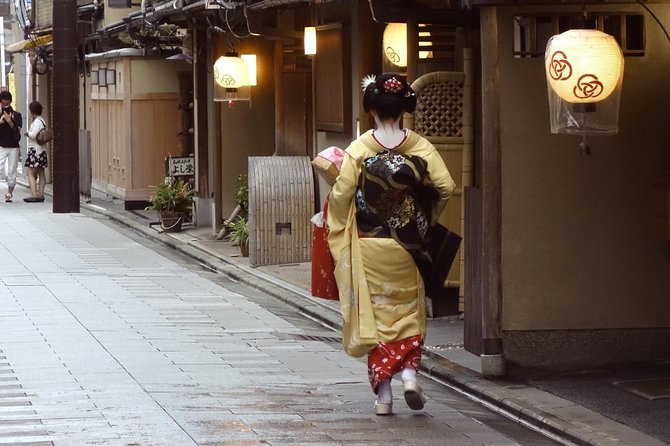
You should expect walking at shrines and temples, even though taxis handle the longer transfers. The information provided says most people can participate, service animals are allowed, and the meeting point is near public transportation.
The route requires good weather. If poor weather causes cancellation, you are offered another date or a full refund. A minimum number of participants is also required for the experience to operate, although the activity itself is private to your group once confirmed.
Pickup is offered, but the stated start and end point is Nidec Kyoto Tower, at Kyoto Tower’s observation area on the third floor. Confirm the exact meeting instructions before setting out, particularly because the address is written in a format that may be easier to locate by copying it into a map.
The free cancellation window closes 24 hours before the start time. Changes or cancellations inside that period are not accepted for a refund, so leave room in your plans if your Kyoto schedule is uncertain.
Who should book this Kyoto experience?
I would consider it for a first-time Kyoto visit when you have only one substantial sightseeing day. The route gives you four recognizable highlights and a guide who can add cultural meaning instead of leaving you to decode each place alone.
It also suits families and small groups that want a private pace. Nobody has to match the walking speed or interests of strangers, and the guide can make suggestions when the group cannot decide what to do next.
Food-focused visitors may like the local recommendations, especially if Niall is available. History-minded visitors should explain that interest in advance, since Eric and Milo have provided particularly strong historical explanations.
I would not choose it for a slow, single-district day. Arashiyama alone can fill many hours, and a dedicated Fushimi Inari visit could include a longer mountain walk. This experience is designed for breadth, convenience, and personal guidance.
Should you book it?
Book it if your Kyoto time is limited, your group values a private guide, and you want the major sights connected without handling the transport yourself. The strongest reasons are the flexible planning, private taxi, and guides who can add history, humor, food advice, and cultural explanation.
Skip it if the price strains your budget or if you prefer to explore at a slow pace using Kyoto’s public transport. At $492.66 per person, it is not a bargain tour. It is a practical premium option for making one carefully organized Kyoto day count.
FAQ
How long is the Kyoto VIP Experience?
The experience lasts approximately six hours.
Where does the tour begin?
It begins at Nidec Kyoto Tower, Japan, 600-8216 Kyoto, Shimogyo Ward, Higashishiokōjichō, 7211, Kyoto Tower observation area, third floor.
Where does the tour end?
The activity ends back at the meeting point.
Is this a private tour?
Yes. Only your group participates in the private activity.
Is transportation included?
Yes. Private transportation is included, and the tour uses taxis to travel between landmarks.
Which sights are included in the planned route?
The route includes Fushimi Inari-taisha Shrine, Bamboo Forest Street, Tenryu-ji Temple, and Kinkakuji Temple.
Are admission fees included?
All fees and taxes are included. Admission is specifically included for Tenryu-ji and Kinkakuji, while Fushimi Inari and Bamboo Forest Street have no admission charge listed.
Are extra activities included?
No. Added activities such as cultural lessons or rickshaw rides are not included.
Can I cancel for a full refund?
Yes, if you cancel at least 24 hours before the experience start time. Cancellations made less than 24 hours before the start time are not refunded.
Recently added around Kyoto
- Higashiyama | Kyoto: Sakura Season Private Rickshaw Tour★ 5.0 · 3 reviews
- Kyoto Kimono Rental CHAMATSU|Kimono/Yukata Rental FamilyPlan★ 5.0 · 3 reviews
- Kyoto: Half-Day Private Guided Tour to the Old Town of Gion★ 4.4 · 3 reviews
- Nara Private Customizable Half Day Tour★ 5.0 · 3 reviews
- Kansai Region Hiking Adventure in Nara Kobe Kyoto and More★ 5.0 · 3 reviews
- Full Day Nara Deer, Temple, Shrine, Activities & Tea Ceremony★ 5.0 · 3 reviews
- Nara: Essential Private Tour with Deer Park and Temples★ 5.0 · 3 reviews
- Hiking Tour for Sacred Sites in Kyoto with a Guide★ 5.0 · 3 reviews
VIP, compared.
Kyoto & Nara: Private Day Tour by luxury Vehicle & English Guide
Read our review →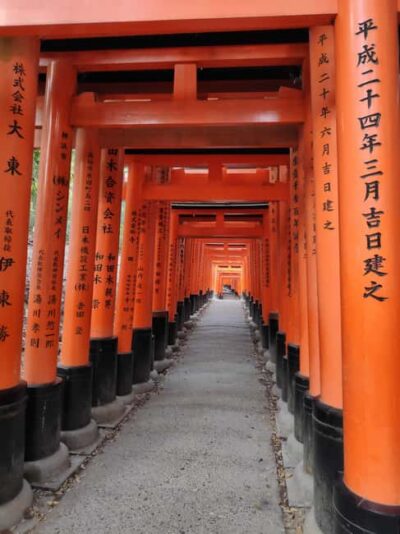
Craig’s Kyoto Private Luxury Alphard Tour / The Early Riser
Read our review →