
REVIEW · KYOTO
Sacred Pathways: Discover the Philosopher’s Path of Kyoto
The best part of this Kyoto walk is its pace. You follow a tree-lined canal beneath the Eastern mountains, stopping at Ginkakuji’s exquisite garden and Nanzenji’s imposing temple grounds instead of rushing from one sight to the next. I like the calm setting, and I like that guides such as Kevin and Craig add useful stories about Japanese culture, art, and daily life. The main drawback is the roughly 5-kilometre route, which requires moderate fitness and includes no food or drinks.
I also appreciate the small groups, capped at eight people, and the fact that entrance fees are already covered. You can ask questions without fighting through a crowd, and there is time for photos, quiet observation, and perhaps a café stop. If you want a fast checklist of Kyoto sights, this is not it. If you want to understand why these places matter, it is a strong choice.
In This Review
- Key points to know before booking
- Why the Philosopher’s Path works so well on foot
- Ginkakuji and the art of restrained beauty
- Nanzenji, temples, and the unexpected aqueduct
- What your guide adds to the walk
- Why a group of eight changes the day
- The $64 price and what it really covers
- Practical details for a comfortable outing
- Who will enjoy this Kyoto walk most
- Should you book Sacred Pathways?
- FAQ
- How long does the Philosopher’s Path tour last?
- How far do you walk?
- Which Kyoto sights are included?
- Are entrance fees included?
- Are food and drinks included?
- What languages are available?
- How large is the group?
- Can children join the tour?
Key points to know before booking
- A gentle 5-kilometre walk follows the canal along Kyoto’s Philosopher’s Path.
- Ginkakuji Temple is a major highlight, especially its carefully arranged garden.
- Nanzenji adds grand architecture and a striking historic aqueduct.
- Guides Kevin and Craig are praised for clear explanations, local experience, and an easygoing pace.
- Groups stay small, with no more than eight people and no flags, microphones, or tour buses.
- The $64 price includes entrance fees, but not food or drinks.
Why the Philosopher’s Path works so well on foot
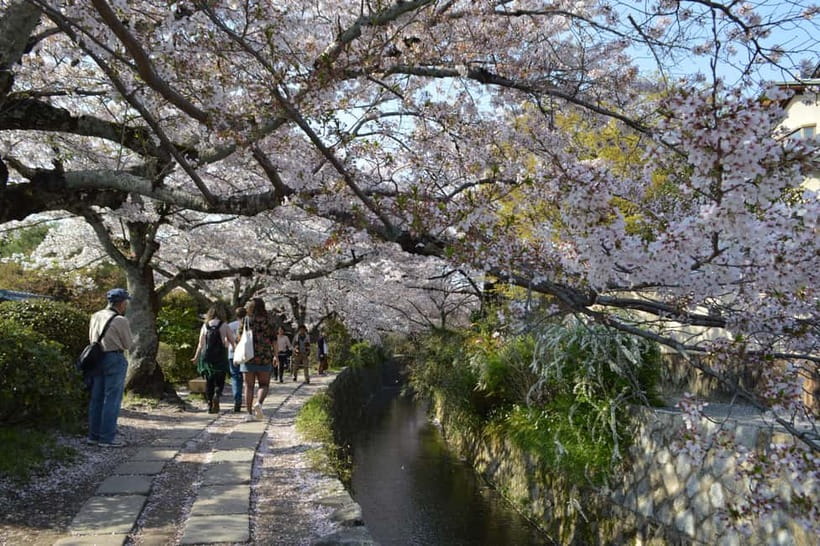
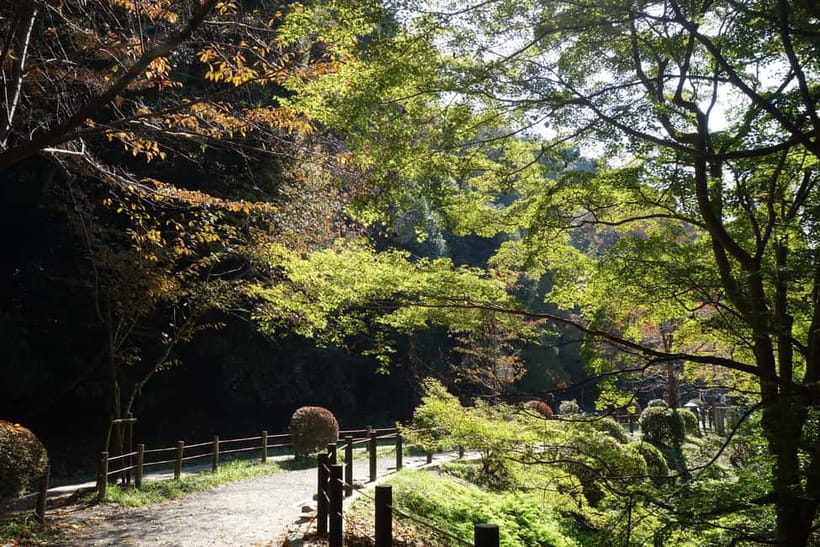
Kyoto has plenty of famous temples, but the Philosopher’s Path gives you something many sightseeing plans lack: breathing room between the major stops. The walkway follows a canal at the foot of the Eastern mountains, with trees, moss, small shops, cafés, and quiet side streets along the way.
I like this kind of route because the walk itself is part of the experience. You are not simply being delivered to one temple after another. The sound of moving water and the greenery along the canal create a softer transition between busy Kyoto and the quieter religious sites.
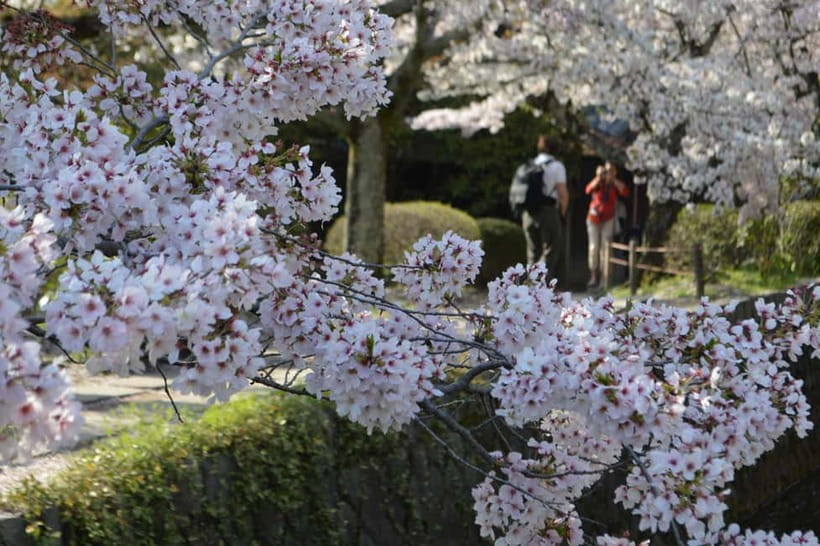
The route changes with the season. In spring, the trees can add a famous burst of color. In autumn, leaves bring another mood. Even in rainy weather, the gardens and moss may look especially fresh, and the damp conditions can thin the crowds. The tour operates across the year, so the exact atmosphere depends on your date.
This is not a strenuous mountain hike, but it is not a short temple visit either. Five kilometres, or about three miles, over four hours means a relaxed walking pace with stops. You should be comfortable walking for much of the morning or afternoon and standing at temple sites. Wear shoes that you can walk in for several hours.
Other Kyoto mornings people book alongside this one:
- PERFECT KYOTO 1-Day Bus Tour
★ 5.0 · 13,518 reviews - Kyoto: Fushimi Inari, Kinkakuji, Bamboo Grove 1 Day Bus Tour
★ 4.8 · 4,316 reviews - Kyoto: Tea Ceremony in a Traditional Tea House in Kiyomizu
★ 4.9 · 3,519 reviews
Ginkakuji and the art of restrained beauty
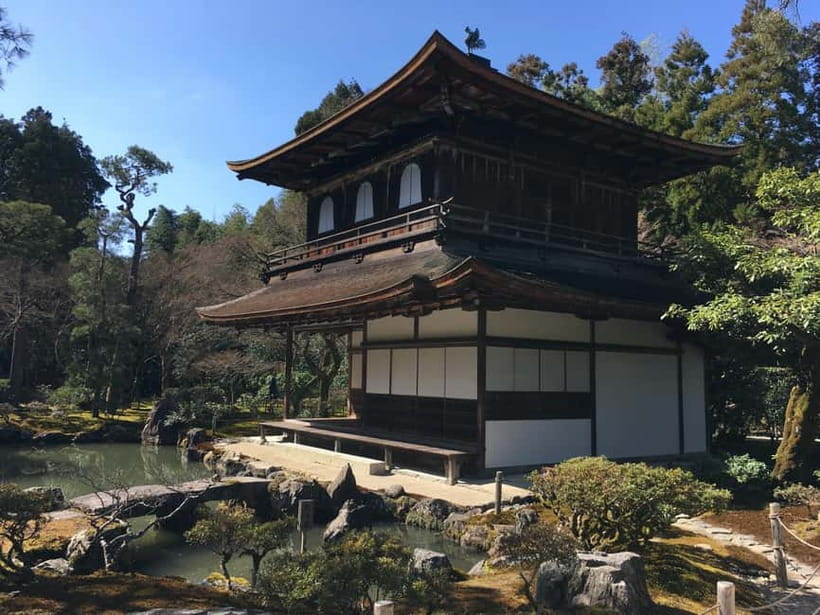
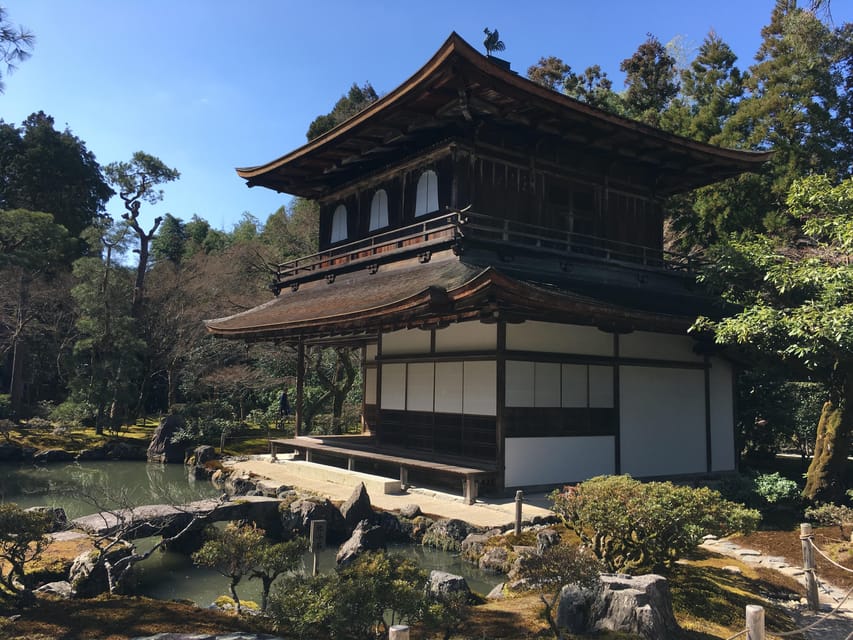
Ginkakuji Temple is often called the Silver Pavilion, though its name can create the wrong picture. The great appeal is not a glittering silver exterior. It is the garden and the quiet visual order of the grounds.
Here, your guide can help you notice details that are easy to miss when you walk through alone. Carefully raked gravel, placed stones, moss, water, and shaped planting all work together. Zen gardens are not merely empty spaces with rocks in them. Their design invites you to slow down and consider balance, distance, texture, and simplicity.
I find this context especially useful in Kyoto. Without some explanation, a garden can appear beautiful but mysterious. With a guide, you can better understand how Zen ideas influenced Japanese arts and culture, including garden design and the preference for disciplined, spare forms.
Allow yourself time to look rather than simply take a photograph. The garden is one of the strongest reasons to book this walk, but it rewards attention. You may also appreciate the contrast between the formal garden areas and the more natural greenery around them.
Ginkakuji can be busy, especially during popular seasons. A small group cannot remove the crowds entirely, and the route does not promise private access or an empty temple. Still, the relaxed format gives you a better chance to pause and take in the setting than a hurried group excursion.
Nanzenji, temples, and the unexpected aqueduct
Nanzenji brings a different scale and mood to the route. It is one of Kyoto’s most prominent Zen temples, with powerful architecture and broad grounds that feel more imposing than the intimate scenes along the canal.
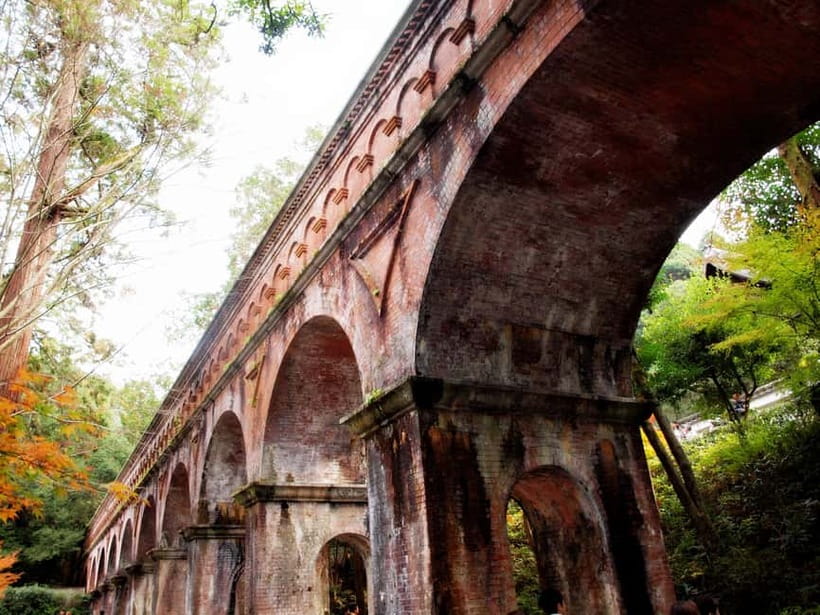
The aqueduct is a particularly memorable feature. Its brick structure adds an unexpected European-looking line to the temple area, creating a striking meeting of engineering, history, and religious surroundings. It is one of those places where a guide’s explanation can make a real difference, since you might otherwise see it as an attractive structure without understanding why it is there.
At Nanzenji, the guide also connects the buildings and grounds to the wider role of Zen in Kyoto. The point is not simply to memorize temple names. You learn how religious thought affected the city’s visual culture and why gardens, architecture, and quiet spaces carry such importance in Japan.
The temple grounds are another place where pace matters. You have room to look up at the architecture, study the layout, and ask questions. The tour is designed for conversation, not a speech delivered from the front of a moving crowd.
What your guide adds to the walk
The strongest feature of this experience is the human explanation. Kyoto’s temples and gardens can be lovely on their own, but the meaning behind them is not always obvious to someone seeing them for the first time.
Kevin is praised for being personable, fun, and able to answer questions about Kyoto, Japan, and the Philosopher’s Path. He is also noted for matching his pace to the group, which matters on a walking tour. You do not want to spend four hours trying to keep up with a guide who treats the route like a race.
Craig brings a similar strength. After living in Kyoto for 13 years, he can connect what you see to the city where he has made his life. That long local experience is useful because it lets you ask ordinary questions, not just temple-related ones. Food suggestions and other local recommendations may also be part of the conversation.
The available guide languages are English and French. Since the group is small, you should have a better chance to ask about customs, history, architecture, or places to eat afterward. The included digital city guide and restaurant recommendations add value beyond the four-hour walk, especially if this is your first stay in Kyoto.
Guide quality can vary because you may not receive the same person every day. Still, the consistent strengths to look for are an easy pace, clear storytelling, and a willingness to engage with your questions. Those qualities come through strongly in the feedback available for this experience.
A completely different side of Kyoto:
- Kyoto Geisha Walking Tour: Gion District & Hidden Gems
★ 4.7 · 3,273 reviews - Kyoto: Tea Ceremony Ju-An at Jotokuji Temple
★ 4.9 · 3,207 reviews - Kyoto: Gion Magical Night Walking Tour with Geisha Trivia
★ 4.9 · 2,393 reviews - Kyoto: 45-Minute Tea Ceremony Lesson Experience
★ 4.3 · 2,378 reviews
Why a group of eight changes the day
A maximum of eight people is a useful middle ground. You get some of the social ease of a group tour without the problems that come with a large coach group.
There are no flags, microphones, or buses involved. That means fewer interruptions and a more natural way to move through residential streets, temple approaches, and the canal path. You can hear the guide without standing right beside a loudspeaker, and the group can stop without blocking a broad section of the walkway.
Small groups also make it easier to adjust the pace. If one person needs a moment for photographs or a closer look at a garden, the guide can usually respond more easily than on a rigid, large-scale tour. Several people specifically valued the unhurried approach and the chance to see places without constantly feeling pushed onward.
Of course, small-group does not mean private. If you want complete control over timing, ask about the private option. Families with children under 10 are asked to enquire about a private tour, and the activity is not considered suitable for children under 10 or people over 95.
The $64 price and what it really covers
At $64 per person, this tour offers fair value if you want temple context and a well-managed route. Entrance fees are included, so you do not need to keep cash ready at Ginkakuji or Nanzenji. That removes a minor nuisance, particularly when you are still getting used to Japanese money and ticketing customs.
The price also pays for the guide, the small group format, and four hours of focused sightseeing. I would value it most early in a Kyoto visit, when a guide can help you understand the city and point you toward places to explore later.
Food and drinks are not included. That is reasonable for a walking tour, but you should budget for your own tea, snack, or café stop. The route includes cafés and small shops, and one stop may provide a pleasant break, but you should not treat refreshments as part of the package.
The tour also includes a digital city guide. That can stretch the value beyond the day itself, especially when paired with restaurant suggestions. If you are comfortable researching temple history on your own and prefer to walk independently, you may decide the admission fees alone do not justify the cost. If you want interpretation, navigation, and local conversation, the price is easier to defend.
Practical details for a comfortable outing
The exact meeting point can vary by the option you book, so check your confirmation carefully. Starting times also vary, and availability needs to be checked before booking.
Plan on four hours and roughly three miles of walking. Comfortable footwear is more important than fashionable footwear here. The path is generally an easy urban walk, but the total distance, temple surfaces, and time spent standing can make the outing tiring if you are not used to long walks.
Bring water, since drinks are not included. You may also want a light rain layer, as the gardens can be particularly atmospheric in wet weather, but rain will still affect your comfort. Drones are not allowed.
The tour is available as a private experience or a small group, with English or French guiding. You can cancel up to 24 hours before the activity for a full refund, and the reserve-now, pay-later option lets you hold a place without paying at once. Those policies are helpful if your Kyoto schedule is still moving around.
Who will enjoy this Kyoto walk most
I would recommend Sacred Pathways to you if you want more than a quick photograph at a famous temple. It suits first-time visitors who want a clear introduction to Zen, gardens, and Kyoto’s eastern temple area.
It is also a good fit for repeat visitors. The route includes familiar names, but the guide can lead you toward details and side views you might overlook on your own. Several people appreciated seeing quieter parts of the area and encountering fewer people away from the busiest streets.
Couples, solo visitors, and adults who enjoy conversation should find the small group format comfortable. The tour is also useful for anyone who likes to ask questions as they go rather than read a guidebook later.
I would hesitate if you dislike walking, want a meal included, or need a fully accessible itinerary with every detail confirmed in advance. The available information supports a moderate walking level, not a promise of step-free access. Families with young children should ask about a private arrangement before booking.
Should you book Sacred Pathways?
Book it if you want Kyoto explained as you walk through it. The combination of the canal, Ginkakuji’s garden, Nanzenji’s architecture, and a small group creates a thoughtful half-day rather than a rushed temple checklist.
The best reasons to choose it are the calm pace, included entrance fees, and guides such as Kevin and Craig, who bring local experience and keep the conversation open. The main question is simple: are you ready to walk five kilometres?
If yes, $64 is a sensible price for four hours of guiding and temple visits, especially early in your trip. If you prefer to move quickly or explore independently, save the money and walk the Philosopher’s Path on your own. You will see the same canal, but you will miss much of the explanation that gives the gardens and temples their meaning.
FAQ
How long does the Philosopher’s Path tour last?
The tour lasts four hours.
How far do you walk?
The route covers about 5 kilometres, or 3 miles, so you need at least a moderate level of fitness.
Which Kyoto sights are included?
The tour visits the Philosopher’s Path, Ginkakuji Temple, and Nanzenji Temple. It also includes the aqueduct at Nanzenji.
Are entrance fees included?
Yes. All entrance fees are included in the tour price.
Are food and drinks included?
No. Food and drinks are not included.
What languages are available?
Live guiding is available in English and French.
How large is the group?
The tour has no more than eight people. A private option is also available.
Can children join the tour?
The activity is not suitable for children under 10. If you want to book for younger children, you should enquire about a private tour.
Recently added around Kyoto
- Higashiyama | Kyoto: Sakura Season Private Rickshaw Tour★ 5.0 · 3 reviews
- Kyoto Kimono Rental CHAMATSU|Kimono/Yukata Rental FamilyPlan★ 5.0 · 3 reviews
- Kyoto: Half-Day Private Guided Tour to the Old Town of Gion★ 4.4 · 3 reviews
- Nara Private Customizable Half Day Tour★ 5.0 · 3 reviews
- Nara: Essential Private Tour with Deer Park and Temples★ 5.0 · 3 reviews
- Kansai Region Hiking Adventure in Nara Kobe Kyoto and More★ 5.0 · 3 reviews
- Full Day Nara Deer, Temple, Shrine, Activities & Tea Ceremony★ 5.0 · 3 reviews
- Hiking Tour for Sacred Sites in Kyoto with a Guide★ 5.0 · 3 reviews