
REVIEW · SAKE TASTING
Private Pewter Sake Cup Experience with a Kyoto Artisan
The best part of this Kyoto experience is that you do not simply buy a craft, you make the souvenir yourself. At Craft Gallery SALUK, artisan Kanako teaches you to hammer patterns into a pewter cup, shape its rim, and add a personal mark before taking it home.
I like the calm workshop setting away from central Kyoto, and I like that beginners get real control over the design. The private format means your group receives Kanako’s full attention. The main drawback is the location: this is not a quick stop between Gion and Kiyomizu-dera, and the trip can take about an hour by scenic train.
In This Review
- Key points to know before booking
- Why a handmade pewter cup makes a better souvenir
- Arriving at Craft Gallery SALUK
- Choosing the hammer and setting the pattern
- Personalizing the base with letters and dates
- Filing the rim for a comfortable drink
- The calm setting adds value
- Kanako’s teaching style and the private format
- What you take home
- Is $144.96 per person a fair price?
- Who will enjoy this most
- Practical details before you go
- Should you book the pewter sake cup workshop?
- FAQ
- Where does the pewter sake cup experience take place?
- How long does the workshop last?
- Is this a private activity?
- Are materials provided?
- Can I personalize the cup?
- What size is the finished cup?
- Can I cancel for a full refund?
Key points to know before booking
- Hammer your own design: Choose from several hammers and create different textures as you rotate the cup.
- Guided by Kanako: Clear instruction and patient help make the metalwork approachable for first-time crafters.
- A true private class: Only your group takes part, so the pace and design can feel personal.
- Add initials or a date: Stamp letters, numbers, or a special date onto the base.
- Useful size: The finished cup measures about 64 millimeters across, stands 53 millimeters high, and holds about 90 milliliters.
- Plan the journey: The studio is in northern Kyoto, away from the main sightseeing districts, so allow extra travel time.
Why a handmade pewter cup makes a better souvenir
Kyoto is full of attractive souvenirs, but many are factory-made or difficult to connect with after you get home. This cup gives you a story. You remember the sound of the hammer, the pattern you tried to create, and the small decisions that made the finished piece yours.
Pewter is also a practical choice for a drinking vessel. The cup is made to sit comfortably in your hand, and its modest size suits sake, which is often served in small portions. You can also use it for whiskey, chilled green tea, or other drinks.
The cup is not a large object. That matters when you are packing for an international flight. At about 64 millimeters in diameter and 53 millimeters tall, it is easy to carry, yet substantial enough to feel like a proper keepsake.
A personal stamp makes the item even more meaningful. You can add initials, numbers, or a date to the base. A wedding date, family trip, or first visit to Japan would all work well. Decide before you arrive if you want a neat, simple mark or something more private and symbolic.
More bars and sake stops in Kyoto:
- Kyoto Night Foodie Tour in Gion (9+ dishes + 6 Sake tastings)
★ 5.0 · 1,762 reviews - 3-Hour Kyoto Insider Sake Brewery Tour with Tastings & Pairings
★ 5.0 · 917 reviews - Arashiyama Bamboo, Temple, Monkeys, or Secret Sake Brewery
★ 4.8 · 886 reviews
Arriving at Craft Gallery SALUK
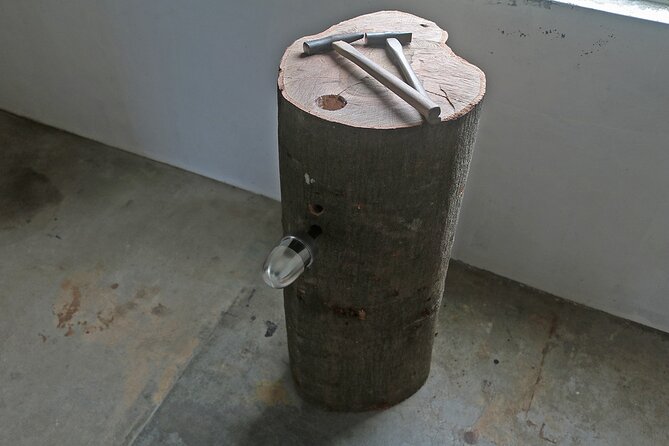
The meeting point is Craft Gallery SALUK, at 35-2 Shizuichinonakacho in Sakyo Ward, Kyoto. This is in the northern part of the city, not in the usual sightseeing core.
That distance is both the weakness and the charm of the activity. You will spend more time getting there than you would for a workshop near Kyoto Station, but the setting offers a break from busy streets and packed temple paths. The studio is described as being in a peaceful area with mountain surroundings and a nearby stream.
One practical note: the address is not the easiest place to combine with a full day of central Kyoto sightseeing. I would treat this as a dedicated half-day outing rather than an add-on after several major attractions. A scenic train ride from Kyoto Station can take about an hour, so check your route and leave room for delays.
The workshop ends where it begins. Some participants have received help getting to a more convenient train station afterward, but you should not assume that will always be available. Ask about your return route when booking or before the class begins.
Choosing the hammer and setting the pattern
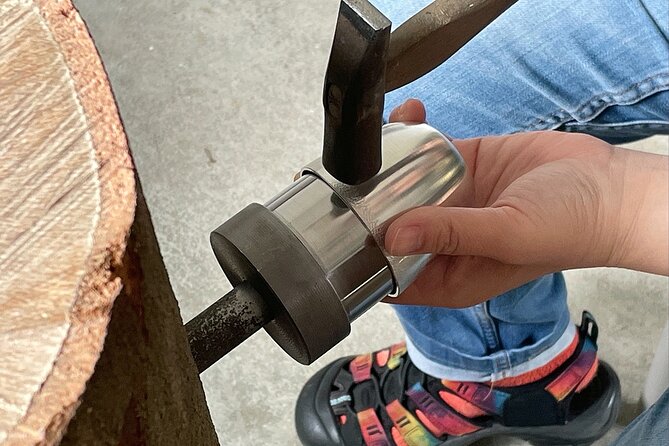
The hands-on work begins with a simple choice: select a hammer from several types. Each hammer produces a different mark on the pewter, so the tool becomes part of the design.
You place the cup on an anvil and strike it while turning it. The goal is not to pound randomly. You are building a pattern around the surface, one tap at a time. A single hammer can create a consistent look, while combining several hammers gives the cup a more varied finish.
This is where the activity becomes personal. Two people can follow the same instructions and produce very different cups. A light, regular touch may create a fine pattern. A stronger or less even rhythm can make a more dramatic surface. You do not need previous metalworking experience, but patience helps.
Kanako’s role is important here. She explains the process clearly and helps beginners avoid major mistakes without taking control of the work. That balance gives you enough freedom to make real choices while keeping the project manageable.
The hammering is also the most physical part of the class. You are not watching a demonstration from a distance. You are making repeated strikes and turning the cup with care. If your wrists or hands tire easily, work steadily and take the time to ask for guidance.
Personalizing the base with letters and dates
Once the main pattern is in place, you can add letters, numbers, initials, or a date to the bottom of the cup. This small step changes the object from a nice handmade item into a personal record of your time in Kyoto.
Keep the design simple. The cup itself already has texture, and a short set of initials or a date is likely to look more balanced than a long message. If several people in your group are making cups, matching dates or individual initials can create a nice set without making every cup identical.
This option is especially useful for couples and families. A wedding date, anniversary, or shared travel date gives the cup a clear connection to the trip. It also helps identify each cup if you make several at once.
Because the stamping is part of the craft, placement matters. Think about whether you want the mark centered or slightly understated. Kanako can guide you through the process, but the final choice remains yours.
More food tours in Kyoto:
- Kyoto: Insider Sake Brewery Tour with Sake and Food Pairing
★ 5.0 · 704 reviews - Kyoto Sake Brewery & Tasting Walking Tour
★ 5.0 · 623 reviews - Kyoto Nishiki Market Food and Culture Walking Tour
★ 5.0 · 412 reviews - Kyoto: Gion Food Tour 13 Dishes at 4 Eateries
★ 5.0 · 408 reviews
Filing the rim for a comfortable drink
After the decorative work, you use a file to adjust the height and shape the rim. The edge is beveled at an angle so it feels pleasant when you drink from it.
This step may sound minor, but it is one of the most useful parts of the workshop. A cup can look beautiful and still feel awkward if the rim is too sharp or uneven. Filing lets you take part in the practical finishing work, not just the decorative side.
The cup’s form is designed to fit comfortably in the hand. Its capacity is about 90 milliliters, or roughly 115 milliliters when filled to the rim. In normal use, you would not need to fill it completely, so the smaller stated capacity is the more useful figure.
The final polishing is done by the craftsperson with a rotary machine for safety. This is a sensible division of labor. You shape and personalize the cup, while Kanako handles the tool work that requires more experience and control.
The calm setting adds value
The studio’s location outside central Kyoto gives the class a slower feel. Instead of moving through a line of attractions, you spend two and a half hours focused on one object.
The area has been described as peaceful, with mountain scenery and a babbling stream nearby. Those details matter because craft work benefits from quiet. You can concentrate on the pattern, talk with your companions, and ask questions without the noise and pressure of a busy commercial venue.
The setting also helps you see another side of Kyoto. The city is famous for temples, gardens, tea culture, and traditional architecture, but its craft traditions are just as important. At SALUK, you get a direct look at the care behind a handmade object.
The tradeoff is obvious: quiet surroundings require extra effort to reach. If you have only one day in Kyoto, central sights may offer better use of your time. If you have several days, the journey can be a worthwhile change of pace.
Kanako’s teaching style and the private format
Kanako is the main reason this class works for beginners. The instruction is available in clear English, and the experience is structured so you can learn by doing. She explains the tools, demonstrates the basic method, and steps in when your design needs correction.
The private format is particularly useful for couples, families, and small groups of friends. Only your group participates, so you are not trying to keep up with strangers or waiting for space at the anvil. You can ask questions freely and spend more time on design choices.
It also makes the activity suitable for people with different skill levels. One person may want a simple, even pattern. Another may want to experiment with several hammers or create a more unusual design. The group can work at a comfortable pace.
The class is not a formal lecture on Japanese metalworking. It is a practical workshop with cultural context. You learn why pewter is valued for drinking vessels and how traditional hand techniques shape the cup, but most of your time is spent making the object.
That is a strength if you want an active experience. It may be less suitable if you prefer to sit back and receive a detailed art-history presentation.
What you take home
The finished cup is small, functional, and easy to use. You can enjoy sake from it, but you are not limited to that. Whiskey and chilled green tea are also suitable options, and the cup can become part of an everyday ritual rather than a decoration that stays in a cabinet.
The craft process gives the surface a one-of-a-kind look. The pattern depends on your hammer choice, the force of each strike, and how you rotate the metal. Small irregularities are part of the point. This is handmade work, not a machine-perfect product.
Packaging is another practical advantage. The cup can be packed in a wooden box, making it easier to protect and present when you return home. If you do not drink alcohol, the cup still has a clear use. One participant used green tea instead of sake, which fits the cup’s intended versatility.
The small size is helpful, but pewter still needs sensible care. The supplied information does not specify a detailed cleaning or dishwasher policy, so ask Kanako about care before leaving. That is a better approach than guessing with a handmade metal cup.
Is $144.96 per person a fair price?
At $144.96 per person, this is not a bargain craft class. You are paying for private instruction, an intimate setting, the materials, the use of specialist tools, and a finished pewter cup that you made yourself.
The value depends on what you want from a Kyoto activity. If your goal is the cheapest souvenir, buy something from a shop. If you want a personal object and two and a half hours of instruction with an artisan, the price is easier to justify.
The class also saves you from having to bring supplies. Everything required for the pewter work is provided, and you leave with the completed piece. That makes it simple for visitors who are traveling with limited luggage or who do not have craft experience.
I would compare it with the cost of other hands-on activities, not with the price of a mass-produced cup. The result is both a usable object and a memory tied to a specific place, teacher, and afternoon. For a special occasion, anniversary, or final day in Kyoto, that combination may be worth the premium.
Who will enjoy this most
I would recommend this workshop to you if you like making things with your hands, prefer small-group activities, or want a souvenir with a personal story. It is also a strong choice for couples and families who enjoy creating matching or complementary objects.
The class suits beginners because the process is broken into clear stages. You do not need to arrive with metalworking experience, and you are not expected to supply your own materials.
It can also appeal to experienced artists and craftspeople. The basic project is accessible, but the hammer patterns allow room for experimentation. People interested in Japanese craft traditions will get more from the session than someone who only wants a quick photo opportunity.
I would hesitate to book it if your Kyoto schedule is packed tightly around central attractions. The remote location and roughly 2.5-hour class require a real time commitment. It is also not the right pick if you want a polished souvenir without doing any work. Your cup will reflect your hand, including any uneven marks.
Practical details before you go
The activity lasts approximately two hours and 30 minutes and ends back at the meeting point. A mobile ticket is accepted, and booking confirmation is provided at the time of reservation.
You do not need to bring materials. Service animals are allowed, and the workshop is near public transportation. Most people can participate, though the activity involves repeated hammering, rotating the cup, and filing the rim.
The experience is private, but it is still described as an intimate small-group class. In practice, that means your booking is reserved for your own party rather than mixed with a larger public group.
Free cancellation is available if you cancel at least 24 hours before the local start time. Changes or cancellations inside that window are not accepted for a refund, so keep the travel time and your Kyoto schedule in mind before booking.
Should you book the pewter sake cup workshop?
Book it if you want a personal, useful Kyoto souvenir and are willing to travel beyond the city center. Kanako’s patient instruction, the private setting, and the freedom to create your own pattern make this much more than a basic souvenir-making session.
Skip it if you have limited time, dislike hands-on work, or want to stay near Kyoto’s main sights. For everyone else, the combination of quiet northern Kyoto, traditional metalwork, and a cup marked by your own hands makes the $144.96 price reasonable for a special half-day experience.
FAQ
Where does the pewter sake cup experience take place?
It takes place at Craft Gallery SALUK, at 35-2 Shizuichinonakacho, Sakyo Ward, Kyoto, Japan.
How long does the workshop last?
The experience lasts approximately two hours and 30 minutes.
Is this a private activity?
Yes. Only your group participates in the activity.
Are materials provided?
Yes. You do not need to bring materials with you.
Can I personalize the cup?
Yes. You can stamp letters, numbers, initials, or a date onto the base of the cup.
What size is the finished cup?
The cup measures approximately 64 millimeters in diameter and 53 millimeters in height. It holds about 90 milliliters, or about 115 milliliters when filled to the rim.
Can I cancel for a full refund?
Yes, if you cancel at least 24 hours before the experience’s start time. Cancellations or changes made less than 24 hours in advance are not refunded.
More Sake Tasting in Kyoto
- 1.5-Hour Kyoto Insider Sake Experience with 7 Tastings & Pairings
★ 5.0 · 297 reviews - Kyoto: Insider Sake Experience with 7 Tastings and Snacks
★ 5.0 · 266 reviews - Private Tea Ceremony and Sake Tasting in Kyoto Samurai House
★ 5.0 · 163 reviews - Advanced Kyoto Insider Sake Tasting Experience
★ 5.0 · 44 reviews
Recently added around Kyoto
- Higashiyama | Kyoto: Sakura Season Private Rickshaw Tour★ 5.0 · 3 reviews
- Kyoto Kimono Rental CHAMATSU|Kimono/Yukata Rental FamilyPlan★ 5.0 · 3 reviews
- Kyoto: Half-Day Private Guided Tour to the Old Town of Gion★ 4.4 · 3 reviews
- Nara Private Customizable Half Day Tour★ 5.0 · 3 reviews
- Kansai Region Hiking Adventure in Nara Kobe Kyoto and More★ 5.0 · 3 reviews
- Full Day Nara Deer, Temple, Shrine, Activities & Tea Ceremony★ 5.0 · 3 reviews
- Nara: Essential Private Tour with Deer Park and Temples★ 5.0 · 3 reviews
- Hiking Tour for Sacred Sites in Kyoto with a Guide★ 5.0 · 3 reviews
Sake Tasting, compared.

Kyoto Night Foodie Tour in Gion (9+ dishes + 6 Sake tastings)
Read our review →
3-Hour Kyoto Insider Sake Brewery Tour with Tastings & Pairings
Read our review →
Arashiyama Bamboo, Temple, Monkeys, or Secret Sake Brewery
Read our review →
Insider Sake Brewery Tour with Sake and Food Pairing
Read our review →
1.5-Hour Kyoto Insider Sake Experience with 7 Tastings & Pairings
Read our review →
Insider Sake Experience with 7 Tastings and Snacks
Read our review →
Private Tea Ceremony and Sake Tasting in Kyoto Samurai House
Read our review →Browse the lists this tour appears in