
REVIEW · GION GEISHA DISTRICT TOURS
Kyoto: The Geisha Districts of Kyoto Walking Tour
Kyoto’s geisha districts are best understood on foot, and this tour gives you more than a quick look at painted tea-house fronts. You begin in Miyagawacho, where a welcome drink, slideshow, and traditional games offer a useful peek behind the scenes before you head into the narrow streets. I especially like the mix of indoor explanation and outdoor walking, plus the chance to see four of Kyoto’s five central hanamachi districts.
The tour also earns points for its small-group feel and guides such as Kevin and Ben, who explain geisha customs alongside wider Japanese culture. The main consideration is the pace and footing: with narrow streets, temple approaches, and around an hour of walking, this is not a good fit for people with mobility impairments. Rain can also make the two-hour walk uncomfortable, so check the forecast.
In This Review
- Key points to know
- Why the lounge matters before Gion
- Miyagawa-chō and the working streets of the hanamachi
- Kenninji Temple adds a quieter turn
- Yasui Kompira-Gu Shrine and local customs
- Ninenzaka brings the historic lanes into view
- Yasaka Shrine closes the walking route
- Four hanamachi districts in two hours
- What the guides add
- Is $38 a fair price?
- Who should book this Kyoto walking tour?
- Practical details before you reserve
- Should you book it?
- FAQ
- How long does the Kyoto geisha districts walking tour last?
- What areas does the tour visit?
- Is a welcome drink included?
- Will I definitely see a geisha or maiko?
- Are tea-house visits included?
- What languages are available?
- Is this a private tour?
- Is the tour suitable for people with mobility impairments?
- Can I cancel for a full refund?
Key points to know
- Start with context in Miyagawacho: A welcome drink, interactive slideshow, and geisha-style games make the opening more than a standard street briefing.
- Visit four hanamachi districts: You get a broader look at Kyoto’s entertainment quarters instead of seeing only the best-known lanes of Gion.
- Walk through real tea-house areas: The route passes hundreds of tea houses, though entering them is not part of the experience.
- Combine geisha culture with major sights: Kenninji Temple, Yasui Kompira-Gu Shrine, Ninenzaka, and Yasaka Shrine add religious and historic context.
- Choose a small group or private format: English and French guides are available, with a reported rating of 4.9 from 14 bookings.
- Plan for about an hour on foot: The full experience lasts two hours, including the indoor introduction and guided route.
Why the lounge matters before Gion

Gion can be easy to misunderstand. You may see a woman in a formal kimono hurrying along a lane and assume you have witnessed an ordinary geisha performance, but the district’s customs and working life are far more private than a quick photograph suggests.
This tour begins in a traveler lounge in Miyagawacho, one of Kyoto’s central geisha districts. That setting gives you time to settle in before walking. You receive a welcome drink, then get background on the world of geisha through an interactive slideshow and games connected with the entertainment districts.
I like this opening because it gives the guide room to explain rather than point. The games are designed to show something of what real geisha do, and the slideshow helps you place the streets into a wider cultural setting. You are not simply told that the area is old or famous. You get an introduction to the customs that shape how these districts work.
The welcome drink is included, but food and additional drinks are not. If you are hoping for a full tea-house meal or an inside visit to a working establishment, this is not that kind of tour. It is an educational walk with a short indoor introduction.
More evenings in Gion:
- Kyoto Geisha Walking Tour: Gion District & Hidden Gems
★ 4.7 · 3,273 reviews - Kyoto: Gion Magical Night Walking Tour with Geisha Trivia
★ 4.9 · 2,393 reviews - Kyoto: Gion Geisha District Walking Tour – Stories of Geisha
★ 4.7 · 2,187 reviews
Miyagawa-chō and the working streets of the hanamachi
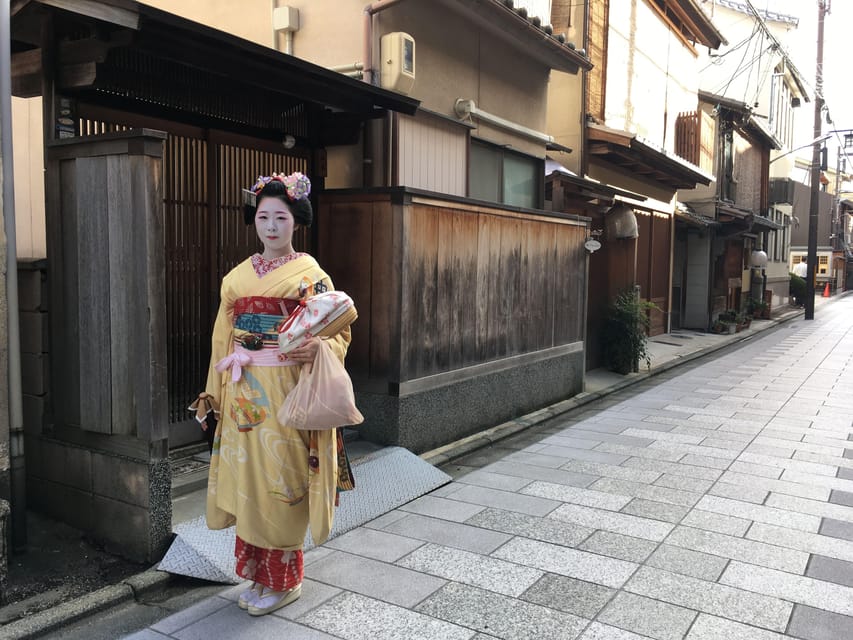
Miyagawa-chō is the first district you visit in detail. The name appears in several spellings, including Miyagawacho, and it is one of the five recognized hanamachi, or geisha districts, in central Kyoto.
Your guide explains how the district connects to the geisha tradition and points out the tea houses that give the area its character. The description of the route promises hundreds of real tea houses across the districts, but you should understand that you see them from the street. The value lies in learning how to read the setting, not in entering private businesses.
This is also where the tour’s emphasis on manners becomes useful. Geisha districts are working neighborhoods, not open-air stages. A guide can help you understand why you should keep moving, avoid blocking a doorway, and treat people in costume with care. The supplied information does not promise a guaranteed geisha sighting, so consider any glimpse of a maiko or geisha a bonus rather than the main product.
The walk from here lasts close to an hour, with stops along the way. Comfortable shoes are a sensible choice. The streets are historic and narrow, and the route includes temple and shrine areas rather than one flat sidewalk.
Kenninji Temple adds a quieter turn
Kenninji Temple is listed as a 15-minute visit. It provides a change of mood after the entertainment district, giving you a chance to connect Kyoto’s cultural life with its Buddhist traditions.
The stop is brief, so this is not a full temple tour. I would treat it as a focused introduction rather than expect extended time for every building or artwork. Your guide can help you understand why a temple appears within a route centered on geisha districts and how religious sites fit into the older city.
The practical benefit is variety. Two hours spent only on tea-house streets could begin to feel repetitive, especially if you do not already have an interest in geisha culture. Kenninji gives the route another layer and breaks up the walk.
Yasui Kompira-Gu Shrine and local customs

The next listed stop is Yasui Kompira-Gu Shrine, with about 15 minutes for a visit. Shrines and temples can look similar to first-time visitors, so having a bilingual guide explain the difference is useful.
The shrine is part of the Higashiyama area and brings a Shinto setting into the tour. This short stop should help you see that the entertainment districts are not isolated attractions. They sit among places of worship, old lanes, shops, homes, and everyday city life.
I would pay attention here to the guide’s explanations of customs rather than rush to take photographs. The tour’s best moments are likely to come from small details: how people move through the district, how the tea houses present themselves, and how public streets meet private cultural spaces.
The route is not designed for a long shrine visit. If Yasui Kompira-Gu is high on your list, leave time to return on your own. The 15-minute stop keeps the overall tour moving toward Ninenzaka and Yasaka Shrine.
More walking tours in Kyoto:
- Night Walk in Gion: Kyoto’s Geisha District
★ 4.5 · 2,003 reviews - Kyoto Gion Geisha District Walking Tour – The Stories of Geisha
★ 5.0 · 1,441 reviews - Nishiki Market Brunch Walking Tour (7 Tastings + Brunch)
★ 5.0 · 1,355 reviews - Kyoto Arashiyama Walking Tour: Bamboo, Monkeys, Gardens & Secrets
★ 5.0 · 1,216 reviews
Ninenzaka brings the historic lanes into view
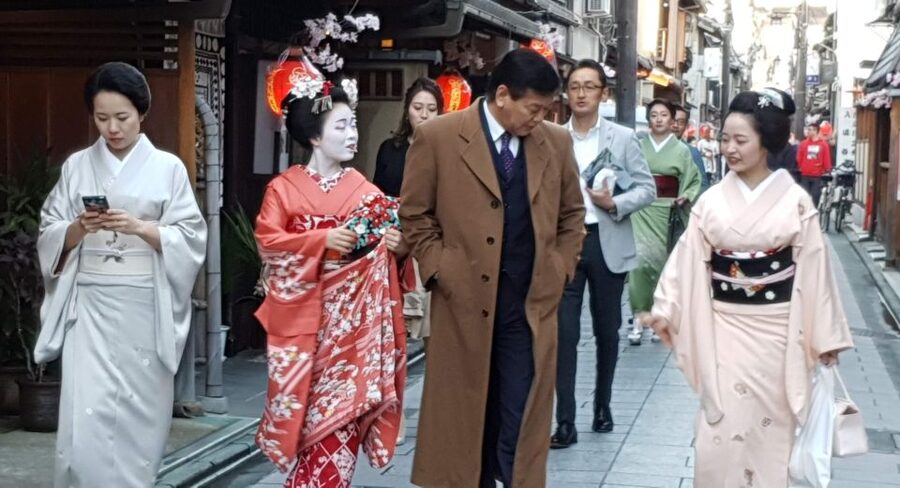
Ninenzaka is a guided 20-minute stop. Its traditional streets and sloping approach make it one of the more recognizable parts of Kyoto’s Higashiyama area.
Here, the tour shifts from the more specialized world of hanamachi customs to a broader view of old Kyoto. Your guide can help explain how the streets, architecture, religious sites, and visitor traffic fit together. The setting is attractive, but it is also one of the more popular parts of the city, so expect more people here than in the quieter corners of Miyagawacho.
That contrast is useful. You see both the polished, well-known side of Higashiyama and the less obvious tea-house districts. I like that the route does not pretend Gion is frozen in the past. It shows a real neighborhood with cultural traditions, tourism, and daily movement all sharing the same narrow lanes.
The slope and stone-paved surfaces are worth noting. The activity specifically says it is not suitable for people with mobility impairments. Even if you walk easily, rain can make the route less pleasant. One booking completed in rainy weather and the walk ended with people wet, so a dry forecast will make a real difference.
Yasaka Shrine closes the walking route
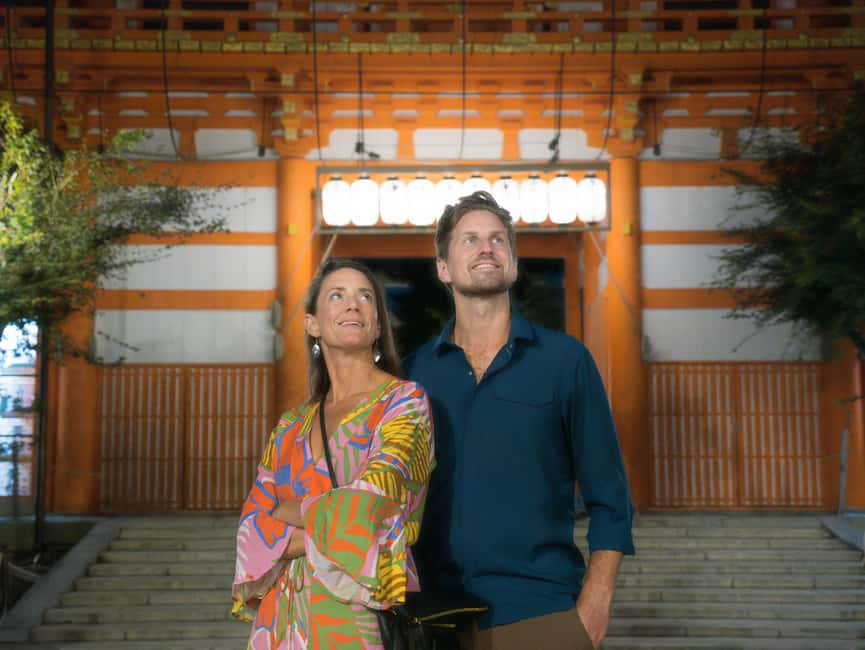
Yasaka Shrine receives about 20 minutes of guided time and serves as a natural end point for the route. It sits near Gion and helps connect the district to Kyoto’s religious calendar and public traditions.
Like the other stops, this is an orientation visit, not an extended shrine exploration. You will have enough time for an explanation and a look around, but not necessarily enough time to wander every section at your own pace.
The ending is practical as well as scenic. Once the guided walk finishes, the team can suggest places for dinner. That can be helpful because the tour ends in an area filled with food options, but the cost of dinner is not included. Ask for suggestions before you part ways if you want to continue your evening nearby.
Four hanamachi districts in two hours
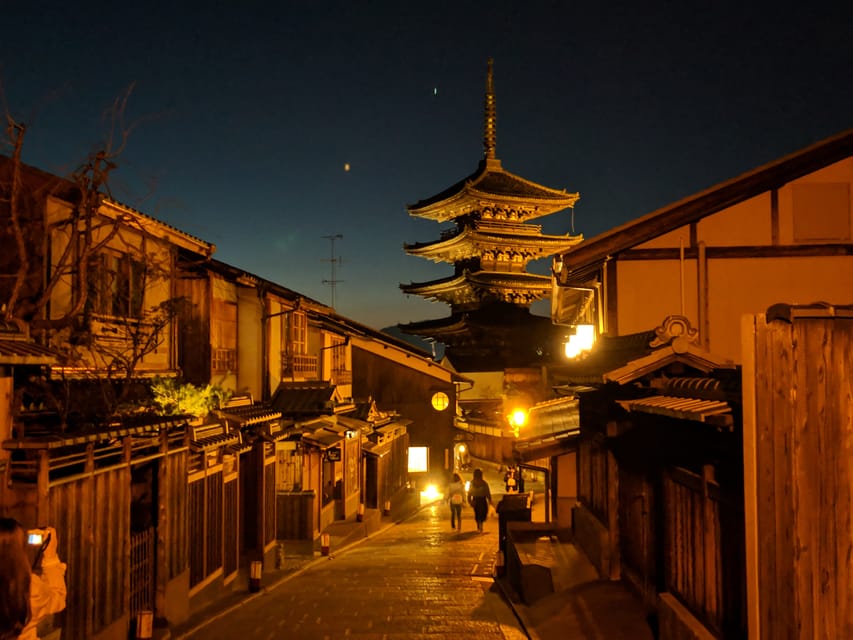
One of the strongest features is the stated plan to visit four of Kyoto’s five central geisha districts. That gives you a wider view than a short Gion-only stroll.
Gion is the name most people know, but the tour also begins in Miyagawacho and moves through the central entertainment areas as part of a broader route. Seeing several districts helps you compare their streets and understand that geisha culture is not confined to a single postcard lane.
The exact time in each district will vary because the walk includes the lounge introduction, temples, shrines, and Higashiyama streets. You should not expect a long stop at every tea house. Instead, you get a guided thread linking the districts together.
That makes this a good choice if you want cultural orientation early in a Kyoto visit. Afterward, you will have a better sense of where the districts are and what you are seeing when you explore Gion independently. It is less suitable if your goal is a private performance, a meal with a geisha, or access inside a working tea house. None of those are included.
What the guides add
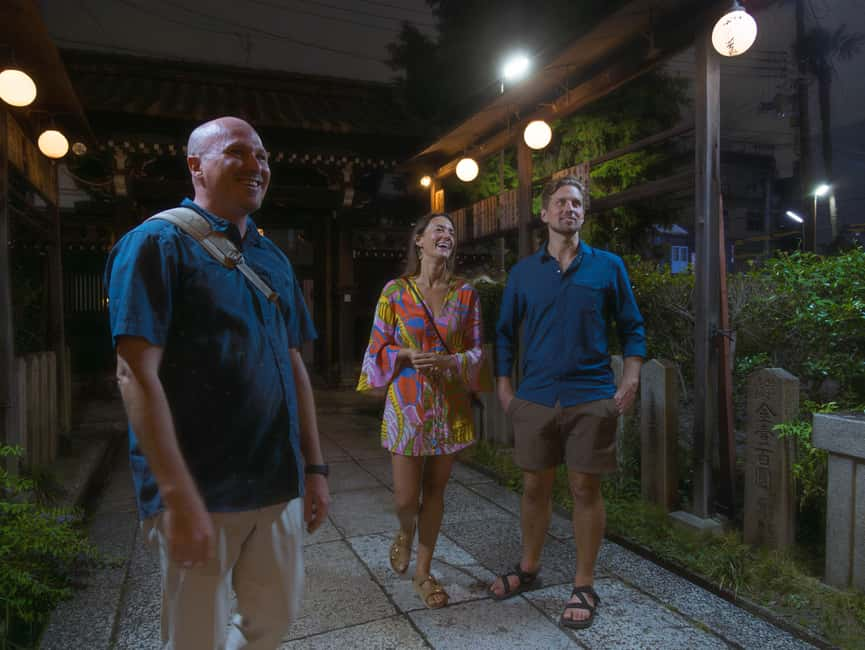
The tour is offered in English and French, and it can be booked as a private or small-group experience. That matters in a subject where context is more important than a long list of dates.
Kevin is specifically associated with a highly praised tour, with strong explanations of geisha culture as well as Japanese history and culture. Ben is also singled out for being warm and appealing while leading an interesting walk. Since guide assignments can vary, you should check the available option when booking, but the guide is clearly central to the experience.
I would choose the small-group or private format if the price difference is reasonable for your budget. Questions about customs, photography, tea houses, and the difference between a maiko and geisha are easier to ask when the group is not large.
The available rating is 4.9 from 14 reviews, and the most consistent praise centers on the guides, the small-group setting, and the informative nature of the walk. That is a good sign for an experience built around explanation. It does not guarantee a particular guide or a geisha sighting, but it does point to strong delivery of the material.
Is $38 a fair price?
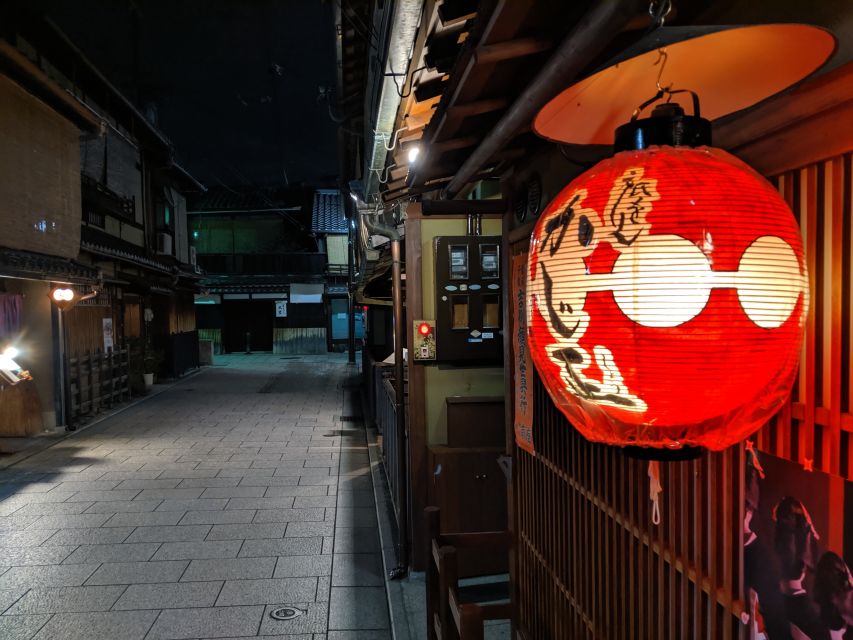
At $38 per person, I see this as a reasonable price for a two-hour guided introduction, especially because it includes the lounge session, welcome drink, bilingual guide, and walk through several districts.
You are paying for interpretation, not admission tickets. Kenninji Temple, Yasui Kompira-Gu Shrine, Ninenzaka, and Yasaka Shrine are visited as route stops, and the supplied details do not list separate entry fees. Food, drinks beyond the welcome drink, and dinner afterward are your responsibility.
The value is best if you are curious about geisha culture but do not know how to approach the subject respectfully on your own. A self-guided walk can show you the same streets, but it will not provide the slideshow, games, cultural explanation, or help identifying what is public and what is private.
The price is less compelling if you only want photographs of Gion. You can walk through the area without paying for a tour. The fee earns its keep through the indoor introduction and the guide’s ability to connect the districts with wider Japanese customs.
Who should book this Kyoto walking tour?
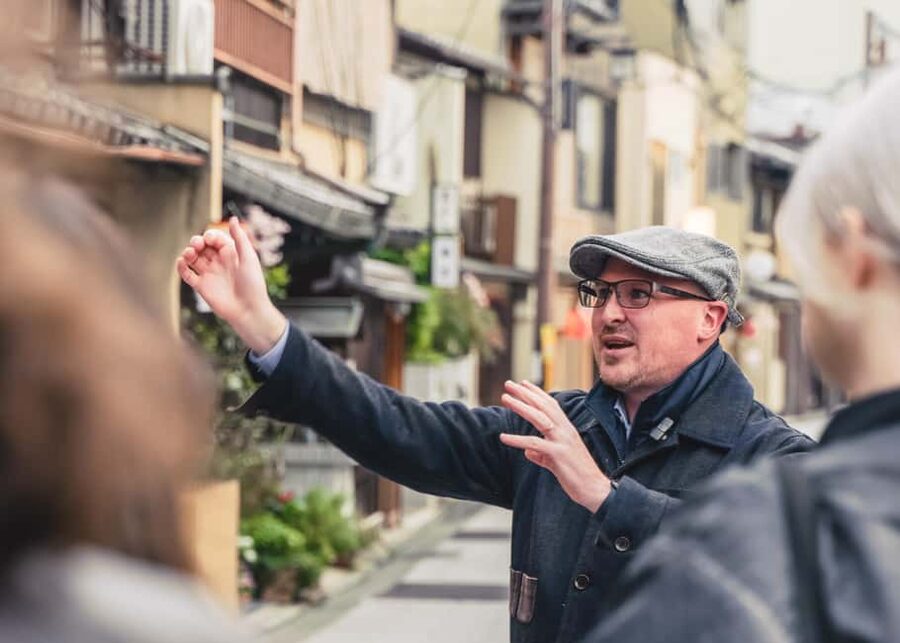
I would recommend it to you if you want a clear introduction to Kyoto’s geisha districts, especially early in your stay. It suits first-time visitors, people interested in Japanese customs, and anyone who prefers a small group over a large scripted tour.
It also works well for visitors who want a mix of famous and less familiar Kyoto settings. The route moves from Miyagawacho to Gion and Higashiyama, then adds temples and shrines, so you get more than one type of sight.
I would be cautious if you have limited walking ability, dislike uneven or sloping streets, or are visiting during poor weather. The tour is two hours, and the walk itself is close to an hour. There is no promise of seeing a geisha, and there is no meal or performance included.
Remember to behave quietly and respectfully in the districts. A geisha or maiko you happen to see may be going to work, not posing for photographs. The guide’s cultural explanation is a major part of the value, so listen as closely as you look.
Practical details before you reserve
There are two possible starting locations, including Kyoto Fun at Kawamatsu Mansion. The exact meeting point depends on the option you book, so check it carefully before setting out.
The activity lasts two hours, with starting times available according to the date selected. Free cancellation is available up to 24 hours in advance for a full refund, and you can reserve now and pay later if you want to keep your plans flexible.
English and French guiding are offered. Private and small-group formats are available, but group size and guide assignment depend on the option you select.
Wear shoes you can walk in for two hours and consider bringing rain protection. The route includes narrow historic streets, temple and shrine grounds, and the sloped lanes around Ninenzaka. People with mobility impairments should choose a different experience.
Should you book it?
Book this tour if you want to understand what you are seeing in Gion rather than simply pass through it. The lounge introduction, four hanamachi districts, temple and shrine stops, and strong guide-led explanations make $38 a fair buy for cultural context.
Skip it if you want a formal geisha performance, a meal, or entry into a tea house. Those are not part of the experience. For most curious first-time visitors, though, this is a useful and respectful way to get oriented before exploring Kyoto’s entertainment districts on your own.
FAQ
How long does the Kyoto geisha districts walking tour last?
The tour lasts two hours. The outdoor walk takes close to one hour, with additional time for the traveler lounge introduction and guided visits.
What areas does the tour visit?
The route covers Gion and Higashiyama, including Miyagawa-chō, Kenninji Temple, Yasui Kompira-Gu Shrine, Ninenzaka, and Yasaka Shrine. It also visits four of Kyoto’s five central hanamachi districts.
Is a welcome drink included?
Yes. The experience begins with a welcome drink at the traveler lounge in Miyagawacho. Food and other drinks are not included.
Will I definitely see a geisha or maiko?
No. The tour offers a chance of seeing women in full costume, but a sighting is not guaranteed.
Are tea-house visits included?
No. You walk through areas containing hundreds of real tea houses, but the supplied details do not include entry into a working tea house.
What languages are available?
Guiding is available in English and French.
Is this a private tour?
Private and small-group options are available. The format depends on the option you book.
Is the tour suitable for people with mobility impairments?
No. The activity is specifically not suitable for people with mobility impairments, and the route includes walking through narrow streets and historic areas.
Can I cancel for a full refund?
Yes. You can cancel up to 24 hours in advance for a full refund. Reserve now and pay later is also available.
Recently added around Kyoto
- Higashiyama | Kyoto: Sakura Season Private Rickshaw Tour★ 5.0 · 3 reviews
- Kyoto Kimono Rental CHAMATSU|Kimono/Yukata Rental FamilyPlan★ 5.0 · 3 reviews
- Kyoto: Half-Day Private Guided Tour to the Old Town of Gion★ 4.4 · 3 reviews
- Nara Private Customizable Half Day Tour★ 5.0 · 3 reviews
- Kansai Region Hiking Adventure in Nara Kobe Kyoto and More★ 5.0 · 3 reviews
- Full Day Nara Deer, Temple, Shrine, Activities & Tea Ceremony★ 5.0 · 3 reviews
- Nara: Essential Private Tour with Deer Park and Temples★ 5.0 · 3 reviews
- Photo Shoot with a Private Vacation Photographer in KYOTO, JAPAN★ 5.0 · 3 reviews
Gion Geisha District Tours, compared.

Kyoto Geisha Walking Tour: Gion District & Hidden Gems
Read our review →
Gion Magical Night Walking Tour with Geisha Trivia
Read our review →
Gion Geisha District Walking Tour – Stories of Geisha
Read our review →
Best of Kyoto: Gion, Geisha, Pagodas & Cobblestones
Read our review →

Kyoto Night Foodie Tour in Gion (9+ dishes + 6 Sake tastings)
Read our review →
Kyoto Gion Geisha District Walking Tour – The Stories of Geisha
Read our review →
Kyoto Gion: 2-Hour Geisha Culture & History Walking Tour
Read our review →Browse the lists this tour appears in