
REVIEW · KYOTO
Kyoto Highlights Eastern Western Northern and Southern Routes
Kyoto is not one compact sightseeing stop. Its best-known places spread across four directions, and this private tour attempts to connect them all in one long day from Osaka. You move from Kiyomizudera and Gion in the east to Zen gardens in the north, then down to the torii gates of Fushimi Inari and Tofukuji.
I like the private transportation, which saves you from piecing together trains, buses, and taxis between distant temples. I also like the choice of stops: you get grand views, imperial gardens, geisha streets, rock gardens, gold-leaf architecture, and Shinto shrines rather than eight versions of the same temple.
The main drawback is the size of the plan. Eight stops in 8 to 14 hours can feel rushed, especially with Osaka traffic and Kyoto’s busy temple areas. This is best for seeing a wide range of Kyoto, not for lingering quietly at every site.
In This Review
- Key points at a glance
- Why this route works for a first Kyoto visit
- Kiyomizudera and Kyoto’s eastern hills
- Gion’s wooden lanes and tea-house atmosphere
- Kyoto Imperial Palace and the old court
- Ryoanji and the art of less
- Kinkakuji, Kyoto’s gold-leaf landmark
- Daitokuji’s quieter Zen setting
- Fushimi Inari and thousands of red torii
- Tofukuji and the Tsutenkyo Bridge
- What the private format really changes
- Food, admission, and booking details to check
- Who should book this Kyoto day trip?
- Should you book it?
- FAQ
- Where does the Kyoto tour start?
- Where does the tour end?
- How long does the tour last?
- Is this a private tour?
- Is pickup available?
- What transportation costs are included?
- Is lunch included?
- Are admission tickets included?
- What happens if the tour is canceled because of bad weather?
Key points at a glance
- Four corners of Kyoto in one private outing: The route links eastern, western, northern, and southern Kyoto from one Osaka pickup point.
- Private vehicle for up to two people: Your group travels alone, with fuel and parking fees included.
- A strong mix of sights: Expect a wooden temple stage, geisha streets, imperial gardens, Zen gardens, gold-leaf architecture, and thousands of red torii gates.
- Flexible length: The day is listed at roughly 8 to 14 hours, giving you room for traffic, walking, and different sightseeing speeds.
- A welcoming guide style: The strongest available praise focuses on an accommodating guide who includes solo visitors and keeps conversation natural.
- Plan for food and possible extra charges: Lunch is not included, and landing or facility fees are also excluded.
Why this route works for a first Kyoto visit
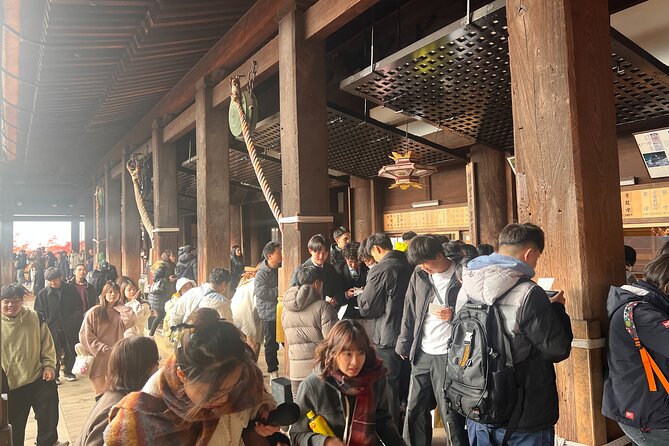
This is a sightseeing marathon, but it solves a real problem. Kyoto’s major sights do not sit next to one another. Kiyomizudera is in the east, Ryoanji and Kinkakuji are in the northwest, and Fushimi Inari is well south of the central temples. Public transport can handle these trips, but transfers and queues eat into your day.
With a private vehicle, you can go directly from one district to the next. That matters most if you are based in Osaka and have limited time. The meeting point is Namba Station, a central Osaka location, and the tour returns there at the end.
The group limit is two people. That makes this a good fit for a couple, two friends, or a solo visitor who values personal attention. You are not being carried along with a large bus group, though the price makes more sense when shared by two people.
At $325.76 per group, the cost is not cheap for a day out. But it covers private transportation, fuel surcharge, and parking fees. For two people, that is about $162.88 each before any food or facility charges. I see the value mainly in time saved and the convenience of reaching far-flung sights in one day. If you already know Kyoto well, or enjoy using trains and buses, you may prefer to spend less and set your own route.
Other Kyoto mornings people book alongside this one:
- PERFECT KYOTO 1-Day Bus Tour
★ 5.0 · 13,518 reviews - Kyoto: Fushimi Inari, Kinkakuji, Bamboo Grove 1 Day Bus Tour
★ 4.8 · 4,316 reviews - Kyoto: Tea Ceremony in a Traditional Tea House in Kiyomizu
★ 4.9 · 3,519 reviews
Kiyomizudera and Kyoto’s eastern hills
The first stop is the famous temple at 605-0862, clearly identified by its large wooden stage and broad views across Kyoto. You have about 45 minutes here, which is enough to see the main architectural highlight and take in the city from above.
Kiyomizudera is a strong opening because it gives you both culture and orientation. Traditional wooden construction is the star, while the view helps you understand how Kyoto spreads between hills and the central plain. The setting also gives you an early taste of the city’s old religious districts.
Forty-five minutes is fairly tight. The temple area can involve walking, and the surrounding approach streets are part of the experience even though they are not given separate time. You should wear comfortable shoes and keep moving if you want to stay on schedule.
Admission is listed as free in the supplied tour details, but the notes also exclude landing and facility fees. Ask the provider what, if anything, applies on your date. Do not assume every possible site charge is covered by the tour price.
Gion’s wooden lanes and tea-house atmosphere
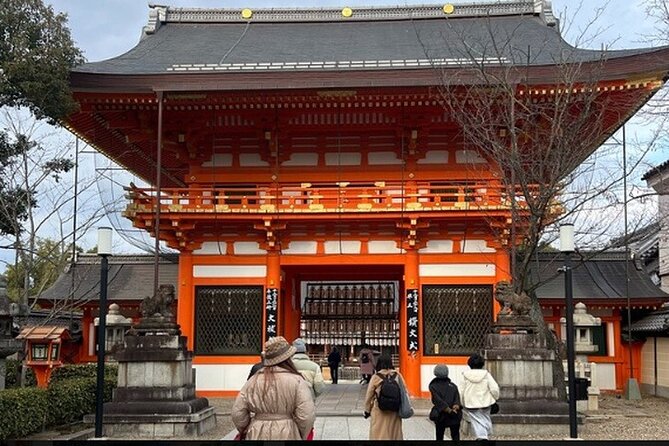
From the temple district, the route continues to Gion at 605-0074. This is Kyoto’s best-known geisha quarter, with wooden machiya houses, tea houses, and narrow streets that preserve an older city mood.
The scheduled 45 minutes is ideal for a short walk and a look at the architecture. Gion rewards slow eyes more than a checklist. Notice the proportions of the wooden facades, the quiet entrances, and the contrast between ordinary homes and refined tea-house buildings.
You should treat this area with care. It is a living neighborhood, not a stage set. Keep voices low, avoid blocking lanes, and do not photograph people without permission. The tour description promises cultural charm, but it does not promise a geisha encounter or a tea ceremony, so do not book it expecting either.
This stop also shows why a private route can be useful. Your guide can help you make the most of a short visit and explain what you are seeing without forcing you to spend half the day here.
Kyoto Imperial Palace and the old court
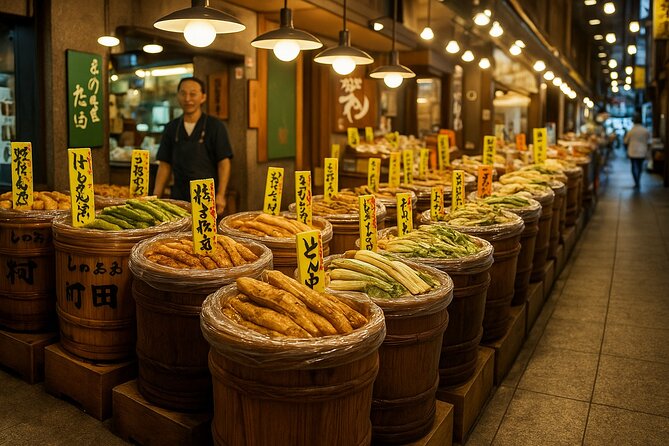
At 3 Kyōtogyoen, you visit the former home of Japan’s Imperial Family. The 45-minute stop brings a different side of Kyoto: broad grounds, traditional architecture, and a calmer setting than the famous temple approaches.
The Imperial Palace helps balance the day. After the religious atmosphere of Kiyomizudera and the commercial history of Gion, you get a sense of Kyoto as a political and royal center. The surrounding gardens also provide a pause from tightly packed sightseeing streets.
The schedule does not specify which palace buildings or garden areas you enter, and admission details are not spelled out beyond the general free-ticket wording. Ask your guide what is open and included on the day of your visit. Palace grounds can also require more walking than the short stop suggests.
A completely different side of Kyoto:
- Kyoto Geisha Walking Tour: Gion District & Hidden Gems
★ 4.7 · 3,273 reviews - Kyoto: Tea Ceremony Ju-An at Jotokuji Temple
★ 4.9 · 3,207 reviews - Kyoto: Gion Magical Night Walking Tour with Geisha Trivia
★ 4.9 · 2,393 reviews - Kyoto: 45-Minute Tea Ceremony Lesson Experience
★ 4.3 · 2,378 reviews
Ryoanji and the art of less
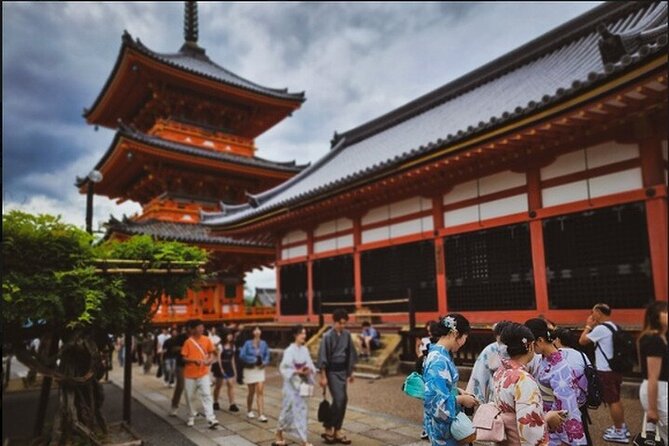
Ryoanji at 13 Ryōanji Goryōnoshitachō is one of Kyoto’s best places to encounter Zen design. Its rock garden uses a small number of stones, gravel, and empty space to create a scene that feels simple but invites long thought.
You have 45 minutes. That gives you time to sit near the garden, look carefully, and visit some of the temple grounds. I would resist treating this as a quick photograph stop. Its value comes from the quiet pause, especially after the more visual impact of the earlier sites.
The limitation is practical. Ryoanji can be busy, and the main garden is not large. Your experience depends on the crowd and on how much time remains after walking from the vehicle. If quiet contemplation matters most to you, this is one of the stops you may wish to protect when discussing the day’s pace with the guide.
Kinkakuji, Kyoto’s gold-leaf landmark
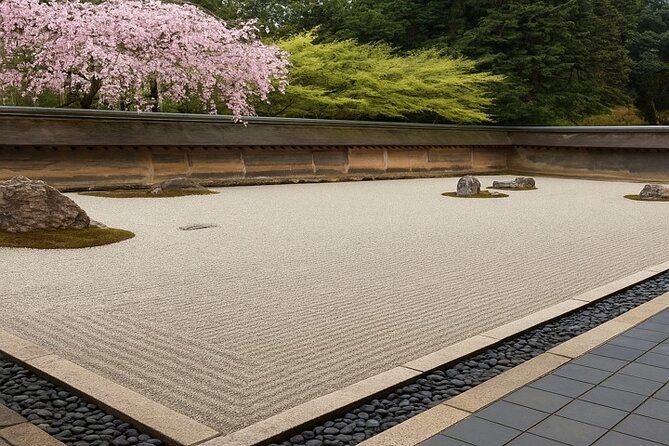
The northern route continues to Kinkakuji at 603-8361. This Zen temple is covered in gold leaf and reflected in a pond, creating one of Kyoto’s most recognizable scenes.
The 45-minute visit is enough to follow the viewing path and photograph the pavilion from its main angles. The gold surface changes with the light, and the pond gives the scene its classic balance. It is a powerful visual contrast with the plain rock garden at Ryoanji.
Kinkakuji is also one of the places where crowds can affect the mood. You generally follow a set path, so this is not a temple for wandering wherever you please. The tour works best if you accept the short, focused visit and save your longer reflective time for another stop.
The description identifies the site as a UNESCO World Heritage location and lists admission as free. Since separate landing and facility fees are excluded, confirm the exact cost arrangements before departure.
Daitokuji’s quieter Zen setting
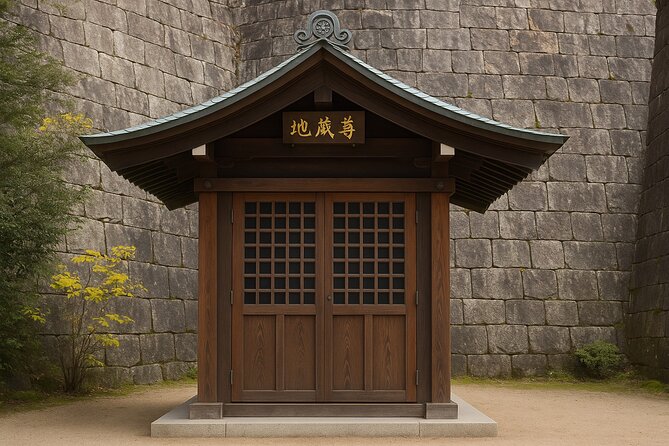
The stop at 603-8231 is described as a group of Zen temples known for gardens, tea culture, and traditional buildings. This points to the Daitokuji area, a useful counterpoint to the headline sights.
You have about 40 minutes here, the shortest scheduled visit. That can work well if you want a calmer setting without adding another major landmark to an already packed route. Gardens and temple buildings offer a chance to notice details such as rooflines, gates, gravel, and carefully placed plants.
The description does not name a particular sub-temple or promise tea participation. You should therefore see this as a brief Zen district visit, not a guaranteed tea ceremony. If tea culture is a priority, ask what the guide plans to show you and whether any separate fee applies.
This stop may be especially valuable for people who find the biggest Kyoto sights too crowded. It gives the day a more measured rhythm, although 40 minutes leaves little room for a long garden visit.
Fushimi Inari and thousands of red torii

In southern Kyoto, Fushimi Inari brings the route to one of Japan’s most recognizable Shinto shrines. The stop at 612-0882 allows about one hour for the gates, shrine grounds, and the beginning of the mountainside route.
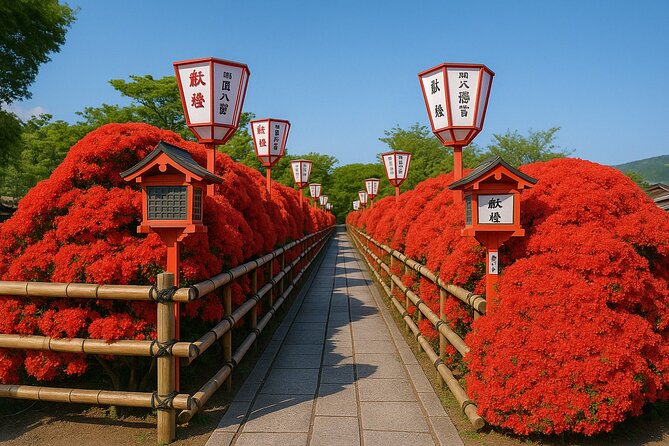
The red torii form a long passage up the sacred mountain. They represent offerings connected with the shrine’s role in prosperity, and the repeating pattern creates a strong sense of movement even when you only walk a short section.
One hour is not enough to walk the full mountain circuit. You will need to choose between spending time near the main shrine and walking farther beneath the gates. Wear proper shoes, bring water, and tell your guide if you want a shorter or longer walk. The private format should make that conversation easier, but the full route still requires much more time than this tour allows.
Fushimi Inari can be among the busiest stops of the day. Early timing would normally help, but this tour’s exact order is not stated. Ask whether the route can be adjusted around crowd levels and opening conditions.
Tofukuji and the Tsutenkyo Bridge
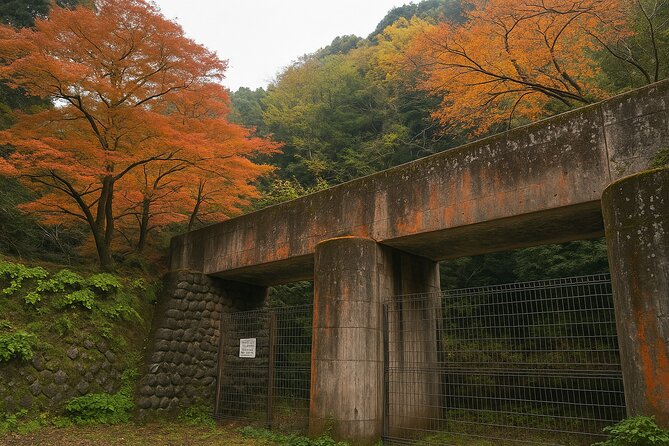
The final listed stop is in Honmachi, at Tofukuji, a Zen temple known for its gardens and Tsutenkyo Bridge. The visit lasts about 45 minutes.
Tofukuji is particularly appealing in autumn, when the bridge frames seasonal color across the valley. Even outside that season, the temple offers a strong combination of wooden structures, garden views, and a quieter religious setting after the intensity of Fushimi Inari.
The bridge and gardens give you a different visual experience from the flat gravel of Ryoanji or the pond at Kinkakuji. This is a good place to slow down and notice how Japanese garden design uses borrowed views, framed space, and controlled movement.
Again, the visit is brief. If seasonal scenery is the main reason you want Tofukuji, ask how much time will be available at the bridge itself. The tour promises the location and its key features, but not a particular foliage condition or special access.
What the private format really changes
The biggest advantage is not luxury. It is control. You can discuss pace, ask questions, and avoid the social pressure of a large group. The strongest praise attached to this experience centers on a guide who was welcoming, accommodating, and careful to include a solo visitor in natural conversation.
That detail matters. A private tour can feel awkward if the guide dominates the day or treats the schedule as fixed. Here, the available feedback points to a friendly approach that helps both couples and solo visitors feel included. No guide name is supplied, so you cannot request a particular person by name.
Private transport also reduces the strain of Kyoto’s distances. You are not carrying a route map through multiple train stations, though you still need to walk around each temple. Parking and fuel are included, which keeps some common transport extras from appearing later.
The tradeoff is that a vehicle cannot erase Kyoto traffic. The stated duration ranges from 8 to 14 hours, a wide span that reflects how much the day can change with road conditions, crowds, and your pace. Keep your schedule open after the tour rather than booking a fixed evening plan.
Food, admission, and booking details to check
Lunch is not included. With such a long day, plan to ask when and where you will eat, or bring a small snack if allowed. The supplied details do not identify a restaurant or a meal stop.
Admission is marked free for each listed stop, but landing and facility fees are excluded. That wording is broad, so ask exactly which charges you may need to pay yourself. A mobile ticket is offered, and booking confirmation is received at the time of booking.
Pickup is offered from Namba Station, at 1 Chome-9 Namba in Osaka’s Chuo Ward. The activity ends back at that meeting point. It is near public transportation, and most people can participate, but the route includes walking through temple grounds, streets, and shrine paths.
The cancellation terms are strict. The experience is non-refundable and cannot be changed for any reason after booking. If poor weather forces cancellation, you are offered another date or a full refund. The same applies if the minimum number of participants is not reached and the provider cancels.
Who should book this Kyoto day trip?
I would choose this tour if you are staying in Osaka, want to cover Kyoto’s headline sights in one day, and prefer a private vehicle to a complicated public transport plan. It is also a sensible choice for two people who want a guide’s help while keeping the group small.
Solo visitors may appreciate the welcoming, conversational guide style described in the available feedback, though the cost is harder to justify alone. Couples get a private setting, but the day’s length and temple-heavy route may feel demanding.
I would not choose it if you want a leisurely tea ceremony, a full walk through Fushimi Inari, or long periods at each garden. The schedule favors variety. You see much of Kyoto, but you do not spend hours in any one place.
Should you book it?
Book it if your priority is coverage and convenience: one private vehicle, eight major Kyoto sights, and a return to Osaka without managing the connections yourself. The mix of temples, palace grounds, Gion, gardens, and shrines gives a first visit a useful range.
Think twice if you dislike long sightseeing days or want plenty of unplanned time. Before paying, confirm the exact route order, lunch plan, facility charges, and how much flexibility you have at each stop. With those points clear, this is a practical, ambitious introduction to Kyoto for two people.
FAQ
Where does the Kyoto tour start?
The tour starts at Namba Station, 1 Chome-9 Namba, Chuo Ward, Osaka, 542-0076, Japan.
Where does the tour end?
The activity ends back at the meeting point at Namba Station.
How long does the tour last?
The listed duration is approximately 8 to 14 hours.
Is this a private tour?
Yes. Only your group participates, and the price covers a group of up to two people.
Is pickup available?
Yes. Pickup is offered, with the stated meeting point at Namba Station in Osaka.
What transportation costs are included?
Private transportation, the fuel surcharge, and parking fees are included.
Is lunch included?
No. Lunch is not included in the tour price.
Are admission tickets included?
The listed stops show admission ticket free, but landing and facility fees are not included. Confirm any specific charges before departure.
What happens if the tour is canceled because of bad weather?
You will be offered a different date or a full refund if poor weather causes the provider to cancel.
Recently added around Kyoto
- Higashiyama | Kyoto: Sakura Season Private Rickshaw Tour★ 5.0 · 3 reviews
- Kyoto Kimono Rental CHAMATSU|Kimono/Yukata Rental FamilyPlan★ 5.0 · 3 reviews
- Nara Private Customizable Half Day Tour★ 5.0 · 3 reviews
- Kyoto: Half-Day Private Guided Tour to the Old Town of Gion★ 4.4 · 3 reviews
- Kansai Region Hiking Adventure in Nara Kobe Kyoto and More★ 5.0 · 3 reviews
- Full Day Nara Deer, Temple, Shrine, Activities & Tea Ceremony★ 5.0 · 3 reviews
- Nara: Essential Private Tour with Deer Park and Temples★ 5.0 · 3 reviews
- Hiking Tour for Sacred Sites in Kyoto with a Guide★ 5.0 · 3 reviews