
REVIEW · FUSHIMI INARI SHRINE TOURS
Kyoto: Essential Tour with Fushimi Inari & Bamboo Grove
Kyoto’s most photographed sights are also among its most meaningful: the thousands of torii gates at Fushimi Inari and the tall bamboo paths of Arashiyama. This private tour links both in one compact outing, with a guide to explain what you are seeing rather than leaving you to guess at the symbols.
I like the private format, which lets you ask questions and request a pace that suits your group. I also like the hotel pickup and the chance to hear local stories from a guide such as Masa, whose friendly, helpful manner earned special praise. The main catch is that meals and train fares are not included, and the 210-minute schedule leaves limited time for wandering beyond the two main sites.
In This Review
- Key points at a glance
- Why these two Kyoto sights belong together
- Starting at Fushimi Inari Taisha
- The 30-minute train ride to Arashiyama
- Walking through Arashiyama Bamboo Grove
- What the private guide adds
- Hotel pickup, timing, and the Osaka question
- Is $135 a fair price?
- Who should book this experience?
- Should you book the Kyoto Essential Tour?
- FAQ
- How long does the tour last?
- Which places does the tour visit?
- Is the tour private?
- Which languages are available?
- Is hotel pickup and drop-off included?
- Are train fares included?
- Can I request a different start time or itinerary?
- Is the tour suitable for wheelchair users?
Key points at a glance
- Two major Kyoto sights in 210 minutes: Visit Fushimi Inari Taisha and Arashiyama Bamboo Grove in one focused half-day.
- Private guide, not a large group: English and Japanese guiding is available, with room for questions and personal requests.
- Red torii and fox guardians: Learn why Fushimi Inari is linked with rice, business prosperity, and Shinto worship.
- Train travel between districts: The route uses three 30-minute train segments, so transportation costs are extra.
- Kyoto hotel pickup and drop-off: This removes some planning from your day, though Osaka pickup and drop-off should be confirmed before booking.
- A flexible but active outing: Comfortable shoes, water, sunscreen, and a camera will serve you well.
Why these two Kyoto sights belong together
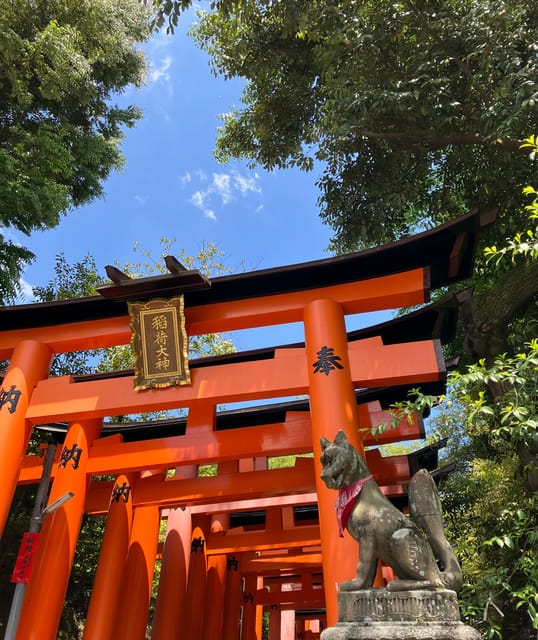
Fushimi Inari and Arashiyama offer very different views of Kyoto. Fushimi Inari feels like a working religious site, with a long climb through orange-red torii gates and fox statues linked to the shrine’s traditions. Arashiyama is quieter in mood, with bamboo, old paths, and the atmosphere of a district once favored as a retreat by Kyoto’s aristocracy.
That contrast gives the tour its shape. You begin with Shinto symbols and sacred mountain paths, then move west to a famed natural setting. You get two strong photographs, but the better reason to combine them is that your guide can help connect the visual beauty with Japanese history and custom.
The route is also useful if you have only a short time in Kyoto. You will not see every corner of either district, but you will visit two places that many people place near the top of their Kyoto list. A private format makes this more worthwhile than simply rushing between them alone.
More ways to walk Fushimi Inari:
- Kyoto: Fushimi Inari, Kinkakuji, Bamboo Grove 1 Day Bus Tour
★ 4.8 · 4,316 reviews - Fushimi Inari Hidden Hiking Tour (Private Option Available)
★ 5.0 · 1,750 reviews - Kyoto/Osaka: Nara, Fushimi Inari Taisha, Arashiyama Bus Tour
★ 4.7 · 1,275 reviews
Starting at Fushimi Inari Taisha
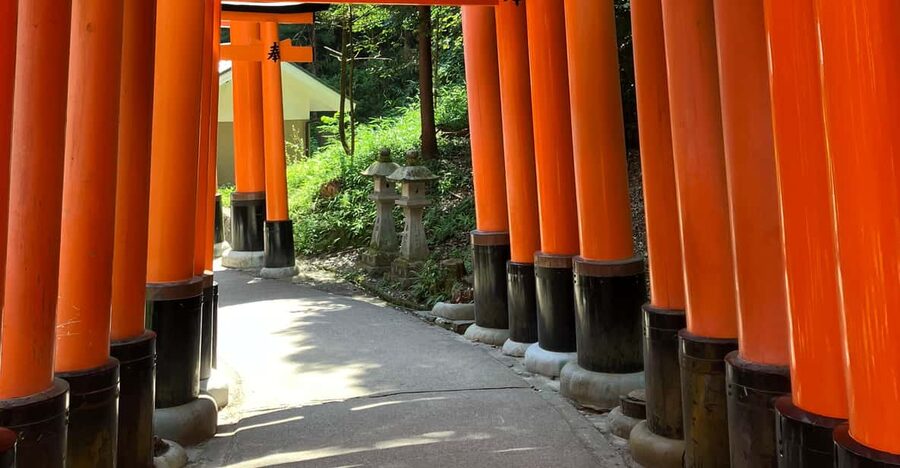
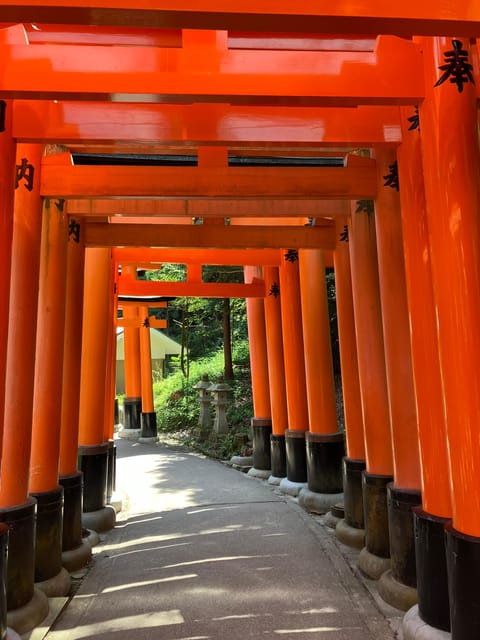
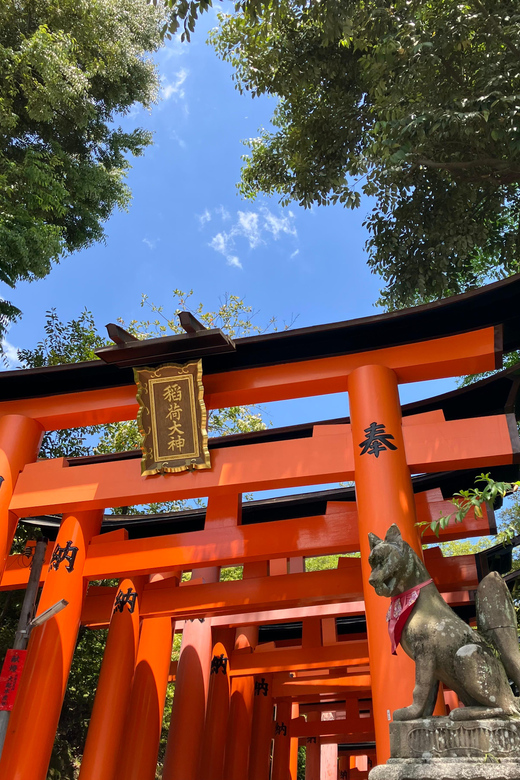
The first major stop is Fushimi Inari Taisha, one of Kyoto’s best-known Shinto shrines. It is dedicated to the god associated with rice and business prosperity, and its most famous feature is the long series of red-orange torii gates leading up Mount Inari.
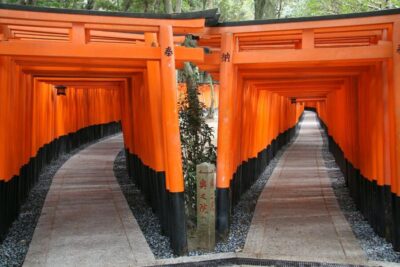
The gates form narrow corridors along the winding route. Their repetition creates a strong visual effect, but this is not just a decorative walkway. The gates represent offerings connected with the shrine, and the setting remains a place of worship. Your guide can explain the customs and help you read the shrine as a religious site, not merely as a popular photo stop.
Fox statues appear throughout the complex. In the shrine’s tradition, foxes are connected with the deity, and you will see them used as important symbols around the grounds. A guide is especially useful here because the meaning can be easy to miss when you are focused on getting the perfect image through the gates.
The guided visit is scheduled for about one hour. That is enough time to enter the complex, walk through part of the torii route, pause at scenic points, and hear the main cultural background. It is not enough for a long mountain hike, so set your expectations accordingly. If you want to go farther up Mount Inari, ask about the route and timing before the tour begins.
Fushimi Inari is also an active outdoor stop. The paths wind and may include steps, so comfortable shoes matter. Bring water, especially if the day is warm, and sunscreen if much of your walk takes place in open areas. The experience is not suitable for wheelchair users, according to the activity information.
The 30-minute train ride to Arashiyama
The itinerary includes a 30-minute train journey between Fushimi Inari and Arashiyama. That transfer is practical because the two districts sit on opposite sides of Kyoto, but you should remember that transportation costs are not included in the $135 price.
A private guide can make the transfer easier, particularly if you are unfamiliar with Kyoto’s rail system. Still, the tour description does not specify the exact train line, station, or fare. I would ask about those details before departure and carry suitable payment for the trains.
The schedule also includes another 30-minute train ride before drop-off, making three train segments in total. Two hours are assigned to guided sightseeing, while the remaining time covers transport and the start and end of the outing. In practical terms, this is a tightly focused experience rather than a full-day exploration.
Walking through Arashiyama Bamboo Grove
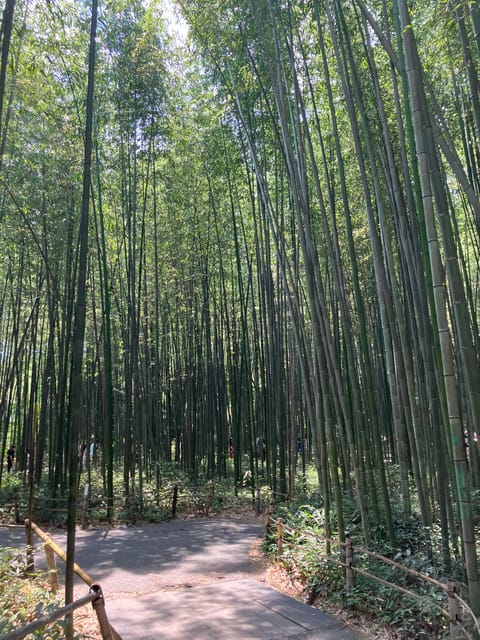
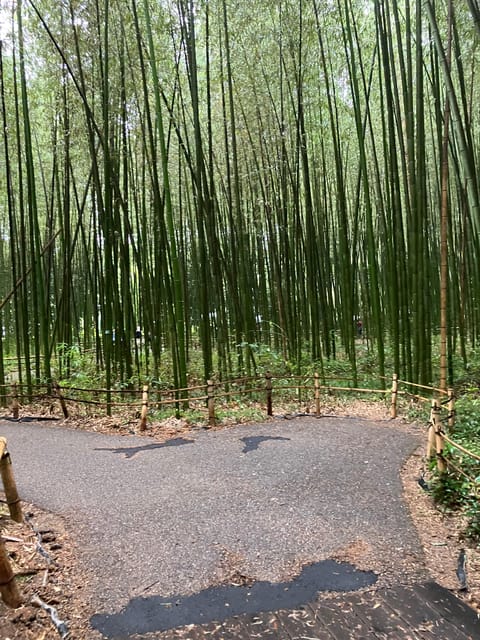
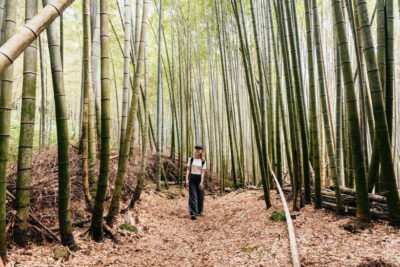
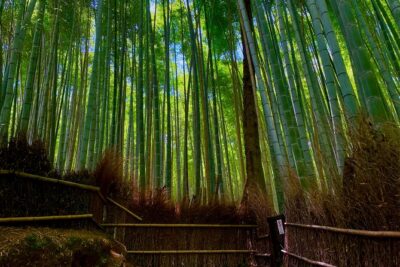
Arashiyama Bamboo Grove supplies the tour’s sharp change of mood. The paths pass beneath tall bamboo stalks, where filtered light and the sound of leaves create a calm setting. The grove is especially appealing if you want a natural counterpoint to the formal gates and shrine buildings at Fushimi Inari.
Your guide will lead you through the bamboo paths and explain Arashiyama’s importance as a retreat for Kyoto’s aristocracy in earlier times. That context helps the district make more sense. You are not simply walking through a photogenic stand of bamboo; you are seeing part of an area long associated with leisure, scenery, and elite Kyoto culture.
The guided visit lasts about one hour. That gives you time for the main grove and some surrounding exploration, but it does not promise an extended visit to every Arashiyama attraction. The experience information specifically allows time to explore the surrounding area, yet the exact stops are flexible rather than fixed.
That flexibility can work in your favor. If your group prefers photographs, your guide may give you more time in the grove. If you want more background about the district, you can ask for additional explanation. Contact the guide in advance with requests, since changes on the same day may be difficult.
The bamboo grove is a popular sight, and the description does not promise a quiet or empty visit. The setting can feel peaceful once you are among the stalks, but it is wise to treat that calm as a possibility rather than a guarantee. Your guide’s local knowledge may help you use the available time well.
More of Arashiyama and the bamboo grove:
- Kyoto Arashiyama Walking Tour: Bamboo, Monkeys, Gardens & Secrets
★ 5.0 · 1,216 reviews - Arashiyama Bamboo, Temple, Monkeys, or Secret Sake Brewery
★ 4.8 · 886 reviews - Kyoto: Arashiyama Bamboo Forest, Monkeys, Matcha & Temple Tour
★ 5.0 · 759 reviews - Kyoto: Nijo, Kinkaku-ji, Arashiyama, Kiyomizu & Fushimi Inari
★ 5.0 · 699 reviews
What the private guide adds
The strongest reason to choose this tour is the guide, not simply the route. Fushimi Inari and Arashiyama are easy to reach on your own, but a guide gives you cultural framing at both places and removes some of the uncertainty from moving between them.
You can ask about the fox statues, Shinto traditions, the purpose of the torii gates, and Arashiyama’s role in Kyoto’s past. You can also request personal recommendations during the outing. The tour is offered in English or Japanese, and the group is private, so the conversation should be more useful than a standard large-group presentation.
Masa is the one guide named in the available feedback. Wendy from Australia described Masa as friendly and helpful, with the group’s interests in mind. That is the kind of quality that matters on a short tour: a guide who watches the clock, notices what you care about, and helps the outing feel personal rather than mechanical.
The current rating is 4.9 from four reviews, so it points to a very positive experience but comes from a small sample. I would treat Masa’s praise as encouraging evidence, not a promise that every departure will have the same guide. If having Masa is important to you, ask whether he will lead your date.
Hotel pickup, timing, and the Osaka question
Hotel pickup and drop-off in Kyoto are included, which can be a real convenience. You do not need to find the first station alone, and you can finish near your accommodation rather than arranging a separate return route.
The activity information also lists Osaka among the possible pickup and drop-off locations, while the included services specifically say hotel pickup and drop-off in Kyoto. Because those details do not perfectly match, confirm the service area before paying. Do not assume that an Osaka hotel transfer is included simply because Osaka appears as a location option.
The total duration is 210 minutes, or three and a half hours. The listed timing breaks down into:
- 30 minutes by train
- 1 hour at Fushimi Inari
- 30 minutes by train
- 1 hour at Arashiyama Bamboo Grove
- 30 minutes by train
This structure is clear and efficient. It is a good match for someone who wants the two headline sights without surrendering an entire day. It is less suitable if you want long walks, unhurried meals, shopping, or several additional Arashiyama stops.
The start time depends on availability. You may request a different start time or itinerary, but same-day changes can be hard to arrange. Share special requests before the tour rather than waiting until pickup.
Is $135 a fair price?
At $135 per person, the value depends on how much you want guidance and convenience. The price covers a private guided visit to both sites, cultural explanation in English or Japanese, and Kyoto hotel pickup and drop-off. For a private group, that can be reasonable if you value having the route shaped around your interests.
The price does not cover meals or transportation costs. Since the plan uses three train journeys, the extra fares are worth budgeting for. You should also plan for your own food and drinks, though the short duration means you may prefer to eat before or after the tour.
If you are comfortable navigating Kyoto by train and mainly want to see the torii gates and bamboo, going independently may cost less. The tour earns its price through personal attention, local interpretation, and the time saved in planning. It is not a bargain sightseeing pass, and it does not include a long list of admissions or a meal.
I see the best value for first-time visitors, people with limited Kyoto time, and anyone who wants cultural explanation without joining a large group. Repeat visitors who already know both sites may prefer to spend the same money on a slower, more specialized outing.
Who should book this experience?
This tour suits couples, families, and small private groups who want a clear route and a guide who can adjust the conversation to them. It also works well for people who find Kyoto’s rail system confusing or would rather have hotel pickup at the beginning and end.
It is a good choice if Fushimi Inari and Arashiyama are your priorities. You will see the major features of each, learn about Shinto traditions and local history, and keep the outing to half a day.
You should think twice if you use a wheelchair, since the activity is not suitable for wheelchair users. You should also look elsewhere if you want a relaxed full-day tour, included meals, or transportation bundled into the price.
Wear comfortable shoes and bring water, sunscreen, and a camera. Smoking is not allowed. The itinerary can be tailored to your preferences, but advance notice is important.
Should you book the Kyoto Essential Tour?
Book it if you want two essential Kyoto sights with a private guide and prefer a short, organized outing over a day of independent planning. The combination of Fushimi Inari’s torii gates and Arashiyama’s bamboo paths gives you two very different sides of the city, while the guide adds meaning to details you might otherwise pass without noticing.
Before booking, confirm the pickup location, train costs, guide availability, and any route requests. If those details suit your plans, $135 can be fair value for personal attention and hotel convenience. If you want more time at either site, choose an independent visit or a longer tour instead.
FAQ
How long does the tour last?
The tour lasts 210 minutes, or three and a half hours.
Which places does the tour visit?
It visits Fushimi Inari Taisha and Arashiyama Bamboo Grove, with some time to explore the surrounding Arashiyama area.
Is the tour private?
Yes. It is offered as a private group experience.
Which languages are available?
The live guide is available in English or Japanese.
Is hotel pickup and drop-off included?
Hotel pickup and drop-off in Kyoto are included. Osaka is listed as a possible pickup and drop-off location, so confirm whether your Osaka hotel is covered before booking.
Are train fares included?
No. Transportation costs are not included, and the itinerary uses three train journeys of about 30 minutes each.
Can I request a different start time or itinerary?
You can ask for itinerary and start-time changes. Same-day changes may be difficult, so make requests in advance.
Is the tour suitable for wheelchair users?
No. The activity is not suitable for wheelchair users.
Recently added around Kyoto
- Higashiyama | Kyoto: Sakura Season Private Rickshaw Tour★ 5.0 · 3 reviews
- Kyoto Kimono Rental CHAMATSU|Kimono/Yukata Rental FamilyPlan★ 5.0 · 3 reviews
- Kyoto: Half-Day Private Guided Tour to the Old Town of Gion★ 4.4 · 3 reviews
- Nara Private Customizable Half Day Tour★ 5.0 · 3 reviews
- Full Day Nara Deer, Temple, Shrine, Activities & Tea Ceremony★ 5.0 · 3 reviews
- Nara: Essential Private Tour with Deer Park and Temples★ 5.0 · 3 reviews
- Kansai Region Hiking Adventure in Nara Kobe Kyoto and More★ 5.0 · 3 reviews
- Hiking Tour for Sacred Sites in Kyoto with a Guide★ 5.0 · 3 reviews
Fushimi Inari Shrine Tours, compared.
Fushimi Inari, Kinkakuji, Bamboo Grove 1 Day Bus Tour
Read our review →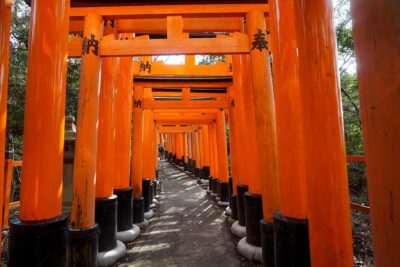
Fushimi Inari Hidden Hiking Tour (Private Option Available)
Read our review →
Kyoto/Osaka: Nara, Fushimi Inari Taisha, Arashiyama Bus Tour
Read our review →
Nijo, Kinkaku-ji, Arashiyama, Kiyomizu & Fushimi Inari
Read our review →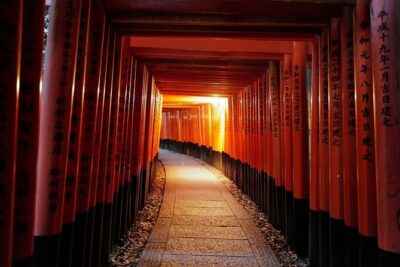
Kyoto Early Bird English Tour: Fushimi-Inari and Arashiyama
Read our review →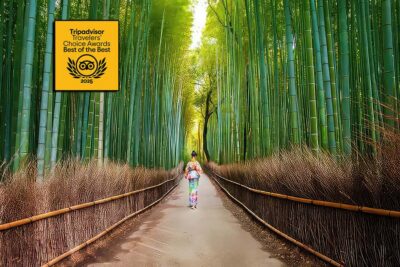
Fushimi, Arashiyama – Bamboo, Monkey, Torii & Secrets
Read our review →Browse the lists this tour appears in