
REVIEW · KYOTO NIGHT WALKS
Experience Japan’s Traditional Culture Night Tour in Kyoto
Kyoto’s traditional arts make the strongest impression here. You watch a compact program at Gion Corner, walk through lantern-lit Gion, then sit down to a candlelit tea ceremony and Zen-style vegetarian dinner at Ryokan Yoshi-Ima. I like the mix of stage performance and quiet ritual, and I like that a licensed English guide gives context instead of leaving you to guess at what you are seeing.
The main drawback is the timing between stops. The tour starts at Good Nature Hotel Kyoto at 5:05 p.m., while Gion Corner is across town, and the full four-hour schedule includes travel and waiting time. One early review found the rush-hour taxi transfer awkward, although the operator said it planned to replace that taxi ride with a walk from tours beginning in December 2024.
In This Review
- Key points to know before booking
- Why this Kyoto evening feels different
- Starting at Good Nature Hotel Kyoto
- Gion Corner and its compact arts program
- Walking Hanamikoji-dori to Gion Shimbashi
- Candlelight at Ryokan Yoshi-Ima
- What the Zen-style vegetarian dinner includes
- How the four-hour schedule works
- Who will get the most from this evening
- Practical value at $175.60
- Should you book the Gion culture night tour?
- FAQ
- How long does the Japan Traditional Culture Night Tour last?
- Where does the tour start and end?
- What performances are included at Gion Corner?
- Is the dinner vegetarian?
- Are drinks included with dinner?
- Can young children join the tour?
Key points to know before booking
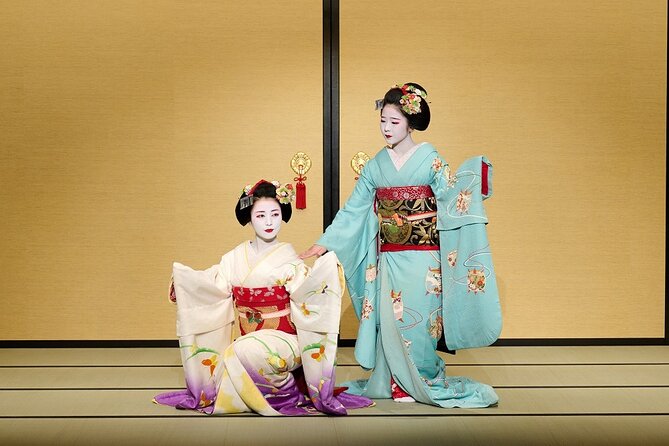
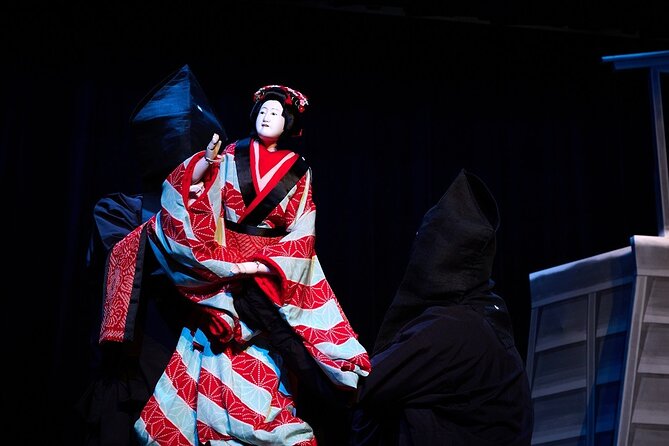
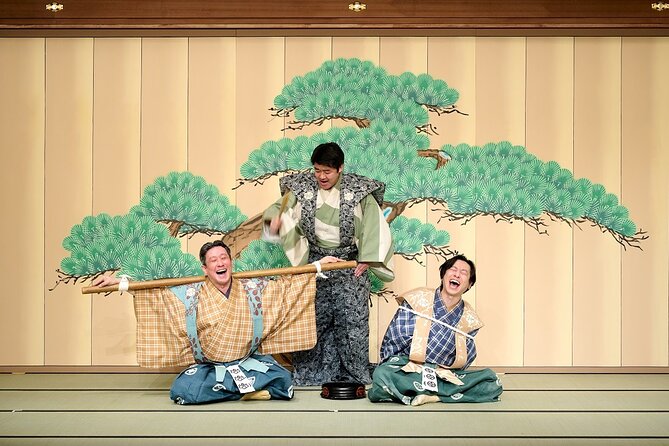
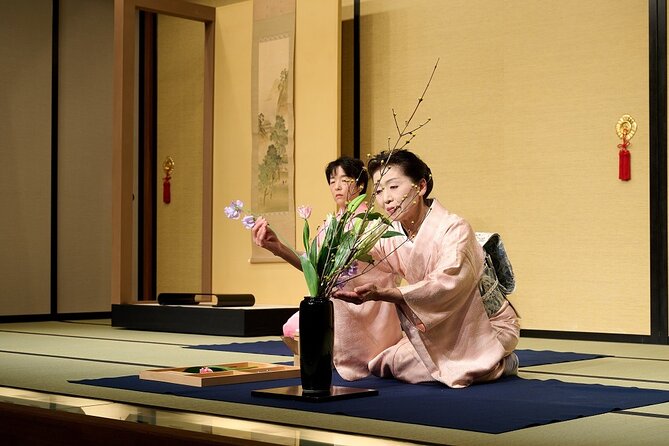
- Gion Corner packs several art forms into about 50 minutes, including Kyoto dance, tea ceremony, flower arrangement, koto music, bugaku, kyogen, and seasonal bunraku or noh.
- The dinner setting is unusually intimate, with a private candlelit tea ceremony room at Gion Yoshi-Ima.
- The meal is Buddhist vegetarian cuisine, including rice, miso soup, seasonal vegetable tempura, tofu, yuba, and namafu.
- The Gion walk connects two historic areas, Hanamikoji-dori and Gion Shimbashi, both known for preserved buildings and old teahouses.
- The advertised four hours include waiting and transport, not four hours of continuous sightseeing.
- The group can include up to 24 people, so this is guided sightseeing rather than a fully private evening.
Why this Kyoto evening feels different
Many Kyoto evening activities center on food, temples, or nightlife. This one takes a more structured look at traditional culture. You see performing arts on a stage, walk through one of the city’s best-preserved districts, and then experience two formal customs, tea and Buddhist dining, in a traditional inn.
That combination gives the evening a useful rhythm. Gion Corner is lively and scheduled. The street walk slows things down. Dinner is quieter and more reflective. You are not simply ticking off one attraction after another.
I especially like that the tour does not treat Kyoto culture as a single performance. A Kyoto dance, a tea ceremony, a koto performance, and bunraku all use different skills and conventions. A licensed English guide can help explain why a gesture, costume, instrument, or serving method matters.
The price is $175.60 per person, so this is not a casual add-on for anyone watching every yen. But the cost includes admission, the meal, and the licensed English guide. If you already plan to attend a cultural performance and book a Kyoto dinner separately, the combined price can make sense. The value is strongest for you if you want the evening arranged in one package and prefer explanation in English.
More Kyoto walks after dark:
- Night Walk in Gion: Kyoto’s Geisha District
★ 4.5 · 2,003 reviews - Kyoto Gion Night Walk & Geisha District Guided Tour
★ 5.0 · 786 reviews - Kyoto Bar Hopping Night Tour
★ 5.0 · 613 reviews
Starting at Good Nature Hotel Kyoto
The meeting point is Good Nature Hotel Kyoto, at 2 Chome 318-6 Inaricho in Kyoto’s Shimogyo Ward. The tour begins at 5:05 p.m., a useful time for an evening program but also a busy period on Kyoto roads.
The first practical point is to arrive early. The group needs to gather before the performance, and the schedule allows for travel to Gion Corner. An earlier review criticized the taxi ride across town during rush hour and felt it would have been easier to meet at the first venue.
The operator responded that it planned to change the transfer from a taxi to walking for tours beginning in December 2024. That should make the start less vulnerable to traffic, but you should still check your confirmation for the current arrangement. The meeting point is not at Gion Corner itself.
This opening transfer accounts for part of the difference between the advertised four-hour duration and the timed stops. The listed stops add up to about two hours and 50 minutes. The remaining time is assigned to travel and waiting for the Gion Corner performance.
Gion Corner and its compact arts program
The first major stop is Gion Corner, where the program lasts about 50 minutes and admission is included. The format is designed for people who want a quick introduction to several traditional arts in one sitting.
The regular program, offered from March 15 through November 30, includes:
- A traditional Kyoto dance
- Tea ceremony
- Flower arrangement
- Koto music
- Bugaku, the old court dance and music tradition
- Kyogen, a form of traditional comic theater
- Bunraku, Japanese puppet theater, or a noh play, depending on the season
This is a lot to absorb in less than an hour. That is both the attraction and the limitation. You get a broad look at Kyoto’s performing traditions, but you should not expect a full-length dance, noh play, or bunraku production.
The seasonal change matters. From December 1 through March 14, the winter performance includes Kyoto dance, tea ceremony, flower arrangement, koto, bugaku, and kyogen. The winter program does not include the seasonal bunraku or noh segment listed for the regular program. Customers can also take a commemorative photo with a maiko during the winter program.
Program content can change, so do not treat the lineup as fixed. If one particular art form is the reason you are booking, check the current schedule before paying.
For many people, Gion Corner will be the most accessible introduction to Japanese arts on this tour. You do not need prior knowledge to appreciate the contrast between graceful dance, precise tea preparation, musical performance, and comic theater. The guide’s explanations are important here because some forms are highly stylized and can seem mysterious without background.
Walking Hanamikoji-dori to Gion Shimbashi
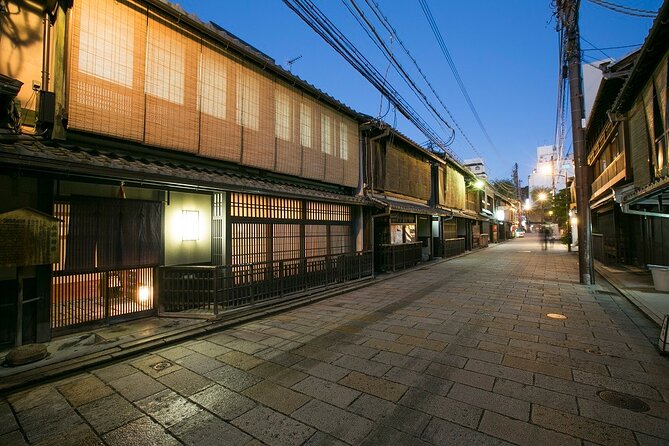
After Gion Corner, the group walks for about 30 minutes through Hanamikoji-dori and toward Gion Shimbashi. This part is free of an additional admission charge and gives you time to see Gion at street level.
Hanamikoji-dori is lined with historic teahouses and restaurants. The area is famous for its traditional wooden buildings and associations with geisha culture, but it is also a working district. The best approach is to walk quietly, follow your guide, and treat the streets as neighborhoods rather than a stage set.
The route continues to Gion Shimbashi, designated an Important Preservation District for Groups of Traditional Buildings. This official designation helps explain why the walk feels distinct from ordinary commercial Kyoto. The buildings, narrow lanes, and older facades offer a strong sense of place even if you know little about the district’s history.
Thirty minutes is enough for atmosphere but not for a long, free exploration. You will be moving with the group and heading toward dinner. If you hope to photograph every lane or browse shops at your own pace, plan to return to Gion after the tour ends.
The end point, Ryokan Yoshi-Ima, is in central Gion, so the evening does not leave you stranded in an outlying area. After dinner, you can continue walking around Gion on your own.
More Kyoto evenings:
- Kyoto: Gion Magical Night Walking Tour with Geisha Trivia
★ 4.9 · 2,393 reviews - Kyoto Night Foodie Tour in Gion (9+ dishes + 6 Sake tastings)
★ 5.0 · 1,762 reviews - Kyoto Ghost Tour: Dark Tales, Urban Legends, Bamboo Forest Night
★ 5.0 · 625 reviews - Kyoto Night All-Inclusive Eats and Streets, Gion and Beyond
★ 4.7 · 601 reviews
Candlelight at Ryokan Yoshi-Ima
The final stop is Ryokan Yoshi-Ima, where the experience becomes quieter and more personal. The tour includes a private evening tea ceremony in the inn’s tea room, Kurenaitei, with candlelight in the room and courtyard setting.
The candlelight is not just decoration. Tea ceremony depends on controlled movement, attention to utensils, and a calm pace. A smaller, private setting helps you notice those details more clearly than you might during a short public demonstration.
You should not expect a long lesson in every rule of tea ceremony. The scheduled time for this stop is about 90 minutes, and that includes both the tea ceremony and dinner. The guide’s role is useful in helping you understand the etiquette and meaning without turning the experience into a lecture.
This is also the point where the tour feels most rooted in a traditional lodging setting. Ryokan Yoshi-Ima provides a more fitting backdrop for tea and Japanese dining than a modern restaurant would. The atmosphere may appeal most to you if you enjoy quiet cultural experiences and do not need constant activity.
What the Zen-style vegetarian dinner includes
Dinner is a Buddhist vegetarian meal, often called shojin-style cuisine. The menu is described as simple but balanced, with a focus on plant-based ingredients and careful preparation.
The meal includes rice and miso soup. Tempura may feature tofu, namafu wheat gluten, yuba tofu skin, and seasonal vegetables such as eggplant, lotus root, ginger, and shiitake mushrooms.
This is a good choice if you want to understand how Buddhist traditions shaped Japanese food. The meal is not presented as a substitute for a Western vegetarian menu. It is built around Japanese ingredients and familiar forms of temple-style cooking, with restraint rather than heavy seasoning.
There is one important food note. Bonito stock is used in the tempura dipping sauce, so the meal is not strictly free of fish-derived ingredients. Salt can be used instead of the sauce. If you follow a vegetarian diet, ask the guide or staff about this point before eating.
The operator does not accept requests for Muslim-friendly meals, Indian thali meals, or allergy-friendly meals. That makes the tour a poor choice if you need a carefully modified menu. It is a better fit for you if the stated Buddhist vegetarian meal works without changes.
Drink charges are not included. Bring a payment method for anything you order with dinner. The supplied details do not specify which drinks are available or their prices, so it is wise not to assume beverages are part of the package.
How the four-hour schedule works
The tour is described as lasting about four hours, beginning at 5:05 p.m. The timed activities total about two hours and 50 minutes:
- Gion Corner: about 50 minutes
- Hanamikoji-dori and Gion Shimbashi walk: about 30 minutes
- Ryokan Yoshi-Ima: about 1 hour and 30 minutes
The rest is used for travel and waiting for the scheduled performance. This distinction matters. If you picture four hours of nonstop cultural programming, you may feel the evening is shorter than expected. If you see the tour as a complete evening outing with transfers included, the schedule is easier to understand.
The meeting point and end point are different. You start at Good Nature Hotel Kyoto and finish at Ryokan Yoshi-Ima, 229 Nishinocho in Gion. The final location is convenient for an additional evening walk, which is a useful bonus in Kyoto.
The group size can reach 24 people. That is not a private tour, and the tea ceremony will not be arranged solely around your party. Still, the licensed English guide gives the group a clear point of contact and helps make unfamiliar customs easier to follow.
The experience is near public transportation, and most people can participate. Children under seven cannot join. Anyone under 18 needs written parental permission, and anyone under 15, or not yet enrolled in middle school, must be accompanied by a parent or guardian.
Who will get the most from this evening
I would choose this tour for a first or second visit to Kyoto if you want a guided introduction to traditional culture without spending several nights arranging separate performances and meals.
It suits you especially well if:
- You want several art forms rather than one long show
- You enjoy historic districts and guided walks
- You are comfortable with a set schedule
- You eat the stated vegetarian menu
- You appreciate explanation in English
- You want to end near Gion for more evening sightseeing
It may not suit you if you prefer independent exploration, need a special diet, or want a full theatrical performance. The 50-minute Gion Corner program is an overview, not a deep study of one art form.
The tour also works better for adults and older children than for very young children. The age restriction is clear, and the tea ceremony and formal meal require patience. Families with children under seven cannot book this activity.
Practical value at $175.60
At $175.60, the tour asks you to pay for convenience as well as admission. You get a performance, a guided walk, a tea ceremony, dinner, and an English-speaking licensed guide in one evening.
That package can save planning time. You do not need to work out which Gion Corner program is running, find a ryokan meal, or figure out how tea ceremony fits into the evening. You also avoid ordering an unfamiliar vegetarian meal without knowing what it contains.
Still, the value depends on how much structure you want. If you are happy to explore Gion independently and book a meal on your own, the price may feel high. If you want a cultural evening with transportation and timing handled for you, the cost is easier to defend.
Book at least a few weeks ahead if possible. This experience is booked an average of 42 days before the date, which suggests that popular evening slots can fill early. Confirmation is sent within 48 hours of booking, subject to availability.
Free cancellation is available until 24 hours before the start time. Canceling or changing the booking less than 24 hours ahead does not qualify for a refund.
Should you book the Gion culture night tour?
Book it if you want a polished introduction to Kyoto’s traditional arts, a preserved Gion walk, and a formal vegetarian dinner in one evening. The strongest parts are the range of performances at Gion Corner and the quieter tea ceremony at Ryokan Yoshi-Ima.
Think twice if you need a special diet, want plenty of free time, or dislike group schedules. Also check the current transfer plan from Good Nature Hotel Kyoto to Gion Corner, since rush-hour travel was the clearest practical weakness in the early arrangement.
For the right person, this is a useful Kyoto evening: broad rather than highly specialized, structured rather than spontaneous, and strongest when you value cultural context as much as sightseeing.
FAQ
How long does the Japan Traditional Culture Night Tour last?
The total experience lasts about four hours. The timed stops add up to about two hours and 50 minutes, with the remaining time used for travel and waiting for the Gion Corner performance.
Where does the tour start and end?
The tour starts at Good Nature Hotel Kyoto, 2 Chome 318-6 Inaricho, at 5:05 p.m. It ends after dinner at Ryokan Yoshi-Ima, 229 Nishinocho in Gion.
What performances are included at Gion Corner?
From March 15 through November 30, the program includes Kyoto dance, tea ceremony, flower arrangement, koto music, bugaku, kyogen, and either bunraku or noh, depending on the season. From December 1 through March 14, the winter program includes Kyoto dance, tea ceremony, flower arrangement, koto, bugaku, and kyogen. The program can change.
Is the dinner vegetarian?
Yes. Buddhist vegetarian cuisine is served, including rice, miso soup, and seasonal vegetable tempura. Bonito stock is used in the tempura dipping sauce, but salt can be used instead.
Are drinks included with dinner?
No. Drink charges are not included in the tour price.
Can young children join the tour?
Children under seven years old cannot participate. Participants under 18 need written parental permission, and anyone under 15, or not yet enrolled in middle school, must be accompanied by a parent or guardian.
Recently added around Kyoto
- Higashiyama | Kyoto: Sakura Season Private Rickshaw Tour★ 5.0 · 3 reviews
- Kyoto Kimono Rental CHAMATSU|Kimono/Yukata Rental FamilyPlan★ 5.0 · 3 reviews
- Nara Private Customizable Half Day Tour★ 5.0 · 3 reviews
- Kyoto: Half-Day Private Guided Tour to the Old Town of Gion★ 4.4 · 3 reviews
- Kansai Region Hiking Adventure in Nara Kobe Kyoto and More★ 5.0 · 3 reviews
- Full Day Nara Deer, Temple, Shrine, Activities & Tea Ceremony★ 5.0 · 3 reviews
- Nara: Essential Private Tour with Deer Park and Temples★ 5.0 · 3 reviews
- Hiking Tour for Sacred Sites in Kyoto with a Guide★ 5.0 · 3 reviews
Kyoto Night Walks, compared.
Kyoto Gion Night Walk & Geisha District Guided Tour
Read our review →
Kyoto 5-Star Geisha Night Walk: Small-Group Authentic Experience
Read our review →
Kyoto Private Night Tour with a Local – Bars, Bites & Culture
Read our review →
Foodie Night Tour in Gion with 9 dishes + 6 Sake
Read our review →Browse the lists this tour appears in