
REVIEW · CYCLING TOURS
Discover Kyoto by Bike Full Day Tour
Kyoto reveals itself best from a bicycle, where a temple gate, canal path, or quiet neighborhood can appear between major sights. This private 32-kilometer ride with Jaime links famous places such as Ginkakuji and Gion with calmer corners that buses cannot reach.
I like the mix of grand temples and ordinary Kyoto life, especially the rides beside the Kamo River and through Miyagawacho. I also like the use of an e-bike, which makes a full day in the saddle more realistic. The catch is simple: this is still a long, active day, and narrow paths demand steady bike handling.
In This Review
- Key points to know before booking
- Why a bicycle is a smart way to see Kyoto
- Toji and Umekoji Park set the tone
- Nishi Honganji brings scale and quiet detail
- Miyagawacho and Gion show two sides of old Kyoto
- Heian Shrine and the Lake Biwa Canal explain modern Kyoto
- Nanzenji combines Zen, gardens, and brick engineering
- Honen-in offers the quietest temple stop
- The Silver Pavilion is the major eastern Kyoto finish
- What the pace feels like over seven to eight hours
- Is $128.48 a fair price?
- Who should book this Kyoto bike tour?
- Should you book it?
- FAQ
- Where does the Kyoto bike tour start?
- What time does the tour begin?
- Where does the tour end?
- How long does the experience last?
- How far do you ride?
- Is an e-bike included?
- Is lunch included?
- Is this a private tour?
- What happens if the weather is poor?
- What is the cancellation policy?
Key points to know before booking
- A 32-kilometer route: Plan on a full day of riding, stopping, walking, and handling the bike in crowded areas.
- Private experience with Jaime: Only your group takes part, allowing the pace and conversation to feel more personal.
- Major temples plus quieter Kyoto: Toji, Nishi Honganji, Nanzenji, Honen-in, the Silver Pavilion, Gion, and smaller streets all appear.
- E-bike included: The motor helps, but you still need moderate fitness and confidence on narrow paths.
- Lunch is not included: Bring money and allow time for a meal during the day.
- Weather matters: Poor conditions can lead to a new date or a full refund.
Why a bicycle is a smart way to see Kyoto
Kyoto’s best-known sights are spread across different parts of the city. On foot, you can spend much of the day simply moving between them. On a bus, you save energy but miss the smaller streets, river paths, and sudden views that make Kyoto feel like a lived-in city rather than a collection of monuments.
This route uses an e-bike to cover a lot of ground without turning the day into a race. You still pedal, steer, stop, and walk through temple grounds, but the electric assistance should make the distance more manageable than a standard bicycle.
The route is not a casual spin around one neighborhood. You need to be fit enough to ride about 32 kilometers and maneuver safely on narrow paths. That matters in Kyoto, where popular temple approaches and old lanes can become crowded. If you are comfortable riding in town and can stay alert around pedestrians, this tour gives you a strong overview of the city.
The private format is another advantage. Only your group participates, so Jaime can keep the ride at a suitable pace and spend more time on places that interest you. It also avoids the waiting and rigid timing that can come with a large cycling group.
More bike days around Kyoto:
- Hidden Kyoto E-Biking tour
★ 5.0 · 1,843 reviews - Bike Tour Exploring North Kyoto plus Lunch
★ 5.0 · 1,087 reviews - Arashiyama Bamboo Forest & Hidden Gems Bike Tour (Early Bird)
★ 5.0 · 613 reviews
Toji and Umekoji Park set the tone
The morning begins at 9:00 a.m. outside the 7-Eleven at 44-1 Higashikujō Kamitonodachō, near Kyoto Station and public transportation. The first stop is Toji, one of Kyoto’s important UNESCO World Heritage sites.
Toji is famous for its five-story pagoda, the tallest wooden tower in Japan. You get about 15 minutes in the temple grounds, enough to appreciate the scale and hear why the site matters without spending the whole morning at one attraction.
That short stop is useful because the day has a lot ahead. You will not receive an extended temple visit at every location. Instead, Jaime uses each place as part of a larger story about Kyoto, Buddhism, imperial power, local neighborhoods, and the city’s water system.
The route then passes through Umekoji Park. Here, the city opens into green space with seasonal flowers, shade, and a pond. It is a pleasant change after the streets around Kyoto Station, and it gives you a look at where local people go for a break.
You also pass Ryukoku University’s Omiya Campus, founded by the Nishi Hongwanji sect of Buddhism. The 10-minute stop offers a glimpse of present-day Kyoto and the way religious institutions remain connected to modern city life.
Nishi Honganji brings scale and quiet detail
Nishi Honganji is a major Jodo Shinshu Buddhist temple and another UNESCO site. Its broad courtyard and large wooden buildings feel different from the more intimate temples later in the day.
You have about 30 minutes here. That is enough time to look closely at the architecture, take photographs, and hear about the temple’s role in Kyoto. The spacious grounds also provide a welcome pause before the route turns toward the river.
The temple is especially worthwhile for anyone who wants more than the usual postcard sights. Its importance comes not only from decoration but from its place in Japanese Buddhism and Kyoto’s religious life.
After Nishi Honganji, the bicycle becomes the main attraction. You ride toward the Kamo River, where paths and open views offer a calmer side of the city. The river is used by joggers, people taking walks, and locals enjoying the outdoors. Riding here helps you see how Kyoto’s natural spaces fit into daily city life.
Miyagawacho and Gion show two sides of old Kyoto
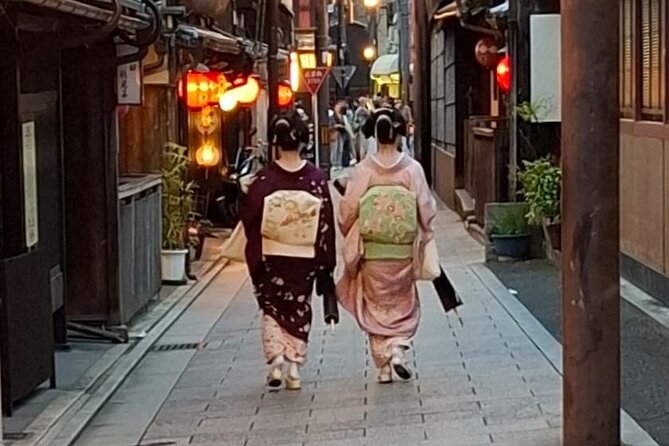
The route includes Miyagawacho, a less-famous geisha district near Gion. You ride through its narrow alleys, where traditional buildings and old neighborhood patterns remain part of the scene.
This section is best approached with respect. You are passing through a working district, not a stage set. Keep your speed low, avoid blocking lanes, and listen carefully when Jaime explains the difference between seeing a traditional quarter and treating it like a photo backdrop.
Later, the tour reaches Gion, Kyoto’s best-known geisha district. The 15-minute stop focuses on wooden machiya houses, lantern-lit lanes, and the culture of geiko and maiko.
Gion can be crowded, especially around its most famous streets. That is one reason the bicycle format works well earlier in the day, when you can approach by quieter routes. At Gion itself, you may need to walk the bicycle or leave it briefly while looking around. Do not expect a long, empty ride through the district.
The contrast between Miyagawacho and Gion is valuable. One feels more low-key, while the other is more widely known and heavily visited. Together, they give you a better sense of Kyoto’s traditional entertainment quarters than a quick photo stop alone.
A few more Kyoto experiences worth comparing
- 5 Top Highlights of Kyoto Full Day Bike Tour (E-bike option)
★ 5.0 · 511 reviews - Full Day Biking Tour Exploring the Best of Kyoto
★ 5.0 · 498 reviews - Kyoto Private Car Tour – Full Day with Local Guide & Nara Option
★ 5.0 · 169 reviews - Full Day Tour of Kyoto with Private Transportation
★ 5.0 · 130 reviews
Heian Shrine and the Lake Biwa Canal explain modern Kyoto
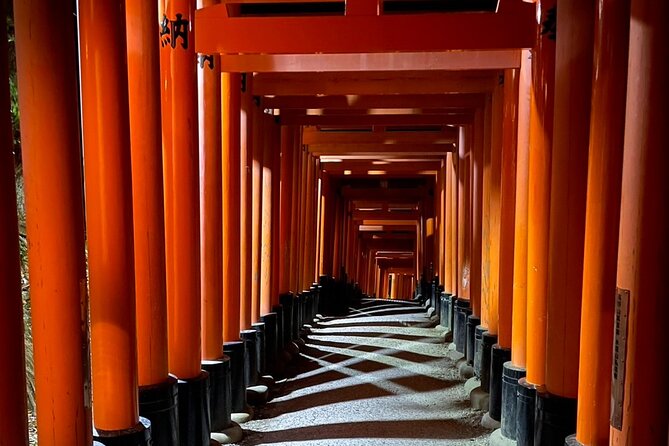
Heian Shrine was built in 1895 to mark Kyoto’s 1,100th anniversary. Its bright vermilion buildings and large gate copy the style of the ancient Imperial Palace.
You spend about 10 minutes here, with time to see the main approach and the huge torii nearby. The short visit works as a visual break. After the dark wood and mossy temple grounds elsewhere, the shrine’s bold colors and broad spaces feel striking.
The next stop is the Lake Biwa Canal area and the Biwa Aqueduct Museum. The museum visit lasts about 10 minutes and explains the canal project built in the 1890s.
The canal brought water, electricity, and new economic life to Kyoto after the capital moved to Tokyo. That detail gives the ride useful balance. Kyoto is not only a city of temples and old wooden houses. It also adapted to major political and engineering changes.
A 10-minute museum stop will not satisfy someone seeking a technical study of the canal, but it gives you enough background to notice the aqueduct and understand why it matters when you see it later.
Nanzenji combines Zen, gardens, and brick engineering
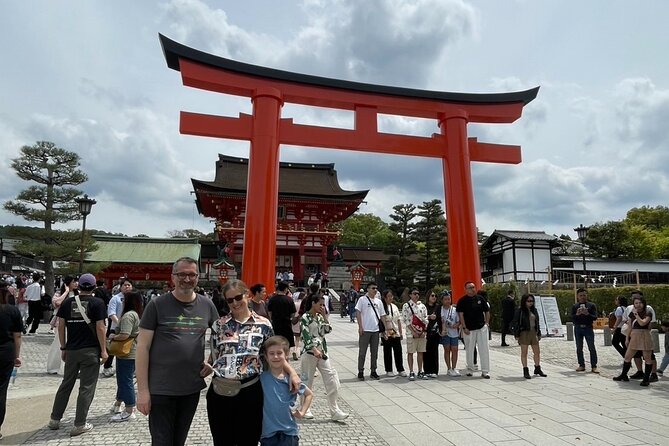
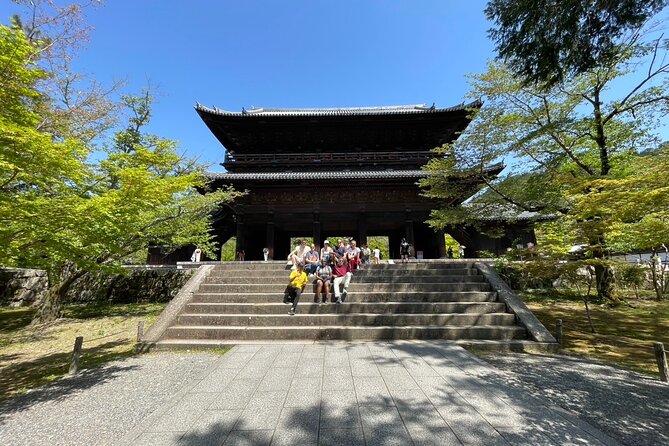
Nanzenji is one of Kyoto’s most important Zen temples, founded in the 13th century. You have about 25 minutes to see its massive Sanmon gate, peaceful garden areas, and the red brick aqueduct running through the temple grounds.
This is one of the tour’s strongest combinations of old and modern Kyoto. The wooden gate and Zen setting suggest centuries of religious tradition, while the brick aqueduct belongs to the city’s later push for water and power.
Nanzenji is also a place where a bicycle cannot replace walking. You will park or handle the bike and move through the grounds on foot. Comfortable shoes and a willingness to spend much of the day getting on and off the bike will help.
The route then follows the Philosopher’s Path, a stone walkway beside a canal lined with cherry trees. It is named for Nishida Kitaro, a Kyoto University professor who walked there while thinking through his ideas.
In spring, the cherry trees make this one of Kyoto’s most popular walks. At other times, the canal and shaded path still offer a peaceful ride, though the narrow route may require care around walkers. This is not a place to rush. Slow down, follow Jaime’s instructions, and enjoy the change from city streets to a quieter corridor.
Honen-in offers the quietest temple stop
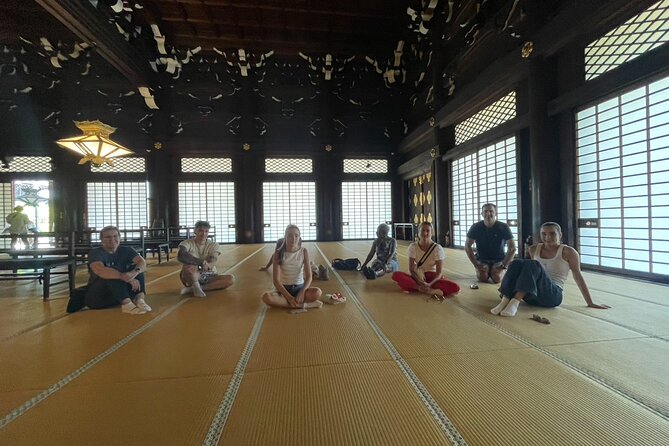
Honen-in sits up the hillside near the Philosopher’s Path. Its mossy gate and white sand patterns create a restrained, quiet setting. The temple was founded in the 1600s to honor Honen, the Buddhist priest associated with Pure Land teachings.
You have about 20 minutes here. That is enough for a thoughtful visit without making the stop feel drawn out.
I especially like the way Honen-in follows Nanzenji and the Philosopher’s Path. After large gates, broad courtyards, and bright shrine buildings, this smaller temple gives the day a gentler pause. It is also a useful reminder that Kyoto’s appeal often comes from modest details: a gate, a garden pattern, a shaded path, or moss at the edge of a stone wall.
The hillside setting may make this stop more demanding for anyone already tired. The tour is not designed around avoiding effort. Its appeal comes partly from reaching places that are less direct by bus.
The Silver Pavilion is the major eastern Kyoto finish
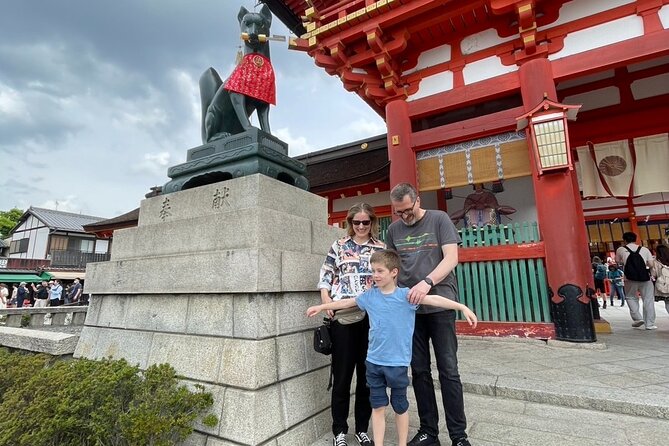
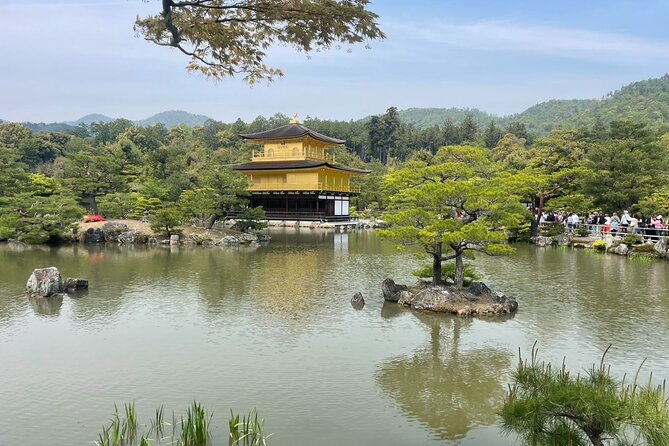
Ginkakuji, or the Silver Pavilion, is one of Kyoto’s famous sights. It was built in the late 1400s by shogun Ashikaga Yoshimasa.
Despite its name, the pavilion was never covered in silver. That small fact is worth remembering because the site’s character comes less from glitter and more from its refined setting, gardens, and understated design.
The visit lasts about 25 minutes. You can walk around the grounds, take photographs, and hear about the shogun who commissioned it. Since the site is popular, expect other people and keep your visit moving at the pace Jaime sets.
Ginkakuji is a strong late-day stop because it rewards close looking rather than grand scale. It also pairs nicely with Honen-in. One is famous around the world, the other quieter and less expected, yet both show Kyoto’s taste for controlled design and calm garden space.
What the pace feels like over seven to eight hours
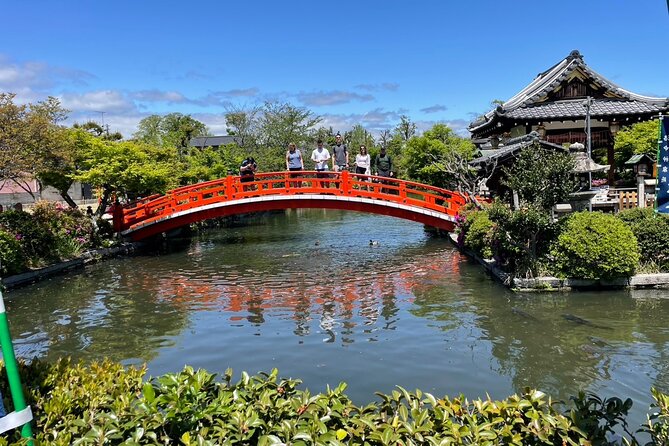
The tour lasts roughly seven to eight hours and finishes back at the starting point. The listed stops range from 10 to 30 minutes, but the actual day also includes riding time, photographs, walking, and transitions between neighborhoods.
You should not book this if you want an easy sightseeing day with minimal physical effort. The route covers about 32 kilometers, and you need to steer safely on narrow paths. Crowded areas may slow the group, while temple grounds require time on foot.
You should also plan for lunch. It is not included in the price, so set aside money and expect a break during the day. One account describes lunch positively, but the tour details clearly exclude it, so do not assume food is part of your booking.
The best clothing is practical: comfortable shoes, clothes suitable for cycling, and protection from the weather. The tour requires good weather, and poor conditions can cause a date change or full refund. Because the activity starts at 9:00 a.m., arrive ready to ride rather than treating the first hour as a slow start.
Is $128.48 a fair price?
At $128.48 per person, this is not the cheapest way to see Kyoto’s temples. The value depends on how much you want from the day.
You receive an e-bike, a private tour, a local guide, and a route connecting much of southern, central, eastern, and traditional Kyoto. Public transportation may cost less, but it will not give you the same continuous ride through backstreets, riverside paths, and old districts. Hiring bicycles independently may also be less expensive, but you would need to plan the route, manage navigation, and explain the sights to yourself.
The private format is important here. You are paying not only for transportation but also for a planned day that joins places often visited separately. If you have only a short stay in Kyoto and want to cover a lot of ground, the price can make sense.
The value is weaker if you prefer long, unhurried visits inside each temple. The stop times are fairly short, and the route’s main purpose is variety. You see many places, but you do not spend half a day studying any one of them.
Who should book this Kyoto bike tour?
I would choose this tour if you enjoy active sightseeing, want context from a local guide, and prefer side streets to a bus window. It suits first-time visitors who want a broad introduction to Kyoto, as well as returning visitors who have already seen the central temples and want a different way to connect the city.
It is also a good match for private groups who value flexibility. Jaime is named as the provider, and the personal format should make it easier to ask questions or adjust the pace within the limits of the route.
I would think twice if you are not comfortable riding 32 kilometers, balancing on narrow paths, or cycling near pedestrians. The e-bike helps with distance, but it does not remove the need for stamina, alertness, and safe handling.
The experience has a 5.0 rating from 24 ratings and 100 percent recommendation, with particular praise for seeing major Kyoto sights while spending much of the day away from busy routes. Jaime is described as friendly and well informed, and the day is repeatedly characterized as full and enjoyable. Treat that as a sign of strong satisfaction, not a promise that the pace will suit everyone.
Should you book it?
Book this tour if you want Kyoto as a connected city, not just a checklist of temples. You will see Toji, Nishi Honganji, Nanzenji, Honen-in, Ginkakuji, Gion, and several quieter areas while riding beside the Kamo River and the canal.
Skip it if your ideal day means slow temple visits, frequent indoor breaks, or very little physical work. For a fit visitor who likes to keep moving, the combination of e-bike travel, local neighborhoods, and major sights gives the $128.48 price solid value.
Free cancellation is available until 24 hours before the 9:00 a.m. start. If weather or minimum participation cancels the tour, you can choose another date or receive a full refund.
FAQ
Where does the Kyoto bike tour start?
It starts at the 7-Eleven at 44-1 Higashikujō Kamitonodachō, Minami Ward, Kyoto, 601-8002, Japan.
What time does the tour begin?
The start time is 9:00 a.m.
Where does the tour end?
The tour ends back at the meeting point.
How long does the experience last?
The tour lasts approximately seven to eight hours.
How far do you ride?
You need to be fit enough to ride about 32 kilometers and handle narrow paths safely.
Is an e-bike included?
Yes. Use of an e-bike is included.
Is lunch included?
No. Lunch is not included in the tour price.
Is this a private tour?
Yes. Only your group participates.
What happens if the weather is poor?
The experience requires good weather. If it is canceled because of poor weather, you will be offered another date or a full refund.
What is the cancellation policy?
You can cancel at least 24 hours before the start time for a full refund. Cancellations or changes made less than 24 hours before the start are not accepted for a refund.
Recently added around Kyoto
- Higashiyama | Kyoto: Sakura Season Private Rickshaw Tour★ 5.0 · 3 reviews
- Kyoto Kimono Rental CHAMATSU|Kimono/Yukata Rental FamilyPlan★ 5.0 · 3 reviews
- Kyoto: Half-Day Private Guided Tour to the Old Town of Gion★ 4.4 · 3 reviews
- Nara Private Customizable Half Day Tour★ 5.0 · 3 reviews
- Kansai Region Hiking Adventure in Nara Kobe Kyoto and More★ 5.0 · 3 reviews
- Full Day Nara Deer, Temple, Shrine, Activities & Tea Ceremony★ 5.0 · 3 reviews
- Nara: Essential Private Tour with Deer Park and Temples★ 5.0 · 3 reviews
- Hiking Tour for Sacred Sites in Kyoto with a Guide★ 5.0 · 3 reviews
Cycling Tours, compared.
Arashiyama Bamboo Forest & Hidden Gems Bike Tour (Early Bird)
Read our review →
5 Top Highlights of Kyoto Full Day Bike Tour (E-bike option)
Read our review →
Full Day Biking Tour Exploring the Best of Kyoto
Read our review →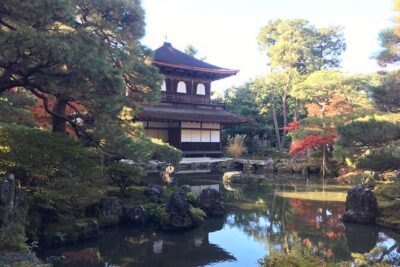
Afternoon Kyoto Bike Tour: Bamboo Forest, Monkeys & Hidden Spots
Read our review →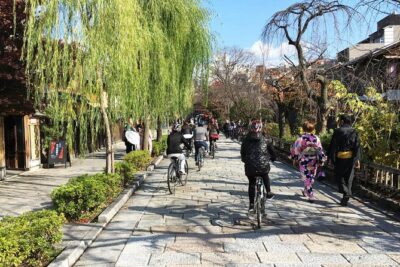
South Kyoto in a Nutshell: Gentle Backstreet Bike Tour!
Read our review →Browse the lists this tour appears in