
REVIEW · CYCLING TOURS
Discover Kyoto at Night by Bike
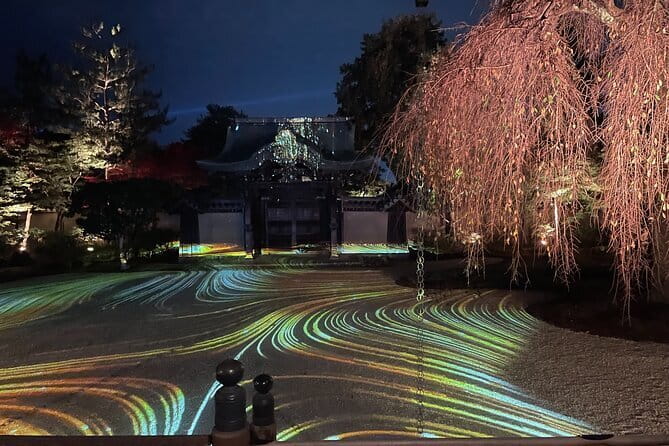
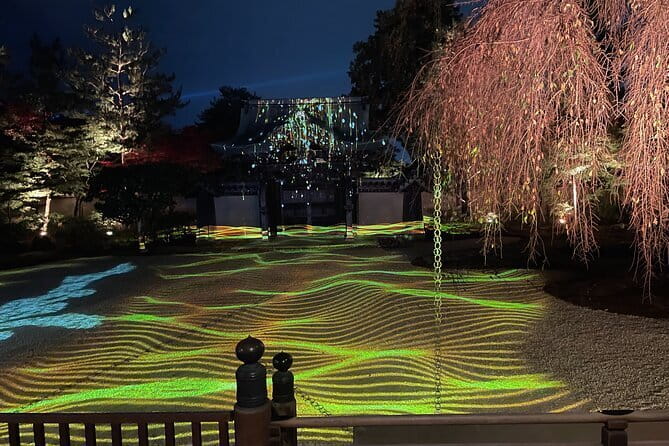
Kyoto changes after dark. Lanterns replace the hard daylight, temple roofs take on a softer outline, and the narrow lanes around Gion and Ninenzaka feel far less pressed by daytime crowds. This 3-hour-45-minute bicycle tour links several of Kyoto’s best-known sights, from Fushimi Inari to Yasaka Pagoda, without making you depend on taxis.
I like two things here: the route mixes famous sights with atmospheric back streets, and the small group, limited to nine people, should make it easier to ride together. Bottled water, bike use, and entrance fees are included, which keeps the $80 price fairly clear.
The main caution is the balance between cycling and listening. One rider found there was only about 1 hour and 45 minutes of riding, with long talks at stops and an ending 45 minutes late. If you want a fast-paced ride, ask at the start how much time will be spent on the bike.
In This Review
- Five things to know before you book
- Why Kyoto works so well after sunset
- Fushimi Inari, where the evening ride begins
- Miyagawa-cho and the river-side atmosphere
- Gion after dark, with a respectful eye
- Yasui-Konpiragu and the custom of cutting ties
- Yasaka Pagoda and the old lanes of Higashiyama
- Ninenzaka, the evening photo stop
- Is $80 a fair price?
- Who should take this Kyoto night ride?
- Timing, booking, and what to bring
- My call: book it for atmosphere, not speed
- FAQ
- How long does Discover Kyoto at Night by Bike last?
- What time does the tour begin?
- Where does the tour meet?
- Where does the tour end?
- What is included in the price?
- Is hotel transportation included?
- How large is the group?
- Do I need to be an experienced cyclist?
- What happens if the weather is poor?
Five things to know before you book
- Fushimi Inari after sunset: You see Kyoto’s famous orange torii gates at a cooler, quieter hour, with about 40 minutes here.
- A compact historic route: The ride connects Fushimi Inari, Miyagawa-cho, Gion, Yasui-Konpiragu, Hōkan-ji Temple, and Ninenzaka.
- A small group of no more than nine: This is a more personal setup than a large bus tour, though the actual number on your date can vary.
- A real cycling requirement: You need moderate fitness and should already be comfortable riding a bicycle. This is not presented as a lesson for first-time riders.
- A strong guide can make the difference: Juan is specifically praised for helping a rider feel safe. The provider is Jaime, and the tour is bilingual.
Why Kyoto works so well after sunset
Kyoto can feel crowded and hot around its major shrines during the day. A bicycle gives you a practical way to move between separate districts, while the evening start at 5:00 pm puts the emphasis on mood rather than speed.
You begin at the 7-Eleven at 44-1 Higashikujō Kamitonodachō in Minami Ward. The tour ends back at this same meeting point, so you do not need to arrange a one-way pickup or figure out where to leave a rental bike afterward.
The route is not simply a long ride with a few photo breaks. At each stop, the guide explains some of Kyoto’s customs, religious places, and traditional neighborhoods. That can be a real plus if you want context, but it also means the experience may feel closer to a guided history walk with bicycles than to a pure cycling outing.
More bike days around Kyoto:
- Hidden Kyoto E-Biking tour
★ 5.0 · 1,843 reviews - Bike Tour Exploring North Kyoto plus Lunch
★ 5.0 · 1,087 reviews - Arashiyama Bamboo Forest & Hidden Gems Bike Tour (Early Bird)
★ 5.0 · 613 reviews
Fushimi Inari, where the evening ride begins
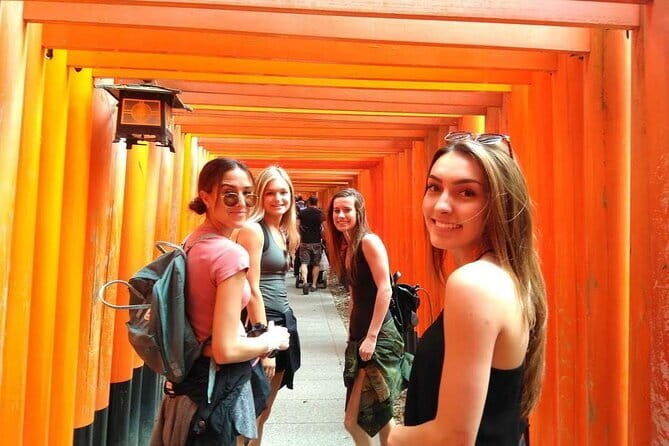
Fushimi Inari-taisha is the tour’s first major stop, with about 40 minutes set aside for the shrine. It is famous for its thousands of orange torii gates, which create long covered passages up the wooded slopes behind the main shrine grounds.
At night, the gates take on a different character. You do not get the same broad daylight views, but the lanterns and shadows make the site feel more hushed and striking. The tour does not charge a separate admission fee for this stop.
The timing matters. Forty minutes is enough to see the main approach and walk through part of the torii-lined route, but not enough to hike the full mountain path. Think of this as an evening introduction, not a complete Fushimi Inari visit.
You should also be ready to leave the bicycle for part of the stop and walk. The tour description focuses on a visit to the shrine, not on cycling through the torii gates. Wear shoes that are comfortable for standing and walking on uneven ground.
Miyagawa-cho and the river-side atmosphere
From Fushimi Inari, the route heads toward Miyakawa-cho Dori, also written as Miyagawa-cho. The stop lasts about 15 minutes and takes you into one of the traditional entertainment districts south of Gion, near the Kamogawa River.
This is a good place to appreciate what makes a night ride different from a daytime sightseeing loop. Lanterns bring attention to old facades and narrow lanes, while the reduced light encourages you to slow down and look carefully.
The short stop means you should not expect a long neighborhood walk. Instead, the guide gives you a brief look at the district and its connection to Kyoto’s traditional arts culture. This portion may appeal most if you enjoy atmosphere and architecture rather than checking off a major monument.
Cycling beside or near the river also adds a welcome change of pace. One particularly positive account praised the beauty of riding along the river and seeing shrines and temples lit after dark. That combination of movement and scenery is one of the strongest reasons to choose this tour over a standard walking route.
Gion after dark, with a respectful eye
The ride continues into Gion, where you spend about 10 minutes. Hanamikoji Street, lined with traditional tea houses, is the best-known part of this district, and the evening setting suits its wooden buildings and quiet lanes.
Gion is not a theme park. It is a working neighborhood tied to traditional performance and hospitality, so you should treat the area with care. Keep voices down, follow the guide’s instructions, and avoid treating people in the district as part of the scenery.
Ten minutes is brief, but it can be enough to see the character of the street and hear why Gion matters. If your main goal is a detailed look at tea-house culture, this tour will only provide an introduction. Its strength is that Gion forms one part of a broader route rather than taking up the entire evening.
The bicycle is useful here because it lets you cover ground between districts without spending the whole night on foot. You should still expect to dismount in crowded or narrow areas. The supplied information does not promise uninterrupted cycling from stop to stop.
More Kyoto evenings:
- Kyoto: Gion Magical Night Walking Tour with Geisha Trivia
★ 4.9 · 2,393 reviews - Night Walk in Gion: Kyoto’s Geisha District
★ 4.5 · 2,003 reviews - Kyoto Night Foodie Tour in Gion (9+ dishes + 6 Sake tastings)
★ 5.0 · 1,762 reviews - Kyoto Gion Night Walk & Geisha District Guided Tour
★ 5.0 · 786 reviews
Yasui-Konpiragu and the custom of cutting ties
At Yasui-Konpiragu, the tour pauses for about 10 minutes. This small Shinto shrine is known for a large sacred stone associated with cutting ties to harmful relationships or habits and forming better connections.
That makes the stop more than another photogenic temple. It gives the evening a glimpse of how religious places in Kyoto can serve personal, practical hopes. People visit shrines not only for grand ceremonies, but also to mark changes in their lives.
The stop is free, and the guide can explain the custom as you look around. Ten minutes will not allow for a long personal ritual, but it gives you enough time to understand why this unusual shrine draws attention.
I like this inclusion because it adds variety. The route is not limited to the city’s biggest postcard sights. You also see places with distinctive local meaning, even when they are small and easy to miss on your own.
Yasaka Pagoda and the old lanes of Higashiyama

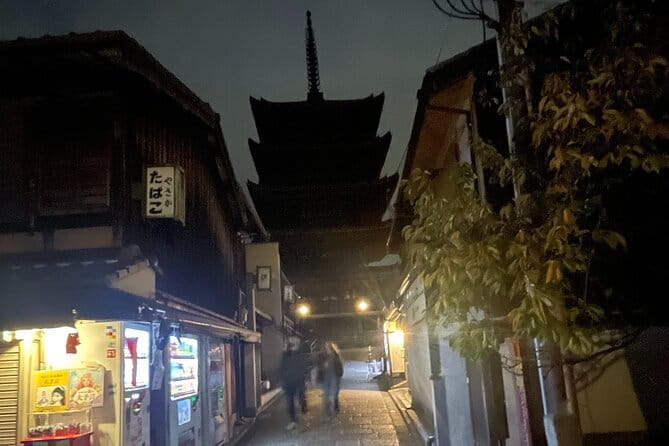
Hōkan-ji Temple, better known as Yasaka Pagoda, receives about 15 minutes. The pagoda rises above narrow cobbled streets and traditional machiya townhouses, creating one of Kyoto’s most recognizable views.
This is one of the best photo stops on the ride, especially under evening light. The surrounding lanes give you the classic Higashiyama scene: timber buildings, sloping streets, and the pagoda framed between them.
The setting also points to a practical limitation. Cobblestones, narrow streets, and foot traffic are not ideal for fast riding. You may spend some of this section walking beside your bicycle or waiting while the group gathers.
That is not a flaw if you want photographs and time to look around. It is a drawback if you chose this activity mainly for continuous exercise. The tour’s advertised length sounds substantial, but the actual riding time can be much shorter once explanations, photos, and walking are counted.
Ninenzaka, the evening photo stop
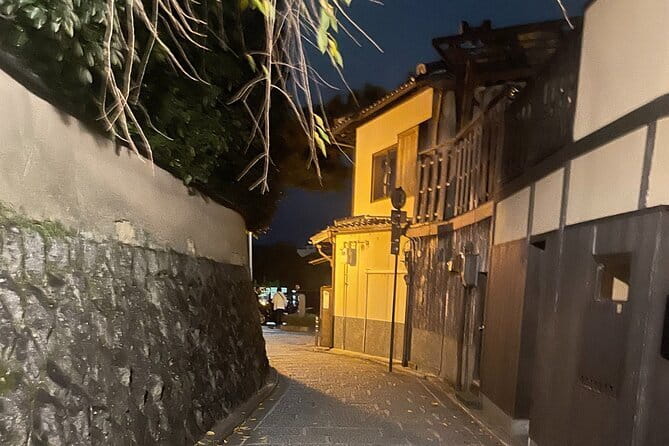
Ninenzaka is another Higashiyama slope, and about 15 minutes is devoted to the area. Along with nearby Sannenzaka, it is often considered one of Kyoto’s most traditional-looking districts.
The sloping lanes, old wooden buildings, and views toward Yasaka Pagoda make this a strong closing section for photography. The evening light can soften the scene, while the absence of daytime heat makes the uphill setting more manageable.
Again, do not expect to pedal freely through every lane. Ninenzaka is best enjoyed at walking speed, and the group may need to stop with the bicycles while the guide points out the view.
The supplied route also mentions a park in Higashiyama with cherry trees, ponds, and wooden bridges, but it does not provide a name or a visit duration. Treat that as an additional area of interest rather than a guaranteed, clearly timed stop. The six named locations are the reliable backbone of the experience.
Is $80 a fair price?
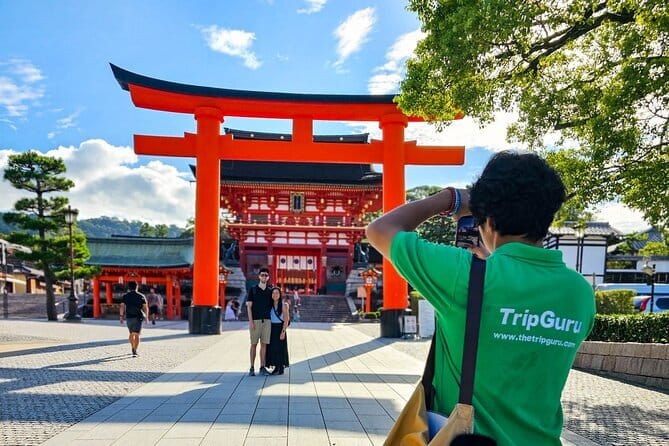
At $80 per person, the value depends on what you want from the evening. You receive the bicycle, bottled water, and all entrance fees, so there are few extra costs during the activity. A bilingual guide also gives you historical and cultural background that would be difficult to gather while navigating Kyoto on your own.
The small maximum group of nine is another point in its favor. A guide can keep a closer eye on the group, and the ride should feel less anonymous than a large coach excursion. The strongest safety praise goes to Juan, who made a solo rider feel comfortable on the bike.
Still, you are not paying for three hours and 45 minutes of nonstop riding. One account found roughly half that time was spent cycling, with the rest divided between standing, listening, and visiting the sights. The tour also ran about 45 minutes beyond the planned finish time on that occasion.
That makes the price fair for a guided evening sightseeing experience by bicycle. It is less attractive if you want a tightly timed workout or need to make a dinner reservation immediately afterward.
Who should take this Kyoto night ride?
I would choose this tour if you want to cover several historic districts in one evening and like having a guide explain what you are seeing. It works especially well for someone who has limited time in Kyoto and wants Fushimi Inari, Gion, and Higashiyama in one outing.
It also suits solo riders. One rider ended up alone with the guide, and the tour still operated rather than being canceled. That suggests the small-group format can sometimes become a very personal experience, though you should not assume you will have a private tour.
You need moderate physical fitness and solid bicycle skills. One direct piece of advice from the experience is important: this is not the ride for a first-time cyclist. You should be able to start, stop, steer, and manage a city route without basic instruction.
Weather matters, too. The activity requires good conditions and can be canceled if the weather is poor. If that happens, you are offered another date or a full refund.
Timing, booking, and what to bring
The start time is 5:00 pm, and the activity lasts approximately 3 hours and 45 minutes. It is often booked about 25 days ahead, so reserve early if your Kyoto dates are fixed.
Wear comfortable clothes for cycling and shoes suitable for walking. The supplied details do not list helmets, clothing, or other cycling equipment as inclusions, so check the booking information directly if you need a specific item.
Bring a phone with your mobile ticket available. Confirmation is sent at booking, and the meeting point is near public transportation, making the start relatively simple to reach.
The cancellation terms are forgiving if your plans change in time. You receive a full refund when you cancel at least 24 hours before the local start time. Cancellations or changes made within 24 hours are not refunded or accepted.
My call: book it for atmosphere, not speed
I would book Discover Kyoto at Night by Bike if you want an evening introduction to Kyoto’s shrines, old districts, and lantern-lit streets, especially when you value explanations and do not want to plan the route yourself. The combination of Fushimi Inari, Gion, Yasaka Pagoda, and Ninenzaka gives you a lot of visual variety for one night.
I would skip it if your priority is constant pedaling, strict timing, or a beginner-friendly cycling lesson. Before setting out, ask the guide to explain the expected riding time and how long the talks will run. If that balance suits you, the $80 fee buys a memorable way to see Kyoto after the day crowds thin out.
FAQ
How long does Discover Kyoto at Night by Bike last?
The tour lasts approximately 3 hours and 45 minutes.
What time does the tour begin?
The scheduled start time is 5:00 pm.
Where does the tour meet?
You meet at the 7-Eleven at 44-1 Higashikujō Kamitonodachō, Minami Ward, Kyoto, 601-8002, Japan.
Where does the tour end?
The activity ends back at the original meeting point.
What is included in the price?
Bike use, bottled water, and all entrance fees are included.
Is hotel transportation included?
No. Hotel transportation is not included.
How large is the group?
The tour has a maximum of nine people.
Do I need to be an experienced cyclist?
You need moderate physical fitness and should be a fairly proficient bicycle rider. The activity is not intended for first-time riders.
What happens if the weather is poor?
If poor weather causes the tour to be canceled, you are offered a different date or a full refund. You can also cancel at least 24 hours before the start time for a full refund.
Recently added around Kyoto
- Higashiyama | Kyoto: Sakura Season Private Rickshaw Tour★ 5.0 · 3 reviews
- Kyoto Kimono Rental CHAMATSU|Kimono/Yukata Rental FamilyPlan★ 5.0 · 3 reviews
- Kyoto: Half-Day Private Guided Tour to the Old Town of Gion★ 4.4 · 3 reviews
- Nara Private Customizable Half Day Tour★ 5.0 · 3 reviews
- Kansai Region Hiking Adventure in Nara Kobe Kyoto and More★ 5.0 · 3 reviews
- Full Day Nara Deer, Temple, Shrine, Activities & Tea Ceremony★ 5.0 · 3 reviews
- Nara: Essential Private Tour with Deer Park and Temples★ 5.0 · 3 reviews
- Hiking Tour for Sacred Sites in Kyoto with a Guide★ 5.0 · 3 reviews
Cycling Tours, compared.
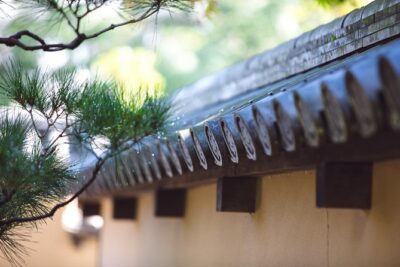
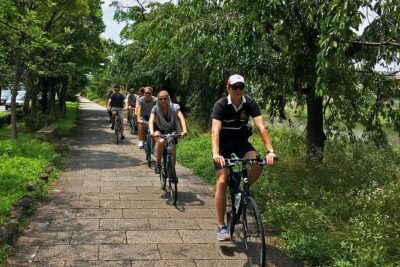
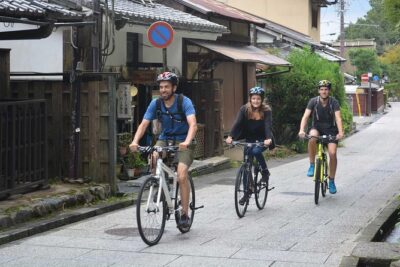
Arashiyama Bamboo Forest & Hidden Gems Bike Tour (Early Bird)
Read our review →
5 Top Highlights of Kyoto Full Day Bike Tour (E-bike option)
Read our review →
Full Day Biking Tour Exploring the Best of Kyoto
Read our review →
Afternoon Kyoto Bike Tour: Bamboo Forest, Monkeys & Hidden Spots
Read our review →
South Kyoto in a Nutshell: Gentle Backstreet Bike Tour!
Read our review →Browse the lists this tour appears in