
REVIEW · AMANOHASHIDATE TOURS
Kyoto: Miyama Village, Amanohashidate & Ine Bay Day Trip
Ine Bay gives this day trip its most unusual opening: traditional boat houses built directly over the water, where fishing boats occupy the lower level and homes sit above. I like that this tour reaches three very different parts of northern Kyoto in one day, and I like the freedom to walk, take photographs, and choose your own stops rather than follow a rigid group march.
The catch is the distance. You spend many hours on the road, and the time at Miyama and Ine is brief. The $63 price is attractive for round-trip transport and a multilingual guide, but you should budget extra for the Amanohashidate cable car and possibly a boat ride.
In This Review
- Key things to know before you book
- Why this northern Kyoto route is worth your time
- Meeting in Nipponbashi before the roads open
- Ine Bay and the boat houses over the water
- Amanohashidate, the bridge to heaven
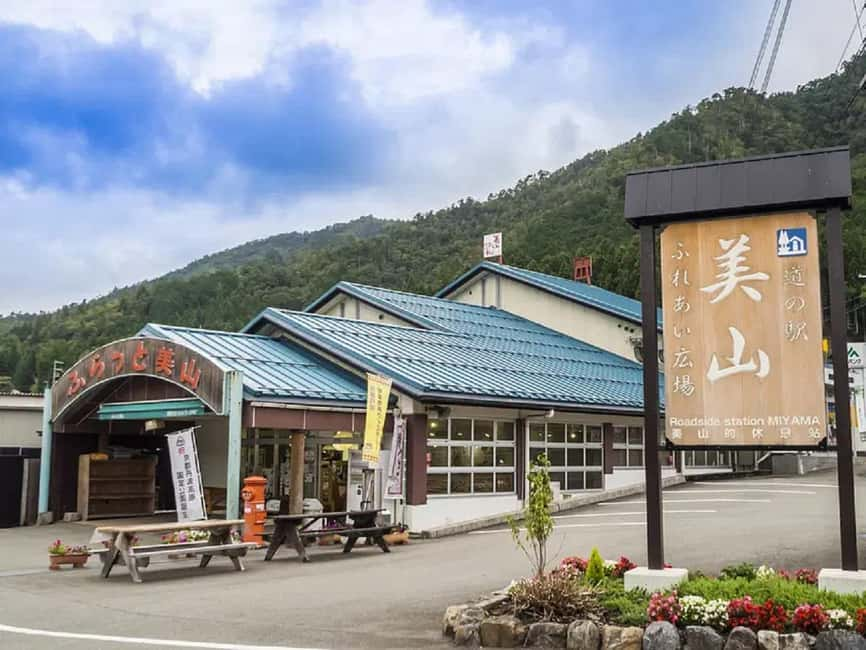
- Miyama Kayabuki no Sato and old farmhouses
- What the $63 price really covers
- The real rhythm of a 10-hour day
- Who should book this experience?
- Should you book the Miyama, Amanohashidate, and Ine trip?
- FAQ
- Where does the tour depart from?
- What time should I arrive?
- How long does the activity last?
- What languages does the guide speak?
- Is lunch included?
- Is the Amanohashidate cable car included?
- Is a boat ride in Ine included?
- What should I bring?
- Can I cancel for a full refund?
- Can I schedule another activity after the tour?
Key things to know before you book
- Ine’s 230 boat houses: See one of Japan’s most unusual coastal communities, with homes and boat storage built around the bay.
- Amanohashidate’s Flying Dragon View: Pay separately for the cable car or chairlift to see the pine-covered sandbar from above.
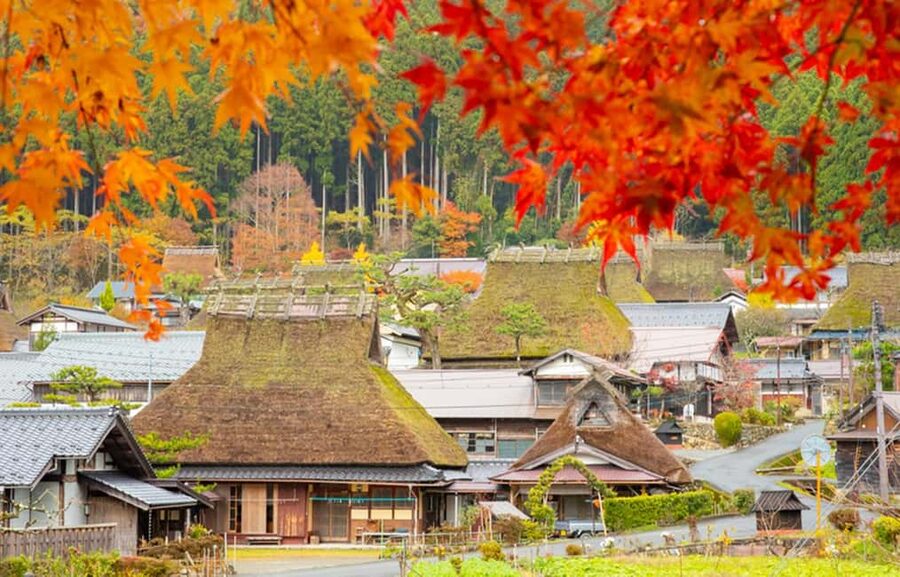
- Miyama in 40 minutes: Walk among more than 40 traditional thatched houses, but do not expect a long village visit.
- A long northern Kyoto road day: The bus rides add up, though the air-conditioned vehicle makes the journey easier.
- Multilingual guiding: English, Japanese, and Traditional Chinese are offered, with guides such as Liu and Cave praised for keeping explanations and departure times clear.
- Cash is useful: Some scenic spots, food sellers, restaurants, and optional activities may not accept cards.
Why this northern Kyoto route is worth your time
Most visitors based in Osaka see Kyoto through temples, shopping streets, and central neighborhoods. This trip takes you far north, toward fishing villages, coastal views, and mountain farming country. It is a very different picture of the region.
I especially like the contrast between the three stops. Ine is tied to the sea. Amanohashidate is a broad scenic viewpoint and temple area. Miyama is quiet, rural, and built around old farmhouses. You get three distinct settings without arranging several train and bus connections yourself.
That convenience matters. Public transport can reach these areas, but combining all three in one day would be difficult. Here, the driver handles the long transfers, parking, and route planning. Your guide also keeps an eye on the clock, which is important when the bus leaves on time.
The day is not relaxed in the traditional sense. The schedule includes roughly two and a half hours from Osaka to Ine, about 40 minutes to Amanohashidate, around an hour and a half to Miyama, and about two hours back to Osaka. The stops are rewarding, but you are buying access and efficiency rather than long, slow visits.
More of the Amanohashidate coast:
- Kyoto Amanohashidate,Ine Bay Trip with Optional boat/Ropeway
★ 4.5 · 87 reviews - Amanohashidate & Ine Boathouse Full-Day Tour from Kyoto or Osaka
★ 4.5 · 48 reviews - Kyoto: Amanohashidate Ine Funaya Tour
★ 4.4 · 19 reviews
Meeting in Nipponbashi before the roads open
The meeting point is Nipponbashi Station Exit 2, at 1-chōme-3-6 Nipponbashi in Osaka’s Namba Shinsaibashi area. Meet at 7:05 AM for a 7:20 AM departure. Arrive early. The bus does not wait for latecomers.
The vehicle type depends on the number of people booked, so you cannot select a particular bus in advance. The included air-conditioned transport, driver, and parking fee are the practical backbone of the experience. On a full day with long transfers, a clean and comfortable bus is not a small matter.
Your guide and vehicle details arrive by email the evening before. Check your spam or junk folder as well as your main inbox. Guides work in English, Japanese, and Traditional Chinese, and multilingual explanations can take a little longer than a single-language tour. The strongest guide comments focus on clear timing and good communication. Liu is specifically praised for moving between languages smoothly and reminding everyone when to return to the bus. Cave is also noted for clear English and Mandarin explanations.
Ine Bay and the boat houses over the water
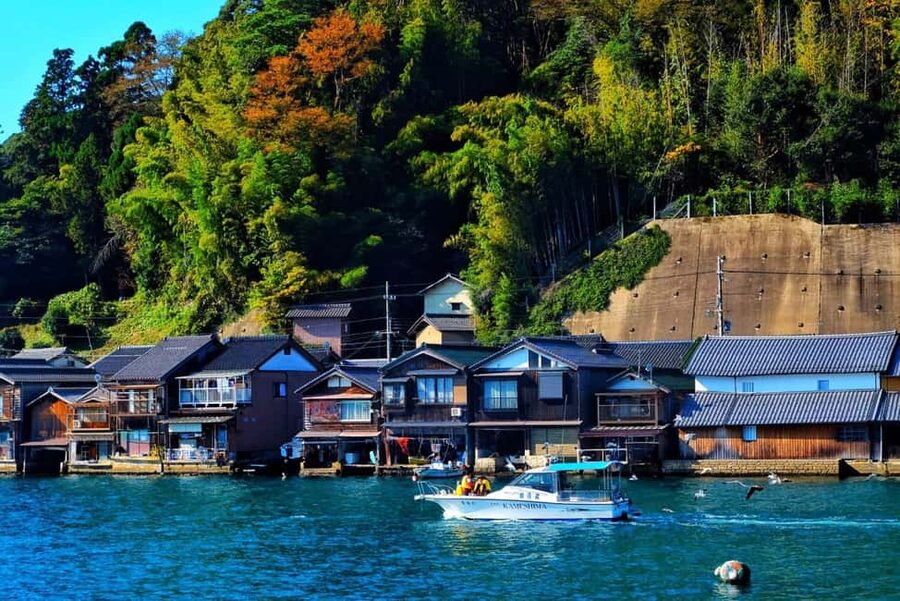
After the longest morning transfer, you reach Ine, a small coastal village known for its funaya boat houses. About 230 of these structures line the bay. Their design reflects daily life shaped by fishing: boats are stored on the ground level, while the living space is above.
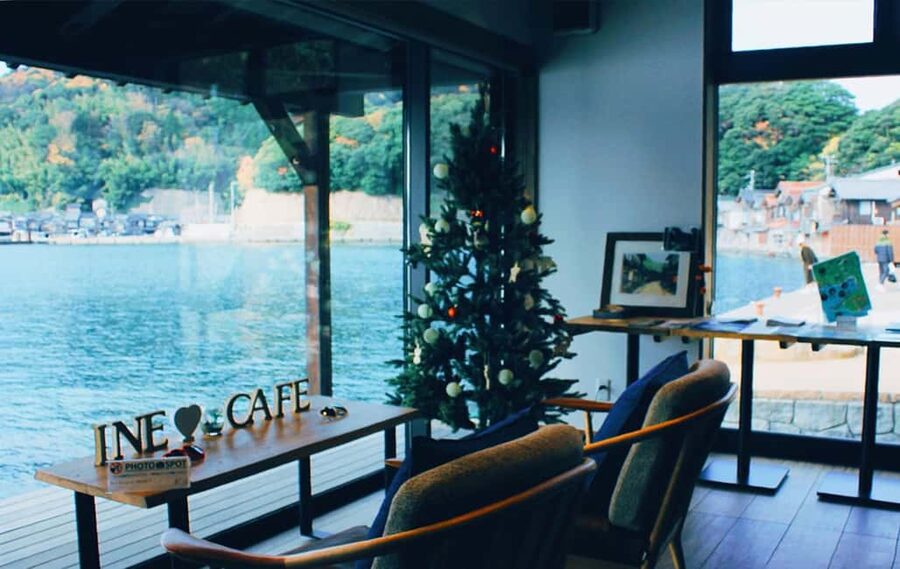
This is the kind of place where a slow walk matters more than a long speech. Look across the water at the row of homes, then follow the quiet lanes and study how closely the buildings relate to the shoreline. You can also stop at a seaside café for coffee and bay views.
The scheduled visit is about 40 minutes, so plan your priorities before you arrive. You will not have time to investigate every lane, linger over a long meal, and visit several interiors. The best use of the stop is usually a quick walk, photographs, and a look at the boat-house design.
A boat ride may be available at an additional cost. One important practical point is that optional rides are not included in the $63 base price. Some people find the bay cruise a highlight, while others prefer to keep their money and explore on foot. Bring cash, since payment options can be limited.
Be cautious around the water and keep food away from birds. The instructions specifically warn about eagles, and feeding animals is not allowed. The bay is scenic, but it is still a working coastal community, not a theme park.
Amanohashidate, the bridge to heaven
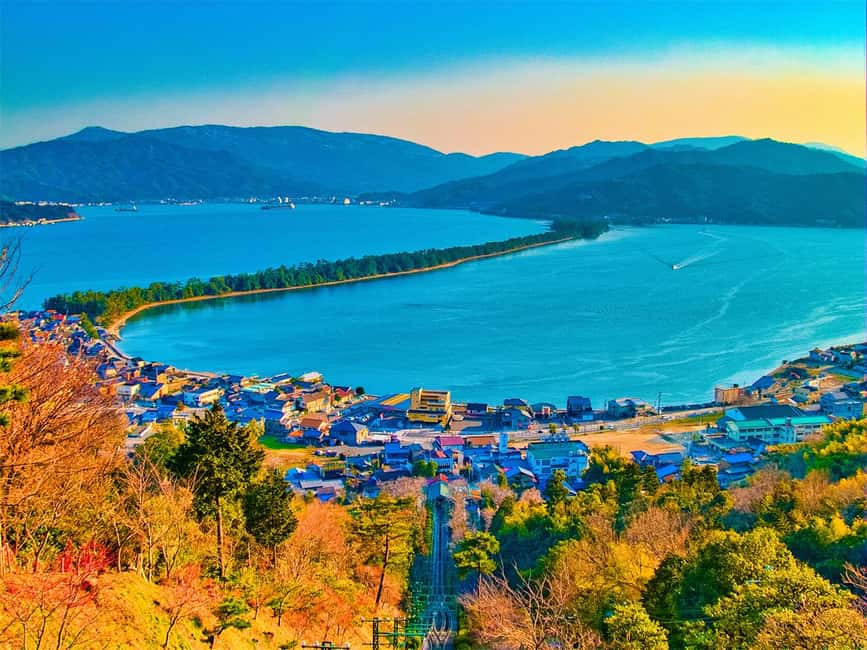
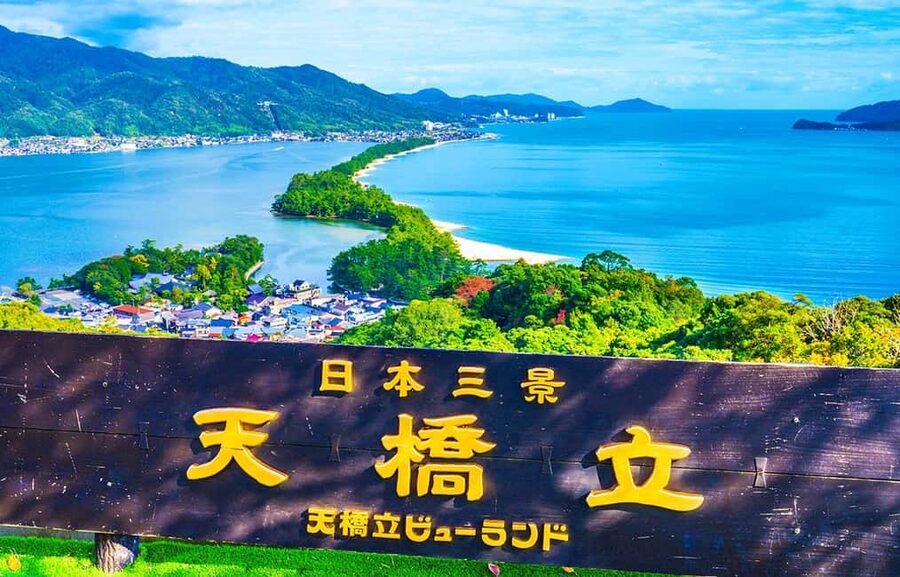
The next stop is Amanohashidate, a 3.6-kilometer natural sandbar stretching across the bay. More than 8,000 pine trees grow along it, giving the narrow strip a green, wooded appearance when viewed from above.
The classic view comes from View Land, reached by a self-paid cable car or chairlift. From the top, the sandbar curves across the water in a shape often compared to a flying dragon. This is the signature photograph of the day, and the extra fare is worth considering if wide views matter to you.
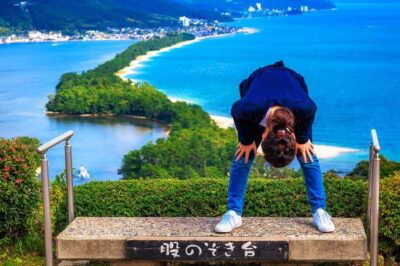
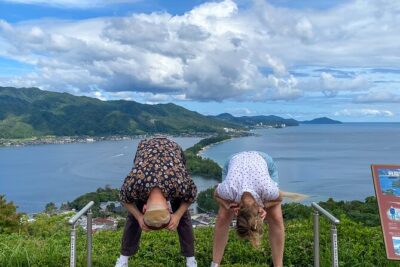
You can also try the traditional matanozoki pose, bending over and looking at Amanohashidate upside down between your legs. The upside-down view is said to bring good fortune and make the sandbar appear to rise toward the sky. It is playful, quick, and easy to fit into the visit.
At ground level, Chion-ji Temple and Monju-do Hall give the stop a spiritual side. They are associated with prayers for academic success. Nearby Amanohashidate Shrine and the Isoshimizu Spring add smaller points of interest, including a chance to cleanse your hands before making a wish.
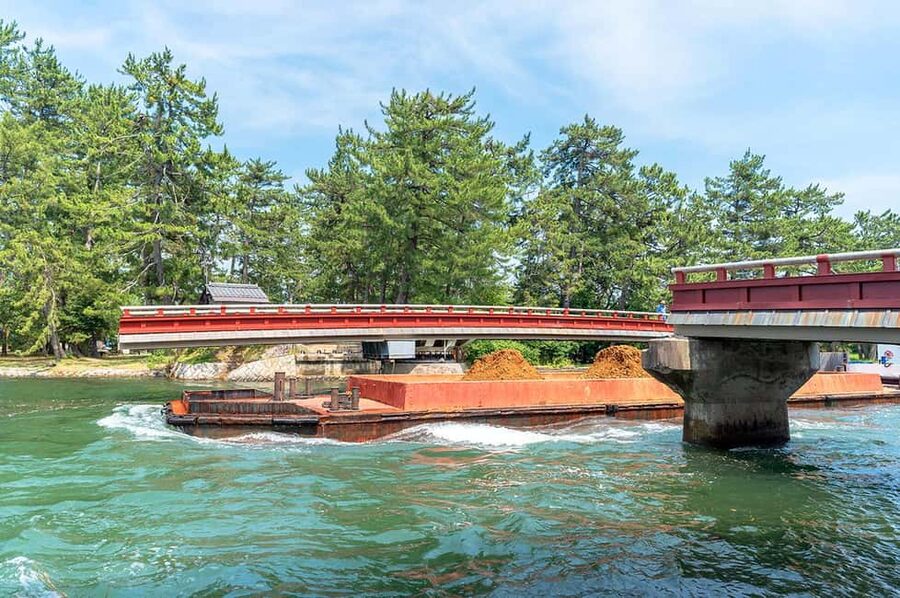
Keep an eye out for the rotating bridge. It turns to allow boats through, a simple but unusual sight that can catch you by surprise if you are not watching the waterway.
The itinerary allows about two hours here, including the viewpoint, temple area, beach, and café time. That sounds generous until you include queues, walking, photographs, and the cable car. If Amanohashidate is your main reason for booking, go straight to the viewpoint first and use the remaining time for Chion-ji, the beach, or a café.
The beach area is more about scenery and a short break than a full beach day. You have free time to wander, but the schedule does not allow for a leisurely coastal outing. Some people would prefer more time here, especially because the viewpoint and temple area offer several separate things to see.
A few more Kyoto experiences worth comparing
- PERFECT KYOTO 1-Day Bus Tour
★ 5.0 · 13,518 reviews - Kyoto: Fushimi Inari, Kinkakuji, Bamboo Grove 1 Day Bus Tour
★ 4.8 · 4,316 reviews - 10 Must-see Spots in Kyoto One Day Private Tour (up to 7 people)
★ 5.0 · 1,108 reviews - Nara Half Day Trip Walking Tour (Private Option Available)
★ 5.0 · 937 reviews
Miyama Kayabuki no Sato and old farmhouses
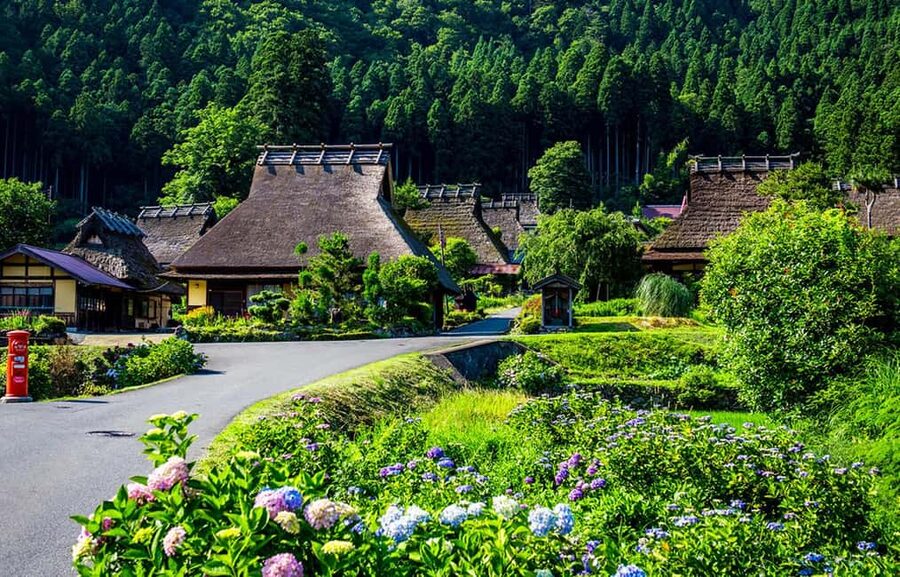
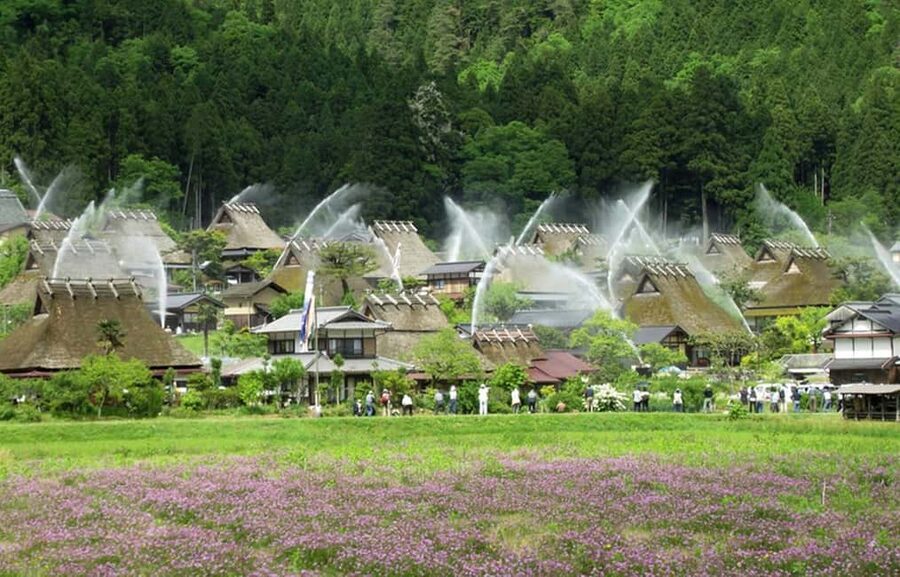
The final destination is Miyama Kayabuki no Sato, a mountain village with more than 40 Edo-period-style thatched houses. The steep roofs are designed for heavy snowfall, and details such as crossed roof beams called chigi and snow-cutting rods called yukiwari show how local building methods answered real weather problems.
Miyama feels different from Ine and Amanohashidate. There is no broad bay or famous panoramic viewpoint here. Instead, the appeal comes from the close-up details: thick thatch, old farm buildings, narrow paths, and displays of rural tools and household objects.
You may be able to look inside a preserved thatched house and visit a small exhibition of traditional village life. Café Gallery Saika is a useful place to pause, with local ice cream and views toward the village. The stop can also include small food discoveries, such as a local fermented soba drink.
The scheduled visit is about 40 minutes, which is the clearest limitation of the day. You can walk through the main area and take photographs, but you will need to choose between a café stop, an interior visit, and a slower stroll. If you want to study the houses in detail, this will feel short.
Still, Miyama is a valuable last stop because it slows the visual rhythm of the day. After the sea and the broad view at Amanohashidate, the quiet farm village offers a closer look at how people lived and built homes in northern Kyoto.
What the $63 price really covers
At $63 per person, this is a strong transport value for a route that is awkward to organize independently in one day. You receive the driver, parking, round-trip bus travel from central Osaka, and a live guide. The price also removes the stress of connecting remote coastal and mountain destinations.
It does not cover lunch, personal purchases, the cable car, or other optional activities. The cable car or chairlift at Amanohashidate is the most important extra to plan for. A boat ride in Ine may also cost more, so check the amount before committing.
Lunch is not provided. You should bring cash and use free time to buy food locally, or pack something practical. Since the schedule is tight, do not count on a long sit-down meal.
The value is best for you if you want variety and convenience. It is less attractive if you prefer to spend half a day in one village, linger over meals, or explore at a very slow pace. You are paying to reach three distant places efficiently, not to receive an in-depth visit at each one.
The real rhythm of a 10-hour day
The tour lasts about 10 hours, but only part of that time is spent sightseeing. The road segments are substantial, and traffic, weather, crowds, or Japanese holiday conditions can delay the return.
I would not schedule a train, airport transfer, dinner reservation, or ticketed event immediately after the expected arrival in Osaka. The return time can shift, and the operator may shorten, move, or cancel a stop if conditions require it.
The guide’s role matters here. At each stop, you receive an overview, then free time to explore. The best approach is to listen carefully at the start, note the bus departure time, and then set your own small plan. Guides such as Liu have been praised for giving reminders during free time, which helps you enjoy the stop without constantly checking the clock.
Wear comfortable shoes. You will walk around village lanes, temple grounds, viewpoints, and the seaside area. Weather-appropriate clothing, sunglasses, a camera, and cash belong in your day bag.
This tour is not suitable for people with mobility impairments. The schedule includes walking and optional cable car or chairlift access, and the remote sites may not be easy for every physical ability.
Who should book this experience?
I would recommend it to first-time visitors staying in Osaka who want to see parts of northern Kyoto that do not fit neatly into a normal city itinerary. It also suits solo visitors and small groups who value handled transport, clear departure times, and a guide who can explain cultural details along the way.
Families can make it work too. The long bus rides provide a break between stops, and the open spaces at Ine, Amanohashidate, and Miyama offer variety. Still, young children may find the early start and long return tiring.
Photography enthusiasts have plenty to work with: boat houses over the bay, pine trees across the sandbar, temple details, mountain scenery, and thatched roofs. The day also suits anyone who wants a change from Osaka’s urban pace.
I would hesitate if your priority is deep exploration. Forty minutes in Ine and Miyama goes quickly, and even two hours at Amanohashidate must cover several sights. For a slower trip, choose one of these destinations and arrange more time there.
Should you book the Miyama, Amanohashidate, and Ine trip?
Book it if you want three memorable settings in one day and accept that the bus is part of the experience. The strongest reasons are the difficult transport connections, the unusual boat houses of Ine, the fine viewpoint at Amanohashidate, and the practical guidance from multilingual staff such as Liu or Cave.
Before paying, add the cost of the cable car and any boat ride you want, then decide if the total still fits your budget. Arrive early at Nipponbashi, keep the following evening free of fixed plans, and treat the day as a broad introduction rather than a detailed study.
For a $63 base fare, it offers a lot of northern Kyoto in a single outing. Just bring patience for the road and a willingness to keep moving.
FAQ
Where does the tour depart from?
The meeting point is Nipponbashi Station Exit 2, at 1-chōme-3-6 Nipponbashi in Osaka’s Namba Shinsaibashi area.
What time should I arrive?
Meet at 7:05 AM for a 7:20 AM departure. Arrive at least 15 minutes early because the bus leaves on time and will not wait for latecomers.
How long does the activity last?
The day trip lasts about 10 hours, including transport from Osaka and the return journey.
What languages does the guide speak?
Live guiding is available in English, Japanese, and Traditional Chinese.
Is lunch included?
No. Lunch is not included, so bring cash or plan to buy food during free time.
Is the Amanohashidate cable car included?
No. The cable car or chairlift to the Amanohashidate viewpoint is self-paid.
Is a boat ride in Ine included?
The base price does not include personal expenses, and the boat ride may require an additional payment.
What should I bring?
Bring comfortable shoes, sunglasses, a camera, cash, and clothing suited to the weather.
Can I cancel for a full refund?
You can cancel up to 24 hours in advance for a full refund. Reserve-now, pay-later booking is also available.
Can I schedule another activity after the tour?
It is not recommended. Traffic, bad weather, crowds, and holiday conditions can delay the return, and stops may be shortened, rescheduled, or canceled.
Recently added around Kyoto
- Higashiyama | Kyoto: Sakura Season Private Rickshaw Tour★ 5.0 · 3 reviews
- Kyoto Kimono Rental CHAMATSU|Kimono/Yukata Rental FamilyPlan★ 5.0 · 3 reviews
- Kyoto: Half-Day Private Guided Tour to the Old Town of Gion★ 4.4 · 3 reviews
- Nara Private Customizable Half Day Tour★ 5.0 · 3 reviews
- Kansai Region Hiking Adventure in Nara Kobe Kyoto and More★ 5.0 · 3 reviews
- Full Day Nara Deer, Temple, Shrine, Activities & Tea Ceremony★ 5.0 · 3 reviews
- Nara: Essential Private Tour with Deer Park and Temples★ 5.0 · 3 reviews
- Hiking Tour for Sacred Sites in Kyoto with a Guide★ 5.0 · 3 reviews
Amanohashidate Tours, compared.
Kyoto Amanohashidate,Ine Bay Trip with Optional boat/Ropeway
Read our review →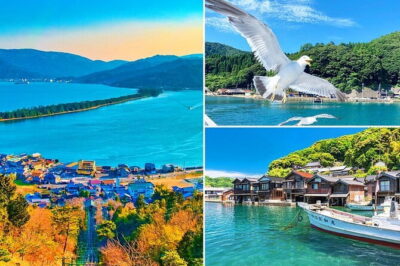
Amanohashidate & Ine Boathouse Full-Day Tour from Kyoto or Osaka
Read our review →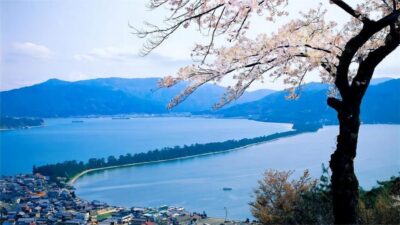
All-Inclusive Kyoto Day Tour: Amanohashidate, Miyama or Ohara
Read our review →Browse the lists this tour appears in