REVIEW · FULL-DAY
Kyoto Full-Day Private Tour (Osaka departure) with Government-Licensed Guide
Kyoto is not a city you can neatly check off in a day, but this private tour gives you a smart way to choose your priorities. Your licensed guide can build a route around three or four sites, then lead you from Osaka by public transport rather than leaving you to puzzle over trains, buses, and crowded streets.
I like two things right away: the itinerary is genuinely flexible, and the guide handles the awkward parts of the day. Guides such as Ichiro, Rie, Haru, Yuko, Bell, and Reo have helped families and cruise passengers adjust plans, navigate rail lines, and fit in major sights. You also get local context instead of simply being pointed toward a famous gate.
The main catch is pace. Eight hours is short for Kyoto, and the tour involves substantial walking, transfers, and entrance fees paid separately. If your group wants a slow temple visit or a long lunch, you will need to see fewer places.
In This Review
- Key Points to Know Before You Book
- Why a Private Osaka to Kyoto Day Makes Sense
- Meeting Your Guide in Osaka
- Fushimi Inari and Kyoto’s Southern Approach
- Kiyomizu-dera and Higashiyama’s Old Streets
- Gion, Pontocho, and Kennin-ji
- Nijo Castle and Kyoto’s Imperial Past
- Nishiki Market and the Taste of Kyoto
- Arashiyama’s Bamboo, Bridges, and Quiet Temples
- Northern Kyoto: Golden Pavilion, Ryoan-ji, and Ninna-ji
- Eastern Mountains and Northern Retreats
- Imperial Villas and Uji’s Byodoin
- What the Guide Adds to the Day
- Walking, Cost, and Practical Planning
- Should You Book This Kyoto Tour From Osaka?
- FAQ
- How long does the Kyoto private tour last?
- Where does the tour begin?
- Is transportation included?
- How many Kyoto sights can I choose?
- Are entrance fees included?
- Is lunch included?
- Can I cancel for a full refund?
Key Points to Know Before You Book
- Choose from 35 Kyoto sights: Build the day around temples, gardens, markets, old districts, imperial villas, or Uji.
- Public transport is part of the service: Your guide meets you in designated Osaka areas and helps with the journey to Kyoto.
- Three or four stops is realistic: The long list is a menu, not a promise that you will see everything.
- Licensed English-speaking guides lead the day: Guide quality matters, and named guides including Ichiro, Rie, Yuko, Bell, and Reo have received especially strong praise.
- Walking is substantial: Bring water, a snack, comfortable shoes, and enough energy for temple grounds and station connections.
- Cruise passengers can use it as a shore day: Several itineraries began at an Osaka cruise terminal and returned guests to the ship on time.
Why a Private Osaka to Kyoto Day Makes Sense
This tour costs $201.46 per person and lasts about eight hours. That is not the cheapest way to see Kyoto, but the price covers a private, licensed guide for your group and a custom plan. It does not cover transport, food, entrance fees, or a private vehicle.
I see the value mainly in time and decision-making. Kyoto has thousands of temples and shrines, and the city’s sights are spread across several districts. A guide who knows the rail and bus system can help you avoid wasting half the day figuring out which station, platform, or connection comes next.
The private format also lets you set the day’s tone. You might focus on major landmarks such as Fushimi Inari, Kiyomizu-dera, and Nijo Castle. You might choose a slower mix of Gion, Nishiki Market, and Kennin-ji. Or you could head west to Arashiyama, knowing that the extra travel time means fewer stops elsewhere.
A group discount may be available, which improves the price for families or small parties. The tour was booked more than five times in the previous week, and it carries a 4.9 rating from 58 ratings, with 98 percent recommending it. Those numbers suggest strong demand, but the practical point is simpler: the guide you receive will shape the day more than the sales page does.
A few more Kyoto experiences worth comparing
- 5 Top Highlights of Kyoto Full Day Bike Tour (E-bike option)
★ 5.0 · 511 reviews - Full Day Biking Tour Exploring the Best of Kyoto
★ 5.0 · 498 reviews - Kyoto Private Car Tour – Full Day with Local Guide & Nara Option
★ 5.0 · 169 reviews
Meeting Your Guide in Osaka
Pickup is offered within designated Osaka areas, but this is a walking pickup rather than a private car collection. You meet the guide on foot, then travel together toward Kyoto using public transportation unless you pre-book a private vehicle at least five days ahead.
This arrangement suits you if you are comfortable walking to a meeting point and using trains. It is especially useful if you are coming from an Osaka cruise port. Guides including Andy Murao, Tatsuya Ito, Kiriko, Shogo, and Haru have met groups at cruise terminals, accompanied them to Kyoto, and helped them return in time for departure.
Tell the operator your must-see sights before the day. That communication matters. Haruk, for example, worked with a group in advance to fit priority stops into a tight schedule, while Reo created a custom plan around a family’s interests. A clear wish list gives the guide something useful to work with.
Do not assume that a private tour means a private vehicle. Transportation is not included, and you should expect train, subway, or bus travel. That can be part of the fun, but it also means that the day moves at the speed of the network and your group.
Fushimi Inari and Kyoto’s Southern Approach
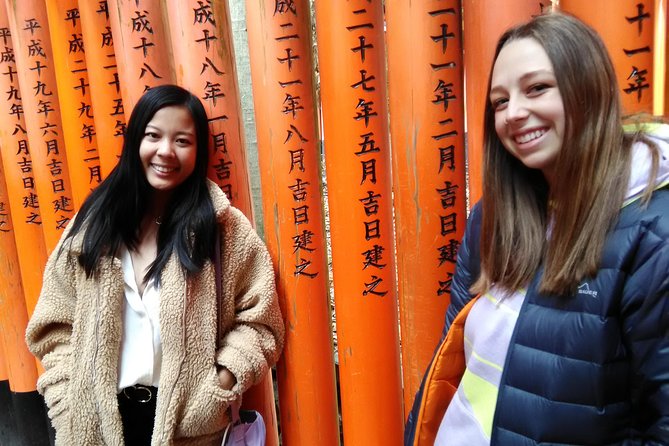
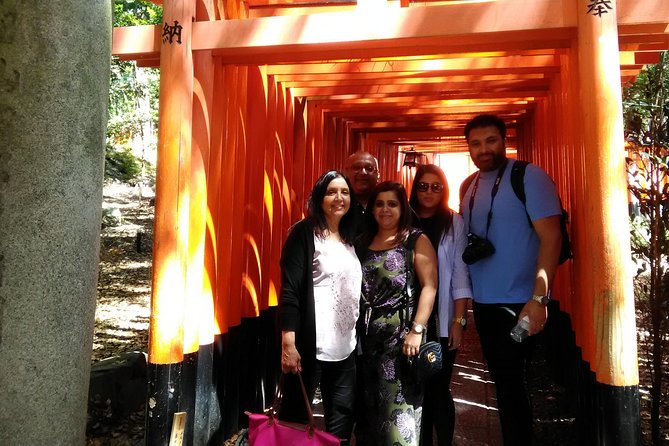
Fushimi Inari-taisha is one of Kyoto’s essential first choices. Its long rows of orange torii gates climb the wooded slopes behind the shrine, and even a shorter visit gives you the famous visual experience.
The benefit of a guide here is orientation and timing. You can learn about the shrine’s role and decide how far to walk instead of treating the mountain path as an all-or-nothing climb. The supplied schedule lists short periods at many stops, so confirm how much time you want to spend on the torii path before the tour begins.
Nearby Tofuku-ji offers a very different mood. It is a large Zen temple known for autumn color, with broad grounds and important buildings. Toji, the East Temple, connects to Kyoto’s early capital period and is easier to pair with southern Kyoto sights.
These three places can make a sensible southern route, but not with every other major site in the same day. If Fushimi Inari is your priority, give it time and accept that another district may need to go.
Kiyomizu-dera and Higashiyama’s Old Streets
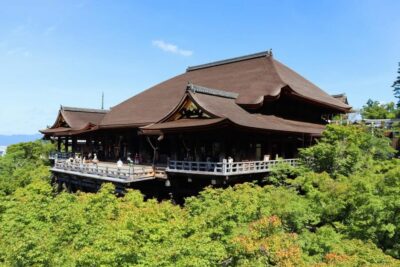
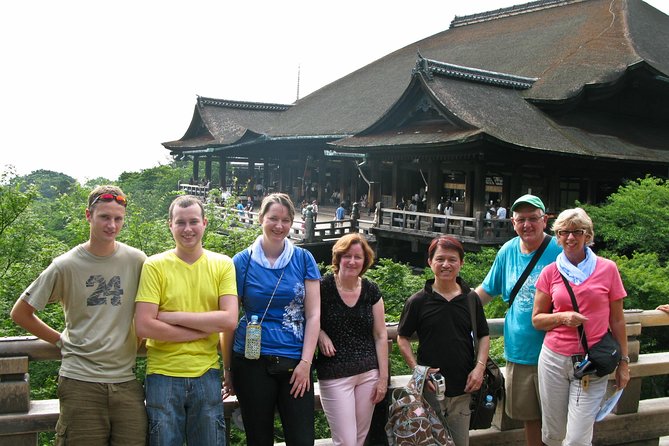
Kiyomizu-dera is one of Kyoto’s best-known temples, and for good reason. The temple sits above the eastern side of the city, with broad views and a memorable approach through the Higashiyama district.
A guide can explain the temple grounds and help you understand what you are seeing rather than reducing the visit to a photo stop. Entrance is not included, so budget separately for admission. The climb through the surrounding streets can also be tiring, especially in warm weather or during busy seasons.
Higashiyama is valuable beyond the temple itself. Its preserved streets offer a sense of old Kyoto, with traditional buildings, narrow lanes, and small shops. Gion lies nearby, making it possible to connect the temple area with the city’s historic entertainment district.
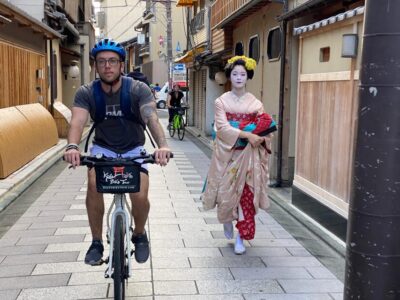
The tradeoff is crowding and foot traffic. You may need to move slowly through popular lanes, and your guide may adjust the order of stops to find quieter times. A guide named Kiriko helped one group visit old streets, the market, and the bamboo forest while also seeing a geisha in full makeup. Such encounters are never guaranteed, but local timing can improve your chances of a calmer walk.
A completely different side of Kyoto:
- PERFECT KYOTO 1-Day Bus Tour
★ 5.0 · 13,518 reviews - Kyoto: Fushimi Inari, Kinkakuji, Bamboo Grove 1 Day Bus Tour
★ 4.8 · 4,316 reviews - Kyoto: Tea Ceremony in a Traditional Tea House in Kiyomizu
★ 4.9 · 3,519 reviews - Kyoto Geisha Walking Tour: Gion District & Hidden Gems
★ 4.7 · 3,273 reviews
Gion, Pontocho, and Kennin-ji
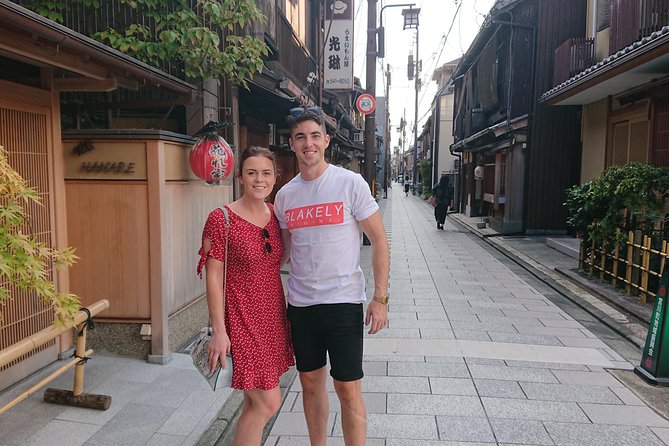
Gion is Kyoto’s most famous geisha district, but it is not a stage set. The narrow lanes are working streets, and respectful behavior matters. Your guide can help you find your way and explain the district without treating it like a spectacle.
Pontocho, the narrow dining lane beside the Kamogawa River, adds a different flavor. It is primarily an evening restaurant area, so its appeal during a daytime tour may be atmospheric rather than culinary. If food matters to you, ask your guide how to fit lunch into the route. Emi recommended a traditional Japanese restaurant to one family at the end of the day, and that kind of local advice can add real value.
Kennin-ji is close to Gion and offers temple grounds and dry gardens. It can be a good choice if you want a quieter cultural stop without making a long cross-city transfer. Its short listed visit time suggests it may work as an add-on, not as the central focus of the day.
Nijo Castle and Kyoto’s Imperial Past
Nijo Castle was built in 1603 as the Kyoto residence of Tokugawa Ieyasu, the first shogun of the Edo period. It gives you a useful counterpoint to Kyoto’s religious sites: this is a place of political power, formal rooms, and shogunal authority.
The castle is also a good stop for visitors who want history explained in plain terms. The famous nightingale floors, designed to sound when walked upon, are easier to appreciate when your guide points out what to notice. Admission is separate, so check the current fee when planning your budget.
Kyoto Imperial Palace tells another part of the city’s story. It was the residence of Japan’s imperial family until 1868, when the emperor and capital moved to Tokyo. The palace grounds are spacious, and the visit can provide a welcome change from narrow shopping lanes and packed temple approaches.
Nijo Castle, the Imperial Palace, Nishiki Market, and Gion form a sensible central Kyoto day. You will see political history, imperial history, food culture, and traditional entertainment. You will not see every famous temple, but the route has a clear theme and less backtracking.
Nishiki Market and the Taste of Kyoto
Nishiki Market is a narrow, five-block shopping street lined with more than 100 shops and restaurants. Known as Kyoto’s Kitchen, it is a practical place to see local food culture in action.
I would use this stop for lunch or small tastes rather than trying to race through it. The market is compact, but it can be difficult to move through when crowded. Keep your group together and ask your guide about foods you may not recognize.
Market visits work best when you are curious and flexible. You might find pickles, seafood, sweets, and other regional foods, but the tour does not include lunch or personal purchases. Carry money for food, and do not expect every stall to accept cards. One guide specifically noted that cashless payment is spreading in Japan but still does not work everywhere.
Arashiyama’s Bamboo, Bridges, and Quiet Temples
Arashiyama is one of the most tempting choices from the 35-point menu. The western district brings together the Togetsukyo Bridge, bamboo groves, Tenryu-ji, and several smaller hillside temples.
The bamboo paths are photogenic, but they are only one part of the area. Togetsukyo Bridge is Arashiyama’s best-known landmark, while Tenryu-ji is the district’s major Zen temple and a World Heritage site. Entrance fees apply at the paid attractions.
If you want a quieter side of Arashiyama, consider Jojakko-ji, Nison-in, Gio-ji, Adashino Nenbutsu-ji, or Otagi Nenbutsu-ji. These temples offer moss, trees, hillside paths, thatched roofs, or distinctive stone figures. Otagi Nenbutsu-ji is known for its 1,200 carved stone statues, each with a different expression.
The catch is distance. Arashiyama is far from Fushimi Inari and the northern temples, so a day built around the bamboo grove should not also promise every major Kyoto landmark. Okochi Sanso Garden is another option near the bamboo paths, but it has a separate admission fee.
Northern Kyoto: Golden Pavilion, Ryoan-ji, and Ninna-ji
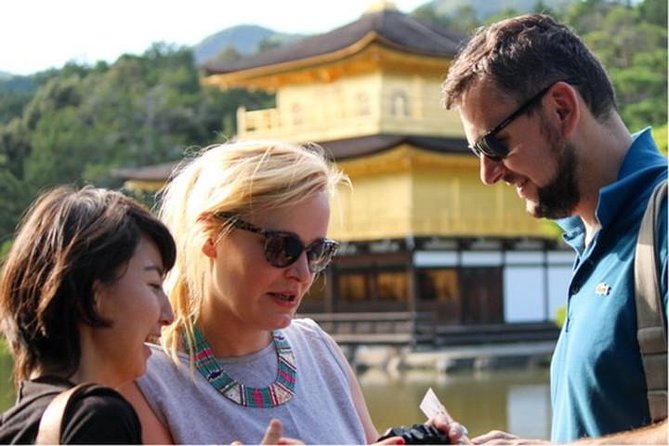
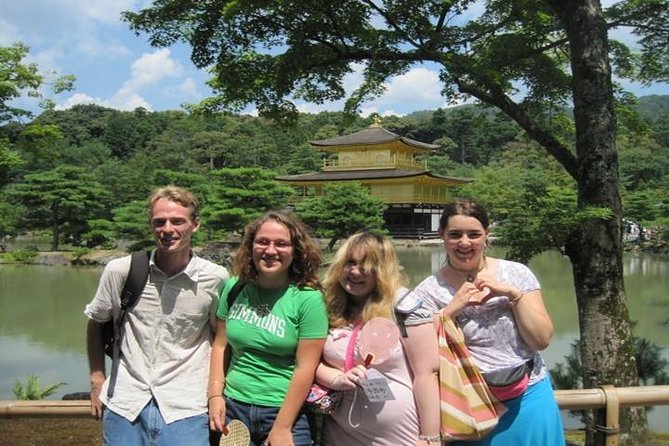
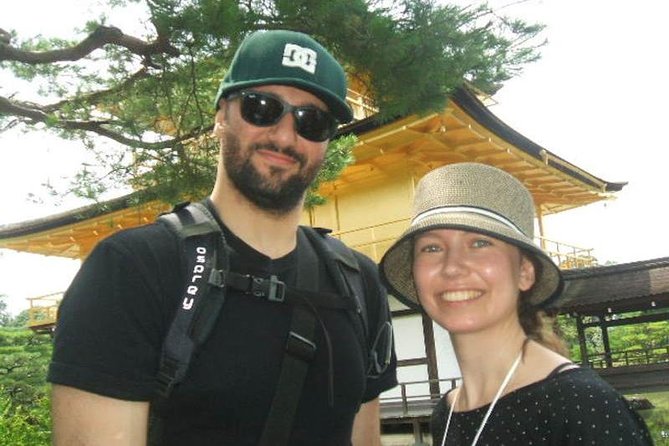
Kinkaku-ji, the Golden Pavilion, is a strong choice if you want one instantly recognizable Kyoto sight. Its upper two floors are covered in gold leaf, and the pavilion reflects in the pond in front of it.
The visit is fairly focused, which makes it useful in a tight schedule. You see the pavilion and grounds, then move on. Admission is not included, and the site can feel more like a formal viewing route than a slow, private stroll.
Ryoan-ji offers a quieter kind of appeal. Its famous rock garden is one of Japan’s best known, with a simple arrangement that rewards a few minutes of stillness. Ninna-ji, founded in 888, adds imperial and Buddhist history and is listed as a World Heritage site.
These three northern stops make a coherent route. Add Arashiyama only if your guide confirms the timing works. Otherwise, you risk spending too much of the day in transit.
Eastern Mountains and Northern Retreats
Ginkaku-ji, the Silver Pavilion, began as the retirement villa of shogun Ashikaga Yoshimasa. Despite its name, it is not covered in silver. Its gardens and Zen setting are the real reason to visit.
Nanzen-ji is one of Kyoto’s major Zen temples, with spacious grounds at the base of the Higashiyama mountains. The brick aqueduct at Nanzenji Suirokaku adds an unusual piece of Meiji-era engineering to the temple setting.
For a more remote day, choose Kibune River, Kurama-dera, or Yoshimine-dera. Kibune lies in a forested northern valley around Kifune Shrine, while Kurama is a rural mountain town less than an hour from central Kyoto. Yoshimine-dera sits in the western mountains and is built along a slope.
These places are appealing if you have already seen Kyoto’s central icons or prefer mountain scenery and religious sites. They are poor choices for a first-time checklist tour that also includes Fushimi Inari, Kiyomizu-dera, and Arashiyama.
Imperial Villas and Uji’s Byodoin
Shugakuin Imperial Villa and Katsura Imperial Villa are among the most refined choices on the menu. Both are associated with imperial life and Japanese garden design, but they require careful planning and add travel time.
Katsura is known for its architecture and garden design. Shugakuin includes upper, middle, and lower villa areas in the northern hills. If one of these is your priority, ask early about access, timing, and admission arrangements. The tour data lists admission as separate, and the day cannot be built around every district at once.
Byodoin Temple in Uji is another special option. Its Phoenix Hall is a National Treasure and a World Heritage site, but the extra travel time to Uji means it should be treated as the day’s main destination.
What the Guide Adds to the Day
The strongest part of this experience is not the number of stops. It is the guide’s ability to make Kyoto workable in a limited window.
Ichiro is repeatedly associated with strong explanations at places such as the bamboo forest, Nijo Castle, Fushimi Inari, and Nishiki Market. Yuko is praised for choosing useful transportation and caring for the group. Bell adjusted the pace for a young daughter, and several guides changed plans when people struggled with the walking.
That flexibility matters, but it has limits. One poor experience involved unclear communication, a language barrier, little historical explanation, and a guide walking too far ahead in the rain. The operator said it would examine the guide’s performance. My advice is direct: confirm the day’s route, walking level, meeting point, and preferred pace before departure.
Walking, Cost, and Practical Planning
This is a walking tour with public transportation. Bring comfortable shoes, water, a snack, and a portable phone battery if you use digital tickets or maps. One person specifically advised bringing a snack and preparing for a lot of walking.
Most people can participate, and service animals are allowed. Still, the combination of temple stairs, station platforms, long paths, and a full day on foot may not suit every group. Tell the guide about stamina concerns early. A flexible private format is most useful when the guide knows what your group can actually manage.
Entrance fees are not included at Kiyomizu-dera, Nijo Castle, Kyoto Imperial Palace, Ginkaku-ji, Kinkaku-ji, Ninna-ji, and many other paid sites. Lunch and personal expenses are also separate. The private vehicle option must be requested and pre-booked at least five days ahead, so do not assume it will be available at the last moment.
Free cancellation is available up to 24 hours before the start time. Changes or cancellations inside that window are not accepted for a refund.
Should You Book This Kyoto Tour From Osaka?
Book it if you want a private plan, personal guidance, and help using Kyoto’s rail and bus system. It is especially useful for first visits, families, small groups, and cruise passengers who must return to Osaka on schedule.
You should also book it if you already know your priorities. Choose three or four places and let the guide build a route around them. Fushimi Inari plus Gion and Kiyomizu-dera makes sense. Nijo Castle, Nishiki Market, and the Imperial Palace make another good central day. Arashiyama deserves its own western Kyoto focus.
Skip it if you want a slow, inexpensive day with no entrance costs beyond your own choices. At $201.46 per person, the value comes from private attention, route planning, and local help, not from squeezing 35 sights into eight hours. Used that way, this is a practical and flexible introduction to Kyoto from Osaka.
FAQ
How long does the Kyoto private tour last?
The tour lasts approximately eight hours.
Where does the tour begin?
The guide meets your group within designated Osaka areas. Pickup is on foot, not by default in a private vehicle.
Is transportation included?
Transportation is not included. You travel with the guide by public transportation unless a private vehicle is requested and pre-booked at least five days ahead.
How many Kyoto sights can I choose?
The tour offers a choice of more than 35 points of interest, but the included description says to choose three or four Kyoto sites for the custom walking tour.
Are entrance fees included?
No. Entrance fees are separate and apply at sites such as Kiyomizu-dera, Nijo Castle, Kinkaku-ji, Ginkaku-ji, and many other temples and villas.
Is lunch included?
No. Lunch and personal expenses are not included.
Can I cancel for a full refund?
Yes, if you cancel at least 24 hours before the experience start time. Cancellations or changes made less than 24 hours before the start time are not eligible for a refund.
Recently added around Kyoto
- Higashiyama | Kyoto: Sakura Season Private Rickshaw Tour★ 5.0 · 3 reviews
- Kyoto Kimono Rental CHAMATSU|Kimono/Yukata Rental FamilyPlan★ 5.0 · 3 reviews
- Kyoto: Half-Day Private Guided Tour to the Old Town of Gion★ 4.4 · 3 reviews
- Nara Private Customizable Half Day Tour★ 5.0 · 3 reviews
- Kansai Region Hiking Adventure in Nara Kobe Kyoto and More★ 5.0 · 3 reviews
- Full Day Nara Deer, Temple, Shrine, Activities & Tea Ceremony★ 5.0 · 3 reviews
- Nara: Essential Private Tour with Deer Park and Temples★ 5.0 · 3 reviews
- Hiking Tour for Sacred Sites in Kyoto with a Guide★ 5.0 · 3 reviews
Full-Day, compared.

5 Top Highlights of Kyoto Full Day Bike Tour (E-bike option)
Read our review →
Full Day Biking Tour Exploring the Best of Kyoto
Read our review →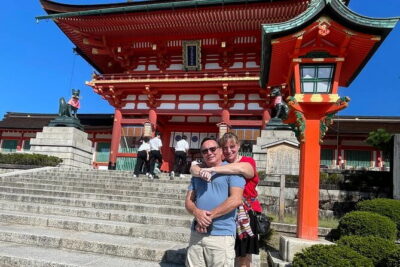
Kyoto Private Car Tour – Full Day with Local Guide & Nara Option
Read our review →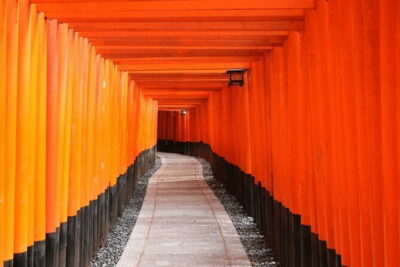
Full Day Tour of Kyoto with Private Transportation
Read our review →
Full Day Hiroshima and Miyajima Tour by Bullet Train from Kyoto
Read our review →