
REVIEW · CYCLING TOURS
Kyoto: Full Day Bike Tour
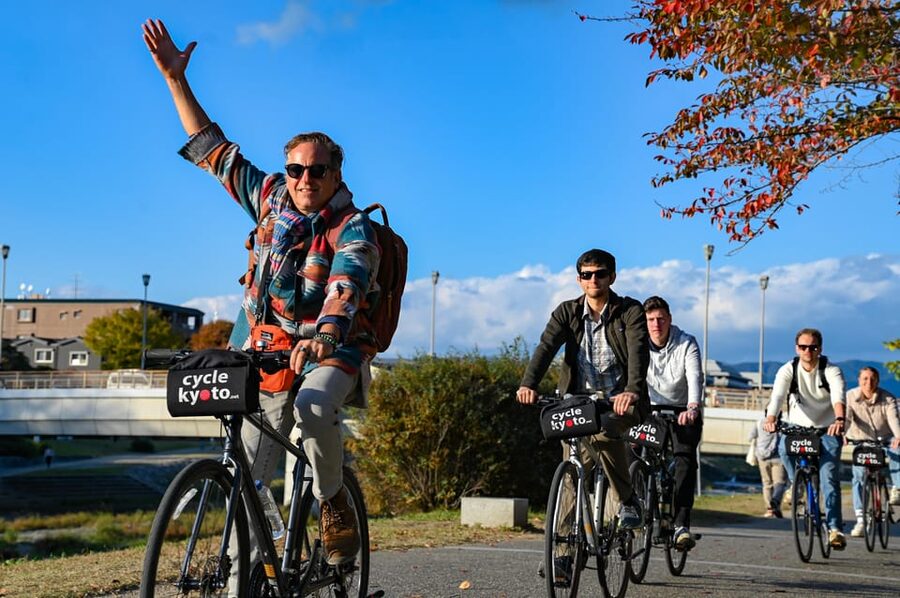
Kyoto’s big sights are spread across the city, and this full-day bike tour links them in one energetic sweep. You’ll pedal from Toji and Nishi Honganji to Kinkaku-ji, the Imperial Palace, Gion, Tofukuji, and Fushimi Inari, with plenty of backstreet riding between the famous stops.
I like the small groups of nine or fewer and the mix of major sights with ordinary Kyoto neighborhoods. I also like that lunch is included and that guides such as Jay, Juan, Karl, and Shawn bring local stories and practical advice to the ride. The catch is simple: this is a long, active day, possibly more than 18 miles, so it suits confident cyclists better than casual riders.
In This Review
- Key points to know before booking
- Why this bike route works so well in Kyoto
- Starting at Toji and Nishi Honganji
- From Sanjo arcade to Kitano Tenmangu
- Kinkaku-ji, the Golden Pavilion
- A traditional lunch and a change of pace
- The Imperial Palace and the Kamo River
- Gion by bicycle, then on foot
- Tofukuji and the torii gates of Fushimi Inari
- The guides and group atmosphere
- What to bring and who should skip it
- Is the $116 price fair?
- Should you book the full-day Kyoto bike tour?
- FAQ
- Where does the Kyoto bike tour start?
- How long does the activity last?
- What language is the tour conducted in?
- Are bikes and helmets included?
- Is lunch included?
- Is the Golden Pavilion entrance fee included?
- Who cannot take this tour?
Key points to know before booking
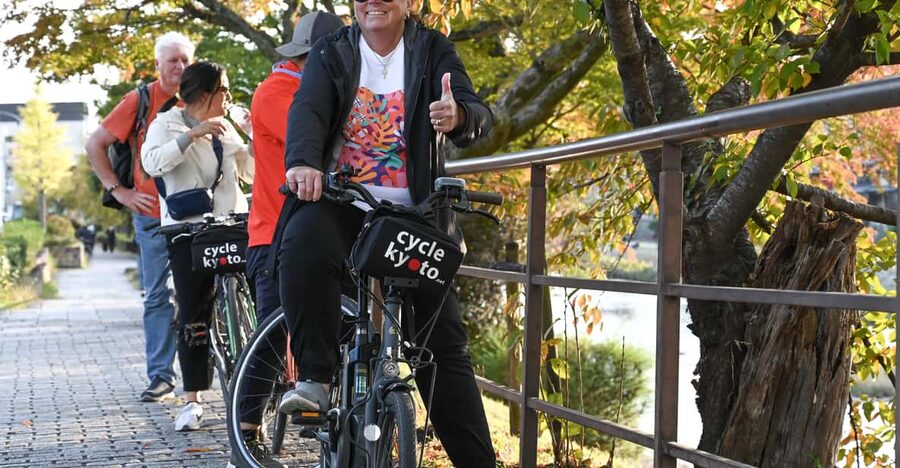
- A full Kyoto sampler: Visit temples, shrines, Gion, the Kamo River, and the Imperial Palace in one 450-minute outing.
- Quiet streets between major sights: The route uses neighborhood lanes and back roads, giving you a look at everyday Kyoto as well as its headline attractions.
- Well-kept Giant and Trek bikes: Standard cross bikes are supplied, with e-bikes available on request.
- Golden Pavilion entry is included: You do not need to arrange the admission separately.
- Lunch is part of the day: The meal is at a traditional Japanese restaurant, with the location subject to availability.
- Best for active adults and older children: Participants must be at least 12, able to ride a bike, and comfortable spending most of the day outdoors.
Why this bike route works so well in Kyoto
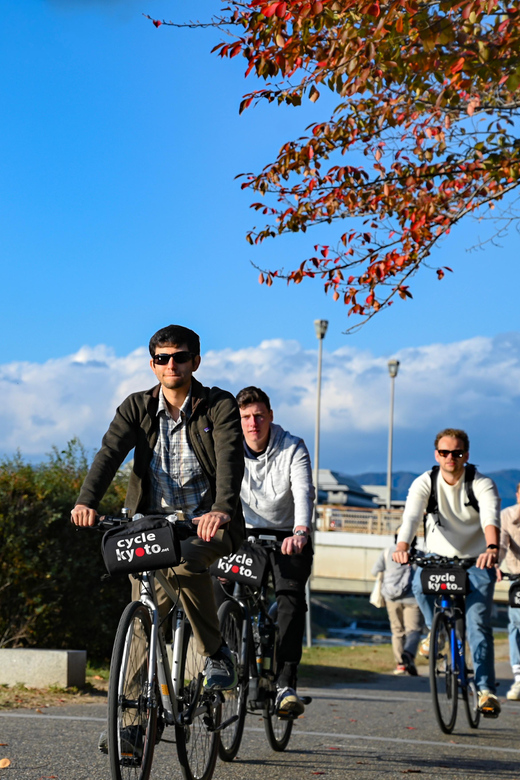
Kyoto can be awkward to cover in one day. Buses are useful but can be slow, taxis add up, and walking between distant temples takes time. A bike gives you a practical middle ground. You can cover long stretches quickly, then stop close to a temple gate or shrine entrance.
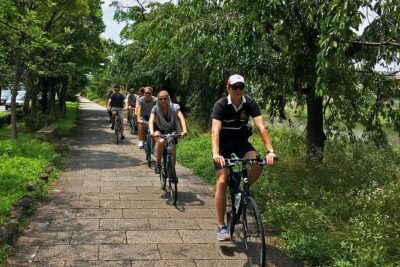
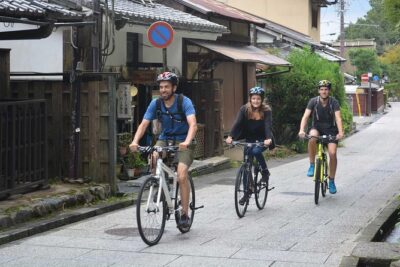
The route also gives the day some texture. You are not simply moving from one famous site to the next by vehicle. You ride through shopping arcades, along the Kamo River, into Gion’s narrow lanes, and through residential streets where the city feels less staged for sightseeing.
The group size matters here. With no more than nine people, the guide can keep the pace together and explain what you are seeing without turning the ride into a large procession. English-speaking guides have lived in Japan for considerable periods, and that helps with the small cultural details that can be missed when you visit on your own.
The price is $116 per person. That covers the bike, helmet, Golden Pavilion admission, lunch, and a full day with a live English-speaking guide. For an independent cyclist, it is possible to visit some of these places more cheaply. But you would need to plan the route, rent equipment, pay separate entry fees, find lunch, and manage the city’s distances yourself. The value here is the amount of ground covered and the interpretation along the way.
More bike days around Kyoto:
- Hidden Kyoto E-Biking tour
★ 5.0 · 1,843 reviews - Bike Tour Exploring North Kyoto plus Lunch
★ 5.0 · 1,087 reviews - Arashiyama Bamboo Forest & Hidden Gems Bike Tour (Early Bird)
★ 5.0 · 613 reviews
Starting at Toji and Nishi Honganji
Meet at Cycle Kyoto at 9:30 AM sharp, arriving 15 minutes early. The first 25 minutes are used for the safety briefing and bike fitting, so this is the moment to tell the staff if the saddle, handlebars, or bike size does not feel right.
The supplied bikes are well-maintained cross bikes from Giant and Trek. They are a sensible choice for city riding, with more speed and comfort than a basic upright rental. E-bikes are available if requested, although you should arrange that ahead of time rather than assume one will be waiting.
The first stop is Toji, identified as Kyoto’s oldest temple. You will have about 30 minutes to look around after the safety briefing. This early stop eases you into the day before the longer run north.
From Toji, it is about a 10-minute ride to Nishi Honganji. The guided visit lasts roughly 50 minutes. The contrast between cycling through the city and entering a quiet temple complex is one of the pleasures of the format. You get a quick sense of Kyoto’s streets, then time to slow down and pay attention to the architecture and religious setting.
From Sanjo arcade to Kitano Tenmangu
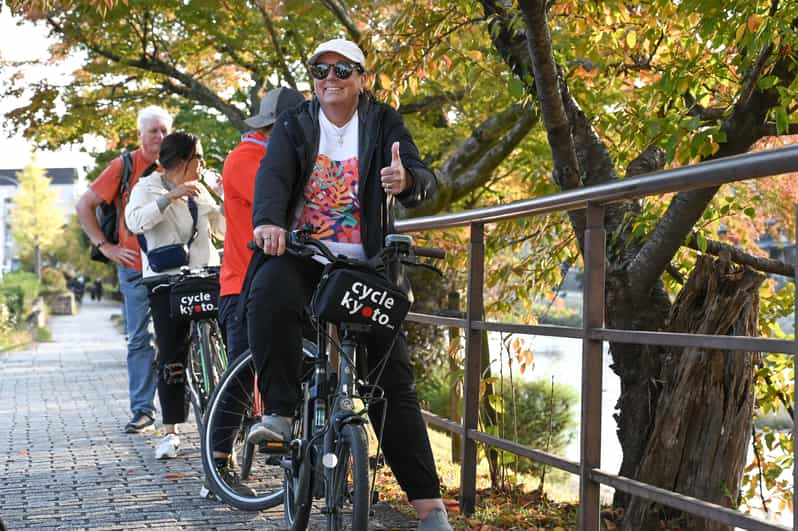
The ride continues north through the Sanjo Shopping arcade. This is a useful change of pace from temple grounds. Instead of polished gates and gardens, you see a working part of the city, with shops and local activity along the route.
A short stop at Shinsen-en gardens adds another small-scale pause before Kitano Tenmangu Shrine. The tour description calls Shinsen-en picturesque, but the main visit here is Kitano Tenmangu, where you spend about an hour with the guide.
This section is valuable because the guide can connect the places rather than treat each one as an isolated photo stop. The day includes famous locations, but it also leaves room for less familiar corners and local streets. Several guides have been praised for adding anecdotes, cultural explanations, and suggestions for places to visit later in your trip.
You should expect some walking at the shrine and at the temples. Bikes are useful for getting between sites, but they do not eliminate time on foot. Wear shoes that can handle both pedaling and temple grounds.
Kinkaku-ji, the Golden Pavilion
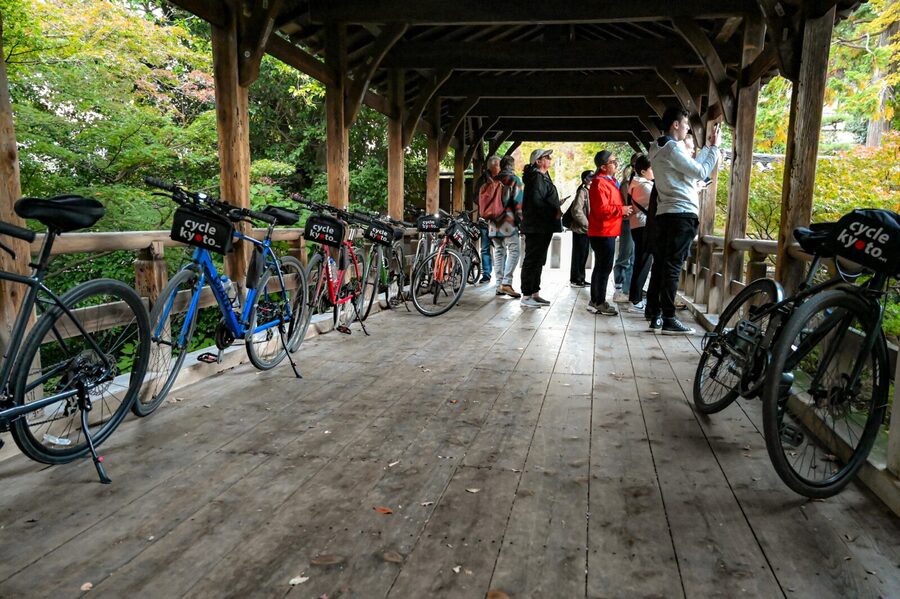
Kinkaku-ji, better known as the Golden Pavilion, is one of Kyoto’s most recognizable sights. The tour includes the entrance fee, and you have about an hour at the site, with roughly 25 minutes specifically noted for exploring the pavilion area.
This is one of the busiest and most photographed stops on the route. The pavilion’s gold exterior and its reflection on the pond make it an easy highlight, but you should not expect solitude. The visit is relatively structured, with a set path through the grounds rather than unlimited time to wander.
Including the admission is a small but useful benefit. You do not need to queue up with cash or adjust the day’s budget at the gate. More important, the guide has already placed the visit into a route that continues toward the Imperial Palace, instead of leaving you to work out how to connect these northern and central parts of Kyoto.
A few more Kyoto experiences worth comparing
- 5 Top Highlights of Kyoto Full Day Bike Tour (E-bike option)
★ 5.0 · 511 reviews - Full Day Biking Tour Exploring the Best of Kyoto
★ 5.0 · 498 reviews - Kyoto Private Car Tour – Full Day with Local Guide & Nara Option
★ 5.0 · 169 reviews - Full Day Tour of Kyoto with Private Transportation
★ 5.0 · 130 reviews
A traditional lunch and a change of pace
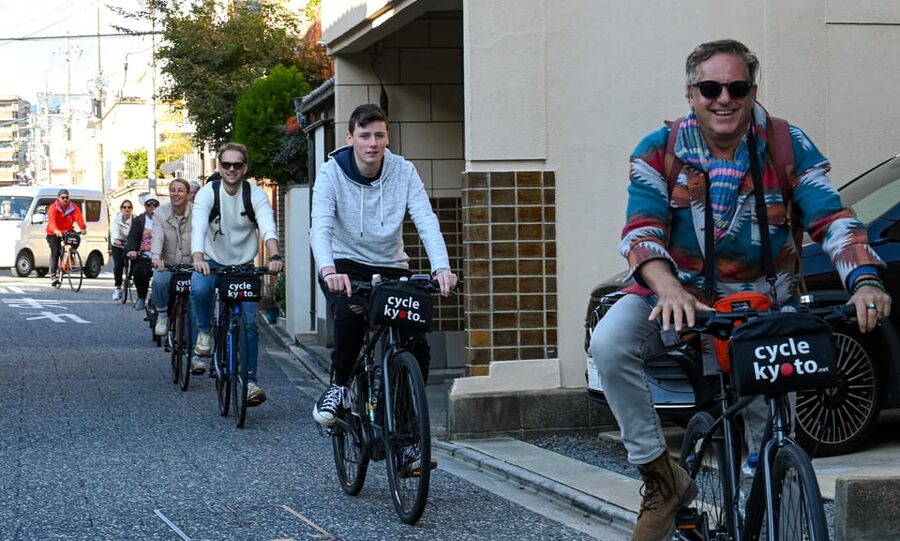
Lunch is scheduled for an hour at a traditional Japanese restaurant. The location can change depending on availability, so do not book this tour expecting one specific menu or restaurant.
That flexibility has a practical upside. The guide can use an available local place rather than force the entire group into a fixed venue. The meals described by participants have included ramen with a special duck broth, and the guides have also found places for ice cream and other food stops on some days. Those details are not guaranteed, but they show how the meal can add local flavor to a long day.
An hour is a useful break after the morning’s riding and temple visits. You can eat, rest your legs, and refill your water before the afternoon route. Keep your belongings light, since storage space on the bikes is limited. Larger luggage can be left in the secure shop space during the tour.
The Imperial Palace and the Kamo River
After lunch, the group visits the Kyoto Imperial Palace for about an hour. The palace grounds provide a broad, formal contrast to the compact temple compounds earlier in the day. The visit also breaks up the route before you return to the bicycle for the river section.
The Kamo River stop lasts around 40 minutes and is listed as a photo stop. This is less about checking off another major monument and more about enjoying open space and a different view of Kyoto. After several enclosed temple and shrine grounds, the river gives you room to breathe.
The route here is one reason a bike tour can feel more connected than a vehicle-based city tour. You are not watching Kyoto pass through a window. You are moving at street level, with the ability to notice small lanes, bridges, storefronts, and changing neighborhoods.
The city is described by one cyclist as fairly flat and manageable on a regular bike. Still, comfort on a bicycle matters more than athletic speed. You need to be happy riding for much of the day, stopping and starting in city conditions, and walking around the sites.
Gion by bicycle, then on foot
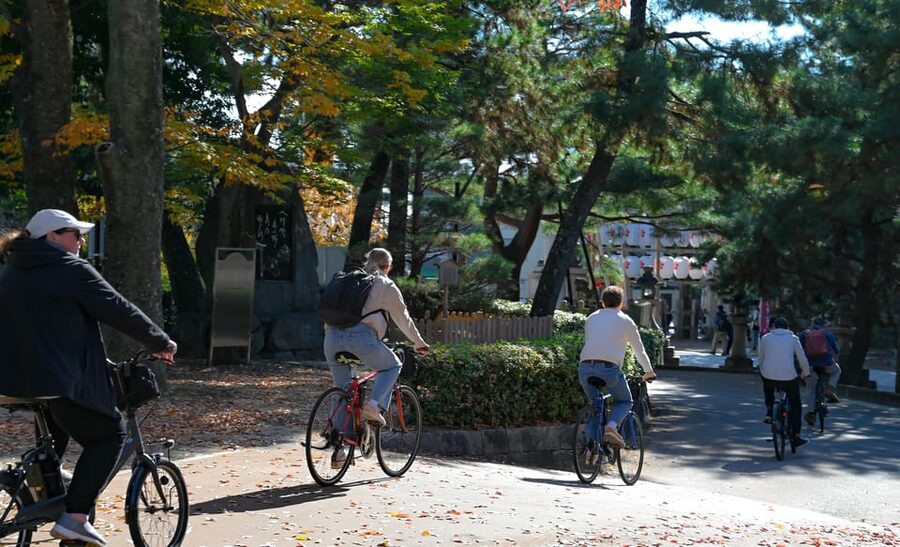
The afternoon continues into Gion, Kyoto’s famous geisha district. The guided portion lasts about an hour. Gion is best appreciated slowly, and a bike lets you reach its lanes without spending your energy walking across the city.
You will need to follow the guide’s instructions about where to ride and where to walk. The streets are narrow in places, and the district is not a racetrack. The point is to observe the traditional facades, lanes, and atmosphere respectfully, not to rush through for a quick photograph.
This is also one of the more appealing places to have a guide. A well-spoken guide can explain what you are seeing and help you understand the difference between a historic entertainment district and a theme-park version of old Kyoto. One guide, Juan, has also been praised for offering useful suggestions for later days, which can be especially handy if this is your first morning in the city.
You might see a geisha or maiko during the day, but that is not something to book the tour expecting. The district itself, along with its architecture and narrow streets, is the dependable part of the experience.
Tofukuji and the torii gates of Fushimi Inari
The last leg heads south to Tofukuji Temple. The scheduled stop is about 30 minutes and is described mainly as a photo stop. That means you should expect less temple time here than at Nishi Honganji or Kitano Tenmangu.
The final major visit is Fushimi Inari Taisha, specifically the Senbontorii area. The shrine is famous for its long rows of orange torii gates, and the guided visit lasts about an hour. This is a strong finish to the day because the gates create a very different visual experience from the gold of Kinkaku-ji, the open grounds of the Imperial Palace, and the quiet river path.
The tour does not imply that you will walk the entire mountain route at Fushimi Inari. The stated visit focuses on the Senbontorii gates, so you should think of it as a substantial shrine visit rather than a complete hike up Inariyama.
After Fushimi Inari, you cycle back to Cycle Kyoto. By this point, the day has included repeated transitions between bike riding, walking, temple grounds, shrine paths, meals, and explanations. The return ride is not a minor detail. This really is a full day, not a short sightseeing outing with a bicycle attached.
The guides and group atmosphere
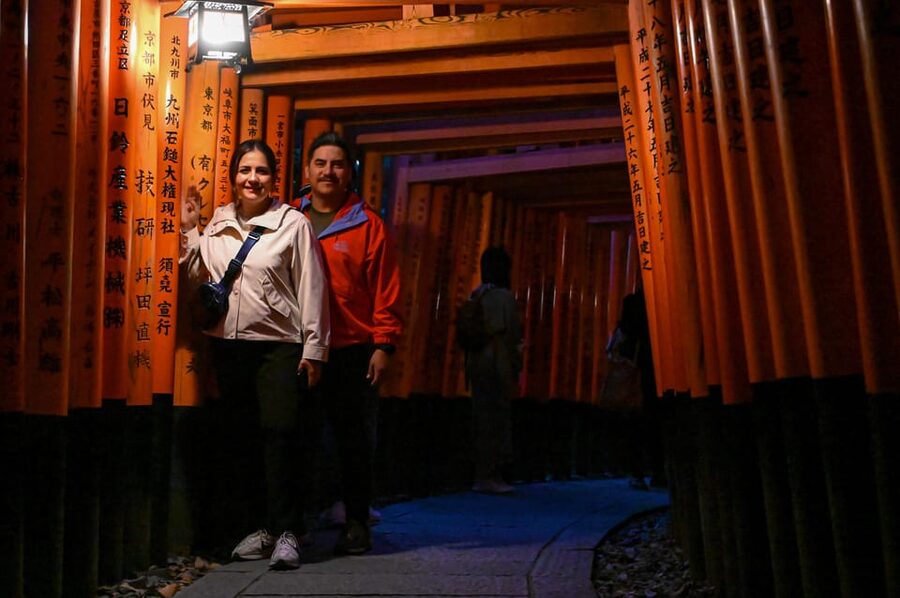
The guides are fluent in English and have spent considerable time living in Japan. That combination is useful because the tour requires more than pointing out buildings. You want clear instructions while riding, plus enough cultural context to make the temples and shrines meaningful.
Guides named in the feedback include Shawn, Vicky’s guide, Juan, Karl, and Jay. Jay is particularly noted for being funny, enthusiastic, and informative, while Karl is praised for making the day engaging and choosing a memorable lunch. Shawn’s tour included explanations of temples and small alleyways, and Juan was described as patient and helpful with future sightseeing ideas.
Guide quality can vary from person to person, as it does on any guided activity. The consistent pattern here is that the guide is central to the experience. You are paying not just for a bicycle, but for someone to choose a workable route, manage the timing, and explain what you encounter.
What to bring and who should skip it
Wear comfortable clothing suitable for cycling and shoes that are easy to walk in. Bring water, sunscreen, a hat, and a camera. High heels are not allowed, and smoking is not allowed during the activity.
Keep personal items to a minimum because bike storage is limited. Larger luggage can stay at the shop, which makes it easier to ride without a heavy bag swinging from the handlebars.
This tour is not suitable for children under 12, pregnant women, or anyone who cannot ride a bicycle. You should also think carefully about your stamina. The city may be flat, but a route that can run beyond 18 miles, combined with walking at several sites, is still a demanding day.
The tour does not operate in every type of weather. In heavy rain, it will be canceled and refunded. Even in milder conditions, dress for the forecast and expect to spend many hours outdoors.
Is the $116 price fair?
I think the price is reasonable if you want an organized first look at Kyoto and value your time. The package includes the bike, helmet, English-speaking guide, lunch, and Golden Pavilion admission. It also removes much of the planning work from a city with sights spread in several directions.
The price is less compelling if you already know Kyoto well, own suitable cycling equipment, and prefer spending half a day at one temple or neighborhood. The schedule is broad by design. You will see many places, but some stops, including Tofukuji and the Kamo River, are shorter than the main visits.
The small group improves the value. A group capped at nine can move through lanes more easily than a large tour, and you have a better chance to ask questions. Free cancellation up to 24 hours before departure and the option to reserve now and pay later also reduce the risk of committing too early.
Should you book the full-day Kyoto bike tour?
Book it if you have limited time, enjoy active sightseeing, and want a well-planned introduction to Kyoto. It is especially useful at the start of a longer Japan trip because the guides can help you understand the city and suggest places for later visits.
I would choose it for confident cyclists who want famous sights without giving up neighborhood riding. I would not choose it for anyone hoping for a slow, temple-focused day, or for a group with mixed cycling ability.
Arrive early, request an e-bike in advance if needed, bring water, and be honest with yourself about the distance. If you can handle a long ride and several hours on your feet, this is an efficient and enjoyable way to connect the many sides of Kyoto in one day.
FAQ
Where does the Kyoto bike tour start?
The tour starts at Cycle Kyoto. You should arrive 15 minutes before the 9:30 AM start.
How long does the activity last?
The tour lasts 450 minutes, or 7.5 hours. It is planned as a full-day activity.
What language is the tour conducted in?
The live tour guide speaks English. The guides are fluent in English and have lived in Japan for considerable time.
Are bikes and helmets included?
Yes. Bike rental and a helmet are included. The standard bikes are well-maintained Giant and Trek cross bikes, and e-bikes are available upon request.
Is lunch included?
Yes. A traditional Japanese lunch is included. The restaurant can vary depending on availability.
Is the Golden Pavilion entrance fee included?
Yes. Admission to Kinkaku-ji, the Golden Pavilion, is included in the tour price.
Who cannot take this tour?
The tour is not suitable for children under 12, pregnant women, or people who cannot ride a bicycle. Comfortable clothing, shoes, water, sunscreen, a hat, and a camera are recommended.
Recently added around Kyoto
- Higashiyama | Kyoto: Sakura Season Private Rickshaw Tour★ 5.0 · 3 reviews
- Kyoto Kimono Rental CHAMATSU|Kimono/Yukata Rental FamilyPlan★ 5.0 · 3 reviews
- Kyoto: Half-Day Private Guided Tour to the Old Town of Gion★ 4.4 · 3 reviews
- Nara Private Customizable Half Day Tour★ 5.0 · 3 reviews
- Kansai Region Hiking Adventure in Nara Kobe Kyoto and More★ 5.0 · 3 reviews
- Full Day Nara Deer, Temple, Shrine, Activities & Tea Ceremony★ 5.0 · 3 reviews
- Nara: Essential Private Tour with Deer Park and Temples★ 5.0 · 3 reviews
- Photo Shoot with a Private Vacation Photographer in KYOTO, JAPAN★ 5.0 · 3 reviews
Cycling Tours, compared.
Arashiyama Bamboo Forest & Hidden Gems Bike Tour (Early Bird)
Read our review →
5 Top Highlights of Kyoto Full Day Bike Tour (E-bike option)
Read our review →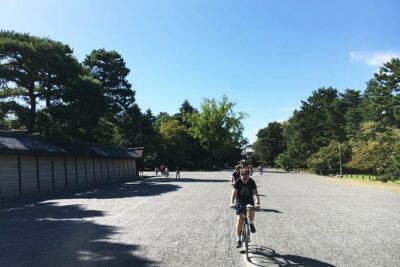
Full Day Biking Tour Exploring the Best of Kyoto
Read our review →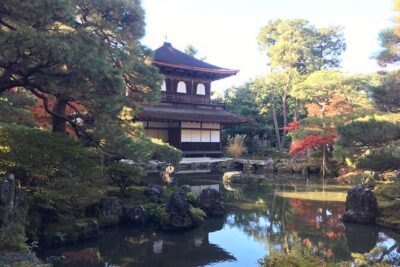
Afternoon Kyoto Bike Tour: Bamboo Forest, Monkeys & Hidden Spots
Read our review →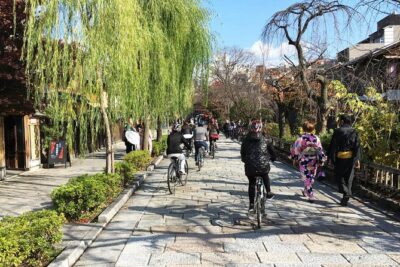
South Kyoto in a Nutshell: Gentle Backstreet Bike Tour!
Read our review →Browse the lists this tour appears in