
REVIEW · ARASHIYAMA BAMBOO GROVE TOURS
Half Day Kyoto Sagano Bamboo Grove & Arashiyama Walking Tour
Arashiyama’s Sagano Bamboo Grove is the star here, but the best part of this tour is that it puts the bamboo in context. You’ll connect the grove with Tenryu-ji’s Zen garden, the hillside paths of Jojakko-ji, and the Hozu River around Togetsukyo Bridge rather than treating the forest as a quick photo stop.
I like the licensed English guide, who can explain the temples and point out details you might otherwise miss. I also like the efficient half-day plan: transport, admissions, and the main route are handled for you, while the early finish leaves time for the monkey park or more of Arashiyama.
The catch is crowding. The group can reach 25 people, and the train uses non-reserved seats, so you may stand. The 3-kilometer walk includes hills and stairs, and a few minutes can disappear while the guide gathers the group.
In This Review
- Key points at a glance
- Why this Arashiyama route works
- Getting from Kyoto Station to Saga-Arashiyama
- Jojakko-ji and the wooded slopes of Mt. Ogura
- Walking through the Sagano bamboo grove
- Tenryu-ji, Kyoto’s major Zen temple
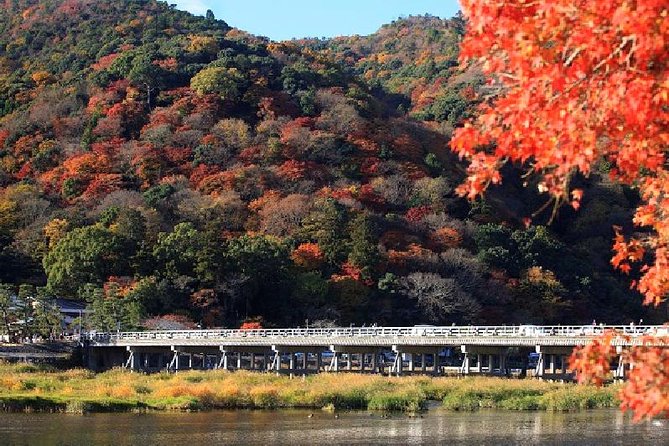
- Togetsukyo Bridge and the Hozu River
- What the four-hour schedule feels like
- The real value of the $79.26 price
- Planning the rest of your day in Arashiyama
- Who should book this walking tour?
- Should you book the Sagano and Arashiyama tour?
- FAQ
- How long does the Kyoto Sagano Bamboo Grove and Arashiyama tour last?
- Where does the tour begin?
- How much walking is involved?
- Is transportation included?
- Which temples are included?
- Is the boat ride included?
- Can children join the tour?
Key points at a glance
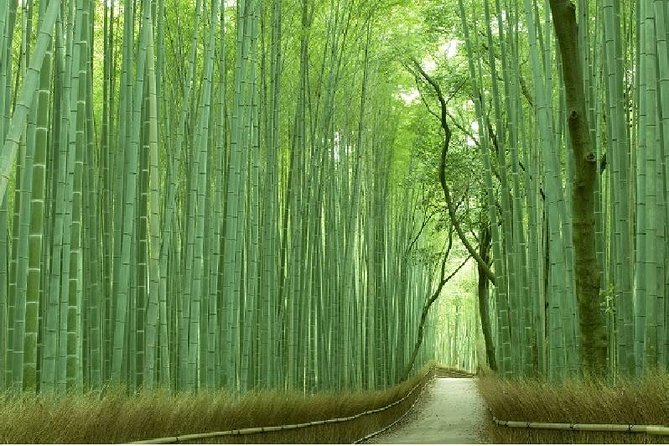
- Sagano bamboo grove: Walk about 3 kilometers through one of Kyoto’s most famous natural settings, with mountain views and narrow paths.
- Two temple visits: Enter Tenryu-ji and Jojakko-ji, with admission fees included.
- Yakatabune boat ride: Take in the Hozu River, Togetsukyo Bridge, and Arashiyama from the water.
- Licensed English guide: Guides such as Sachiko, Donna, June, and Michiharu have added cultural background and practical local advice.
- Four-hour format: The tour ends at Kyoto Station, usually leaving part of the afternoon free.
- Seasonal changes: From July through September 22, Jojakko-ji is replaced by Okochi Sanso Villa Garden, and the start is earlier to avoid the worst heat.
Why this Arashiyama route works
Arashiyama is easy to reach from central Kyoto, but its sights are spread across streets, temple grounds, wooded slopes, and riverfront paths. I can see the value of having someone manage the route, especially on a first visit when you want to see several major places without studying train connections and temple entrances.
This is not a bus tour. You’ll travel from Kyoto Station to Saga-Arashiyama Station by public transport, then walk between the stops. That gives you a more ordinary look at getting around Kyoto, though it also means you need to be comfortable with a local train and a fair amount of walking.
The tour is planned for roughly four hours and ends at Kyoto Station. That timing suits you if you want a focused morning outing before lunch. It also gives you a useful choice at the end: return with the group or remain in Arashiyama and continue on your own, then make your own way back.
The group size is listed as a maximum of 25. That is not tiny, and a group of 20 can feel unwieldy in a crowded bamboo grove. On other departures, the group has been as small as three or around 12, so the experience may feel quite different depending on the date.
More of Arashiyama and the bamboo grove:
- Kyoto: Fushimi Inari, Kinkakuji, Bamboo Grove 1 Day Bus Tour
★ 4.8 · 4,316 reviews - Kyoto/Osaka: Nara, Fushimi Inari Taisha, Arashiyama Bus Tour
★ 4.7 · 1,275 reviews - Kyoto Arashiyama Walking Tour: Bamboo, Monkeys, Gardens & Secrets
★ 5.0 · 1,216 reviews
Getting from Kyoto Station to Saga-Arashiyama
The meeting point is the JTB Sunrise Tours Desk in the basement of Kyoto Avanti, near Kyoto Station. From there, you travel by public transport to Saga-Arashiyama Station using non-reserved seats.
This detail matters during busy periods. Your seat is not guaranteed, and you may stand, particularly during cherry blossom season, autumn color, or a crowded morning commute. If you have a JR Pass, clarify how the included transportation is handled before departure. One person found it disappointing to use a JR Pass for the train without receiving a reduction in the tour price.
Once you arrive, the route becomes a walking excursion through Arashiyama and Sagano. The guide handles navigation and keeps the group together, which is useful when the streets and paths are full. Headsets may be used for larger groups, but commentary can be harder to follow when the group spreads out.
Jojakko-ji and the wooded slopes of Mt. Ogura
Jojakko-ji is a fine opening stop because it gives you more than another famous Kyoto temple courtyard. The temple sits on a wooded mountainside and offers broad views over Sagano and Kyoto. Its hillside setting also makes it particularly attractive when maple trees change color in autumn.
You’ll have about 30 minutes here, with admission included except during July and September. The site is associated with the Tale of the Heike and the story of Empress Dowager Kenrei-mon-in, who is said to have lived here. The tour also draws your attention to a Jizo statue and a pagoda among the trees.
Expect stairs and uneven ground. The temple’s position on the slope is part of its appeal, but it also makes this stop more demanding than a flat garden visit. Wear shoes with good grip and avoid treating the 3-kilometer distance as the full measure of effort. The stairs can make the outing feel longer.
From July through September 22, the program changes. The tour starts earlier to avoid the strongest heat, and Okochi Sanso Villa Garden replaces Jojakko-ji. If Jojakko-ji is one of your main reasons for booking, check the seasonal schedule before paying.
Walking through the Sagano bamboo grove
The route from Jojakko-ji to Tenryu-ji passes through the Sagano Bamboo Grove. This is the portion most people picture when they think of Arashiyama: tall bamboo rising on both sides of a narrow path, with glimpses of the wooded hills beyond.
The grove is beautiful, but it is not always tranquil. It is one of Kyoto’s most photographed places, and crowd levels can change sharply by season and time of day. The tour’s morning timing helps, but it cannot remove the crowds. If you want long, quiet stretches alone, a guided group may not be the best fit.
You’ll spend part of the route walking rather than stopping for a long formal explanation. That is a good thing when you want to keep moving through the area, but it also means you may have only a short window for photographs. One useful option is to stay in Arashiyama after the official tour ends, giving yourself more time to revisit the grove at your own pace.
The bamboo path is only one part of the setting. Look beyond the stalks toward the hills and valleys, and listen for the guide’s explanation of how the area fits into Kyoto’s religious and cultural life. That broader view helps turn a quick photo stop into a more meaningful walk.
More walking tours in Kyoto:
- Kyoto Geisha Walking Tour: Gion District & Hidden Gems
★ 4.7 · 3,273 reviews - Kyoto: Gion Magical Night Walking Tour with Geisha Trivia
★ 4.9 · 2,393 reviews - Kyoto: Gion Geisha District Walking Tour – Stories of Geisha
★ 4.7 · 2,187 reviews - Night Walk in Gion: Kyoto’s Geisha District
★ 4.5 · 2,003 reviews
Tenryu-ji, Kyoto’s major Zen temple
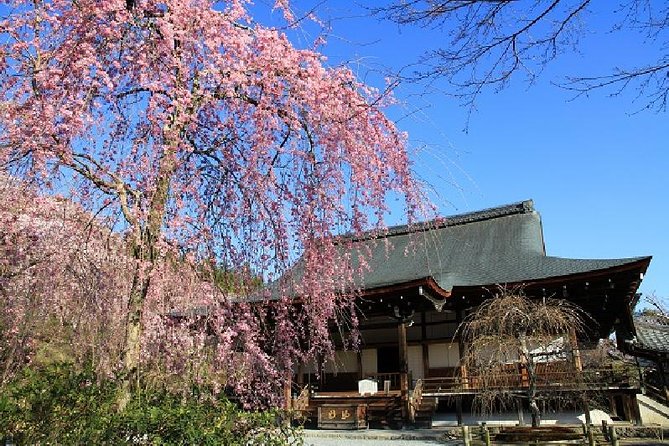
Tenryu-ji dates to 1339 and is one of the principal temples of the Rinzai Zen school. It is also a World Heritage site and one of Arashiyama’s most important stops.
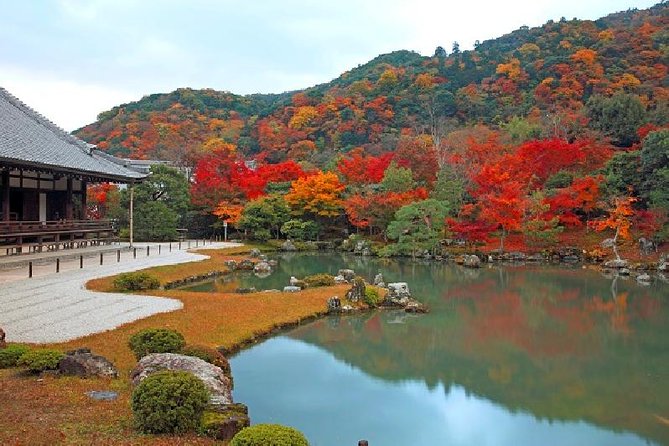
The garden is the main focus of this tour. Its design has survived in close to its original form, and it uses the surrounding Arashiyama hills as part of the view. I like this approach because the garden is not an isolated patch of landscaping. Water, stones, trees, and distant hills work together, giving you a clear example of how Japanese garden design frames nature rather than trying to overpower it.
You’ll have about 30 minutes here. That is enough for a guided look at the garden, but it is not enough for a leisurely exploration of every corner. Be aware that the visit may concentrate on the grounds rather than an extensive look inside the temple buildings. If interior architecture is a priority, you may want to return separately.
This stop is where a good guide can make a real difference. Sachiko has been praised for explaining what the group was seeing while adding personal stories. Donna was noted for giving useful direction without filling every minute with talk. Michiharu has offered detailed background on Arashiyama and Kyoto, along with suggestions suited to individual interests.
Those names do not guarantee who will lead your departure, but they show the sort of guide-led experience this tour can provide. The strongest value is not simply admission to Tenryu-ji. It is having someone explain why this garden matters and answer questions as you move through it.
Togetsukyo Bridge and the Hozu River
The final major area is Togetsukyo Bridge, or the Crossing Moon Bridge. The current bridge was rebuilt in 1934, and it stretches about 250 meters across the river.
From the bridge, you’ll see the Hozu River below and forested hills beyond. Cherry blossoms and autumn color make this a particularly attractive part of the route, but the river view works in any season. It gives the tour a change of pace after the temples and bamboo.
The itinerary also includes scenery from aboard a yakatabune, a traditional-style pleasure boat. This is a welcome chance to sit and rest after walking, while seeing Togetsukyo Bridge and Arashiyama from a different angle. The boat portion is not the main focus of the morning, but it adds variety and gives you a calm pause.
Conditions at the river and local congestion can change the order and timing of the stops. Do not plan a tight connection immediately after the advertised finish. The tour ends at Kyoto Station, but the return time can shift.
What the four-hour schedule feels like
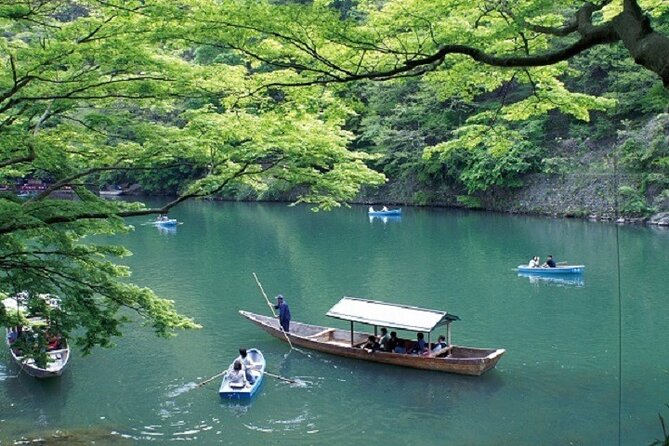
This is a compact tour, not a slow day in Arashiyama. You’ll cover several major sights in one morning, with about 30 minutes listed at each principal stop and walking between them.
That pace works well for a first look. You get an introduction to the bamboo grove, two temples, the bridge, and the river without spending a full day on one district. It also works well for a short Kyoto stay, when you need to see the area before moving on to another part of the city.
The downside is limited free time. One person found the tour too loose in places and wanted more explanation instead of unscheduled pauses. Another felt the short bamboo visit was not enough and would have preferred time to wander through the town, browse food stalls, and explore at leisure.
I see the tradeoff clearly. You are paying for a guided route and easy movement between the sights, not for unlimited time at each location. If you enjoy structure, the schedule is efficient. If you prefer to linger, take many photographs, or stop for snacks, use the official tour as an introduction and stay in Arashiyama afterward.
The real value of the $79.26 price
At $79.26 per person, this tour is not the cheapest way to see Arashiyama. You can reach the district independently by train and walk to the bamboo grove and temples.
The price becomes easier to justify if you value three things: a licensed English guide, included admission fees, and help with transport and navigation. You are also buying a carefully arranged route that links sights which can feel scattered when you first arrive.
The strongest praise has focused on the guides. They have explained temple customs, local history, and nearby attractions, then offered useful suggestions for the rest of the day. One guide pointed a martial arts enthusiast toward the Budo Centre. Another gave clear directions and lunch ideas for the monkey park after the tour.
The included boat ride also adds something beyond a standard self-guided walk. Still, you should be honest about your priorities. If you are comfortable using Kyoto trains, reading signs, and planning temple visits, the basic route is manageable on your own. The tour’s value rests mainly in the guide and the convenience, not in exclusive access.
Planning the rest of your day in Arashiyama
The tour ends at Kyoto Station, but you do not always have to leave Arashiyama with the group. If the guide permits you to remain, you can continue to the monkey park, return to the bamboo grove, explore local streets, or stop for food and souvenirs.
The monkey park is a popular add-on, and several people used the free afternoon for it. You’ll need to follow the guide’s directions and continue independently. The park is not part of the listed tour route, so allow extra time and expect more walking.
Staying behind is also useful if the bamboo grove felt rushed. You can revisit the paths, take photographs, or simply sit with the river views. A small soft-serve ice cream costing 200 yen was singled out as a worthwhile local treat, though food purchases are not included.
If you return to Kyoto Station with the guide, the tour ends there and you continue to your next destination independently. That makes the excursion easy to pair with a station-area lunch or an afternoon visit elsewhere in Kyoto.
Who should book this walking tour?
I would recommend it most strongly for a first visit to Kyoto, a short stay, or anyone who wants a clear introduction to Arashiyama without spending hours planning. It is also a good fit if you want temple background and local suggestions rather than only photographs.
The tour suits people with moderate fitness who can walk about 3 kilometers and manage stairs. Comfortable shoes are essential. Rain does not automatically ruin the outing, but wet paths, umbrellas, and crowded conditions can slow the group.
Families should note the age rules. Children aged 0 to 5 are free if they do not need separate seats. Written parental permission is required for participants under 18, and anyone under 15 or not yet in middle school must be accompanied by a parent or guardian.
I would hesitate if you dislike group travel, dislike standing on public transport, or want a quiet bamboo forest experience. A group of 20 to 25 can feel crowded, and time may be lost waiting for people who fall behind or get separated. Independent visitors may prefer to choose their own temple timing and linger longer.
The tour requires at least two adults to operate. If that minimum is not met by four days before the date, it may be canceled and you’ll be offered another date or experience, or a full refund. You can cancel for a full refund up to 24 hours before the start time.
Should you book the Sagano and Arashiyama tour?
Book it if you want a well-organized first look at Arashiyama, value an English-speaking guide, and like the idea of combining bamboo, Zen gardens, a hillside temple, and river views in four hours.
Skip it if you already know the district, want to explore at a slow pace, or can easily arrange public transport and temple admissions yourself. The route is not difficult to recreate, but the guide can add real value through stories, cultural context, and practical advice.
My best strategy is to take the tour early, then stay in Arashiyama after it ends if you have the time. That gives you the convenience of a planned introduction and the freedom to enjoy the district on your own terms.
FAQ
How long does the Kyoto Sagano Bamboo Grove and Arashiyama tour last?
The tour lasts approximately four hours and ends at Kyoto Station.
Where does the tour begin?
It begins at the JTB Sunrise Tours Desk in the basement of Kyoto Avanti near Kyoto Station, at 31 Higashikujo Nishisannocho, Minami Ward, Kyoto.
How much walking is involved?
The total walking distance is approximately 3 kilometers. The route also includes stairs and hillside paths, so moderate physical fitness is recommended.
Is transportation included?
Yes. Public transportation costs and other listed admission fees are included. The train uses non-reserved seats, so a seat is not guaranteed and you may need to stand.
Which temples are included?
The standard itinerary includes Jojakko-ji Temple and Tenryu-ji Temple. From July through September 22, Okochi Sanso Villa Garden replaces Jojakko-ji.
Is the boat ride included?
Yes. The itinerary includes time aboard a yakatabune to view Togetsukyo Bridge, the Hozu River, and Arashiyama.
Can children join the tour?
Children aged 0 to 5 are free if they do not occupy separate seats. Participants under 18 need written parental permission, and anyone under 15 or not yet enrolled in middle school must join with a parent or guardian.
Recently added around Kyoto
- Higashiyama | Kyoto: Sakura Season Private Rickshaw Tour★ 5.0 · 3 reviews
- Kyoto Kimono Rental CHAMATSU|Kimono/Yukata Rental FamilyPlan★ 5.0 · 3 reviews
- Kyoto: Half-Day Private Guided Tour to the Old Town of Gion★ 4.4 · 3 reviews
- Nara Private Customizable Half Day Tour★ 5.0 · 3 reviews
- Full Day Nara Deer, Temple, Shrine, Activities & Tea Ceremony★ 5.0 · 3 reviews
- Nara: Essential Private Tour with Deer Park and Temples★ 5.0 · 3 reviews
- Kansai Region Hiking Adventure in Nara Kobe Kyoto and More★ 5.0 · 3 reviews
- Hiking Tour for Sacred Sites in Kyoto with a Guide★ 5.0 · 3 reviews
Arashiyama Bamboo Grove Tours, compared.
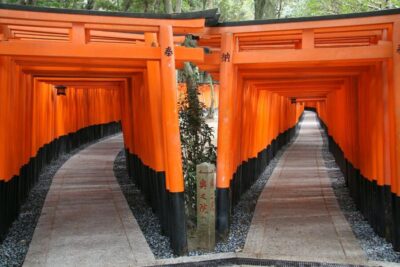
Fushimi Inari, Kinkakuji, Bamboo Grove 1 Day Bus Tour
Read our review →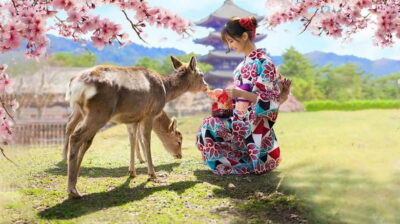
Kyoto/Osaka: Nara, Fushimi Inari Taisha, Arashiyama Bus Tour
Read our review →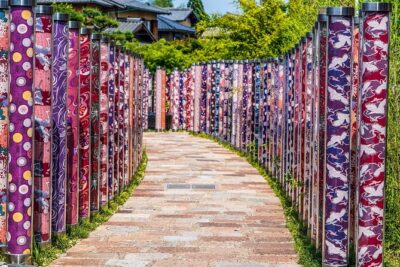
Kyoto Arashiyama Walking Tour: Bamboo, Monkeys, Gardens & Secrets
Read our review →
Arashiyama Bamboo, Temple, Monkeys, or Secret Sake Brewery
Read our review →
Arashiyama Bamboo Forest, Monkeys, Matcha & Temple Tour
Read our review →
Nijo, Kinkaku-ji, Arashiyama, Kiyomizu & Fushimi Inari
Read our review →
Kyoto Ghost Tour: Dark Tales, Urban Legends, Bamboo Forest Night
Read our review →
Arashiyama Bamboo Forest & Hidden Gems Bike Tour (Early Bird)
Read our review →Browse the lists this tour appears in