
REVIEW · ARASHIYAMA BAMBOO GROVE TOURS
Kyoto Arashiyama & Sagano Bamboo Private Tour with Government-Licensed Guide
Arashiyama is best understood on foot, and this private tour gives you a guide who can connect the famous bamboo grove with quieter temples, mossy lanes, river views, and local food stops. The big win is flexibility: you choose three or four places rather than racing through every stop on a fixed route. I also like the personal attention, especially for families or anyone who needs a slower pace.
The main catch is simple: the famous sights can be packed, especially in autumn, and six hours of walking can be tiring. The price is also much higher than sightseeing alone. You are paying for a private English-speaking guide and planning help, not an all-inclusive day.
In This Review
- Key points to know before booking
- What this private Arashiyama tour really offers
- Togetsukyo Bridge and the river valley
- Bamboo Forest Street, beautiful but busy
- Tenryu-ji, the essential temple stop
- Jojakko-ji, Nisonin, and Gio-ji for a quieter Sagano
- Adashino and Otagi Nenbutsu-ji
- Okochi Sanso Garden behind the bamboo
- Daikaku-ji and the imperial connection
- Why Shugakuin and Katsura need special planning
- Kurama, Yoshimine-dera, and Kibune are not casual add-ons
- Price, walking, and what is not included
- Who should book this Kyoto walking day
- Final call: book it for the guide, not the checklist
- FAQ
- How long does the tour last?
- Is this a private tour?
- How many sites can I visit?
- Is an English-speaking guide included?
- Are lunch and entrance fees included?
- Is a private vehicle provided?
- What happens if bad weather cancels the tour?
Key points to know before booking
- Choose only three or four sights: The long list of possible places is a menu, not a realistic promise that you will see them all.
- Expect a walking day: Pickup and drop-off are on foot, and transportation and admission fees are extra.
- The guide can shape the day: Guides such as Kazuo, Kazz, Tomo, Shoji, Satoko, and Ken have tailored routes to interests, fitness, children, and crowd conditions.
- Bamboo is only the beginning: Tenryu-ji, Jojakko-ji, Gio-ji, Otagi Nenbutsu-ji, and Sagano’s old streets offer more atmosphere than the famous grove alone.
- Crowds affect the experience: Early planning and a flexible guide can help, but no guide can make peak autumn Arashiyama empty.
- Budget for extras: Lunch, temple admissions, and train, bus, or other transport costs are not included.
What this private Arashiyama tour really offers
The product is a private, customizable walking tour of roughly six hours in western Kyoto. You meet your licensed local English-speaking guide in Kyoto, then spend the day exploring a selection of Arashiyama and Sagano sights.
That wording matters. The itinerary lists 18 possible stops, including several places far from Arashiyama, but the included service says you select three or four. You should decide your priorities before the day begins. If you want the bamboo grove, Tenryu-ji, Togetsukyo Bridge, and one quieter temple, that is a sensible half-day plan. If you try to add imperial villas, northern mountain towns, and several distant temples, you will spend too much time getting from place to place.
The private format is the strongest reason to book. With only your group and the guide, you can ask questions as they come up, pause for photos, stop for food, or adjust the pace. One guide, Kazuo Sumi, was especially praised for discussing options before the tour and fine-tuning the route. Other named guides, including Kazz, Tomo, Bell, Ted, Ken, Shoji, and Satoko, have also led customized days.
You should not assume that you will receive a particular guide unless the operator confirms it. Still, the range of named guides gives you a useful idea of the service: the quality depends heavily on the individual guide assigned to your group.
More of Arashiyama and the bamboo grove:
- Kyoto: Fushimi Inari, Kinkakuji, Bamboo Grove 1 Day Bus Tour
★ 4.8 · 4,316 reviews - Kyoto/Osaka: Nara, Fushimi Inari Taisha, Arashiyama Bus Tour
★ 4.7 · 1,275 reviews - Kyoto Arashiyama Walking Tour: Bamboo, Monkeys, Gardens & Secrets
★ 5.0 · 1,216 reviews
Togetsukyo Bridge and the river valley
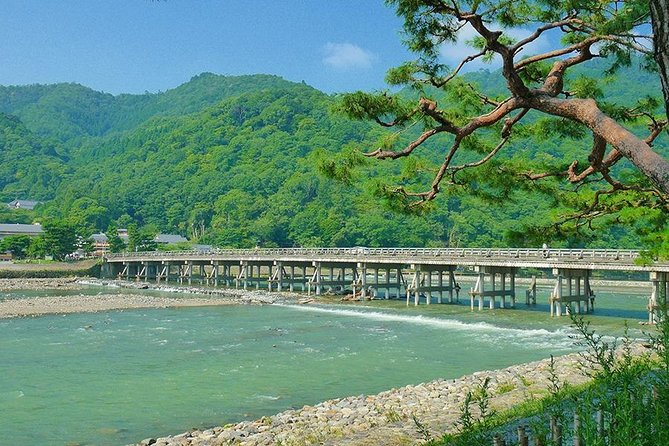
A natural starting point is Togetsukyo Bridge, Arashiyama’s best-known landmark. The present bridge dates from the 1930s, although a bridge has crossed this area since the Heian Period, when Kyoto’s aristocrats came here for scenery and seasonal outings.
The bridge itself is free to view. Its appeal comes from the setting: the river, wooded hills, and riverside park create the classic Arashiyama view. Cherry trees make the riverbank especially attractive in spring, while the hills take on strong color in autumn.
You will also find shops, restaurants, and boat rentals near the bridge. That makes this a useful place to get oriented, but it is not the quietest part of the district. If your guide starts here, ask to move on once you have taken in the view. The value of a private tour is using the bridge as a reference point, then heading toward less crowded paths.
The listed schedule gives Arashiyama only about 20 minutes at one point, which is not enough for a full visit. Treat those time blocks as rough planning notes rather than a strict promise. Your selected route determines how long you actually spend at each sight.
Bamboo Forest Street, beautiful but busy
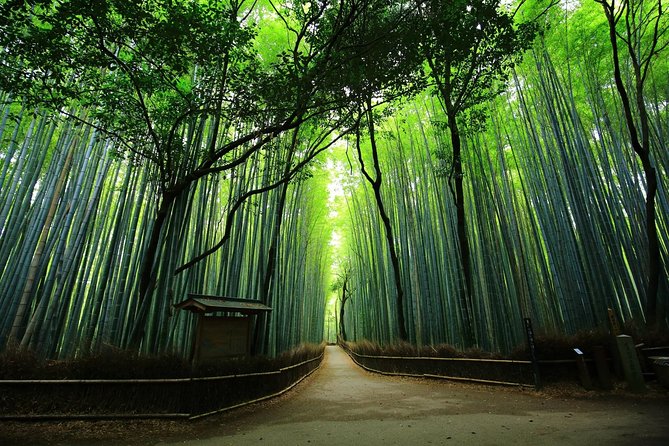
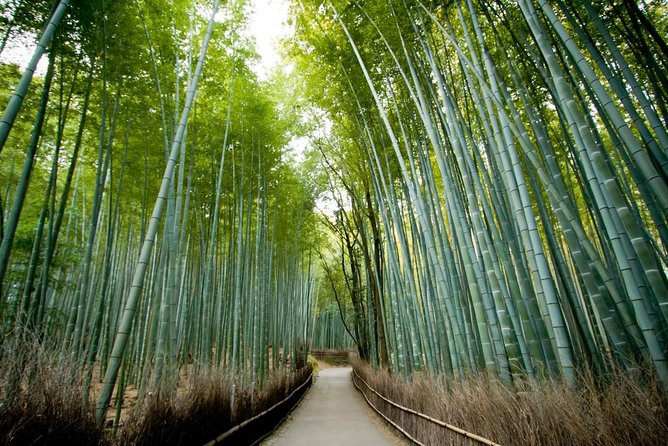
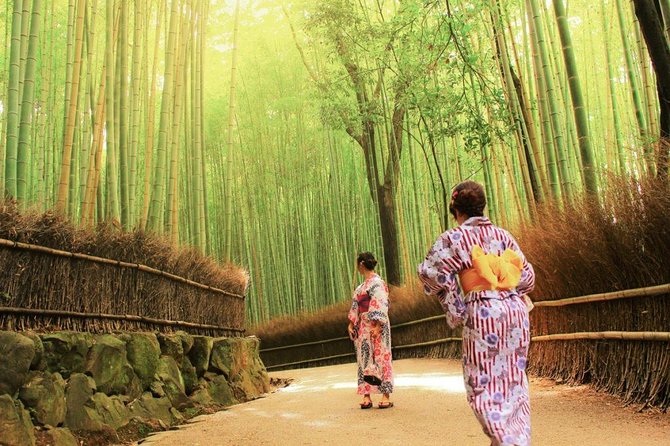
The bamboo grove is the image that draws most people to Arashiyama. Tall stalks line the walking paths, and on a breezy day they sway and creak above you. Bamboo has also been used by local craftspeople for baskets, cups, boxes, and mats for centuries.
The grove is free, but the path is not a secluded woodland walk. It is one of Kyoto’s most popular places, so crowd levels can shape the entire experience. A guide may help you approach it at a better time or pair it with quieter nearby places, but you should keep expectations realistic during cherry blossom season and autumn foliage.
This is also the tour’s clearest test of value. If all you want is a quick look at bamboo, you can visit on your own in about an hour. The private tour earns its price when the guide adds context, leads you beyond the central path, and builds a day around temples, gardens, and old neighborhoods.
A useful tactic is to avoid making the grove your only goal. Pair it with Tenryu-ji and one or two smaller temples. That turns a short photo stop into a fuller understanding of Sagano.
Tenryu-ji, the essential temple stop
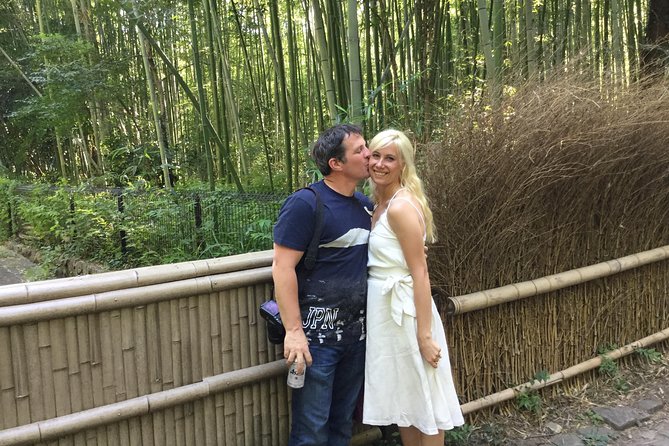
Tenryu-ji is the major temple in Arashiyama and one of Kyoto’s best-known Zen temples. Founded in 1339, it is also recognized as a UNESCO World Heritage Site. Its gardens and walking paths are as important as its buildings.
The grounds give you a welcome change from the commercial streets near the bridge. Expect temple architecture, garden views, and a more reflective pace. Admission is not included, so check the current fee when planning your budget.
Tenryu-ji is an excellent choice for a first visit because it combines several things in one stop: Zen tradition, historic buildings, garden design, and a direct connection to the bamboo grove. It also makes practical sense geographically. You can combine it with the grove without turning the day into a transport exercise.
If your group has children, keep the temple explanation focused. The most useful guide is not the one who recites every date, but the one who helps you notice how the garden, buildings, and surrounding hills work together.
A few more Kyoto experiences worth comparing
- Fushimi Inari Hidden Hiking Tour (Private Option Available)
★ 5.0 · 1,750 reviews - Private Kyoto Tour with a Local, Highlights & Hidden Gems, Personalised
★ 5.0 · 1,543 reviews - Kyoto 6hr Private Tour with Government-Licensed Guide
★ 5.0 · 1,369 reviews - 10 Must-see Spots in Kyoto One Day Private Tour (up to 7 people)
★ 5.0 · 1,108 reviews
Jojakko-ji, Nisonin, and Gio-ji for a quieter Sagano
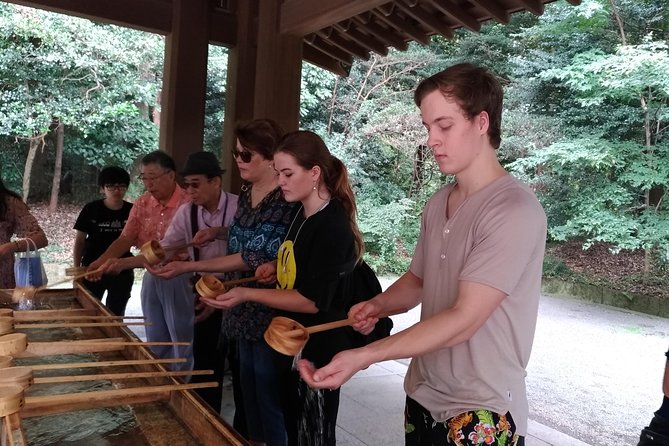
The smaller temples north of the main Arashiyama zone are where this tour can become much more rewarding than a standard checklist visit.
Jojakko-ji dates from 1596 and climbs a wooded hillside. Its buildings and gates are modest, while maple trees and moss line the steps. You may also find views over Kyoto from higher points. The stairs make footwear and steady legs useful, especially in wet weather.
Nisonin has a similar feel, though its buildings are larger and more imposing. Trees shade the approach, and the upper grounds offer city views. It was founded in the ninth century and belongs to the Tendai school of Buddhism.
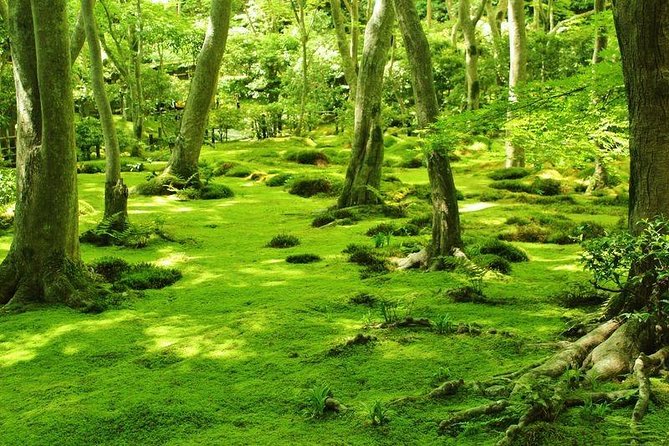
Gio-ji is smaller and more enclosed by trees. Its moss garden, maple trees, thatched gate, and small main hall create a gentle, almost storybook setting. The round window in the hall is a memorable detail, but the temple’s real appeal is the quiet green space around it.
These three places are not necessary for every visitor. If this is your first Kyoto visit and you have only six hours, you may prefer one of them alongside the bamboo grove and Tenryu-ji. If you have already seen Kyoto’s major temples, choosing Gio-ji or Jojakko-ji gives the day a calmer, more local feel.
Rain changes the equation. Wet steps and slopes can be slippery, particularly in autumn. A guide who pays attention to your pace is valuable here. Kazuo was specifically praised for adjusting the day for a guest recovering from injuries, but you should still tell the operator about mobility limits before the tour.
Adashino and Otagi Nenbutsu-ji
Sagano’s northern end offers two unusual temple visits.
Adashino Nenbutsu-ji is linked to Kobo Daishi, who placed stone figures here for the dead in the early ninth century. Today, many stone statues fill the grounds. The temple sits near Saga-Toriimoto Preserved Street, an older-looking area that provides a pleasant break from Arashiyama’s busiest commercial zone.
A short walk farther north brings you to Otagi Nenbutsu-ji. It is known for about 1,200 stone rakan figures, each with a different expression. The statues were made in the 1980s and early 1990s, so this is not an ancient collection in the usual sense. That newer date does not make the stop less interesting. The variety of faces gives the temple a playful, human quality that children often appreciate.
These temples are a good reason to hire a guide who can explain the difference between them. They are also a good choice if you want a route that feels less predictable than the bamboo grove and bridge. The tradeoff is distance. Adding both can consume much of your walking time, so they work best as the focus of the day rather than quick add-ons.
Okochi Sanso Garden behind the bamboo
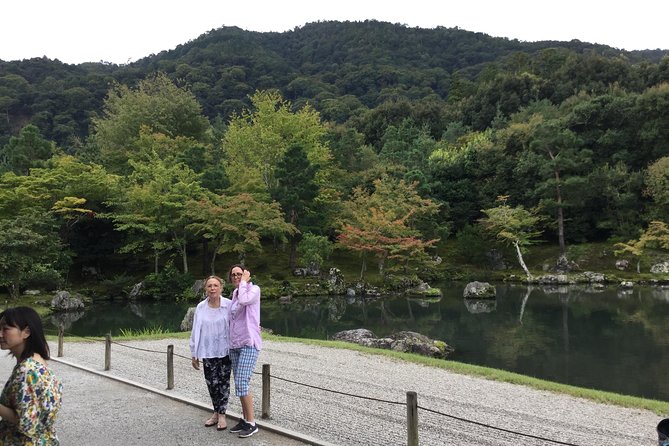
Okochi Sanso was the former villa of actor Okochi Denjiro. It includes gardens, tea houses, gates, and living quarters, though the buildings are viewed from outside.
Its position behind the bamboo grove makes it a logical pairing with that stop. The garden offers another way to experience Arashiyama’s scenery, with a more planned and private setting than the public forest paths.
Because the villa is an extra admission stop, ask your guide about the current cost before choosing it. It is best for you if gardens and design interest you more than collecting temple names. It may be less appealing if your priority is getting to several different religious sites.
Daikaku-ji and the imperial connection
Daikaku-ji began as the detached palace of Emperor Saga in the early ninth century. It became a temple in 876 and remains associated with the Shingon school of Buddhism. The compound includes temple buildings, a large pond, and a pagoda.
This is one of the better stops for understanding how Kyoto’s political and religious worlds overlapped. Retired emperors once ruled from here, and peace talks in the 12th century helped reunite the Northern and Southern Imperial Courts after decades of conflict.
Daikaku-ji is not a quick bamboo photo stop. It suits you if you enjoy historical explanation and broad temple compounds. The itinerary lists it twice, which appears to be a duplication rather than two separate visits. Confirm your chosen stops in advance so you do not assume both entries represent different attractions.
Why Shugakuin and Katsura need special planning
Shugakuin Imperial Villa and Katsura Imperial Villa are important architectural and garden sites, but they do not fit neatly into a spontaneous walking tour of Arashiyama.
Shugakuin was built between 1655 and 1659 for Emperor Gomizuno. It includes Upper, Middle, and Lower Villa areas, with gardens, traditional buildings, and farmland still worked by local farmers under lease arrangements. The grounds are managed by the Imperial Household Agency.
Katsura Imperial Villa is famed for its architecture and garden design. Its present form was completed in 1645 for the Katsura branch of the Imperial Family. Visits require joining a tour. The route circles a central pond, while the palace buildings can be viewed only from outside. Photography is limited to designated spots, and English tours are available.
Both villas require more planning than a casual temple visit, and entrance fees are extra. They are poor choices if you want a relaxed route centered on Arashiyama’s bamboo and temples. They can be worthwhile for a visitor who has a strong interest in Japanese garden design and has confirmed the practical arrangements ahead of time.
Katsura is listed twice in the supplied route details, once for 20 minutes and once for 30 minutes. That reinforces the need to settle the exact plan with the guide before the morning begins.
Kurama, Yoshimine-dera, and Kibune are not casual add-ons
Kurama is a rural mountain town in northern Kyoto, less than an hour from the city center. It is known for Kurama-dera and Kurama Onsen, where day visitors can pay to use the baths. The outdoor-only bath costs 1,000 yen, while use of all baths is listed at 2,500 yen. Those fees are separate from the tour.
Yoshimine-dera sits in Kyoto’s western mountains and climbs a hillside with views toward the city. Founded in 1029, it was destroyed during the Onin War and rebuilt in 1621. Its spread-out grounds require uphill walking.
Kibune is a forested northern valley developed around Kifune Shrine, devoted to the god of water and rain. A distinctive fortune is revealed when you dip the paper slip into water. The inner shrine lies about one kilometer farther up the valley.
These are appealing places, but they are not sensible additions to a tight Arashiyama day. The long list combines several separate Kyoto outings. Choose them only if the guide and your group agree to make the tour about one of these areas, and confirm transport costs for both you and the guide.
Price, walking, and what is not included
At $157.82 per person, this is a premium half-day experience. The price makes the most sense for a small group that values a private guide, personal questions, route planning, and help avoiding the worst crowd pressure.
It is less compelling for a solo visitor or a pair who are happy to follow a map and pay temple admissions on their own. Arashiyama is easy to reach and many of its headline sights are straightforward to visit independently.
The cost does not include lunch, entrance fees, transportation, a private vehicle, or personal expenses. You may also need to pay transportation costs for the guide. Pickup and drop-off are on foot, so do not expect hotel transport or a car.
For families, the private setup can be worth more. Guides have adjusted routes for children, built in snack and lunch breaks, and helped families add the monkey park. That attraction is not included in the stated itinerary, so request it specifically if it is important to your children.
Allow for heat and humidity in summer. One successful day covered bamboo, the monkey park, and a scenic train ride, but the guide described it as tiring. In wet weather, take extra care on temple steps. Spring blossoms and November foliage can be beautiful, but they also bring the heaviest crowds.
Free cancellation is available up to 24 hours before the start time. The tour requires good weather, and a weather cancellation brings the choice of another date or a full refund.
Who should book this Kyoto walking day
I would recommend this tour to you if you want more than a quick bamboo photograph and prefer a guide-led day shaped around your interests. It is especially suitable for families, first-time visitors who feel overwhelmed by Kyoto’s choices, and anyone who wants help finding quieter temples without doing the planning alone.
It also suits travelers with a flexible wish list. You can ask for major sights, local neighborhoods, garden stops, food advice, or a slower route. Guides have helped with restaurant suggestions, local food, and even finding a particular local artist.
I would be cautious if you dislike walking, need guaranteed vehicle transport, or expect every listed site to be included. The tour is also not the best value if you want only the bamboo grove. You can see that independently for far less.
Final call: book it for the guide, not the checklist
Book this private Arashiyama and Sagano tour if the guide’s local knowledge and flexible pacing are worth paying for. Before you go, name your top three priorities, ask which admissions and transport costs apply, and confirm that the route is realistic for six hours.
My ideal plan would pair Togetsukyo Bridge, the bamboo grove, Tenryu-ji, and one quieter temple such as Gio-ji, Jojakko-ji, or Otagi Nenbutsu-ji. That gives you Kyoto’s famous image, a major temple, and a taste of Sagano beyond the crowds. The tour works best as a thoughtful, personalized walk, not as a race through every place on the list.
FAQ
How long does the tour last?
The experience lasts approximately six hours.
Is this a private tour?
Yes. Only your group participates in the activity.
How many sites can I visit?
The included service allows you to customize a walking tour around three or four sites from the available choices.
Is an English-speaking guide included?
Yes. A licensed local English-speaking guide is included.
Are lunch and entrance fees included?
No. Lunch, entrance fees, transportation costs, and personal expenses are not included.
Is a private vehicle provided?
No. Pickup and drop-off are on foot, and the tour does not include a private vehicle.
What happens if bad weather cancels the tour?
If poor weather causes a cancellation, you can choose a different date or receive a full refund. You can also cancel for a full refund up to 24 hours before the experience start time.
Recently added around Kyoto
- Higashiyama | Kyoto: Sakura Season Private Rickshaw Tour★ 5.0 · 3 reviews
- Kyoto Kimono Rental CHAMATSU|Kimono/Yukata Rental FamilyPlan★ 5.0 · 3 reviews
- Kyoto: Half-Day Private Guided Tour to the Old Town of Gion★ 4.4 · 3 reviews
- Nara Private Customizable Half Day Tour★ 5.0 · 3 reviews
- Kansai Region Hiking Adventure in Nara Kobe Kyoto and More★ 5.0 · 3 reviews
- Full Day Nara Deer, Temple, Shrine, Activities & Tea Ceremony★ 5.0 · 3 reviews
- Nara: Essential Private Tour with Deer Park and Temples★ 5.0 · 3 reviews
- Hiking Tour for Sacred Sites in Kyoto with a Guide★ 5.0 · 3 reviews
Arashiyama Bamboo Grove Tours, compared.
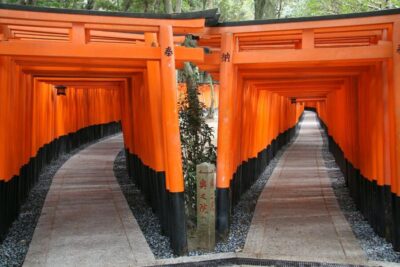
Fushimi Inari, Kinkakuji, Bamboo Grove 1 Day Bus Tour
Read our review →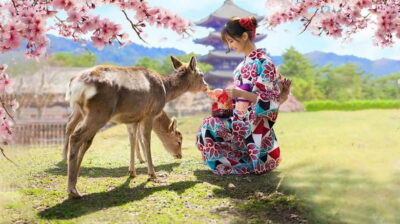
Kyoto/Osaka: Nara, Fushimi Inari Taisha, Arashiyama Bus Tour
Read our review →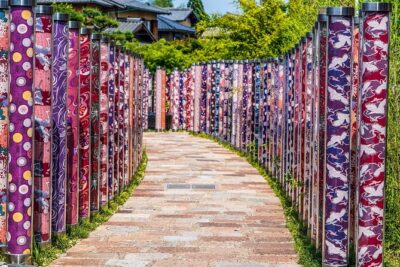
Kyoto Arashiyama Walking Tour: Bamboo, Monkeys, Gardens & Secrets
Read our review →
Arashiyama Bamboo, Temple, Monkeys, or Secret Sake Brewery
Read our review →
Arashiyama Bamboo Forest, Monkeys, Matcha & Temple Tour
Read our review →
Nijo, Kinkaku-ji, Arashiyama, Kiyomizu & Fushimi Inari
Read our review →
Kyoto Ghost Tour: Dark Tales, Urban Legends, Bamboo Forest Night
Read our review →
Arashiyama Bamboo Forest & Hidden Gems Bike Tour (Early Bird)
Read our review →Browse the lists this tour appears in