
REVIEW · ARASHIYAMA BAMBOO GROVE TOURS
Kyoto Arashiyama Bamboo Forest & Scenery Customized Private Tour
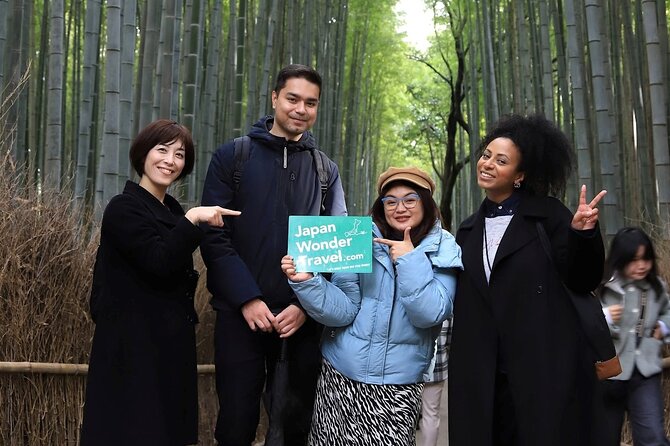
Arashiyama is at its best when you get beyond the famous bamboo path. This private four-hour walk lets you choose two or three stops with your guide, from Tenryu-ji and Okochi Sanso Garden to quieter temples farther into Sagano. Guides such as Takuma Goda, Osamu, Fuji, Kazu, and Yasuna have received especially warm praise for clear English, patience, and thoughtful adjustments.
I like the freedom to shape the route around your interests, and I like that the meeting point at JR Saga-Arashiyama Station puts you close to the area’s main sights. The trade-off is important: entrance fees and transport are extra, and this is a genuine walking tour without hotel pickup or a private van.
In This Review
- Key points to know before booking
- Why a private walk improves Arashiyama
- Starting at JR Saga-Arashiyama Station
- Togetsukyo Bridge and the Katsura River
- Tenryu-ji’s Zen garden
- Okochi Sanso Garden and the famous bamboo path
- Jojakko-ji, Nison-in, and Giōji
- Adashino Nembutsu-ji and Otagi Nenbutsu-ji
- Saga Toriimoto’s preserved traditional buildings
- Monkey Park Iwatayama for animal lovers
- What the four hours really cover
- Price, extra fees, and overall value
- Who should book this Arashiyama experience
- Should you book it?
- FAQ
- Where does the tour start?
- Where does the tour end?
- How long is the tour?
- Is the tour private?
- Can I customize the itinerary?
- What attractions can I choose?
- Are admission fees included?
- Is transportation included?
- Does the tour operate in bad weather?
Key points to know before booking
- You choose two or three main stops: Build the walk around temples, gardens, the bamboo forest, scenery, or animals.
- The guide is private to your group: You can ask questions, change the pace, and spend longer at places that interest you.
- The bamboo forest is only one part of Arashiyama: Quieter temples and the old Saga Toriimoto area can give you a fuller feel for the district.
- The tour begins and ends at JR Saga-Arashiyama Station: You make your own way there and back.
- Budget for added costs: Temple and garden admission, local taxis, and public transport are not included.
- Comfortable shoes matter: Expect a moderate amount of walking, with possible slopes and transfers between sites.
Why a private walk improves Arashiyama
Arashiyama’s famous sights are easy to find. The harder part is deciding how to connect them without wasting half your day or missing the places that fit your interests.
A private guide helps with that. You can focus on Zen gardens if you enjoy temple design, choose foliage spots during autumn, or add Monkey Park Iwatayama if animals are a priority. You can also ask for a gentler route, spend more time taking photographs, or move quickly through a site that does not appeal to you.
The experience is not a fixed checklist. The suggested route includes twelve possible stops, but the tour is designed for only two or three selected places during the four-hour period. That flexibility is the real product. It gives you local context without forcing you to march through every attraction in the district.
The strongest guide feedback centers on personal attention. Fuji is repeatedly described as patient and warm, while Kazu is praised for adapting to adults and children. Takuma Goda is noted for his English and interest in the area’s scenery and past. These names do not guarantee your assigned guide, but they show the sort of service the operator aims to provide.
More of Arashiyama and the bamboo grove:
- Kyoto: Fushimi Inari, Kinkakuji, Bamboo Grove 1 Day Bus Tour
★ 4.8 · 4,316 reviews - Kyoto/Osaka: Nara, Fushimi Inari Taisha, Arashiyama Bus Tour
★ 4.7 · 1,275 reviews - Kyoto Arashiyama Walking Tour: Bamboo, Monkeys, Gardens & Secrets
★ 5.0 · 1,216 reviews
Starting at JR Saga-Arashiyama Station
You meet your guide in front of a ticket gate at JR Saga-Arashiyama Station. This is practical for visitors arriving from Kyoto Station, but it is not a hotel pickup service. You must plan the trip to the station yourself.
The station is close to the main Arashiyama sights, though the district spreads out more than a first visit may suggest. Togetsukyo Bridge, Tenryu-ji, the bamboo forest, and the temples toward Saga Toriimoto are not all clustered in one small square. Your chosen stops will affect both the walking time and the need for a bus, train, or taxi.
The tour ends back at the meeting point. That makes the four-hour outing easy to fit into a larger day, but it also means you should allow extra time afterward if you want to continue exploring independently.
Togetsukyo Bridge and the Katsura River
Togetsukyo Bridge is one of Kyoto’s familiar images, and for good reason. The 155-meter bridge crosses the Katsura River with Arashiyama’s mountains behind it.
The bridge itself does not require an admission fee, and the riverbank gives you an easy first look at the area. Your guide can explain why this crossing became such a symbol of Arashiyama, while you take photographs from the surrounding streets and river edges.
This is a good opening stop for most groups. It requires little effort, gives you a sense of direction, and works well in every season. It is also one of the more exposed parts of the route, so rain or strong sun can affect your comfort.
Tenryu-ji’s Zen garden
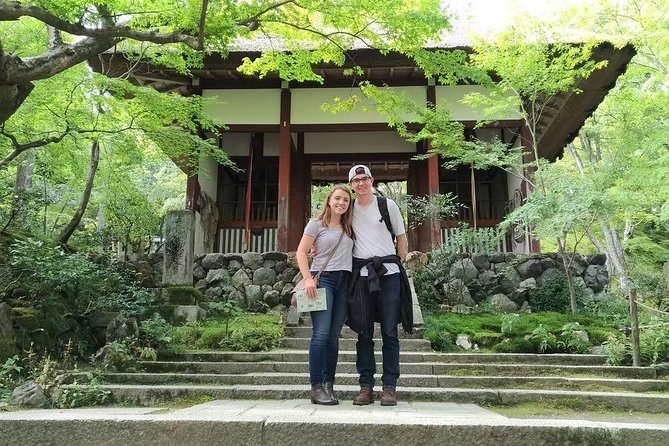
Tenryu-ji is one of the major reasons to visit Arashiyama. The temple has a long Zen tradition, and its garden changes character throughout the year as flowers, maples, and other plants come into season.
The admission fee is not included, and you pay for your own entry as well as the guide’s. That extra cost is worth considering because Tenryu-ji offers more than a quick photo stop. The garden is a place to slow down and look at how water, stones, plants, and the surrounding mountains are arranged.
A guide can help you notice details you might pass without context. You can also ask about Zen practice, temple design, or the connection between the garden and its setting. If your group wants only the most famous sights, Tenryu-ji pairs naturally with the bamboo forest. If you prefer a calmer visit, it may be better combined with a quieter temple instead.
A few more Kyoto experiences worth comparing
- Fushimi Inari Hidden Hiking Tour (Private Option Available)
★ 5.0 · 1,750 reviews - Private Kyoto Tour with a Local, Highlights & Hidden Gems, Personalised
★ 5.0 · 1,543 reviews - Kyoto 6hr Private Tour with Government-Licensed Guide
★ 5.0 · 1,369 reviews - 10 Must-see Spots in Kyoto One Day Private Tour (up to 7 people)
★ 5.0 · 1,108 reviews
Okochi Sanso Garden and the famous bamboo path
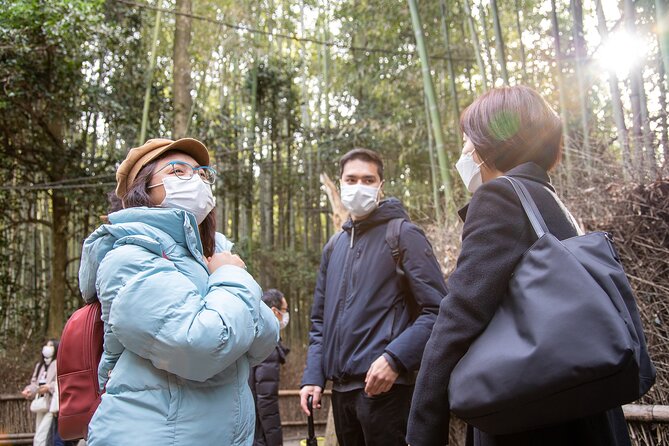
Okochi Sanso Garden was created over roughly thirty years by Denjiro Okochi, a well-known actor in samurai films. The villa garden covers about 19,800 square meters and is known for seasonal scenery, including spring blossoms and autumn color.
It requires an admission fee, so ask your guide about the cost before finalizing the route. The garden may appeal most to you if you want carefully designed views and a more spacious setting than the central bamboo path.
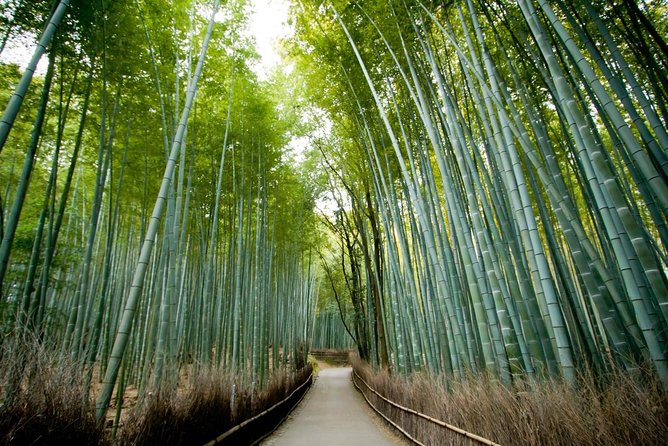
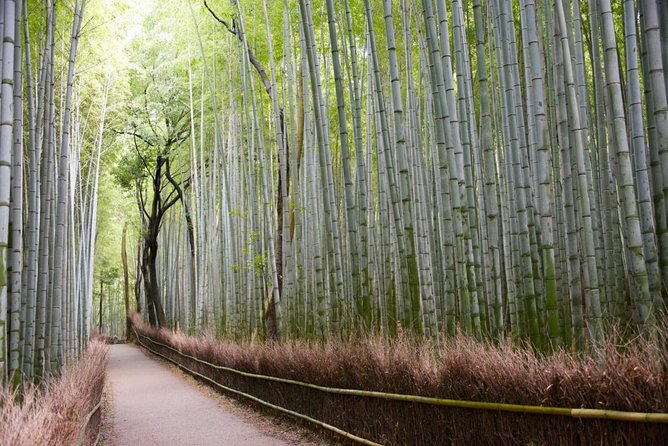
The Bamboo Forest Street is free to enter and is one of Kyoto’s most photographed sights. Tall bamboo rises on both sides of the path, creating the enclosed, otherworldly setting that appears in so many travel photographs.
Here is the practical truth: the bamboo path is beautiful, but it is also the stop most likely to feel crowded. One guide account specifically notes that the bamboo forest was busy while other Arashiyama stops felt quieter and more enjoyable. A private guide cannot clear the path, but can help you visit it as part of a smarter route rather than treating it as the whole day.
For the best experience, use the bamboo forest as one piece of the outing. Give yourself time for Tenryu-ji or a hillside temple, where you can pause without being carried along by foot traffic.
Jojakko-ji, Nison-in, and Giōji
Jojakko-ji sits on the hillside of Mt. Ogura, an area known for autumn foliage since the late Heian period. About 200 old maple trees turn red, orange, and yellow in the fall, making this a strong choice for a seasonal visit.
The hillside setting means you should expect some uphill walking. The reward is a more wooded, reflective temple visit, with a different feel from the open riverfront and the famous bamboo lane. Admission is extra.
Nison-in is another quiet temple surrounded by scenery that has endured for centuries. It is particularly known for autumn color and gets its name from the two principal Buddhist images it enshrines.
Giōji is smaller and carries a more dramatic story. It is associated with a dancer who lost the favor of an important figure and later lived as a nun after heartbreak. The mossy temple grounds and secluded setting make it a good choice if you prefer atmosphere and old stories to grand architecture.
You probably should not try to fit all three into a four-hour visit along with the bamboo forest and Tenryu-ji. Pick one or two based on the season and your walking stamina. This is where a custom tour is more useful than a standard route.
Adashino Nembutsu-ji and Otagi Nenbutsu-ji
Adashino Nembutsu-ji occupies a place associated with burial practices dating back to ancient times. Stone Buddhas were dedicated to mourn the dead, and the site gives the western edge of Sagano a solemn, historic character.
Otagi Nenbutsu-ji has an unusual past. Its origins reach back to the eighth century, but the temple was later abandoned after wartime decline and serious typhoon damage in 1950. Its survival gives the visit a sense of renewal rather than polished grandeur.
Both temples require admission fees. They are also farther from the central Arashiyama sights, so adding them may require public transport or a taxi. The extra effort can make sense if you have already seen Kyoto’s major temples and want a less predictable route.
Ask your guide to explain the time needed before choosing these stops. A route that looks short on a map can become tiring when you add temple paths, hills, photo breaks, and transfers.
Saga Toriimoto’s preserved traditional buildings
The Saga Toriimoto Traditional Buildings Preservation Area follows about 600 meters of Atago Highway toward Atago Shrine. Its buildings include farmhouse-style homes with thatched roofs, giving you a look at an older village character beyond central Arashiyama.
There is no admission fee for walking through the area. This is a strong choice if you want to see how the district feels away from the headline attractions. It also pairs well with Adashino Nembutsu-ji and Otagi Nenbutsu-ji, since those sites lie toward the same end of Sagano.
The drawback is distance. You will trade time at the central sights for a longer walk or a paid transfer. For a first visit of only four hours, I would choose this area when traditional buildings and quieter streets matter more to you than checking off every famous name.
Monkey Park Iwatayama for animal lovers
Monkey Park Iwatayama is home to about 120 Japanese macaques living in the wild. It is the clear choice for animal lovers, but it is not a casual flat stroll. The park requires admission, and the approach includes walking that may feel more demanding than the temple streets.
Because the tour requires moderate physical fitness, tell your guide if this is your priority. You may need to give up another stop to allow enough time. The park can be a memorable addition for families and anyone who wants a nature-focused visit, but it is less suitable if your group wants an easy temple walk.
What the four hours really cover
Four hours sounds generous until you account for walking between sights, temple admissions, photographs, questions, and any public transport or taxi transfers. The tour is best viewed as a focused introduction, not a complete survey of Arashiyama and Sagano.
The suggested stops include more than you can reasonably visit in one short outing. A sensible plan might be Togetsukyo Bridge, Tenryu-ji, and the Bamboo Forest Street. A quieter plan could combine Jojakko-ji, Nison-in, and the preserved Toriimoto area. A family-focused plan might favor the bamboo forest, Monkey Park, and one major temple.
Your guide can help adjust the pace. Several guide accounts describe groups taking their time for photographs, asking many questions, or extending beyond the usual length. Do not count on extra time, though. Treat it as a possible courtesy, not part of the advertised four-hour service.
This is a walking tour, and the activity runs rain or shine. Wear shoes you can use comfortably for several hours. Bring rain protection and leave room in your schedule for the possibility that a wet day will slow the route.
Price, extra fees, and overall value
The listed price is $132.14 per person, with group discounts available. For a private experience, that can be fair value if you want a guide focused only on your group and you will make good use of the route planning.
The headline price is not the full cost. You may also pay:
- Admission for yourself and your guide at selected temples, gardens, and Monkey Park
- Public transport or local taxi fares between distant stops
- Any optional private van service, if arranged separately
- Food or drinks, since they are not included in this sightseeing experience
The guide’s admission fee is an easy cost to overlook. Ask for an approximate total before choosing several paid attractions. If you are a solo visitor, the per-person price may feel high, but private attention can be valuable when you want help with photographs, a slower pace, or a route built around one interest.
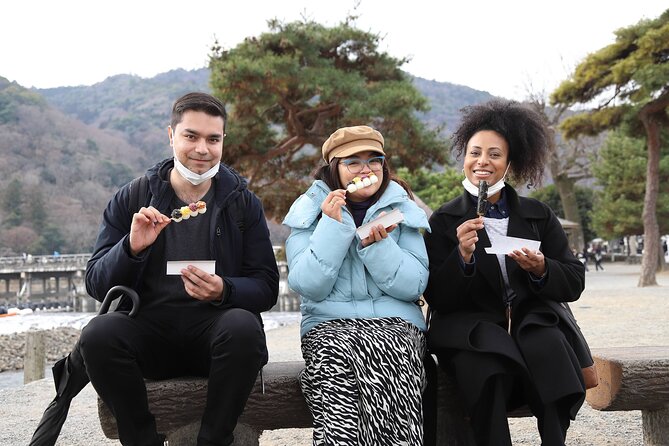
Some accounts connected with this operator describe food tastings and guides taking visitors to local snacks. Do not assume those tastings are part of this specific booking. The stated inclusions cover a licensed English-speaking guide and a private customized walking tour, not meals.
Who should book this Arashiyama experience
I would choose this tour if you want more than directions and less than a full-day group excursion. It suits first-time Kyoto visitors who want the major sights explained, families that need a flexible pace, and repeat visitors who would rather explore Sagano’s quieter temples.
It is also a good fit if you are unsure how to connect the district’s scattered attractions. The guide can help you decide between a scenic route, a temple-focused route, a traditional-building route, or one that includes monkeys.
You may want a different option if you dislike walking, need guaranteed hotel transport, or want every expense included upfront. It is also not ideal if you want to see all twelve suggested stops. The tour is private, but the area itself can still be crowded, especially around the bamboo forest.
Free cancellation is available when you cancel at least 24 hours before the start time. Changes or cancellations inside that window are not accepted for a refund.
Should you book it?
Book this tour if personal attention and route flexibility matter more to you than a low fixed price. The best use of the four hours is to choose one famous sight, one quieter temple or garden, and one scenic or cultural stop.
I would not book it simply for the bamboo forest. You can reach that path without a guide, and it may be crowded. I would book it for the chance to connect the bamboo, Tenryu-ji, Togetsukyo Bridge, and the less-visited corners of Sagano with someone who can explain what you are seeing and adjust the day to your group.
FAQ
Where does the tour start?
You meet your guide in front of a ticket gate at JR Saga-Arashiyama Station, at 11-1 Sagatenryuji Kurumamichicho, Ukyo Ward, Kyoto.
Where does the tour end?
The activity ends back at the meeting point at JR Saga-Arashiyama Station.
How long is the tour?
The tour lasts approximately four hours.
Is the tour private?
Yes. Only your own group participates in this private activity.
Can I customize the itinerary?
Yes. You can discuss your preferences with the guide and choose two or three places in the Arashiyama and Sagano area.
What attractions can I choose?
Possible stops include Togetsukyo Bridge, Tenryu-ji Temple, Okochi Sanso Garden, Jojakko-ji Temple, Nison-in, Giōji Temple, Adashino Nembutsu-ji, Otagi Nenbutsu-ji, Saga Toriimoto, Monkey Park Iwatayama, and the Bamboo Forest Street.
Are admission fees included?
No. Entrance fees for you and the guide are optional extras and are not included in the listed price.
Is transportation included?
No. This is primarily a walking tour. Public transport or local taxis may be used, but those fares are not included. A private van is also not included.
Does the tour operate in bad weather?
Yes. The tour takes place rain or shine. Comfortable walking shoes are recommended, and you should be prepared for a moderate amount of walking.
Recently added around Kyoto
- Higashiyama | Kyoto: Sakura Season Private Rickshaw Tour★ 5.0 · 3 reviews
- Kyoto Kimono Rental CHAMATSU|Kimono/Yukata Rental FamilyPlan★ 5.0 · 3 reviews
- Kyoto: Half-Day Private Guided Tour to the Old Town of Gion★ 4.4 · 3 reviews
- Nara Private Customizable Half Day Tour★ 5.0 · 3 reviews
- Kansai Region Hiking Adventure in Nara Kobe Kyoto and More★ 5.0 · 3 reviews
- Full Day Nara Deer, Temple, Shrine, Activities & Tea Ceremony★ 5.0 · 3 reviews
- Nara: Essential Private Tour with Deer Park and Temples★ 5.0 · 3 reviews
- Hiking Tour for Sacred Sites in Kyoto with a Guide★ 5.0 · 3 reviews
Arashiyama Bamboo Grove Tours, compared.
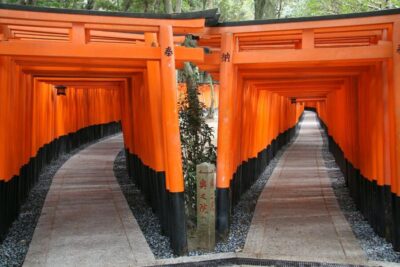
Fushimi Inari, Kinkakuji, Bamboo Grove 1 Day Bus Tour
Read our review →
Kyoto/Osaka: Nara, Fushimi Inari Taisha, Arashiyama Bus Tour
Read our review →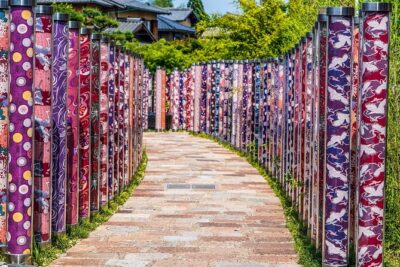
Kyoto Arashiyama Walking Tour: Bamboo, Monkeys, Gardens & Secrets
Read our review →
Arashiyama Bamboo, Temple, Monkeys, or Secret Sake Brewery
Read our review →
Arashiyama Bamboo Forest, Monkeys, Matcha & Temple Tour
Read our review →
Nijo, Kinkaku-ji, Arashiyama, Kiyomizu & Fushimi Inari
Read our review →
Kyoto Ghost Tour: Dark Tales, Urban Legends, Bamboo Forest Night
Read our review →
Arashiyama Bamboo Forest & Hidden Gems Bike Tour (Early Bird)
Read our review →Browse the lists this tour appears in